
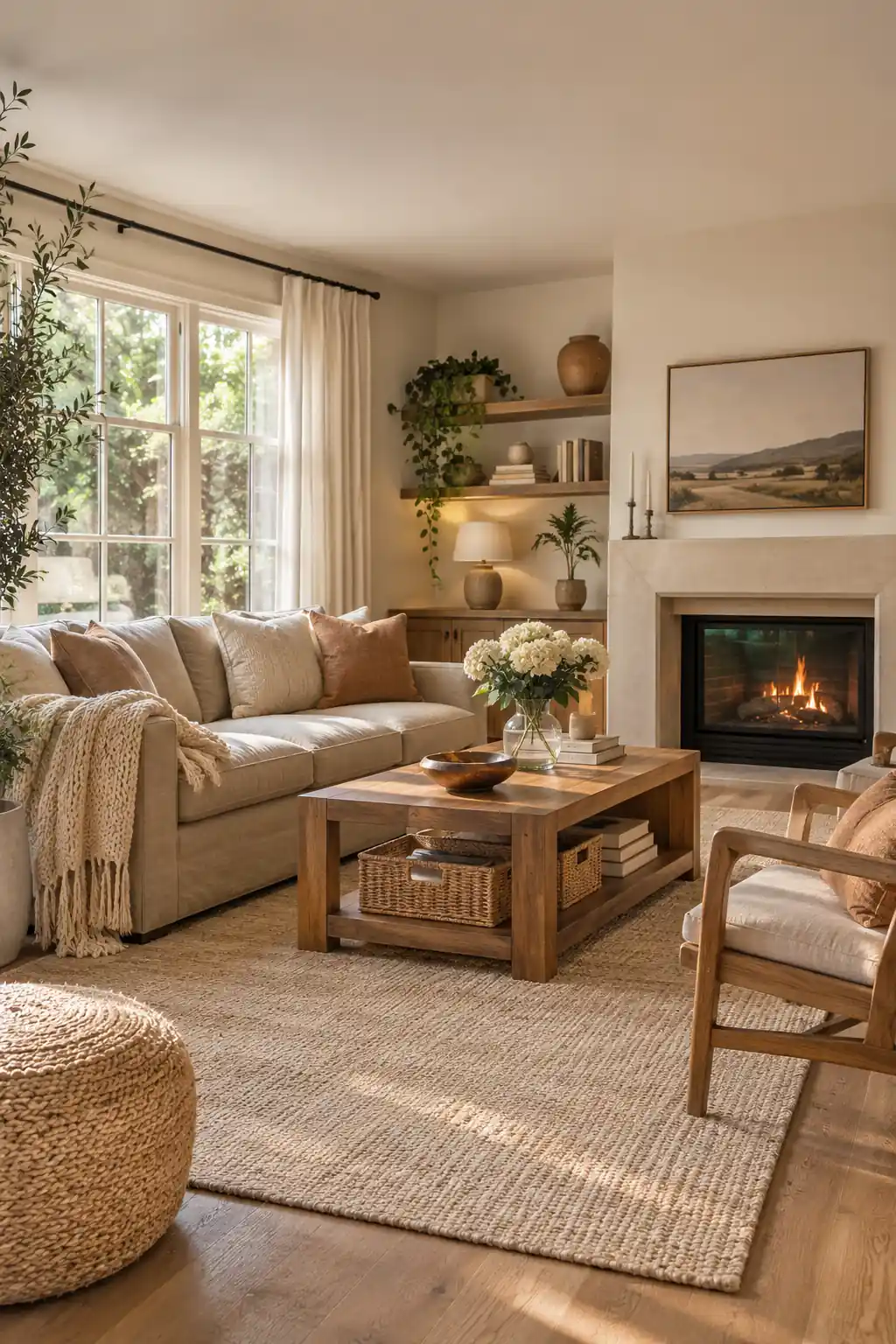
Living room decor ideas need to work with your doorways, seating and daily routine. Start with the furniture footprint, then choose the rug, lighting and smaller details. A photograph-style arrangement can suggest a direction without becoming a shopping list.
These AI-generated images illustrate possible rooms. They are not photographs of completed or measured projects. Use the guidance to adapt each look, then check real dimensions, materials and installation instructions.
Before moving furniture, mark its outline on the floor with removable tape suited to the surface. Check door swings, drawers and the route between rooms. Keep existing pieces that still work rather than replacing everything to match an image.
Warm neutrals with a linen-look sofa
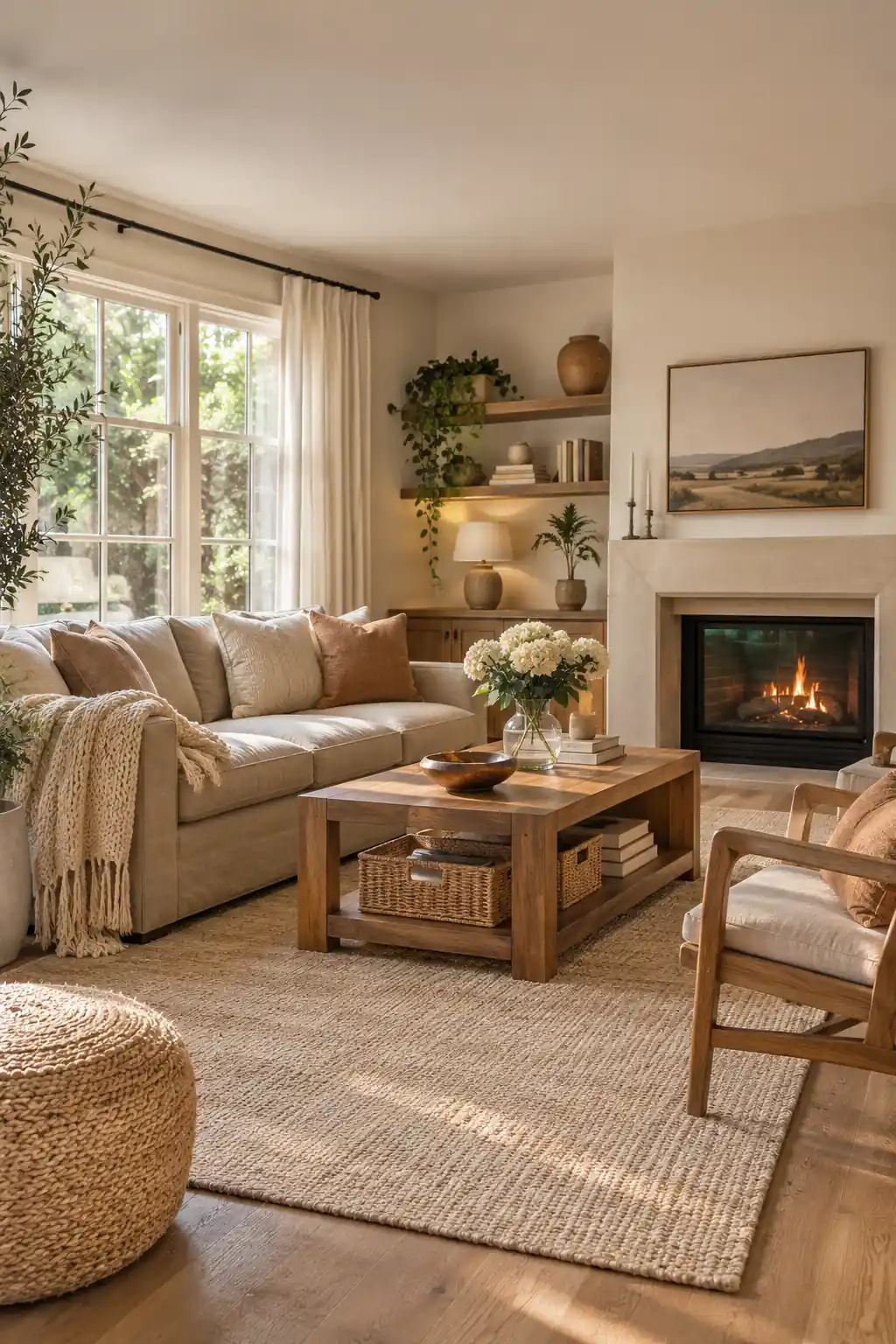
The cream sofa, oak table and pale rug share a light palette. Darker cushions and wood edges keep the individual pieces visible. Start with the sofa fabric you already own, then compare rug and curtain samples beside it.
Check those samples in daylight and under your evening lamps. Two creams can have different yellow, pink or gray tones. Buy a small paint sample before committing to the wall color.
Keep the table top mostly available for daily use. Choose one washable throw and removable cushion covers if the room gets frequent use. Linen appearance alone does not tell you how a fabric should be cleaned; read its care label.
Compact seating with nesting tables
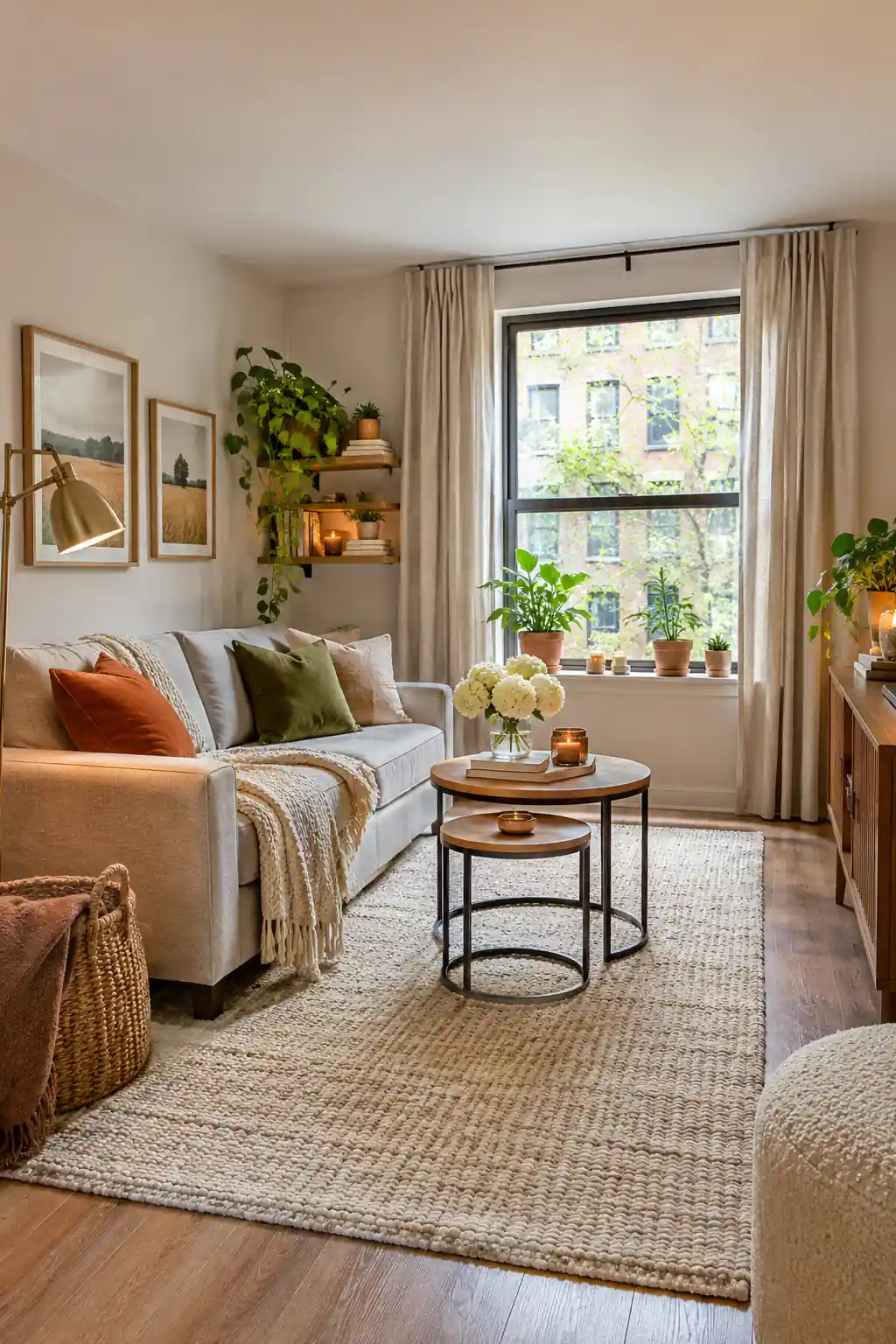
The nesting tables can separate when guests need more surfaces, then slide together afterward. Measure both their stored footprint and their fully extended arrangement. A set that fits beside the sofa may block the room when opened.
Tape the sofa outline before buying. Check its depth as well as its width, especially when the window wall is close. Choose arm width according to the space left for actual seating.
Keep one clear route across the room. A movable pouf can provide occasional seating, but give it a storage position. Avoid using every empty floor patch for another table. For related layouts, compare these living room examples.
Rust sofa with blue artwork
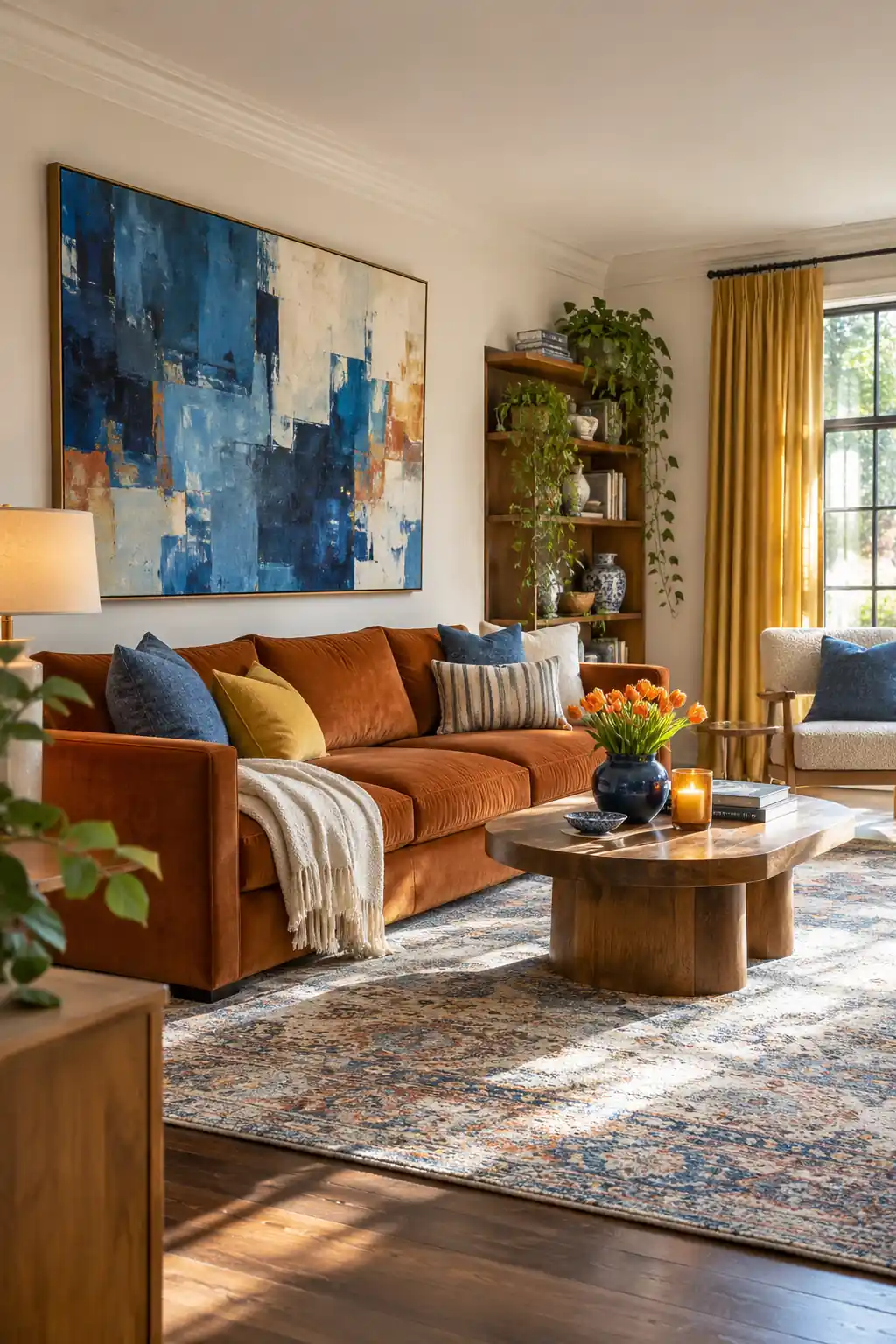
The rust sofa is the largest color area, while the blue artwork provides contrast above it. Choose those two colors first. Repeat smaller amounts in cushions or a bowl instead of adding several unrelated colors.
Test the art size with a paper rectangle on the wall. A wide sofa usually needs more visual width above it than a tiny framed print provides. Use the sofa width as your comparison, not the entire wall.
Keep nearby curtains or the rug quieter if the painting has a busy pattern. If you own a neutral sofa, try this combination through covers and art before replacing the upholstery.
Low seating and a paper lamp
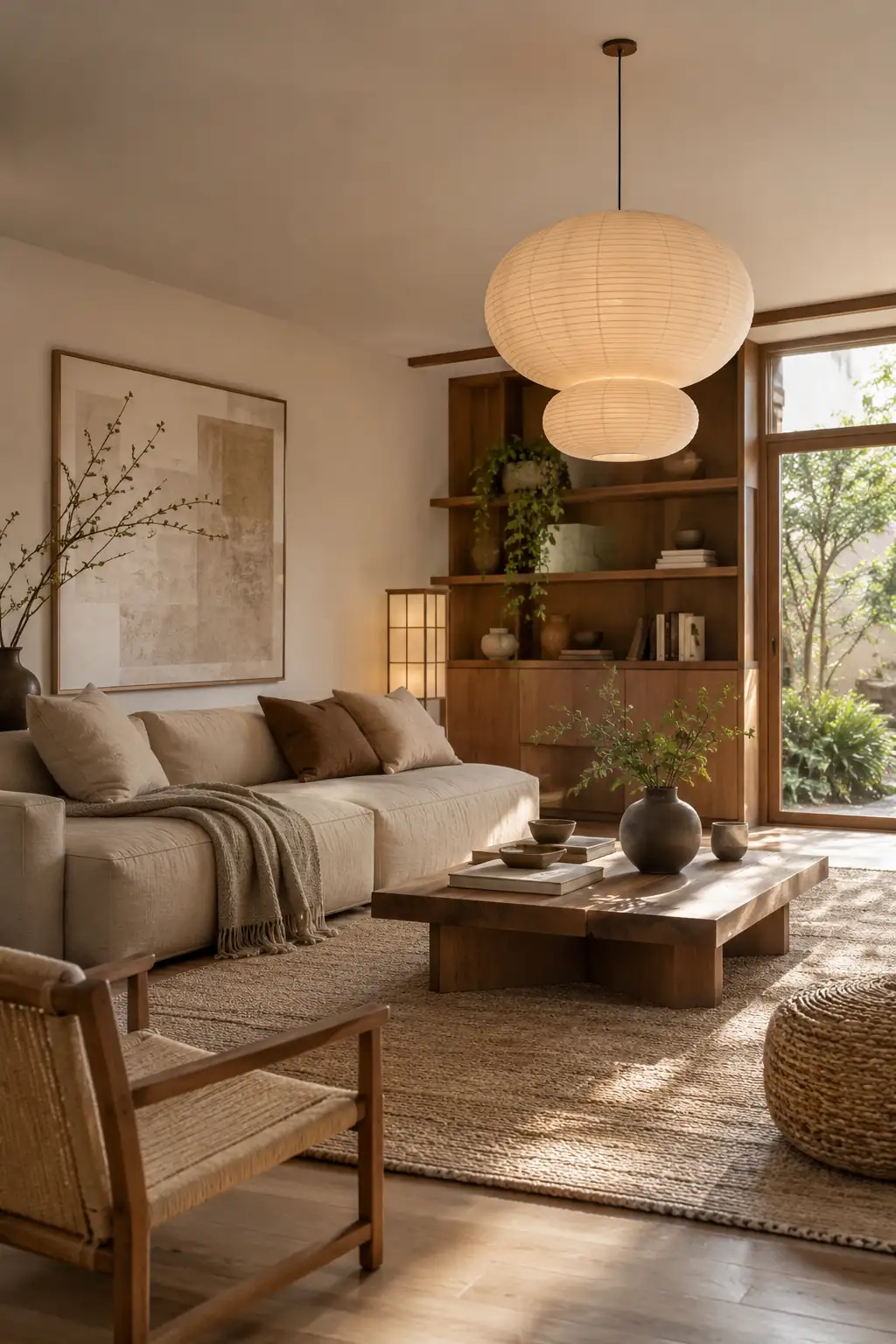
The low sofa and broad table create a horizontal arrangement. Test the seat height before buying, because a low sofa can be harder to get up from. Comfort and access matter more than matching this shape.
A large paper shade needs enough clearance above people and furniture. Follow the fitting’s instructions for bulb type, maximum wattage and installation. Use an electrician where the work requires one.
Keep storage closed where possible so loose items do not compete with the broad furniture shapes. Start with the sofa and lamp; the room does not need every pottery piece shown. A darker wood table can separate pale seating from a pale rug.
White slipcovers and woven furniture
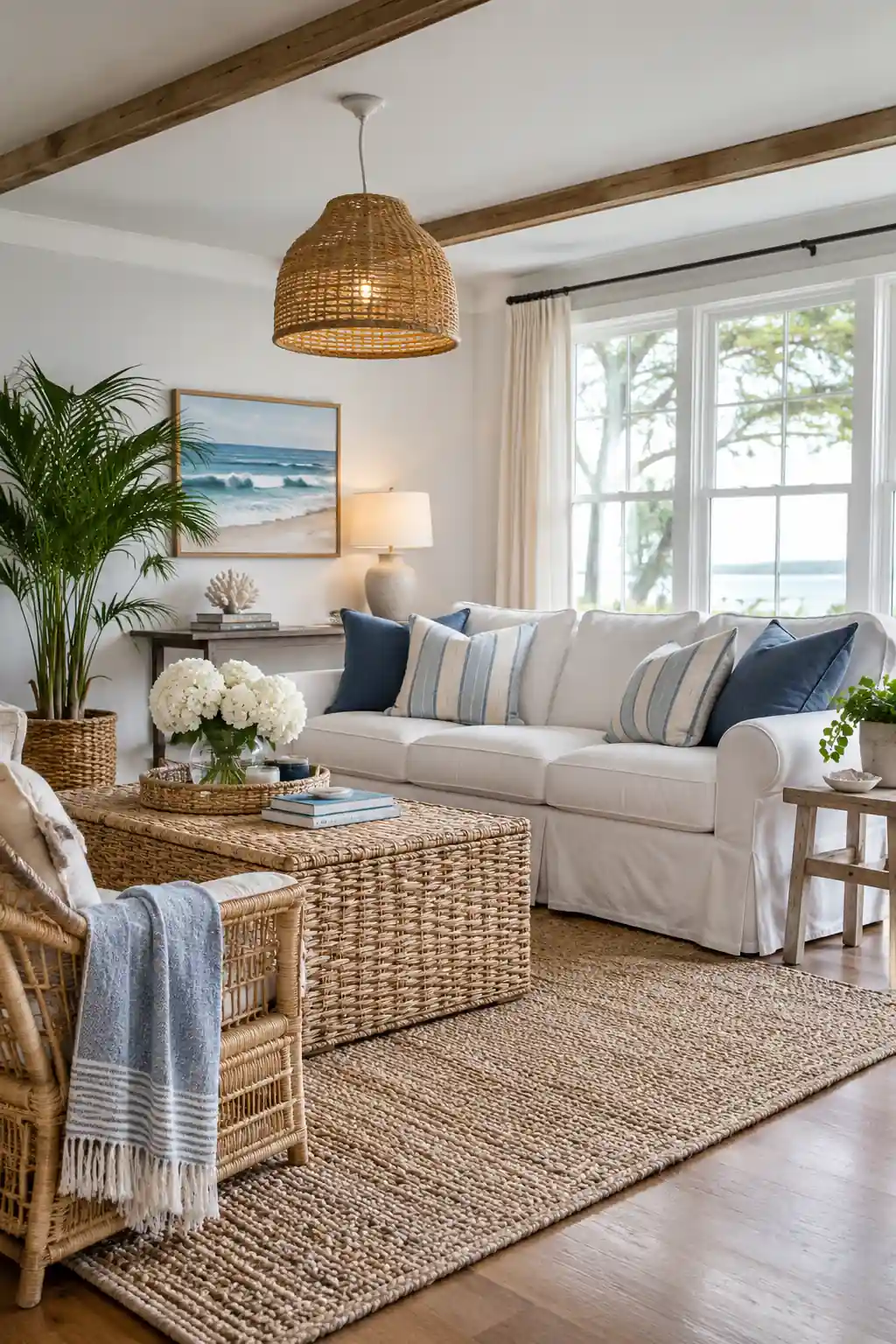
The white sofa, woven table and blue cushions create the coastal direction without many beach-themed ornaments. Check that a slipcover is removable and washable before treating it as easy to maintain. Follow the fabric label for drying and shrinkage guidance.
Woven furniture can have uneven surfaces. Use a stable tray for cups and check that the weave has no loose ends. Keep drinks away from books stored underneath.
Choose the rug texture according to bare feet, pets and cleaning needs. If the room already has dark flooring, keep some of it visible around the rug. The contrast can give the pale furniture a clearer outline.
Olive walls with a brown leather sofa
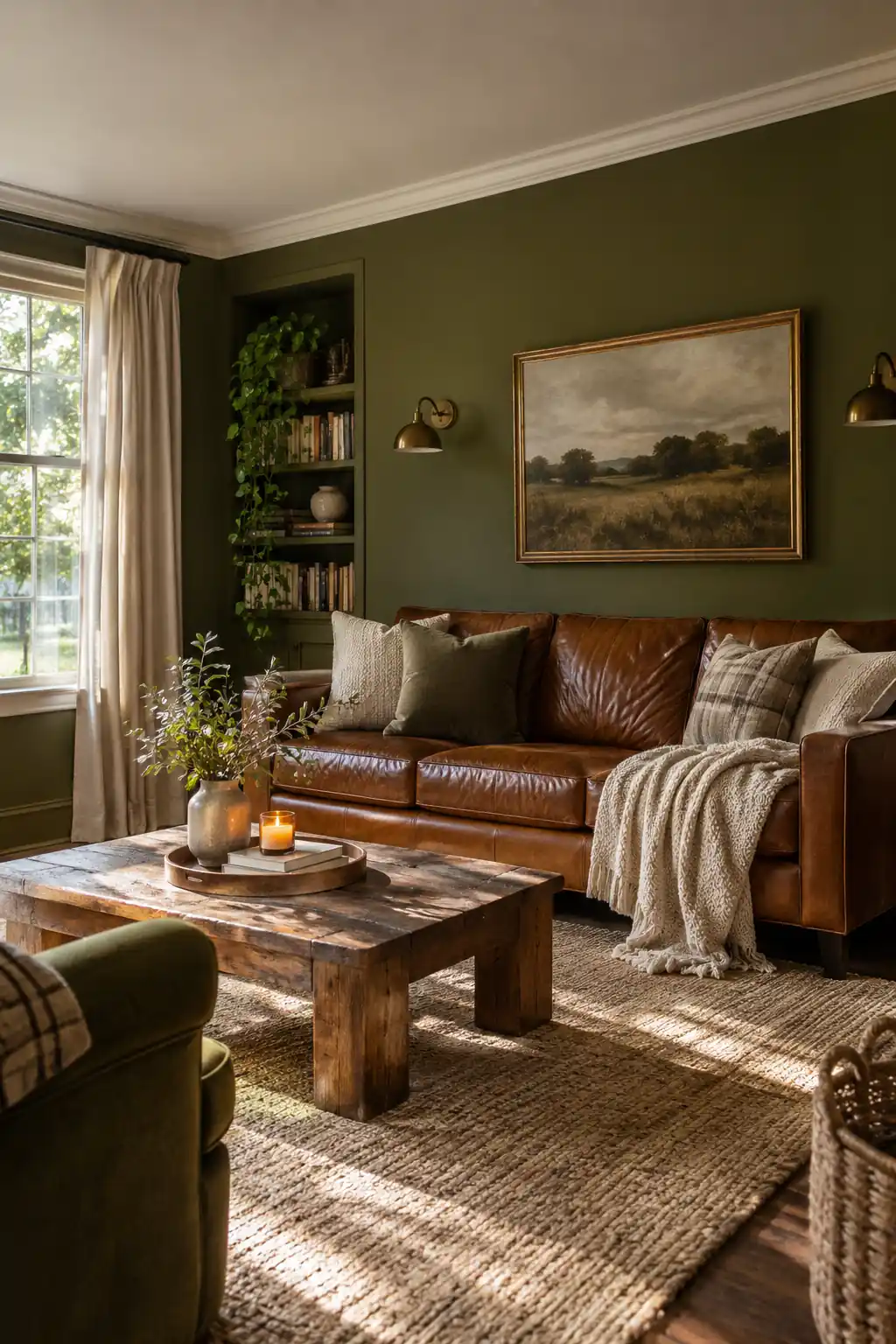
The olive wall makes the brown sofa look more pronounced. Test a large paint sample behind the sofa rather than choosing from a small swatch in a shop. Check it at night, when a darker wall may absorb more visible light.
Add a reading lamp near the seat used most often. A ceiling fitting alone can leave the sofa corner dim. Keep the lamp switch and a useful surface within reach.
Check leather care requirements before adding cleaning products or conditioners. Keep the sofa away from heat sources according to its instructions. Cream textiles can lighten the arrangement without repainting the room.
Floral curtains with an older wood table
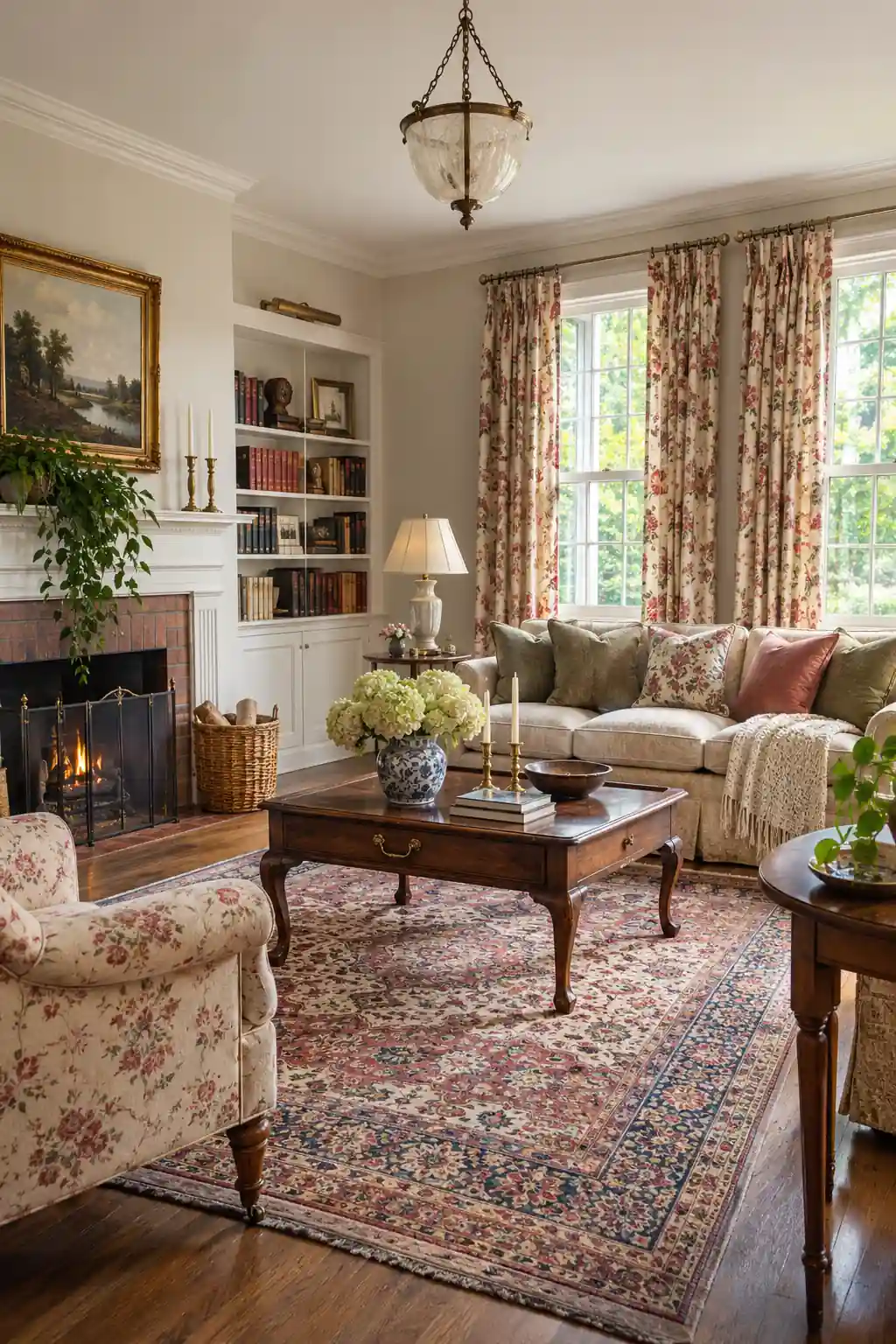
The floral curtains, rug and wood table provide most of this room’s pattern and detail. Choose one pattern as the starting point. Pull a small color from it for cushions or lampshades, rather than matching every print.
Measure the curtain stack when open. Thick curtains can cover part of the glass and reduce daylight. Choose rod width and placement around the real window and any nearby furniture.
Check an older table for loose joints before using it daily. A protective coaster can help preserve the finish, but follow care advice suited to that finish. Leave enough floor visible that the rug and furniture edges remain readable.
Curved sofa with a stone-look table
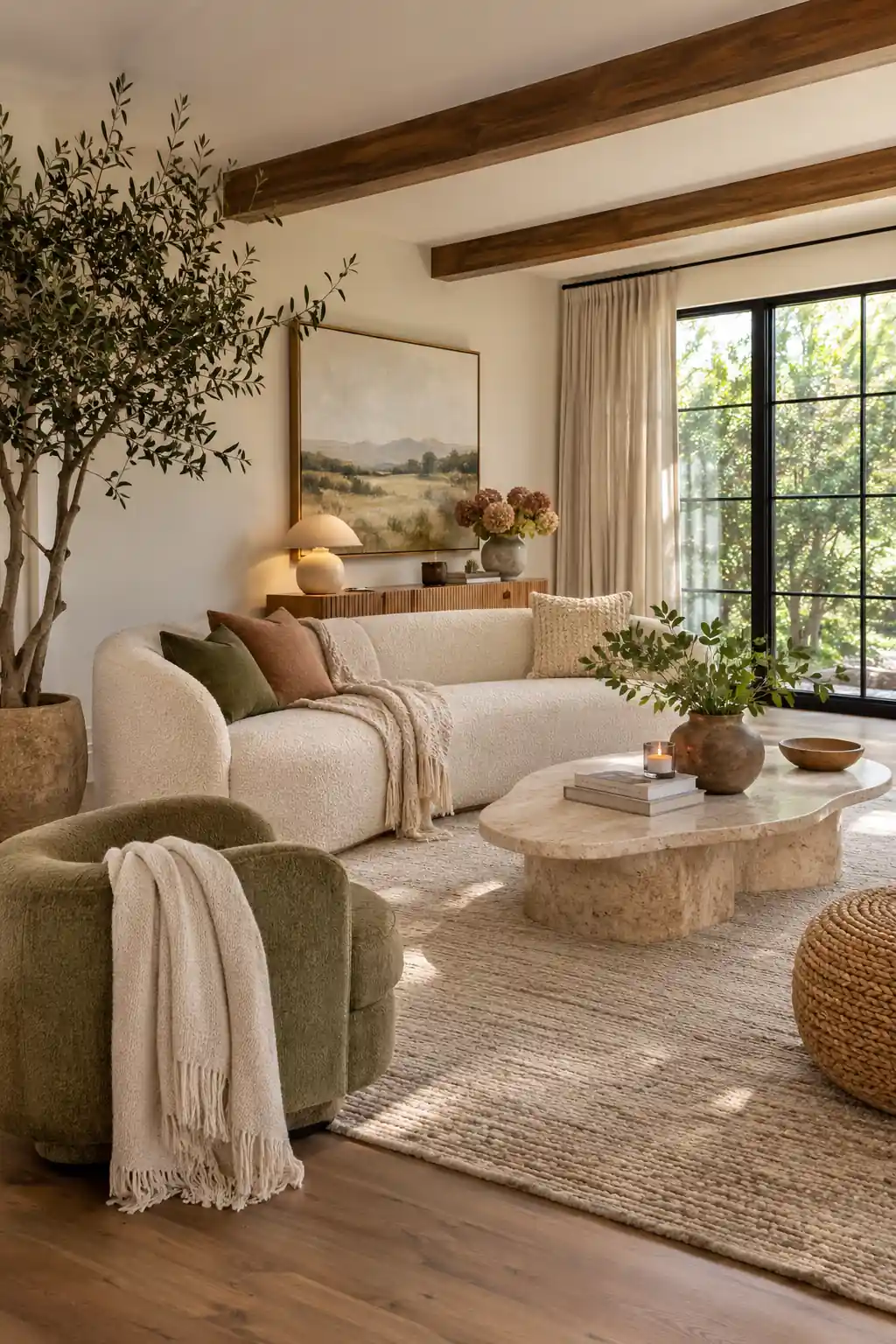
The curved sofa changes how people face one another. Measure its widest point and depth, including the curved ends. A sofa can appear compact at the center while using more floor space at either end.
Tape the coffee table outline and test the gap with people using the sofa. There should be room to reach a drink and move past without squeezing. Treat any suggested spacing as a starting point to test.
Stone and stone-look tables can differ greatly in weight and care. Check floor access, delivery and stain guidance before buying. Rounded edges reduce sharp corners, but they do not make heavy furniture suitable for every household.
Rattan chair, patterned rug and plants
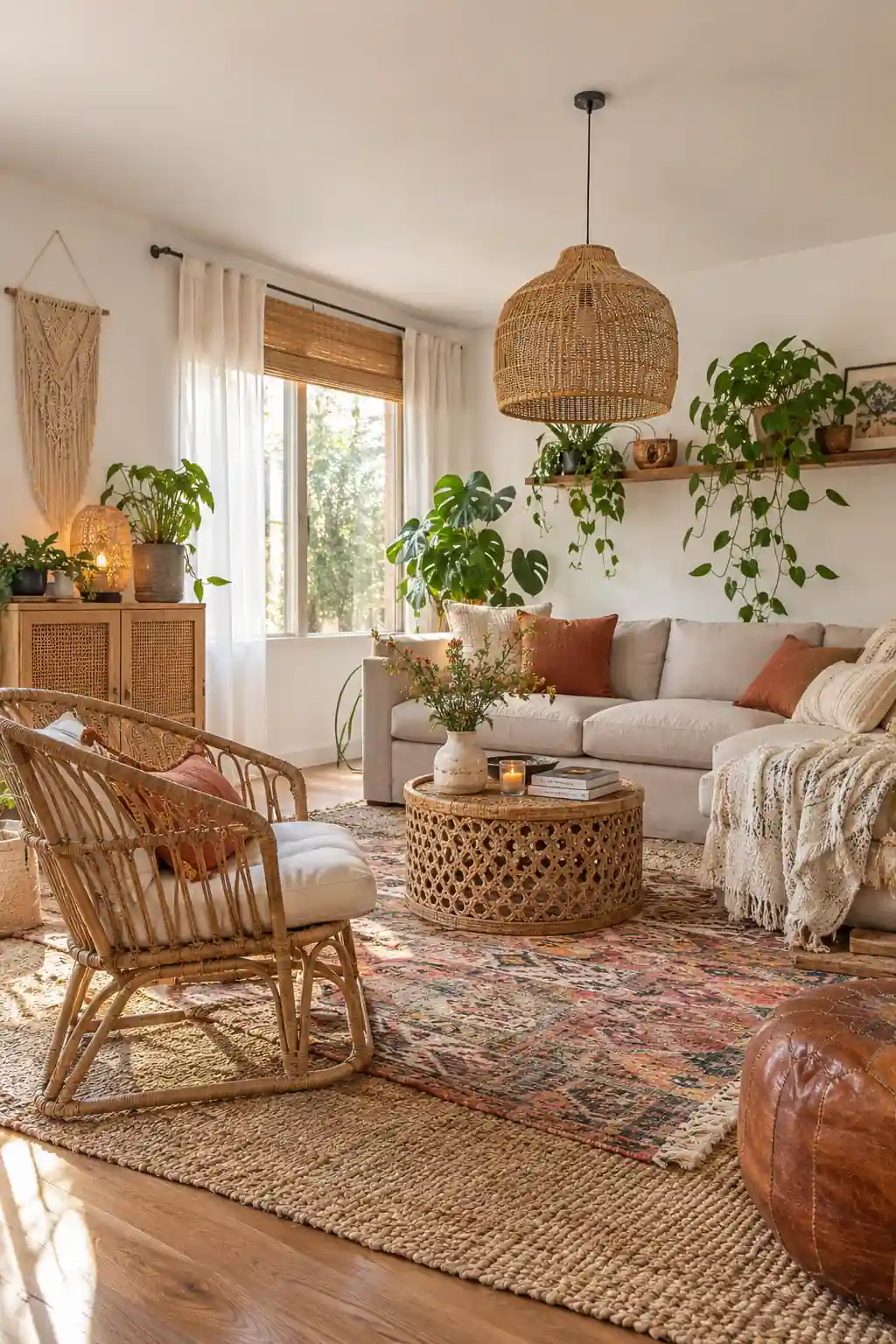
The rattan chair and patterned rug already supply texture. Add plants according to the room’s light rather than filling every shelf. Check plant suitability for any pets or children sharing the room.
Start with one rug under the seating. If you add a second, test whether its edge curls or shifts when people walk. A rug pad should suit both the rug and the floor finish.
Try the chair before buying, particularly its back angle and arm height. A loose cushion can change comfort but will not fix an unsuitable seat shape. More arrangements appear in these boho living room ideas.
Cream sofa with one large picture
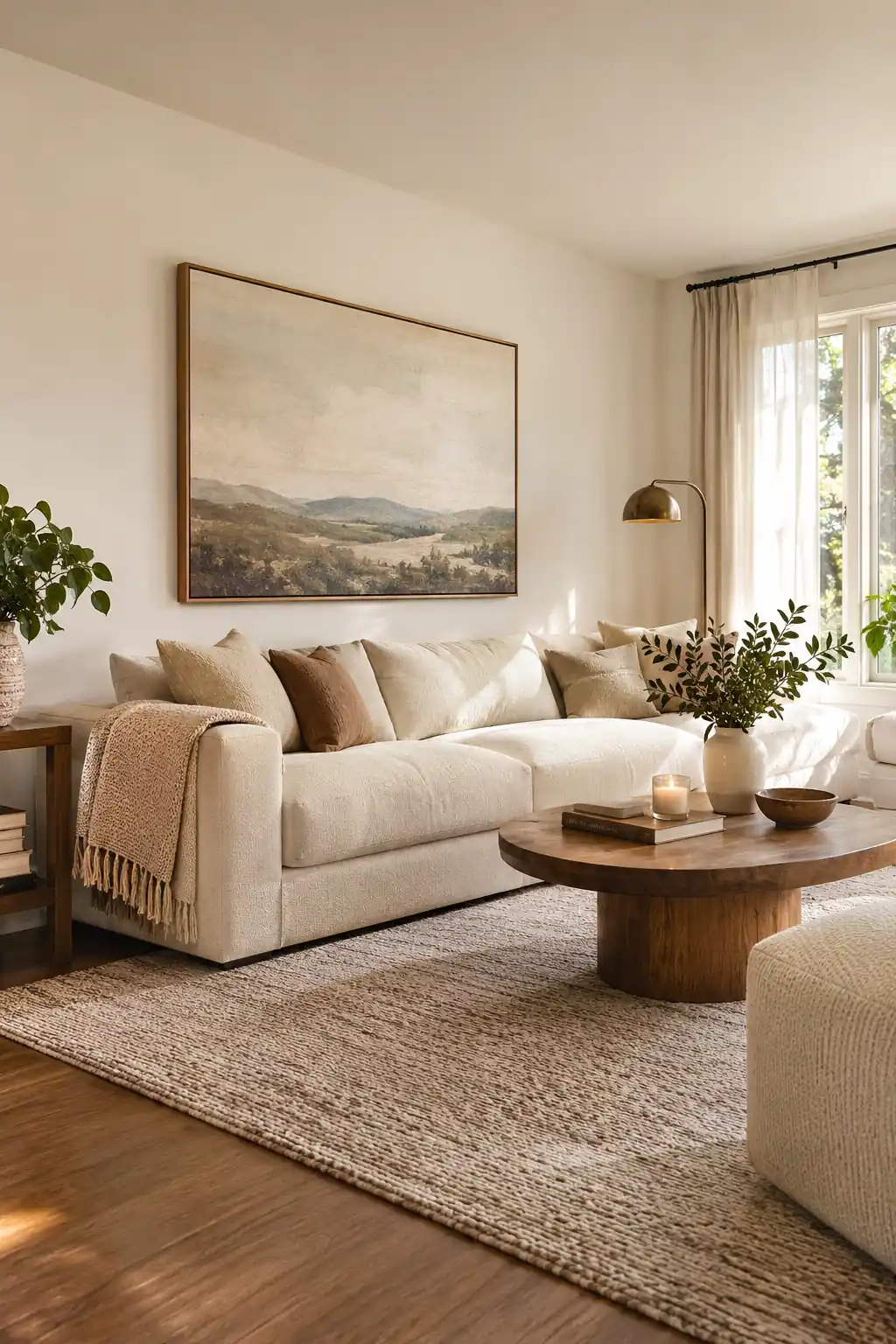
One large artwork gives this arrangement a clear focal area. Remove smaller objects before buying more decor. This helps you judge whether the room needs another piece or only better placement.
Use paper to test the frame position above the sofa. Check the view from the doorway and while seated. The artwork should relate to the seating rather than float near the ceiling.
Closed storage is useful when the display surfaces are sparse. Keep remote controls, chargers and everyday papers somewhere reachable. Leave a lamp and usable side surface even if you remove most decorative objects. A room still needs to support the way it is used.
Walnut furniture with a mustard chair
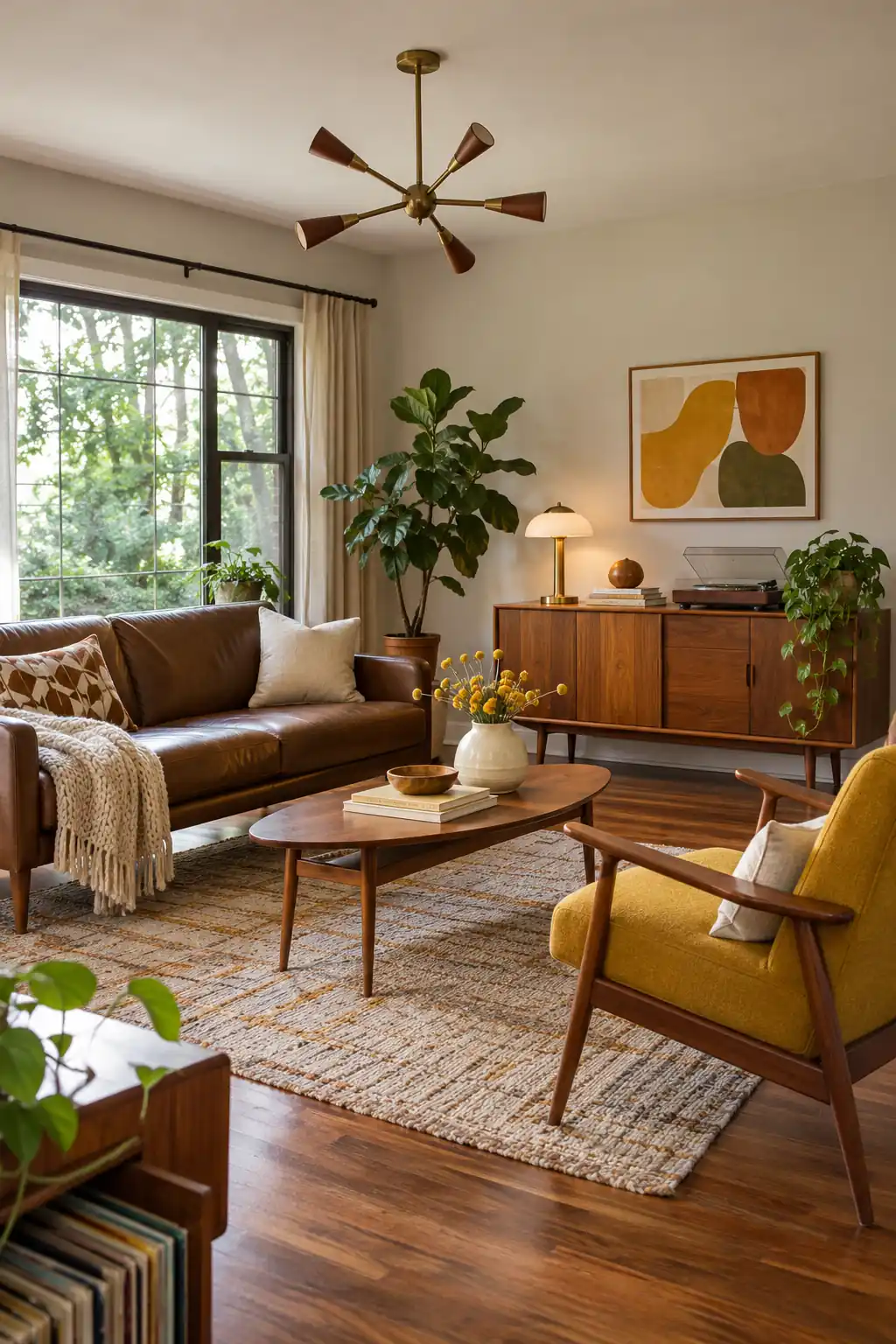
The wood cabinet and table repeat the same brown tone, while the mustard chair provides a separate color. Match the warmth of the wood rather than trying to buy every piece from one set.
Compare seat heights when mixing an armchair and sofa. People should be able to talk without one seat feeling much lower than the other. Check the chair arms against nearby table height too.
Furniture on narrow legs can reveal more floor, but check stability and weight limits on the actual pieces. Put heavy objects low in the cabinet. Leave room for the cabinet doors to open beyond the edge of the rug.
Exposed beams and plaid cushions
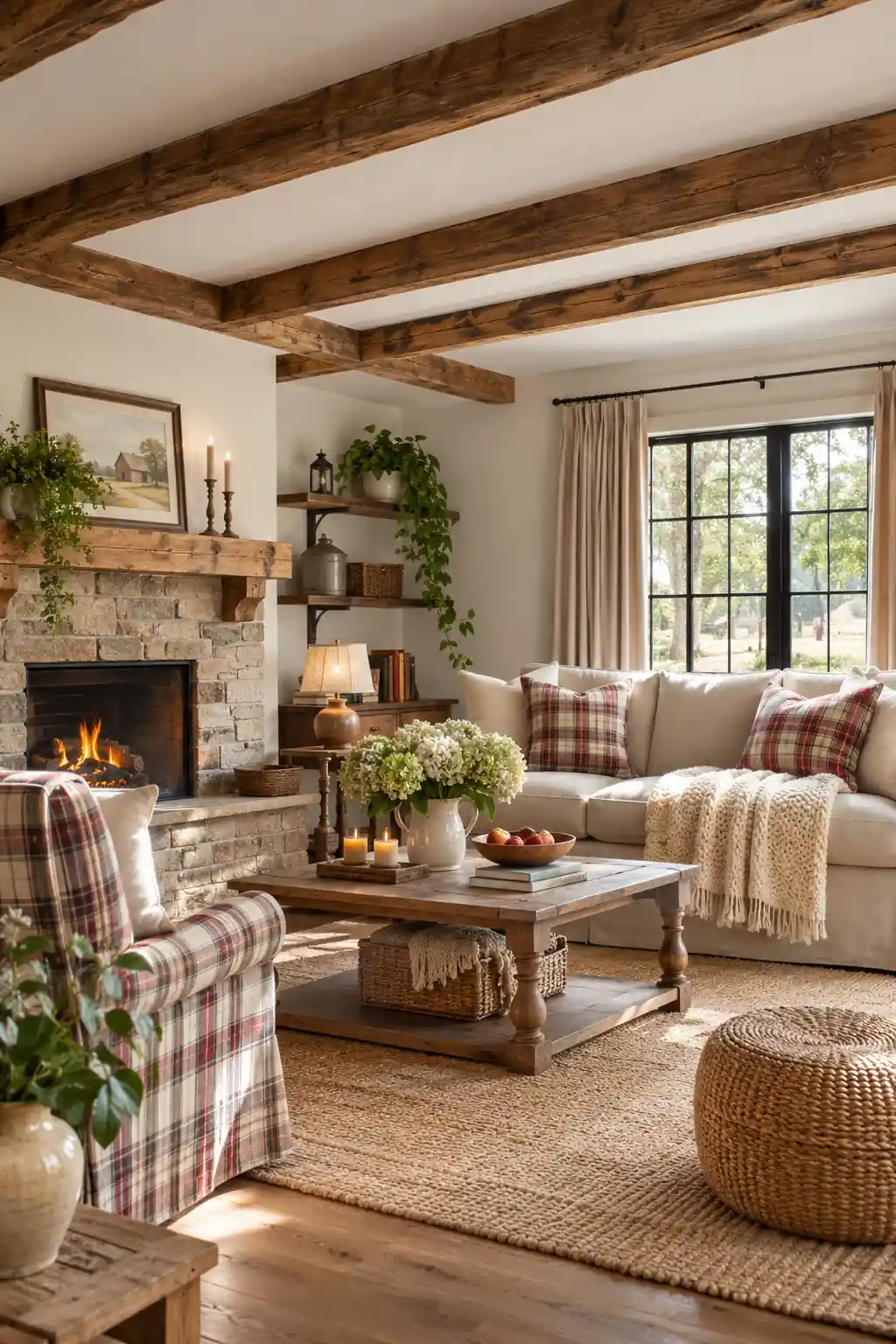
The beams and fireplace give this room strong fixed details. Repeat their wood or stone tones in one movable piece, then keep the main upholstery quieter. Plaid cushions can supply the pattern without changing the whole sofa.
If your ceiling has no beams, use the image for its fabric and furniture choices. Adding structural-looking overhead elements requires a separate installation plan. It is unnecessary for the rest of this arrangement.
Keep textiles and decorations away from a working fireplace according to its clearances. Position the table around the seating route rather than centering it on the hearth at the expense of access.
Bookshelves with space between groups
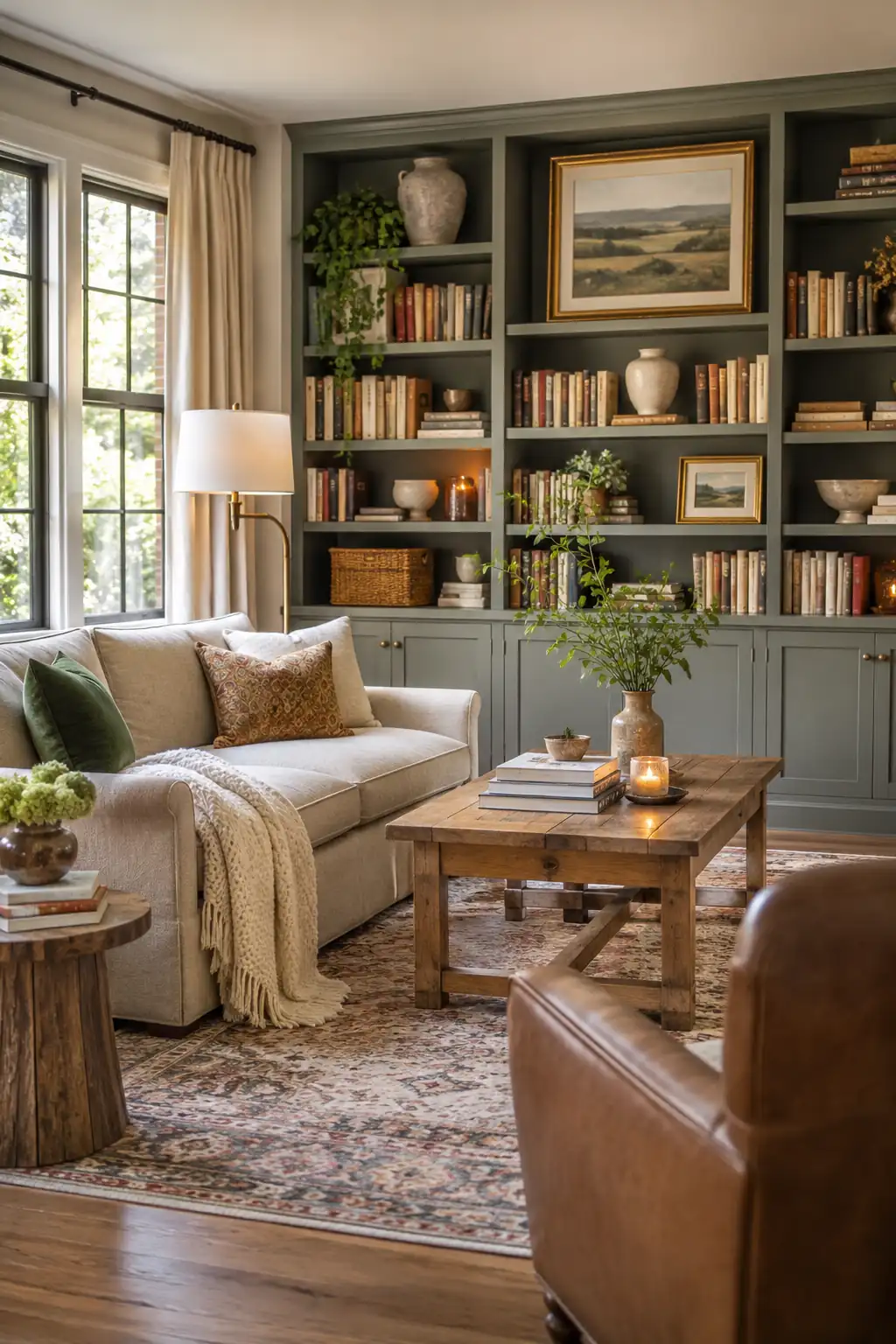
Place books you use where you can reach them, then reserve remaining shelf space for pottery and pictures. Keep heavier items low. Measure shelf depth and load limits before filling it with large books or ceramics.
Work one shelf at a time. Mix upright books with a short horizontal stack only where the stack is easy to remove. Leave gaps so each group can be seen.
Freestanding units should be secured according to their instructions and wall type. For more information, see CPSC furniture anchoring guidance. A basket on a lower shelf can hold cables or remotes without adding several small boxes.
A gallery wall aligned with the sofa
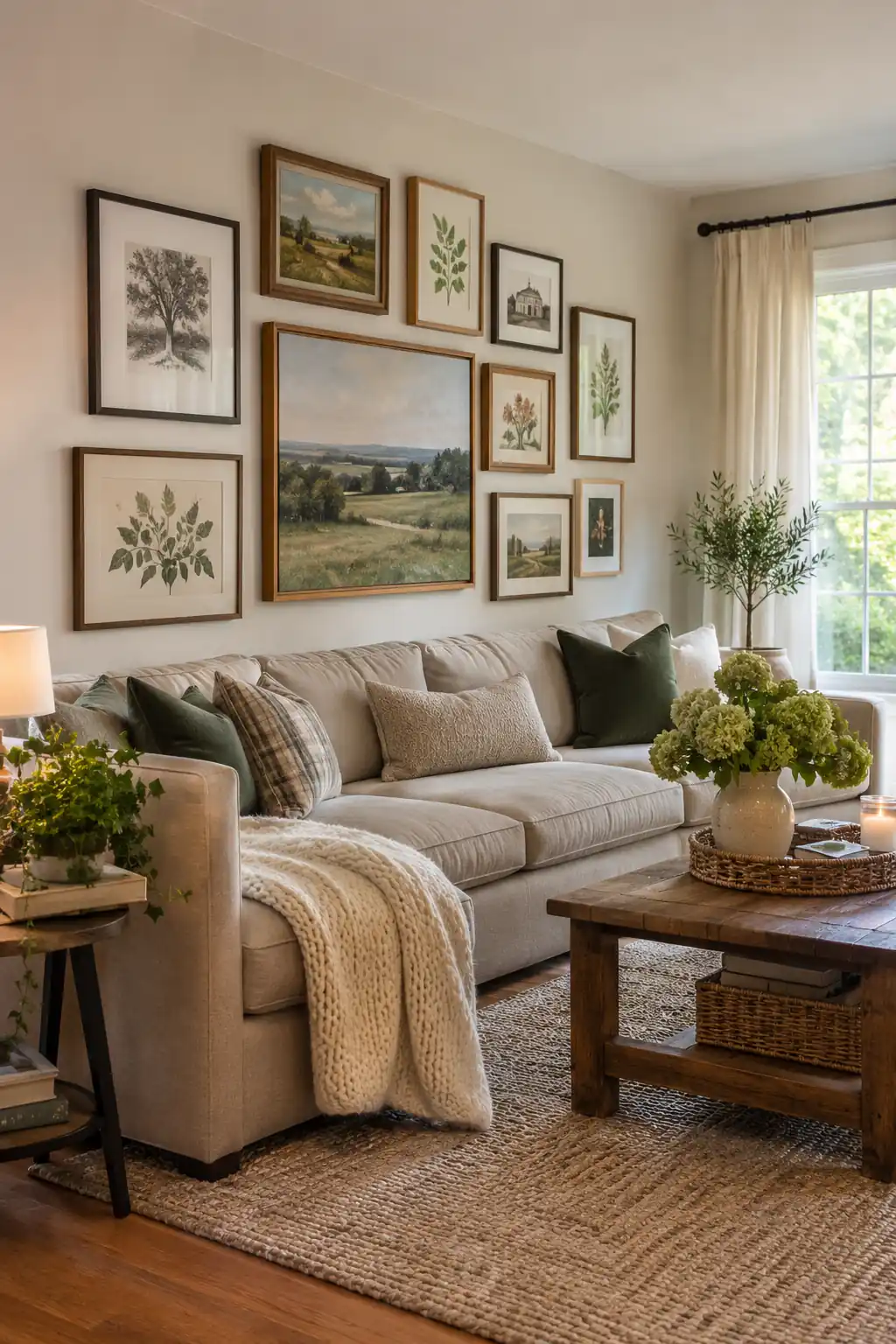
Arrange the frames on the floor before making wall holes. Cut paper templates to each outside frame size, including any mount. Move those templates until the group looks balanced above the sofa.
Choose a consistent gap between nearby frames and check it with a ruler. The frames can vary in size while keeping that spacing steady. Leave a little more visual weight near the center of the group.
Use fixings rated for each frame and the wall material. In a rental, check your agreement before mounting. If drilling is unsuitable, a freestanding display on a cabinet can carry a smaller collection.
Fireplace mantel with a mirror and branches
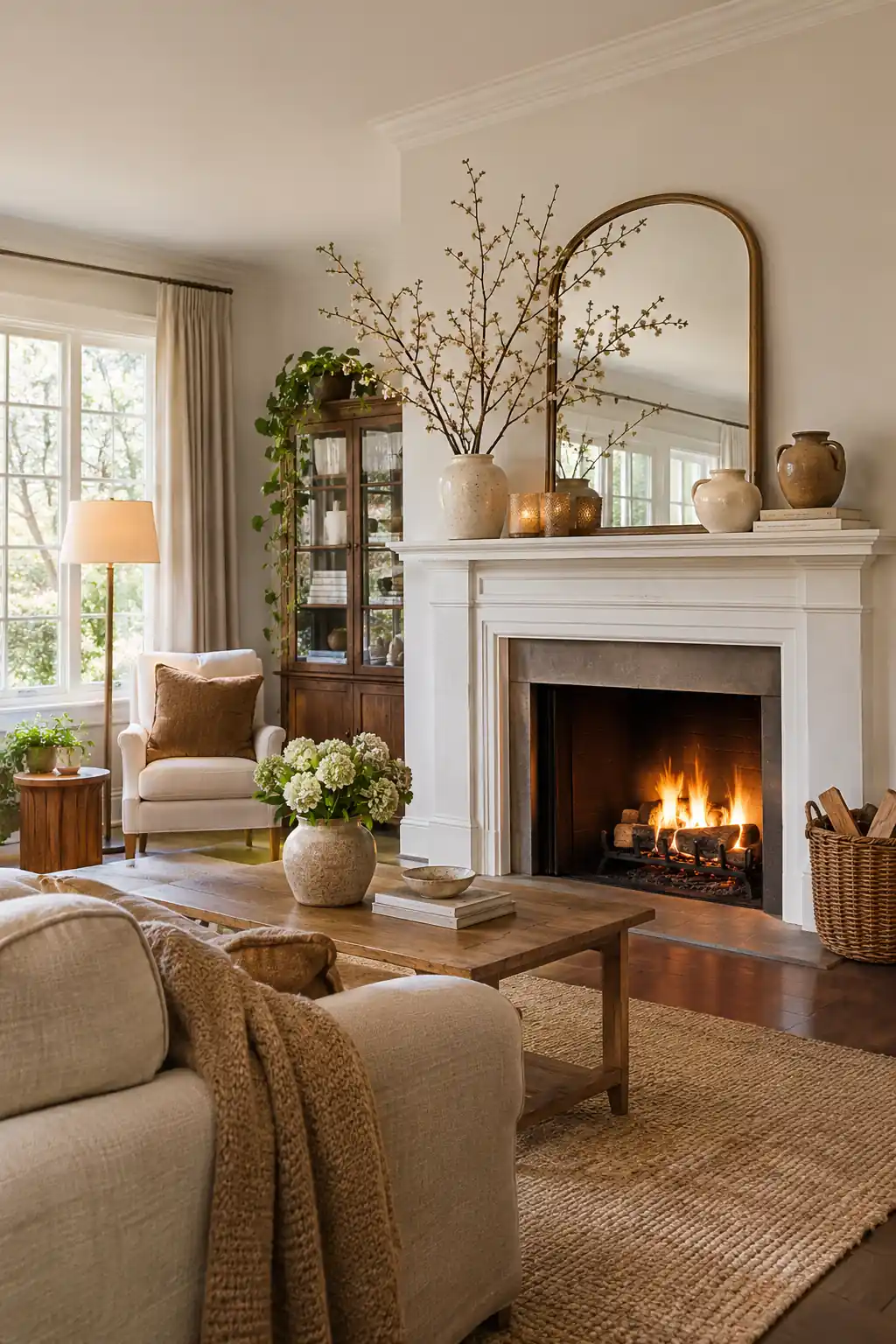
The mirror is the largest object, with the vase and pottery lower beside it. Check what the mirror reflects before choosing its position. A reflected doorway or ceiling light can change the effect.
Secure the mirror with a fixing suitable for its weight rather than relying on the mantel lip. Choose a stable vase, and trim branches so they do not brush the frame or wall.
A working fireplace needs clearance according to its appliance and surround instructions. The generated image cannot establish safe distances. Use fewer objects if the ledge is shallow, and keep seasonal paper or dried materials away from heat.
Window reading corner with a floor lamp
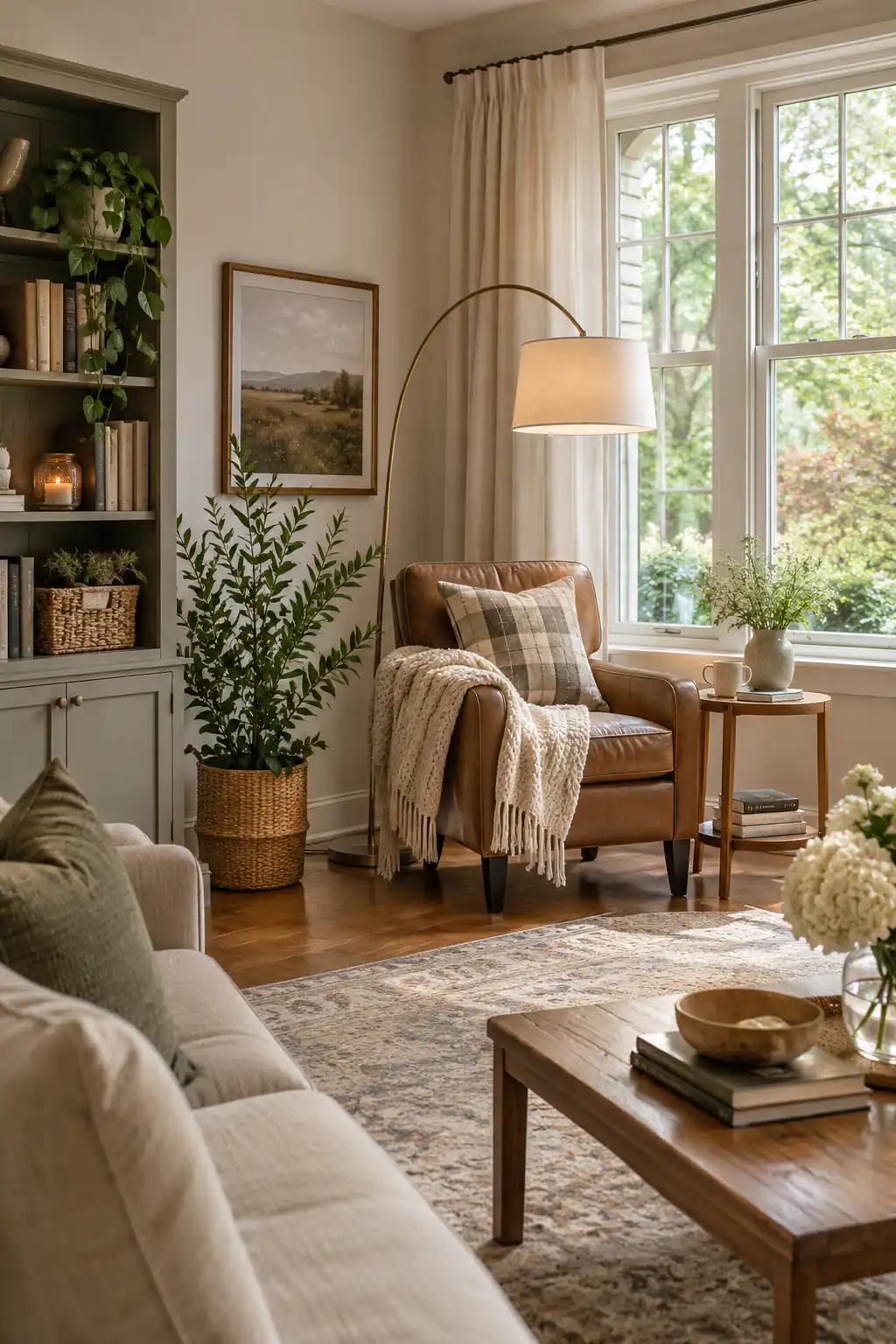
Place the chair where daylight reaches the book without forcing the reader to face strong glare. Try the position at the time of day it will be used. An adjustable lamp can handle darker afternoons.
Choose a side table that can be reached from the seat without leaning far forward. Check that the lamp base does not compete with the chair legs or walking route.
Keep the cable out of the path and follow the lamp’s instructions. If the room is narrow, measure the lamp base as well as the shade before choosing its position. Add a footrest only after testing the remaining floor space.
Freestanding storage for a rented room
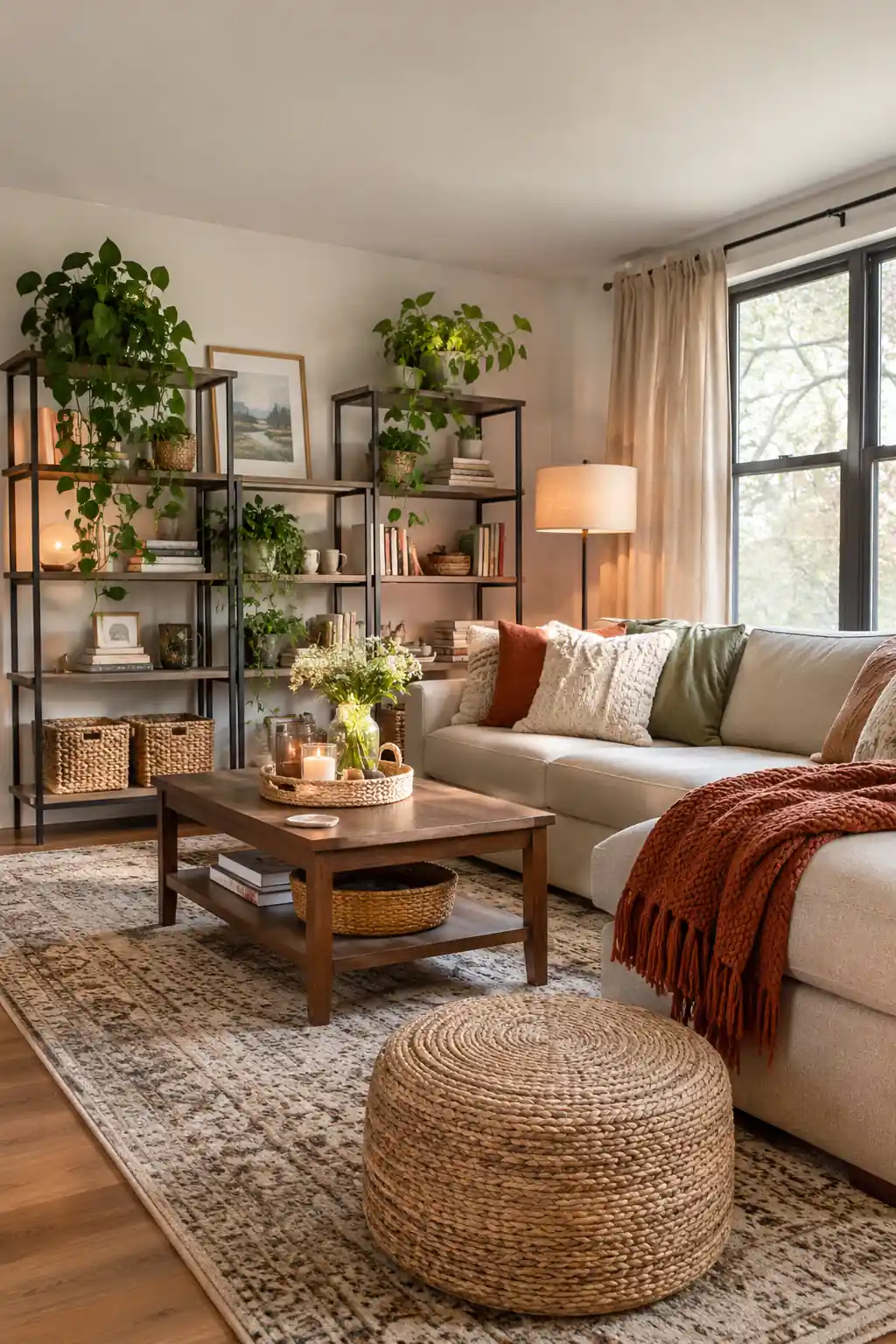
Freestanding shelves avoid built-in cabinetry, but tall units can still need anchoring. Follow the manufacturer’s instructions and ask the landlord about suitable fixings. Do not assume a unit is stable because it has no wall brackets in an image.
Use baskets sized to the shelf depth so they do not project into the room. Put frequently used items at an easy height and keep heavy storage low.
Bring color through cushion covers, curtains or a throw when repainting is restricted. Check curtain installation rules before buying hardware. A low, stable storage unit may be more suitable where a tall unit cannot be installed safely.
Patterned rug with velvet cushions
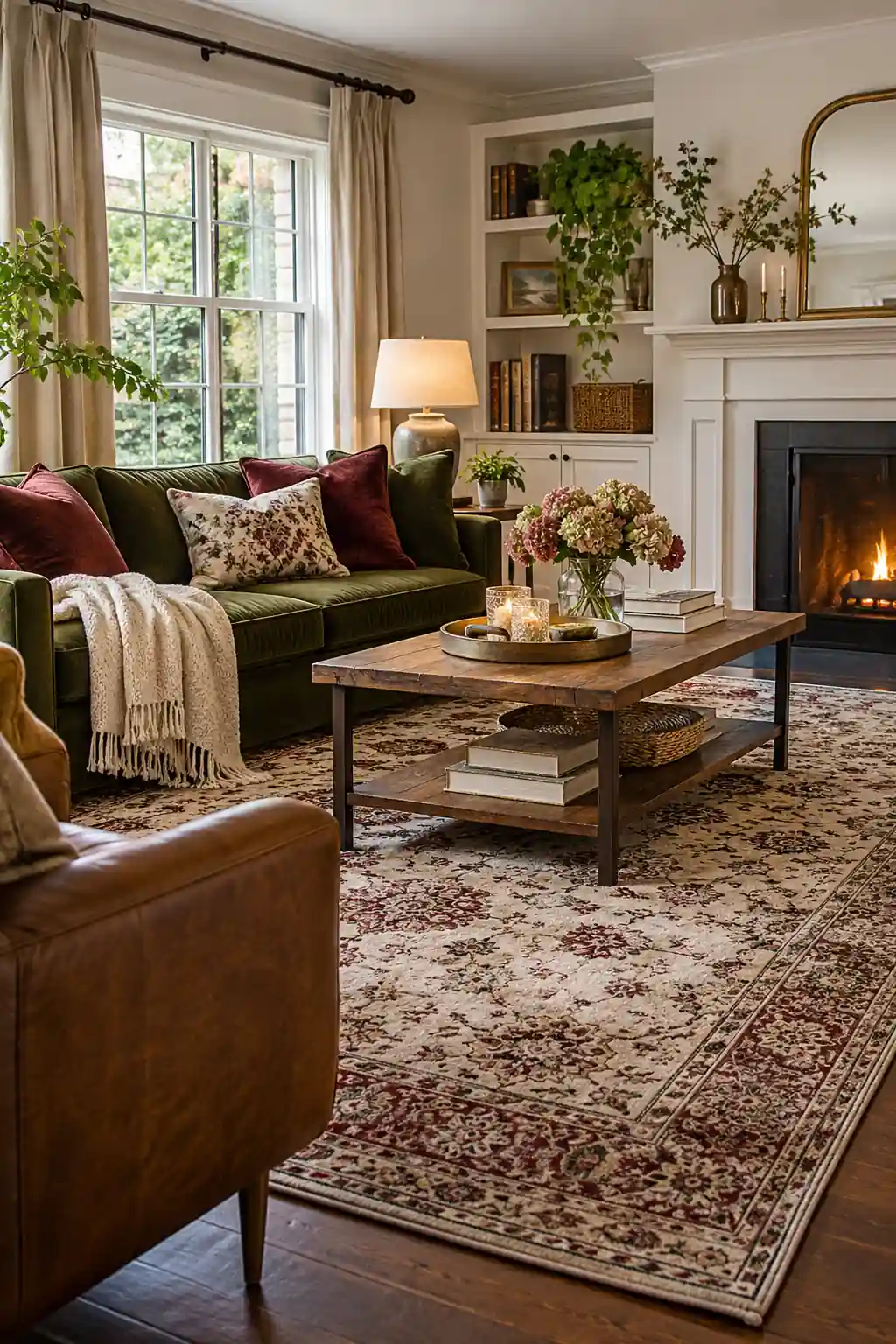
Use the rug as the starting point for cushion colors. Pick one or two shades already in its pattern. This keeps the upholstery and smaller textiles connected without buying a matching set.
Measure the seating group before ordering the rug. IKEA’s rug placement guide recommends considering the sofa width and the whole seating area. Tape the proposed rug edges to see whether the real room can accommodate them.
Check velvet care directions and how the fabric looks when brushed in different directions. Use a plain cushion cover between patterned ones if the sofa starts to look visually crowded.
Family seating with baskets and a round table
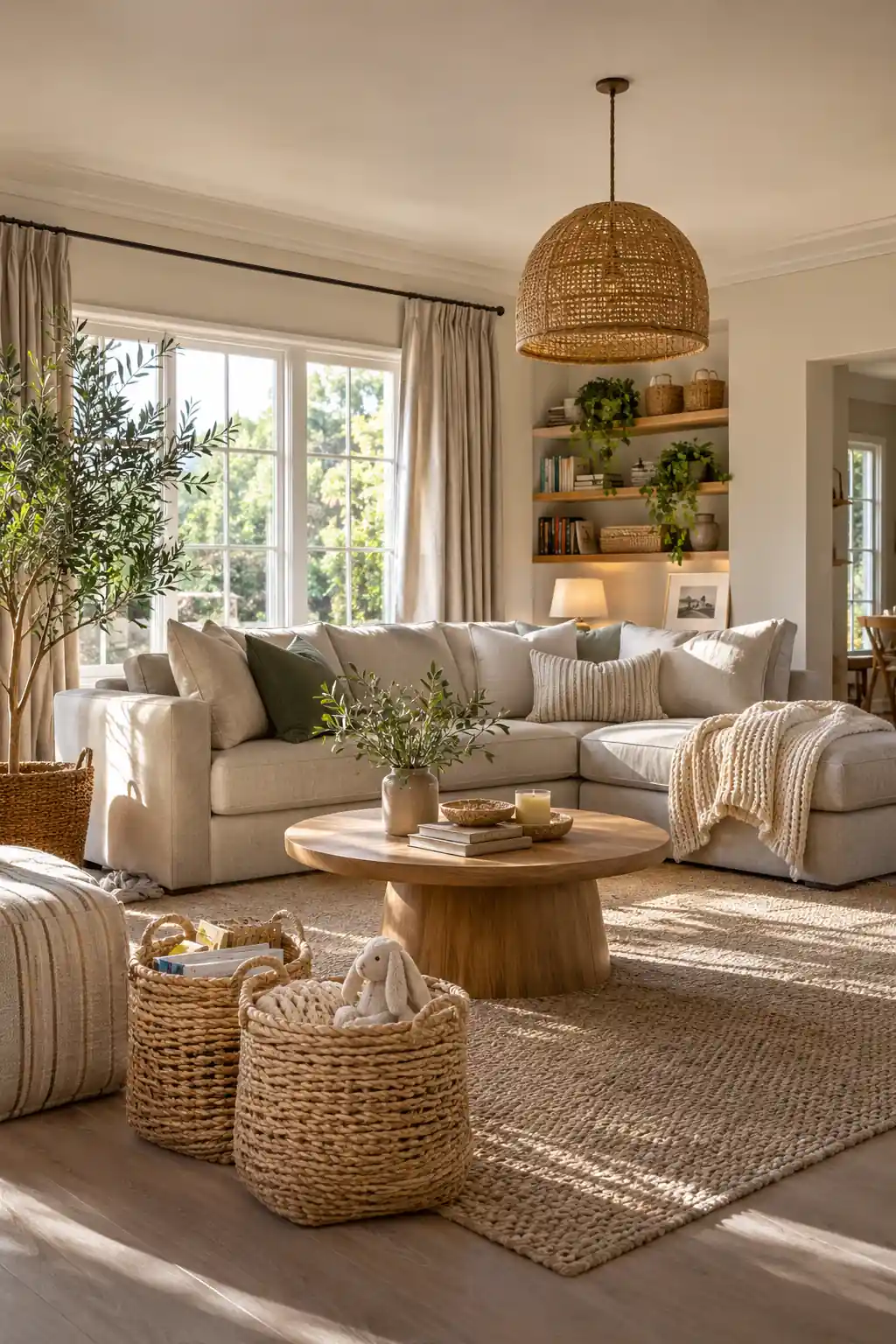
Give each storage basket a job, such as books, toys or throws. Choose sizes children can move without tipping a heavy container. Keep everyday storage close to where those items are used.
The sofa in the image suggests a removable-cover style, but appearance does not prove washability. Check the actual cover’s cleaning and drying directions before buying.
A rounded table changes the walking route around the sofa. Test that route with the basket handles pulled out as well as tucked away. Check the table’s stability and any sharp underside edges. Fewer large containers can be easier to manage than many small baskets across the floor.
Deep-blue sofa with brass lighting
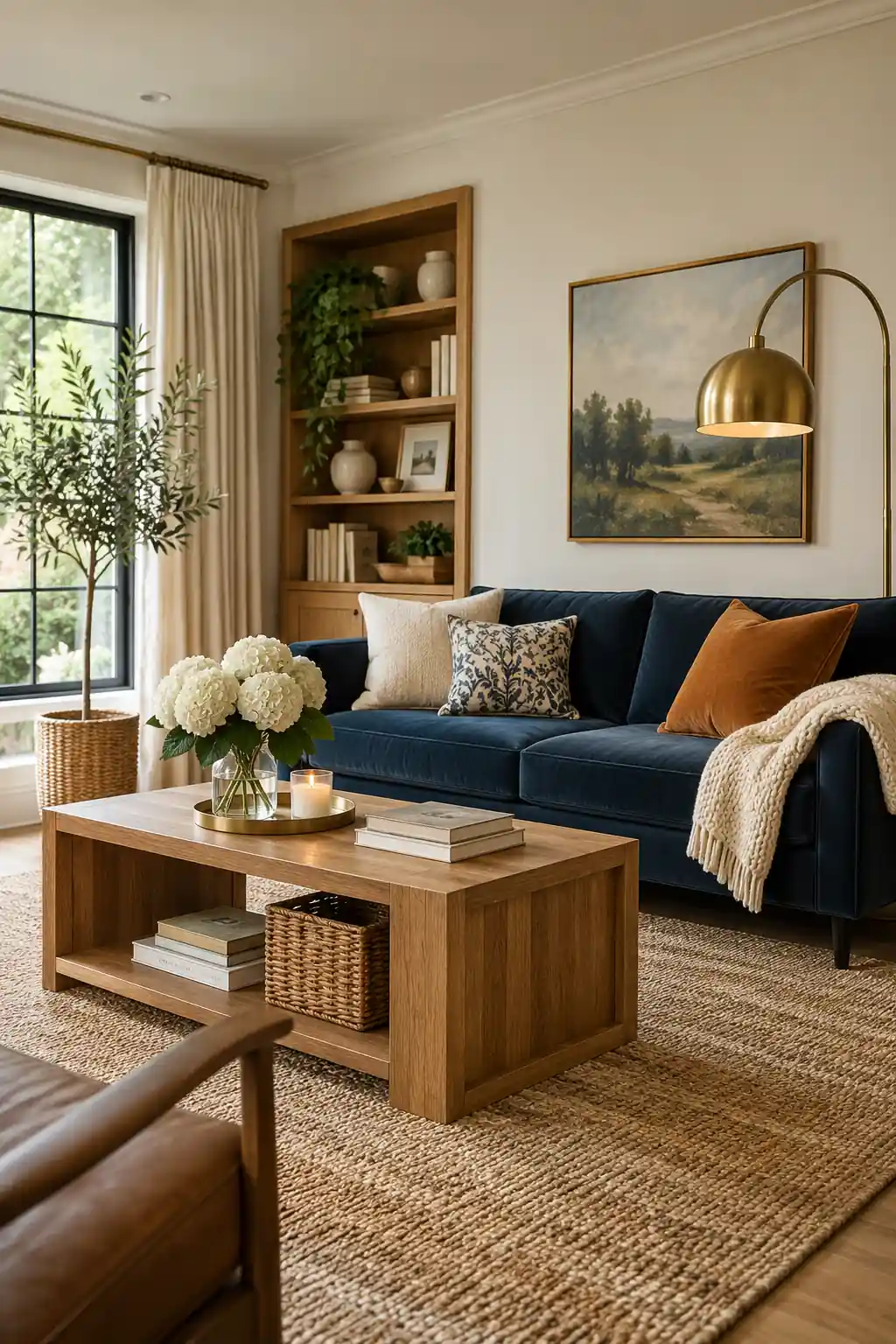
The dark blue sofa separates clearly from the pale walls. Oak furniture keeps the blue from dominating every surface. Try a blue fabric sample beside your floor and curtains before choosing a large upholstered piece.
Use brass in one or two visible fittings. Existing handles and lamp finishes do not all need replacing. Compare finishes in person because polished, brushed and aged brass look different.
Choose lamp placement according to the seat that needs light. A tall fitting should not shine straight into a seated person’s eyes. Cream or brown cushion covers can connect the sofa with the wood without adding another strong color.
Terracotta accents with a textured wall
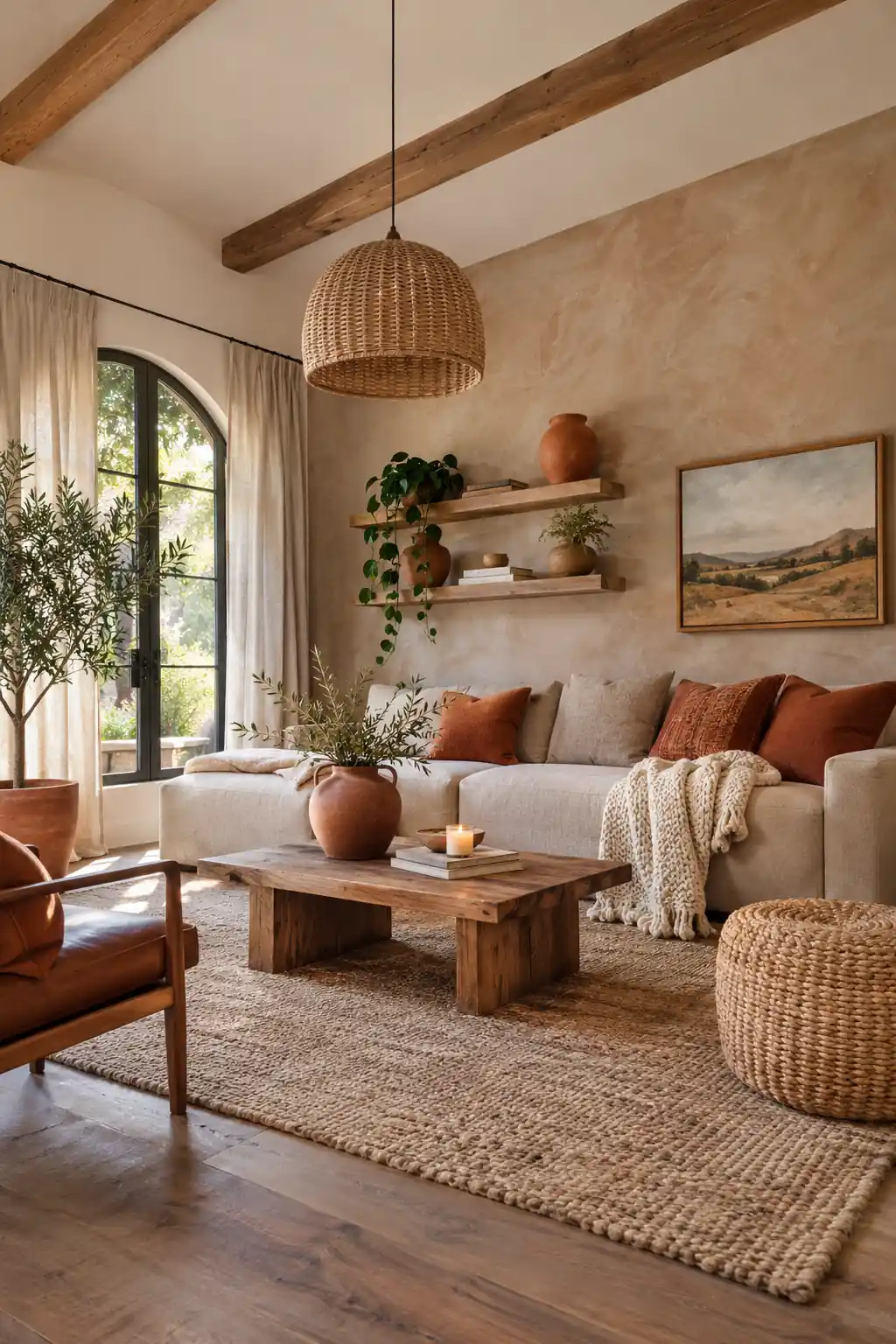
Terracotta appears in the cushions and pots, so the color repeats without covering every wall. Start with movable textiles if you are uncertain. Check them beside the flooring and sofa in the same light.
The wall texture is a visual example, not a finish specification. Ask for a sample panel and application guidance before committing to plaster or a decorative coating. Existing wall condition affects the work.
Use only one larger pot near the seating if floor space is limited. Protect the floor against moisture and check the plant’s light needs. You can use the palette with ordinary painted walls and keep the same furniture arrangement.
Black and white with chrome and marble
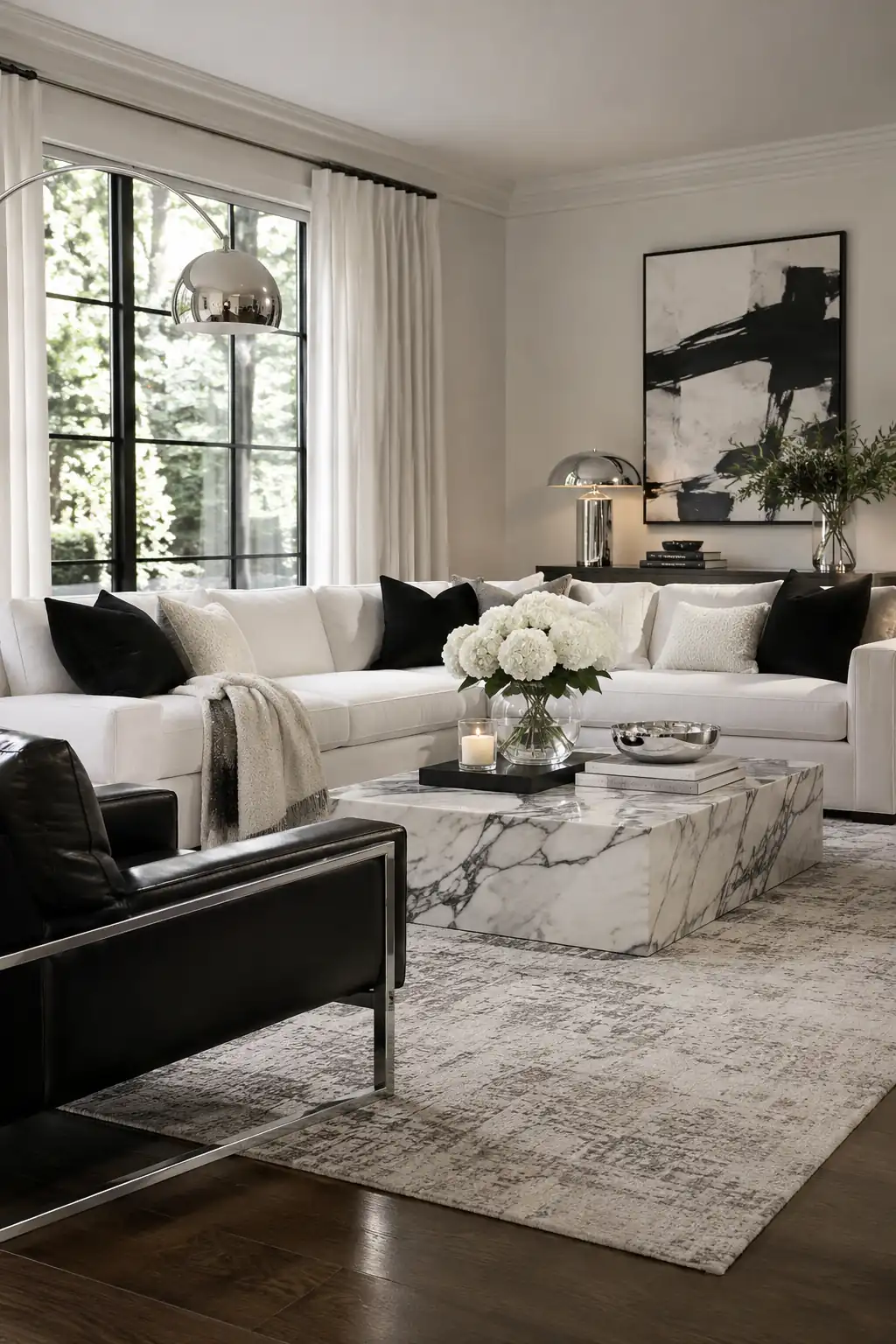
The white sofa and black chair create contrast, while the rug and throw soften the change between them. Start with the furniture you own. A black frame or lamp can introduce contrast without replacing the seating.
Check marble care before choosing it for a coffee table. Coasters and quick spill cleanup may be needed, depending on the material and finish. A stone-look surface may have different cleaning instructions.
Chrome reflects windows and lamps, so check glare from the main seats. Leave some matte surfaces among the reflective pieces. Keep the table size practical; a heavy block that looks balanced in an image can overwhelm a smaller room.
Living room decor ideas to plan before shopping
Write down what currently causes trouble: glare, missing storage, awkward seating or a blocked route. Solve that problem before buying the decorative pieces shown in an image.
Measure the furniture and delivery route, including stairs and door openings. Test paint and fabric samples in the room. Choose the rug after checking the seating footprint, then position lamps where they are needed.
Change one large surface at a time. You can judge a new rug or wall color more clearly before adding cushions and ornaments. For more color and material combinations, compare these living room layouts and styles.

Written by Stephanie Fallis
Mom and homemaker who shares budget friendly DIY projects, decorating tips and gardening ideas for busy families.
More about me → UncategorizedWayfair coffee bar ideas for choosing useful pieces
 UncategorizedEarthy living room ideas for color, wood and texture
 UncategorizedCoffee bar ideas for an easier morning routine