
An organic modern dining room combines natural textures with clean, contemporary lines. This style favors raw wood, soft curves, and calm neutral tones. Homeowners choose it to create a space that feels grounded and warm. The look suits small breakfast nooks and large formal rooms alike. It works well for families who want function without giving up style.
Interior designers describe this trend as a bridge between minimalism and nature. However, it never feels cold or empty. Additionally, it pulls from Japandi and coastal influences without copying either style directly. Furniture stays simple, but materials carry visual interest. Meanwhile, lighting and textiles soften every hard edge in the room. This blend keeps the room feeling personal rather than showroom perfect.
This guide walks through practical ways to bring this look into any dining space. Each idea covers materials, color, and layout choices that work together. As a result, readers can mix and match ideas based on their own room size and budget. The following sections cover furniture, lighting, textures, and finishing touches. Together, they build a dining room that feels calm, current, and easy to live in.
Choose a Natural Wood Dining Table
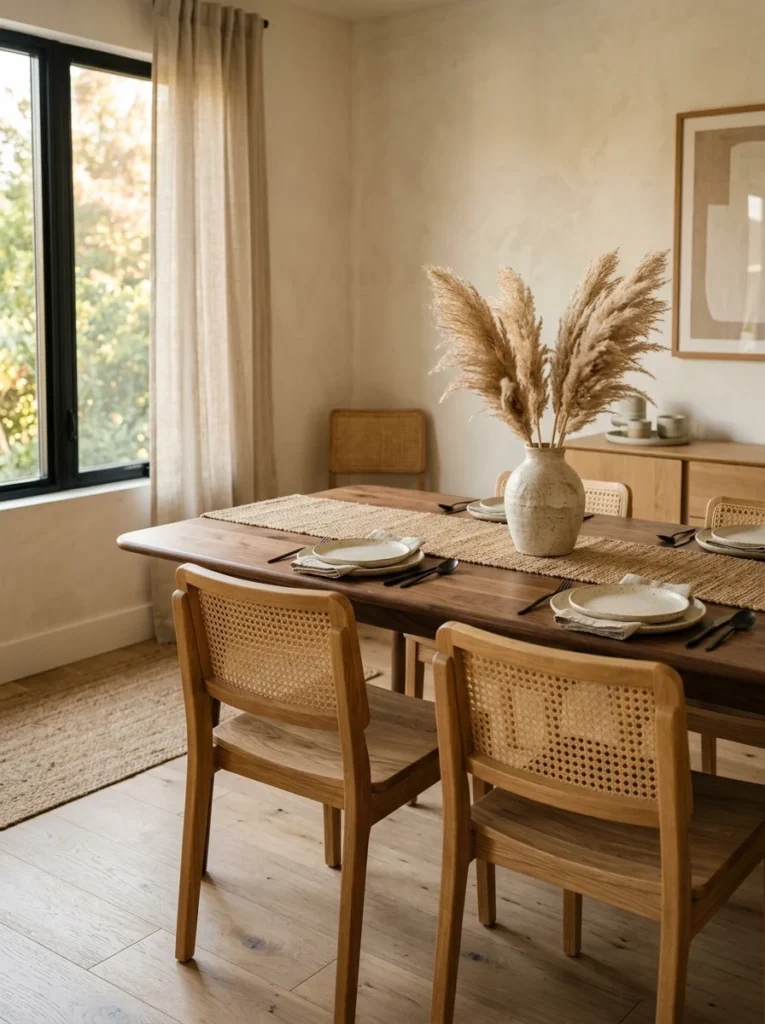
A solid wood table anchors any organic modern dining room. Oak, walnut, and ash bring warmth without feeling heavy. Choose a table with clean lines and minimal ornamentation. Live-edge or gently rounded corners add softness to the design. This piece sets the tone for every other choice in the room. Additionally, a wood table pairs easily with metal, stone, or woven accents. Keep the finish matte rather than glossy for a more natural feel. A lighter wood tone opens up smaller rooms, while darker wood grounds larger spaces. Either way, the table should feel substantial and grounded. This approach keeps the organic modern dining room look authentic and lasting.
Add Curved, Soft-Edged Furniture
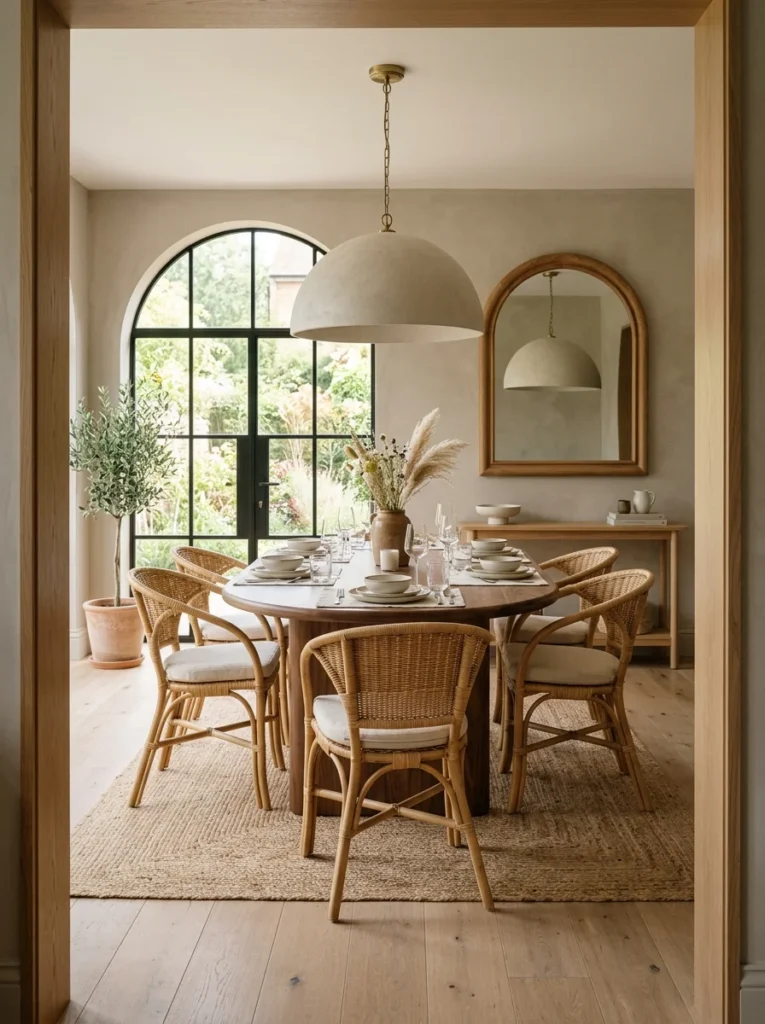
Curves soften the geometry in an organic modern dining room. Rounded chair backs, oval tables, and arched mirrors all work well together. However, curves should not compete with the room’s clean structure. Choose one or two curved pieces rather than filling the room with rounded shapes. A curved chandelier or an arched doorway can carry this theme without extra furniture. Soft edges make a space feel more welcoming and less rigid. Meanwhile, straight lines in the walls or windows keep the room from feeling overly soft. This balance between curved and straight forms defines the style. It creates a room that feels calm rather than sharp.
Stick to a Warm Neutral Color Palette
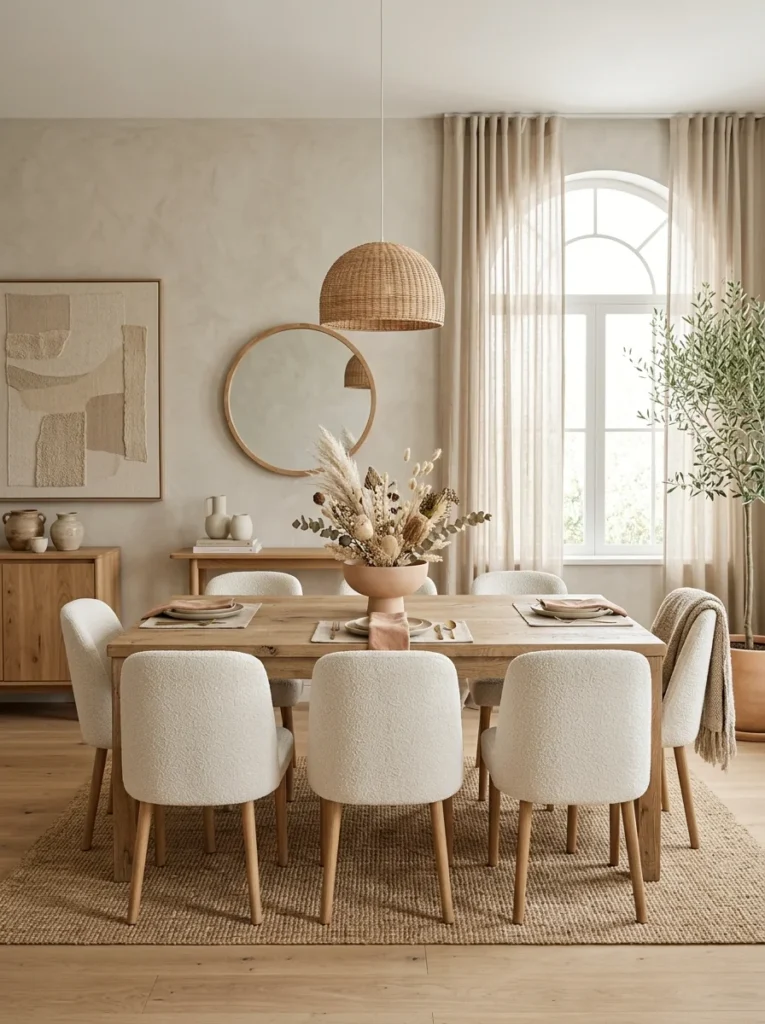
Warm neutrals form the backbone of most organic modern dining rooms. Think cream, sand, taupe, and soft greige tones. These colors let natural materials stand out without visual clutter. Additionally, warm whites keep the room bright while still feeling cozy. Avoid stark, cool whites, since they can feel clinical in this style. Add depth with one or two deeper tones, such as terracotta or olive. Paint the walls in a matte or limewash finish for texture. This palette works well with wood, stone, and woven materials. As a result, the color scheme feels calm and cohesive throughout the space.
Bring In Woven and Rattan Dining Chairs
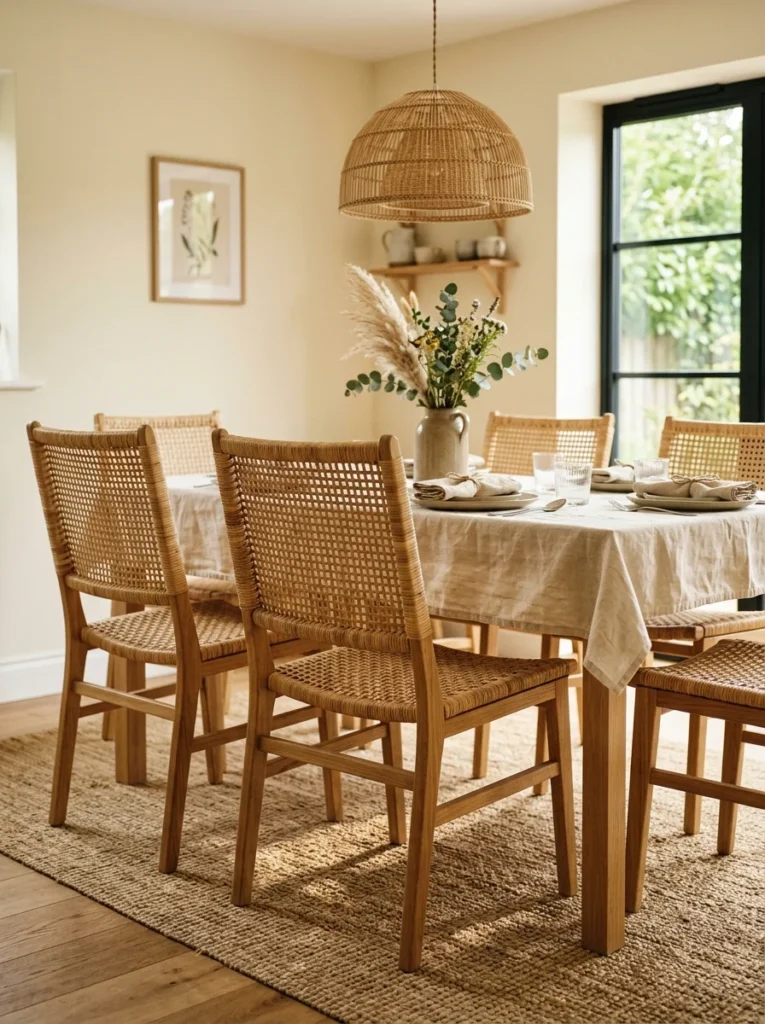
Woven dining chairs add texture and a handmade feel to the room. Rattan, cane, and rush seating all work well in this style. These materials pair beautifully with a wood table and neutral walls. Additionally, woven chairs feel lighter than upholstered ones, which helps in smaller rooms. Choose chairs with simple, straight frames to keep the look modern rather than rustic. Mixing dining chairs with a bench adds visual variety. This combination keeps the room from feeling too matchy. Woven textures also bring a subtle organic quality without adding pattern or color.
Hang a Sculptural Organic Pendant Light
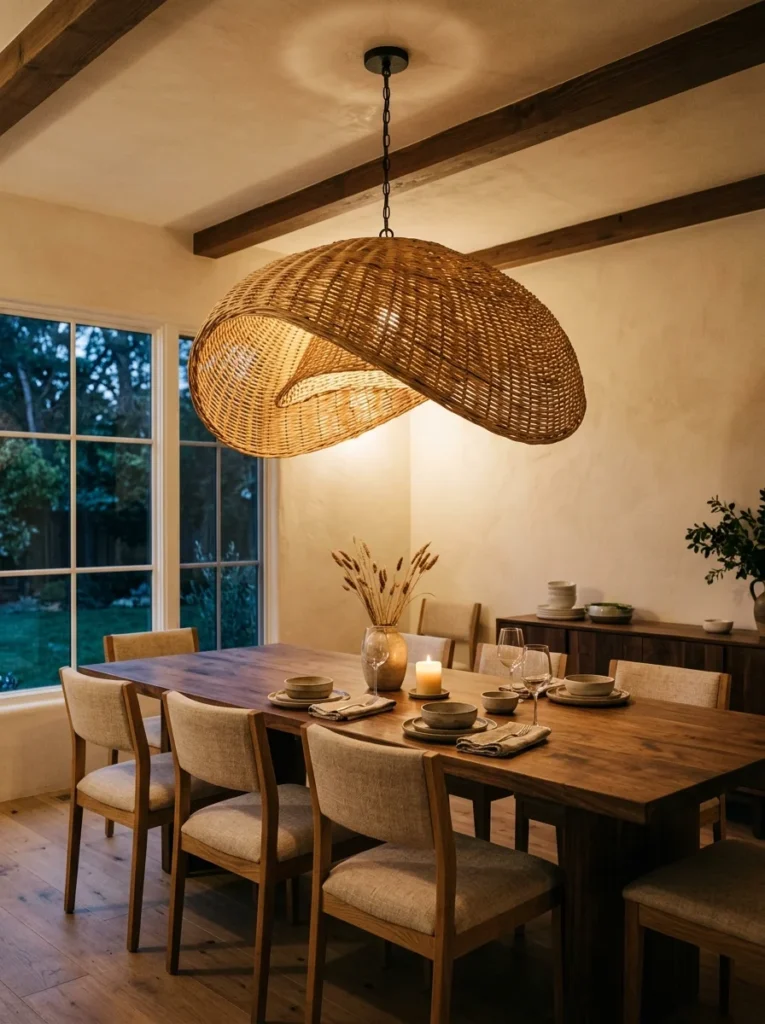
Lighting becomes a focal point in an organic modern dining room. A sculptural pendant in raw clay, paper, or woven rattan adds interest overhead. Choose a fixture with an irregular shape rather than a rigid geometric one. This piece should hang low enough to define the dining area. Additionally, warm bulb tones keep the mood soft in the evening. A single statement fixture works better than several small lights. This keeps the ceiling from feeling cluttered. The right pendant ties the whole room together and adds a sense of craftsmanship.
Add Textured Plaster or Limewash Walls
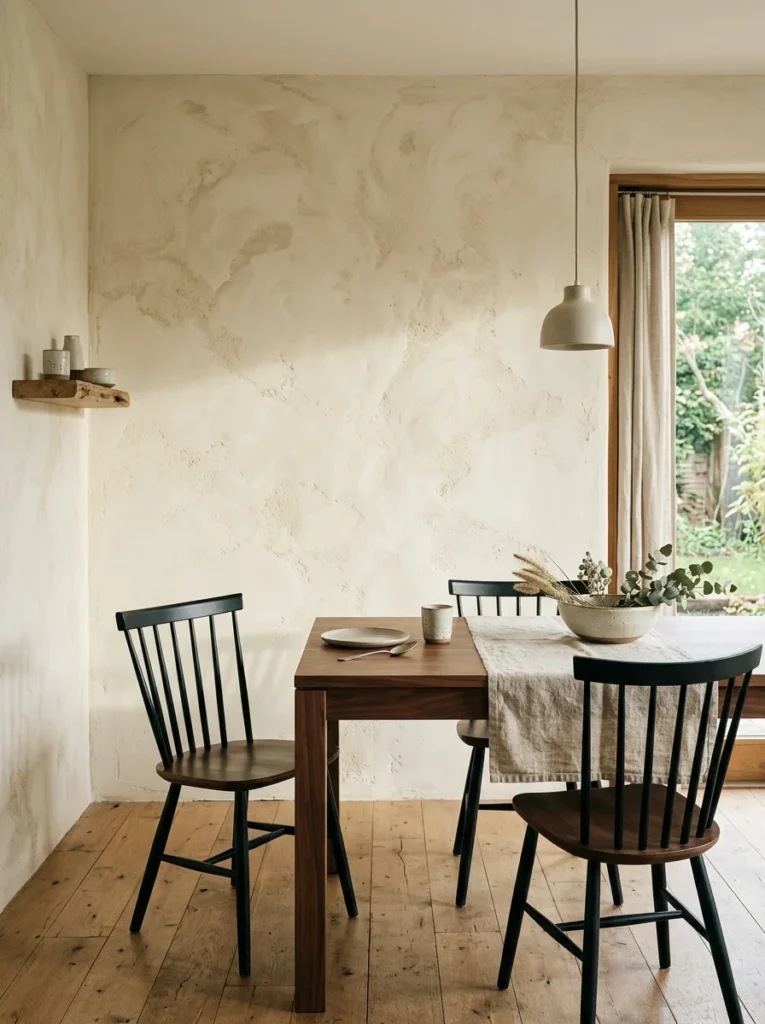
Textured walls give an organic modern dining room depth and character. Limewash paint creates soft, cloud-like variation across the surface. Plaster finishes add a tactile quality that flat paint cannot match. These finishes work especially well behind a sideboard or dining table. However, keep the color within the same warm neutral family as the rest of the room. This prevents the texture from becoming a distraction. Textured walls also reflect light differently throughout the day. As a result, the room feels alive rather than static.
Incorporate Stone or Travertine Accents
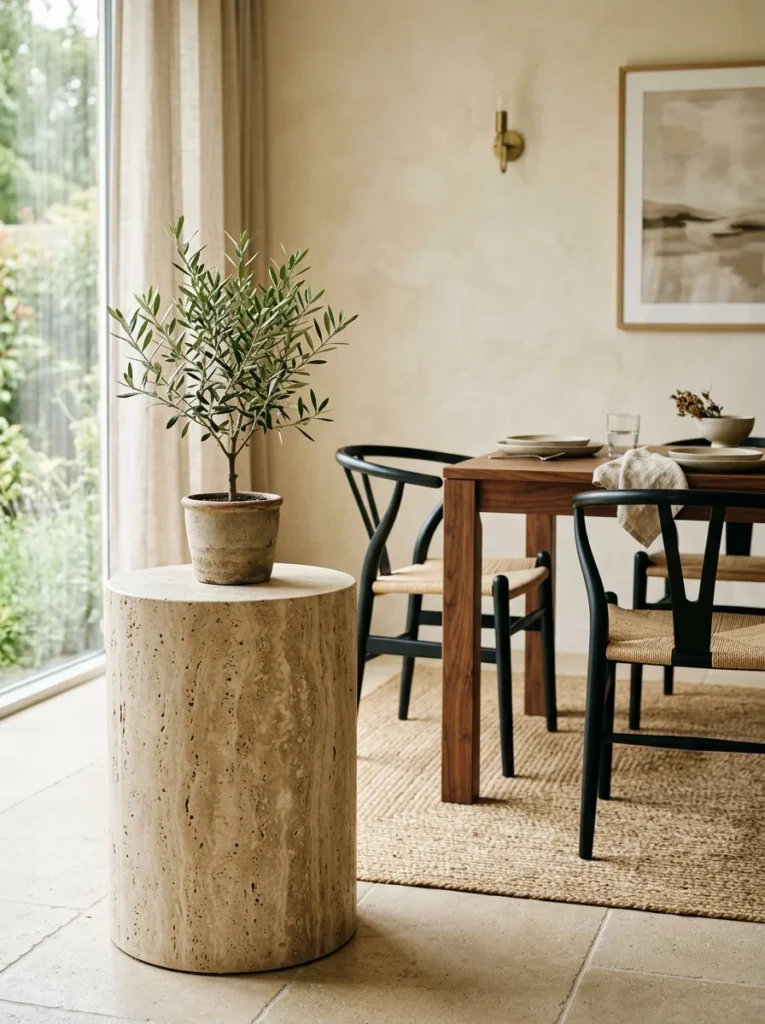
Stone brings an earthy, grounded quality to organic modern dining rooms. Travertine works well for a side table, plinth, or even a dining table base. Its natural veining adds visual interest without extra decoration. Additionally, stone pairs beautifully with wood and woven textures already in the room. Choose honed rather than polished stone for a softer, more organic look. A small stone stool or accent table can serve as a plant stand. This detail adds weight and permanence to the space. Stone accents also age gracefully, which suits the timeless feel of this style.
Dress the Table With Linen Textiles
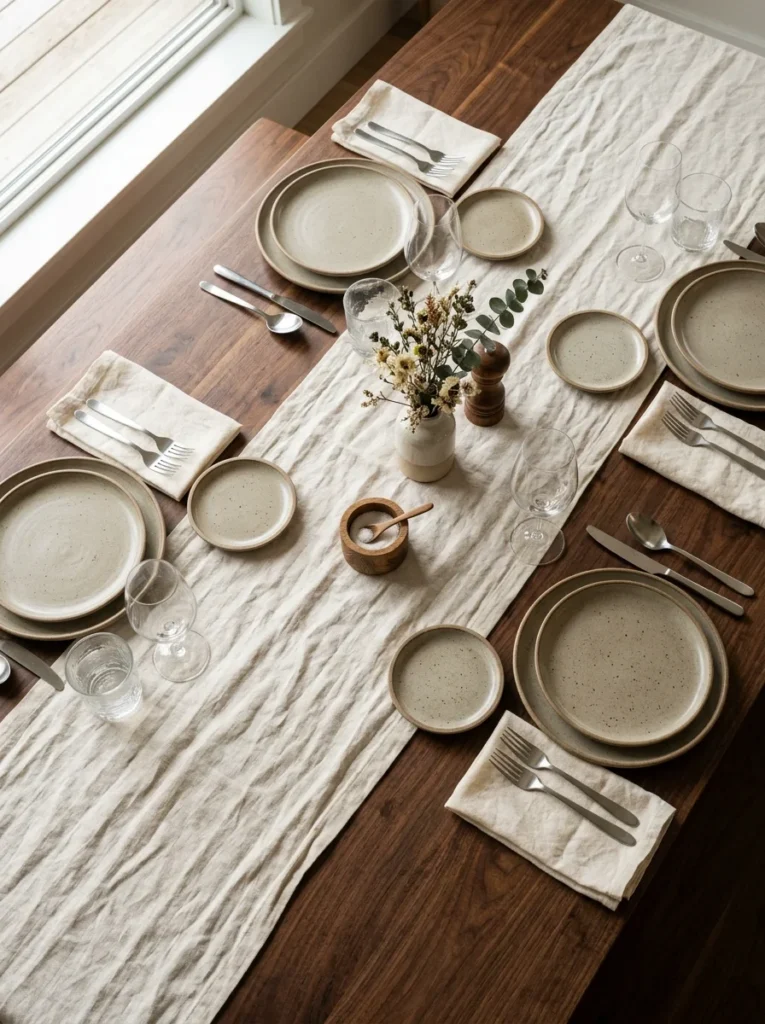
Linen napkins and table runners add softness to a wood dining table. This fabric wrinkles naturally, which suits the relaxed nature of organic modern design. Choose linen in neutral or muted tones to match the room’s palette. Additionally, linen runners work well for everyday use and special occasions alike. For seasonal styling, a table runner and centerpiece can shift the look quickly, similar to ideas found in this guide to seasonal table styling. Layering textiles this way keeps the table from feeling bare between meals. Natural fabric also feels warmer underfoot than synthetic blends.
Layer Natural Fiber Rugs
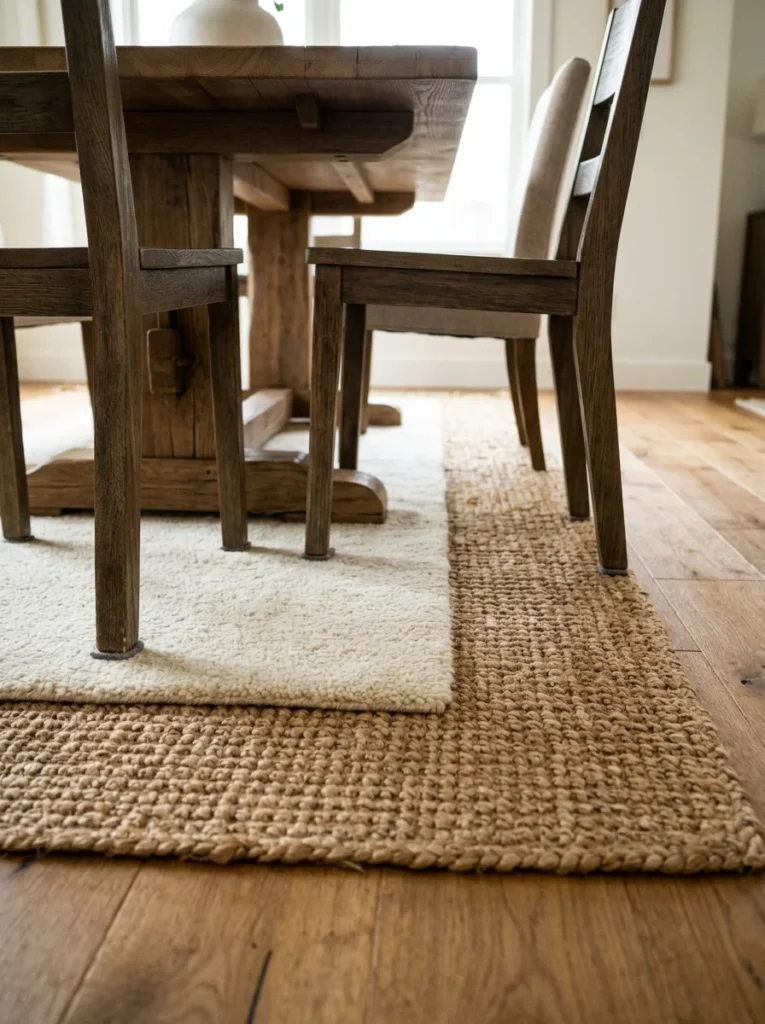
A jute or sisal rug adds texture underfoot in the dining area. These natural fibers fit the organic modern aesthetic better than synthetic rugs. Layering a smaller wool rug on top adds softness for bare feet. Additionally, natural fiber rugs hide crumbs and stains better than light-colored synthetic options. Choose a rug large enough to fit under all the chairs, even when pulled out. This keeps the dining area feeling grounded and complete. Natural rugs also add warmth to rooms with hardwood or stone flooring.
Style With Handmade Ceramic Vases
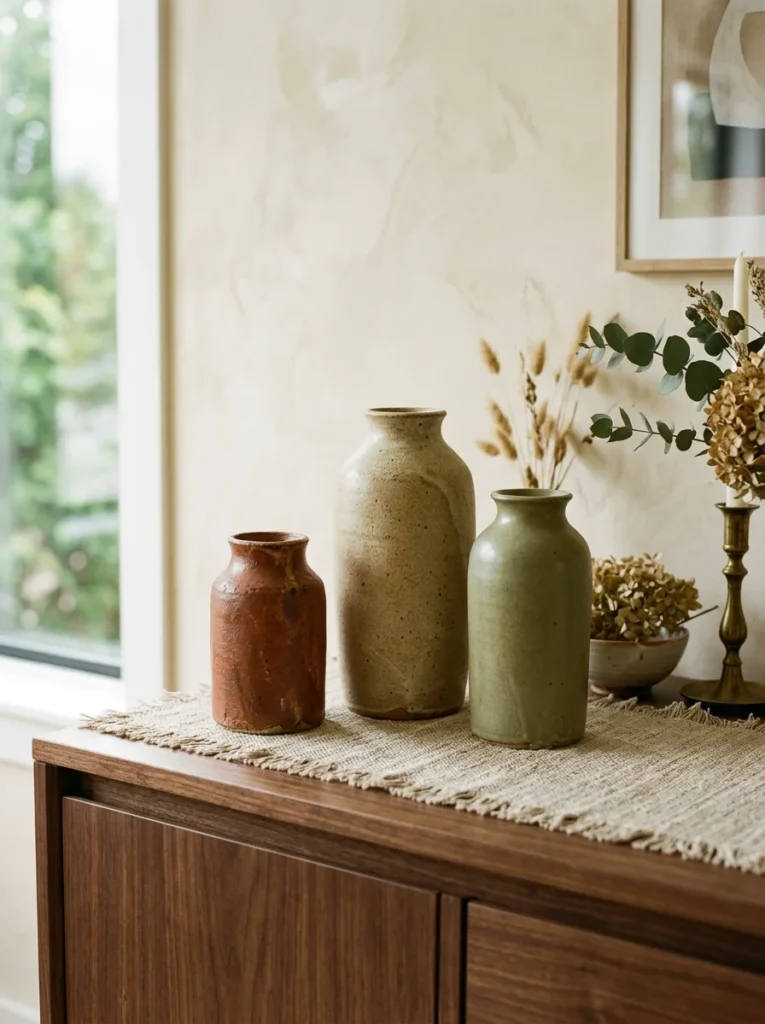
Ceramic vases in earthy glazes add a handcrafted touch to the room. Choose pieces with irregular shapes or visible texture rather than perfectly smooth surfaces. These vases work well on the table, sideboard, or a nearby shelf. Additionally, grouping two or three vases of different heights creates a simple vignette. Keep the color palette limited to two or three earthy tones. This keeps the display looking curated rather than cluttered. Handmade ceramics also support the organic feel by showing small imperfections in the glaze.
Add Dried Botanicals as a Centerpiece
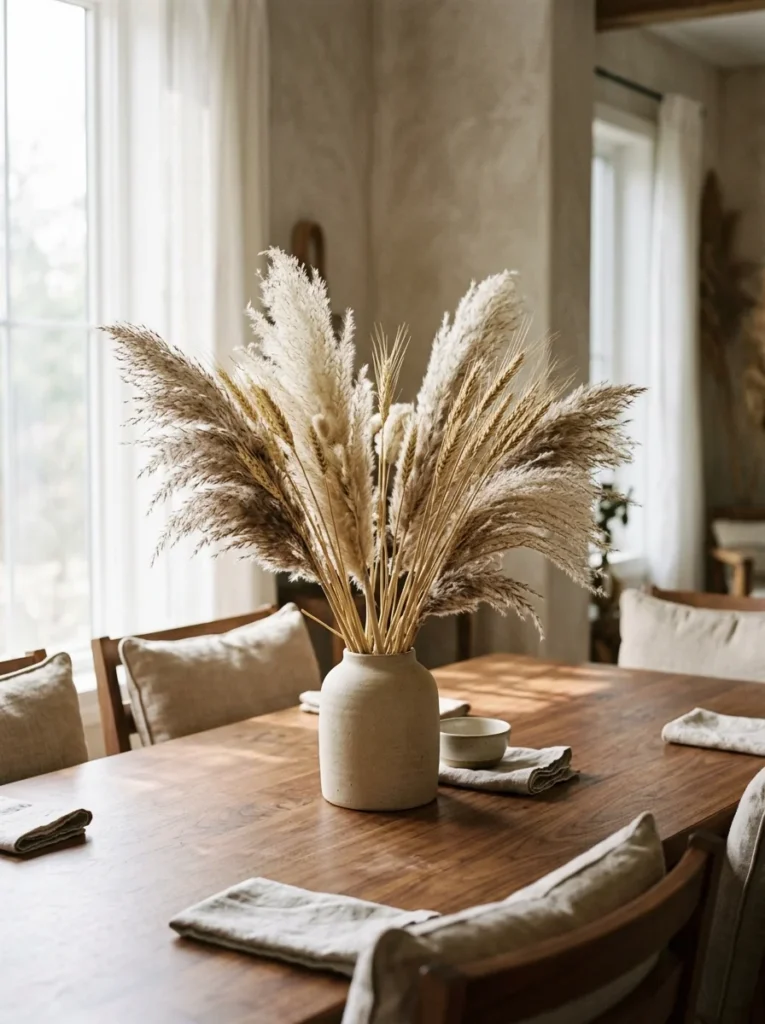
Dried branches, pampas grass, or wheat stems make an easy centerpiece. These botanicals need no water and last for months without wilting. Additionally, dried arrangements fit the earthy, muted palette of organic modern rooms. Choose a simple ceramic or glass vase to hold the display. Keep the arrangement loose rather than tightly bunched for a natural look. For inspiration on seasonal centerpiece styling, this guide to indoor fall decor ideas offers useful pairings. Dried botanicals also work well alongside candles for evening dinners.
Mix Wood Tones for Depth
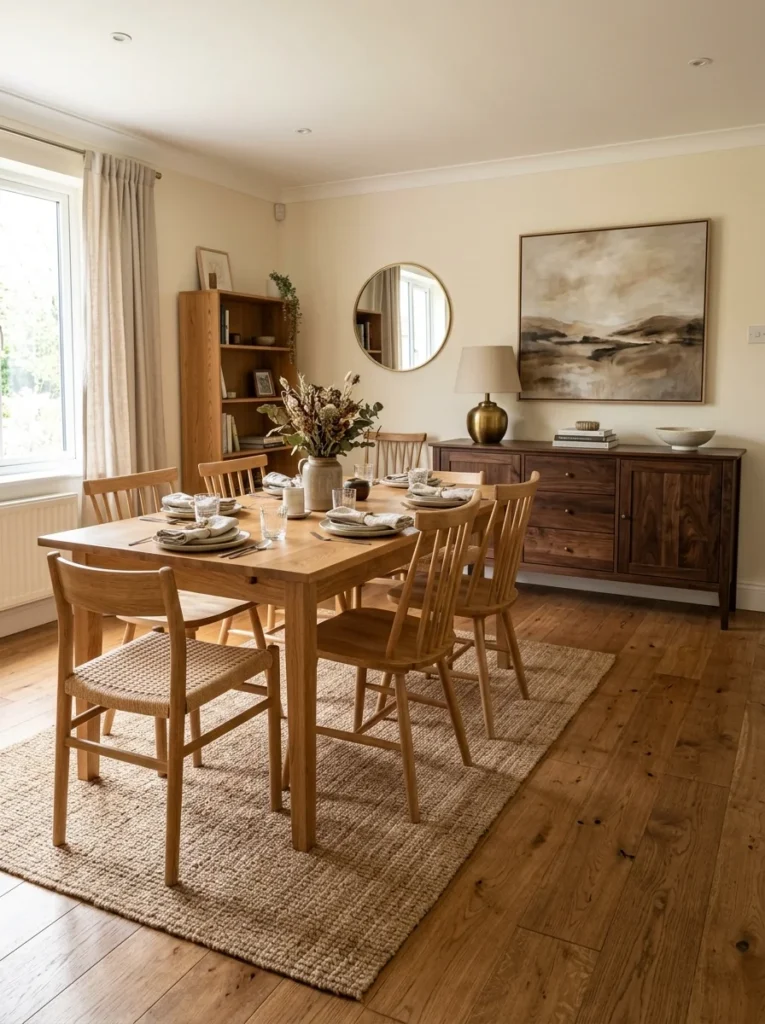
Mixing two or three wood tones adds depth without feeling mismatched. A lighter oak table can pair with a darker walnut sideboard. Additionally, wood flooring in a different tone than the furniture keeps the room from feeling flat. Keep undertones consistent, either warm or cool, across all wood pieces. This small detail prevents the mixed tones from clashing. Wood chairs, a wood table, and a wood shelf can all differ slightly and still look intentional. This layered approach mirrors how natural materials appear in real forests and landscapes.
Let in Natural Light With Large Windows
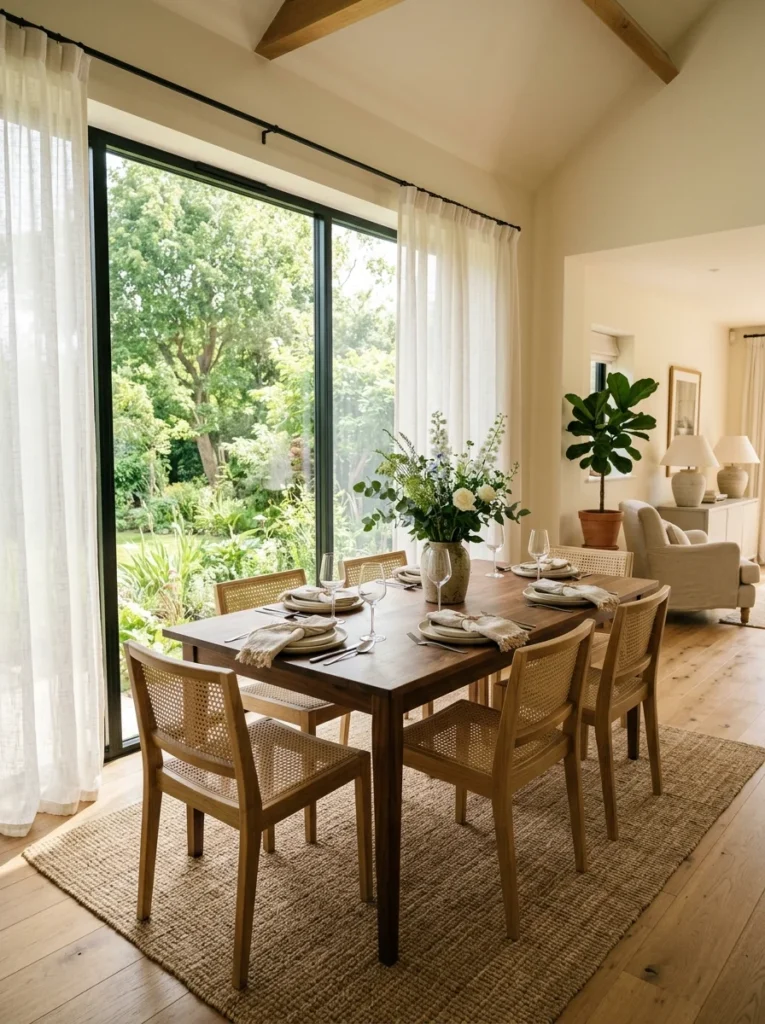
Natural light plays a major role in organic modern dining rooms. Large windows or sliding doors bring the outdoors closer to the table. Additionally, sheer linen curtains soften direct sunlight without blocking the view. Keep window treatments simple and light in color. This allows the room to feel bright throughout the day. If the dining room lacks large windows, mirrors can help bounce available light around the space. Good natural light also makes wood tones and textures look richer.
Add Greenery and Potted Plants
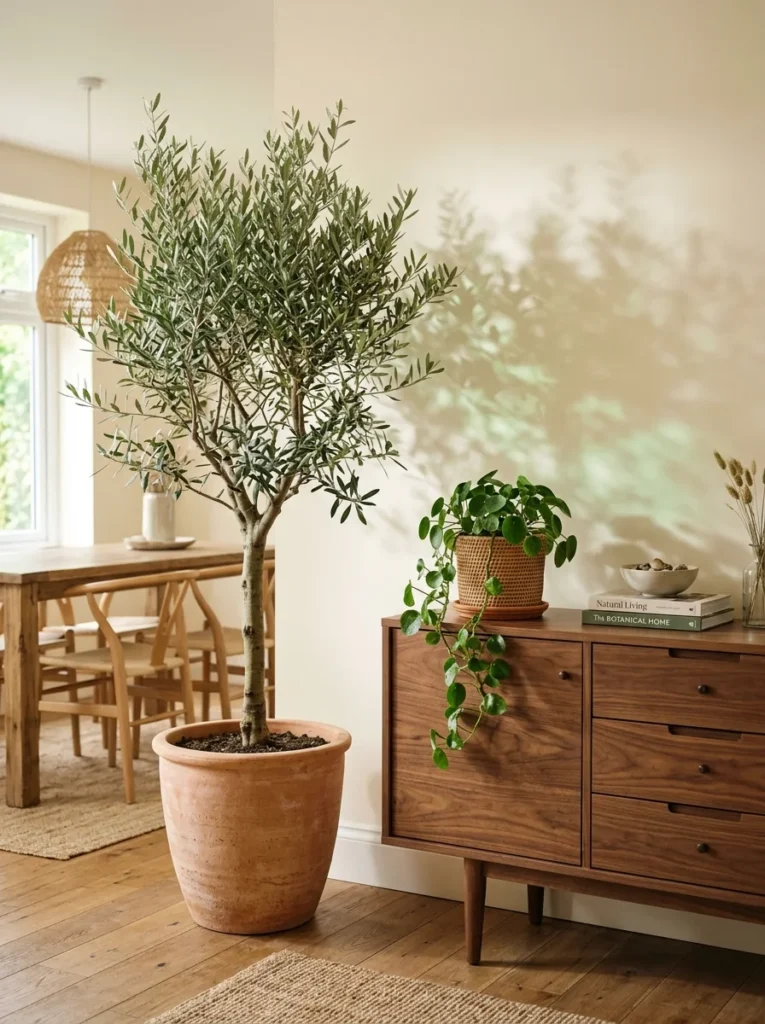
A potted plant brings life and softness to any dining room corner. Fiddle leaf figs, olive trees, and snake plants all suit this style. Additionally, a trailing plant on the sideboard adds a relaxed, natural touch. Choose planters in terracotta, stone, or woven baskets to match the room’s materials. Keep plant placement away from the direct dining path to avoid crowding. Greenery also helps soften hard corners and empty wall space. This detail keeps the organic modern dining room feeling fresh rather than static.
Choose Handmade Pottery Tableware
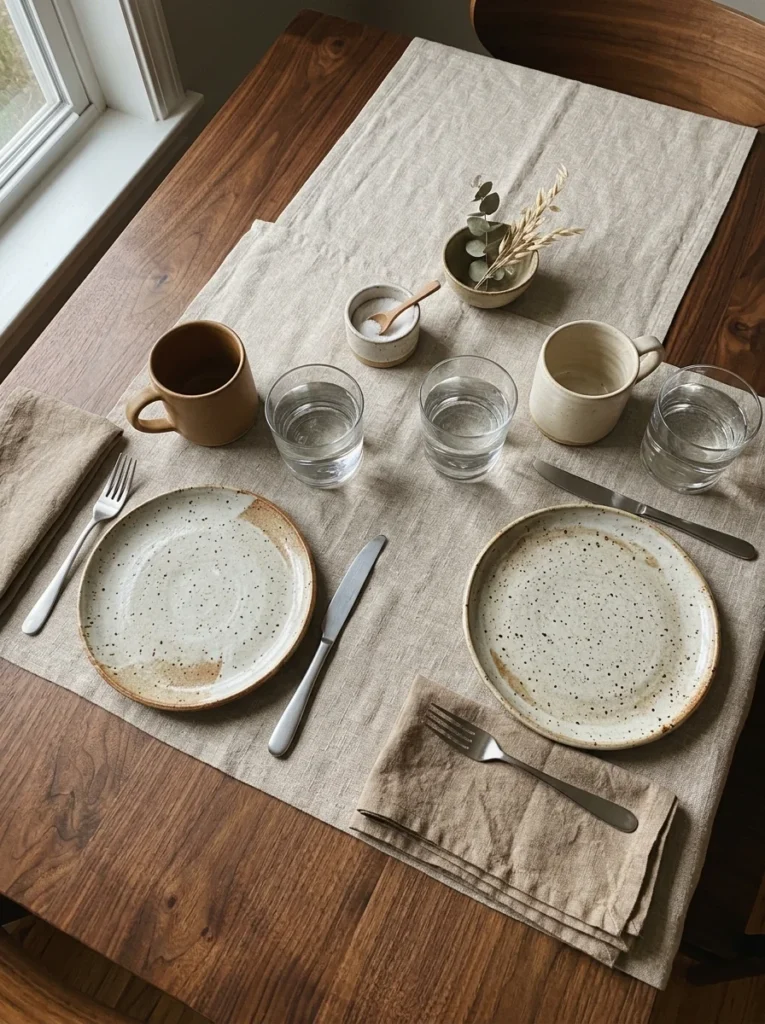
Stoneware plates and mugs add texture to the dining table itself. Choose pieces with speckled glazes or matte finishes for an earthy feel. Additionally, mismatched but coordinated pottery looks more collected than a matching set. This approach works well for both everyday meals and formal dinners. For formal dining room setups during the holidays, pairing handmade pottery with simple glassware keeps the table from feeling too ornate, an idea explored further in this guide to formal dining room setups. Textured tableware also photographs beautifully for those who enjoy styling tablescapes.
Add a Minimalist Wood Sideboard
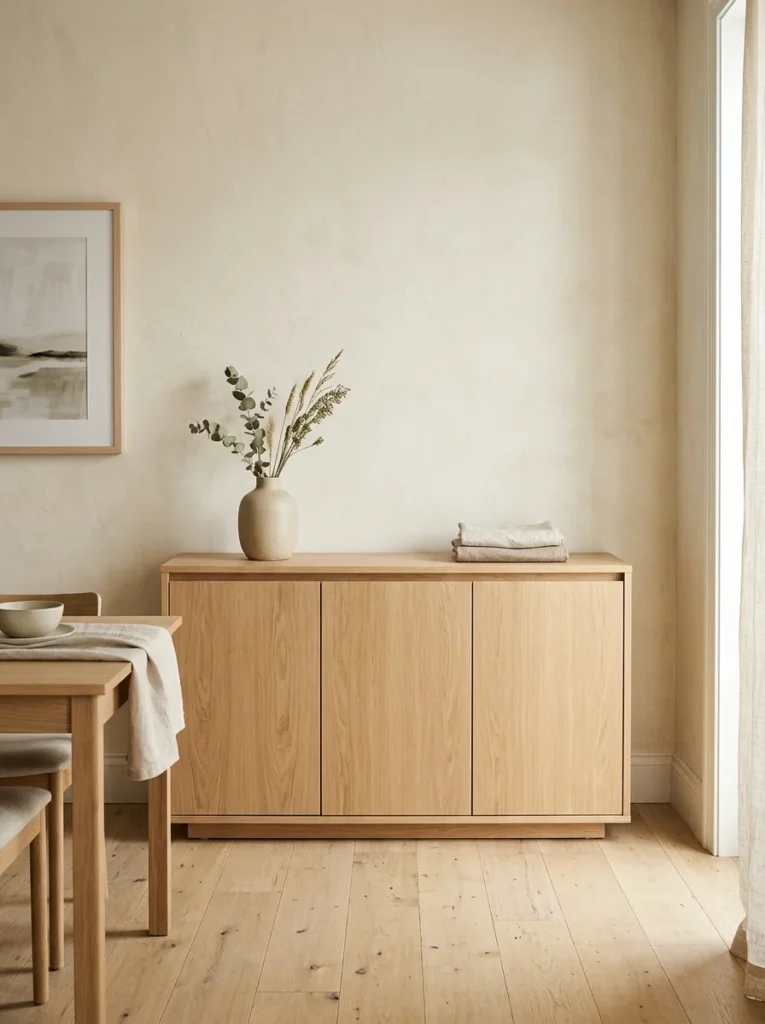
A simple wood sideboard offers storage without breaking the room’s clean lines. Choose a piece with slab doors and no ornate hardware. Additionally, a sideboard gives extra surface space for vases, candles, or serving dishes during meals. Keep the top styled with only two or three objects at a time. This restraint keeps the room feeling calm rather than crowded. A sideboard in a lighter wood tone can also brighten a darker dining room. This piece works as both storage and display space.
Bring In Warm Brass or Bronze Accents
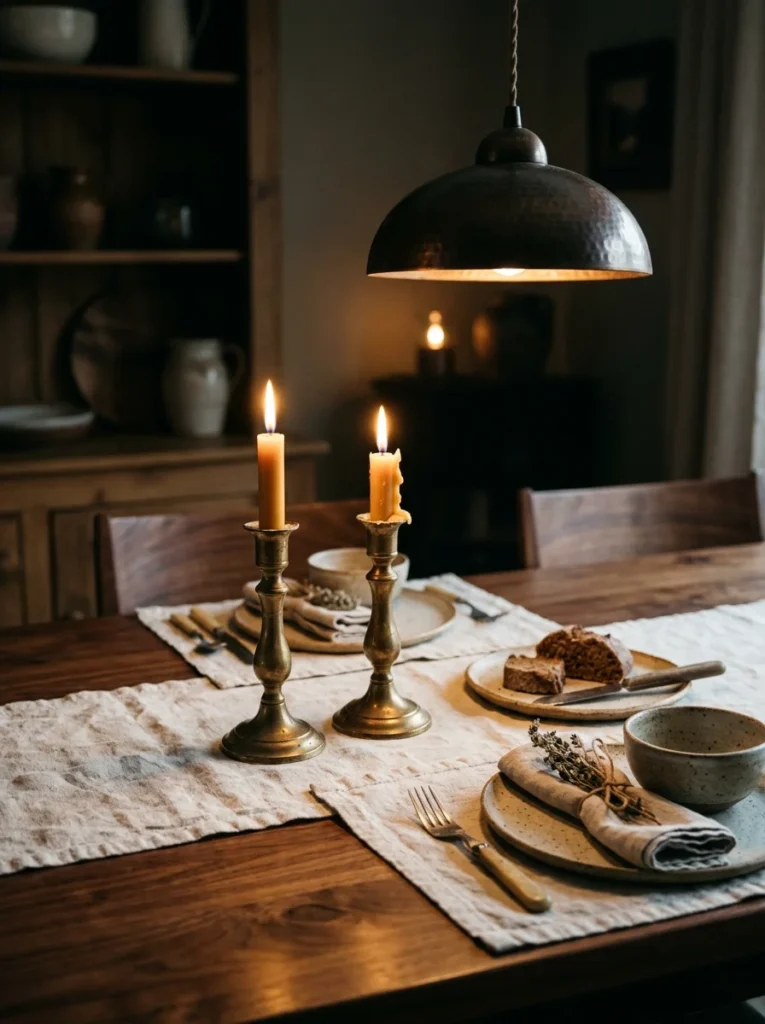
Warm metals add a subtle shine against all the natural materials in the room. Brass candlesticks, bronze drawer pulls, or a bronze light fixture all work well. Additionally, these metals age gracefully and develop a soft patina over time. Keep metal accents limited to two or three pieces to avoid overpowering the space. A brushed or aged finish suits this style better than a bright, polished one. For luxury holiday styling that still fits an earthy palette, warm brass details pair beautifully with dried greenery, as shown in this guide to luxury holiday styling. This small detail adds a refined touch to the room.
Add a Textured Mirror or Wall Art
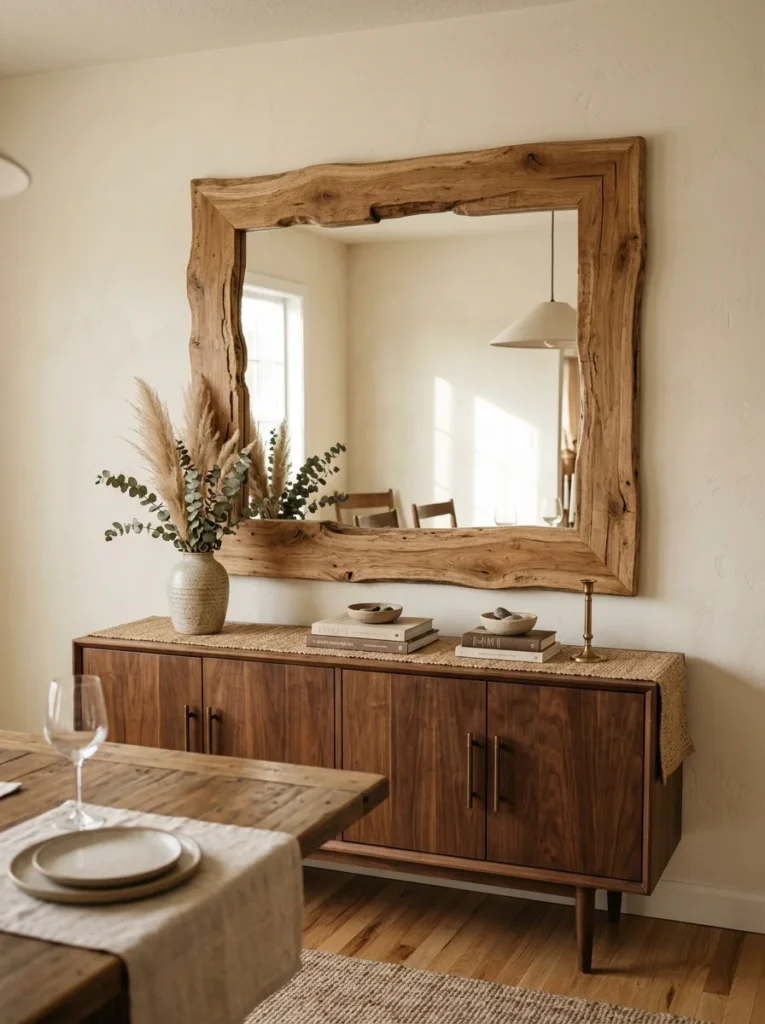
A mirror with a raw wood, rattan, or stone frame adds texture to a bare wall. Additionally, mirrors help bounce light around the dining space. Choose an organic or irregular shape rather than a perfectly round or square frame. Botanical prints or abstract earthy artwork also work well in this style. Keep the art palette consistent with the room’s neutral tones. A single large piece often works better than several small frames. This keeps the wall from feeling too busy.
Include a Cozy Upholstered Bench
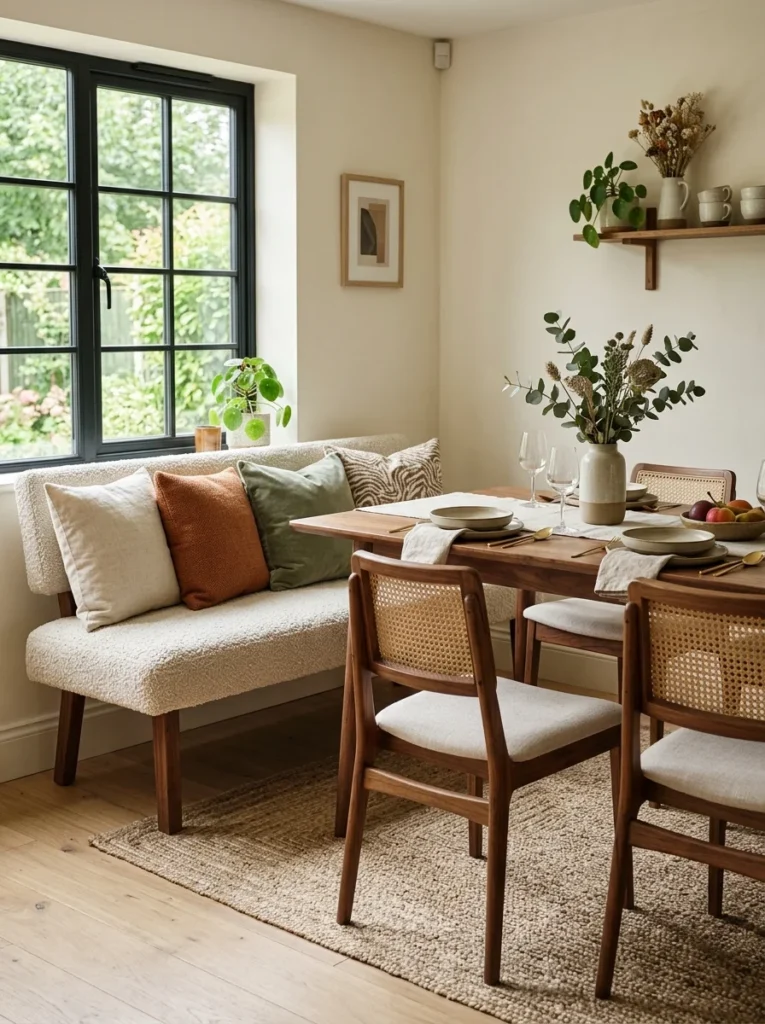
A bench on one side of the table adds comfort and flexibility. Choose a bench upholstered in boucle, linen, or a nubby woven fabric. Additionally, a bench allows more people to sit comfortably during larger gatherings. Pair it with a few textured cushions for added comfort. This seating option also softens the look of a room filled with wood furniture. A bench works especially well in smaller dining nooks where chairs might feel bulky. This detail adds both function and warmth to the space.
How to Choose an Organic Modern Dining Room Color Palette
Start with a base of warm neutrals like cream, sand, and taupe. Additionally, add one earthy accent color, such as olive, rust, or clay. Keep the palette limited to four or five tones total. This prevents the room from feeling busy or overdone. Test paint samples in natural light before committing to a wall color. Natural materials, like wood and stone, should carry most of the visual interest. Paint and textiles should support these materials rather than compete with them. For seasonal inspiration on shifting a neutral base, this guide to seasonal centerpiece ideas shows how small changes update the same palette.
Common Mistakes to Avoid in an Organic Modern Dining Room
Avoid mixing too many wood tones without a consistent undertone. This creates a mismatched, cluttered look rather than a layered one. Additionally, avoid stark white walls, which can feel cold against warm, natural materials. Skip glossy finishes on furniture and flooring, since matte surfaces suit this style better. Overfilling the table with decor also crowds the space. Keep centerpieces simple and rotate them seasonally instead of stacking multiple items. Finally, avoid ignoring lighting, since a harsh overhead bulb can undo an otherwise well-designed room.
Budget-Friendly Ways to Style an Organic Modern Dining Room
Anyone can bring this look home without a full furniture overhaul. Start with textiles, since linen napkins and a table runner cost little. Additionally, thrifted ceramic vases and secondhand wood chairs often carry the right texture already. A fresh coat of limewash paint costs far less than new furniture. Dried botanicals from a local market last for months and need no upkeep. Many of these updates are simple enough to do on your own over a single weekend. Small, gradual changes add up to a fully styled room over time.
FAQs About Organic Modern Dining Rooms
What makes a dining room organic modern? This style combines natural materials, curved furniture, and a warm neutral palette. It avoids ornate details while keeping the room feeling grounded and calm.
Is organic modern the same as Japandi? The two styles overlap but are not identical. Japandi leans more heavily on Scandinavian and Japanese minimalism, while organic modern allows more texture and warmth.
What colors work best in an organic modern dining room? Warm neutrals like cream, sand, and taupe form the base. One or two earthy accent colors, such as terracotta or olive, add depth.
Can a small dining room use this style? Yes, this style works well in small spaces. Lighter wood tones and simple furniture keep small rooms from feeling cramped.

Written by Stephanie Fallis
Mom and homemaker who shares budget friendly DIY projects, decorating tips and gardening ideas for busy families.
More about me → Christmas ideas10 Christmas Chair Decoration Ideas for a Charming Home
 Christmas ideas11 Christmas Coaster Ideas for a Charming Table
 Christmas ideas13 Christmas Bucket Ideas for a Charming Home