
Great ideas for dorm essentials turn a tiny shared space into a comfortable home base. Every dorm room ships with a bed, a desk, and barely any storage. Students need smart furniture, personal touches, and clever organization to make the space work. This guide covers pieces that save floor space and still feel stylish. Each idea fits typical dorm rules and budgets.
This list leans toward a modern, cozy aesthetic that suits any gender or major. Warm textiles, natural wood tones, and soft lighting bring comfort without clutter. Additionally, every item respects strict dorm regulations on nails, paint, and open flames. Removable adhesives and freestanding furniture keep security deposits safe. Meanwhile, layered textures and personal decor items add character to a plain room.
The following eighteen dorm essentials cover sleep, storage, study, and style. Each section explains why the piece works and how to use it well. However, students can mix and match based on room size and roommate agreements. As a result, this list works for a single dorm room or a shared double. Read on for practical dorm essentials that fit any budget.
In this post: 18 ideas
- Storage Bed with Under-Bed Bins
- Loft Bed for Extra Floor Space
- Compact Desk Nook for Study Time
- Wall-Mounted Floating Shelves
- String Lights for a Cozy Glow
- Layered Area Rugs for Warmth
- Folding Privacy Screen You Can Do on Your Own
- Command Center Whiteboard and Calendar
- Multi-Functional Storage Ottoman
- Gallery Wall Above the Desk
- Layered Curtains for Light Control
- Compact Mini Fridge Station
- Closet Organizer System
- Small Reading Nook Corner
- Removable Wallpaper Accent Wall
- Charging Station and Cable Management
- Personal Plant Corner
- DIY Bed Tent for Extra Privacy
1. Storage Bed with Under-Bed Bins
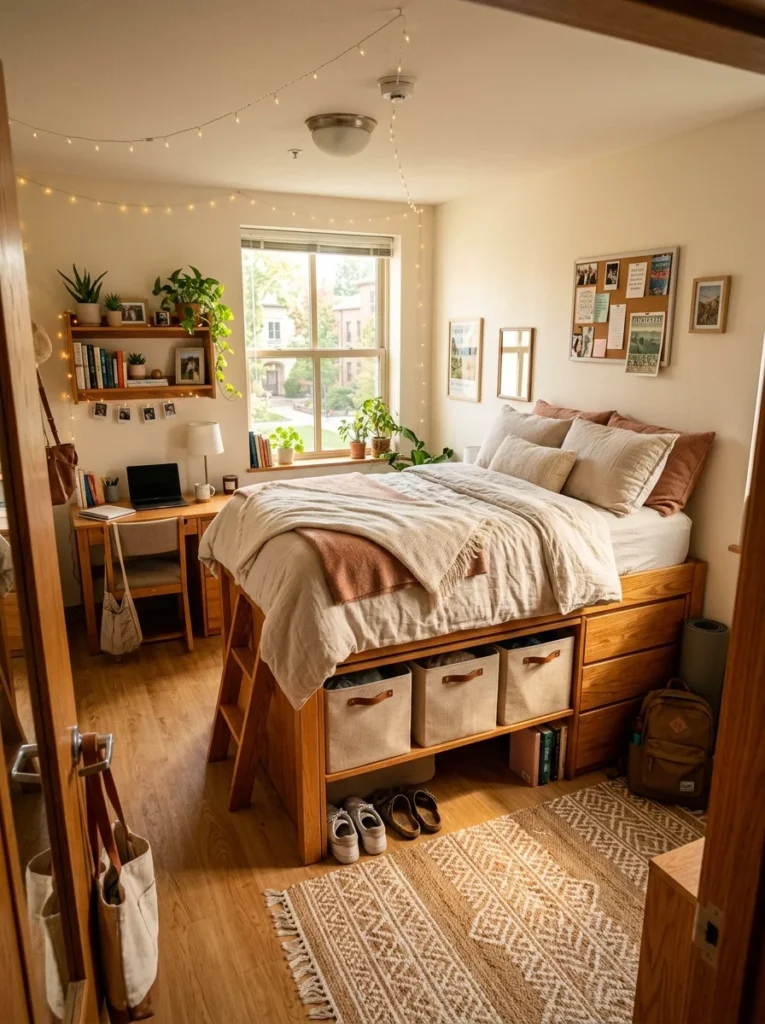
A storage bed solves the biggest dorm problem right away: limited floor space. Raised platform frames leave room underneath for stackable bins, suitcases, or a small dresser. Canvas or woven bins hide clutter while keeping items easy to reach. Neutral bedding in cream or oatmeal tones keeps the corner calm. For extra storage without buying new furniture, students can pair a bed riser kit with the dresser ideas already fitting the room’s layout. This setup works well in both single and shared dorm rooms.
2. Loft Bed for Extra Floor Space
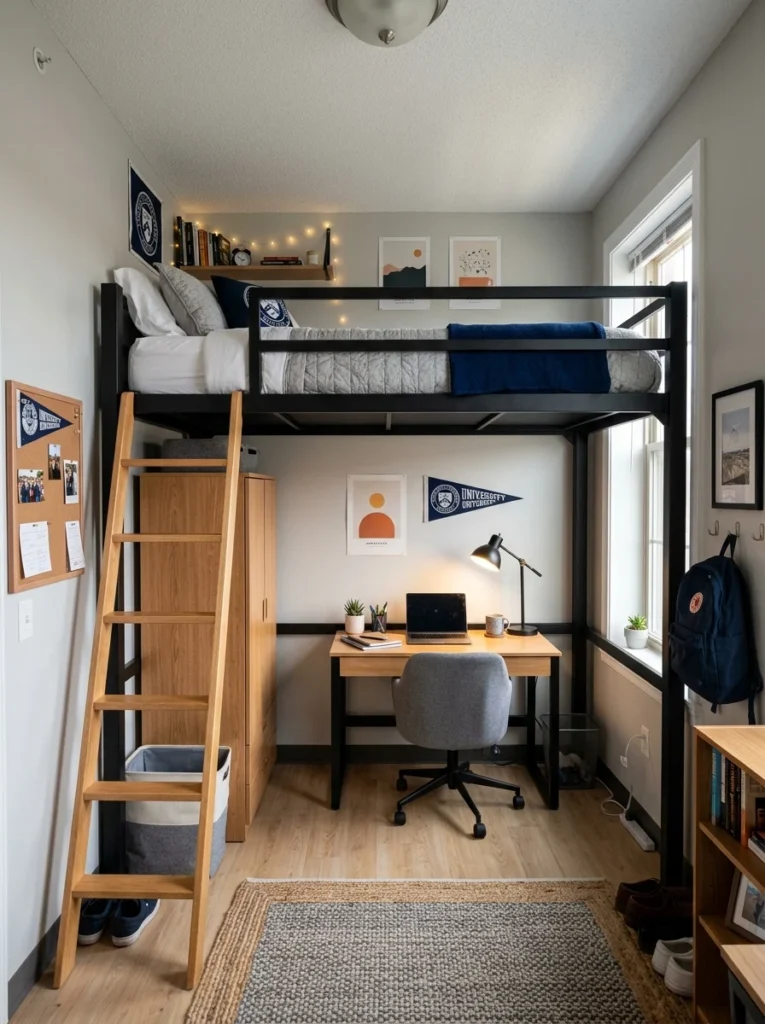
Lofting the bed frees up an entire section of floor for a desk, chair, or small rug. A sturdy metal or wood frame with safety rails keeps the setup secure. Many campuses allow loft kits that raise the mattress two to three feet. This move works especially well in tight quarters, as shown in several single dorm room ideas that maximize vertical space. Add a small ladder with a textured, non-slip tread for safety. String a curtain below for a cozy reading tent.
3. Compact Desk Nook for Study Time
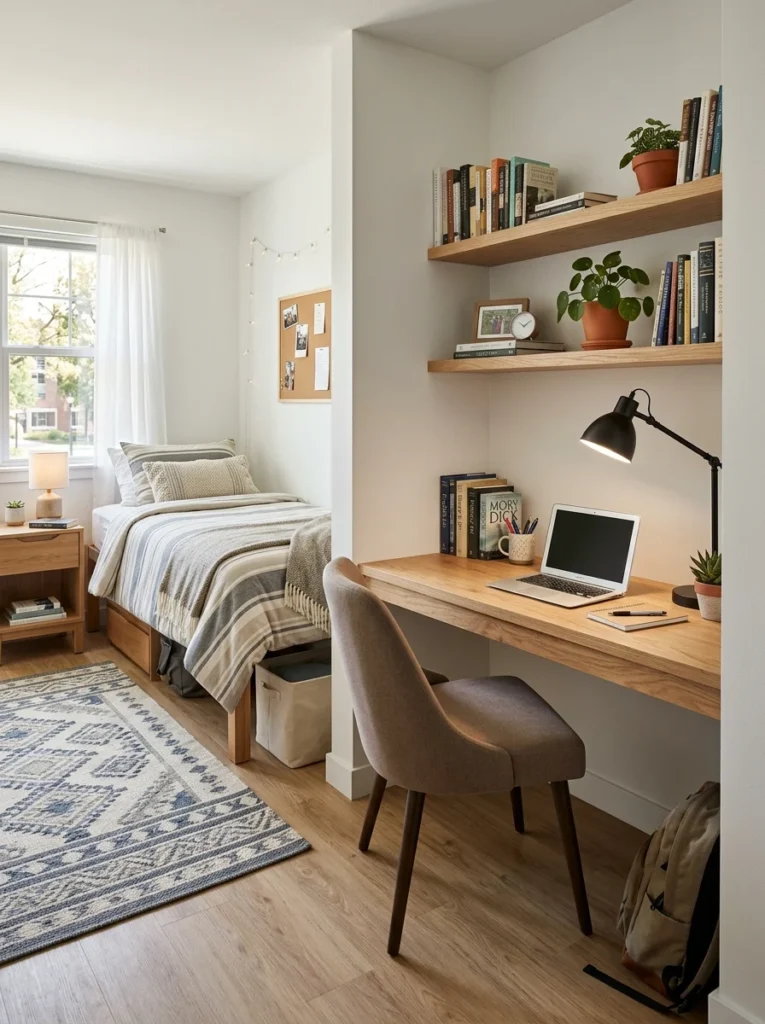
A dedicated desk nook keeps schoolwork separate from sleep space, even in a small room. A slim desk with a wood-tone top pairs well with a simple task lamp. Wall-mounted shelving above the desk holds books without eating into surface space. This layout mirrors the compact, dual-purpose setups seen in bedroom office combo designs. A cushioned desk chair in a neutral fabric adds comfort during long study sessions. Cable organizers keep the desktop tidy and distraction-free.
4. Wall-Mounted Floating Shelves
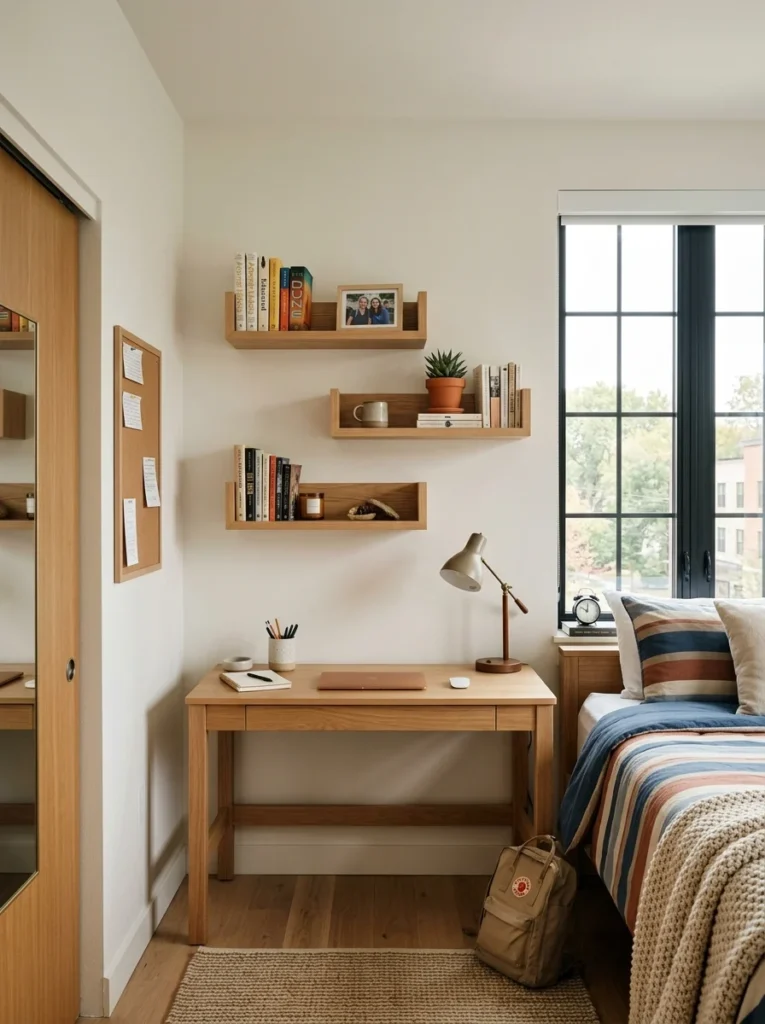
Floating shelves add storage and display space without touching the floor. Command-strip mounting brackets keep walls damage-free, which matters for dorm deposits. Three staggered shelves in light oak or white create a clean, gallery-style look. Students can style them with books, framed photos, and a small plant. This idea works well above a desk or beside a bed. Additionally, floating shelves keep frequently used items within easy reach.
5. String Lights for a Cozy Glow
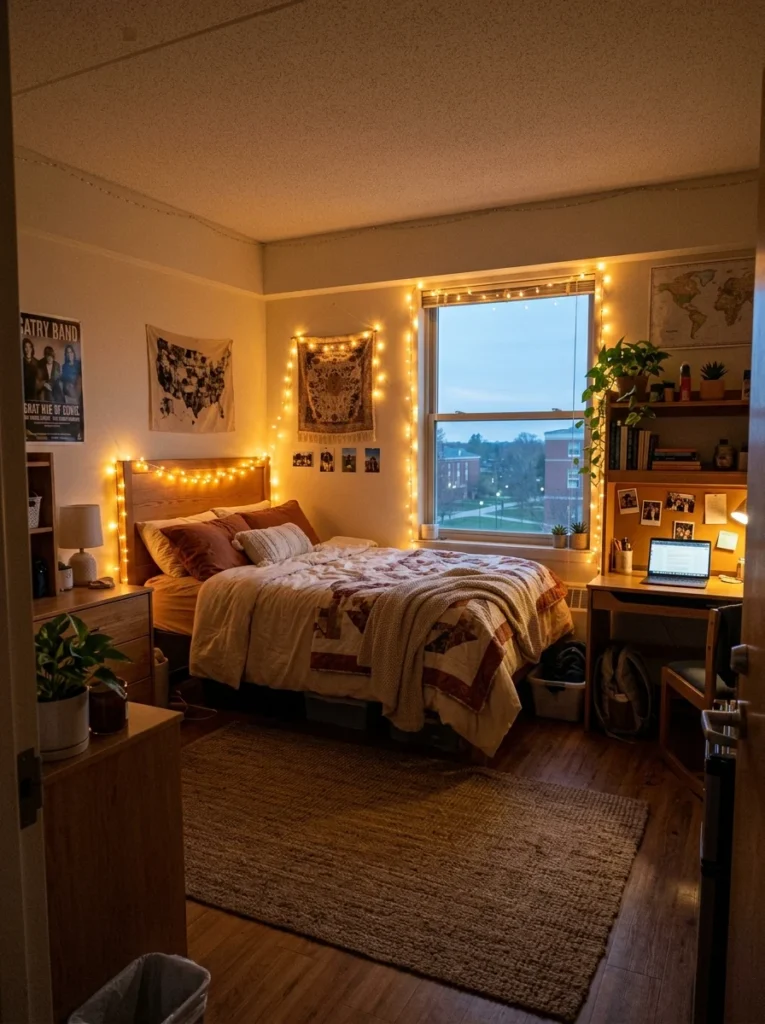
Soft string lights instantly warm up a plain dorm room. LED strands in warm white avoid the harsh glare of overhead fluorescent lighting. Battery-powered or USB options skip the need for extra outlets. Draping lights along a headboard or window frame adds a soft, ambient layer. This small addition changes the mood of the entire room after sunset. Many students also add lights around a mirror or shelf for extra warmth.
6. Layered Area Rugs for Warmth
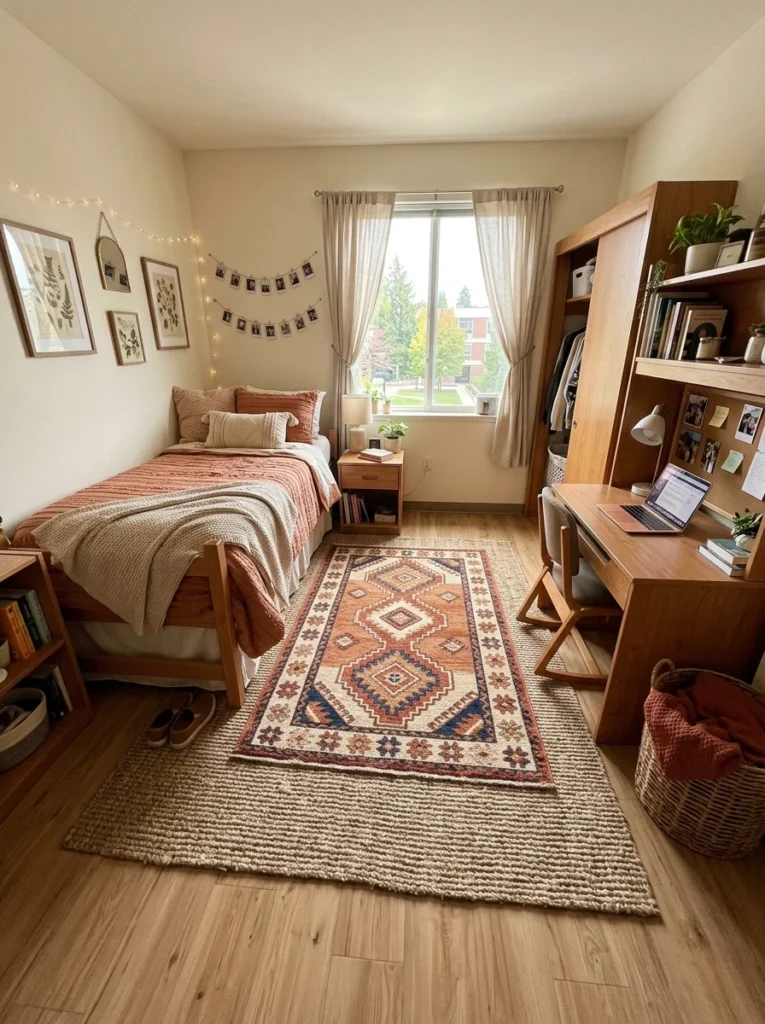
Dorm floors are often cold tile or thin carpet, so a rug adds comfort underfoot. A medium-sized rug in a neutral or subtly patterned design anchors the room. Layering a smaller textured rug on top adds visual depth. Wool-blend or cotton rugs feel soft and clean easily after spills. This layer also muffles footstep noise, which roommates and neighbors appreciate. A rug pad keeps everything secure on slick dorm flooring.
7. Folding Privacy Screen You Can Do on Your Own
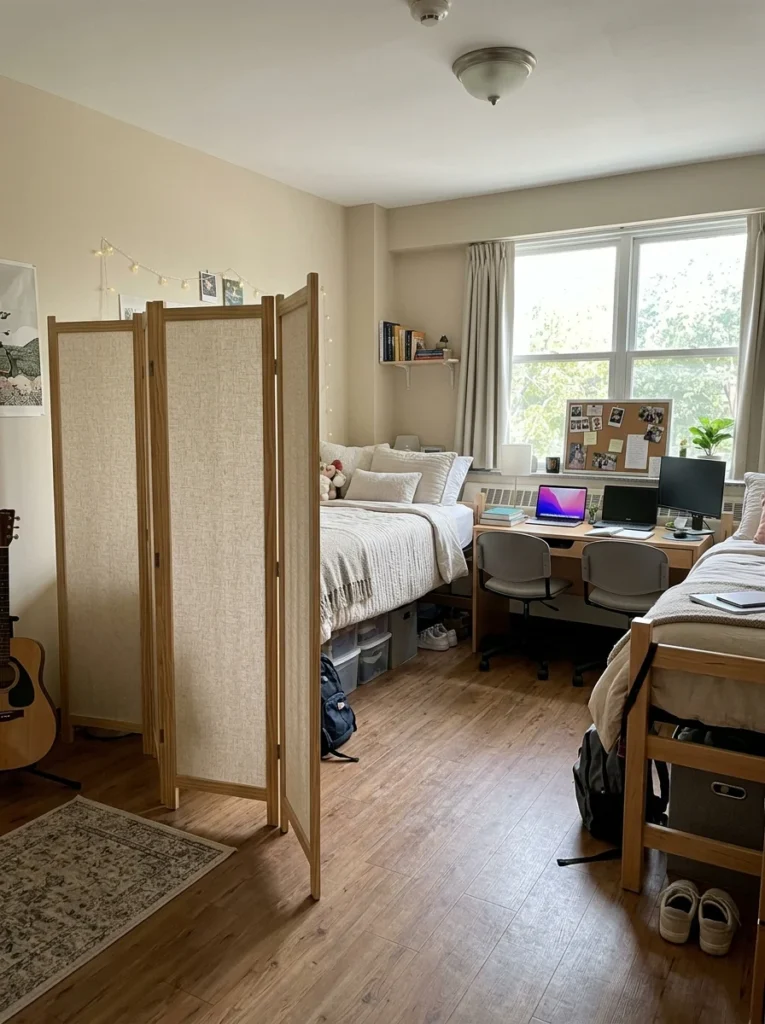
A folding screen creates a private changing corner or visual break in a shared room. Students can do it on your own with a basic wood frame and fabric panels. Three hinged panels in a light linen or patterned textile fold flat for storage. This piece works especially well in double or triple dorm rooms. It also doubles as a backdrop for hanging small photos or fairy lights. A folding screen never requires drilling or permanent mounting.
8. Command Center Whiteboard and Calendar
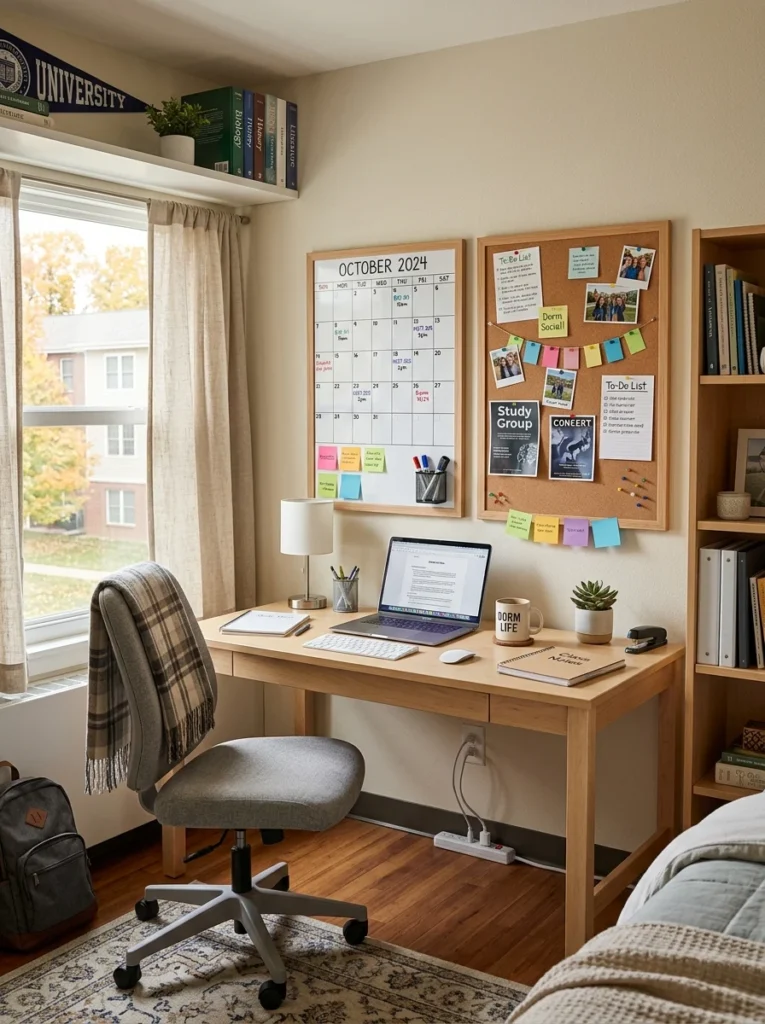
A small command center keeps assignments, events, and roommate notes organized in one spot. A whiteboard calendar paired with a corkboard covers both digital-free planning and pinned reminders. Mounting both above the desk keeps deadlines visible during study sessions. Wood-frame boards look more polished than plain plastic versions. This setup also reduces clutter from loose sticky notes. A small cup for markers keeps supplies within reach.
9. Multi-Functional Storage Ottoman
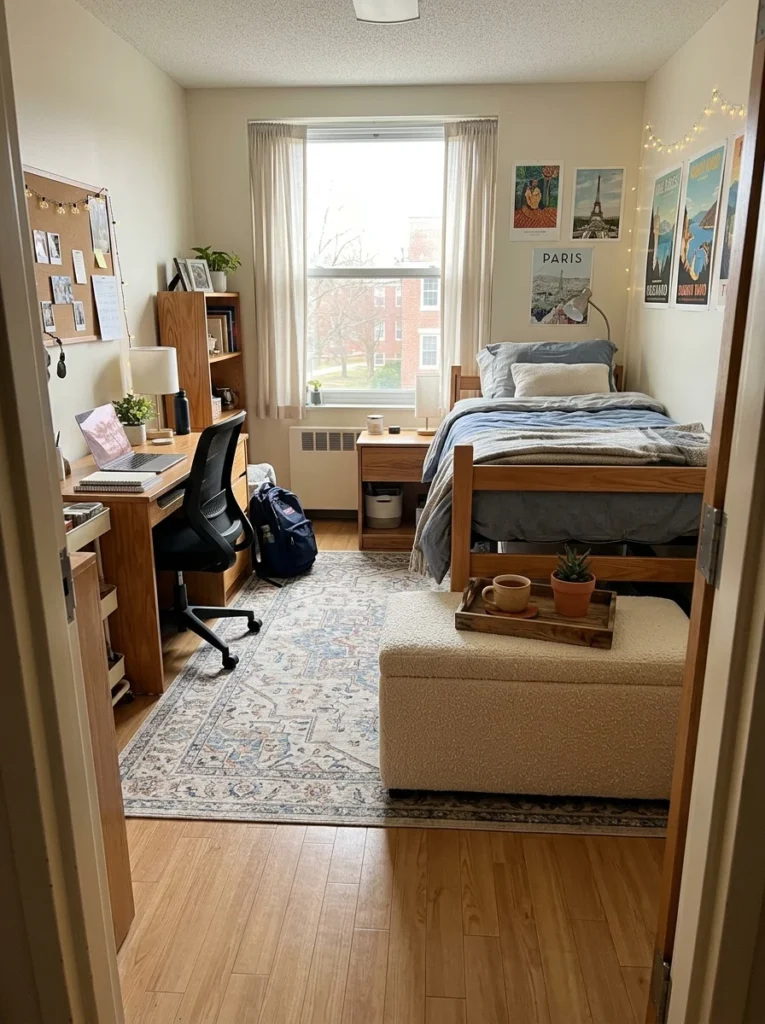
A storage ottoman works as extra seating, a footrest, and hidden storage all in one piece. Boucle or woven fabric in a neutral tone fits most dorm color schemes. The hollow interior holds extra blankets, shoes, or study supplies. This piece slides easily under a desk when floor space gets tight. It also gives guests a place to sit during study groups. A tray-top version doubles as a side table.
 You may also like20 DIY Christmas Earrings That Are Quick to Make
10. Gallery Wall Above the Desk
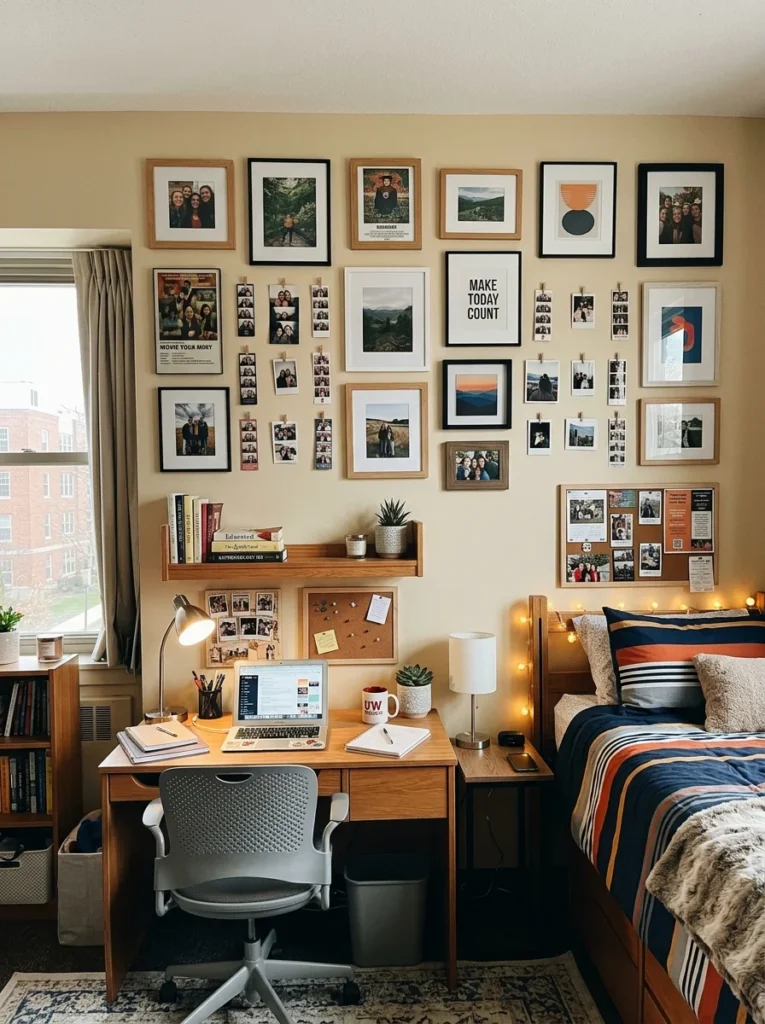
A gallery wall turns a blank stretch of wall into a personal, styled focal point. Removable poster strips or adhesive hooks keep the wall damage-free. Mixing framed prints, photo strips, and small art pieces adds texture and personality. A loose grid layout feels more relaxed than a strict symmetrical grid. This idea works especially well above a desk or bed headboard. Rotating pieces throughout the semester keeps the display feeling fresh.
11. Layered Curtains for Light Control
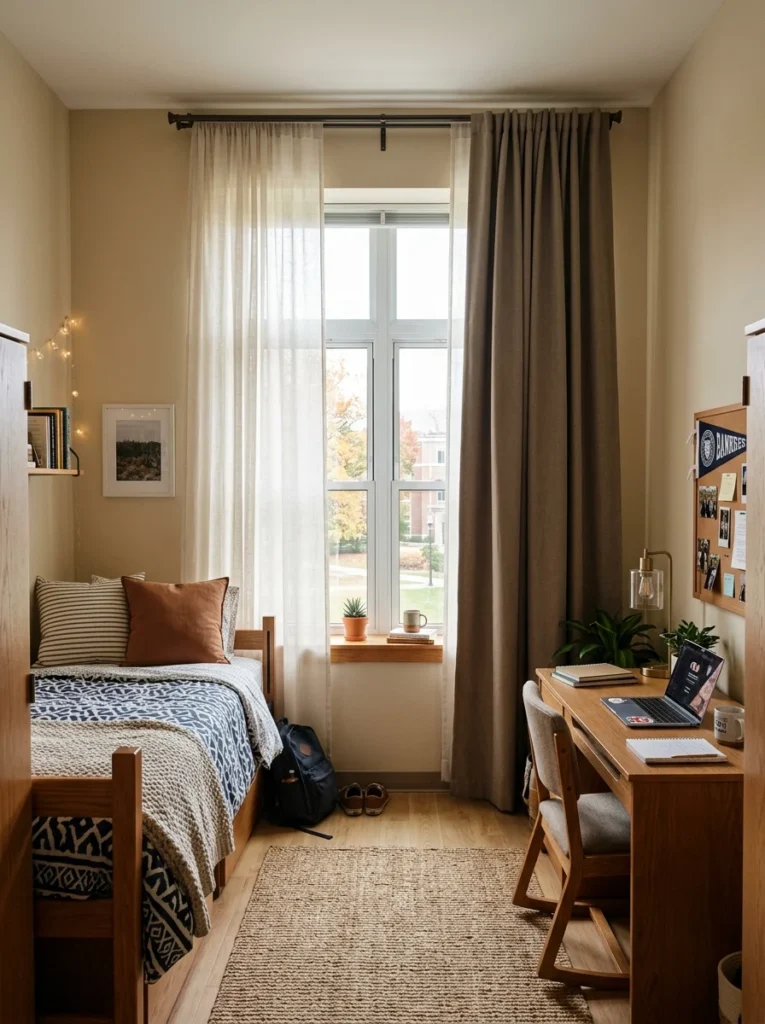
Dorm windows often come with thin, standard blinds that let in too much light. Adding a curtain rod with sheer and blackout panels improves both privacy and sleep quality. Light linen sheers filter daylight, while a blackout layer blocks it entirely at night. Tension rods work well for dorm windows that cannot be drilled into. This layered approach also softens the look of a plain window. Curtains in a warm neutral tone tie the room’s palette together.
12. Compact Mini Fridge Station
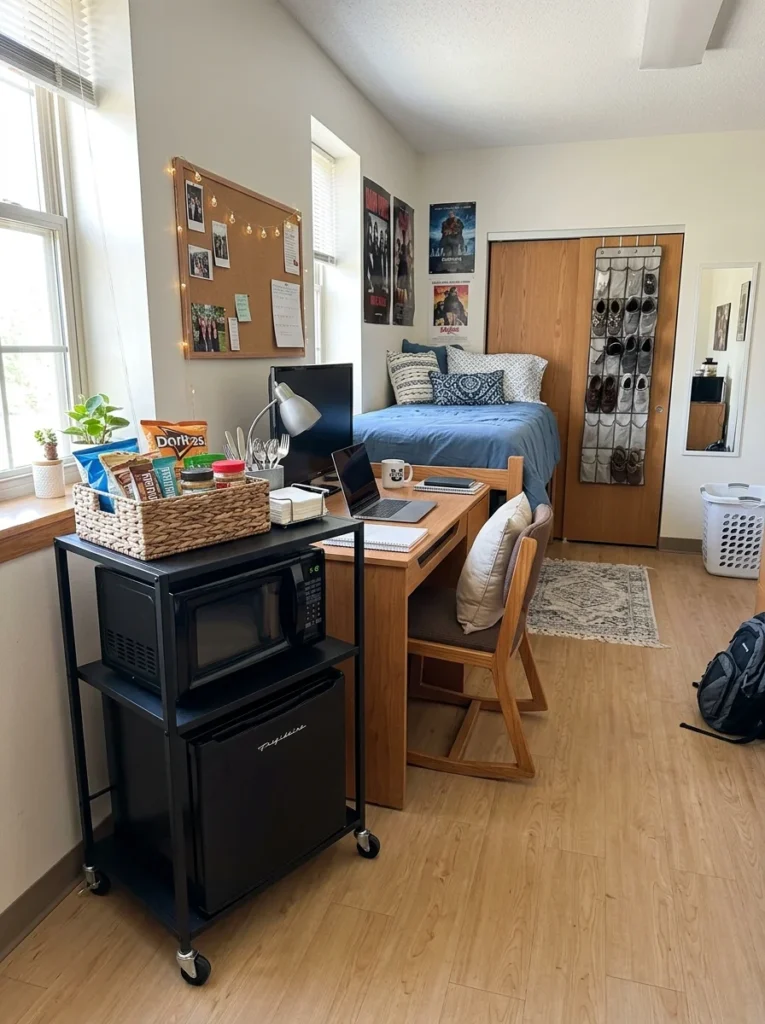
A mini fridge station keeps snacks and drinks close without taking over the room. Pairing the fridge with a small microwave on a rolling cart saves counter space. A woven basket on top holds snacks, plates, and utensils. This corner works best tucked beside a desk or closet. Choosing a fridge with a quiet compressor helps roommates sleep better. A small mat underneath protects flooring from spills and scuffs.
13. Closet Organizer System
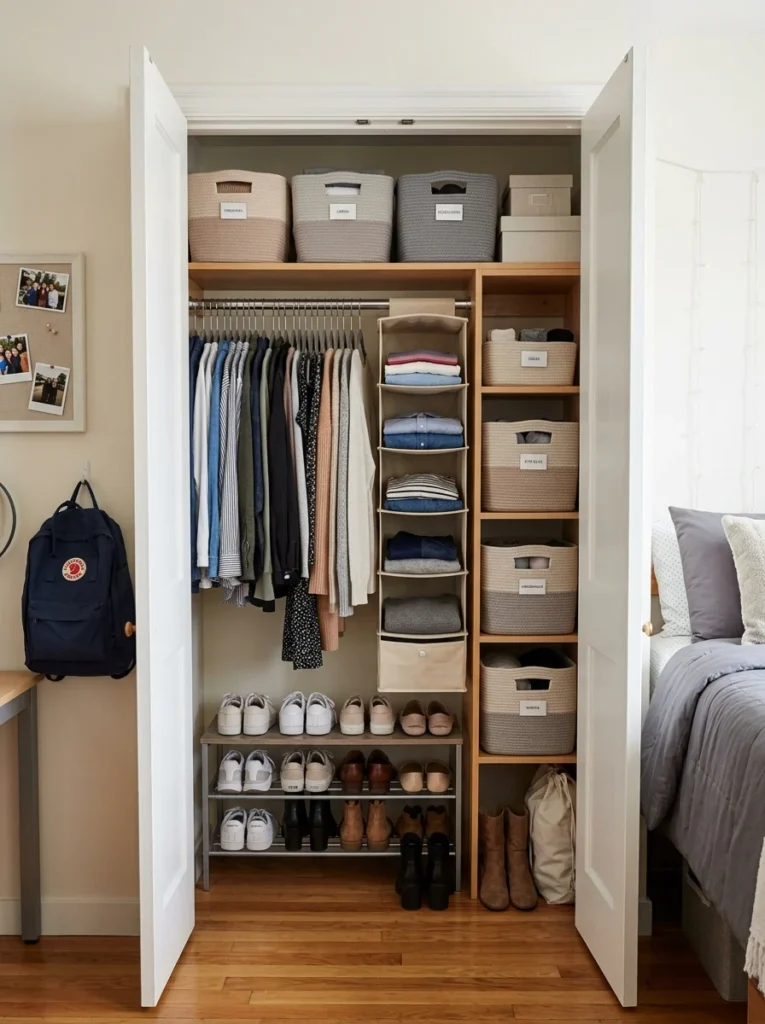
Dorm closets are usually narrow, so an organizer system makes every inch count. Hanging shelf dividers, slim velvet hangers, and stackable bins maximize vertical space. A shoe rack on the closet floor keeps footwear from piling up. Over-the-door hooks add extra hanging room for bags and jackets. This system keeps clothing wrinkle-free and easy to find each morning. Labeling bins speeds up packing at the end of the semester.
14. Small Reading Nook Corner
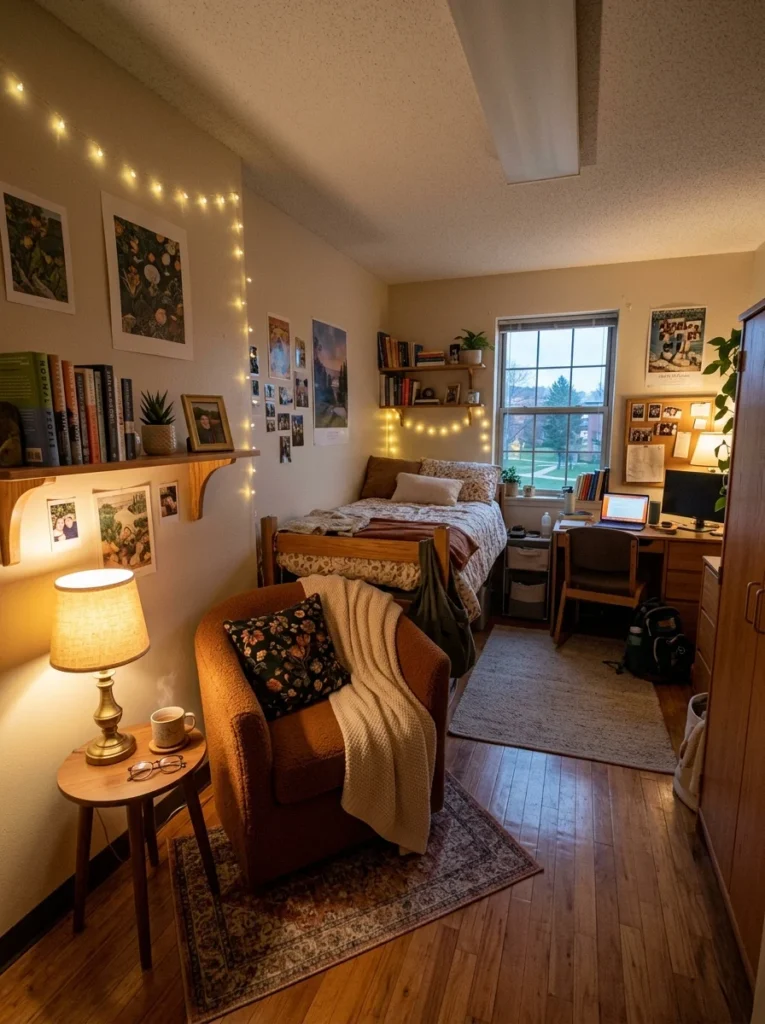
A small reading nook gives students a spot to unwind away from the desk. A floor cushion or compact armchair fits into even the tightest corner. Adding a soft throw blanket and a small lamp completes the cozy setup. This idea borrows from the layout principles found in small sitting area designs for bedrooms. A wall-mounted shelf nearby holds books within arm’s reach. This nook offers a mental break between classes and study sessions.
15. Removable Wallpaper Accent Wall
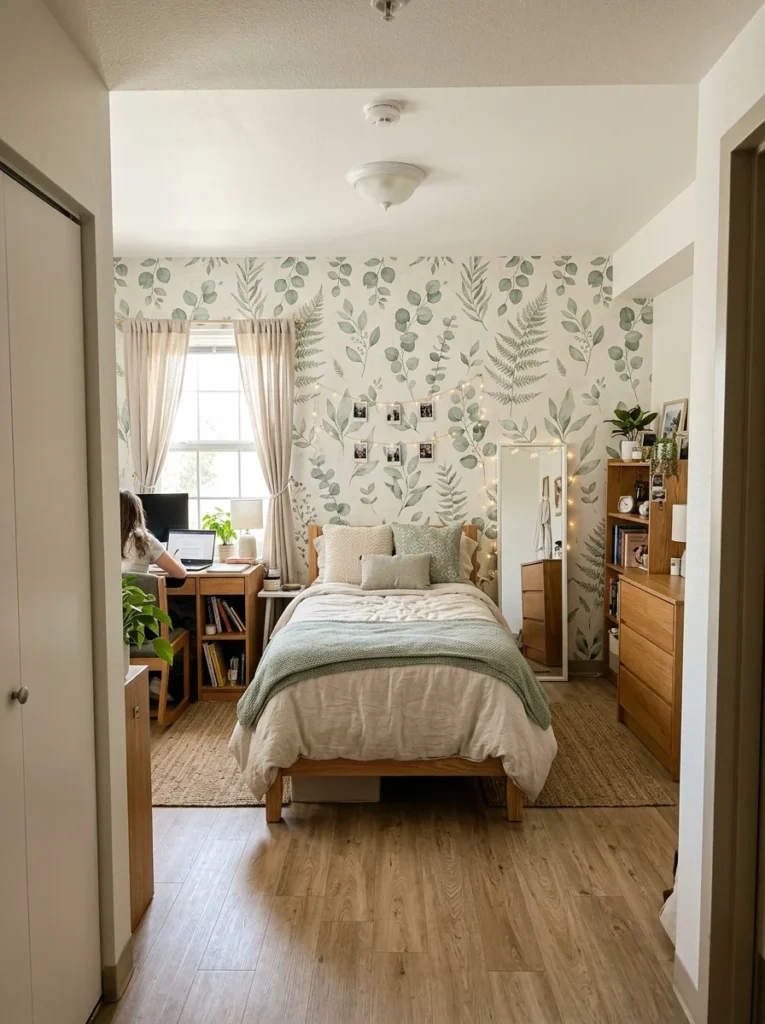
Removable wallpaper adds color and pattern without violating most dorm lease agreements. Peel-and-stick panels in a botanical, checker, or textured print cover one accent wall. Application takes an afternoon and lifts cleanly at move-out. This idea works well behind a headboard or on a closet door. A muted color palette keeps the room feeling calm rather than busy. Wallpaper samples help students test patterns before committing to a full wall.
16. Charging Station and Cable Management
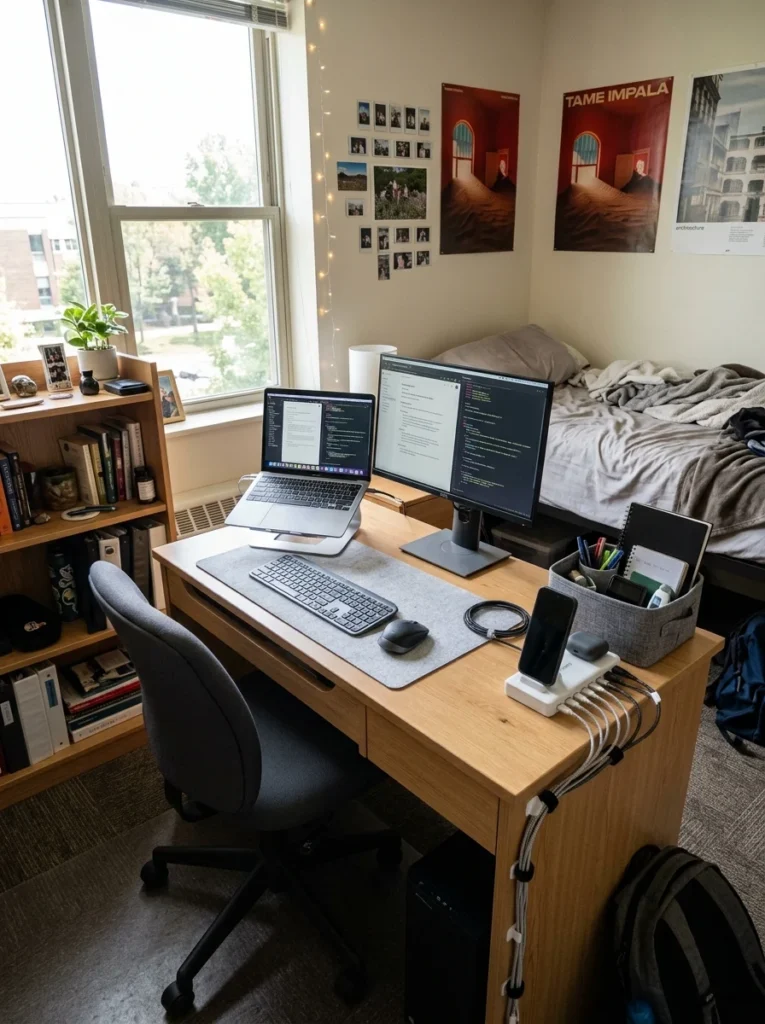
A dedicated charging station keeps phones, laptops, and tablets powered without tangled cords. A multi-port charging hub on the desk reduces the need for multiple wall outlets. Cable clips along the desk edge keep cords from sliding onto the floor. A small basket nearby stores extra cables and adapters. This setup keeps the desk surface clear for actual studying. Labeling cords also saves time when packing for breaks.
17. Personal Plant Corner
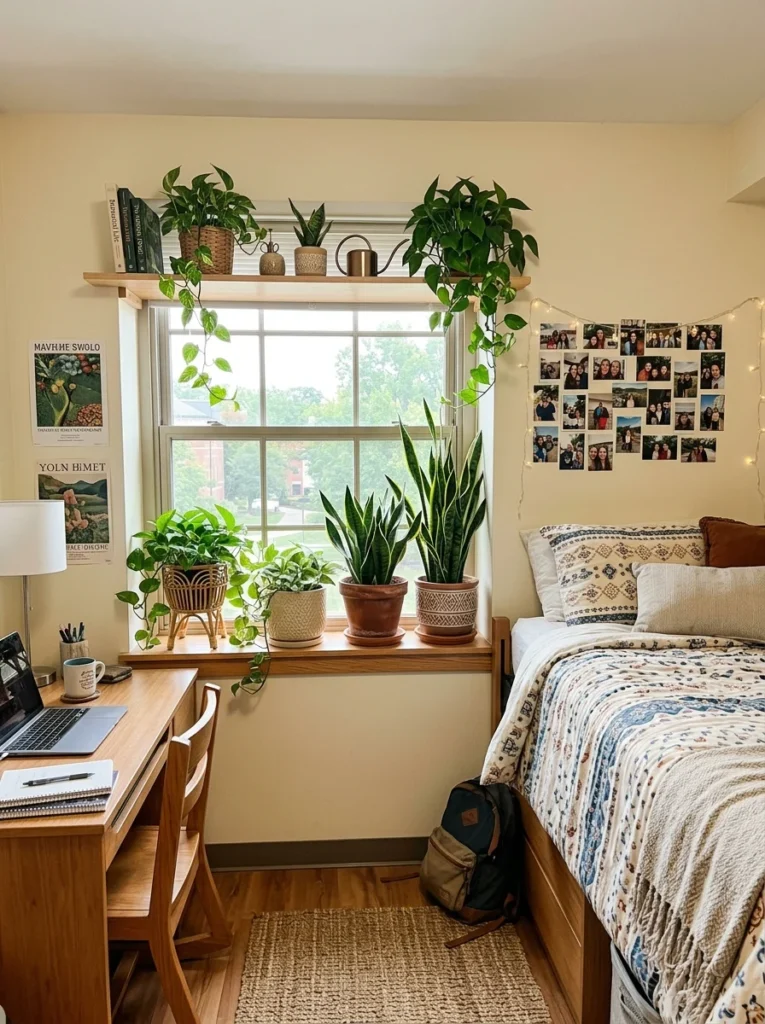
A small plant corner brings life and color into an otherwise neutral dorm room. Low-maintenance options like pothos or snake plants tolerate limited natural light. Grouping two or three pots on a windowsill or shelf adds visual interest. Ceramic or woven planters in warm tones fit most decor styles. Plants also improve air quality and add a calming presence to a busy schedule. A small watering can nearby keeps care simple and consistent.
18. DIY Bed Tent for Extra Privacy
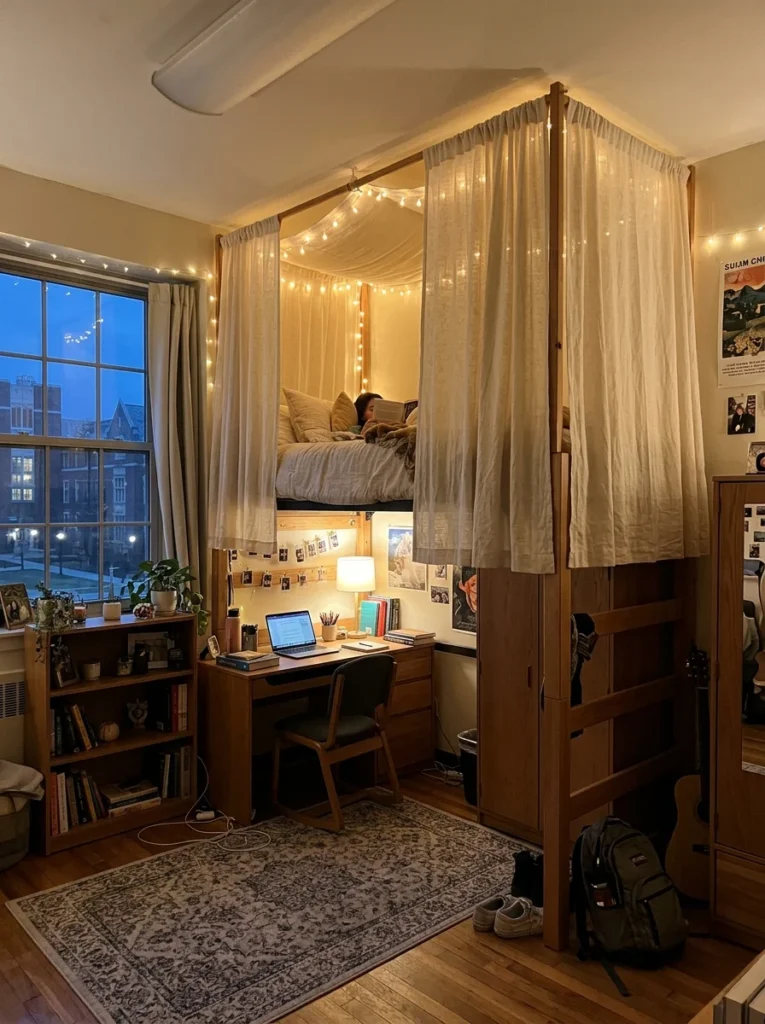
A bed tent creates a private sleeping nook inside a shared or lofted dorm bed. A simple curtain rod frame with lightweight fabric panels wraps around the bed frame. This setup borrows techniques from popular DIY bed tent projects built for small bedrooms. Adding string lights inside the tent creates a cozy reading spot after dark. This idea works especially well for students sharing a room with limited privacy. The fabric can match the room’s existing color palette for a cohesive look.
How to Choose Dorm Essentials for Your Space
Choosing dorm essentials starts with measuring the room and noting fixed furniture placement. Students should check housing rules on lofting, wall damage, and fire safety before buying. Multi-functional pieces, like storage ottomans or storage beds, offer the best value in small spaces. Sticking to a simple color palette keeps mismatched items looking intentional. Additionally, prioritizing comfort items like bedding and lighting improves daily life the most. A short shopping list prevents overspending on items that never get used.
Common Mistakes to Avoid When Decorating a Dorm
Many students buy oversized furniture that overwhelms a small dorm footprint. Skipping the housing handbook often leads to fines for nails, paint, or unauthorized lofting. Ignoring vertical storage wastes valuable square footage that shelves and hooks could use instead. Ordering bedding before confirming mattress dimensions causes returns and wasted time. Overloading the room with decor, meanwhile, can make a small space feel cluttered rather than cozy. A simple checklist before move-in day helps avoid most of these issues.
FAQs About Dorm Essentials
What are the most important dorm essentials for a first-year student? A comfortable mattress topper, storage bins, a desk lamp, and basic bedding cover the core needs first.
Can students loft or bunk dorm beds without special tools? Most colleges provide loft kits or allow bed risers, though students should confirm rules with housing staff first.
How can students add storage without drilling into dorm walls? Command hooks, over-the-door organizers, and freestanding shelving units add storage without any permanent wall damage.
What dorm essentials help the most with noise and privacy? Rugs, curtains, and a folding screen reduce noise and create visual privacy in shared rooms.

Written by Stephanie Fallis
Mom and homemaker who shares budget friendly DIY projects, decorating tips and gardening ideas for busy families.
More about me → Christmas ideas21 DIY Christmas Cards That Are Fun to Make
 Christmas ideas22 Christmas Plants for a Festive Green Home
 Christmas ideas21 Farmhouse Christmas Decor Ideas: Simple and Rustic