
A single dorm room gives students a rare gift, complete privacy over a small footprint. These single dorm room ideas turn a plain box into a space that feels personal and functional. Every choice, from furniture to lighting, matters more when square footage is limited. A single layout also means every decision reflects one person’s taste, without compromise. That freedom makes planning both exciting and a little overwhelming for first-year students.
Many students lean toward a soft, airy style for single rooms. Light colors, layered textures, and smart storage keep the space calm instead of cluttered. This approach also makes the room feel bigger than it actually is, which matters in most dorm layouts. Natural materials, like wood and woven baskets, add warmth without taking up much room. Meanwhile, a mix of soft textiles and open shelving keeps the overall mood relaxed and welcoming.
The sections below walk through practical, budget-friendly upgrades for any single dorm room. Some ideas involve furniture, while others focus on lighting, color, or organization. Each one works independently, so students can mix and match based on their room and budget. Additionally, most projects require no special tools or landlord approval. As a result, students can build a comfortable space from move-in day through finals week.
Loft the Bed for Extra Floor Space
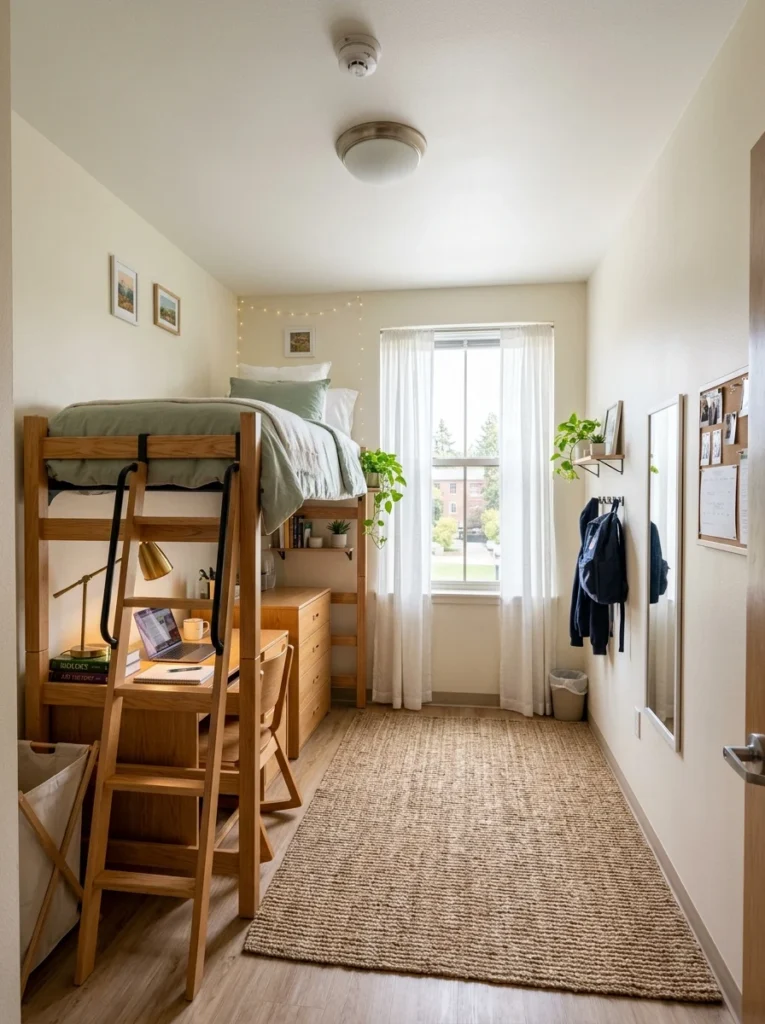
Lofting the bed frees up valuable floor space in a compact single room. Most dorm beds come with adjustable frames, so raising the mattress takes little effort. Underneath, a desk, dresser, or seating area fits neatly.
This setup works especially well in narrow rooms with limited square footage. Additionally, it creates a defined zone for sleeping, separate from study or lounge areas. Students who want to do it on their own can usually raise the frame using the existing hardware.
A ladder or step stool makes nightly access easier and safer. Pair the loft with string lights underneath for a cozy, tucked-in reading nook.
Add a Compact Desk Nook
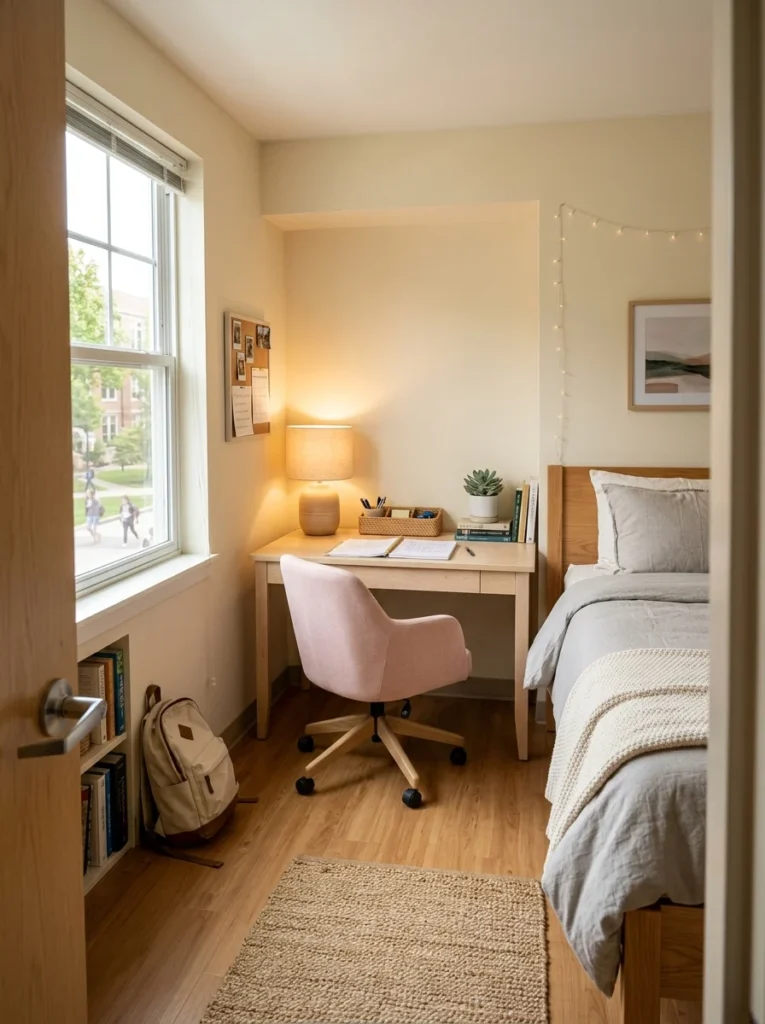
A dedicated desk nook keeps schoolwork organized and separate from the sleeping area. Choose a slim desk that fits against a wall or under a lofted bed. This keeps the center of the room open.
A desk lamp with warm light supports late-night studying without harsh glare. Meanwhile, a rolling chair saves space compared to a bulky armchair. Add a small organizer tray for pens, chargers, and notebooks.
Students furnishing a compact space might also review these studio apartment ideas for more tips. The same layout principles apply to a dorm room.
Use Vertical Wall Storage
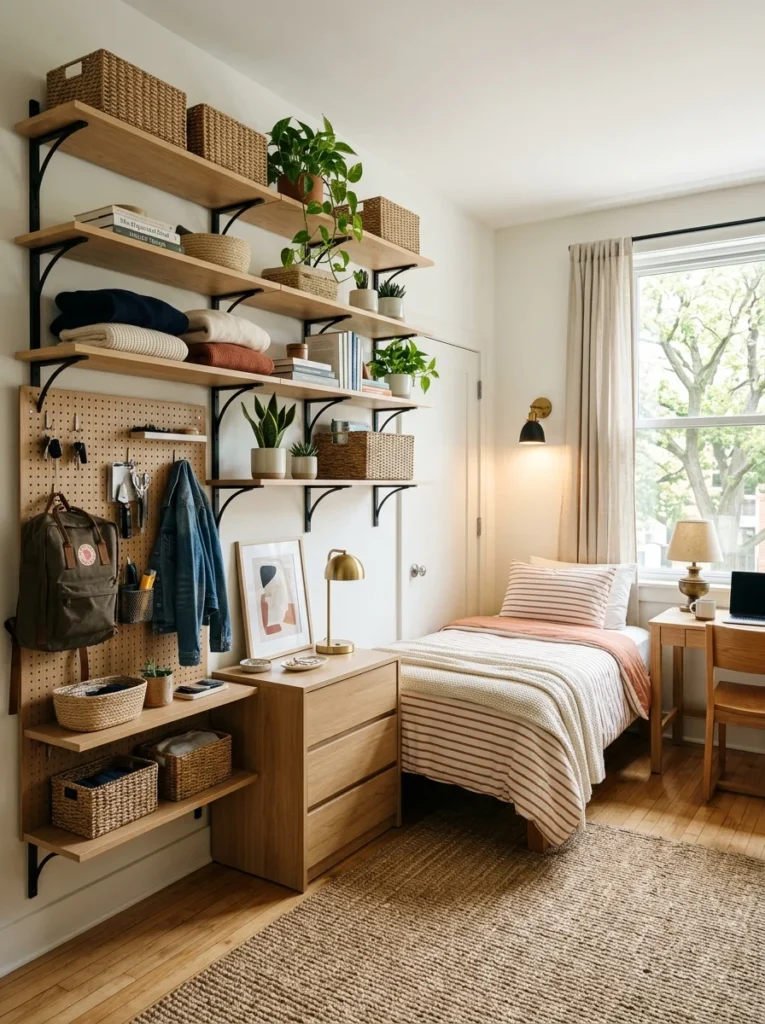
Vertical storage solves the biggest challenge in small dorm rooms, limited floor space. Floating shelves, wall-mounted baskets, and pegboards keep items off the desk and dresser. This approach also adds visual interest to bare walls.
Command strips make installation simple and damage-free, which most colleges require. As a result, students can hang shelves without drilling into walls. Group shelves by height to create a gallery-style display.
For more storage inspiration, these bedroom wall storage ideas offer layouts that adapt well to a small room.
Layer a Soft Area Rug
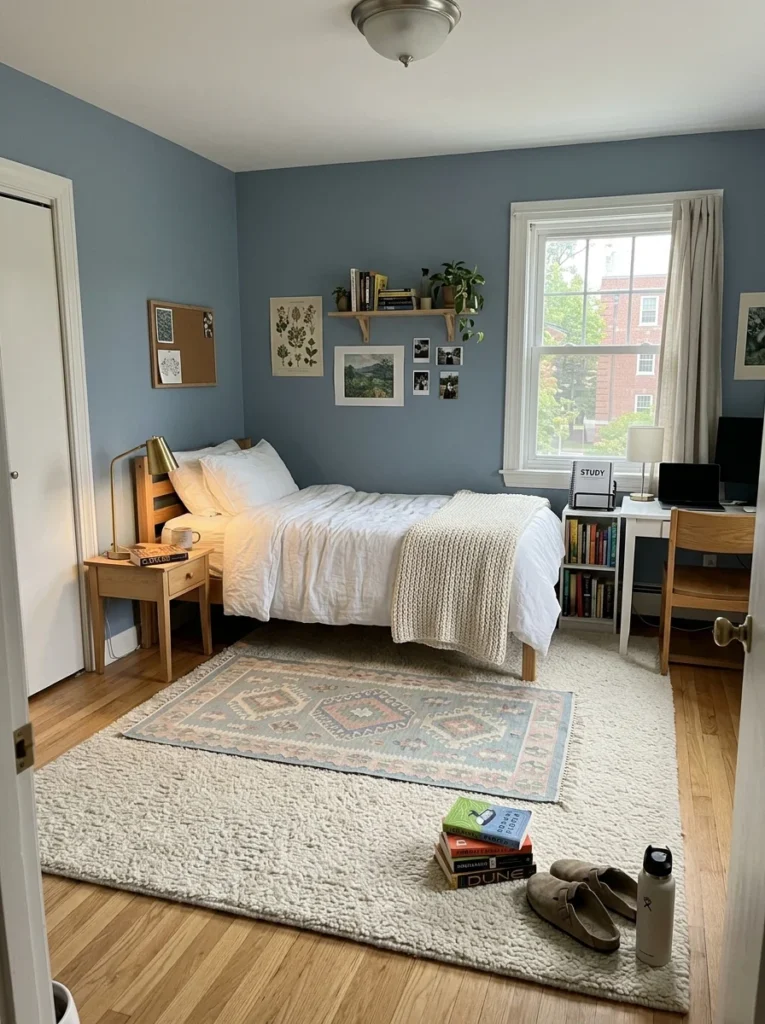
A soft area rug softens the hard flooring common in most dorm buildings. It also defines separate zones, like a sleeping area and a study corner. Choose a rug in a neutral or pastel tone for a calm, airy feel.
Wool or plush materials add warmth underfoot during colder months. However, a low-pile option works better for easy vacuuming in tight quarters. Layering two smaller rugs can also mimic the look of one larger piece.
This small addition makes the entire room feel more finished and intentional.
Hang String Lights for Warm Ambiance
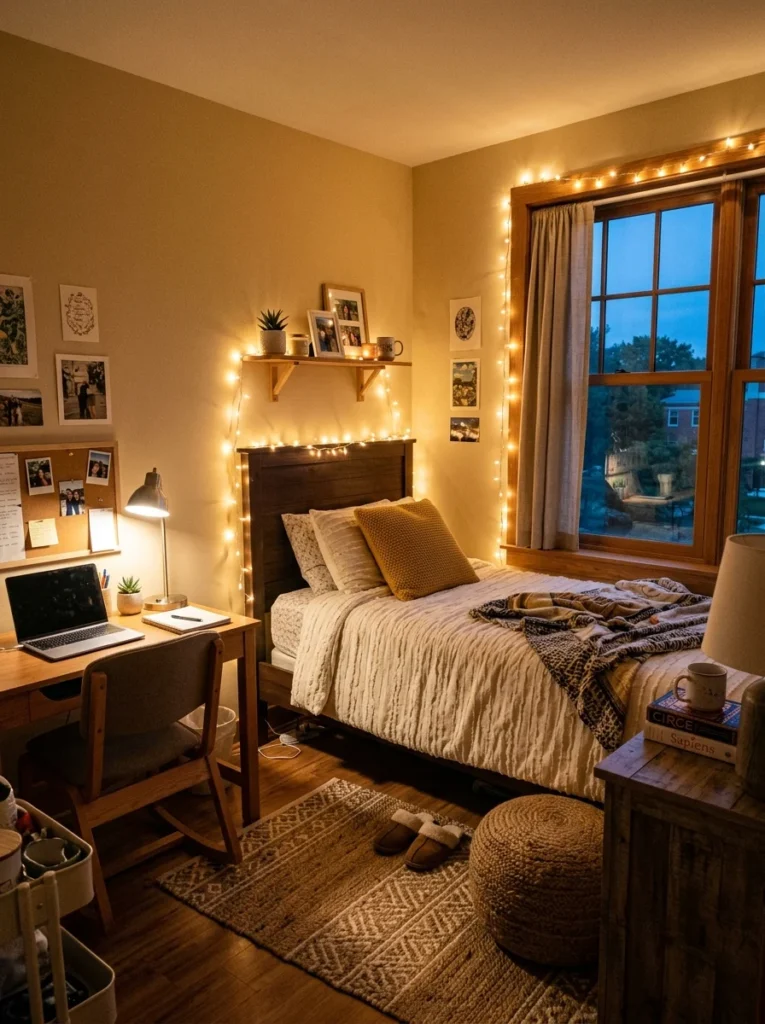
String lights add instant warmth to a small dorm room without much effort. Battery-operated or USB-powered strands avoid extra outlets and cords. Drape them along a headboard, window frame, or wall shelf.
Warm white bulbs create a cozier glow than cool white options. Additionally, dimmable strands allow flexibility between study time and relaxation. Many students choose to do it on their own with adhesive clips instead of nails.
This simple upgrade transforms a plain wall into a soft, welcoming focal point.
Choose a Light, Airy Color Palette
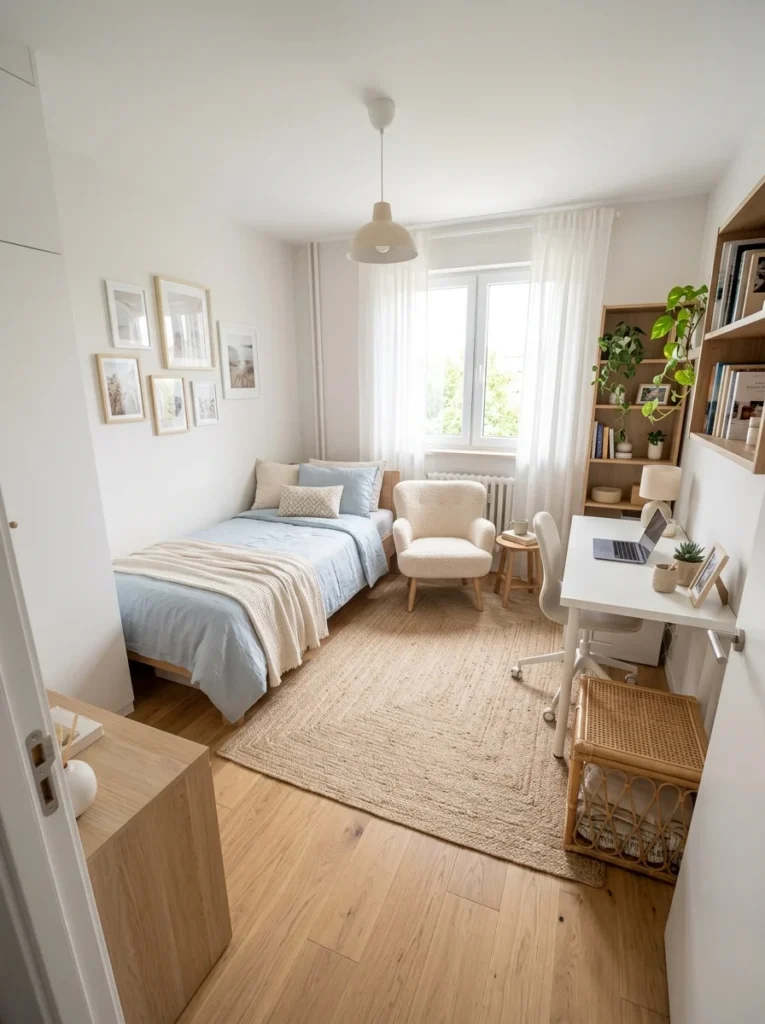
Light colors make a dorm room feel more open and bright. Soft whites, pale blues, and gentle beige tones reflect natural light well. This palette also pairs easily with bedding, rugs, and wall art.
Darker accent colors still work in small doses, like a throw pillow or poster. As a result, the room stays airy while gaining personality. Choose bedding in a matching tone to tie the whole space together.
These light color bedroom ideas offer more direction for building a bright, calming palette in a small footprint.
Add a Cozy Reading Corner
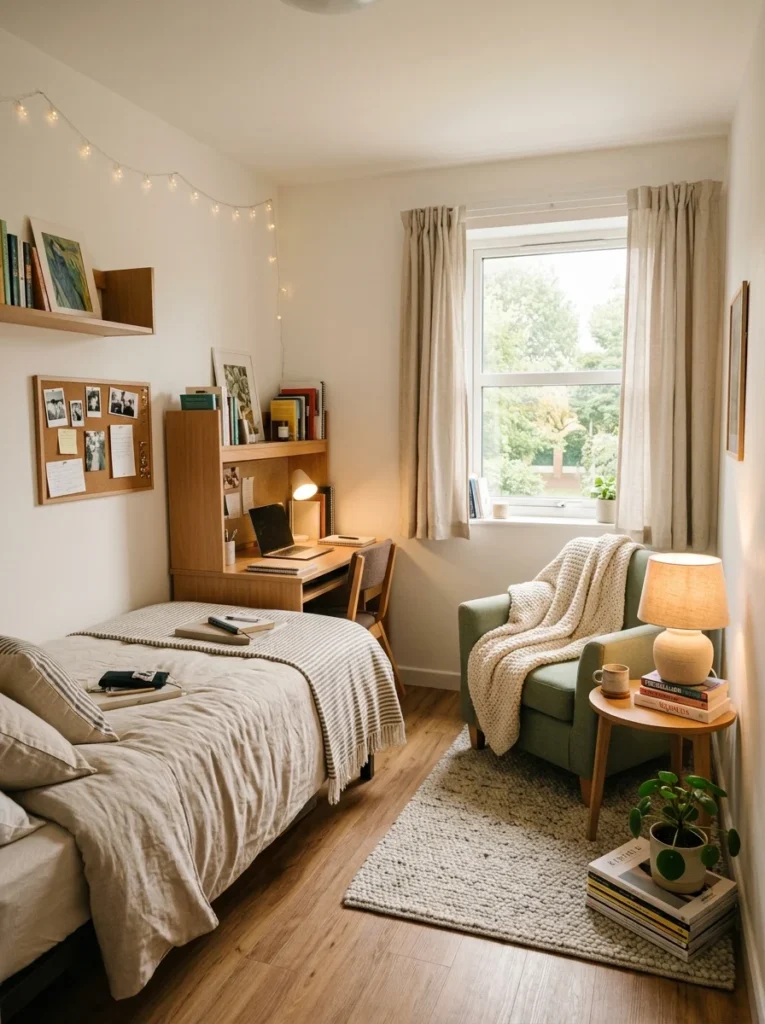
A small reading corner gives students a quiet escape within their single room. A floor cushion, compact armchair, or window seat works well for this purpose. Pair the seating with a small side table for books and tea.
Soft lighting, like a clip-on lamp, supports evening reading without disturbing sleep schedules. Meanwhile, a folded blanket adds texture and comfort to the nook. Even a corner as small as three feet can hold this setup.
This zone gives the room a sense of purpose beyond studying and sleeping.
Use a Folding Screen for Privacy
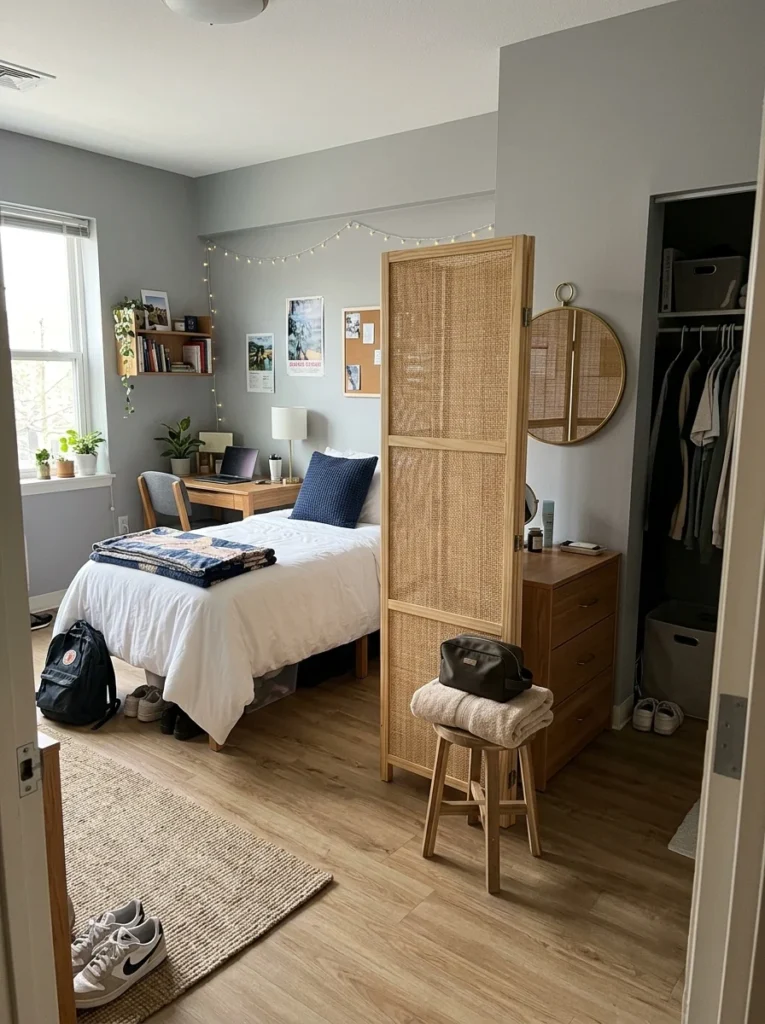
A folding screen creates a flexible privacy barrier in an open single room. It works well to separate a changing area from the main living space. Lightweight wood or fabric screens fold flat for easy storage.
This option suits students who share a hallway or common bathroom. Additionally, a patterned screen doubles as a decorative element. Choose a screen with three or four panels for the best coverage.
Folding screens require no installation, making them ideal for rental-restricted dorm policies.
Install Floating Shelves Above the Desk
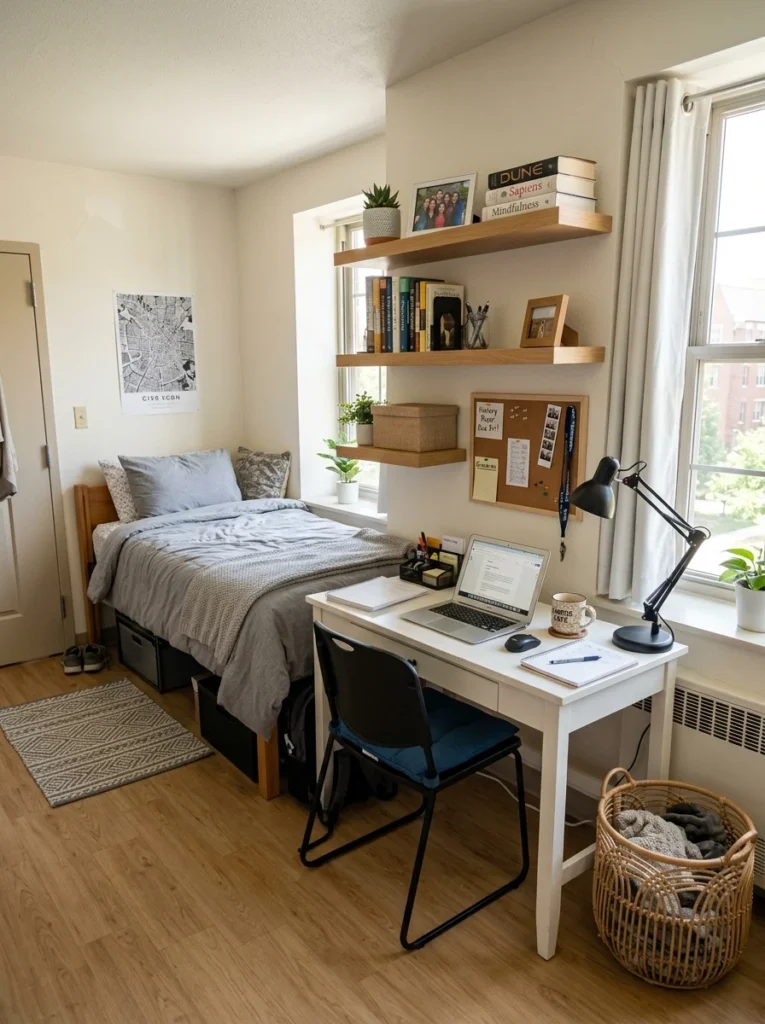
Floating shelves above a desk keep books and supplies within easy reach. This placement also frees up desk surface for actual studying. Choose two or three shelves at staggered heights for visual balance.
Wood shelves in a light finish match most dorm color schemes. However, black metal brackets add a modern contrast for eclectic styles. Style the shelves with a small plant, framed photo, and a stack of books.
This setup keeps the desk area tidy while adding a personal touch above it.
Add Under-Bed Storage Bins
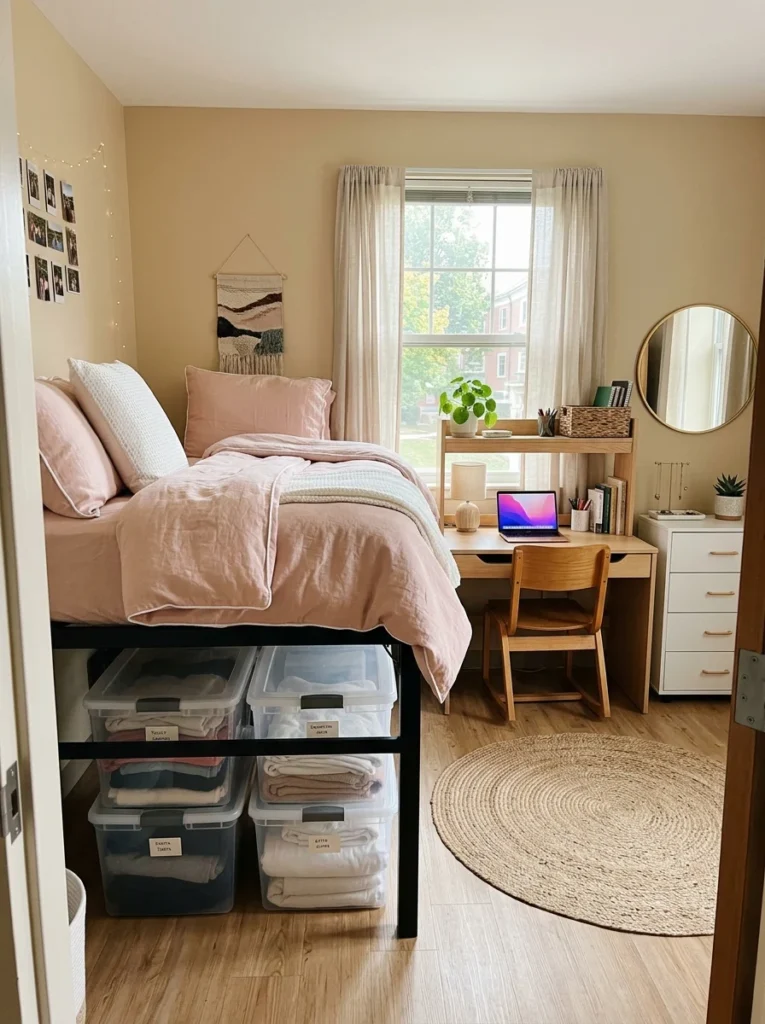
Under-bed storage bins make use of space that often goes to waste. Clear bins help students see contents quickly without digging through clutter. Fabric bins with lids work well for off-season clothing or extra bedding.
This solution pairs perfectly with a lofted or standard-height bed frame. As a result, the closet and dresser stay less crowded. Label each bin for faster organization during busy weeks.
Rolling bins with wheels make retrieval even easier in a tight single room.
Hang a Gallery Wall
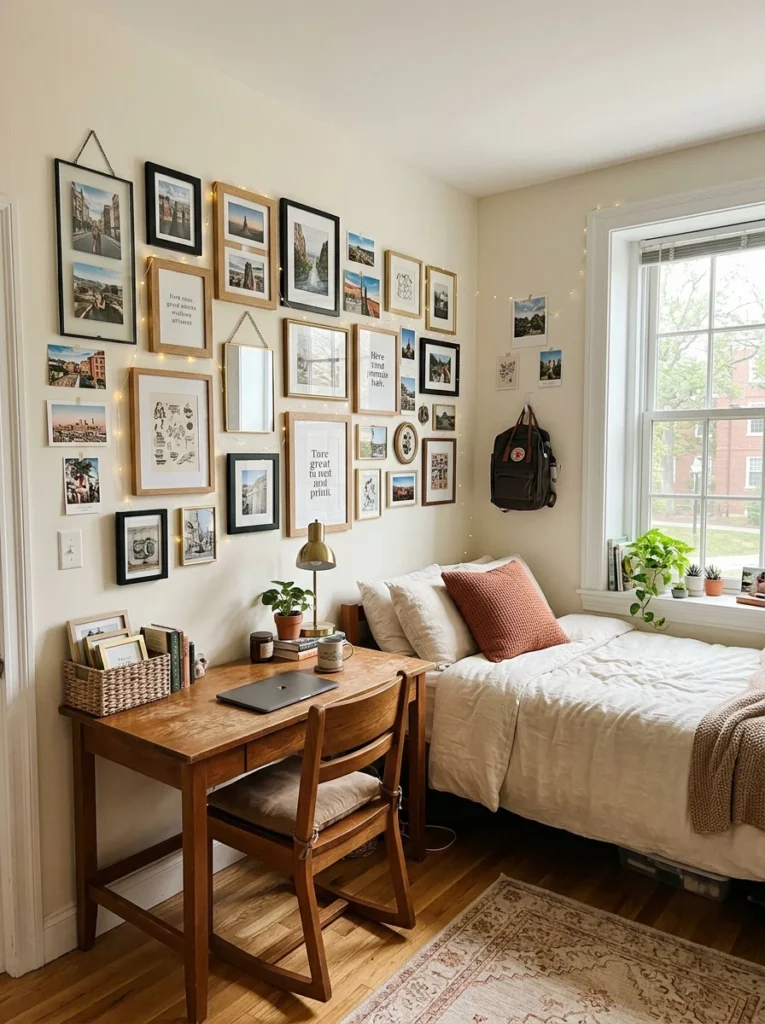
A gallery wall turns blank space into a personal, expressive feature. Mix framed prints, photos, and small art pieces for visual variety. Command strips keep the display damage-free for move-out day.
This idea works well above a desk, bed, or dresser. Meanwhile, a consistent color scheme keeps the wall from feeling chaotic. Adding fairy lights around the frames enhances the cozy effect at night.
A gallery wall makes the room feel lived-in rather than temporary or bare.
Use a Whiteboard Command Center
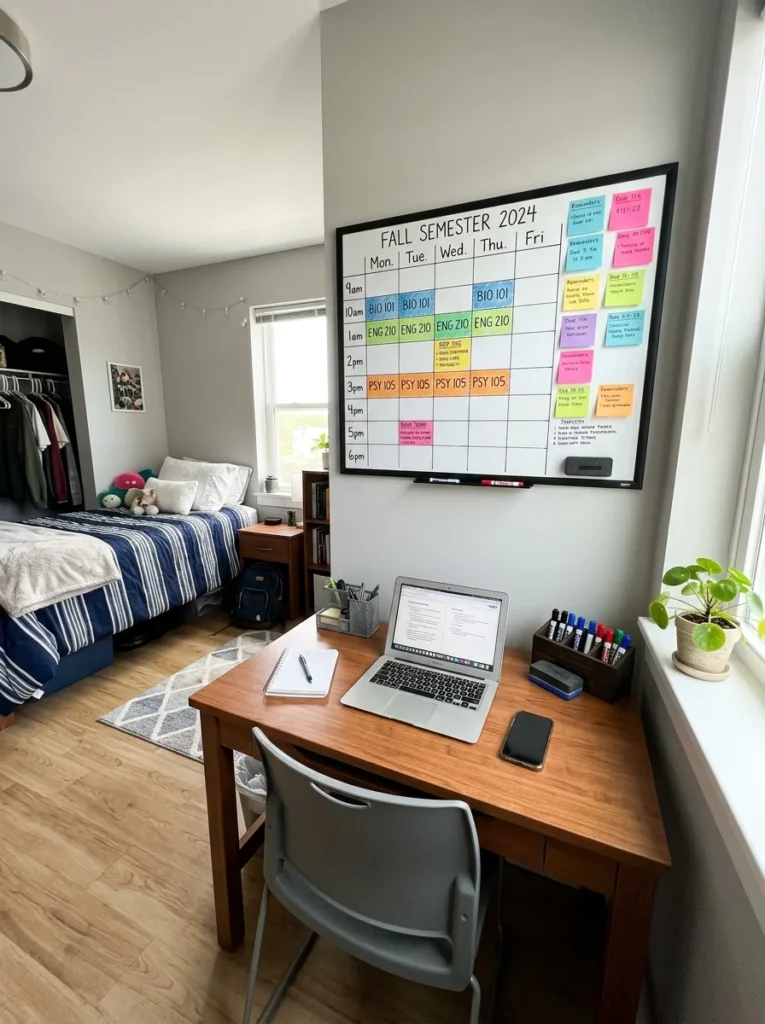
A whiteboard command center helps students track deadlines, schedules, and reminders. Mount it near the desk or door for quick daily reference. Magnetic whiteboards also hold small notes and photos.
This tool keeps the room organized without paper clutter piling up. Additionally, a colorful marker set adds a playful touch to the wall. For more layout ideas, these college dorm whiteboard ideas cover several styling approaches.
A command center keeps academic life visible and manageable in a small room.
Add Plants for Fresh Energy
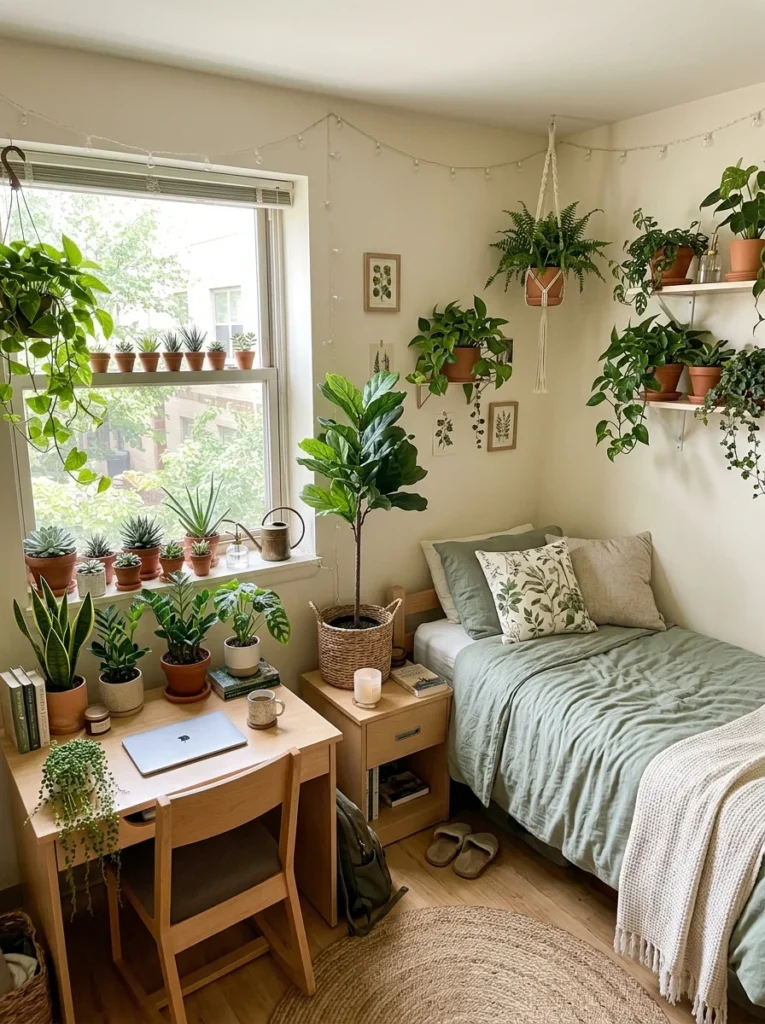
Plants bring life and color into an otherwise static dorm room. Low-maintenance options like pothos or snake plants suit busy student schedules. A small pot on the windowsill catches natural light well.
Faux plants work just as well for rooms with limited sunlight. However, real plants also improve air quality throughout the semester. Group two or three plants at different heights for a layered look.
This simple addition softens hard furniture lines and adds a natural element.
Choose Multi-Functional Furniture
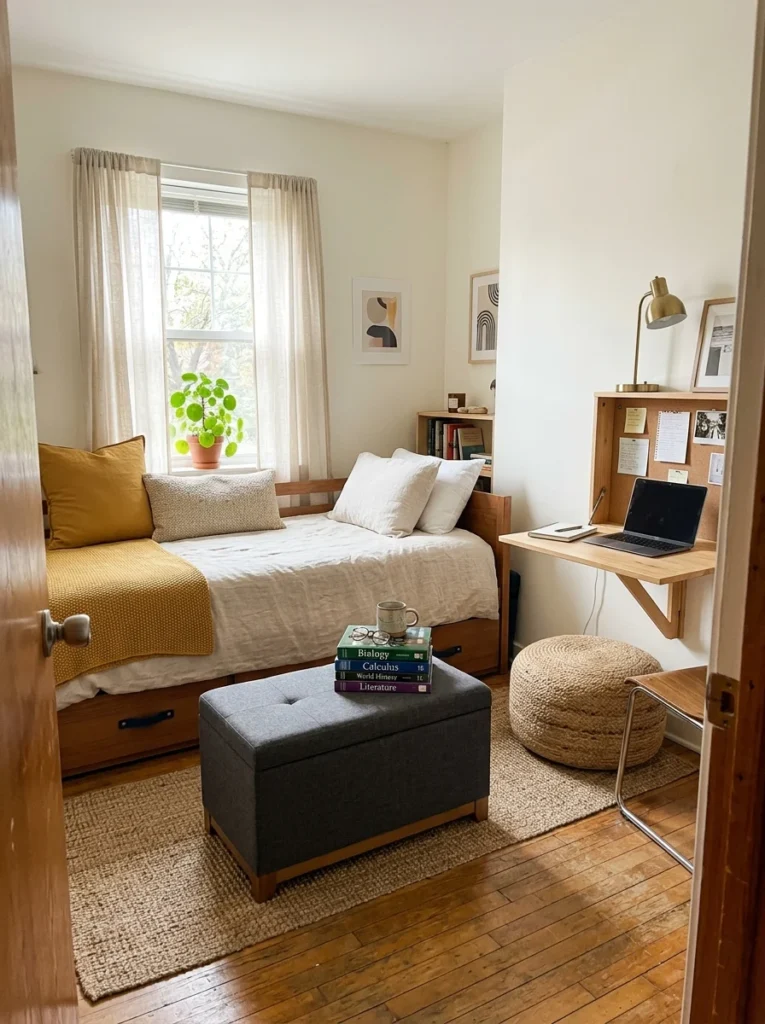
Multi-functional furniture solves space challenges common in compact dorm rooms. An ottoman with storage, a bed with drawers, or a folding desk all serve double duty. This approach reduces the total number of pieces needed.
Students furnishing on a budget benefit most from this strategy. Meanwhile, these bed alternatives ideas explore compact sleeping options that free up even more room. A daybed, for example, doubles as seating during the day.
Choosing furniture with built-in storage keeps clutter to a minimum all semester.
Use Curtains to Soften the Window
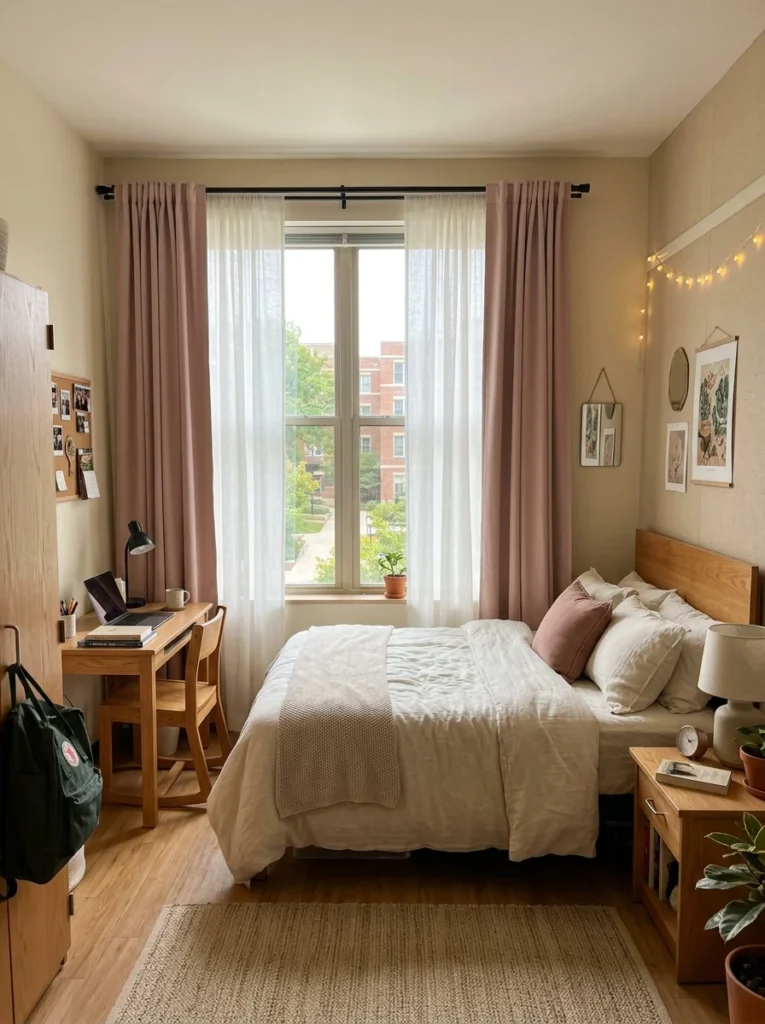
Curtains soften the look of a standard dorm window and block outside light. Choose a lightweight fabric in a color that matches the room palette. Tension rods work well without requiring drilling into the wall.
Blackout curtains help with sleep quality, especially for students with early classes. Additionally, sheer panels add softness while still letting in daylight. Layering both types offers flexibility throughout the day.
This small touch adds warmth and privacy to an otherwise plain window frame.
Add Personal Touches with Textiles
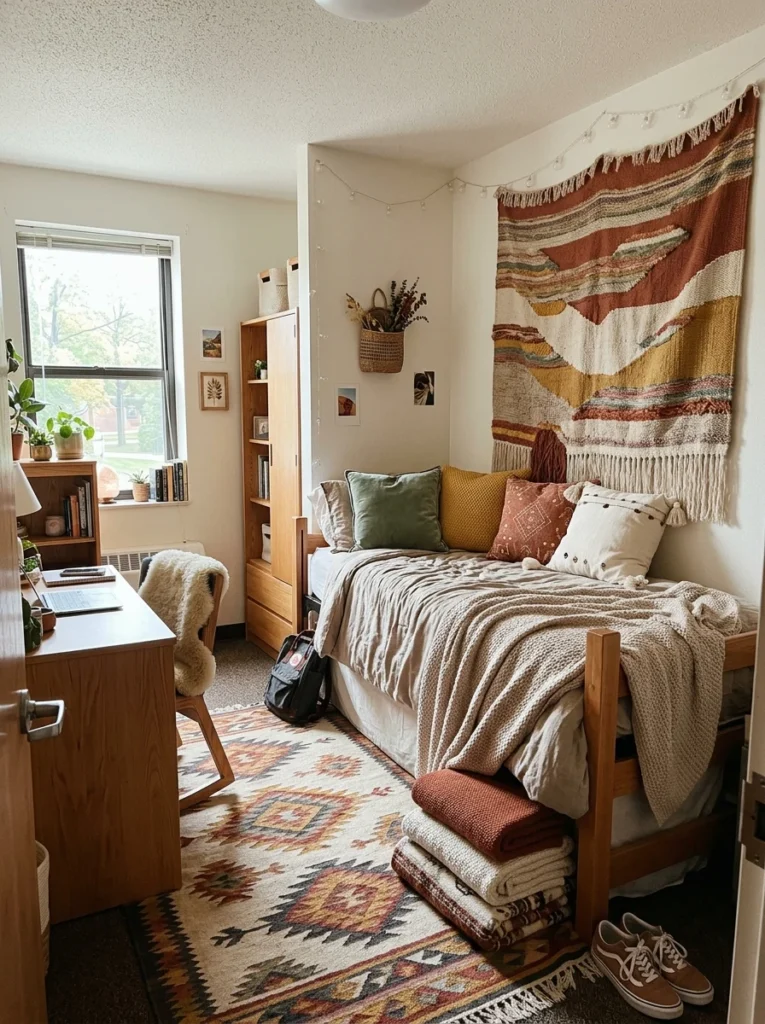
Textiles bring comfort and personality into a dorm room quickly. Throw pillows, a soft blanket, and a patterned tapestry all add texture. These items also travel well between dorm rooms each year.
Mixing patterns works best when the color palette stays consistent. However, sticking to two or three main colors avoids visual clutter. A tapestry above the bed can double as a headboard substitute.
This finishing touch makes the room feel personal rather than generic or unfinished.
How to Choose Colors for a Single Dorm Room
Choosing colors for a dorm room starts with the amount of natural light available. Rooms with small windows benefit from lighter, reflective tones. South-facing rooms can handle slightly deeper accent shades without feeling dark.
Neutral bases, like white, beige, or soft gray, work well as a foundation. Additionally, one or two accent colors keep the palette from feeling flat. Bedding, rugs, and wall art offer easy places to introduce color without repainting.
Testing fabric swatches under the room’s actual lighting helps avoid surprises later.
Common Mistakes to Avoid in Single Dorm Rooms
Overcrowding the room with too much furniture is a common early mistake. Students often bring more than the space can comfortably hold. Measuring the room before move-in day prevents this issue.
Ignoring vertical space is another frequent oversight. Walls and the area above the desk often go unused. Ignoring lighting layers also leaves rooms feeling flat and clinical.
Finally, skipping storage planning leads to clutter within the first few weeks of the semester.
FAQs About Single Dorm Room Ideas
Can I paint the walls in a single dorm room? Most colleges do not allow paint. Removable wallpaper or fabric panels offer a similar effect without violating housing rules.
What is the best bed setup for a small single room? A lofted bed usually works best. It frees up floor space for a desk, storage, or seating area below.
How can I add storage without bulky furniture? Vertical wall shelves, under-bed bins, and over-the-door organizers add storage without extra floor space.
What lighting works best for studying and relaxing? A layered approach works best. Combine a desk lamp for studying with string lights or a floor lamp for softer evening light.
How do I make a single dorm room feel less plain? A gallery wall, textiles, and plants add personality fast. These sleepover aesthetic ideas also offer inspiration for cozy, welcoming touches.

Written by Stephanie Fallis
Mom and homemaker who shares budget friendly DIY projects, decorating tips and gardening ideas for busy families.
More about me → Christmas ideas21 DIY Christmas Cards That Are Fun to Make
 Christmas ideas22 Christmas Plants for a Festive Green Home
 Christmas ideas21 Farmhouse Christmas Decor Ideas: Simple and Rustic