
Finding good ideas for a calming room starts with understanding what makes a space feel peaceful. A calming room relies on soft colors, natural materials, and gentle lighting. It removes visual noise and replaces it with texture and warmth. Many homeowners crave a retreat from daily stress. Their bedroom or living space can become that retreat with a few intentional choices. Small, thoughtful updates often matter more than a full renovation.
This guide focuses on a soothing, nature-inspired style that suits bedrooms, reading corners, and quiet living rooms alike. The tone stays soft throughout, favoring muted palettes over bold statements. Materials like linen, wood, and stone appear again and again because they ground a space without overwhelming it. Meanwhile, color choices lean toward blues, greens, and warm neutrals rather than anything bright or jarring. This style works equally well in a primary bedroom, a guest room, or a quiet reading corner.
Below are eighteen practical ways to bring calm into any room. Each idea works on its own, or as part of a larger relaxing redesign. Additionally, several ideas pair well together for a layered, spa-like feel. Readers can mix and match based on budget, room size, and personal style. Each section below includes a placeholder image for reference.
Soft Neutral Color Palette
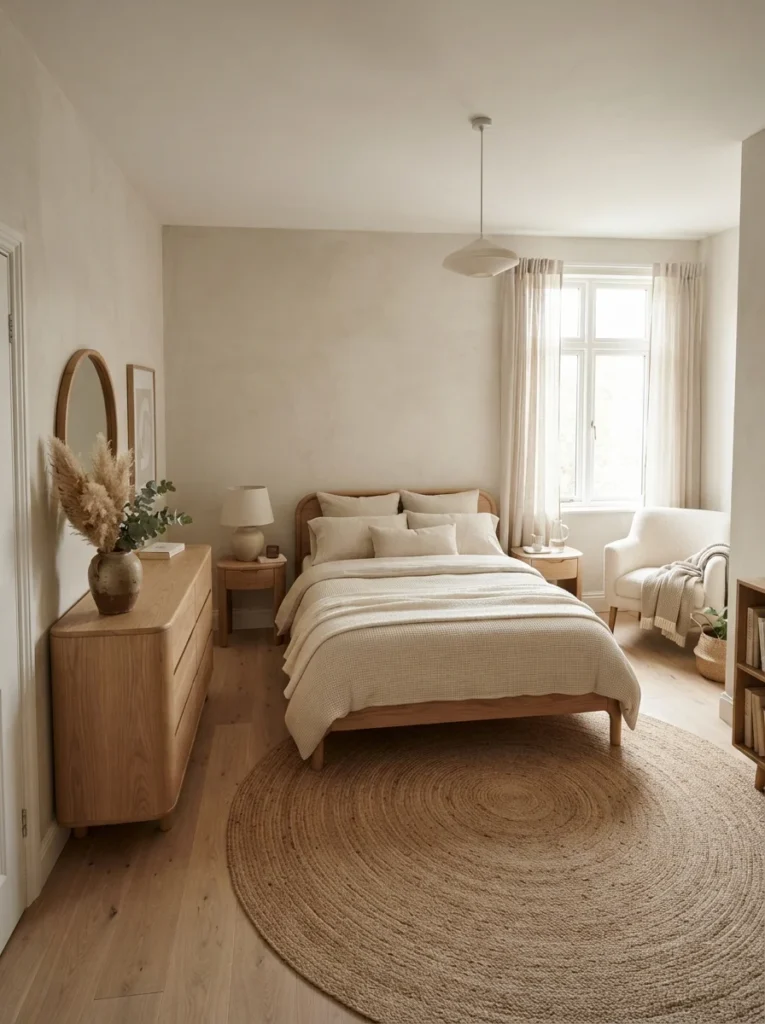
A soft neutral palette forms the backbone of most calming rooms. Shades like ivory, oatmeal, and warm greige keep walls feeling gentle. These tones reflect light softly instead of bouncing it harshly around the room. A neutral base also lets textures take center stage. Homeowners who prefer a cream palette can look at modern cream bedroom ideas for inspiration on layering warm neutrals. Paint finishes matter too; matte finishes absorb light and reduce glare. This approach suits nearly every architectural style, from modern to traditional.
Natural Wood Furniture
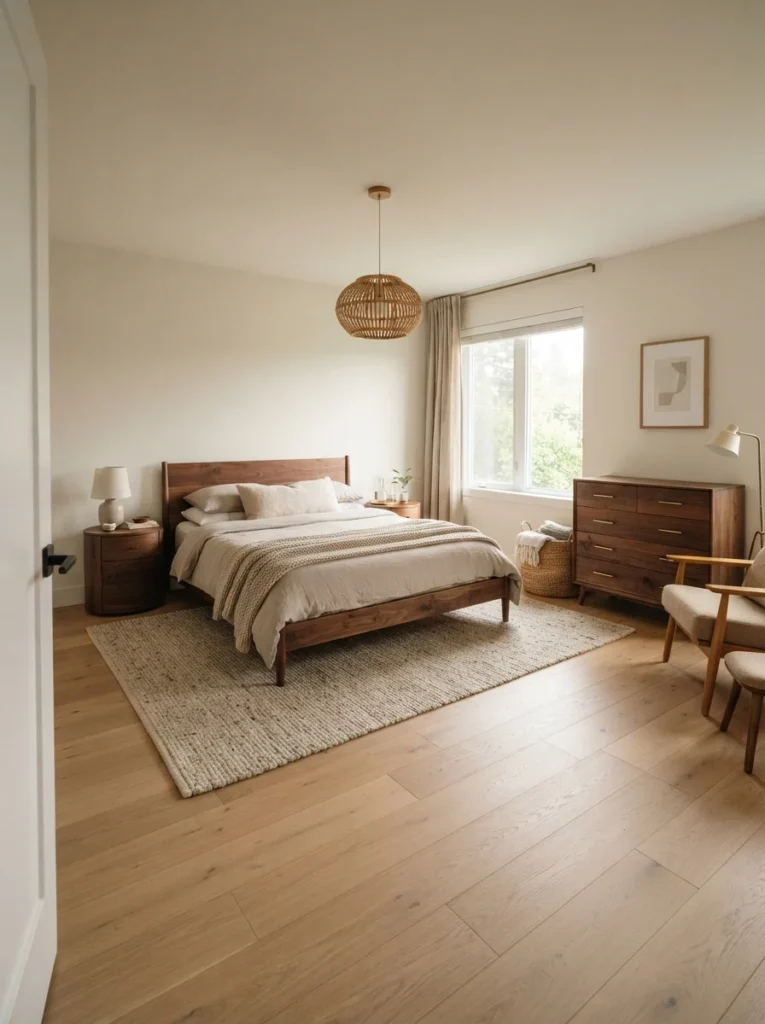
Wood furniture brings warmth and organic texture into a calming room. Oak, walnut, and ash all carry a grounding presence. Unlike glossy metal or high-shine lacquer, wood grain feels tactile and quiet. A low wooden bed frame or a simple dresser adds structure without visual clutter. Additionally, wood pairs naturally with linen, wool, and stone accents. Furniture with rounded edges softens the overall room even further. This combination creates a space that feels rooted rather than sterile.
Layered Soft Textiles
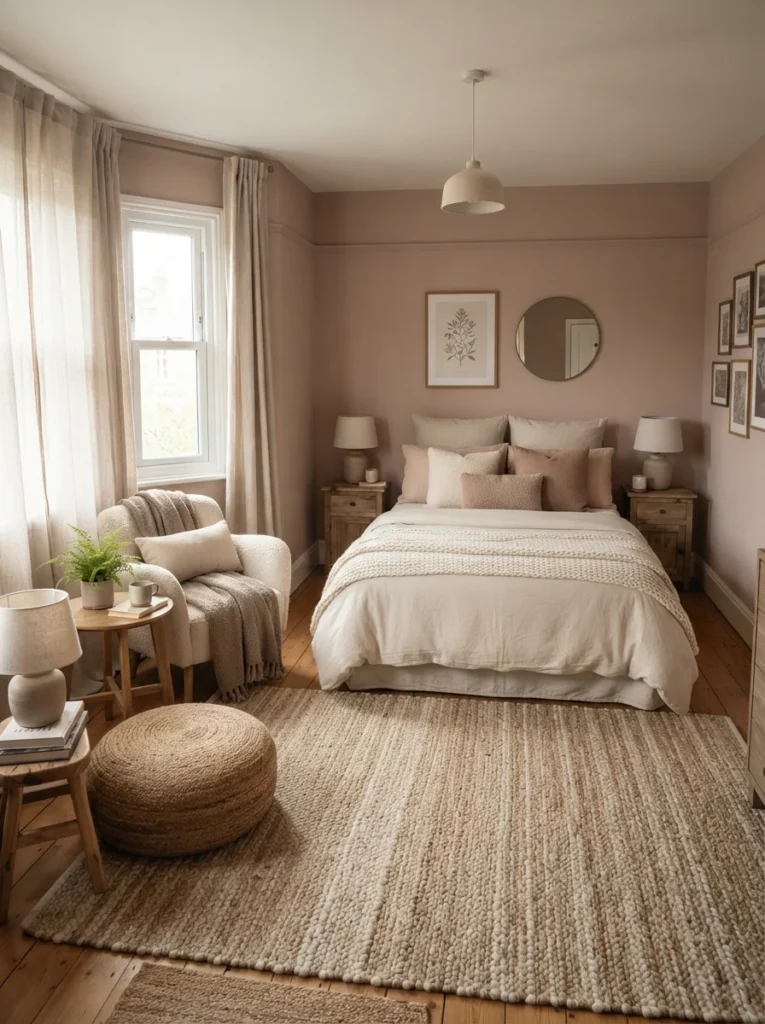
Textiles add softness that hard surfaces cannot provide alone. A calming room benefits from layered throws, cushions, and woven blankets. Boucle, chenille, and brushed cotton all invite touch. Layering different textures, rather than matching everything exactly, creates depth. A single chunky knit throw over a smooth linen duvet works well. These small details make a room feel lived-in and comforting. As a result, the space feels warmer without adding visual weight.
Diffused Ambient Lighting
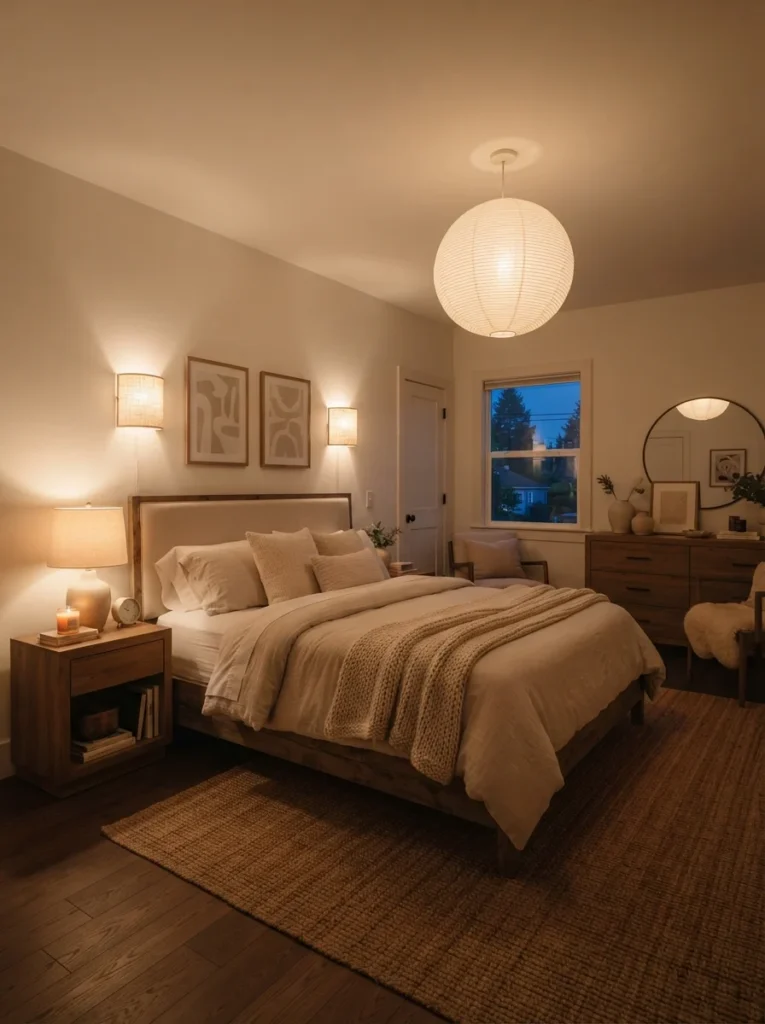
Harsh overhead lighting rarely feels calming. Diffused ambient lighting spreads light evenly and softly across a room. Frosted glass fixtures, paper lanterns, and fabric shades all soften bulb glare. Wall sconces placed at eye level create a gentle glow. Meanwhile, dimmer switches allow the mood to shift throughout the day. Warm bulbs, rated around 2700K, replicate candlelight better than cool white bulbs. This lighting style supports rest instead of alertness.
Indoor Plants and Greenery
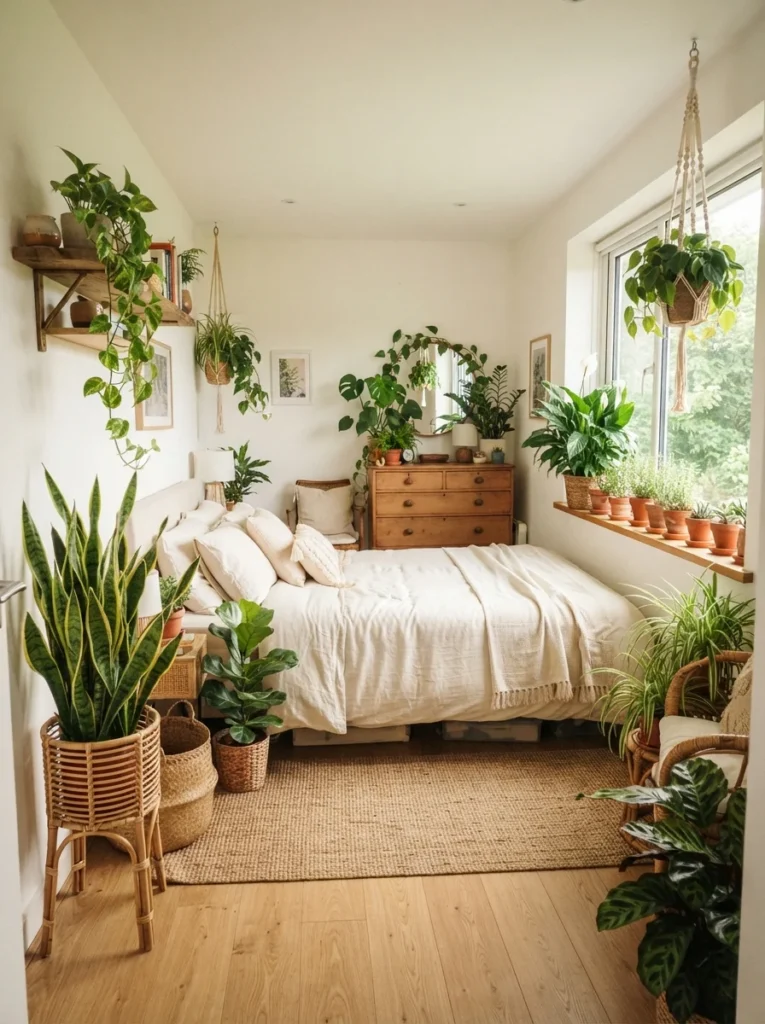
Plants bring life and gentle color into a calming room. Species like snake plants, pothos, and peace lilies tolerate lower light easily. Greenery softens hard edges around furniture and windows. Additionally, plants improve air quality and add a sense of freshness. A cluster of small pots on a windowsill works as well as one large statement plant. Woven baskets or ceramic planters keep the look cohesive. This natural element ties the whole room together.
Decluttered Minimalist Layout
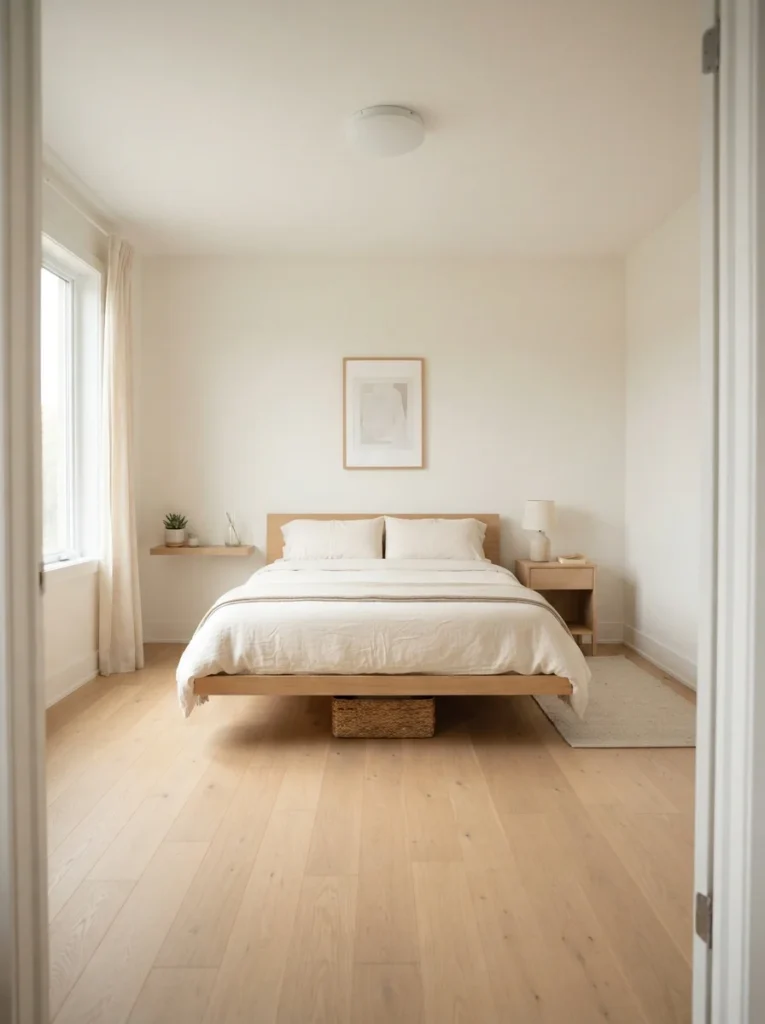
Clutter competes for attention and raises visual stress. A decluttered layout keeps only what serves the room’s purpose. Closed storage, like baskets or drawers, hides everyday items from view. Surfaces stay mostly clear, with only a few meaningful objects displayed. This approach doesn’t mean the room feels empty; it means the room feels intentional. As a result, the eye has fewer places to land and more room to rest.
Calming Blue Accent Wall
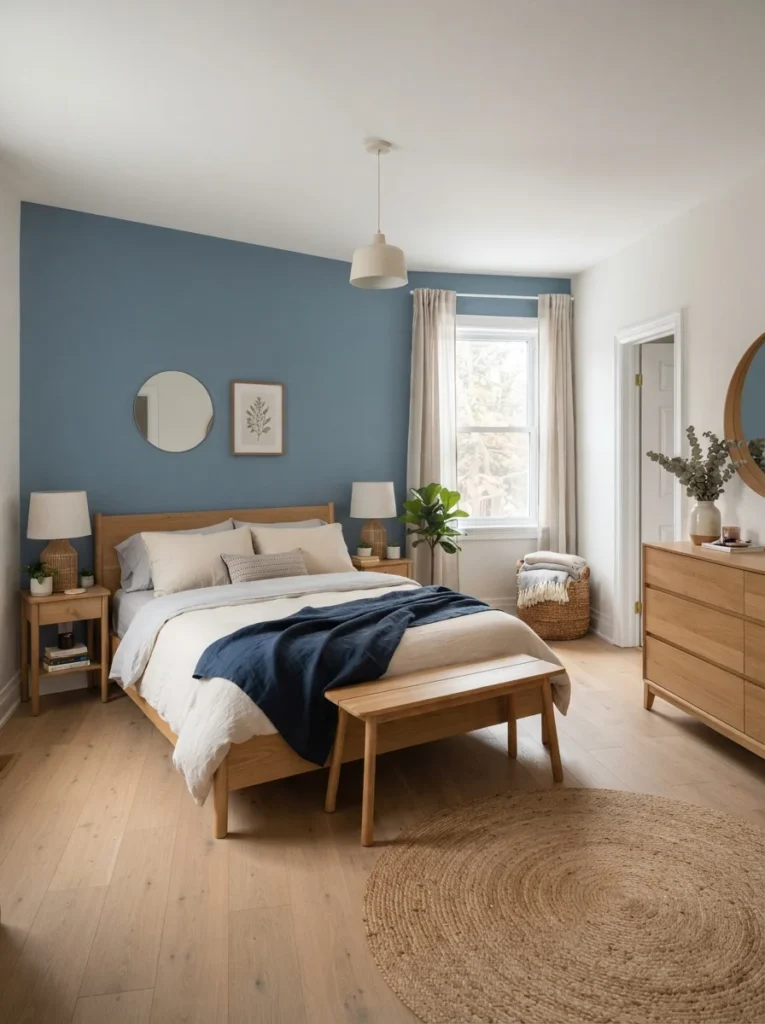
Blue remains one of the most researched calming colors in interior design. A single accent wall in dusty blue or soft slate avoids overwhelming the space. This color choice pairs beautifully with white trim and natural wood tones. For more color direction, homeowners can browse blue rooms ideas for palette pairings that stay soothing rather than cold. Matte or eggshell finishes keep the blue from feeling stark. This wall becomes a quiet focal point rather than a bold statement.
Blackout or Sheer Curtains
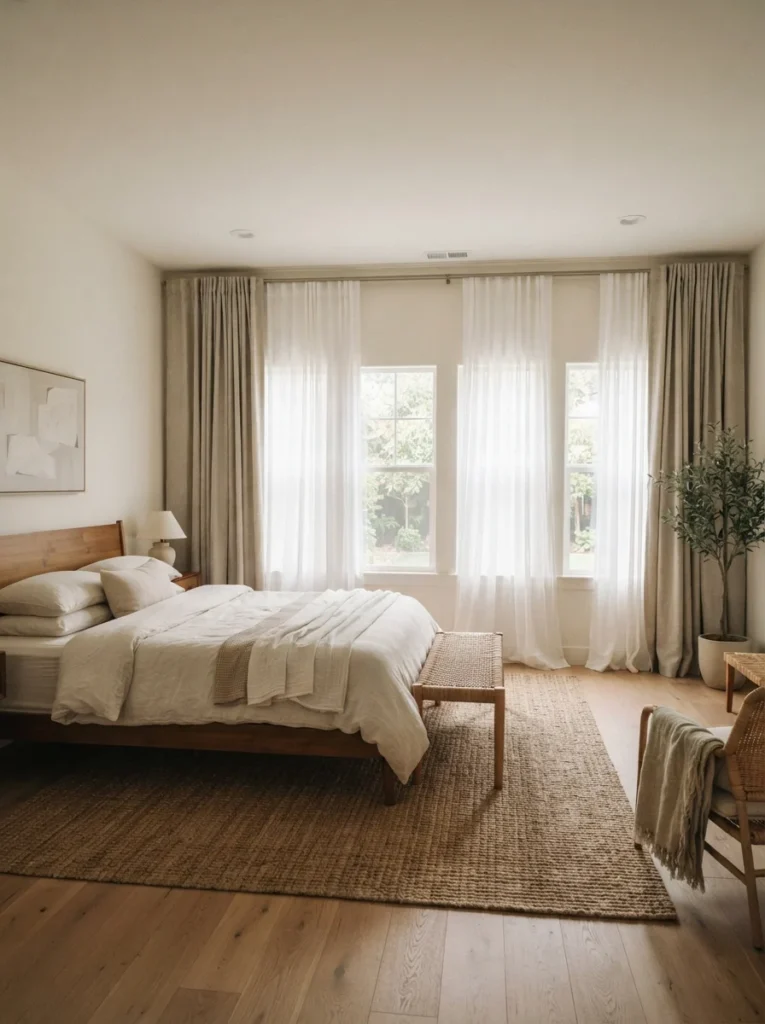
Window treatments control both light and privacy, two factors tied closely to calm. Blackout curtains in a soft fabric help with sleep and daytime rest. Sheer linen panels, meanwhile, filter harsh sunlight into a gentle glow. Layering both types allows flexibility throughout the day. Curtain rods mounted higher than the window frame make ceilings feel taller. This small adjustment adds an airy, unhurried feeling to the room.
Cozy Reading Nook
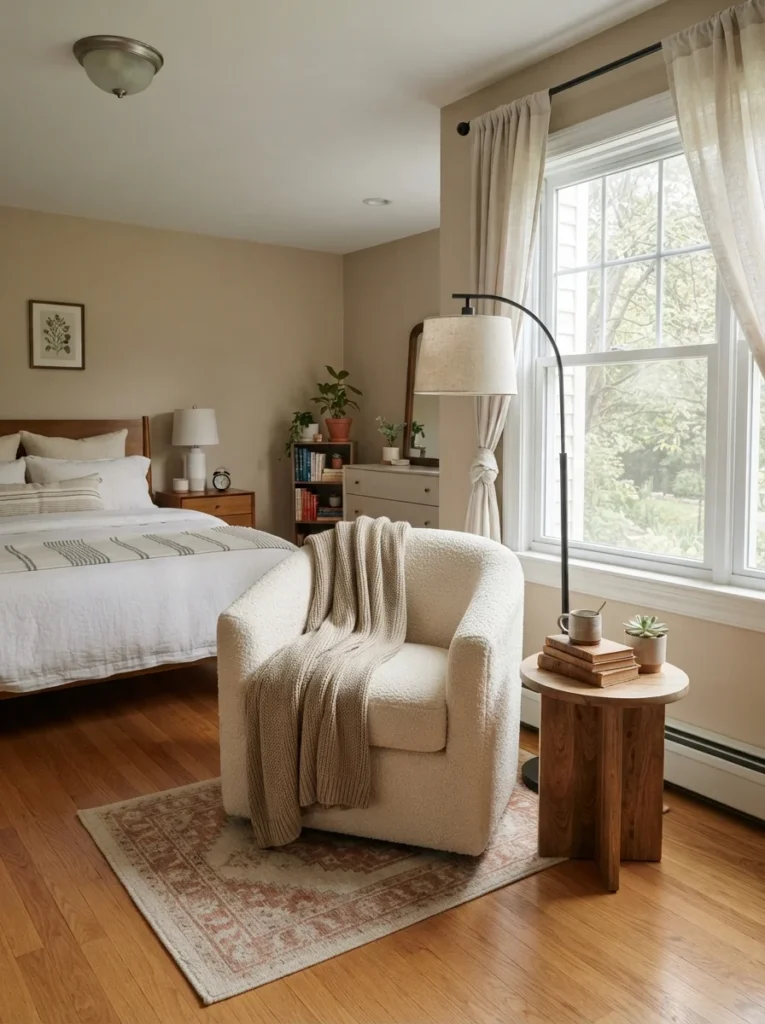
A dedicated reading nook gives a calming room a clear purpose beyond sleep. A single upholstered chair near a window works well in almost any layout. Adding a small side table and a soft throw completes the setup. For layout inspiration in tighter spaces, this small sitting area in bedroom guide offers practical configurations. A nook like this encourages slower mornings and quiet evenings. It also gives the room a second function beyond rest.
Aromatherapy Diffuser Corner
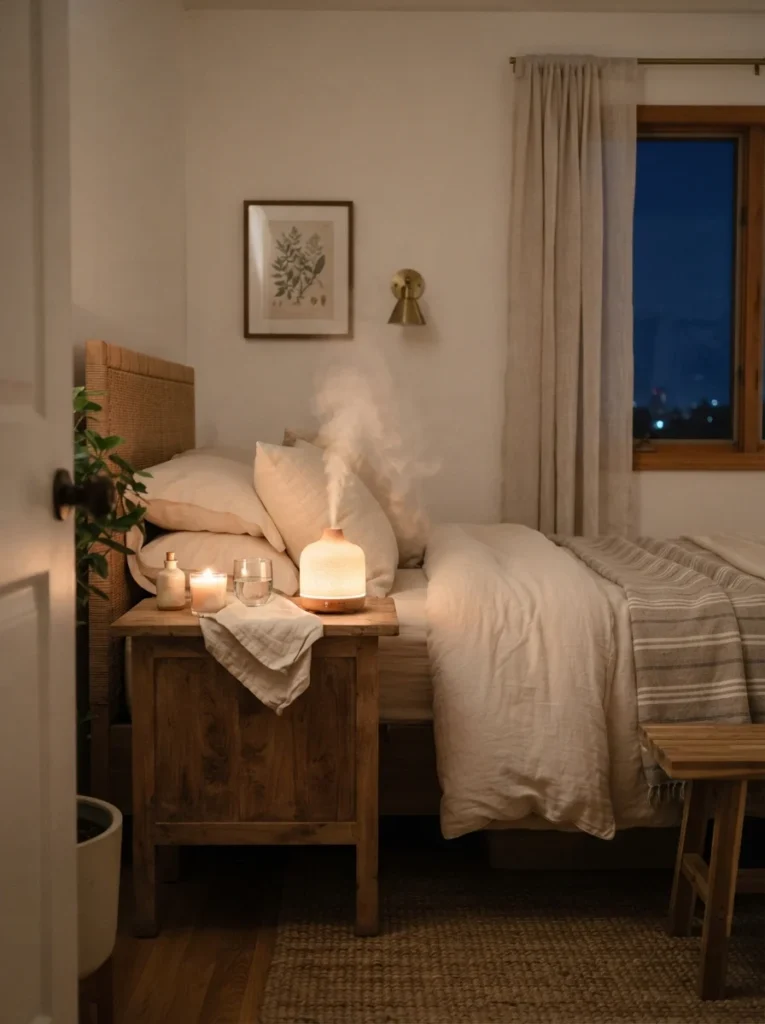
Scent plays a real role in how calm a room feels. A small diffuser corner with lavender, sandalwood, or chamomile oil supports relaxation. Placing it on a nightstand or shelf keeps it accessible without taking up floor space. Additionally, a soft glow diffuser doubles as gentle nighttime lighting. This detail appeals to the senses beyond sight alone. Scent-based calm works quickly and requires very little space.
Soft Area Rug Layering
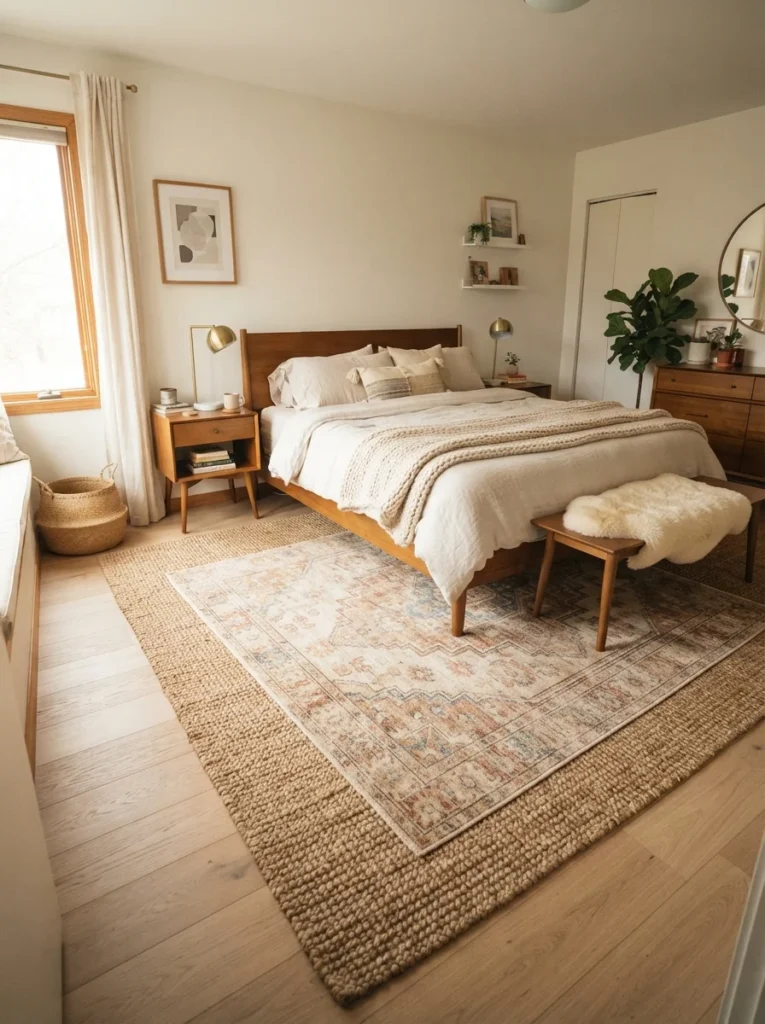
Bare floors can feel cold and echo sound around a room. A soft area rug absorbs noise and adds warmth underfoot. Layering a smaller patterned rug over a larger neutral one adds texture without clashing. Wool and jute rugs both bring natural fiber into the space. This layering technique works especially well in bedrooms and reading corners. As a result, the floor feels as intentional as the walls.
Muted Sage Green Tones
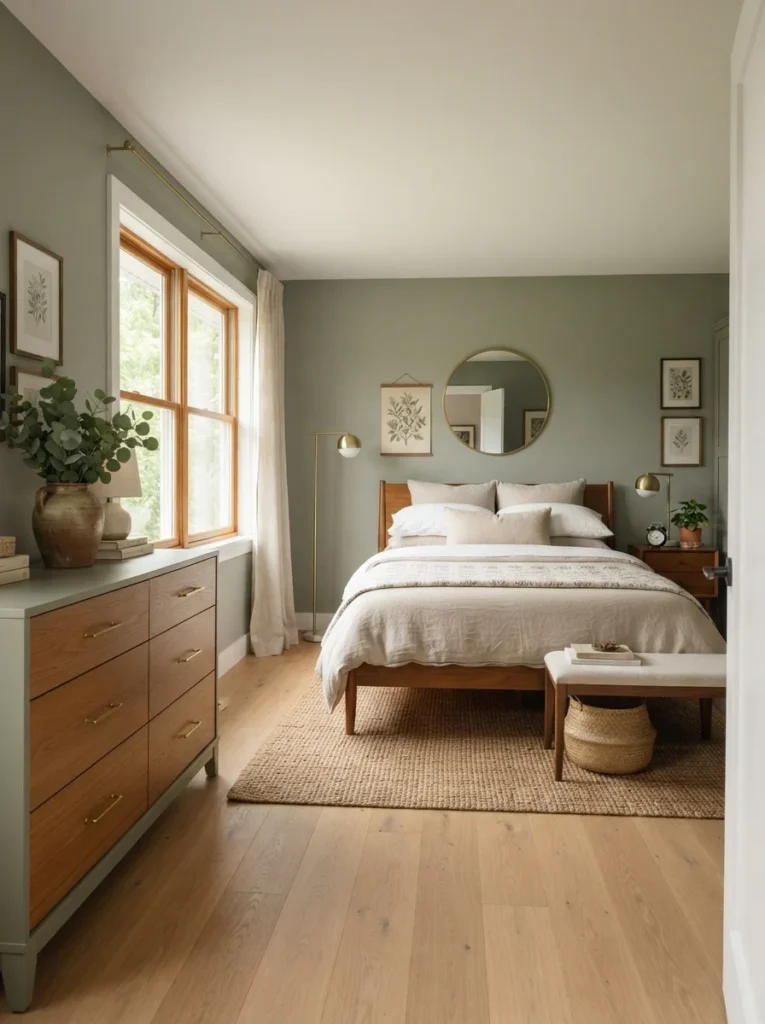
Sage green sits between blue and neutral on the calming color spectrum. This muted tone works beautifully on walls, bedding, or upholstery. It pairs naturally with warm wood and brass accents. Readers who want a deeper dive into this palette can explore olive green bedroom ideas for styling direction. Sage green avoids feeling cold, unlike some brighter greens. This tone works well in rooms with plenty of natural light.
Linen Bedding and Natural Fabrics
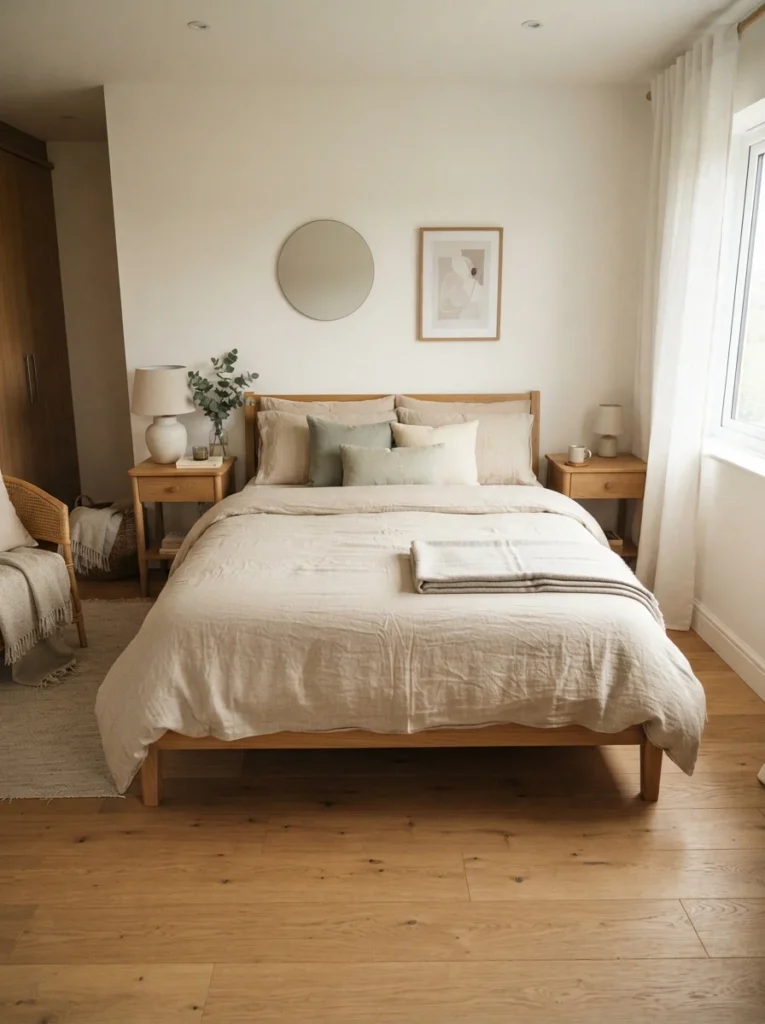
Bedding fabric affects both comfort and visual calm. Linen wrinkles softly and breathes well, unlike stiff synthetic blends. Natural cotton and wool also support a relaxed, tactile feel. For a full breakdown of fiber choices, this natural bedding ideas resource covers materials in more depth. Choosing muted, earthy bedding colors keeps the whole room cohesive. This detail touches the body directly, so comfort matters as much as looks.
Wall Art with Nature Scenes
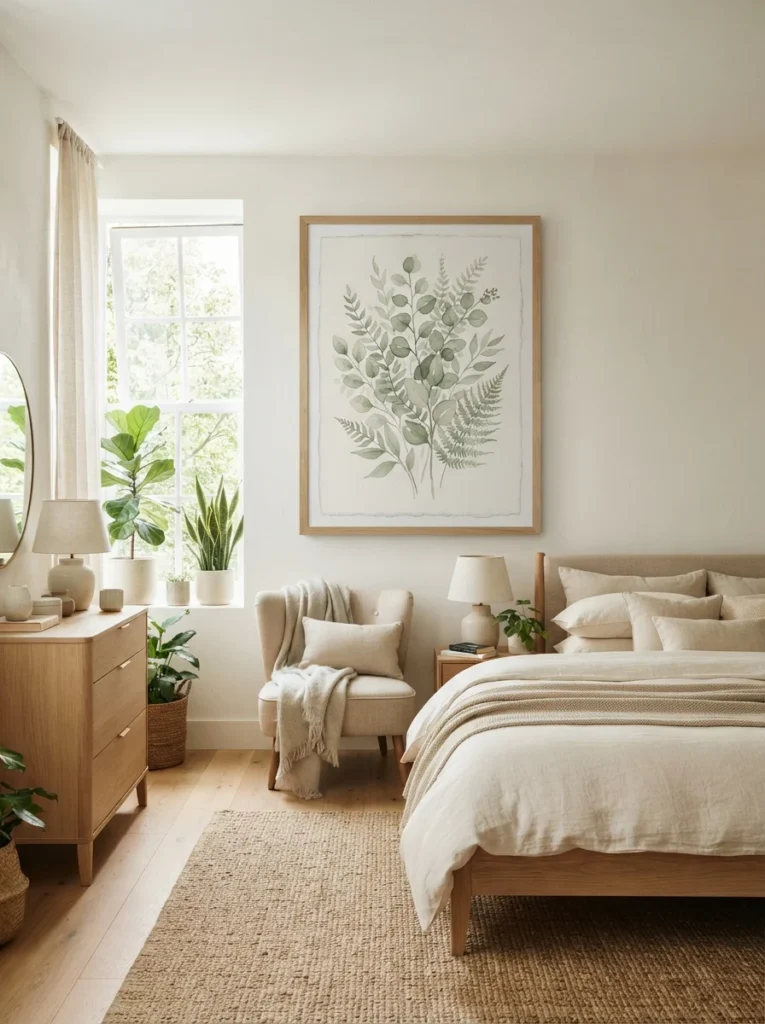
Nature-themed art brings the outdoors inside without adding clutter. Soft watercolor landscapes or botanical prints work well above a bed or sofa. Frames in natural wood tones keep the art from feeling too formal. A single large piece often works better than several small, busy pieces. This choice gives the eye a peaceful focal point. As a result, the wall feels curated rather than empty.
Dimmable Table Lamps
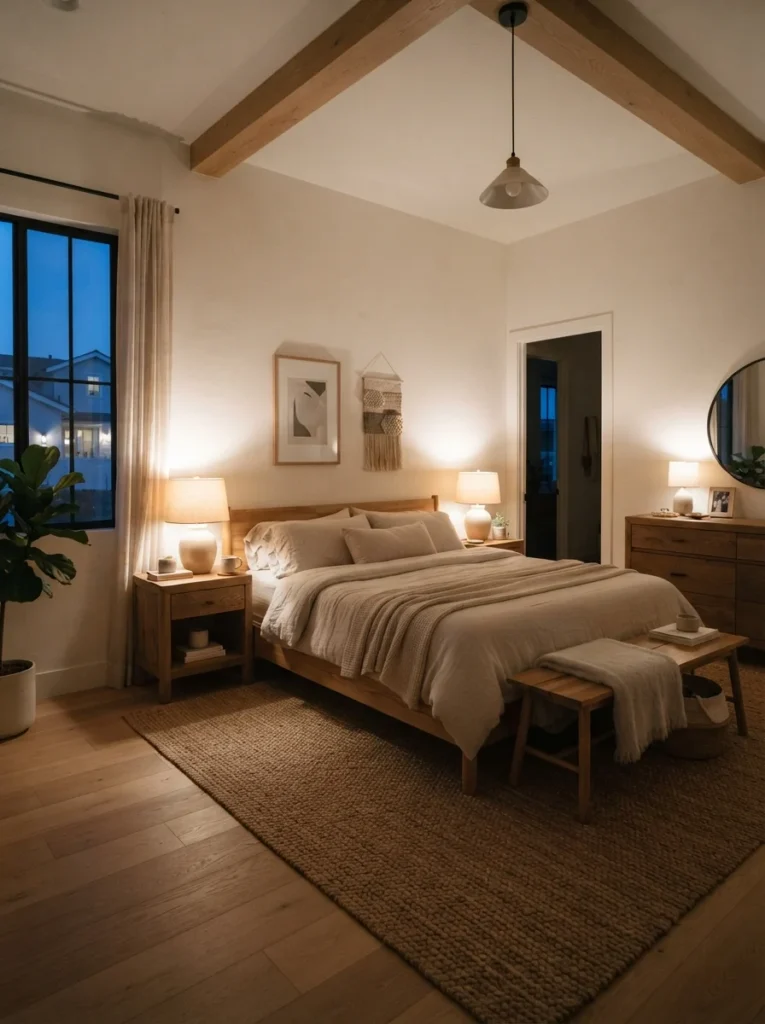
Table lamps offer flexible, low-level lighting that overhead fixtures cannot match. A dimmable lamp on a nightstand allows brightness to shift with mood. Ceramic or linen shade lamps diffuse light more gently than exposed bulbs. Placing two matching lamps on either side of a bed creates symmetry and calm. This lighting layer works alongside ambient fixtures rather than replacing them. Together, these layers support a softer evening routine.
Meditation or Yoga Corner
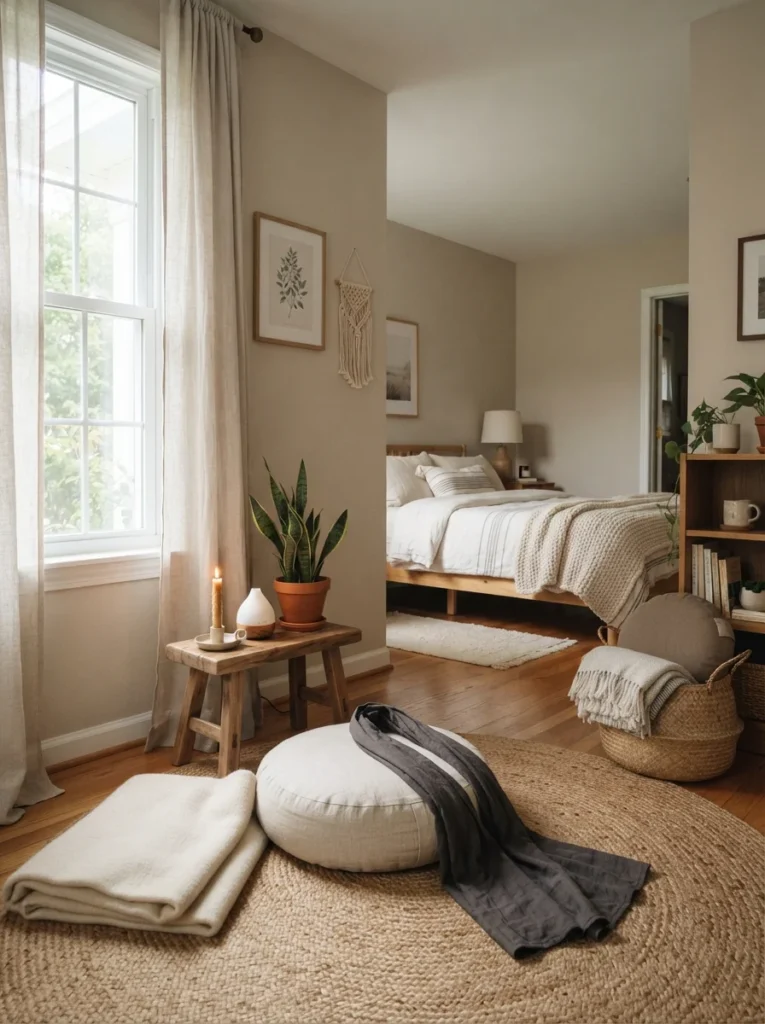
A small meditation corner gives a calming room a dedicated purpose for stillness. A floor cushion, a folded blanket, and a low table are often enough. This corner works best near natural light, away from screens and clutter. Additionally, a small plant or candle nearby reinforces the mood. This space doesn’t need to be large to feel effective. Even a modest corner supports a daily pause.
Wood and Stone Textures
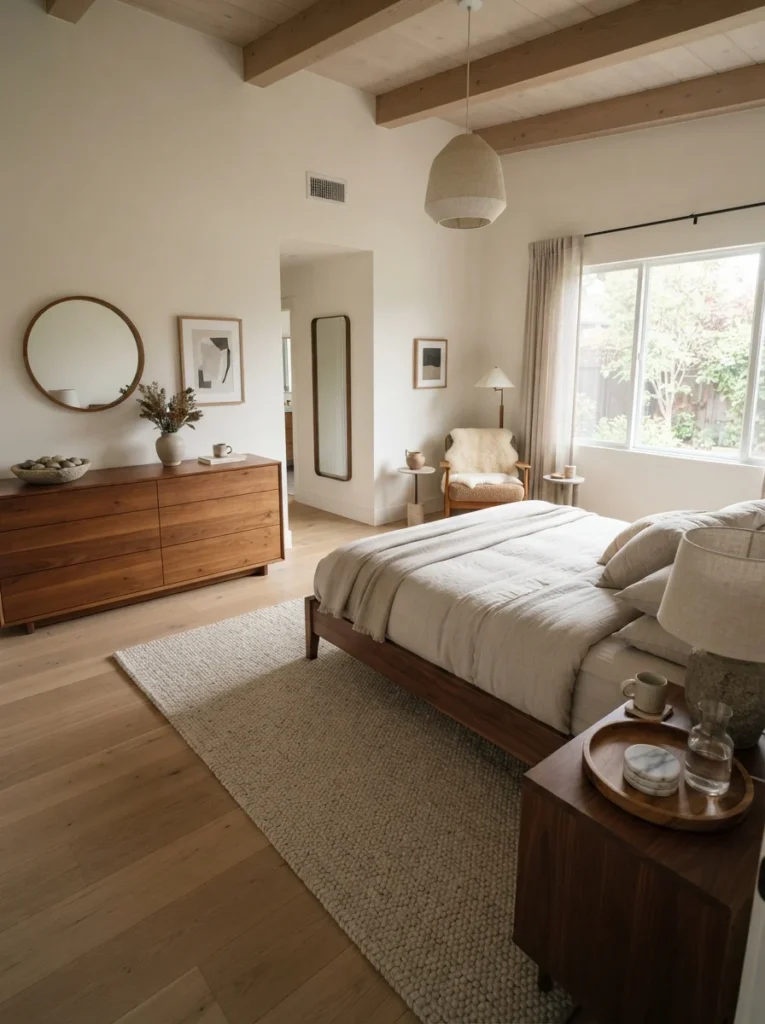
Mixing wood and stone brings a grounded, natural feel into any room. A stone lamp base, a wooden tray, or a marble coaster set adds texture in small doses. These materials feel cool and solid against softer fabrics nearby. This contrast, rather than clashing, actually balances a room’s warmth. Additionally, natural materials age gracefully compared to synthetic finishes. This pairing suits Japandi, organic modern, and minimalist styles equally well.
Soundproofing and Soft Acoustic Elements
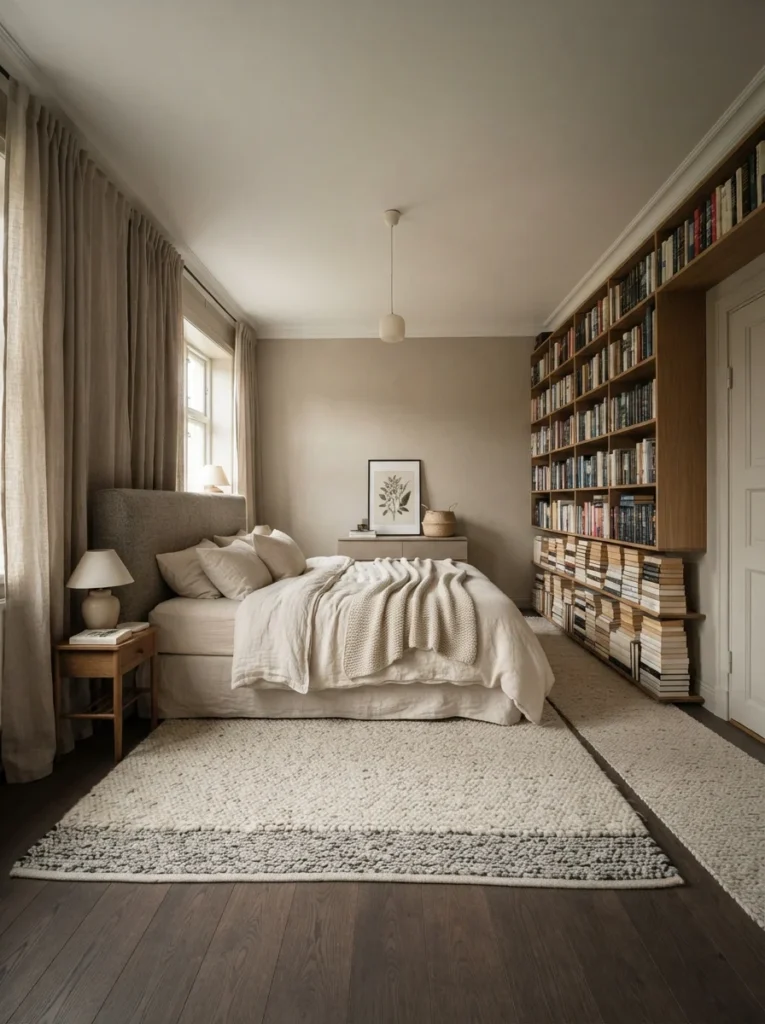
Sound affects calm as much as color and light. Thick curtains, upholstered headboards, and layered rugs all absorb noise naturally. A bookshelf placed against a shared wall also softens sound transfer. Additionally, felt or cork wall panels work well in rooms near busy streets. This detail often gets overlooked, yet it matters greatly for true rest. A quieter room supports deeper, more consistent relaxation.
How to Choose Colors for a Calming Room
Choosing the right palette starts with undertone, not just color name. Warm neutrals, muted blues, and soft sage greens all read as calming. However, overly bright or saturated shades tend to raise energy rather than lower it. Testing paint swatches at different times of day helps avoid surprises. Morning light and evening light both change how a color appears. Additionally, pairing a chosen color with natural materials softens its overall effect. A calming room rarely relies on one single wall color alone; it relies on a consistent, muted palette throughout.
Common Mistakes to Avoid When Creating a Calming Room
Overcrowding furniture is one of the most common mistakes in a calming room. Too many pieces compete for space and attention. Another mistake involves mixing too many bold patterns at once. A calming room favors texture over pattern in most cases. Harsh, cool-toned lighting is another frequent issue, since it can feel clinical rather than restful. Skipping window treatments altogether also leaves a room feeling exposed and unfinished. Finally, ignoring scent and sound means missing two senses that strongly shape how calm a room actually feels. For primary suites with attached bathrooms, this master suite floor plan ideas guide helps balance calm across connected spaces.
More ideas: For more inspiration, take a look at these college apartment room ideas.
FAQs About Calming Room Ideas
What color is best for a calming room? Soft blues, warm neutrals, and muted sage greens consistently rank as the most calming choices. These colors avoid high saturation, which keeps the room feeling settled rather than stimulating.
Can a small room still feel calming? Yes, small rooms often feel calming faster than large ones. Decluttering, soft lighting, and a limited color palette make compact spaces feel cozy instead of cramped.
Do plants really make a room feel calmer? Plants add texture, color, and improved air quality, all of which support a relaxed atmosphere. Even one or two well-placed plants can make a noticeable difference.
Is this something homeowners can do themselves? Most of these ideas work well as a do it on your own project. They rely on styling and swaps, not construction. Paint, textiles, and lighting changes require no special tools or contractors.
How much does it cost to create a calming room? Costs vary widely depending on materials chosen. Small changes, like new bedding or a lamp swap, cost very little. Larger changes, like new furniture or paint, require a bigger budget.

Written by Stephanie Fallis
Mom and homemaker who shares budget friendly DIY projects, decorating tips and gardening ideas for busy families.
More about me → Christmas ideas21 DIY Christmas Cards That Are Fun to Make
 Christmas ideas22 Christmas Plants for a Festive Green Home
 Christmas ideas21 Farmhouse Christmas Decor Ideas: Simple and Rustic