
Christmas sensory activities for kids should match the child’s age, interests, and tendency to mouth objects. Begin with one material and close adult supervision. Keep sessions optional, and stop when a child shows discomfort or loses interest. These activities are play ideas, not therapy or promised developmental results.
The AI-generated images are visual prompts, not safety-tested setups. Several contain decorative baubles, pinecones, glass, small parts, or homemade bags that should not be copied literally. The descriptions explain what to replace. Use age-rated products and keep nearby holiday decorations outside the play area.
In this post: 20 ideas
- A tree-shaped color pressing activity
- A basket for comparing large fabric textures
- A tree mat for pressing dough shapes
- Washing holiday cups with water
- Sorting large red and green play shapes
- Watching a purpose-made snowflake viewer
- Stamping with large tree and star shapes
- Comparing sounds with age-rated shakers
- Decorating a large felt tree
- A white cloth basket instead of loose snow
- Watching plain ice melt in a tray
- Comparing textures on a flat activity panel
- A food-based mark-making option
- Stacking large soft gift blocks
- Rolling a piece of play dough
- A green visual panel with a tree outline
- A stocking-shaped textile comparison
- Painting cardboard with plain water
- Sorting large soft play balls
- Listening to paper crumple
1. A tree-shaped color pressing activity
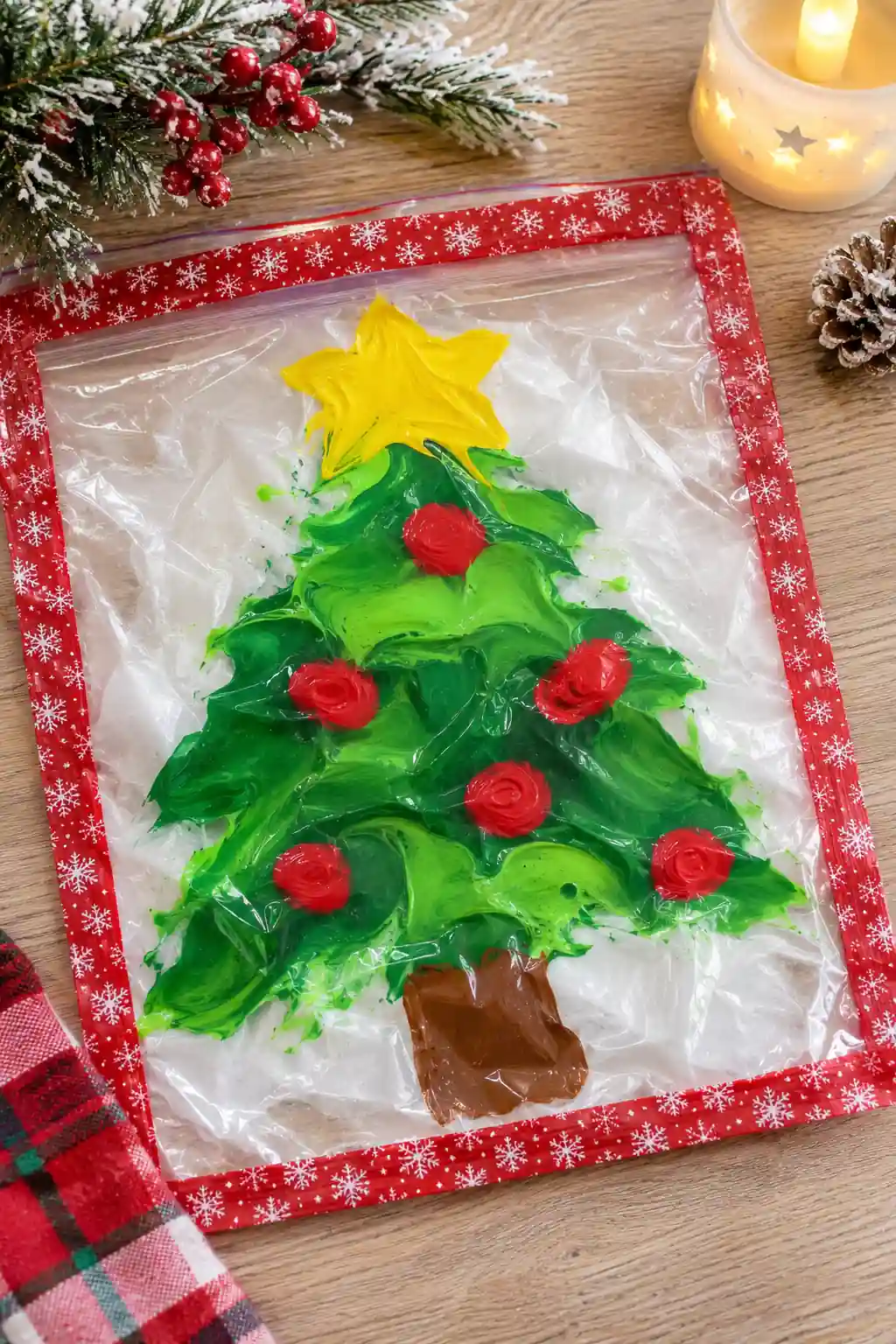
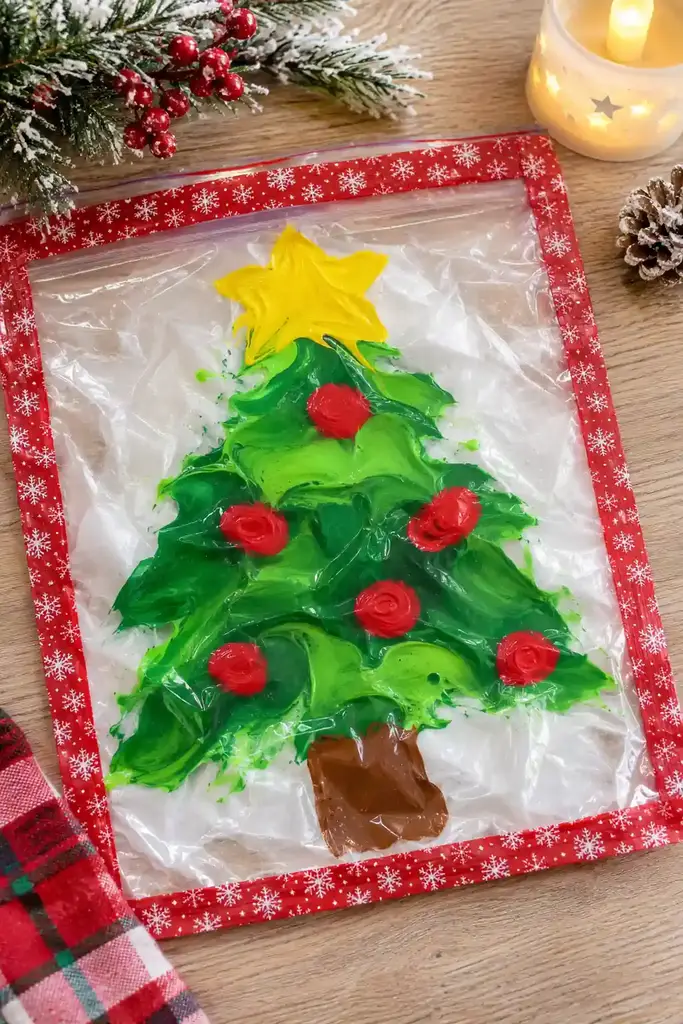
Green color, red circles, and a yellow star create a tree inside the pictured clear pouch. The visual idea is to press and move color without touching it directly. However, an ordinary taped storage bag is not a tested sensory toy. Tape does not establish a secure permanent seal.
Adapt the concept with a purpose-made sensory panel rated for the child’s age, following all product instructions. Do not hand a loose plastic bag to a baby or child who mouths objects. A flat printed tree beneath a suitable commercial panel can supply the Christmas theme without loose decorative contents.
Invite the child to trace the outside tree shape or follow a broad line with one finger. Keep the session short enough to maintain interest. Stop if the panel leaks, loosens, or shows damage. For a child who prefers dry materials, use a large fabric tree instead. The seasonal colors are optional; the simple pressing action is the main part of this activity.
2. A basket for comparing large fabric textures
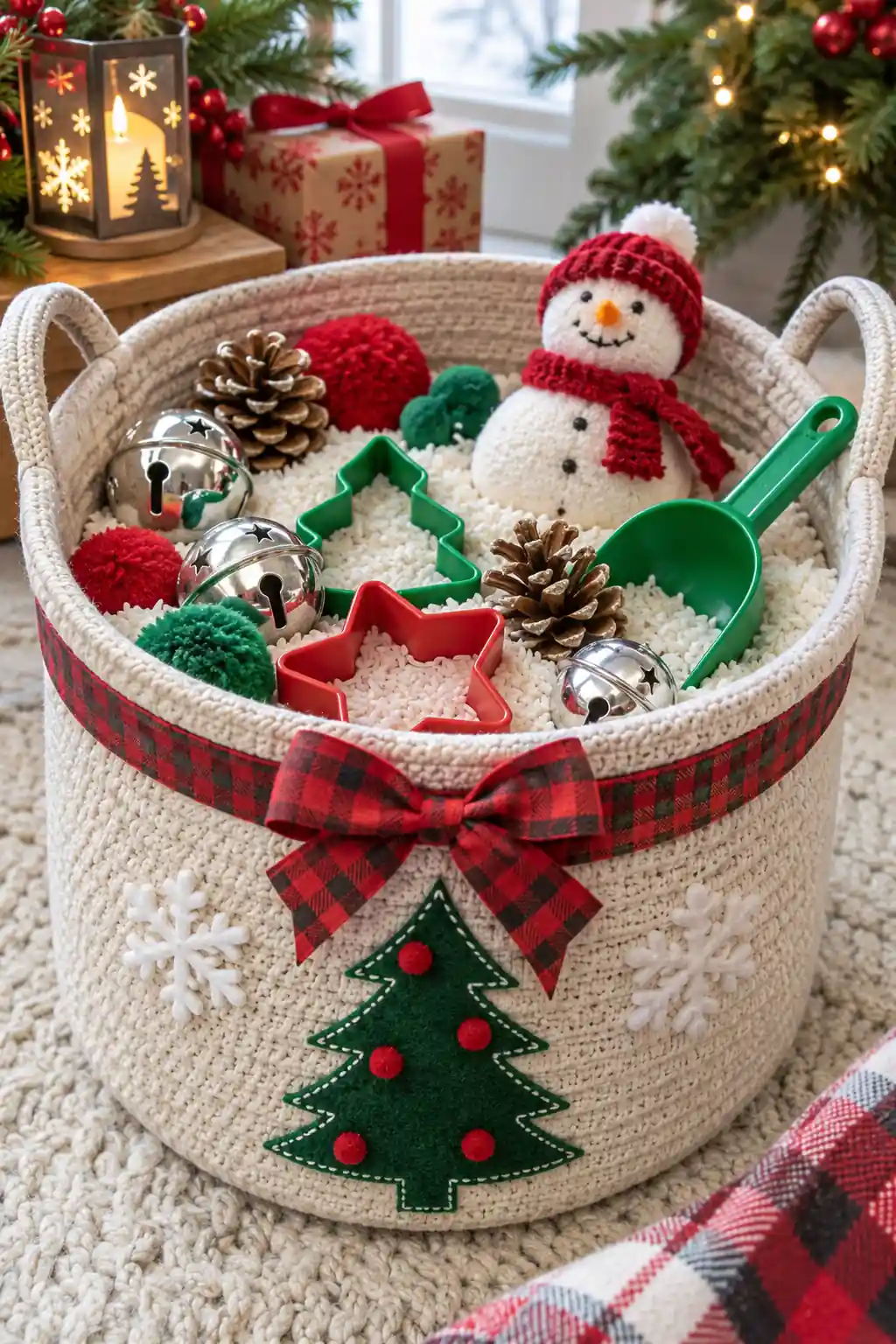
The pictured basket mixes knitted shapes with bells, pinecones, and other small decorations. Use the fabric-comparison idea, but remove those loose decorative objects before planning children’s play. They are styling props, not a suitable general-purpose sensory collection. Choose large washable textile pieces with intact edges instead.
Offer two contrasting fabrics first, such as smooth cotton and a soft ribbed cloth. Let the child choose which to touch rather than placing unfamiliar texture in their hands. Describe a texture briefly if they welcome conversation. There is no need to turn each touch into a quiz.
Keep ribbons, buttons, beads, and loose stuffing out of the basket. Inspect seams before each use and choose materials appropriate to the child’s age and habits. A low container makes the pieces easier to reach. Put the fabrics away after the supervised session rather than leaving a decorative basket accessible. The red-and-green palette can provide the holiday reference without additional small Christmas ornaments.
3. A tree mat for pressing dough shapes
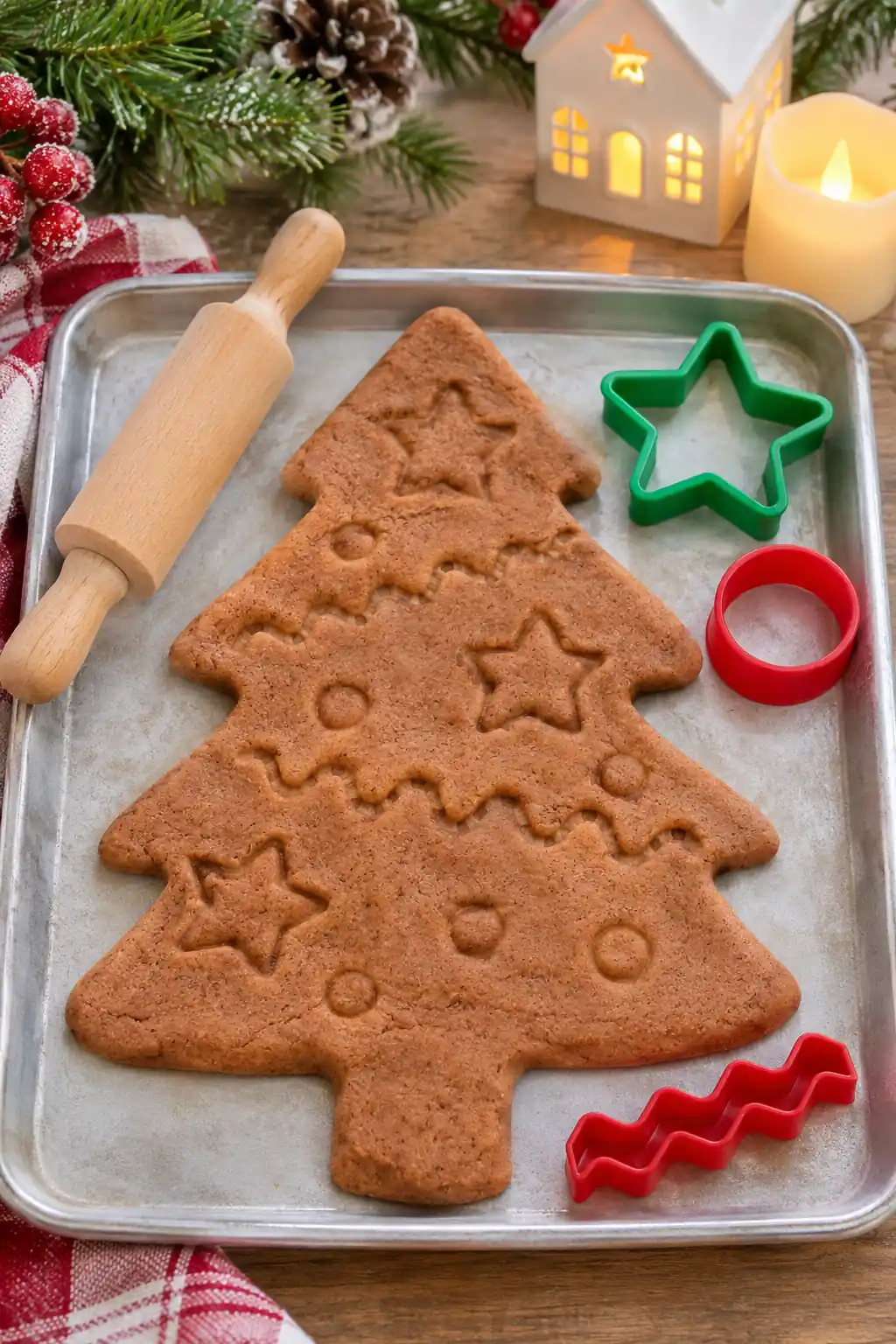
A broad tree shape provides a surface for making star and circle impressions. The pictured brown material suggests cinnamon dough, but this image is not a recipe. Use an age-appropriate commercial play dough according to its label, checking ingredients and allergies. Unscented material is a reasonable first choice.
Do not use uncooked flour dough for play. The CDC raw dough guidance includes homemade play dough among products children should not handle when made with raw flour. Avoid adding loose spices or essential oils to copy the picture.
Choose large blunt tools designed for the child’s age, with no detachable small parts. Show one press, then leave room for their own marks. The dough does not need to remain a neat tree. Some children may prefer flattening or rolling it instead. Stop the activity if the child mouths the material, and wash hands and the work surface afterward according to the product instructions.
4. Washing holiday cups with water
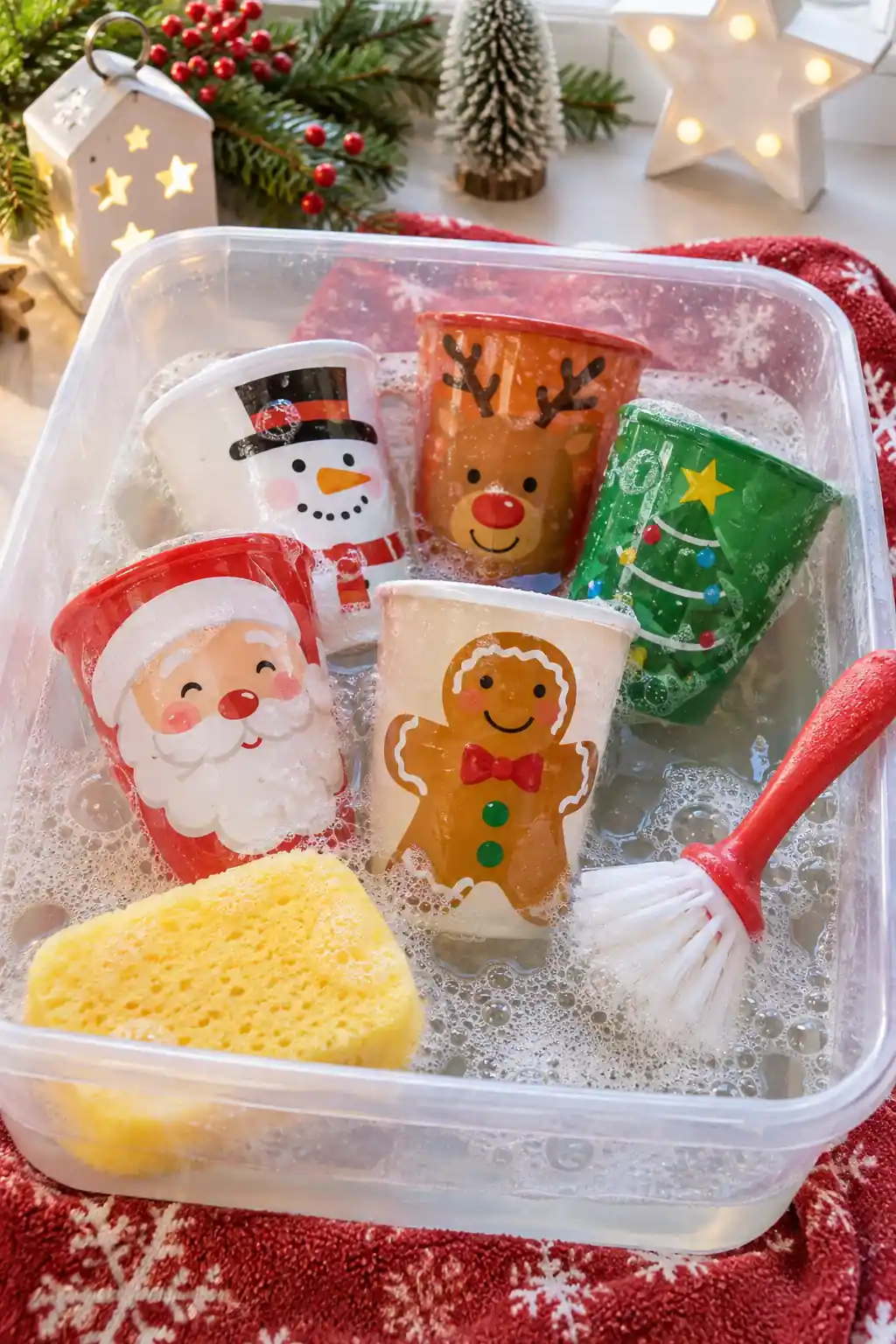
Holiday pictures on large cups turn a washing activity into a seasonal one. The image includes suds and a brush, but plain water can provide enough variation. Choose sturdy age-appropriate cups without loose decorations. Keep the number of items small so the child has room to move them.
Use a shallow stable tray with an adult continuously within reach. Water play requires close attention even when the amount looks small. Do not leave to answer a phone or collect supplies. Have towels ready before starting and empty the tray immediately after the activity.
A child can pour between cups, wipe the outside, or place them upside down to drain. Demonstrate gently without requiring a particular result. Replace the pictured sponge if it sheds or could be bitten apart. Avoid glass containers and unnecessary detergents. Dry spills promptly so the surrounding floor does not become slippery. A dry cloth-and-cup version is another option when water play does not suit the setting or supervision available.
You may also like: Christmas painting ideas for kids.
5. Sorting large red and green play shapes
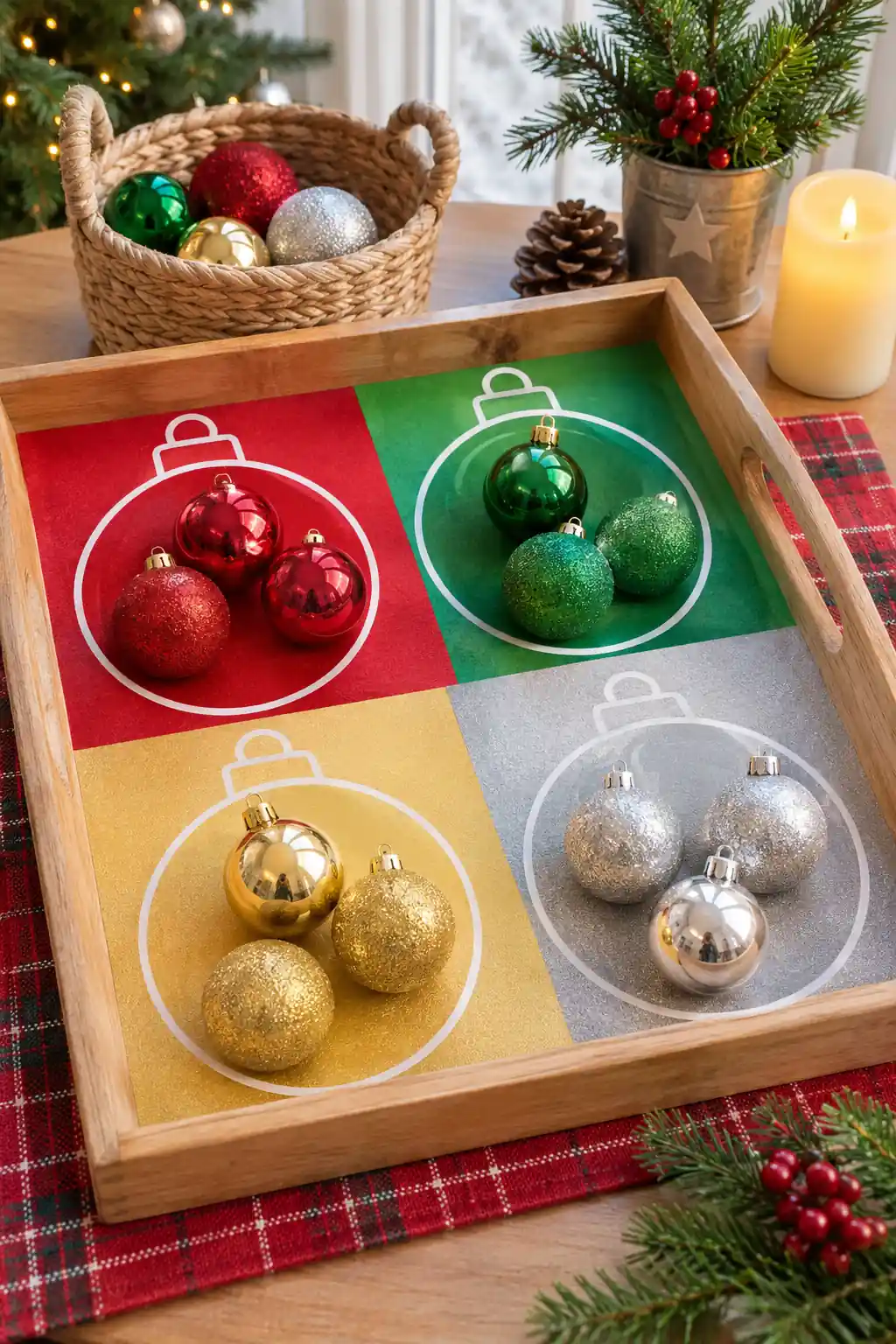
The image shows shiny baubles divided by color, despite the intended wooden-sorting concept. Do not use glass ornaments, metal caps, or ordinary tree decorations for children’s sorting. Replace them with large age-rated wooden or soft play pieces. Choose products designed for handling, not seasonal display.
Use two colored areas on a tray to begin. Place one matching piece in each area, then let the child continue if interested. Sorting by shape is another option when color matching feels repetitive. Keep the task flexible rather than correcting every choice.
Check each play piece for loose parts, rough edges, and suitability for the child’s age. Large-looking objects in an image do not prove they are safe. Avoid magnets and loose hanging loops. A flat paper picture beneath the tray can suggest baubles without introducing real ornaments. Finish by counting or naming the groups only if the child wants that extra step. The main activity can remain moving and comparing the pieces.
6. Watching a purpose-made snowflake viewer
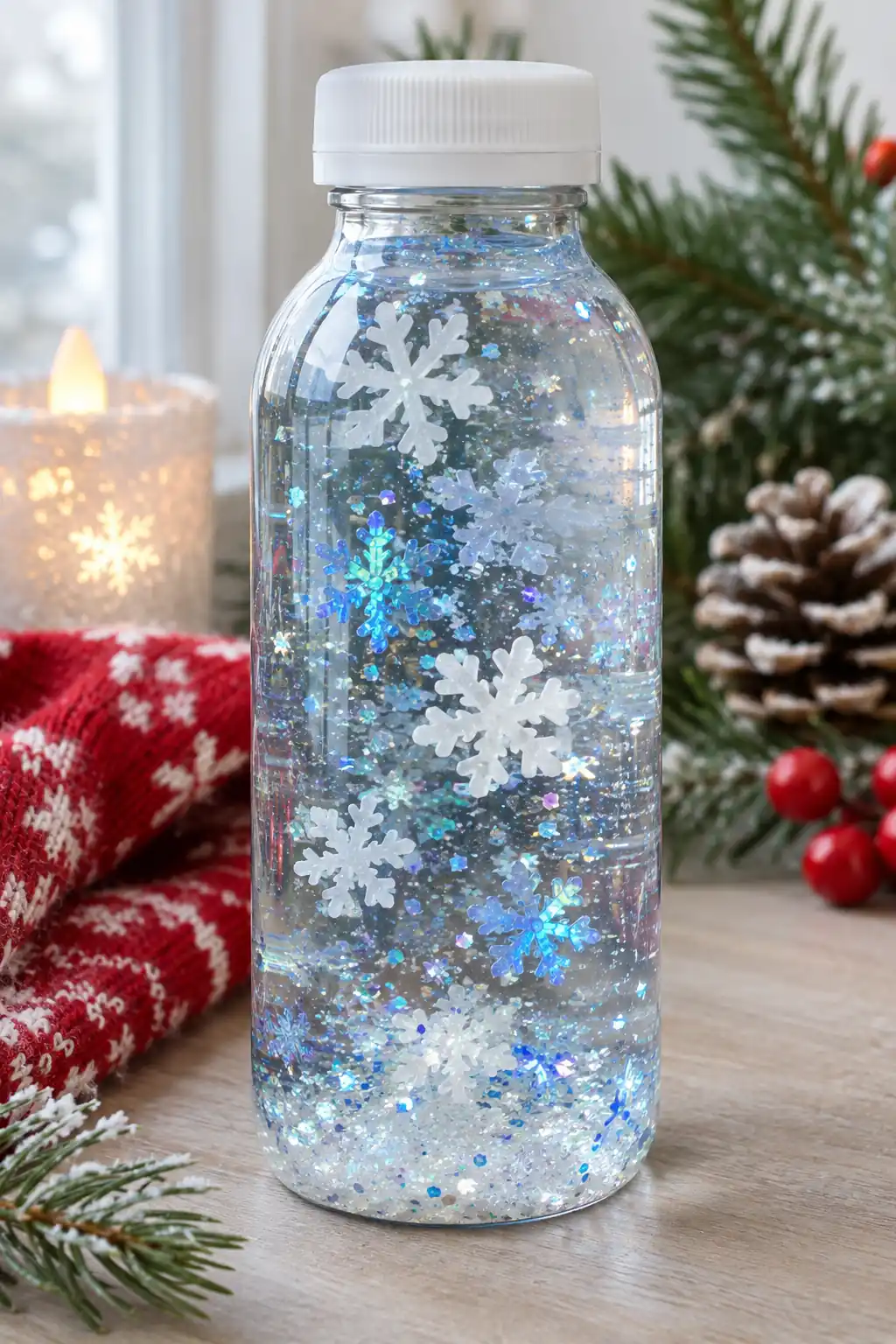
White and blue shapes appear suspended inside the clear bottle in this image. The visual concept is watching movement settle. A glued or taped household bottle is not automatically suitable for children’s handling. Its closure, contents, and resistance to damage cannot be verified from the illustration.
Choose a commercially made sensory viewer rated for the child’s age and follow its instructions. Do not make a loose-filled bottle with glitter, beads, or small decorations for a child who mouths objects. An adult can hold an appropriate viewer while a child watches, if that matches the product’s intended use.
Keep the viewing activity optional. Some children enjoy slow movement, while others prefer a stationary picture. Invite them to notice one shape rather than promising a calming effect. Stop using the product if the container or seal is damaged. Do not add water beads. A laminated snowflake picture can provide a simpler seasonal alternative without moving liquid or loose contents inside a homemade container.
7. Stamping with large tree and star shapes
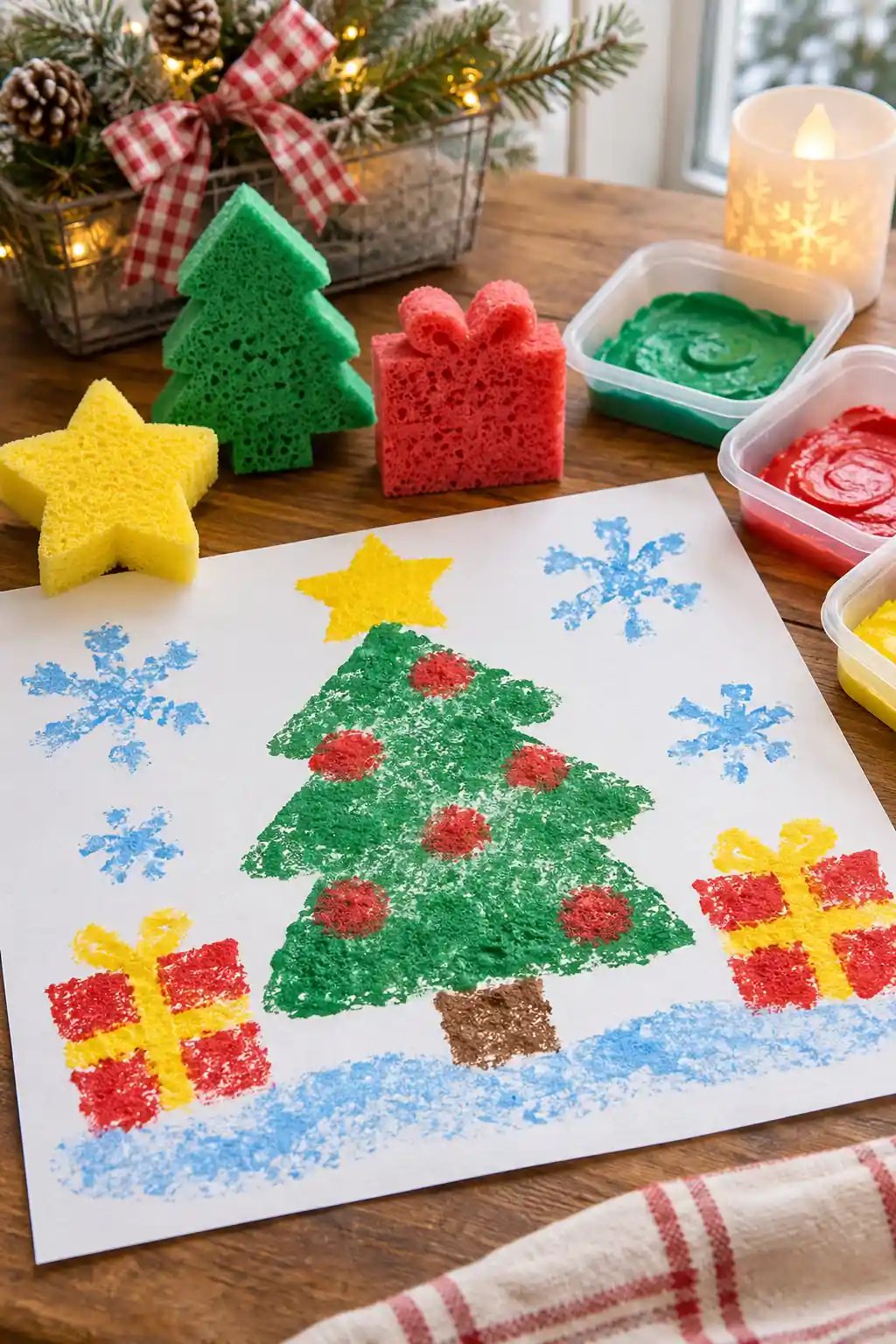
Large sponge shapes create tree, star, and present marks on the pictured paper. The different outlines make the activity recognizable without detailed drawing. Use tools made for children’s art at the relevant age. Ordinary foam can tear or be bitten, so inspect the material before use.
Choose paint labeled for the intended activity and age. Follow its directions and keep it away from mouths. Offer one or two colors first so the tray remains manageable. A broad sheet of paper gives room for repeated marks without needing a finished Christmas scene.
Show how to lift the stamp straight up, then let the child choose where to press. Smudges and overlapping shapes are part of the result. Do not expect the precise layout shown in the generated image. Our Christmas painting ideas for kids provide related visual prompts. Keep nearby ornaments and artificial greenery away from the art surface, then clean hands and tools after the supervised session.
8. Comparing sounds with age-rated shakers
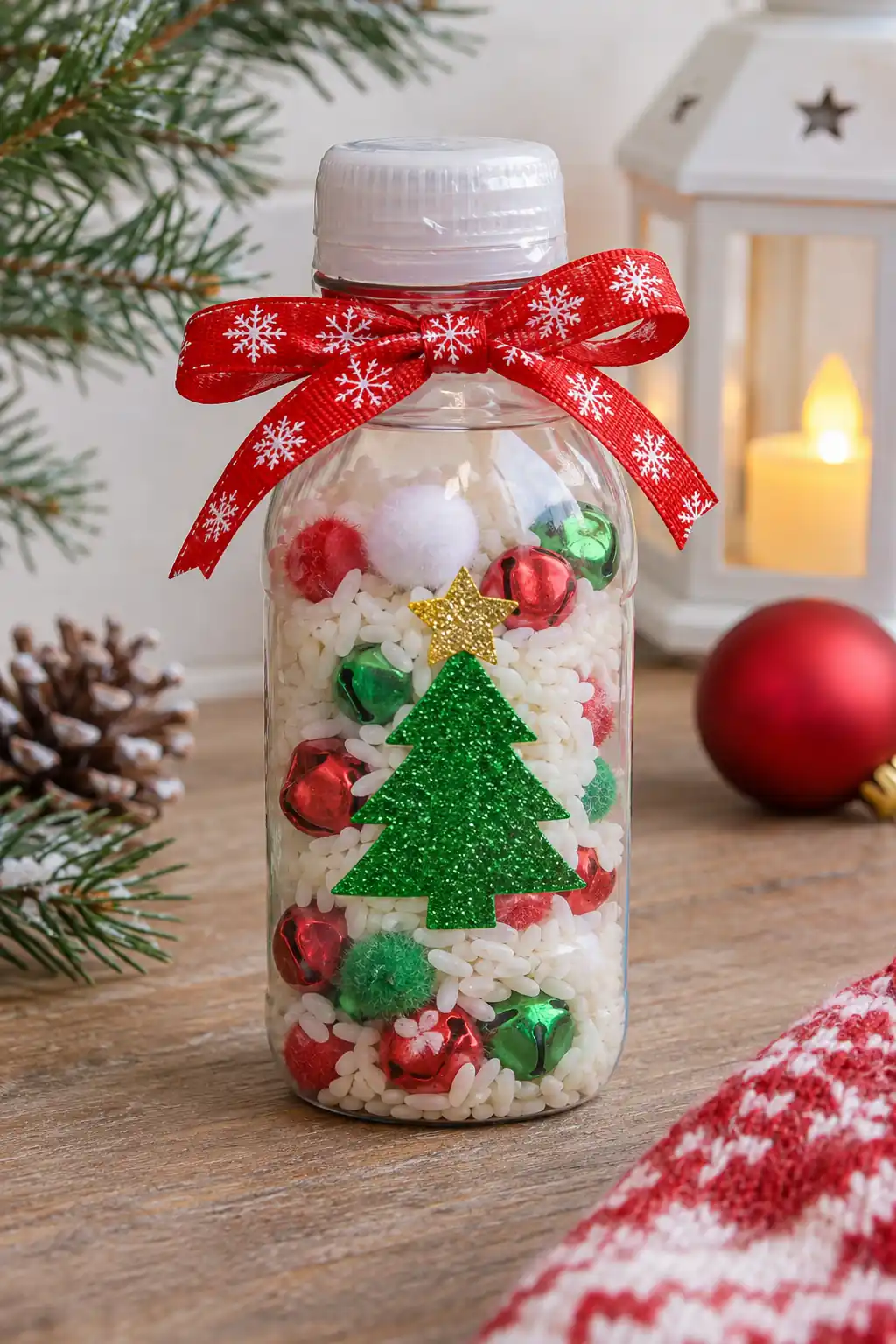
The pictured bottle contains small bells and other loose pieces beneath a decorated cap. Do not copy that household-container construction for children’s play. A lid that appears sealed in an image does not prove it will resist opening or damage. Use purpose-made age-rated musical shakers instead.
Choose two shakers with noticeably different sounds, following their package guidance. Let the child listen before encouraging handling. Some may prefer watching an adult demonstrate at a comfortable distance. Keep volume modest and stop if the sound is unwelcome.
The Christmas theme can come from a red tray or a nearby picture outside the play area. It does not require ribbons, glued bells, or decorations attached to the instrument. Check the shaker for cracks and loose parts before each session. Avoid treating this as a hearing test or promising developmental results. A short repeat-and-pause game is enough. Put the instruments away afterward according to their cleaning and storage instructions, keeping damaged items out of use.
You may also like: Playroom ideas.
9. Decorating a large felt tree
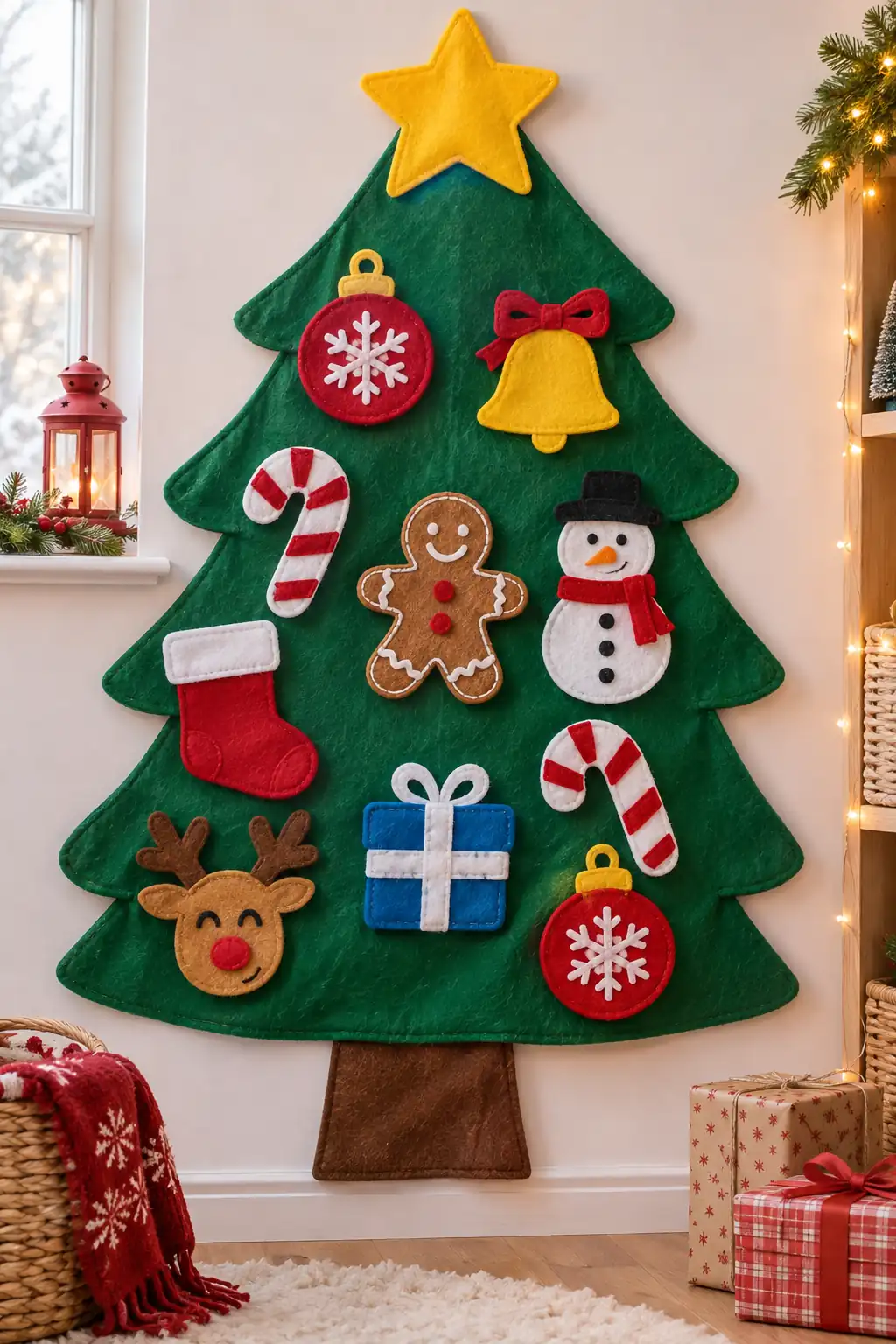
A green felt tree provides a broad background for colorful holiday shapes. The pictured pieces include gifts, a snowman, and stockings. For play, choose large simple shapes with no attached buttons, bells, or beads. An age-rated felt activity set can provide clearer product guidance than a decorative wall hanging.
Position the tree where the child can reach comfortably without climbing. Secure the backing according to its intended use. Start with only a few pieces so the child can compare colors and placement. They may prefer removing and replacing one shape rather than filling the whole tree.
Inspect the pieces and attachments before each use. Hook-and-loop dots or other fasteners can become small loose parts if poorly attached. Avoid long hanging cords and keep the activity away from electrical decorations. The tree does not need a symmetrical finished arrangement. Let the child decide which shapes remain. Store the pieces together after the session so they do not become scattered around younger siblings or pets elsewhere in the home.
10. A white cloth basket instead of loose snow
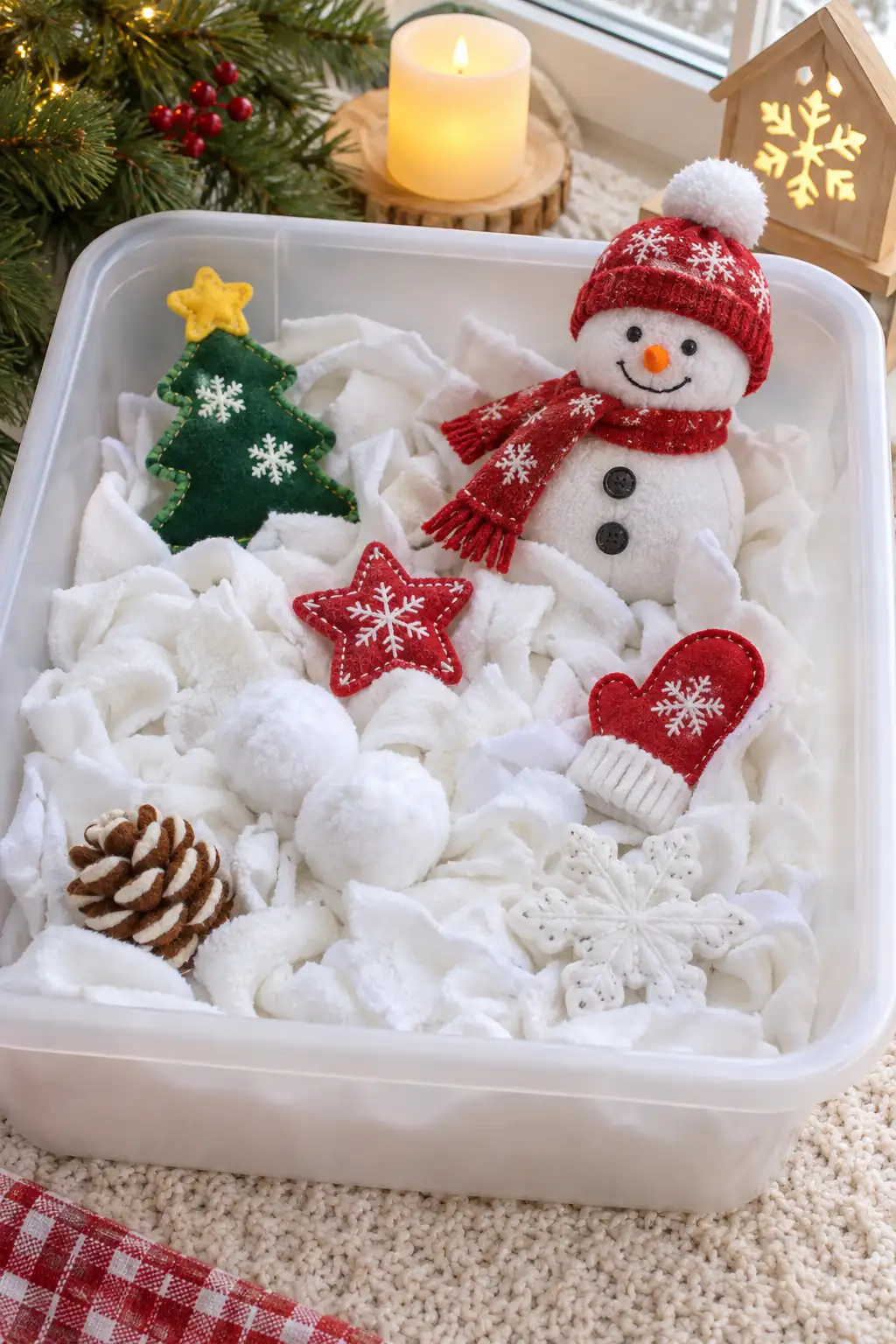
White cloth pieces create the snow-like base in this image. It also includes pinecones, knitted figures, and small decorative shapes. Remove those added props when adapting the idea for children. Use large clean cloth pieces with secure edges, chosen for the child’s age and handling habits.
A child can fold, bunch, or move the cloth between two low containers. Offer a large age-rated soft toy only if it suits the activity. Avoid loose cotton balls, artificial snow, sequins, and pieces that could be mouthed. The white color alone is enough to suggest winter.
Keep the container low and stable, with an adult present throughout. Do not cover a child’s face or turn the materials into a sleep-space activity. Let them reject a texture without pressure. A smooth cotton cloth may be preferable to a fluffy one. Wash and dry reusable fabrics according to their care labels, and remove any piece that begins shedding, fraying, or exposing its internal stuffing during handling.
 You may also like9 Thanksgiving Template Ideas for Easy Printable Crafts
11. Watching plain ice melt in a tray
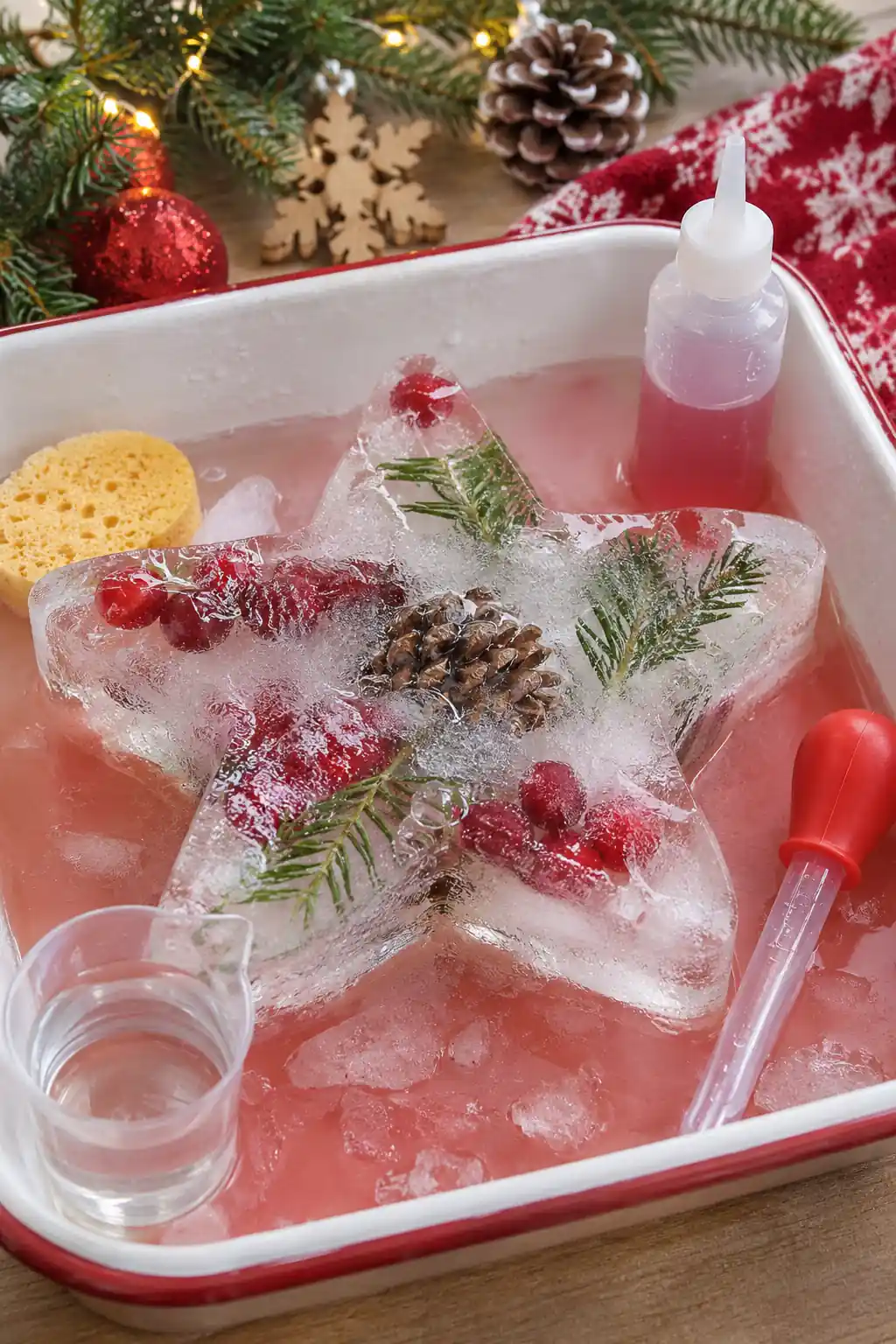
A large star-shaped ice piece fills the pictured tray, but it contains berries, greenery, and a pinecone. Do not freeze those decorative objects into a children’s activity. They become loose parts as the ice melts. Use plain ice for an adult-led observation with older children who do not mouth materials.
Place the ice in a stable shallow tray and let the child watch its edges change. Avoid hot water, salt mixtures, and tools that could chip sharp fragments toward the face. An adult can demonstrate a little room-temperature water while keeping the surrounding surface dry.
Do not ask a child to hold ice against skin for a prolonged period or put it in their mouth. Keep close supervision and remove small fragments as they develop. Empty the tray after the activity. A child can draw the changing shape instead of touching it. For younger children or anyone who mouths objects, choose the dry felt-tree activity rather than adapting this ice concept.
12. Comparing textures on a flat activity panel
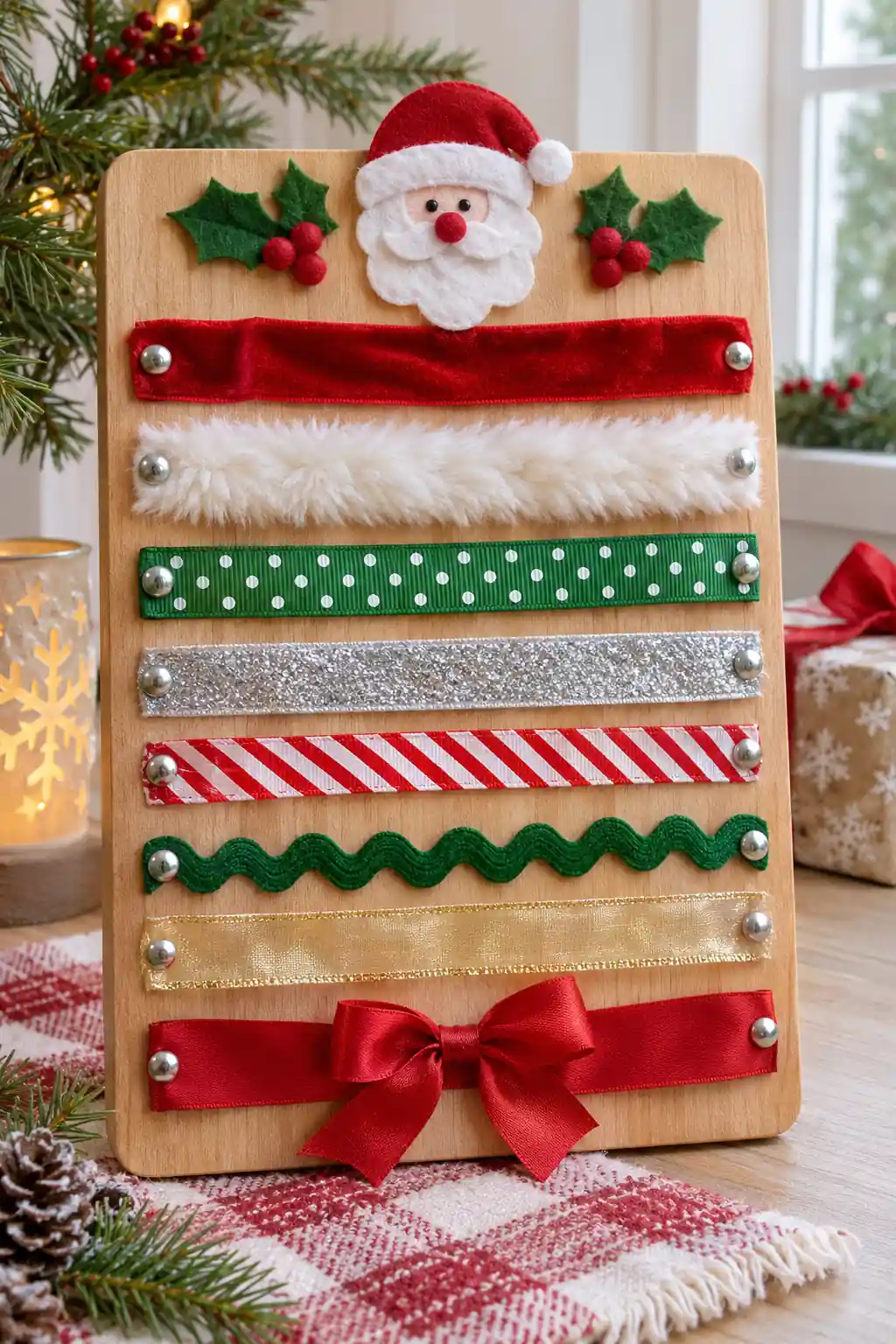
Rows of red, green, and pale materials form the pictured texture board. The visible design includes exposed fasteners and decorative small pieces. Those construction details should not be copied into a young child’s play panel. Use a purpose-made age-rated texture board with secure components instead.
Choose a small selection of contrasting surfaces rather than many similar strips. Let the child touch one area at a time or point to a preferred section. There is no need to move their hand onto a texture they avoid. A plain board can become seasonal through color alone.
Keep ribbons short and fully secured according to the product design. Do not add loose loops, bells, staples, or decorative buttons. Inspect all edges and attachments before use. The board should remain stable on its intended surface, without leaning where it could fall. Clean it according to the maker’s directions. Stop the activity if the child picks at an edge or begins loosening a component, and remove the item for inspection.
You may also like: Christmas craft ideas for toddlers.
13. A food-based mark-making option
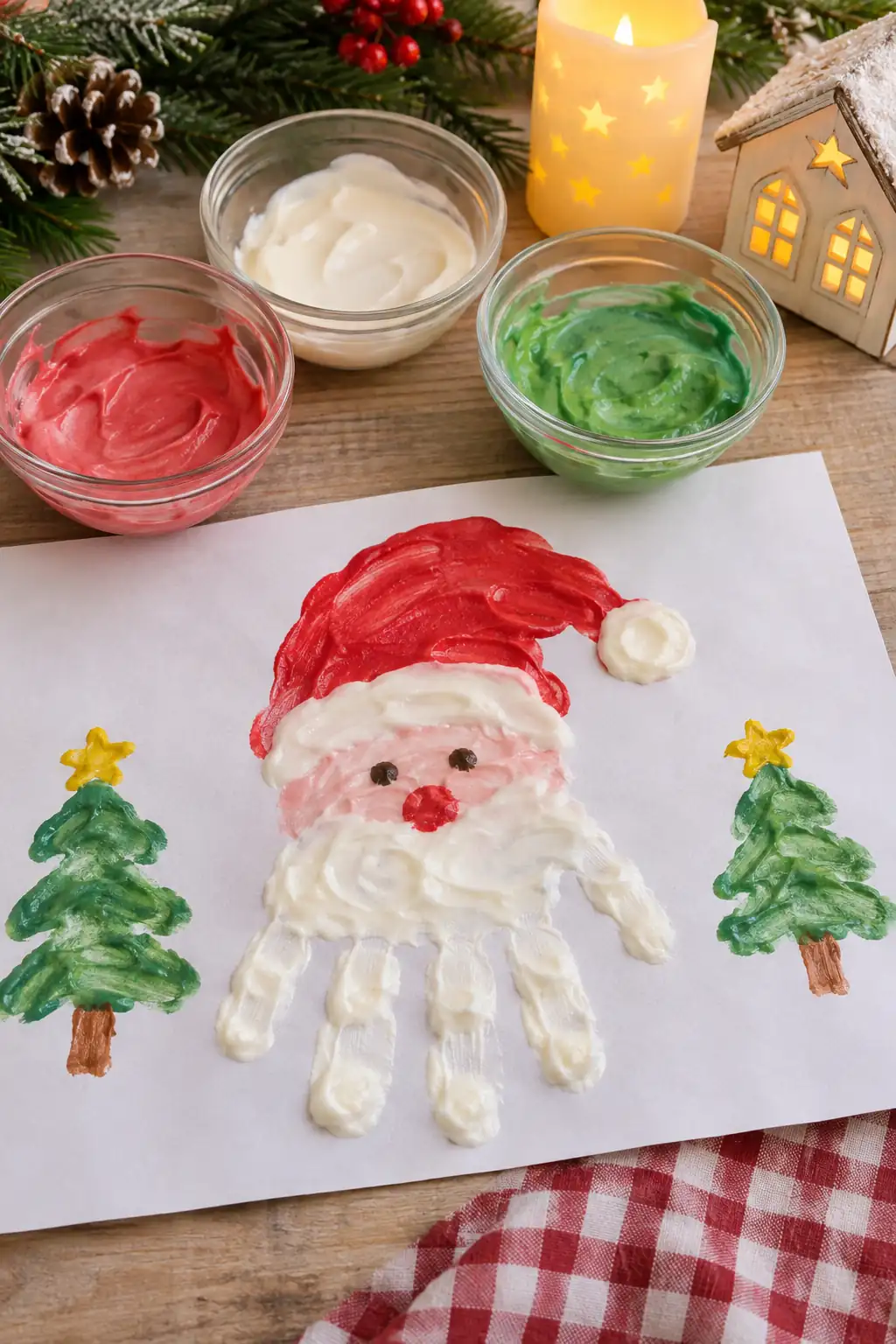
The image uses red, green, and white yogurt-like colors to suggest a Santa picture. A finished illustration does not establish suitable ingredients or a tested activity. If choosing food-based play, use a food the child already tolerates. Consider allergies, dietary needs, and the setting before offering it.
Keep food and art supplies separate. Do not mix ordinary paint, glitter, or craft glue into yogurt. A clean food-safe tray can hold a small amount for supervised finger marks. The child does not need to reproduce a face or tree. Broad swirls and lines are enough.
Treat handling and cleanup as you would with food. Use clean hands and utensils, follow the food’s storage directions, and discard the portion used for play. Do not return it to the original container. If food play is unsuitable, choose age-labeled finger paint and follow its instructions without encouraging tasting. Keep glass bowls and decorative candles from the styled image outside the child’s reach during the activity.
14. Stacking large soft gift blocks
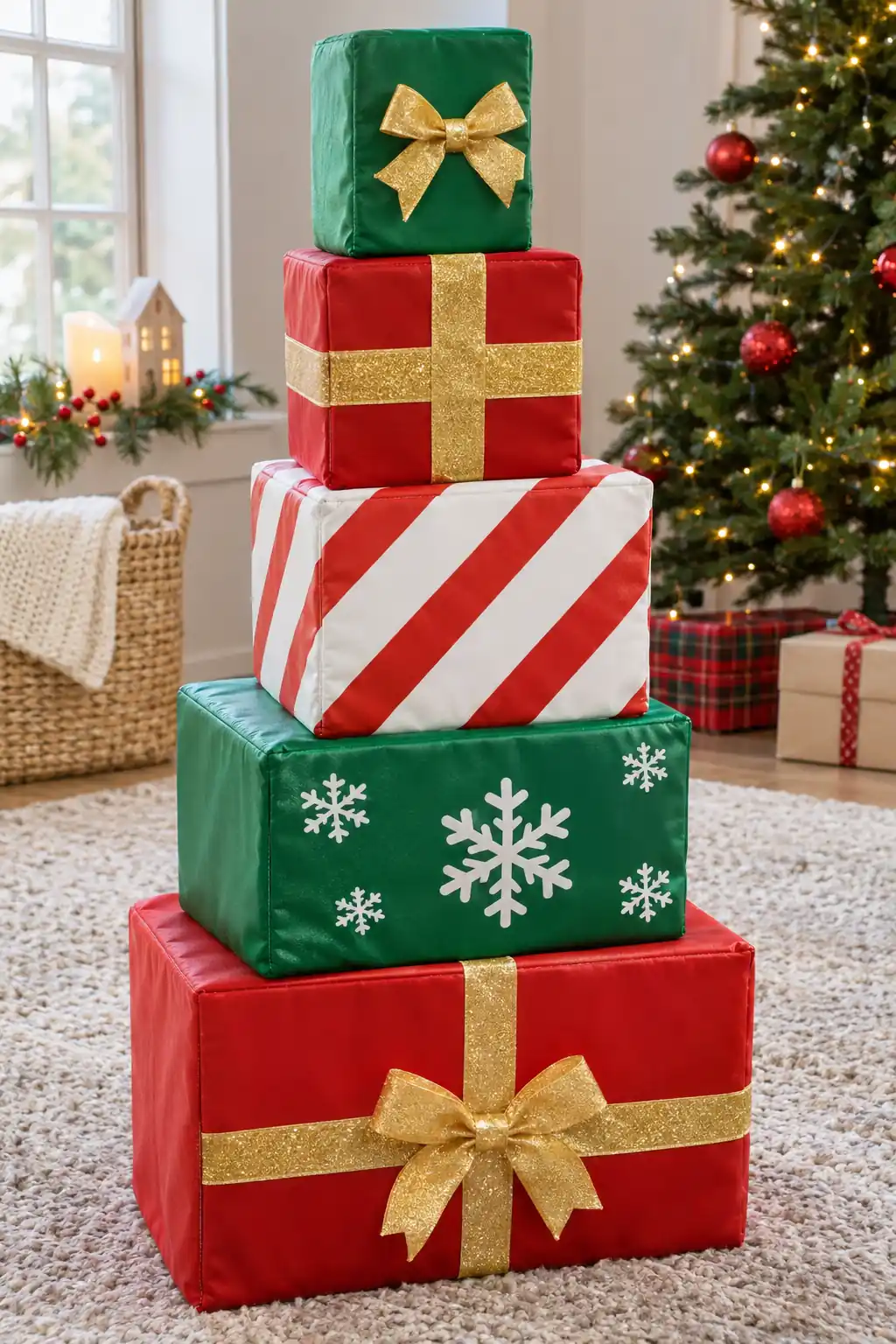
The image shows a tall stack of wrapped gift shapes. For children’s play, replace ordinary boxes and ribbons with age-rated large soft blocks. Printed gift patterns can provide the seasonal appearance without loose bows. The blocks should be intended for stacking and handling at the child’s age.
Start with a low arrangement on a clear floor area. Let the child build and knock it down without a nearby glass display or tree. Avoid encouraging them to climb the stack. A broad base with fewer blocks can be more manageable than the tall tower shown.
Do not wrap toy blocks with paper that could tear into small pieces during play. Keep packaging and tape out of the activity. Compare a wide block and a narrow one if the child enjoys noticing differences. Our playroom ideas can help identify a clear area for floor activities. Put blocks away afterward so they do not become obstacles along a walking route.
15. Rolling a piece of play dough
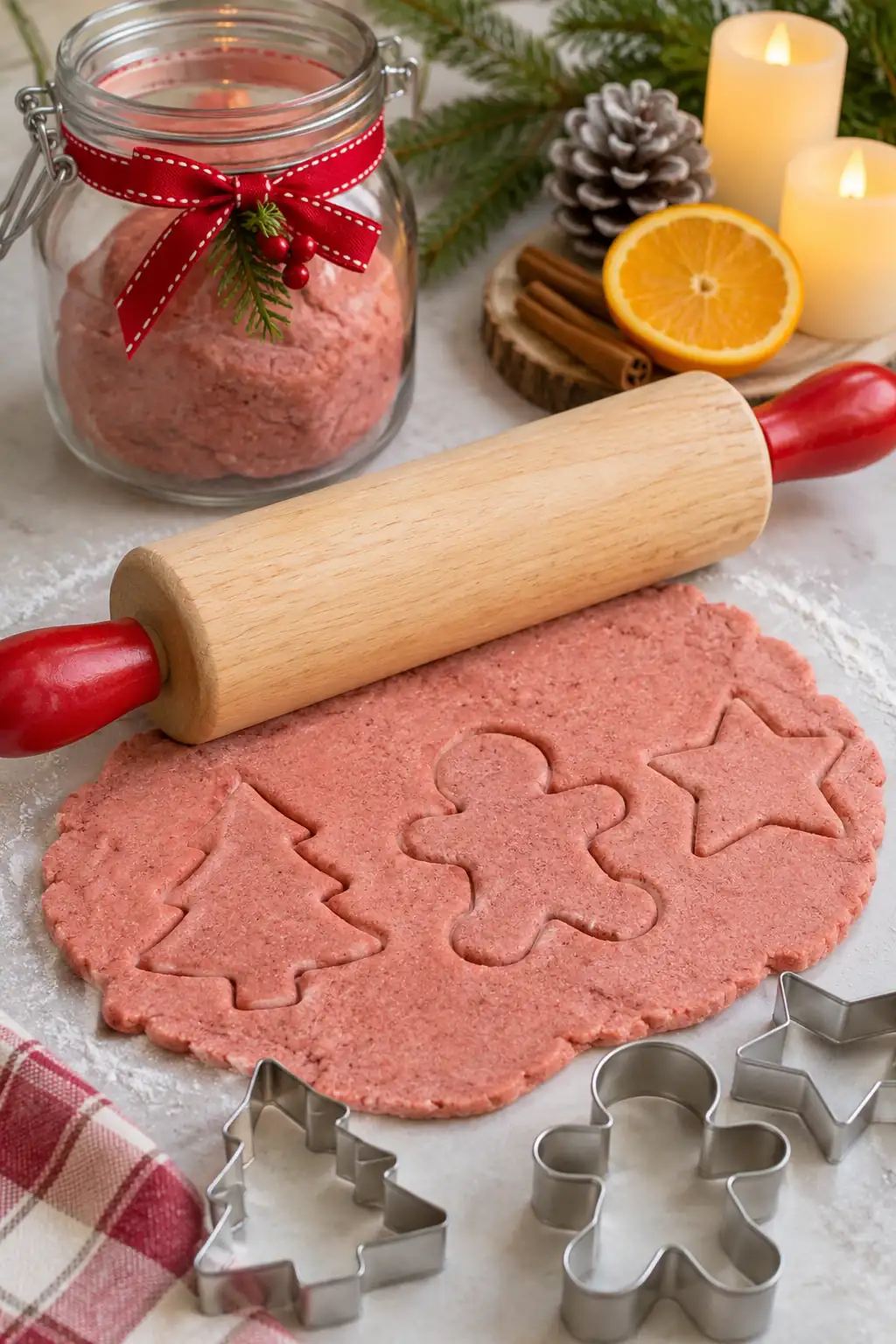
A broad rolling pin and shaped cutters accompany pink dough in this image. The visual focus is flattening and making impressions. Use commercial play dough and tools appropriate to the child’s age, checking ingredient information. A scented product is optional, and an unscented choice avoids unnecessary fragrance.
Do not add cinnamon, essential oils, or raw flour to reproduce the styled scene. Follow the product label rather than improvising a recipe. A child can press with a palm before trying a rolling tool. Keep the pin lightweight and designed for the activity, without detachable handles or sharp parts.
Offer one large cutter at first. A crowded tray of tools can distract from the rolling action. Stop if the child mouths the dough or tool. The pictured glass storage jar should remain out of the play area. Use the product’s own storage instructions after cleanup. The finished shapes do not need to be kept; changing the dough repeatedly can be the whole activity without producing a decoration.
16. A green visual panel with a tree outline
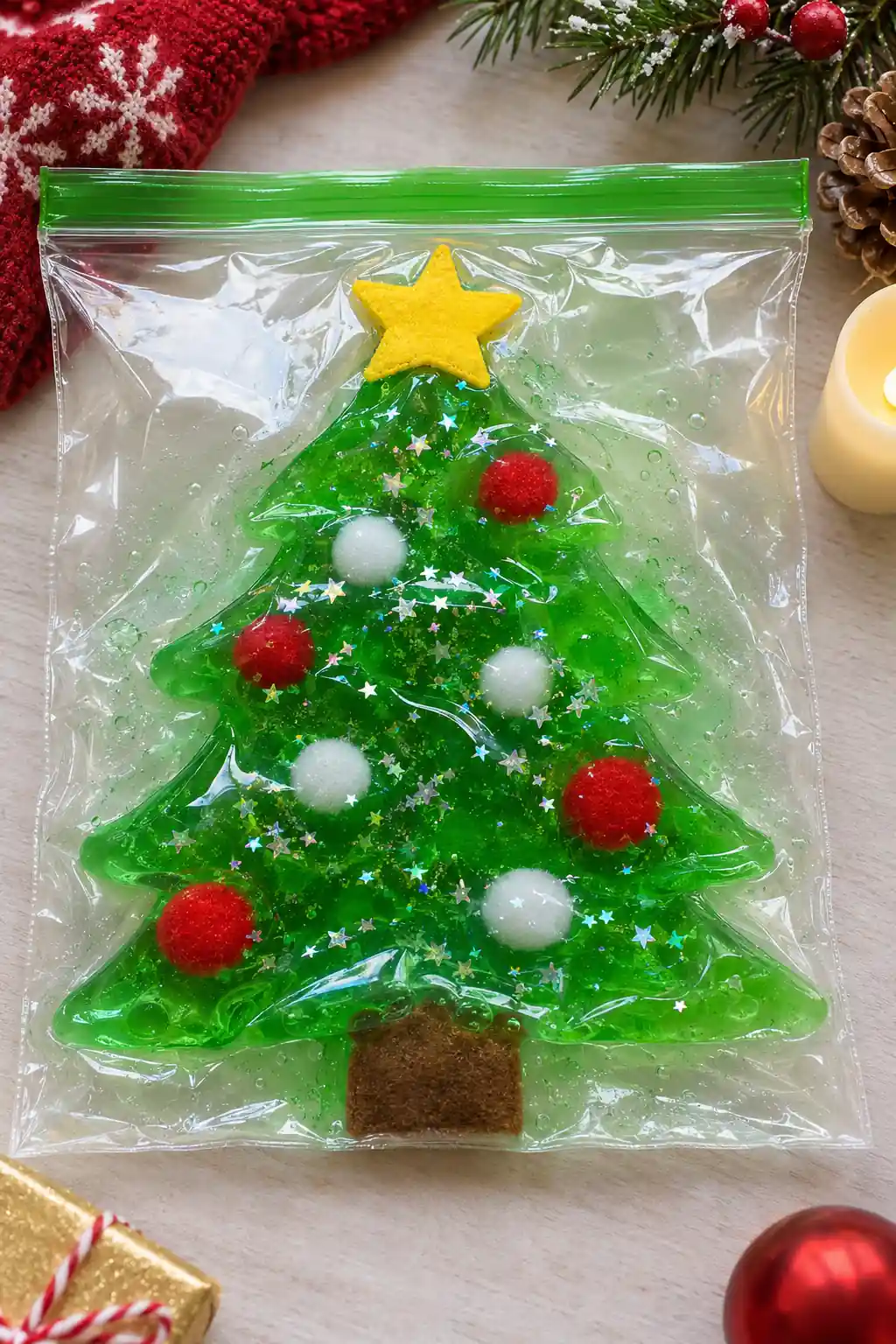
Green material and round colored shapes fill the pictured storage bag. The tree outline makes the visual subject clear. However, a zip closure or extra tape does not turn a household bag into a verified children’s toy. Do not copy this loose gel-bag construction for babies or children who mouth objects.
Adapt the visual idea with an age-rated commercial sensory panel, using it exactly as directed. Keep the Christmas reference on a separate printed background if the panel allows that setup. Do not add loose pompoms, glitter, or small decorations to a homemade gel pouch.
Invite gentle tracing of the tree outline without promising that the activity will calm every child. Some may prefer a dry textured board or plain drawing. Check the panel for damage before and during use. Remove it immediately if a seam or surface fails. Avoid water beads entirely. A solid green felt triangle with large age-appropriate pieces provides a simpler alternative when a suitable manufactured panel is unavailable.
You may also like: Christmas painting ideas for kids.
17. A stocking-shaped textile comparison
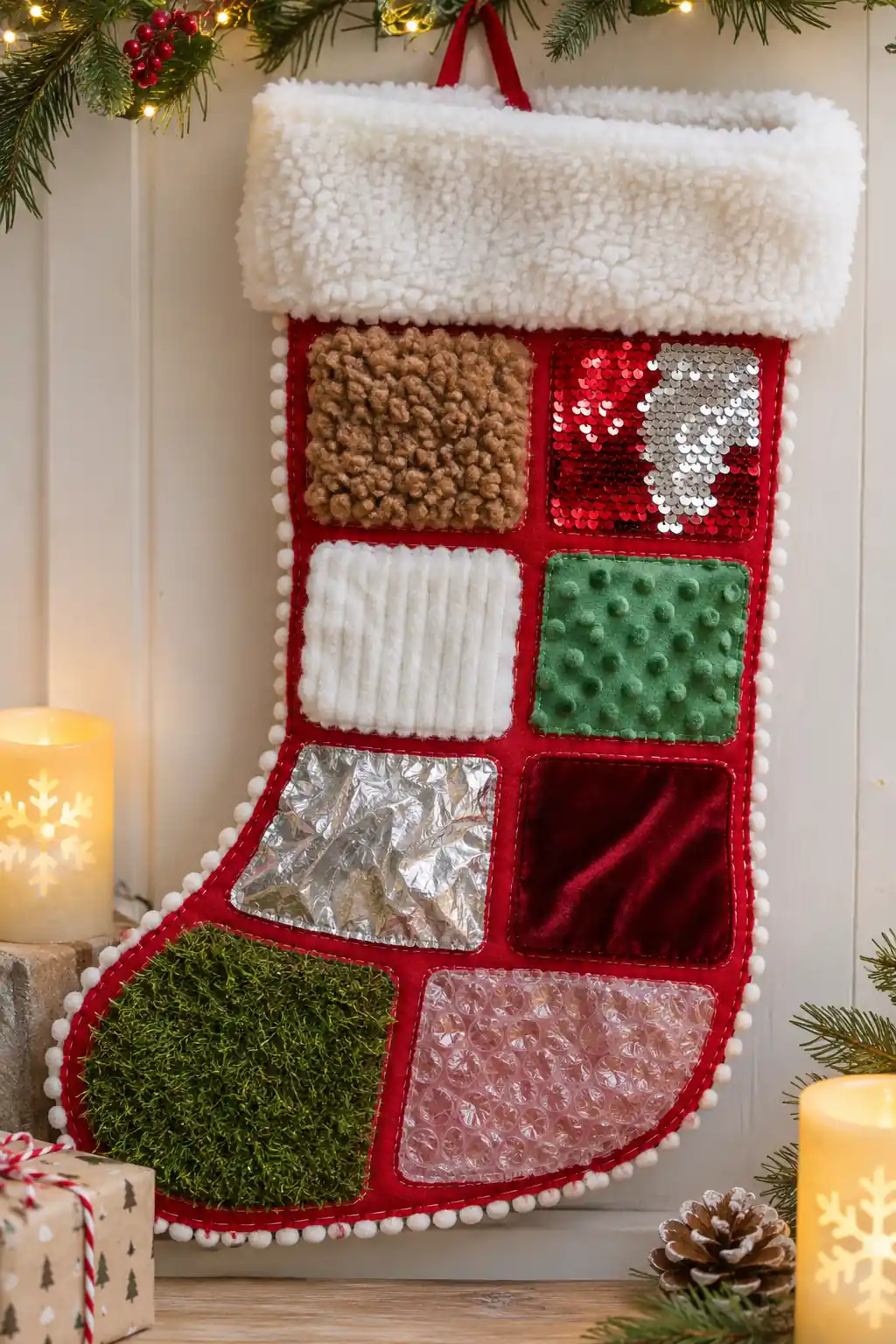
The pictured stocking contains several texture patches, including shiny, fuzzy, and raised areas. Some resemble sequins, foil, or moss. Those materials are not suitable substitutes for age-rated play surfaces. Use a securely made textile activity panel without small removable pieces, exposed filling, or loose decorative trim.
The stocking outline can provide the Christmas theme while the patches remain plain fabric. Choose a few broad areas with contrasting textures. Let the child decide which to touch and how long to continue. Looking or pointing is also participation; direct hand contact is not required.
Avoid adding bead borders or buttons to match the illustration. Check seams and patch edges before each session. Keep the panel supported at a comfortable height without long cords. A flat tabletop version may be easier to inspect than a hanging stocking. Follow the product’s cleaning directions and remove damaged pieces from use. Do not use the panel as a sleep toy or leave it in a crib after the supervised activity.
18. Painting cardboard with plain water
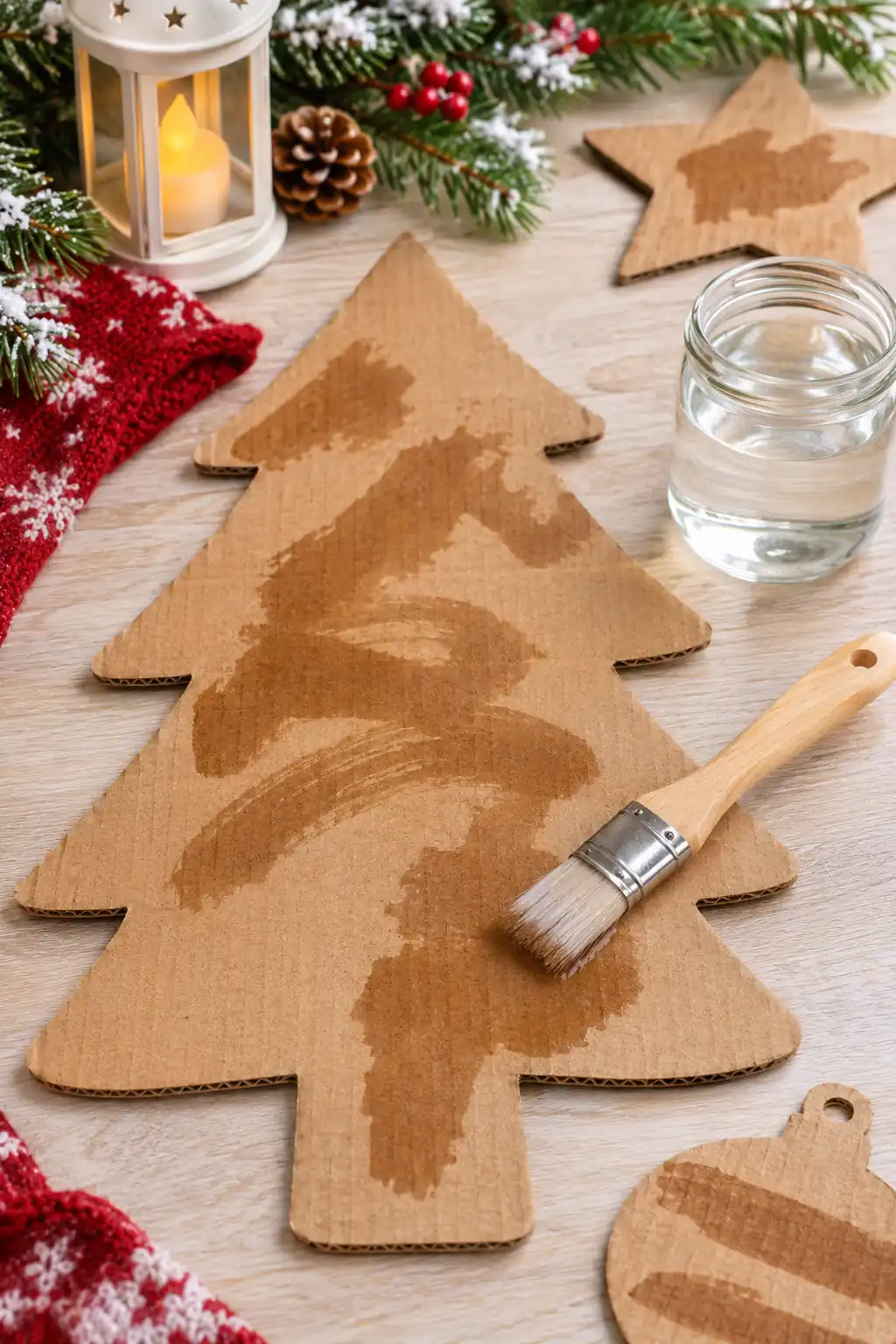
A brush leaves darker marks on brown cardboard tree shapes. The visible change appears without colored paint. Use clean plain cardboard without staples, sharp edges, glossy coatings, or loose tape. Choose a broad age-appropriate brush with a secure head and no detachable small parts.
Offer a small amount of water in a stable unbreakable container rather than the pictured glass jar. An adult should remain close and attentive throughout. The child can make broad marks or follow the tree edge. There is no need to fill every area or preserve the result.
Remove the cardboard when it becomes soft, tears, or develops loose pieces. This activity is unsuitable for children who chew paper or brushes. Dry spills promptly and empty the water afterward. A reusable water-painting board designed for the child’s age may be another option. Keep actual tree ornaments and lighting outside the work area. The Christmas shape supplies the subject without requiring any additional seasonal objects on the tray.
19. Sorting large soft play balls
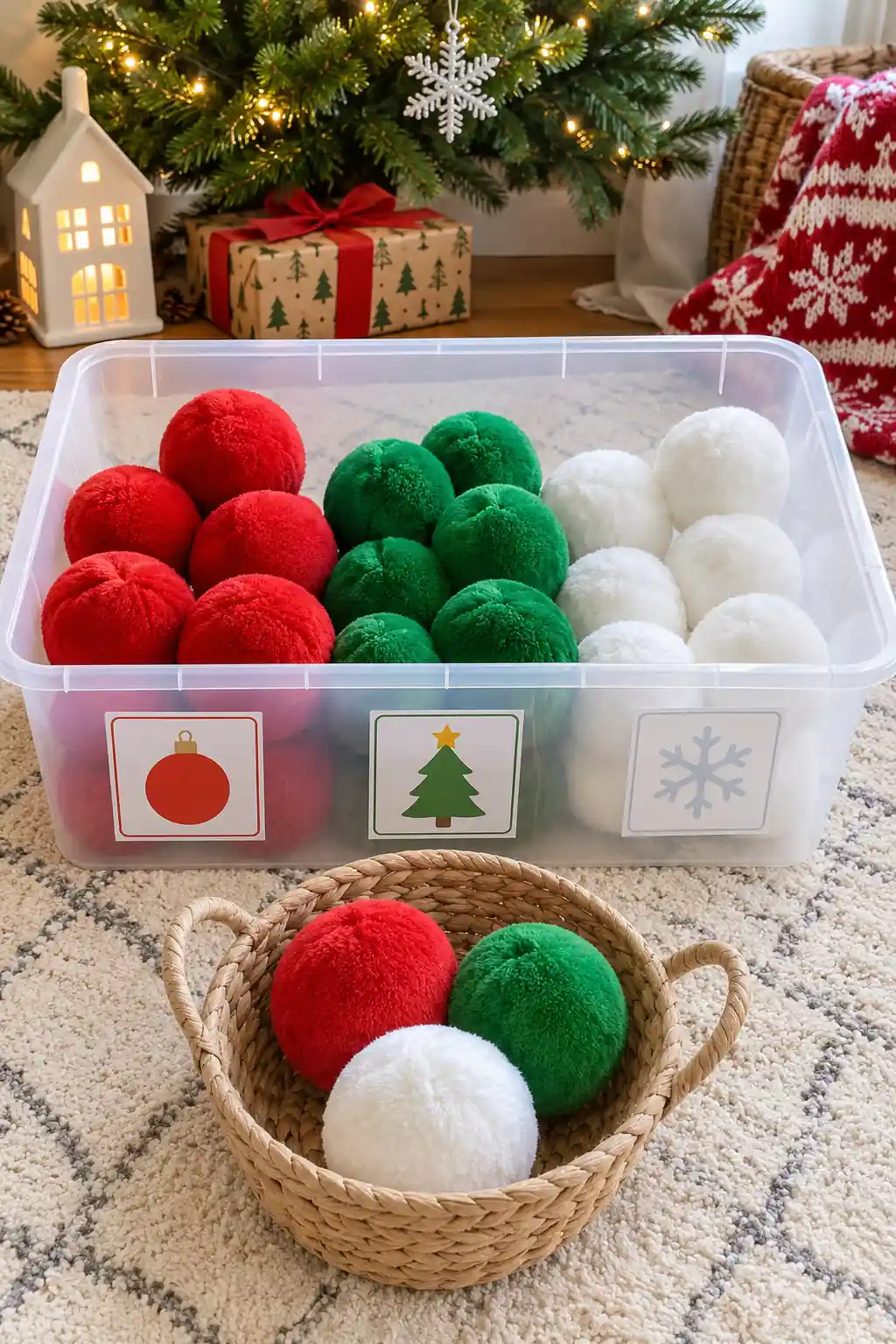
Red, green, and white balls fill this tray, with matching areas suggested along the front. Use age-rated soft play balls rather than craft pompoms. The size and construction must suit the child, and the outer covering should remain intact. A large appearance in the image is not a safety guarantee.
Offer two colors first if three groups feel overwhelming. The child can move balls between containers or line them up instead of sorting. Keep the containers low enough for easy reach. A soft floor area gives room for a dropped ball without encouraging chasing near fragile decorations.
Check for loose fibers, split seams, and exposed filling before play. Remove any damaged ball. Keep the activity away from stairs and doorways where rolling pieces could become a trip hazard. Avoid attaching bows or bells for a stronger holiday theme. The colors already provide that connection. Store the balls after use, keeping smaller siblings’ access and the manufacturer’s age guidance in mind.
20. Listening to paper crumple
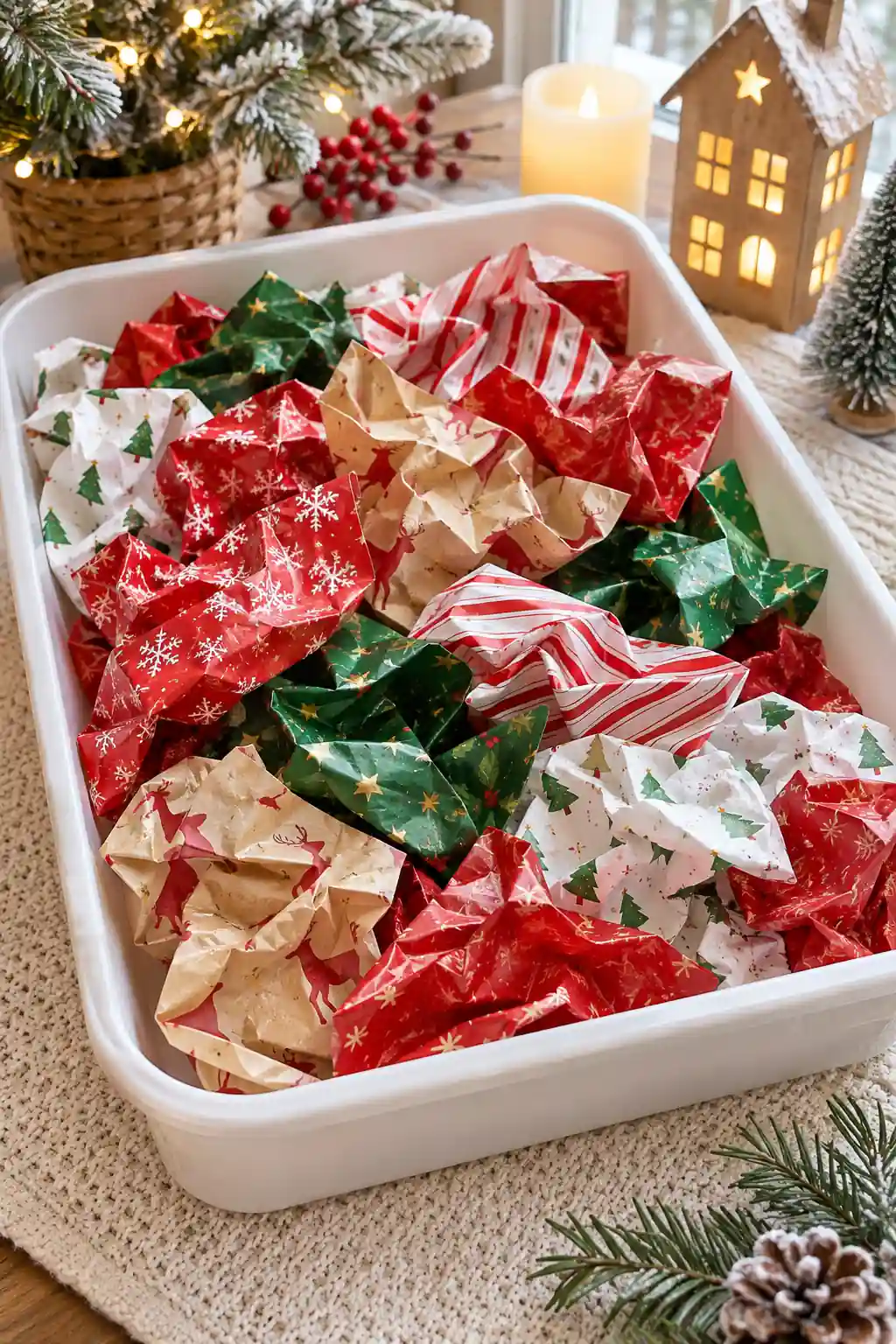
The pictured tray contains crumpled red, green, and cream wrapping paper. The activity idea is comparing sound and shape while scrunching a sheet. Reserve this for children who do not mouth or tear paper into small pieces. Use clean plain paper without glitter, foil, staples, or attached ribbon.
Offer one large sheet at a time rather than a tray of loose scraps. An adult can demonstrate the sound first. Let the child stop if the noise is unpleasant. Flattening the sheet afterward creates a quieter action and shows how its surface has changed.
Remove torn pieces promptly and keep the paper away from the face. Do not use plastic wrapping or bags. A purpose-made age-rated crinkle toy is a better alternative for younger children. The Christmas connection can come from the sheet’s color, so printed decorative coatings are unnecessary. Clear the tray when the session ends and recycle suitable clean paper according to local guidance, keeping damaged or mouthed materials out of further play.
Choose materials for the child, not the photograph
Follow age labels and inspect every item for damage or loose parts. Health Canada’s arts and crafts guidance advises age-appropriate materials and close supervision. Use paint labeled for finger painting when that is the intended activity.
Do not use water beads. The CPSC water bead guidance advises keeping them out of environments with children. Tape or a homemade container does not remove that concern.
Set up supervision and cleanup before starting
Keep towels, cleaning supplies, and storage ready before offering water or messy materials. The AAP drowning prevention guidance emphasizes close constant supervision around water. Stay within reach and empty containers immediately afterward.
For a dry alternative, compare our Christmas activity ideas for toddlers, checking each material against the child’s age. A simple fabric or drawing activity may suit the day better than a full sensory tray.

Written by Stephanie Fallis
Mom and homemaker who shares budget friendly DIY projects, decorating tips and gardening ideas for busy families.
More about me → Home Decor16 Halloween Preschool Craft Ideas With Paint, Paper and Cotton
 Kids Crafts15 Baby footprint Christmas ideas to preserve a milestone
 Kids CraftsWinter crafts for kids with materials and making steps