
Playroom ideas turn any spare room, nook, or basement into a lively hub for kids. A thoughtful playroom mixes soft textures, sturdy furniture, and open floor space. This balance keeps little ones engaged without overwhelming the room. Parents gain a tidy space that hides toys, books, and art supplies with ease. A good layout also grows with a child, adapting as interests shift from blocks to books.
Color palette and material choices set the mood for each design. Warm wood tones bring a cozy, natural feel, while pastel hues add a playful touch. Woven baskets, canvas bins, and low shelving keep everything within a child’s reach. Additionally, textiles like rugs and floor cushions add comfort during story time or block play. Natural light and soft lighting fixtures also make the space feel inviting throughout the day.
The following list covers eighteen playroom ideas for every home style and budget. Each concept includes furniture picks, storage tips, and layout advice. Some designs work well as a weekend project to do it on your own. Others call for a full room makeover. However, every idea focuses on comfort, safety, and organized fun. Explore these ideas and find the layout that fits your family’s rhythm.
In this post: 18 ideas
- Scandinavian Neutral Playroom
- Boho Rattan Playroom Corner
- Coastal Blue and White Playroom
- Organic Modern Playroom with Natural Textures
- DIY Chalkboard Wall Playroom You Can Do on Your Own
- Rainbow Pastel Playroom for Toddlers
- Cozy Reading Nook Playroom Corner
- Montessori-Inspired Open Shelf Playroom
- Play Kitchen Corner Playroom
- Under-the-Stairs Playroom Nook
- Farmhouse Playroom with Wood Beams
- Mudroom-Style Playroom Storage Wall
- Gallery Wall Playroom Art Corner
- Teepee and Tent Play Corner
- Sensory Play Table Zone
- Loft Bed Playroom Combo
- Craft Station Playroom Corner
- Outdoor-Inspired Indoor Playroom
1. Scandinavian Neutral Playroom
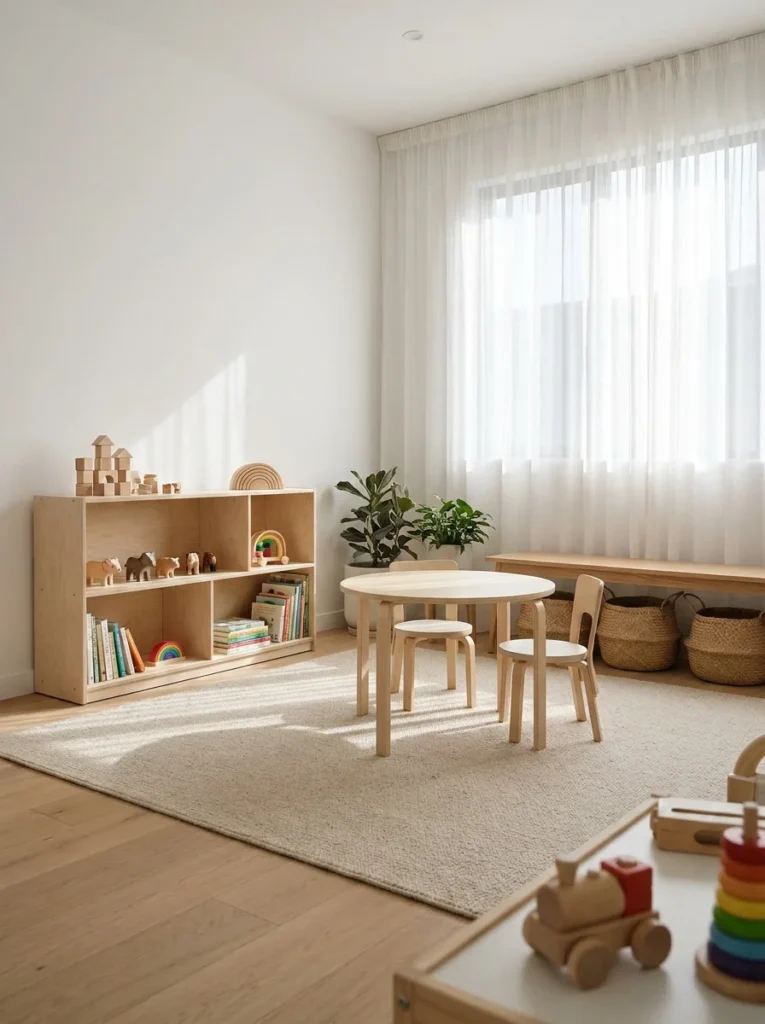
A Scandinavian playroom leans on white walls, light oak furniture, and simple lines. This style keeps visual clutter low, so toys stand out as the main decor. Soft gray or beige rugs anchor the floor space nicely. Meanwhile, wall shelves display books and wooden toys in tidy rows. Woven storage bins slide under low tables for quick cleanup. Natural light plays a big role here, so sheer curtains work better than heavy drapes. This palette pairs well with a small collection of plants for a fresh touch. Overall, the look stays calm and functional. This suits families who want a playroom that looks polished for guests.
2. Boho Rattan Playroom Corner
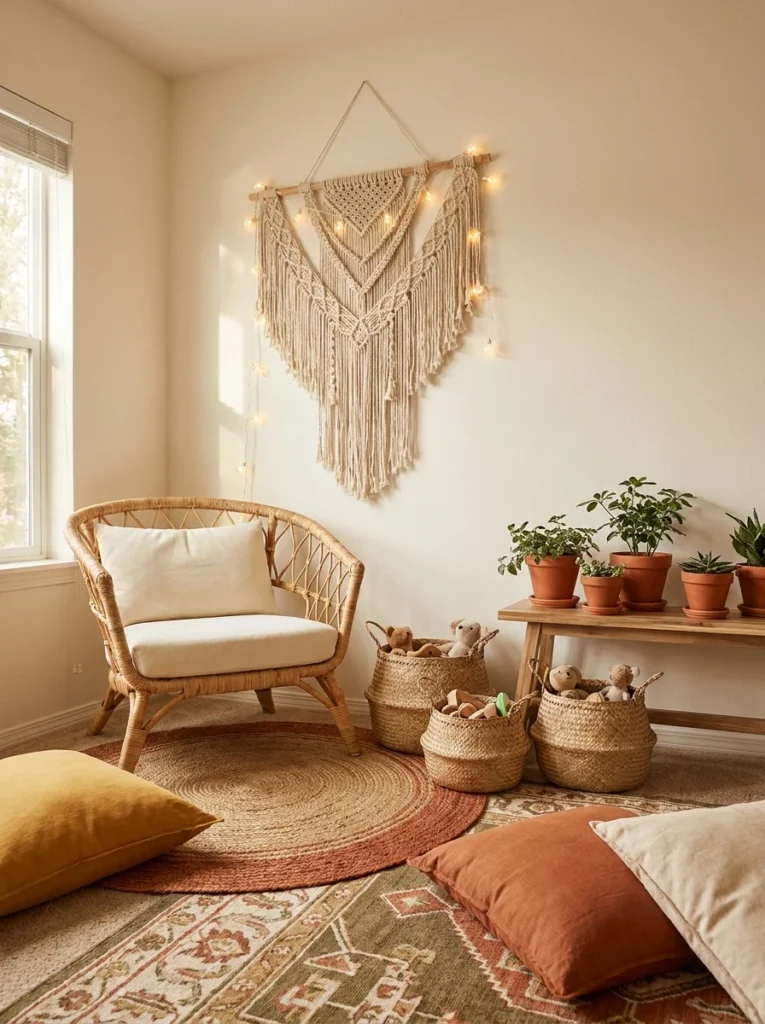
A boho playroom corner brings texture through rattan furniture and layered textiles. A small rattan chair or basket swing adds a playful focal point. Macrame wall hangings soften the walls without taking up floor space. This look borrows heavily from the relaxed, earthy tones seen in boho living room layouts around the home. Jute rugs and patterned floor cushions create a cozy reading spot. Terracotta planters and woven baskets keep the palette warm and grounded. As a result, the corner feels inviting rather than cluttered, even with toys scattered about. This style works well in a shared living space or a converted den.
3. Coastal Blue and White Playroom
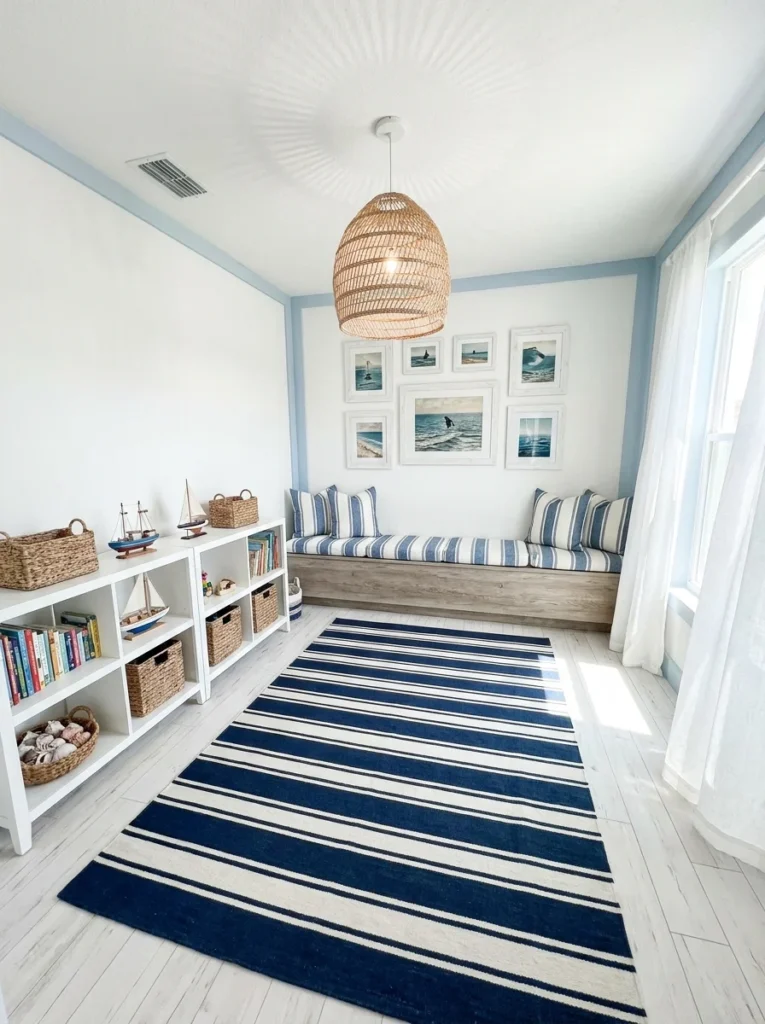
A coastal playroom uses soft blue tones paired with crisp white trim. This combination feels airy and light, similar to the palettes found in many coastal living room designs. Striped rugs and canvas storage bins reinforce the nautical theme without feeling overly themed. Driftwood shelves hold books, puzzles, and small toy boats. Additionally, woven pendant lights add texture to the ceiling. White furniture with rounded edges keeps the space safe for younger children. A gallery wall of ocean prints ties the room together. This playroom style suits beach towns and inland homes alike, since the palette feels fresh year round.
4. Organic Modern Playroom with Natural Textures
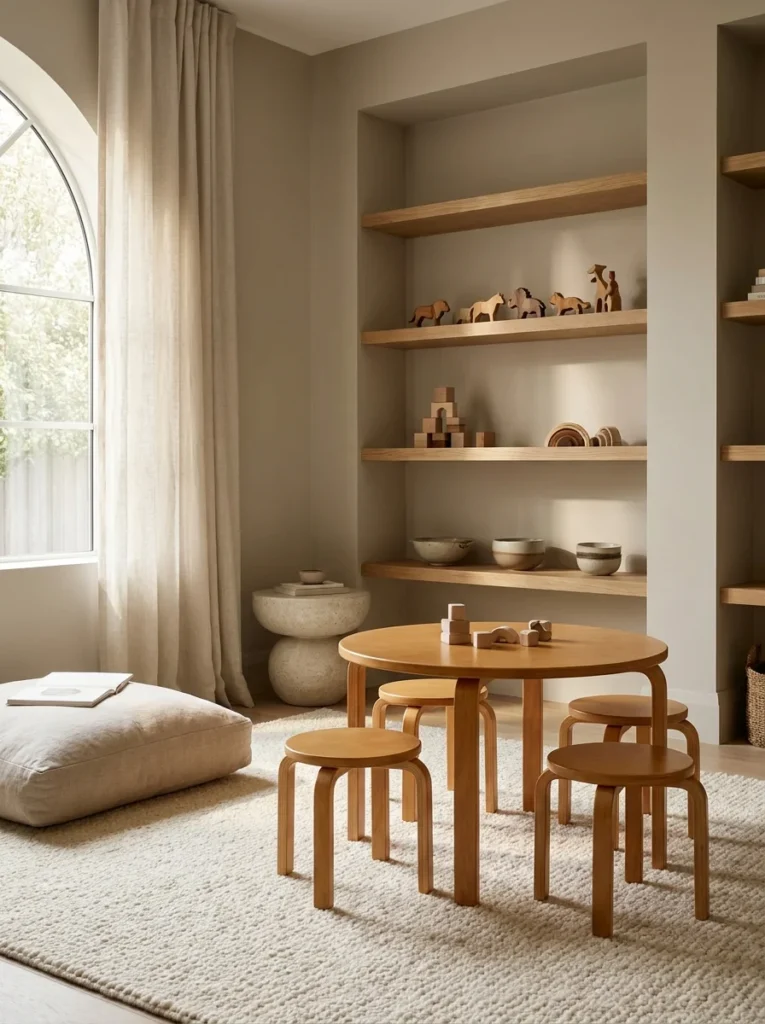
An organic modern playroom blends curved furniture with natural materials like wood and stone. This approach mirrors the layered textures found in organic modern living room spaces, only scaled down for kids. A curved play table softens the room’s hard edges. Linen floor cushions and a jute rug add warmth underfoot. Open wood shelving keeps toys visible and easy to reach. Neutral walls let the furniture and toys provide color instead. As a result, the room feels grown up while still staying practical for play. This style also transitions smoothly as a child grows older and needs.
5. DIY Chalkboard Wall Playroom You Can Do on Your Own
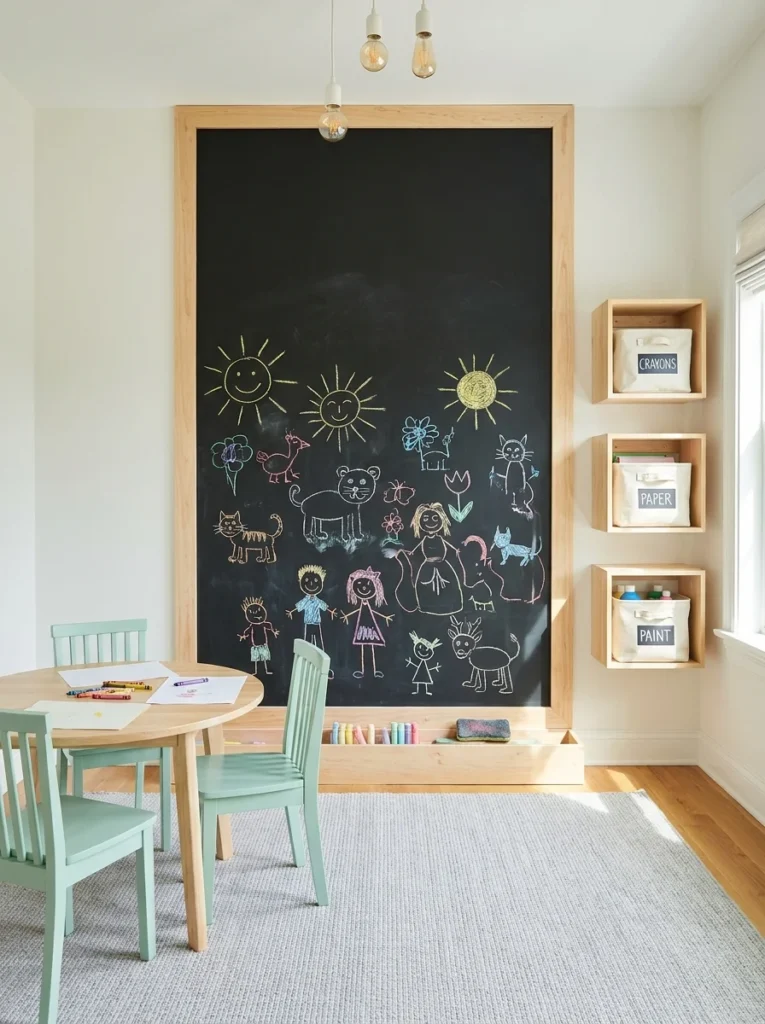
A chalkboard wall gives kids a space to draw, write, and doodle freely. This project ranks among the easiest playroom ideas to do it on your own over a weekend. Chalkboard paint applies directly over most drywall with minimal prep work. A wood trim frame around the edge gives the wall a finished look. Add a small tray below to hold chalk and erasers. This feature works well in a corner or behind a play table. Kids enjoy the freedom to change the wall daily, which keeps the room feeling fresh. Parents also like that mistakes wipe away in seconds.
6. Rainbow Pastel Playroom for Toddlers
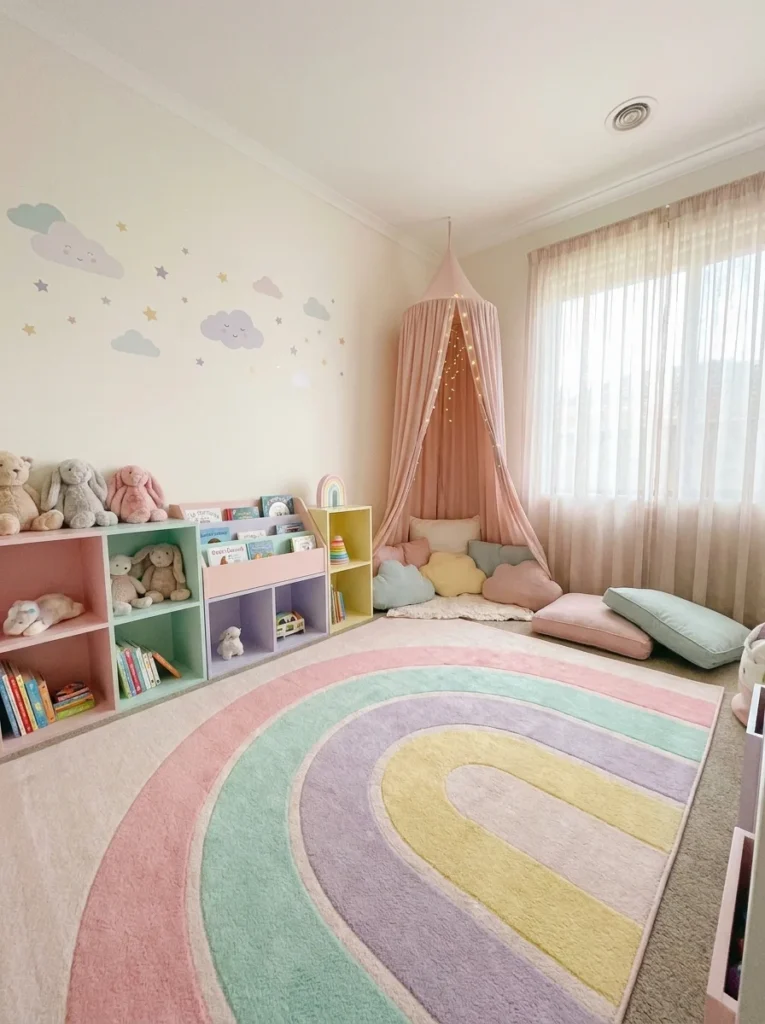
A rainbow pastel playroom uses soft pink, mint, and lavender tones instead of bold primary colors. This palette feels gentle rather than overwhelming for young toddlers. A pastel rug in a rainbow arch pattern anchors the floor. Low open shelving in matching pastel tones holds books and soft toys. Floor cushions in complementary shades add extra seating for story time. Wall decals shaped like clouds or stars keep the ceiling area playful too. This design suits a nursery that transitions into a full playroom later. The soft palette also photographs beautifully for family memories.
7. Cozy Reading Nook Playroom Corner
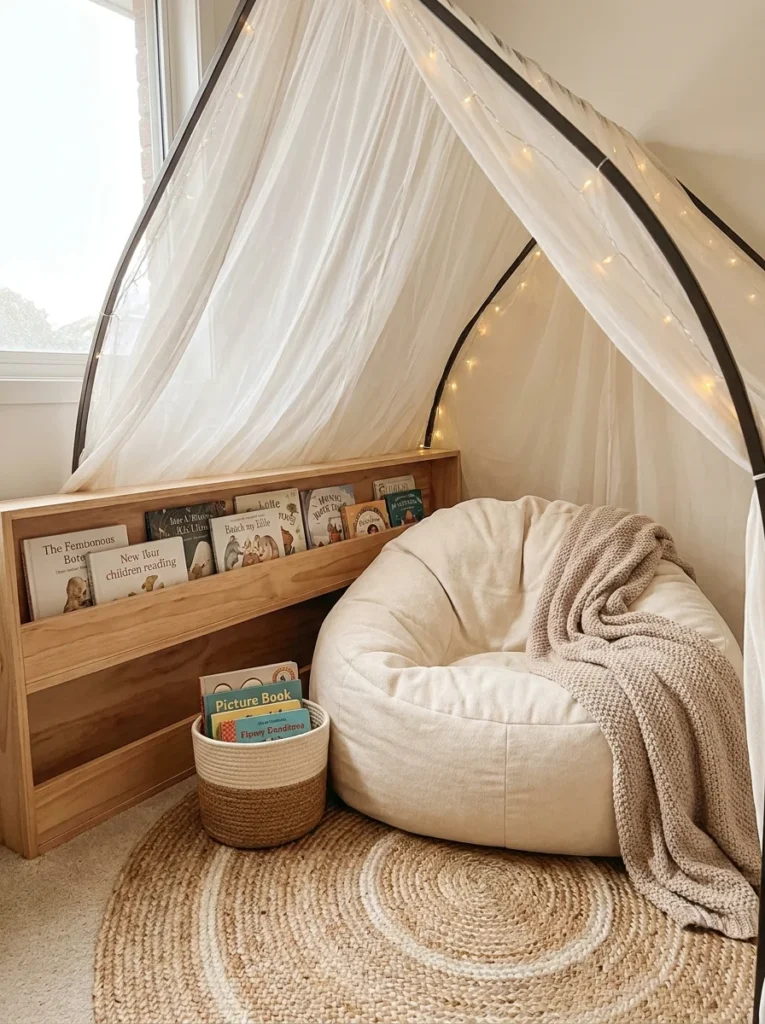
A reading nook gives kids a quiet corner away from active play zones. A low bookshelf with covers facing outward helps young readers pick books easily. A soft bean bag or floor cushion adds a comfortable seat. String lights or a small floor lamp create a warm glow for evening stories. A canopy or small tent overhead adds a sense of privacy. This nook works well tucked under a window for natural light during the day. Parents often find this corner doubles as a calm-down space when play gets too loud. A small basket nearby holds a rotating book selection.
8. Montessori-Inspired Open Shelf Playroom
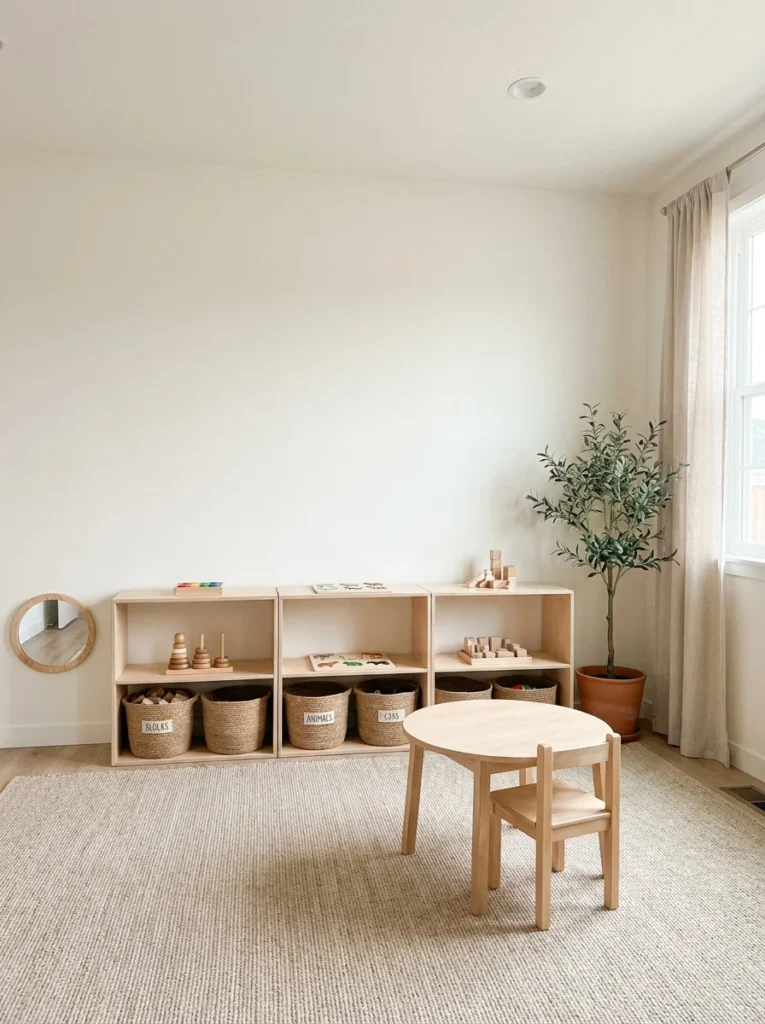
A Montessori playroom keeps everything at a child’s height for full independence. Open wood shelving replaces closed cabinets, so toys stay visible and organized. Each shelf holds a small number of items, which prevents visual overload. A low table and chair set gives kids a spot for focused activities. Baskets sort toys by category, such as blocks, art supplies, and puzzles. This layout encourages kids to choose and return items without help. A floor mat marks a defined play area for structured activities. This style works especially well for younger children building early independence skills.
9. Play Kitchen Corner Playroom
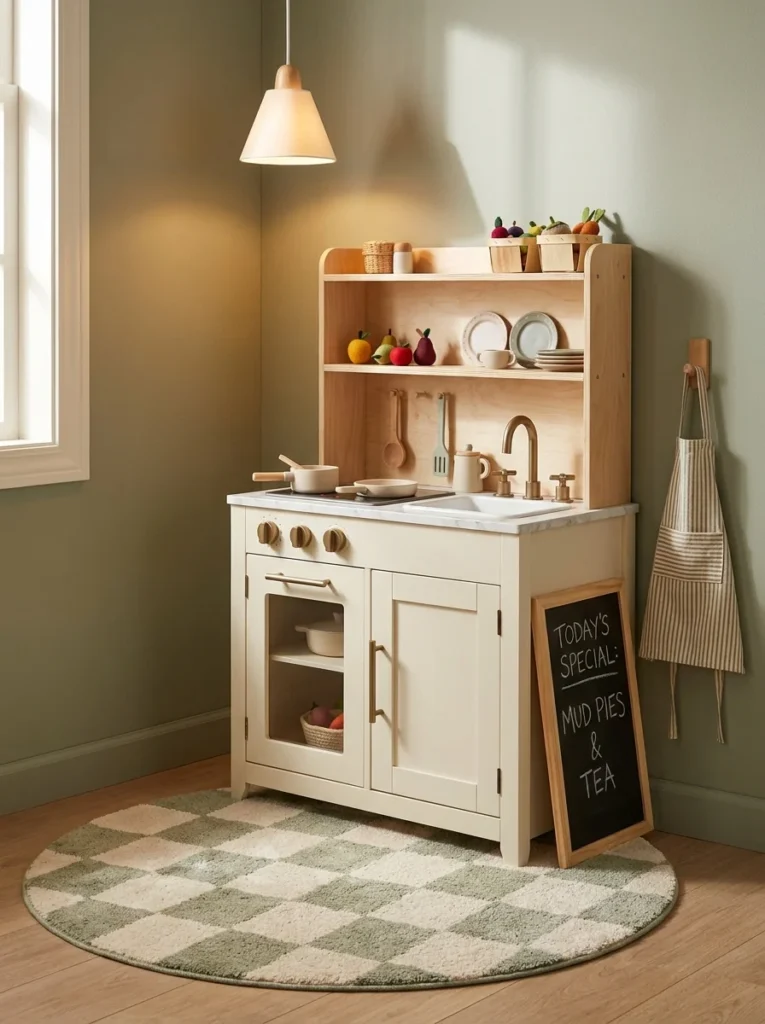
A play kitchen corner turns imaginative cooking into a favorite playroom activity. Many families love the range of styles shown in these DUKTIG IKEA play kitchen makeovers. These designs cover everything from farmhouse to Scandinavian looks. A small rug defines the kitchen zone within the larger playroom. Open shelves nearby hold play food, dishes, and pretend grocery items. A chalkboard menu sign adds a fun detail for older kids. Soft lighting above the kitchen area keeps the corner inviting. This setup works well near the reading nook, since both zones encourage quiet, imaginative play. Kids often spend long stretches here role playing daily routines.
 You may also like10 Christmas Chair Decoration Ideas for a Charming Home
10. Under-the-Stairs Playroom Nook
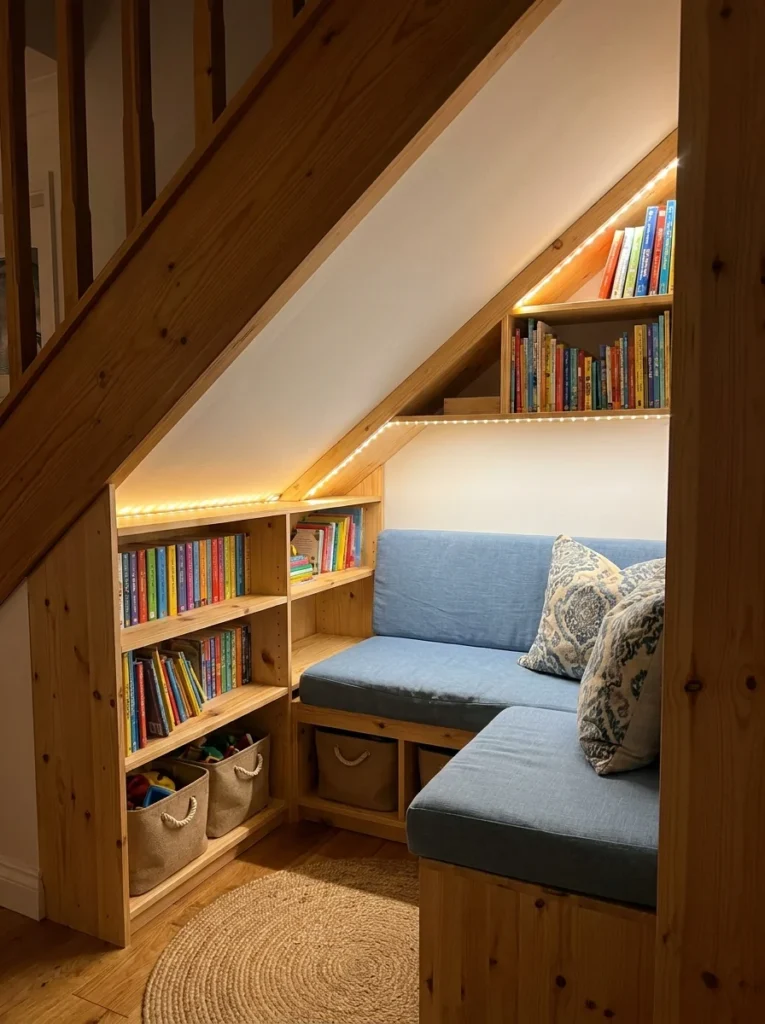
An under-the-stairs nook makes clever use of otherwise wasted space. Built-in shelving fits the angled ceiling line, holding books and small toy bins. A cushioned bench seat along the back wall adds comfortable seating. String lights along the shelf edges create a cozy, hideaway feel. This nook borrows storage logic from clever small entryway layouts, where every inch counts. A small rug on the floor softens the space underfoot. This idea suits homes with limited square footage, since it adds function without needing extra rooms. Kids often treat this nook as a secret hideout of their own.
11. Farmhouse Playroom with Wood Beams
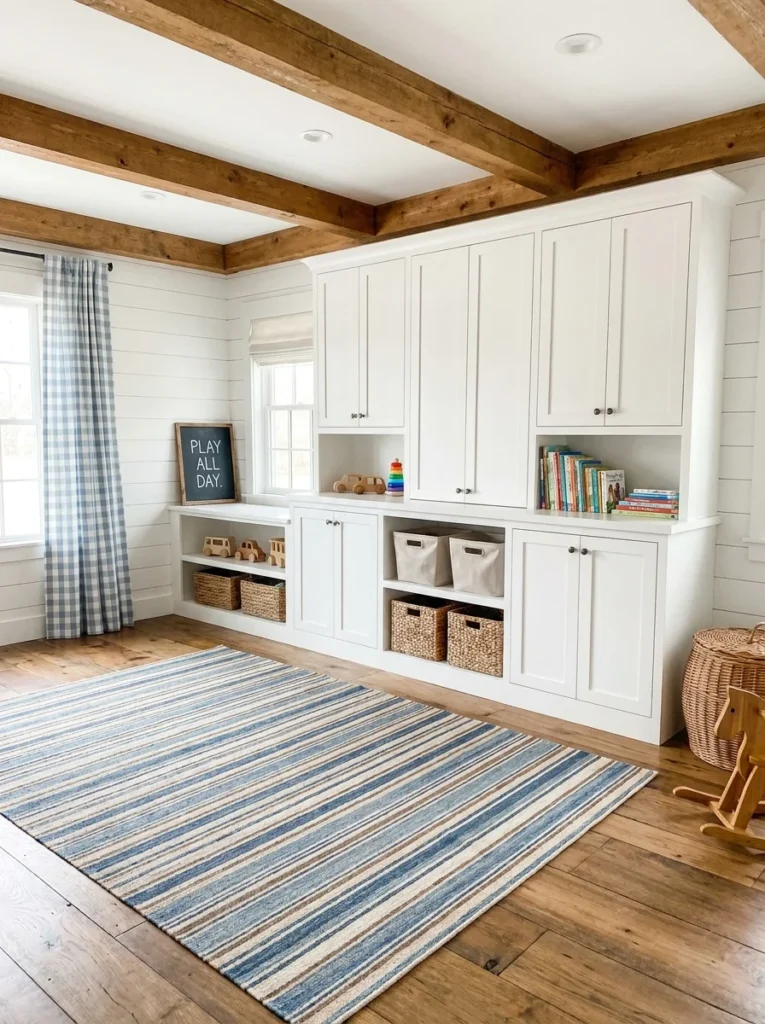
A farmhouse playroom pairs shiplap walls with warm wood beam accents overhead. White cabinetry keeps toys organized while matching the classic farmhouse palette. A vintage-style rug adds pattern without overwhelming the room. Open shelving displays wooden toys and baskets in a tidy row. A small chalkboard sign near the door adds a charming, homey touch. Soft gingham or striped curtains bring in gentle pattern and texture. This style works well in older homes with existing wood beams or shiplap detailing. The overall mood stays warm, welcoming, and family friendly throughout the day.
12. Mudroom-Style Playroom Storage Wall
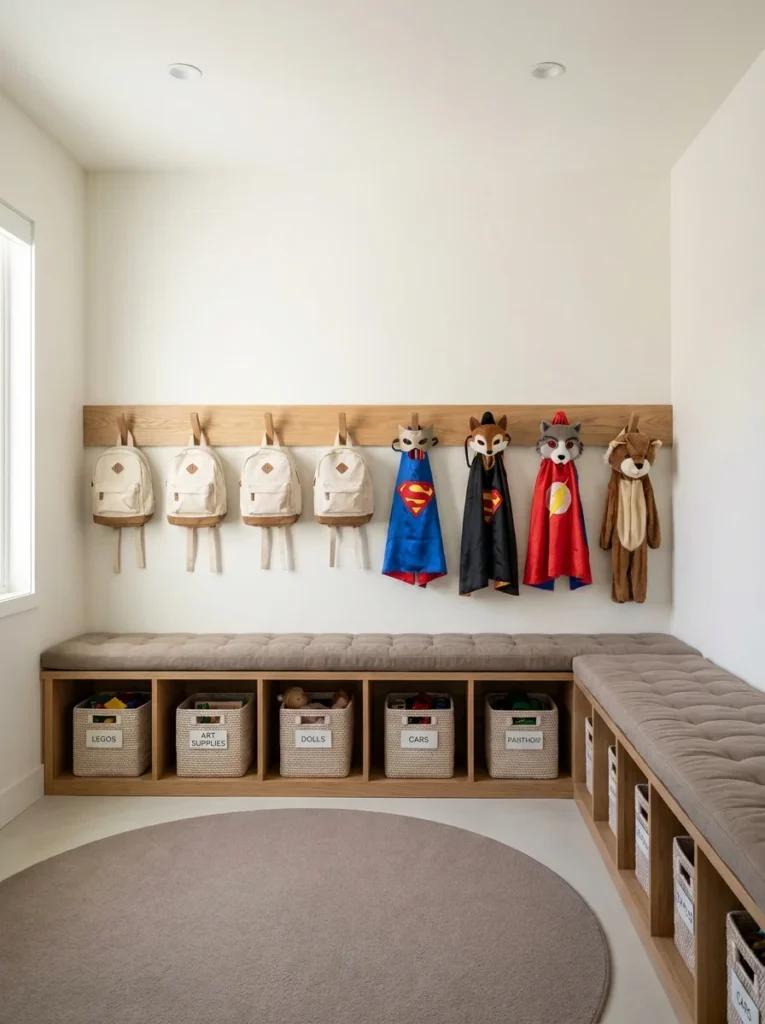
A mudroom-style storage wall brings serious organization to a busy playroom. Wall-mounted hooks hold backpacks, dress-up costumes, and jackets within easy reach. Cubbies sized for bins keep toys sorted by type or activity. This layout borrows heavily from practical mudroom storage systems, adapted for toy organization instead of shoes and coats. A bench seat below the hooks gives kids a spot to sit while getting ready for play. Labels on each cubby help kids learn where items belong. This setup suits playrooms doubling as a drop zone near a back door or garage entrance.
13. Gallery Wall Playroom Art Corner
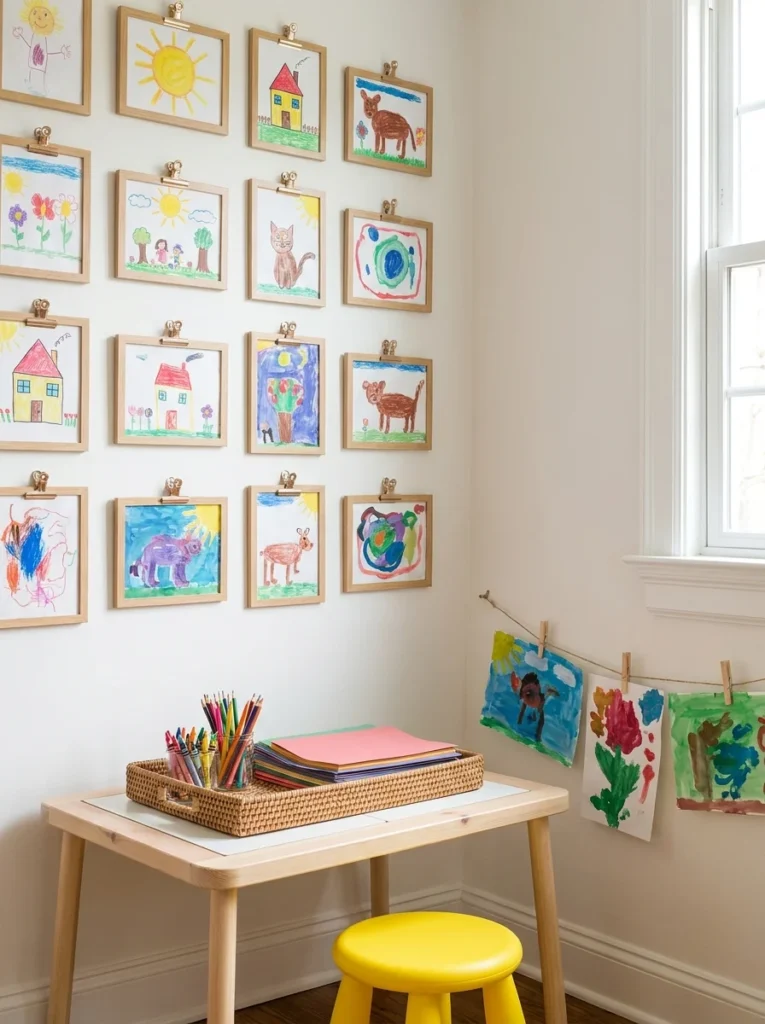
A gallery wall corner turns a child’s own artwork into playroom decor. Simple clip frames make it easy to swap drawings as new ones arrive. A row of frames at a child’s eye level keeps the display interactive. This corner pairs well with a small art table nearby, stocked with crayons and paper. A drying line with clothespins holds fresh paintings before framing. Soft neutral wall paint lets the colorful art stand out clearly. This idea costs very little to set up, since frames and clips are affordable basics. Kids feel proud seeing their work displayed like real gallery pieces.
14. Teepee and Tent Play Corner
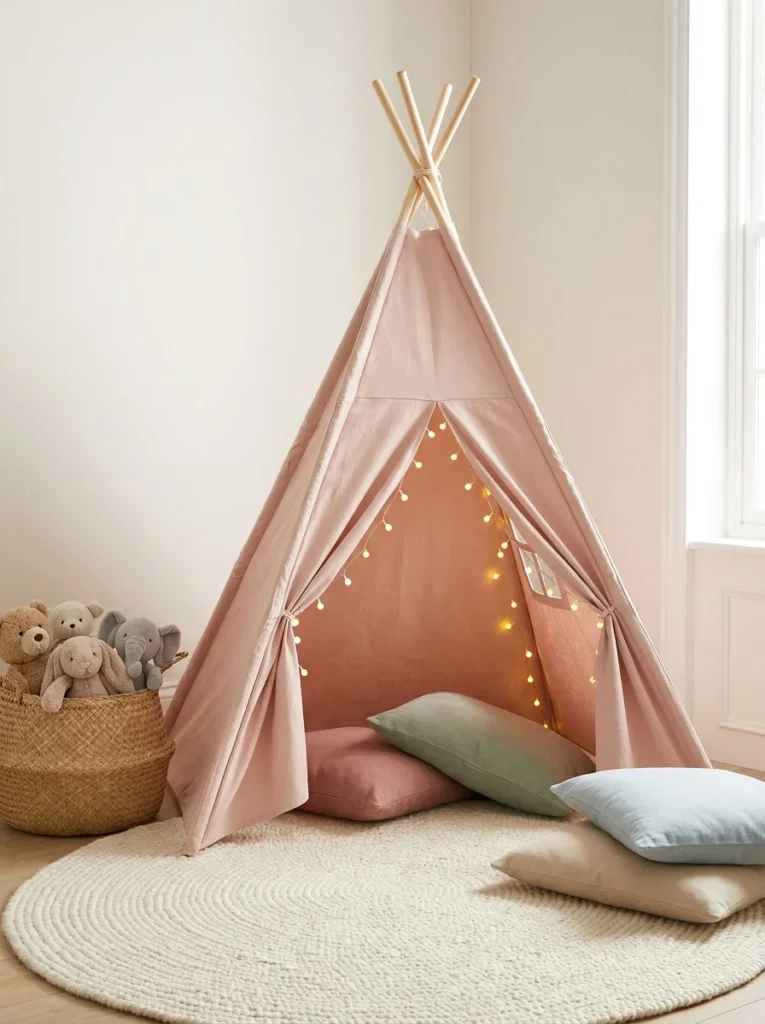
A teepee or play tent gives kids their own small, enclosed retreat. Canvas fabric in a soft neutral or pastel tone keeps the piece from overwhelming the room. String lights inside add a magical glow for pretend camping trips. A soft rug and floor cushions inside make the tent comfortable for reading or resting. This corner works well paired with a small basket of stuffed animals. Kids often use this spot for quiet, independent play throughout the day. This idea suits smaller playrooms, since the tent takes up minimal floor space overall.
15. Sensory Play Table Zone
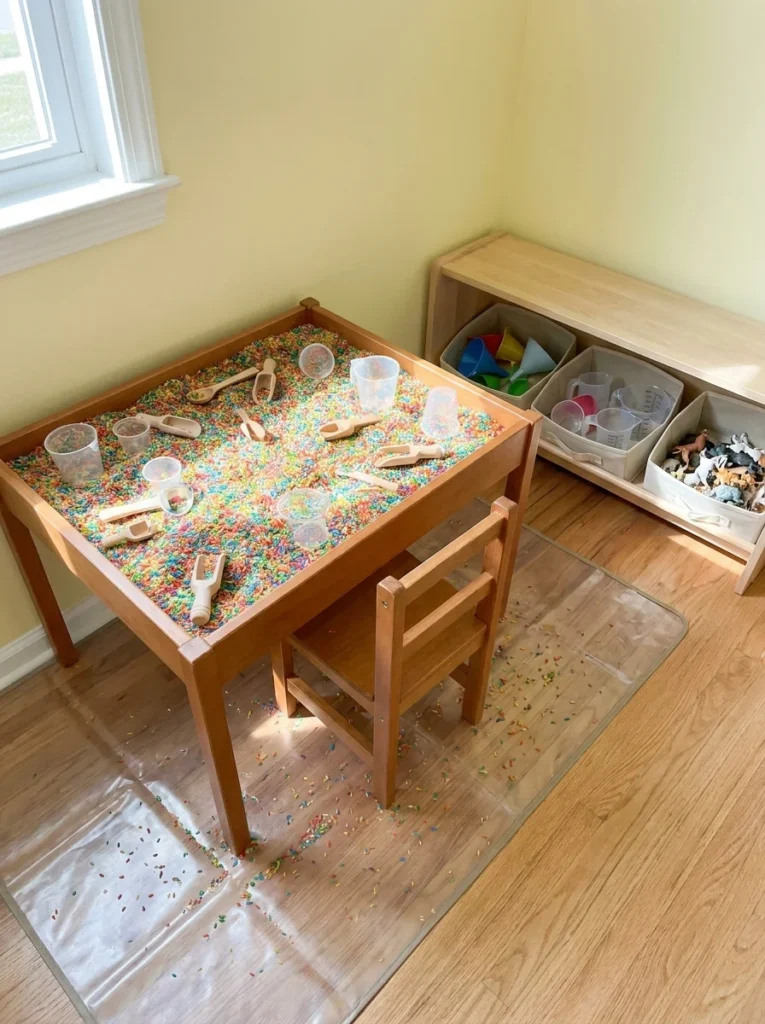
A sensory play table gives kids a hands-on zone for rice, sand, or water play. A waterproof mat underneath protects flooring from spills and messes. Open bins nearby store scoops, cups, and small toys used during play. This zone works best near a window or in a room with easy-to-clean flooring. A small chair set at table height keeps kids comfortable during longer sessions. Rotating materials in the table keeps the activity fresh throughout the month. This idea suits toddlers and preschoolers who benefit from tactile, hands-on exploration daily.
16. Loft Bed Playroom Combo
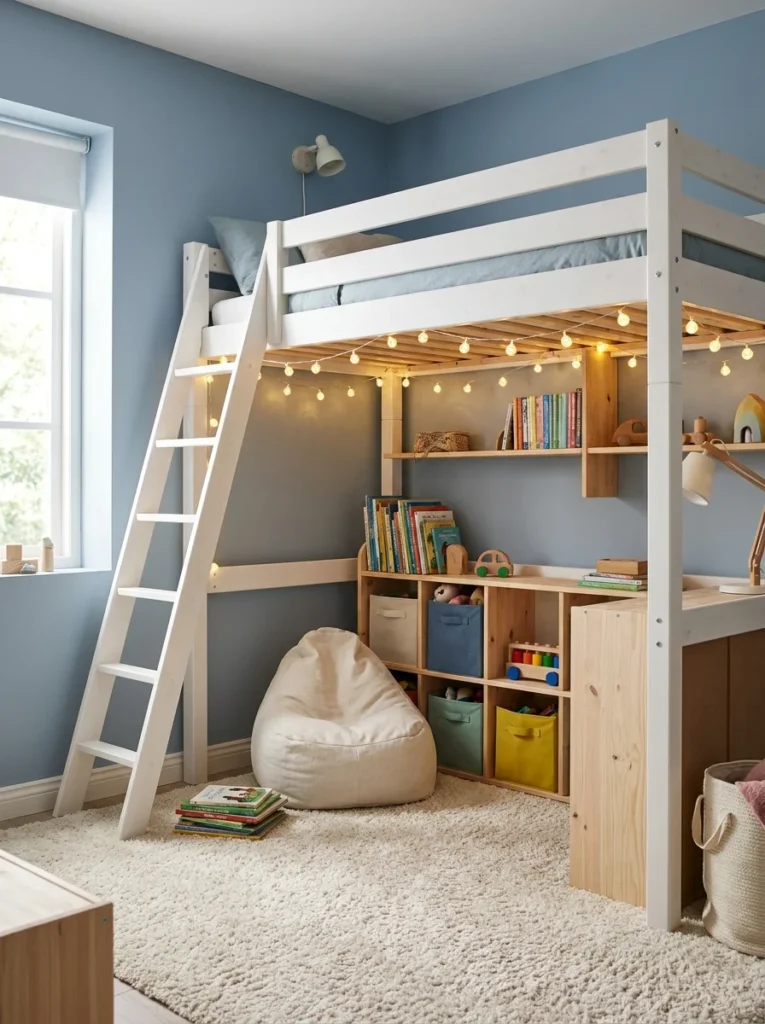
A loft bed combo works well in a shared bedroom and playroom space. Raising the bed frees up floor space underneath for a reading nook or art table. A soft rug beneath the loft grounds the play area below. Built-in shelving on the loft’s support beams adds extra storage for books and toys. String lights along the loft frame create a cozy retreat feel. This layout suits smaller homes where a separate playroom is not an option. Kids often enjoy the sense of having their own little clubhouse tucked beneath the bed.
17. Craft Station Playroom Corner
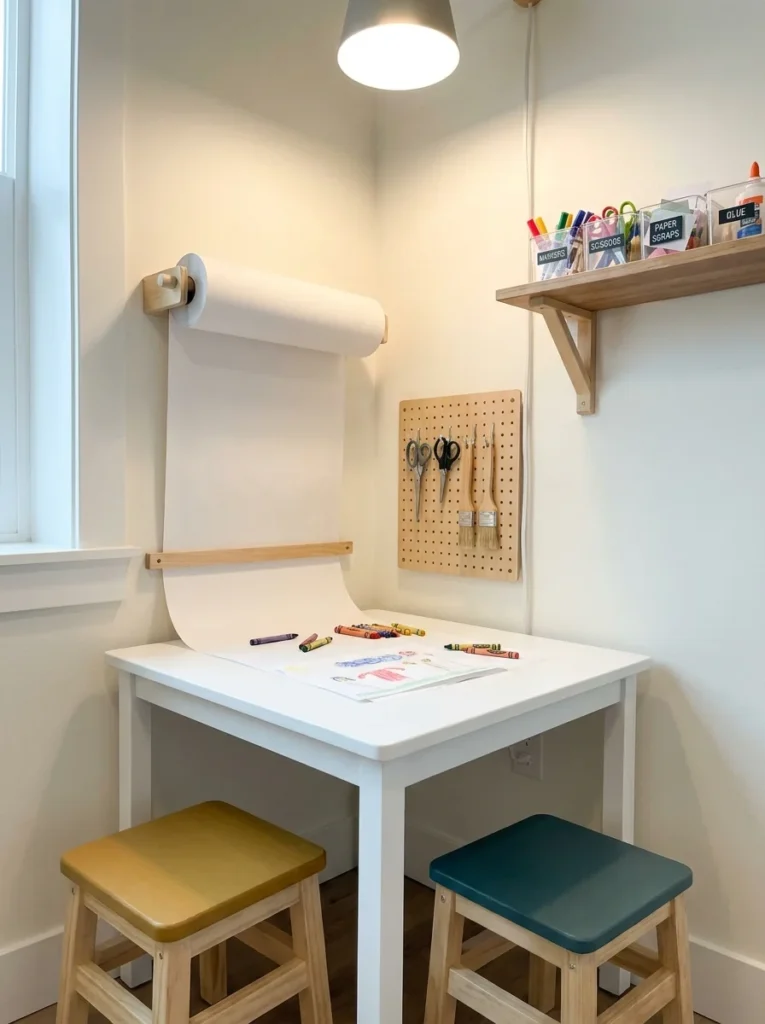
A craft station gives kids a dedicated spot for drawing, painting, and building projects. A wipeable table surface makes cleanup fast after messy activities. Wall-mounted paper rolls let kids draw large-scale art without using extra table space. Labeled bins sort markers, scissors, and paper by category for easy access. A small stool at table height keeps the station comfortable for young hands. Good lighting overhead supports detailed work like coloring or cutting. This corner suits playrooms with creative, artistic kids who need a space of their own for projects.
18. Outdoor-Inspired Indoor Playroom
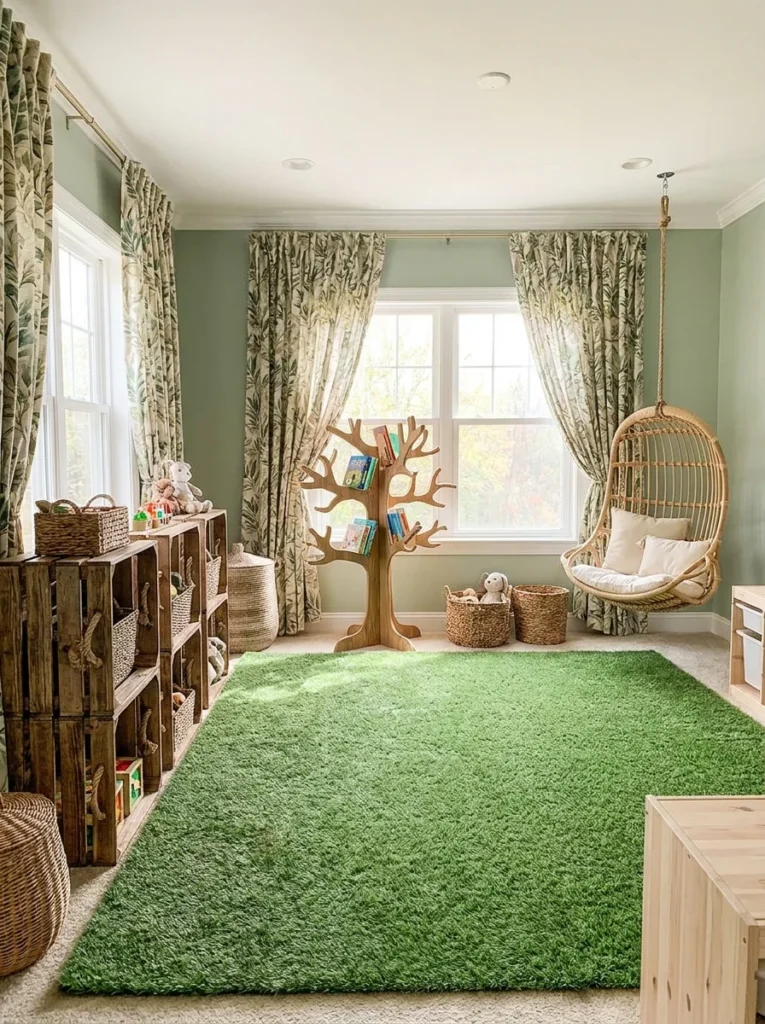
An outdoor-inspired playroom brings green tones, wood textures, and natural light indoors. A faux grass rug adds a playful nod to backyard play. Wood crate storage and rope details reinforce the nature theme throughout the room. A small tree-shaped bookshelf adds a whimsical focal point for younger kids. Botanical wall decals or leaf-print curtains soften the space further. This style suits families in apartments or homes without easy yard access. The room still delivers an outdoor feel, even during colder months when outside play slows down.
How to Choose the Right Playroom Layout
Choosing a layout starts with measuring the available floor space carefully. Traffic flow matters, so leave clear paths between furniture pieces. Group activities by type, such as reading, building, and art. This zoning approach helps kids focus on one activity at a time. Consider a child’s age too, since toddlers need more open floor space than older kids. Storage should stay within reach, encouraging kids to clean up independently. Finally, pick a color palette that feels calm rather than overstimulating for daily use.
Common Mistakes to Avoid in Playroom Design
Overfilling the room with furniture is a common misstep in playroom design. Too many pieces limit open floor space needed for active play. Skipping labeled storage often leads to cluttered bins and lost toys. Choosing delicate rugs or furniture also creates unnecessary stress over stains and spills. Another mistake involves placing shelves too high for kids to reach independently. Poor lighting can make a playroom feel dim and uninviting. Finally, ignoring future growth means a room may need a full redo within a year or two.
Playroom Storage Solutions That Work
Open shelving remains one of the most effective playroom storage solutions. Baskets and bins sort toys by category, which speeds up daily cleanup. Wall-mounted hooks keep dress-up items and bags off the floor. Rolling carts add flexible storage that moves between activity zones easily. Labeled containers help kids learn where each toy belongs over time. A bench with hidden storage underneath adds seating and function in one piece. These solutions work across styles, from farmhouse to modern minimalist playrooms alike.
FAQs about Playroom Ideas
What size room works best for a playroom? Most playrooms function well in a space between eighty and one hundred fifty square feet. Smaller nooks still work if storage stays efficient and organized.
What flooring holds up best in a playroom? Low-pile carpet tiles, vinyl, or cork flooring handle spills and heavy play well. These options also feel comfortable for kids sitting or crawling on the floor.
How often should playroom toys rotate? Rotating toys every few weeks keeps the space fresh and prevents overwhelming clutter. This habit also renews a child’s interest in older toys.
Can a playroom double as a guest space? Yes, a daybed or fold-out sofa allows a playroom to serve guests occasionally. Storage ottomans also hide toys quickly when guests arrive unexpectedly.

Written by Stephanie Fallis
Mom and homemaker who shares budget friendly DIY projects, decorating tips and gardening ideas for busy families.
More about me → Christmas ideas21 Christmas Tray Ideas for a Festive Home
 Christmas ideas21 Blue Christmas Decoration Ideas for a Stunning Home
 Christmas ideas9 Log Christmas Decoration Ideas for a Cozy Home