
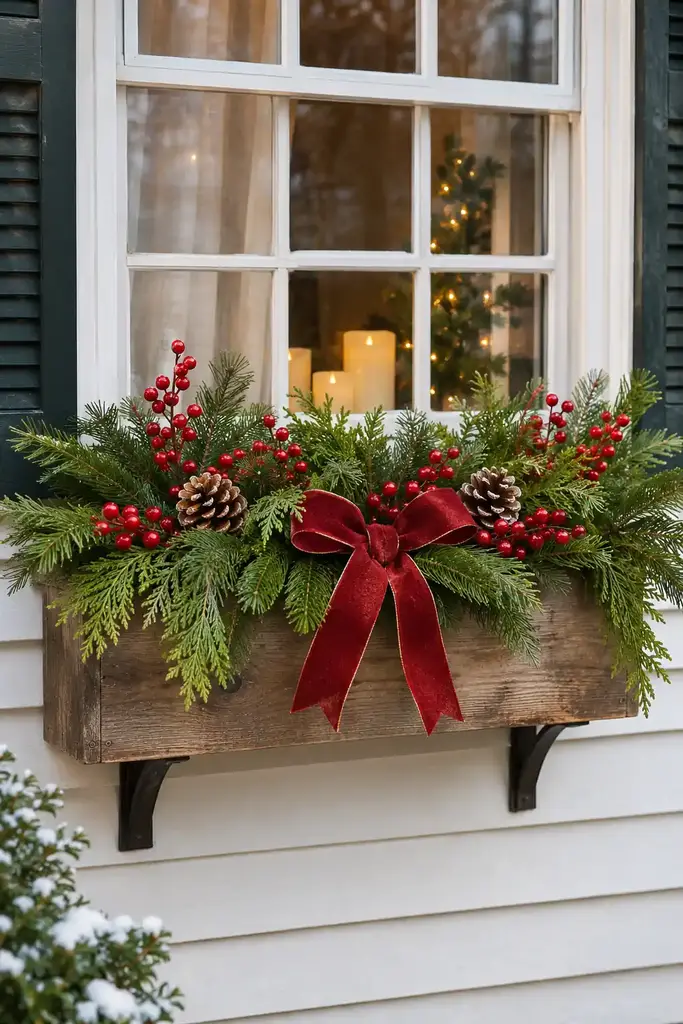
Christmas window box ideas need to suit the container, its brackets, and the weather outside your window. Start with a low arrangement, then add one main accent. Keep opening windows, drainage, and required access clear before deciding on tall decorations.
These AI-generated images are design inspiration, not verified planting or installation plans. Snowy scenes may show materials that need artificial substitutes. Check the finished weight and choose decorations and lights rated for their actual outdoor conditions.
In this post: 20 ideas
- Evergreen branches with red berry accents
- Pale birch branches above snowy greenery
- Gold ornaments among dark greenery
- Blue ornaments with silver lanterns
- Dried citrus accents across a wood box
- A red lantern as the main focal point
- Pink bows across a dark green box
- Pinecones against mixed green branches
- White poinsettia shapes above a red box
- Copper-colored bells below evergreen branches
- Small tree shapes in a row
- Red-and-white stripes with candy cane shapes
- A broad plaid bow on a wood box
- Round eucalyptus-like leaves with a red bow
- Small warm lights through greenery
- Wooden star shapes above the box
- Broad magnolia-like leaves and red berries
- Decorative gingerbread houses among branches
- Red cardinal ornaments above greenery
- One oversized red bow with low greenery
1. Evergreen branches with red berry accents
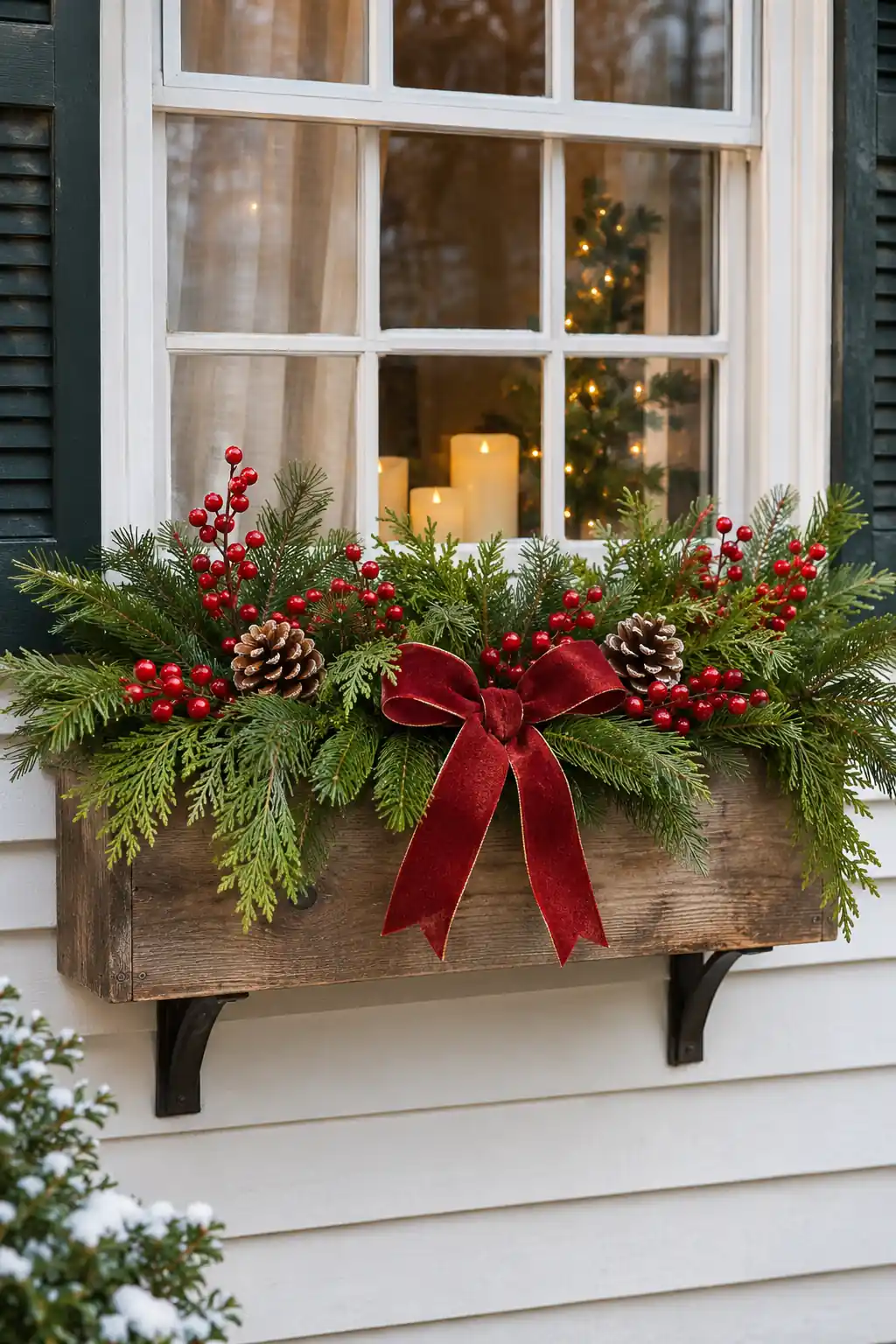
Green branches spread across this wooden box, with red berries raised slightly above them. Pinecones add brown shapes near the center. A red bow marks the front, leaving much of the wood visible. The arrangement follows the box’s horizontal line rather than blocking the window.
Place the longest branches toward the ends and shorter pieces near the middle. Keep the center low enough that the inside view remains useful. Use a limited number of berry stems so the red appears in clear groups. Scattering individual berries everywhere can make the display look speckled.
Choose cut greenery or outdoor-rated artificial stems according to your climate and maintenance plans. Do not assume the pictured branches are rooted plants. Secure loose decorations against wind using a method suited to the box. Check the mounting brackets before adding weight. A single front bow is enough when the red berries already repeat across the arrangement, especially on a narrow window with little wall space around it.
2. Pale birch branches above snowy greenery
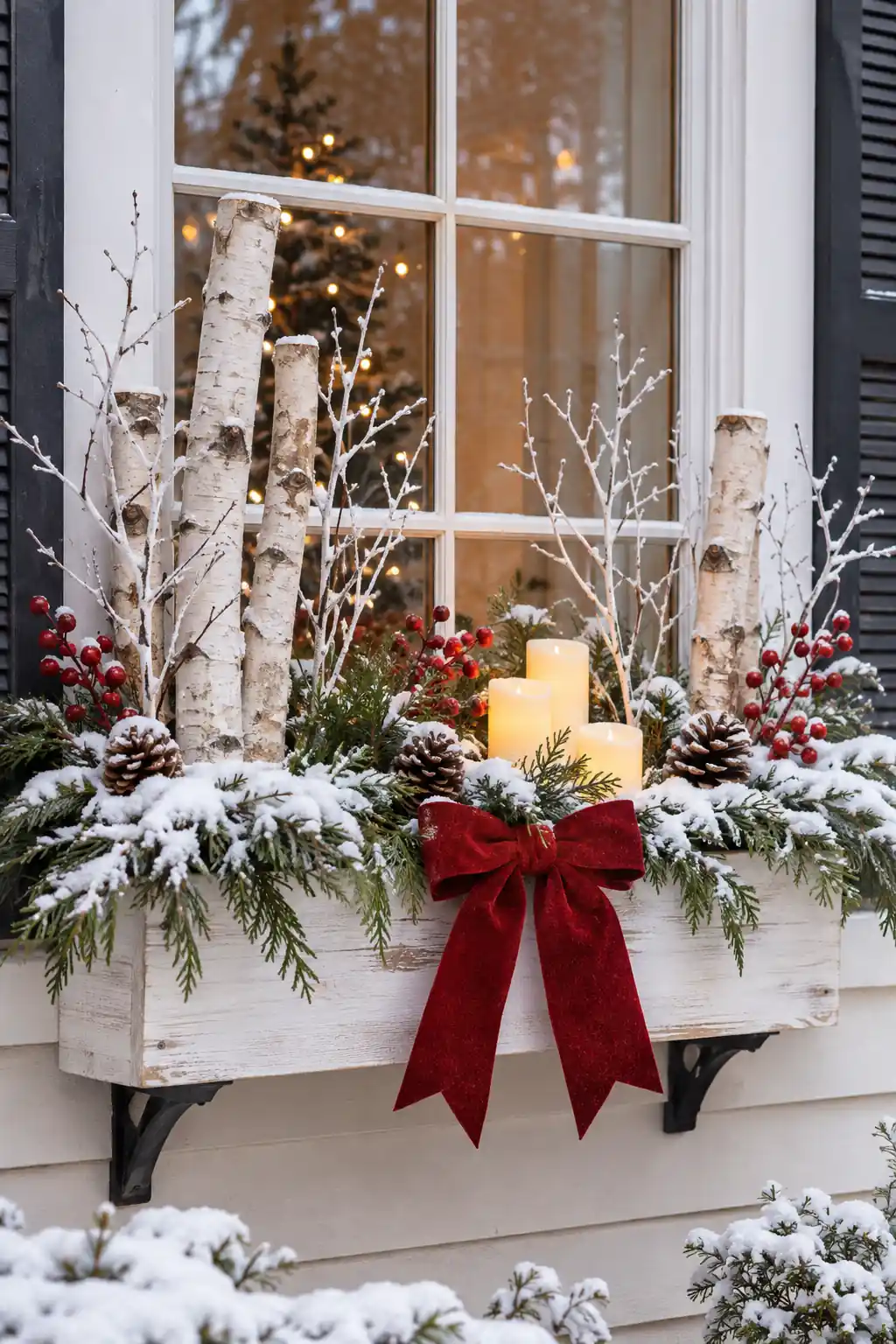
Upright pale branches create height at the back of this box. Frosted-looking greenery fills the base, while a red bow provides the main color accent. The vertical branches echo the window divisions. Their open spacing allows some view through the arrangement instead of forming a solid screen.
Use lightweight decorative branches where a wall-mounted box has limited capacity. Tall solid logs can add considerable weight and catch wind. Confirm the support limits before choosing them. Keep the tallest pieces away from opening window sections and any required escape route.
The snowy effect can come from outdoor-rated artificial greenery rather than loose artificial snow. Choose products intended for the exposure they will receive. Keep any candle effect flameless and rated for exterior conditions. The pale branches need less decoration than a dense evergreen arrangement. A few dark cones can distinguish the base without adding more vertical stems. Check the view from indoors as well as the street before fixing the final branch positions.
3. Gold ornaments among dark greenery
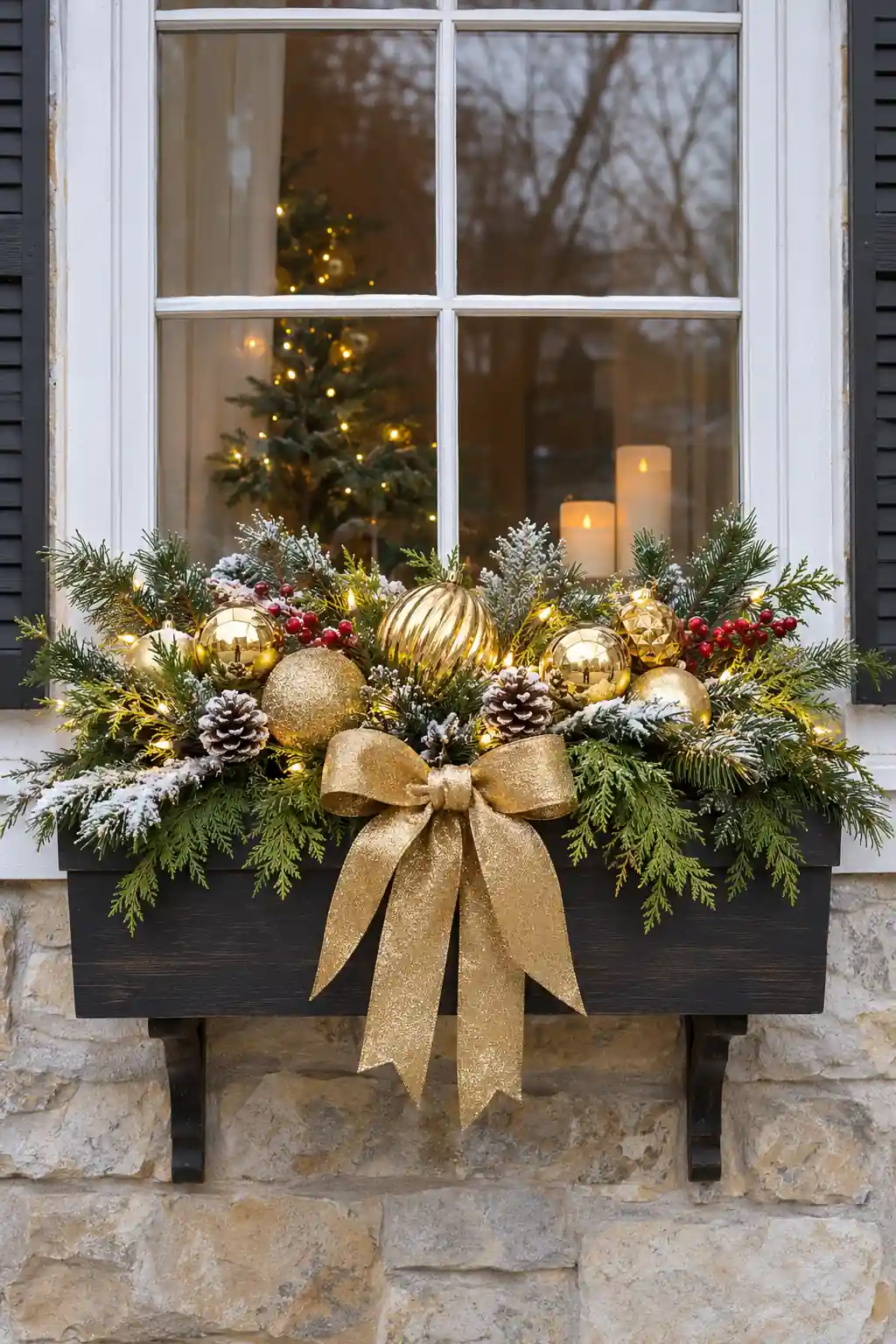
Gold-colored balls cluster across this dark window box. Their different finishes create contrast against the green branches. A gold bow repeats the color on the front. The arrangement remains relatively low, so the ornaments supply detail without tall stems covering the glass.
Choose lightweight ornaments intended for exterior display. Indoor glass baubles may be unsuitable for exposed wind and weather. Secure each ornament rather than leaving it balanced on the greenery. Place larger balls near the middle and smaller ones toward the ends to follow the box’s shape.
Keep some dark green visible between the gold pieces. Filling every gap with a shiny ornament can hide the branch texture. A matte gold bow can balance more reflective balls. Check the arrangement in daylight before deciding whether it needs lights. The gold may already provide enough contrast. Avoid adding heavy decorative filler merely to raise the ornaments; use a support method appropriate to the box and within its mounting capacity.
4. Blue ornaments with silver lanterns
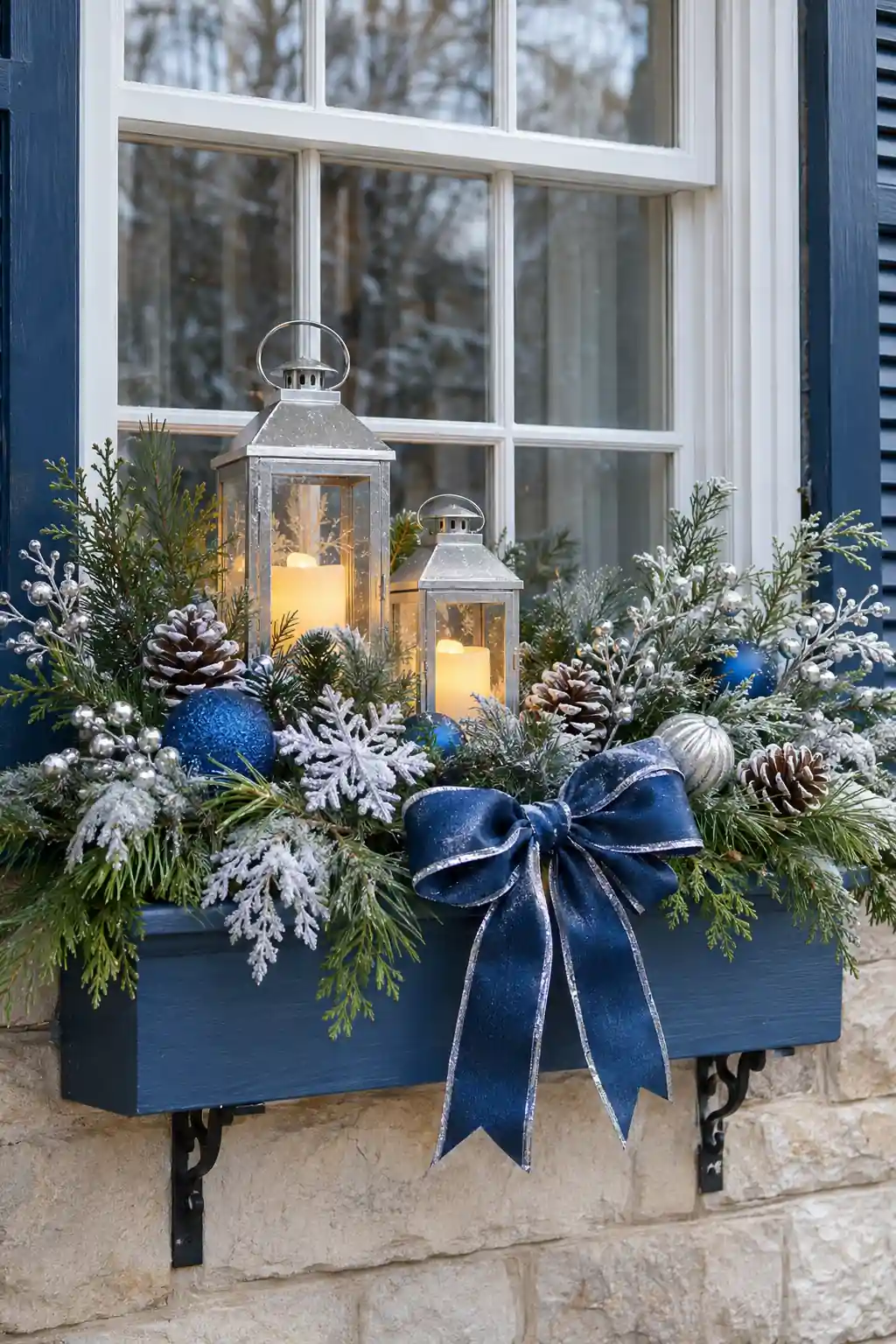
Blue balls and a blue bow establish the main color in this box. Silver-colored lanterns add height above frosted-looking branches. Pale snowflake shapes repeat the winter theme. The blue-painted container connects the lower structure with the decorations instead of disappearing behind them.
Choose lanterns with a scale and weight suited to the box. They need secure support, not a loose position on flexible branches. Use only suitable flameless lighting products. Keep battery access possible without dismantling the whole arrangement. A single lantern may be enough for a shorter box.
Leave the center window area partly open so the display does not block too much light. Dark blue ornaments are easiest to distinguish beside pale foliage or silver pieces. Our blue Christmas decoration ideas can connect the palette with the porch. Match the blue approximately rather than repainting a serviceable window box solely to reproduce the picture, especially when the existing finish already suits the house.
You may also like: Outdoor christmas lights ideas.
5. Dried citrus accents across a wood box
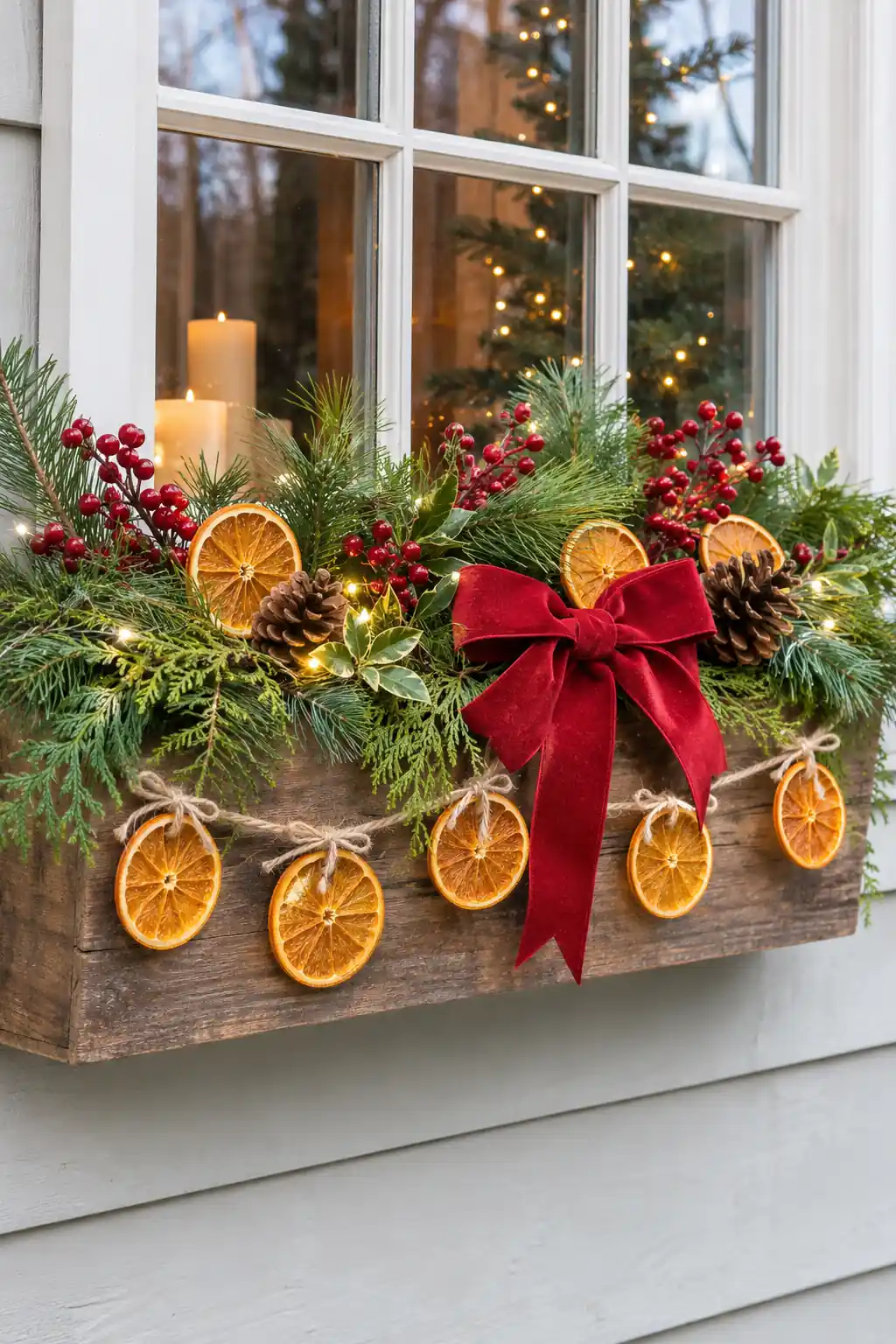
Orange slices hang along the front of this wood box and appear among the greenery above. Red berries and a central bow connect the citrus with Christmas colors. The circular slices contrast with the thin evergreen needles. The natural wood background keeps their orange sections easy to see.
Treat dried citrus as a decorative material that may deteriorate outdoors. A sheltered position offers more protection, but it does not guarantee a full season of use. Inspect the slices and replace damaged pieces. Outdoor-rated artificial citrus can give a similar color effect with different maintenance needs.
Keep hanging slices close enough to the box that they do not flap against the siding. Short attachments are easier to control than a long loose garland. Leave gaps between circles so the wood remains visible. Avoid adding many other dangling ornaments, since the citrus already defines the front edge. Check all attachment points after wind, and remove the display if pieces begin loosening above a walkway or entrance.
6. A red lantern as the main focal point
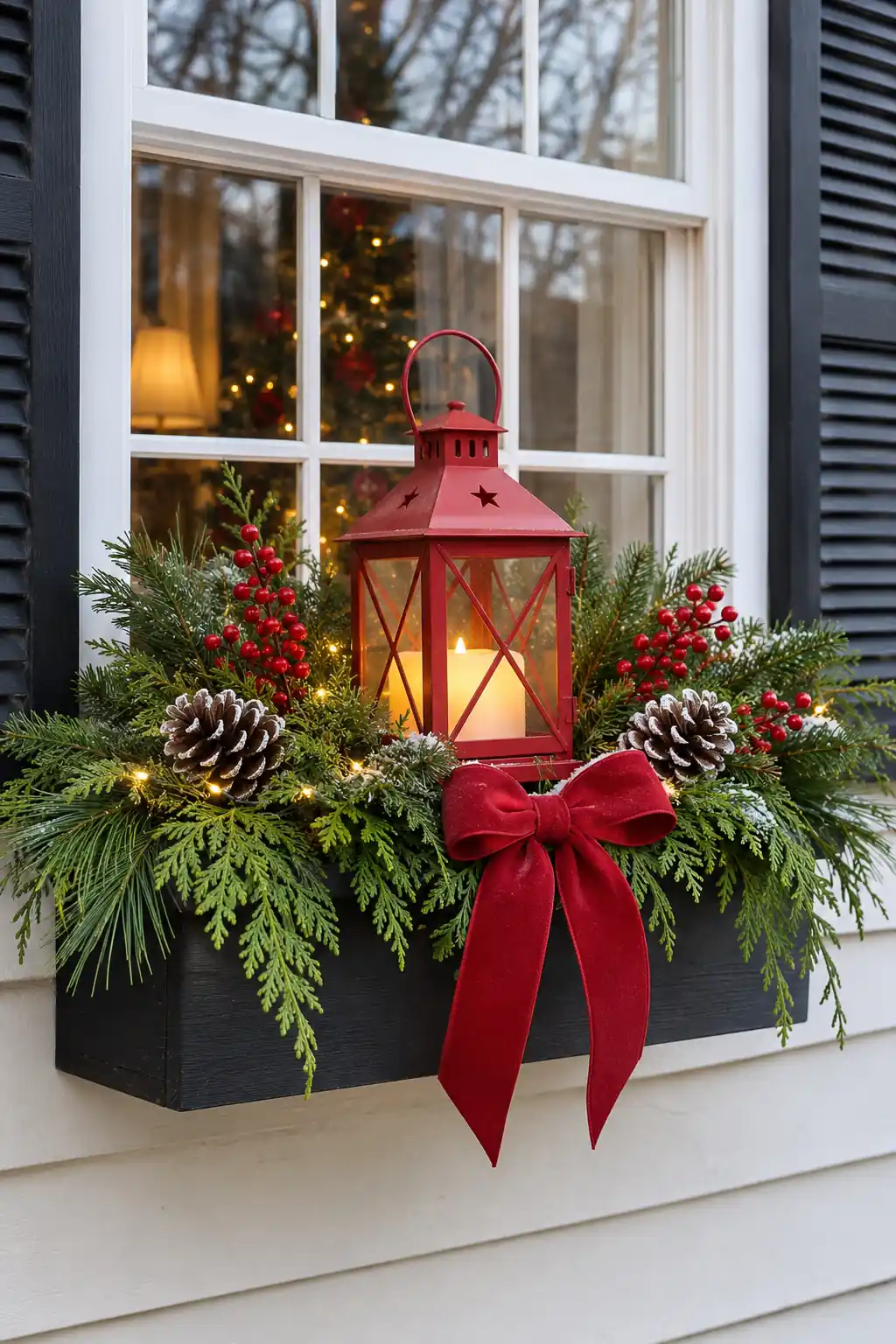
One red lantern rises above green branches in this dark box. A matching red bow appears directly below it. Red berry stems spread toward the sides, while pinecones fill the lower area. The lantern’s clear geometric shape contrasts with the looser outline of the greenery.
Measure the lantern against the window before choosing its height. A tall piece can obscure more of the view than expected. Confirm that the box and brackets can support its weight. Secure it using a method suited to both the lantern and container, rather than relying on the branches to hold it.
Use an outdoor-rated flameless light if the lantern will be illuminated. A decorative housing does not automatically protect an indoor LED candle from weather. Keep the light accessible for inspection. If the lantern feels too heavy, use a flat red house-shaped accent instead. The same central color can remain, while the arrangement becomes shallower and easier to maintain beneath an opening window throughout the season.
7. Pink bows across a dark green box
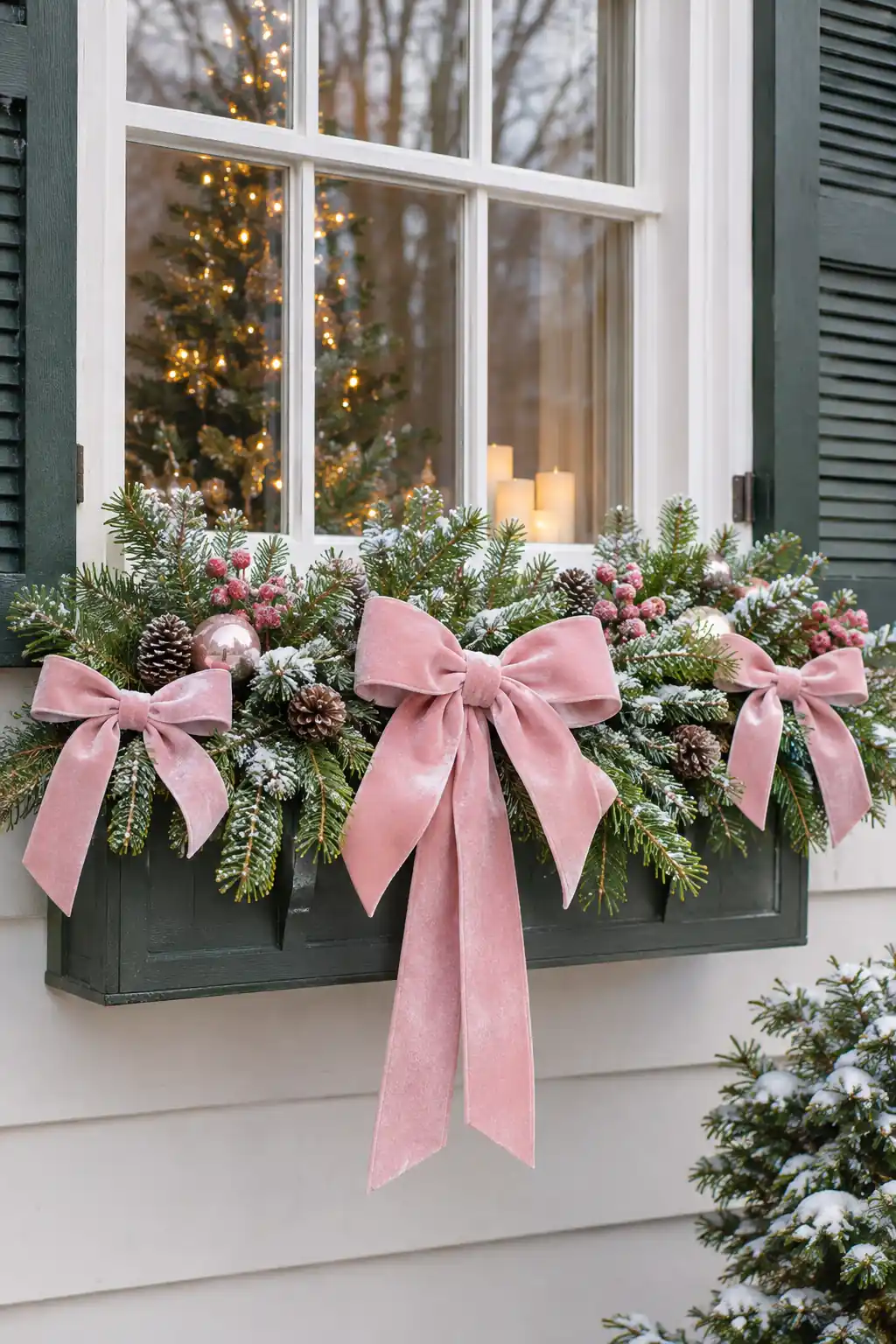
Pale pink bows repeat along this dark green box, with the largest at the center. Pink ornaments and soft-colored berry accents appear above them. The greenery remains low, letting the fabric loops provide most of the shape. The dark container increases contrast with the pale ribbon.
Choose ribbon intended for the display conditions. Ordinary indoor fabric may lose its shape or color in wet weather. Make the center bow first, then decide whether smaller side bows are necessary. On a short box, one bow and a few matching ornaments may be enough.
Keep the tails above any lower window trim or walkway. They should not obstruct access to the container or hide its mounting points. Use pale ornaments sparingly so the bows remain the main subject. Repeat pink on a separate door wreath if you want a connected exterior. There is no need to add pink to every window. A limited repeated color can connect the display without making each box identical.
8. Pinecones against mixed green branches
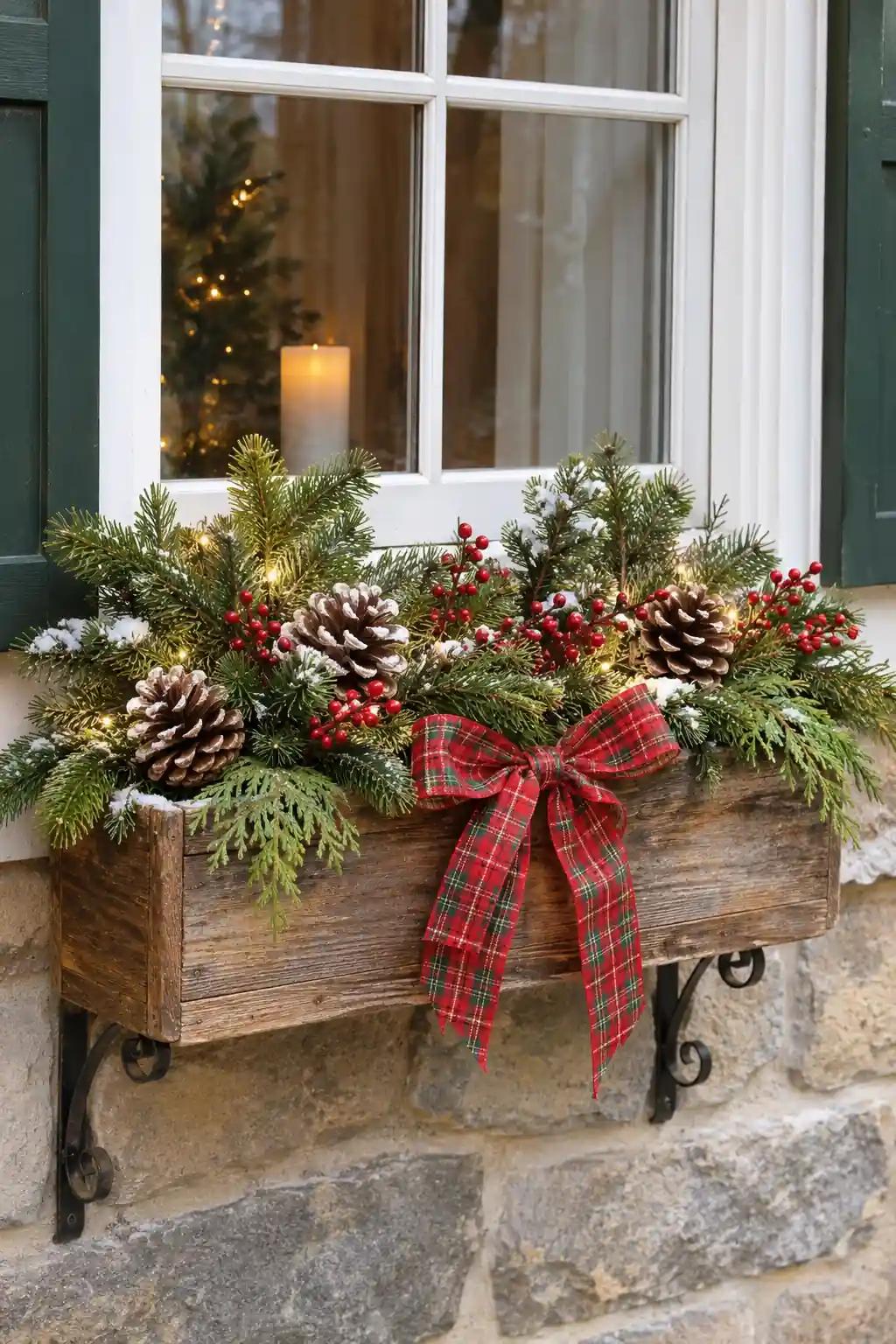
Large brown pinecones form a clear rhythm across this wooden box. Red berries provide smaller color groups behind them. A checked bow completes the front. The arrangement shows several branch textures, but the cones remain the easiest shapes to read from the street.
Choose cones that are large enough for the viewing distance. Tiny ones may disappear beneath the greenery. Secure the cones rather than leaving them loose along the rim. Place a few at different angles so the scales remain visible instead of showing only their narrow tips.
Keep the wood front partly uncovered to connect with the brown cones. A shorter bow can avoid hiding that texture. Use artificial cones if the natural material available is damaged or unsuitable for prolonged outdoor display. The box does not need additional gold ornaments or painted snow. Its contrast comes from brown shapes, red berries, and green branches. Check the arrangement from inside, where a dense back row could block more daylight than its outside appearance suggests.
You may also like: Mini christmas tree ideas.
9. White poinsettia shapes above a red box
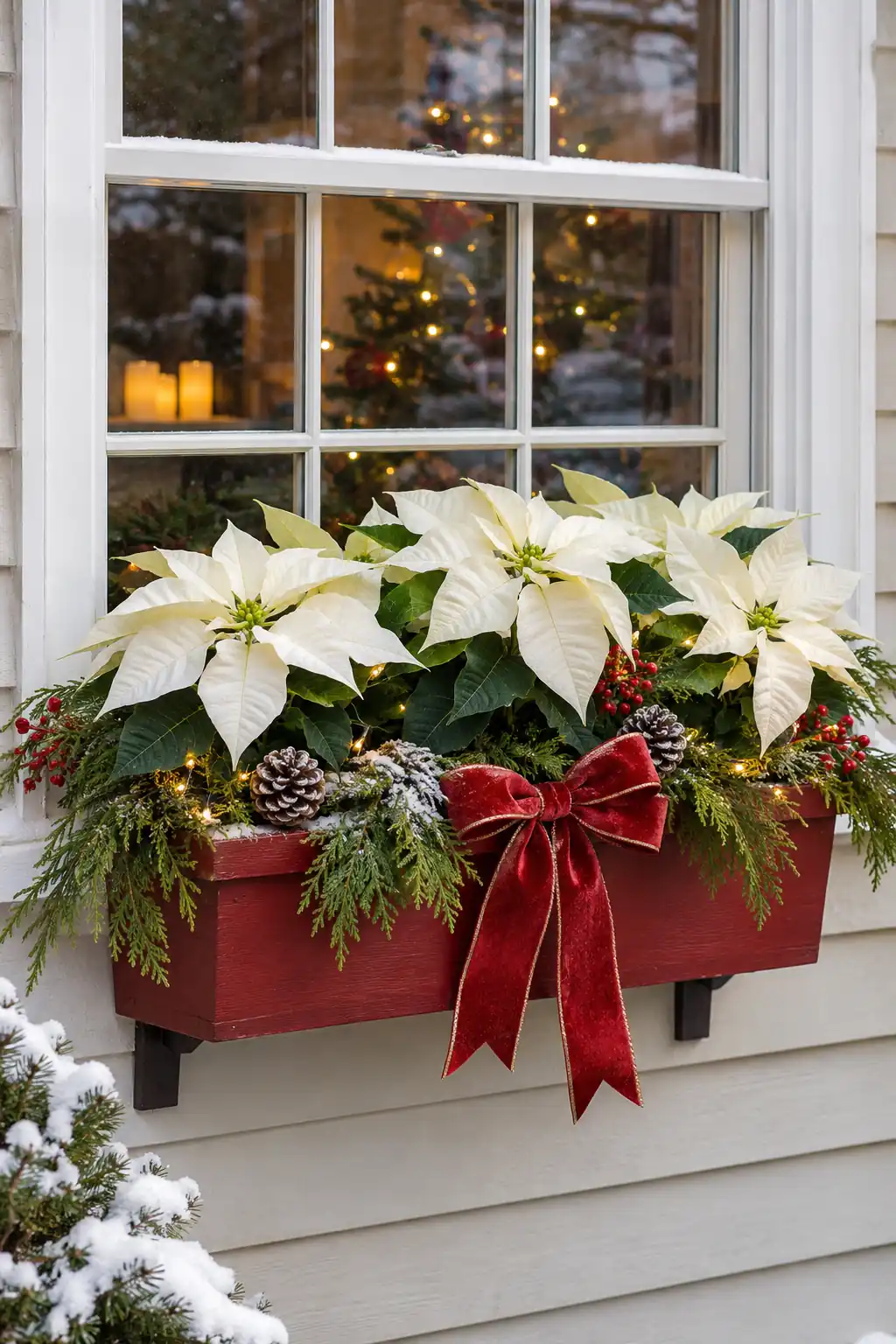
Large pale poinsettia shapes fill the top of this red container. Dark green leaves separate the flowers from the snowy-looking branch base. A red bow blends with the box, leaving the flowers as the strongest contrast. The broad petals create a different texture from fine evergreen needles.
Use outdoor-rated artificial poinsettias for the cold-weather scene shown here. Real poinsettias are not suitable for freezing window boxes. University of Minnesota Extension notes damage below 50 degrees Fahrenheit. Keep living plants in conditions appropriate to their care instead of copying the snowy image literally.
Arrange the artificial flower heads at slightly different angles so they remain distinct. Avoid packing every bloom into the same straight line. A few dark leaves between them can separate their outlines. Choose secure stems that cannot lift out in wind. The red container already supplies enough color, so extra berry clusters are optional. Inspect the artificial material periodically and remove any deteriorating pieces before they shed into the area below the window.
10. Copper-colored bells below evergreen branches
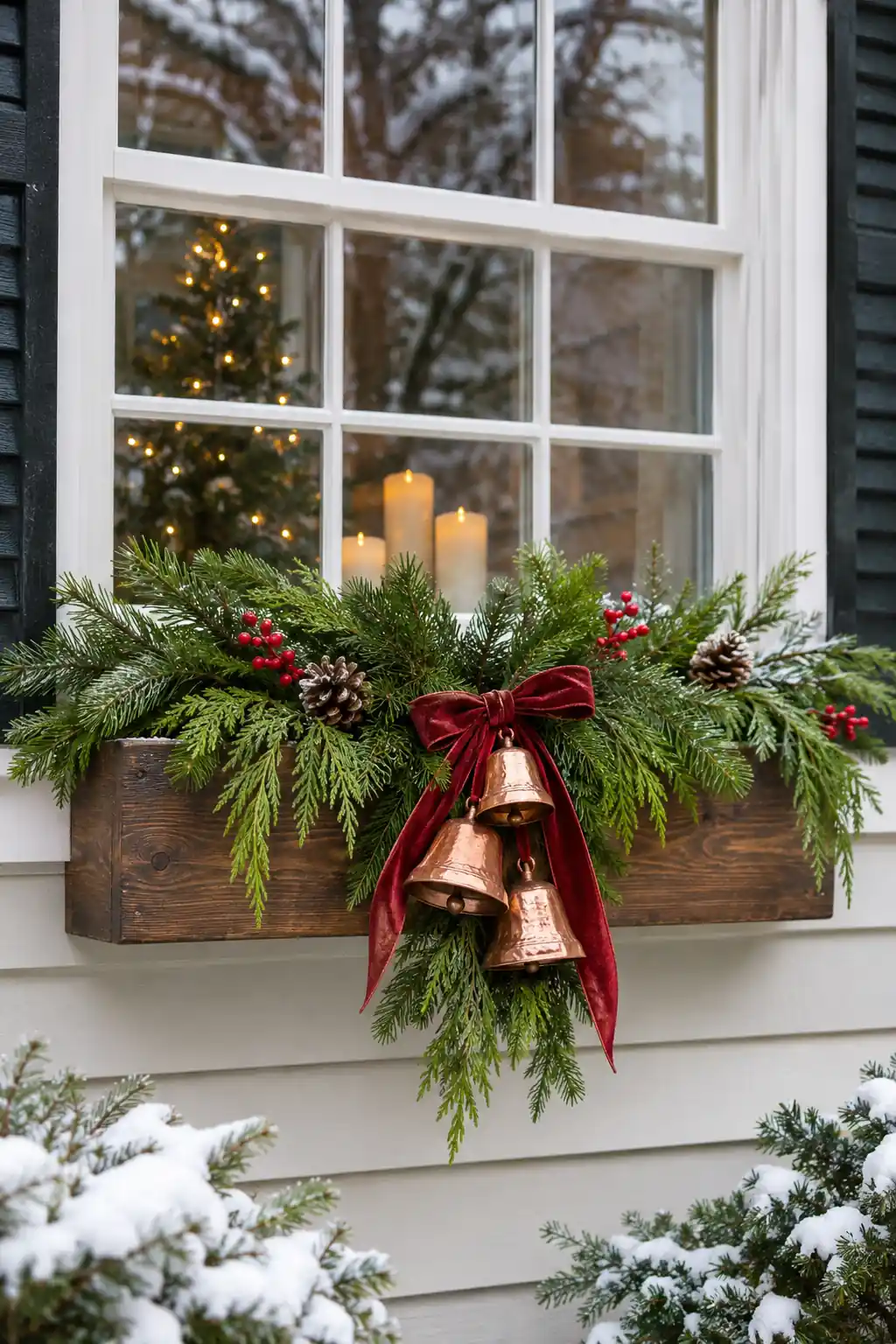
Copper-colored bells hang beneath a red bow at the front of this box. The greenery above remains comparatively simple. Red berries and a few cones repeat familiar holiday shapes without covering the metal. The bells add a vertical detail below the long horizontal arrangement.
Check the combined weight before attaching bells to the container. Lightweight decorative versions may be more suitable than heavy metal pieces. Keep the attachment independent of the bow so the ribbon does not carry the whole load. Ensure the bells cannot strike window glass or siding in wind.
Consider whether sound is welcome near a bedroom window or neighbor. A decorative clapper-free version can provide the outline without repeated ringing. Keep the bells short enough that they do not obstruct anything below the box. Copper color connects well with brown wood, but a painted container can work too. Leave the front relatively plain so the bell shapes remain visible and do not compete with another hanging garland across the same space.
 You may also like13 Front door Christmas decoration ideas to try
11. Small tree shapes in a row
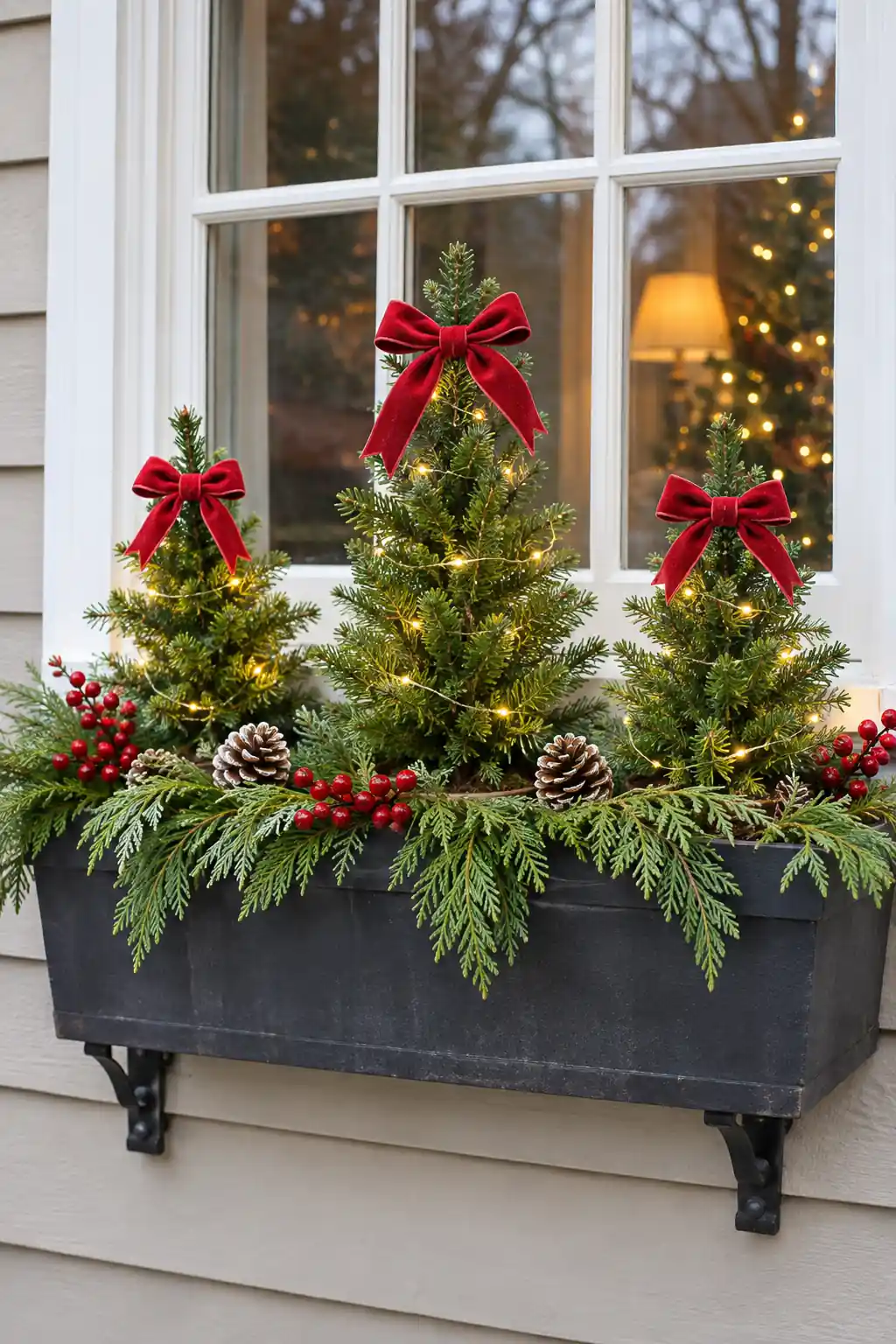
Three miniature tree forms rise above this dark box, with the tallest in the center. Red bows repeat at their tops. Low branches and berries connect the separate trees along the base. The height differences create a clear arrangement without filling the entire window width.
Decide whether you want artificial decorative trees or living plants before choosing materials. Their support and care needs differ. Do not assume a small potted evergreen will tolerate your winter conditions in a shallow box. Ask a local nursery about climate and container suitability if using live plants.
Artificial trees should still be intended for the exposure and secured against wind. Keep the central tree below important sightlines and opening hardware. Small bows can provide enough decoration without adding strings of fragile ornaments. Our mini Christmas tree ideas offer related indoor arrangements if the outdoor box cannot support tall pieces. A low greenery display is a practical alternative when the mounting capacity or window access is limited.
12. Red-and-white stripes with candy cane shapes
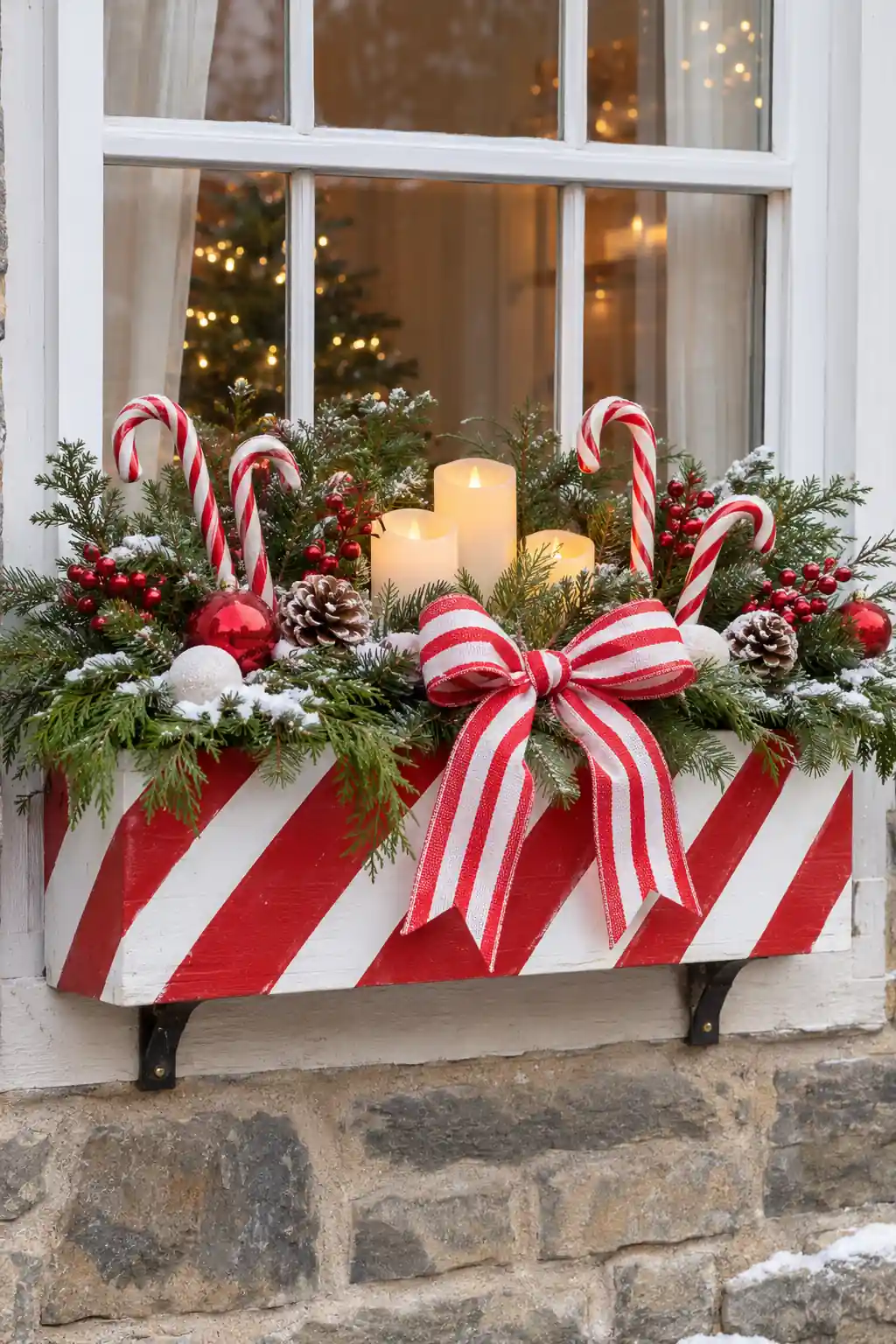
Diagonal stripes cover the box front, and large candy cane shapes rise among the greenery. A striped bow repeats the pattern in the center. Pale decorative lights and white accents keep the upper section from becoming entirely red. The container itself provides much of the theme.
A removable exterior-suitable panel can suggest stripes without permanently repainting the box. Check compatibility with its surface and drainage before attaching anything. Keep the stripe angle consistent across the front. A small sample can help you judge whether the pattern is too busy beneath your window.
Use lightweight outdoor-rated candy cane decorations, secured below the visible greenery. Do not add edible candy. Keep the tallest curves away from opening glass. The striped bow is optional when the box already has a strong pattern. A plain red bow can reduce repetition. Check that any lighting is suitable outdoors and that its power route does not pass through a closing window or leave a cable stretched across a walkway.
You may also like: Blue christmas decoration ideas.
13. A broad plaid bow on a wood box
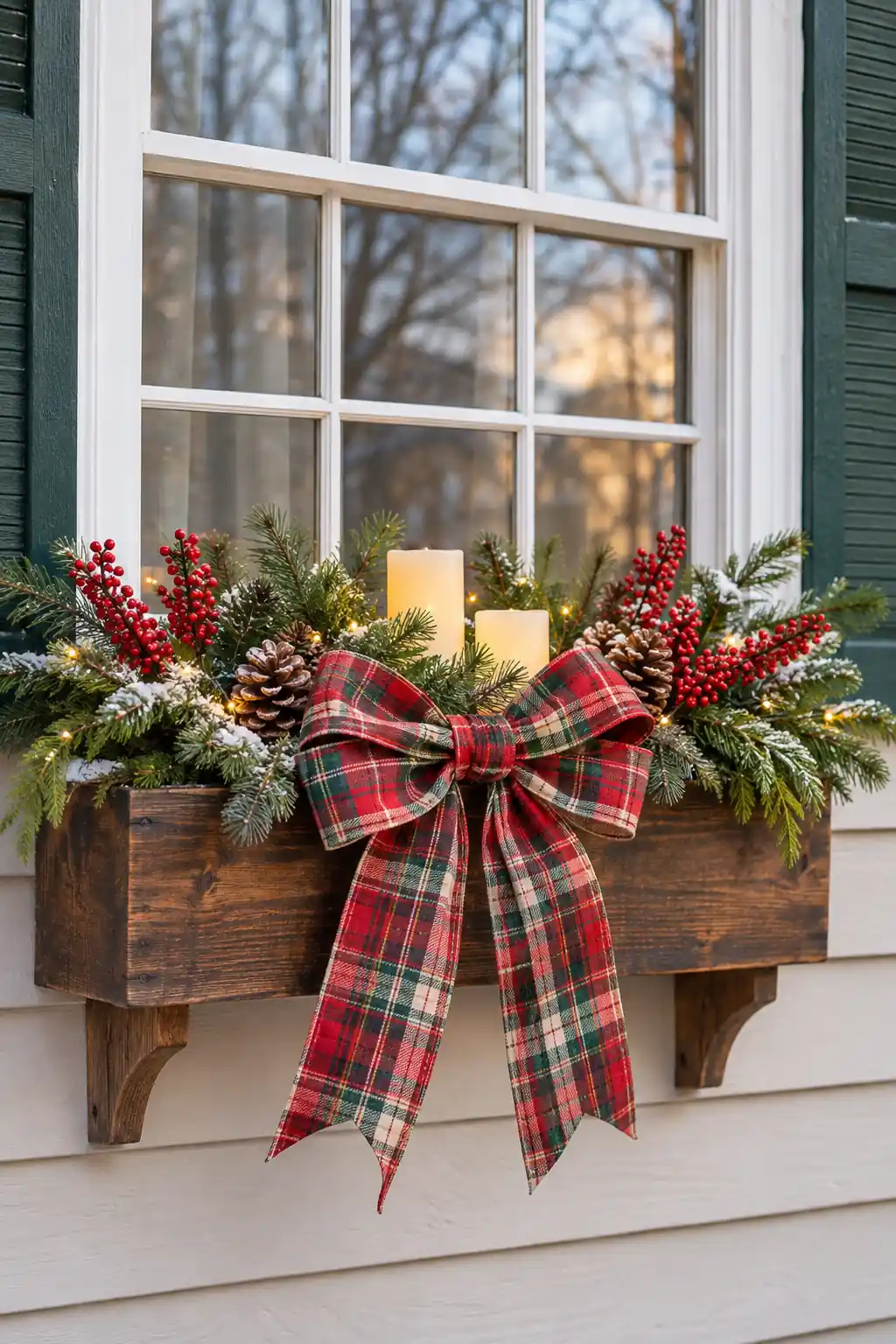
A large checked bow fills the middle of this wooden box. Red berry stems and evergreen branches repeat its colors above. Pale LED candle shapes appear behind the greenery. The fabric pattern provides the main detail, while the wood front remains visible on both sides.
Choose the bow width after measuring the container. Its loops should not cover the whole front unless that is the intended effect. Shorter tails can show more wood and reduce movement in wind. Use ribbon suited to exterior conditions rather than assuming all wired ribbon is weather-resistant.
Keep the upper arrangement lower near the center if the bow needs to remain visible from the street. One or two berry groups can repeat the red without making a solid band. Use suitable flameless lights only, and leave access to their controls. A simpler unlit arrangement can work equally well in daylight. Inspect the bow attachment during the season, especially after rain changes the fabric weight or wind shifts its position against the container.
14. Round eucalyptus-like leaves with a red bow
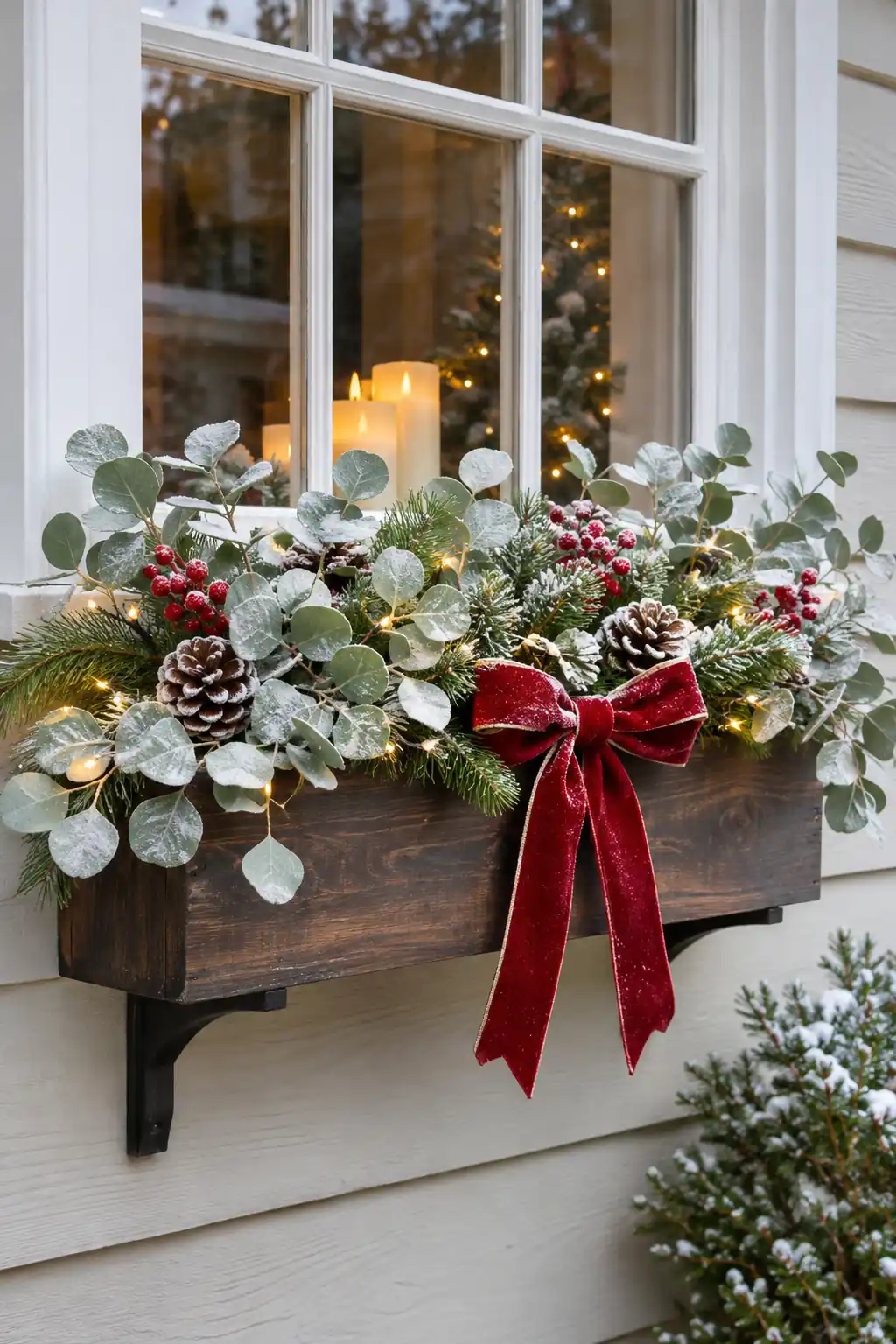
Pale rounded leaves spread across this box, creating a different outline from pointed evergreen branches. Dark cones and small red berries add contrast. A red bow finishes the front. The cool leaf color works with the dark container and pale window frame.
Use foliage suited to your climate or exterior-rated artificial stems. The frosted appearance in the image does not establish that living eucalyptus would survive the conditions shown. Choose the material for its actual requirements rather than copying the snowy styling as a planting guide.
Let some round leaves project slightly above the main arrangement so their shape remains clear. Keep lower stems shorter at the sides to avoid a shapeless mass. A few dark cones help separate pale leaves from pale siding. Avoid covering every leaf with additional snow-like product. The rounded form already supplies enough detail. Check that the arrangement does not rub against window glass, and keep the foliage clear of opening sections and any ventilation or access requirements around the window.
15. Small warm lights through greenery
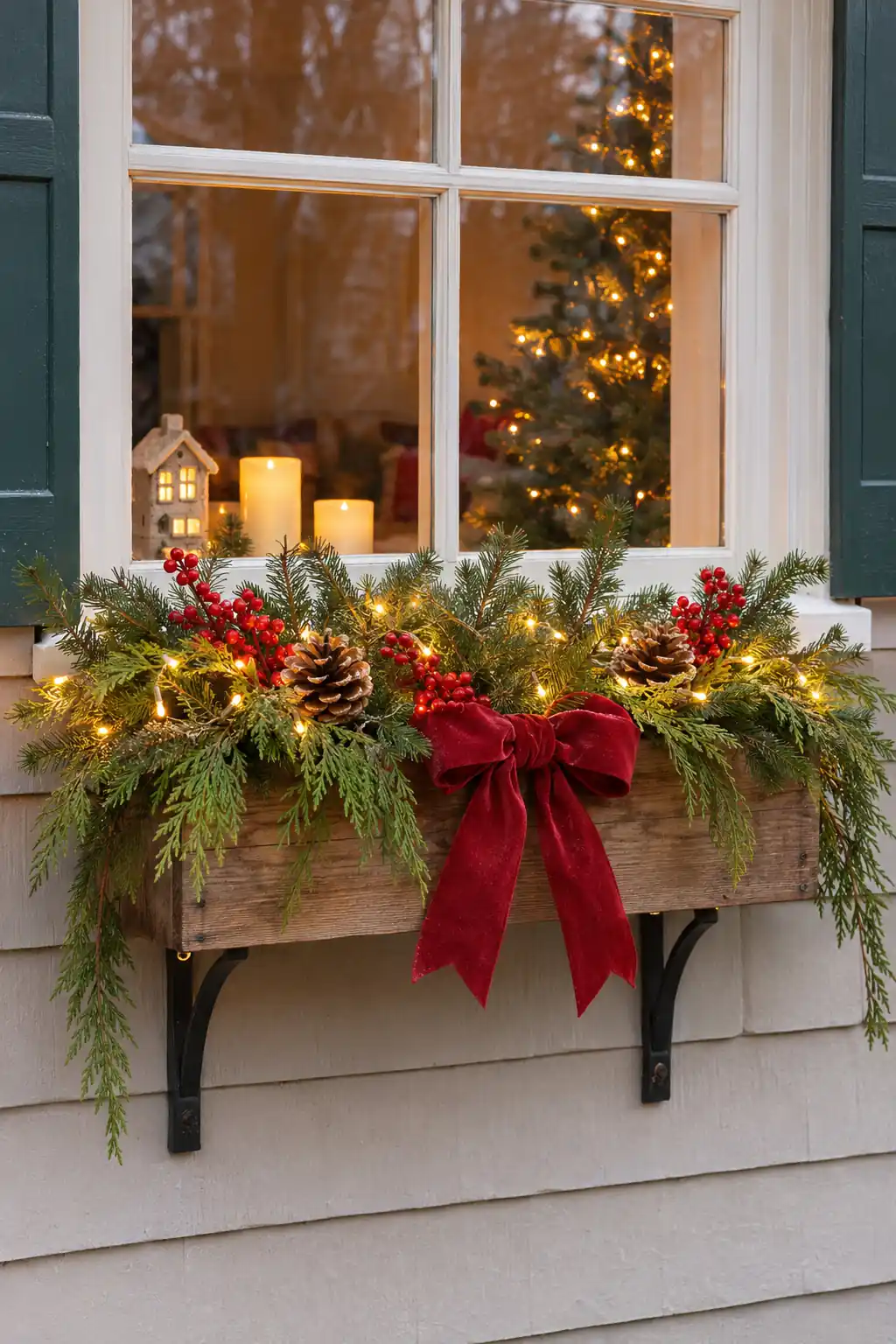
Tiny warm-colored lights appear throughout a low evergreen arrangement. Red berries and one red bow provide daylight interest. A small wooden house is visible near one end. The lighting follows the box’s length rather than creating a tall illuminated shape above it.
Plan the power source before installing the greenery. Use lights rated for outdoor use and follow the manufacturer’s connection limits. Keep cables away from pinching window frames. If battery-powered, choose a unit with suitable weather protection and accessible controls. Do not bury the battery box where inspection becomes difficult.
Space visible light points across the whole arrangement instead of concentrating them near the center. Check the result after dark before adding another strand. Our outdoor Christmas lighting ideas can help coordinate nearby areas. Keep decorative houses lightweight and securely attached. The lights should supplement a clear daytime arrangement, so the box still looks complete when they are switched off or during battery replacement.
16. Wooden star shapes above the box
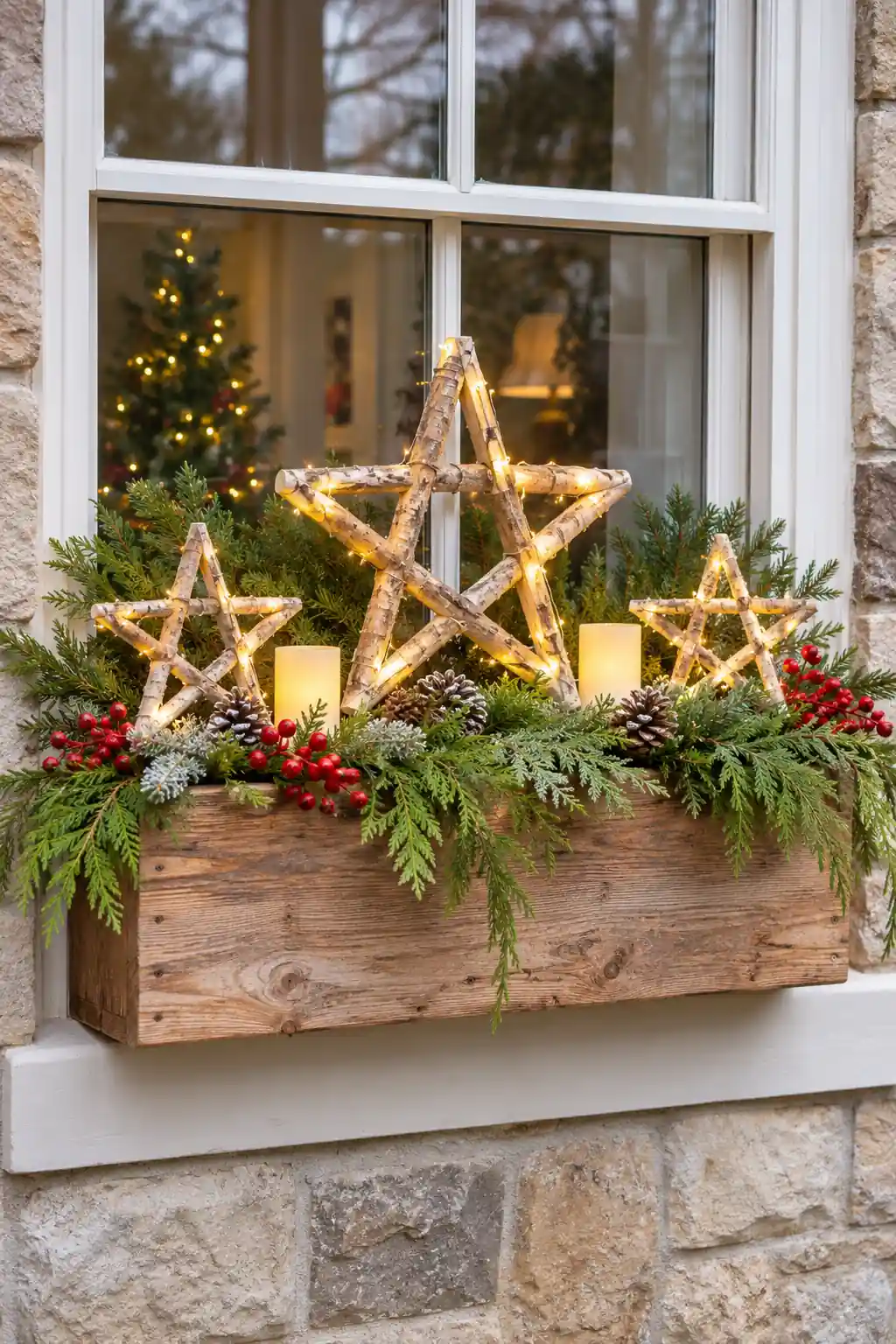
Three open star shapes rise from evergreen branches, with the largest in the center. Small lights follow their outlines in the image. Red berries remain low, leaving the star points visible. The wood tones connect the upper shapes with the box front.
Use outdoor-suitable lightweight stars with appropriate supports. A heavy handmade frame may place too much strain on a shallow container. Keep the tallest point below any opening window path. Check the view from indoors before securing the center star permanently.
The open shapes need little extra decoration. Avoid filling their centers with bows or dense greenery, since the negative space defines them. An unlit version can preserve the design when there is no convenient outdoor power source. If adding lights, choose a product intended for the location and follow its installation directions. Secure wires without damaging their insulation. Inspect the stars after wind because their broad outlines can shift even when the lower branches remain in place.
You may also like: Diy christmas porch decoration ideas.
17. Broad magnolia-like leaves and red berries
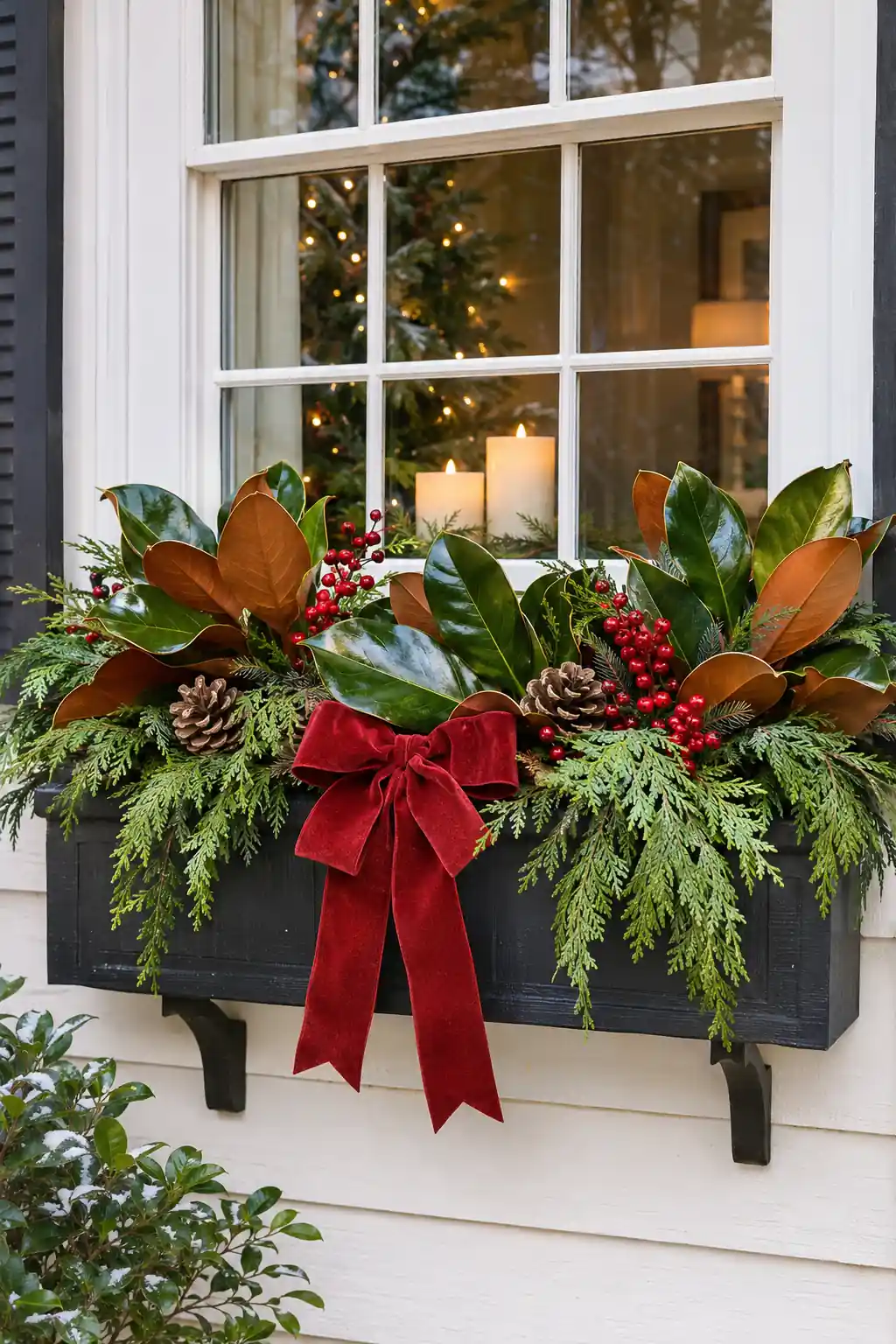
Large dark green leaves spread across this box, with brown undersides visible among them. Fine evergreen branches soften the lower edge. Red berries and a bow provide the holiday color. The broad leaves create a calmer pattern than a box filled only with fine needles.
Arrange some leaves to show their reverse sides if the material has that natural contrast. Keep their angles varied rather than laying every leaf flat. A few upright stems can create height without a separate tall ornament. Avoid crowding the center window area.
Choose cut foliage with care appropriate to your climate or use exterior-rated artificial alternatives. The image does not establish a planting plan or expected lifespan. Keep the attachment method suitable for the container and inspect it during the season. Brown wood accents nearby can repeat the leaf undersides without adding another bright color. A single red bow is enough when berries already appear across the arrangement. Leave the box’s drainage and mounting points accessible rather than covering them with dense trailing material.
18. Decorative gingerbread houses among branches
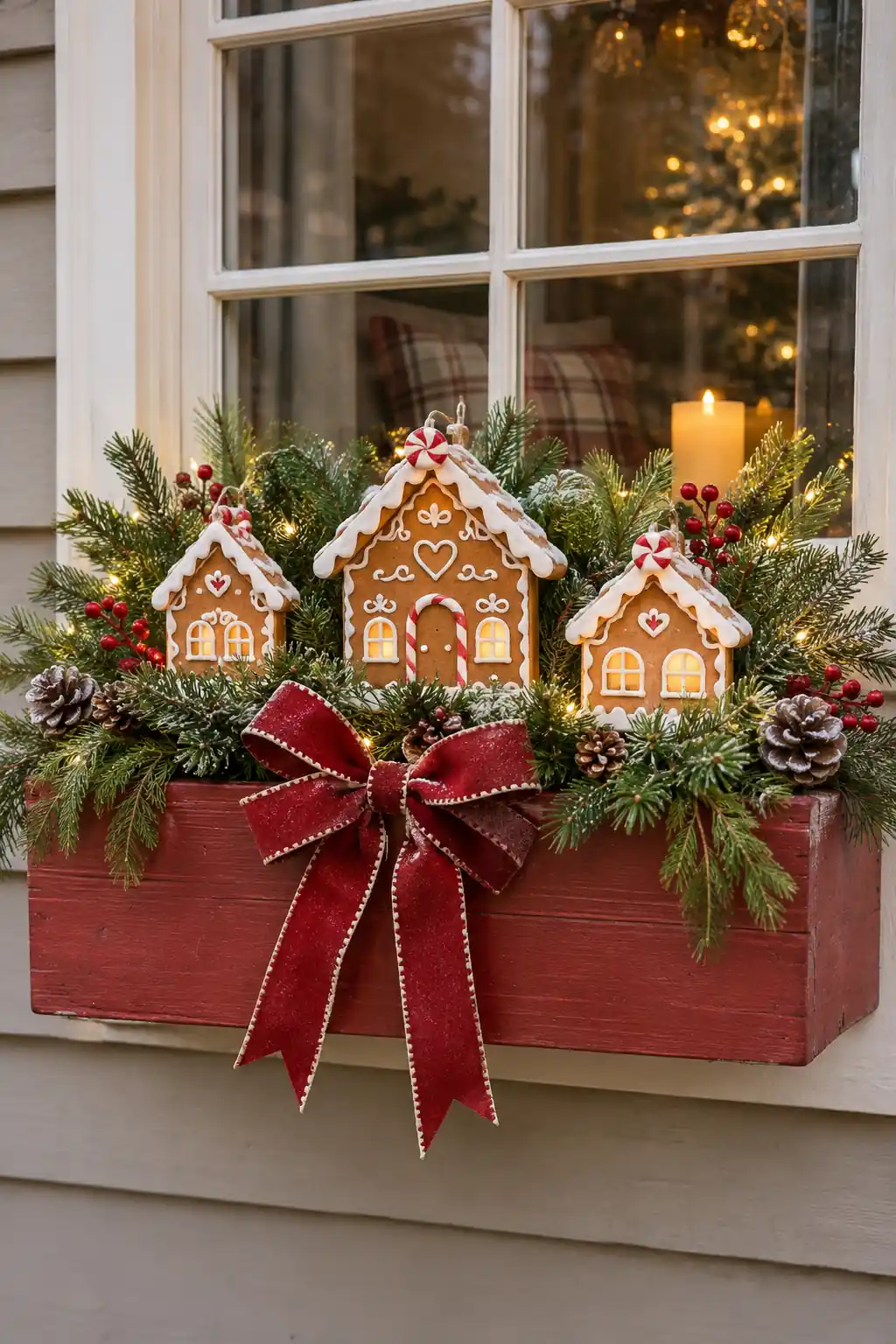
Small brown house shapes form a village across this red box. White icing-like lines define roofs and windows. Evergreen branches separate the buildings, while a red bow connects the front. The repeated houses provide a clear subject without needing many other ornaments.
Use outdoor-rated decorative houses rather than edible gingerbread or indoor paper models. Check their weight and secure them to an appropriate support. Keep the tallest building near the center only if it does not obstruct the window. A shorter row may work better beneath opening glass.
Leave gaps between houses so their roofs remain distinct. Dense greenery can hide the lower doors, so trim the visible arrangement accordingly. Painted yellow windows can suggest light without wiring. If using illuminated models, follow their exterior rating and power instructions. The red box already supplies a strong background, so additional candy cane stripes are optional. Inspect the small roof details after bad weather and remove any pieces that loosen above paths or areas where people regularly pass.
19. Red cardinal ornaments above greenery
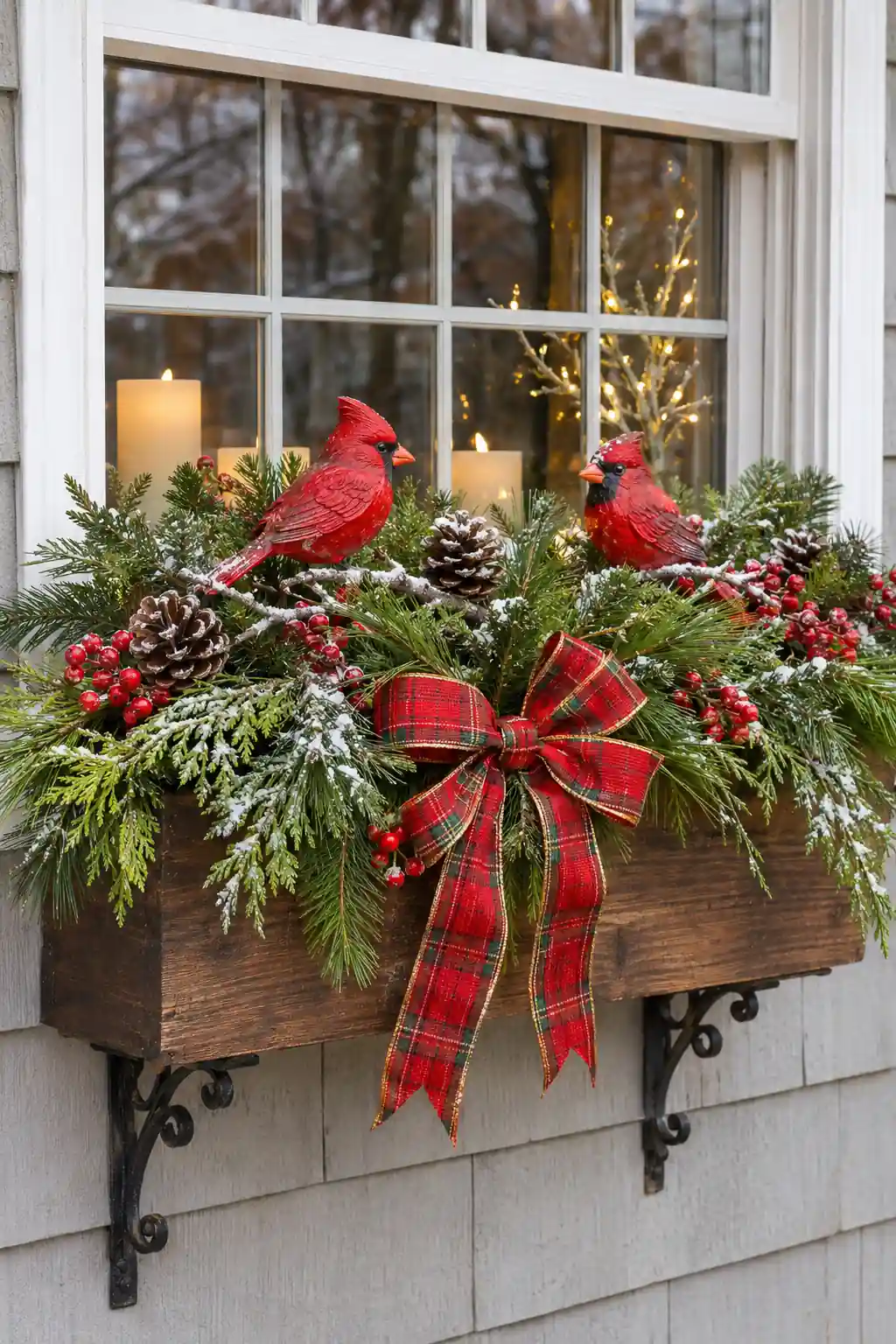
Two red bird figures rise above this green arrangement. Their different positions make the display less symmetrical. Red berries repeat the color in smaller groups, and a checked bow finishes the front. The birds remain visible because they are higher than most of the branches.
Choose decorative birds specifically suitable for outdoor conditions. Indoor feathered ornaments may deteriorate quickly when wet. Attach each bird securely using its intended method, checking that it cannot detach in wind. Keep the bodies angled toward the main viewing direction without creating a rigid identical pair.
Use fewer berry stems near the birds so their red outlines remain separate. A plain bow can work if the checked ribbon feels too busy. The figures should stay below opening window paths and away from the glass. This arrangement does not need extra hanging ornaments beneath the box. Its interest comes from the contrast between two recognizable birds and the surrounding greenery. Recheck attachment points periodically rather than assuming a small ornament needs less attention than a larger one.
20. One oversized red bow with low greenery
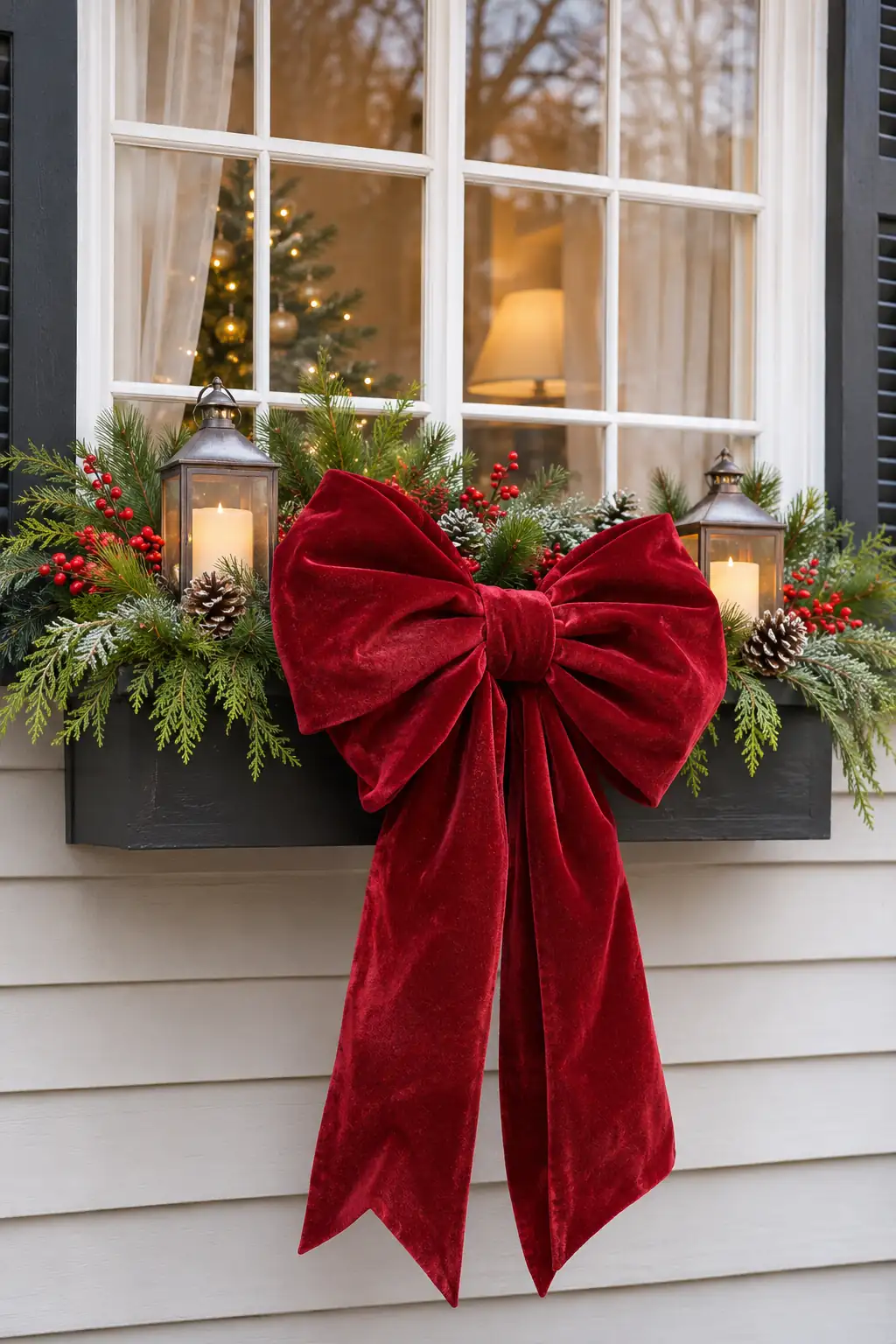
A large red bow dominates the front of this dark box. The greenery remains low and broad behind it. A small lantern-like accent appears at one side, but the bow carries most of the design. Long tails emphasize the vertical space beneath the window.
Measure the available drop before choosing tail length. They should not cover lower fixtures, obstruct a path, or whip against the siding. A shorter bow can keep the same strong color effect. Use ribbon designed for the outdoor exposure, especially when the window lacks an overhang.
Secure the bow to an appropriate attachment point on the box. Do not rely on a loose tie around flexible branches. Keep the loops broad enough to read from the street but separate enough that they do not collapse into one red mass. The greenery needs only a few berry accents because the fabric already supplies plenty of red. Check the bow after wet or windy weather and remove it if its attachment or fabric begins to fail.
Separate decorative arrangements from living plants
Cut stems, artificial greenery, and rooted plants need different care. Ask a local nursery about living plants suited to your climate and container depth. Do not treat a winter styling image as proof that a plant will survive outdoors.
For example, University of Minnesota Extension poinsettia guidance notes cold damage below 50 degrees Fahrenheit. Use exterior-suitable artificial poinsettias for the snowy white-flower arrangement shown here.
Check the box and power route before decorating
Follow the window box manufacturer’s mounting and load guidance. Include the weight of the arrangement and any wet material. Keep drainage openings clear. Use outdoor-rated lighting, and never pinch cords in a closing window.
Our Christmas porch decoration ideas can place heavier items closer to ground level. A small window box does not need to support every part of the exterior display.

Written by Stephanie Fallis
Mom and homemaker who shares budget friendly DIY projects, decorating tips and gardening ideas for busy families.
More about me → Christmas ideas25 Cool Christmas Gift Ideas People Will Use All Year
 Christmas ideas16 Christmas whiteboard drawing ideas with markers
 Christmas Gifts15 Christmas Gift Wrapping Ideas for a Pretty Finish