
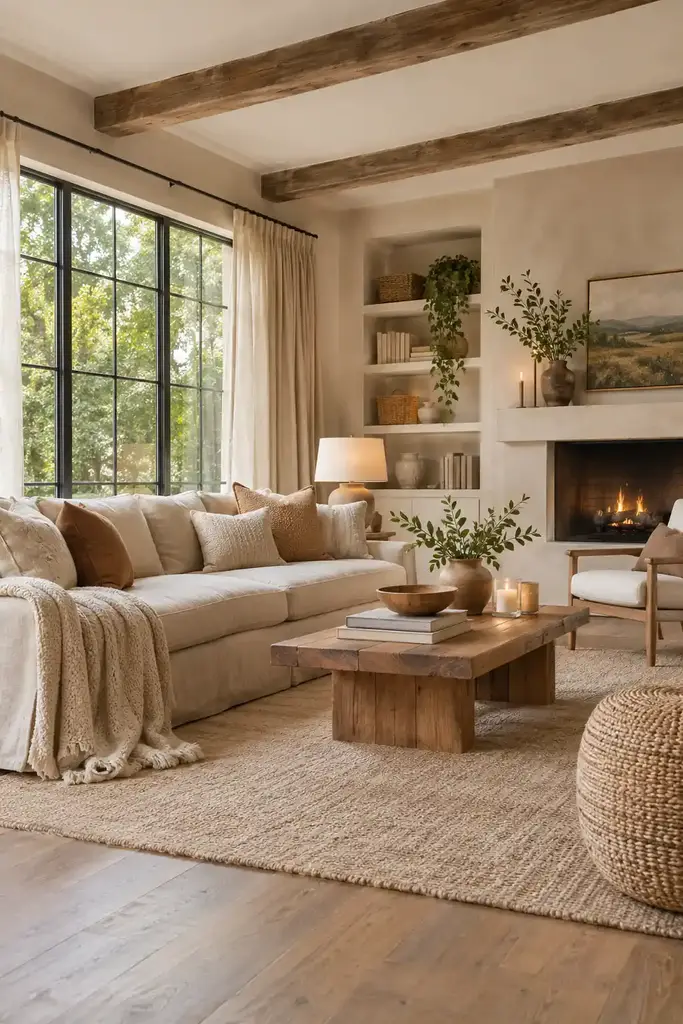
Beautiful living room ideas start with how the room needs to work. Seating, walking routes and daylight shape the result before cushions or ornaments come into the picture. These spaces show different ways to combine those practical needs with a clear decorating style.
The AI-generated images are design inspiration, not photographs of completed projects. Use them to compare proportions, materials and color placement, then adapt the details to your own room. For a more focused palette, explore these cozy living room ideas and boho living room ideas.
Warm neutrals with a linen-look sofa
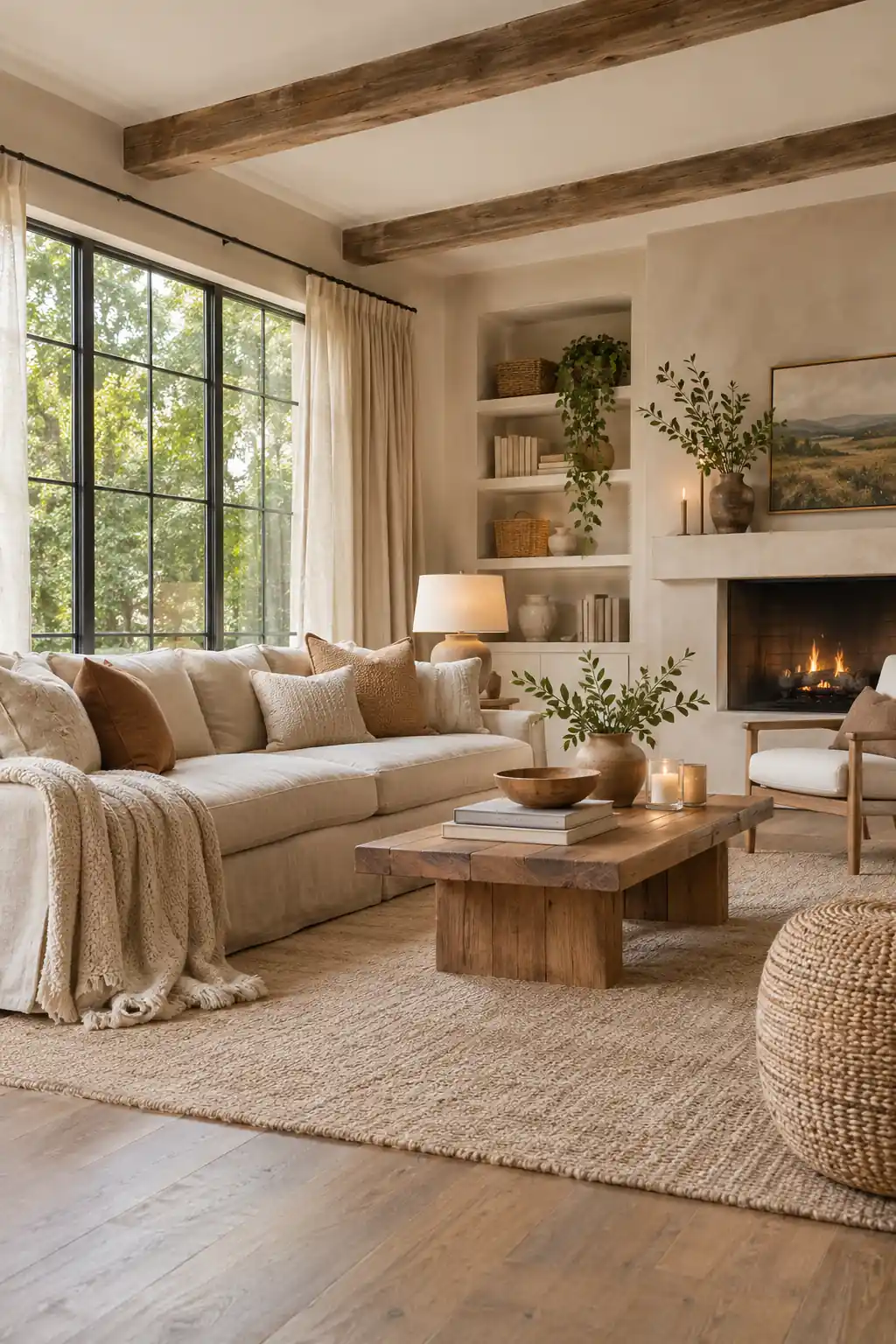
This room gets its warmth from texture rather than strong color. The sofa, curtains and rug sit close together in tone, while the wooden table and ceiling beams provide contrast. That balance prevents the pale furnishings from blending into one flat surface, especially in a room with generous daylight.
Start with the largest fabric you already own. Compare rug and curtain samples beside it in the room, since cream can lean yellow, gray or pink under different lighting. Keep the shades related without trying to match every item exactly. A slightly darker table gives the seating area a clear center.
Choose cushions with different weaves rather than many competing prints. The arrangement needs only a few objects on the coffee table because the materials already supply detail. If the room receives less light than this example, test your neutral shades at night too. A color that looks soft beside a large window may feel dull in a darker corner.
A small room with built-in storage
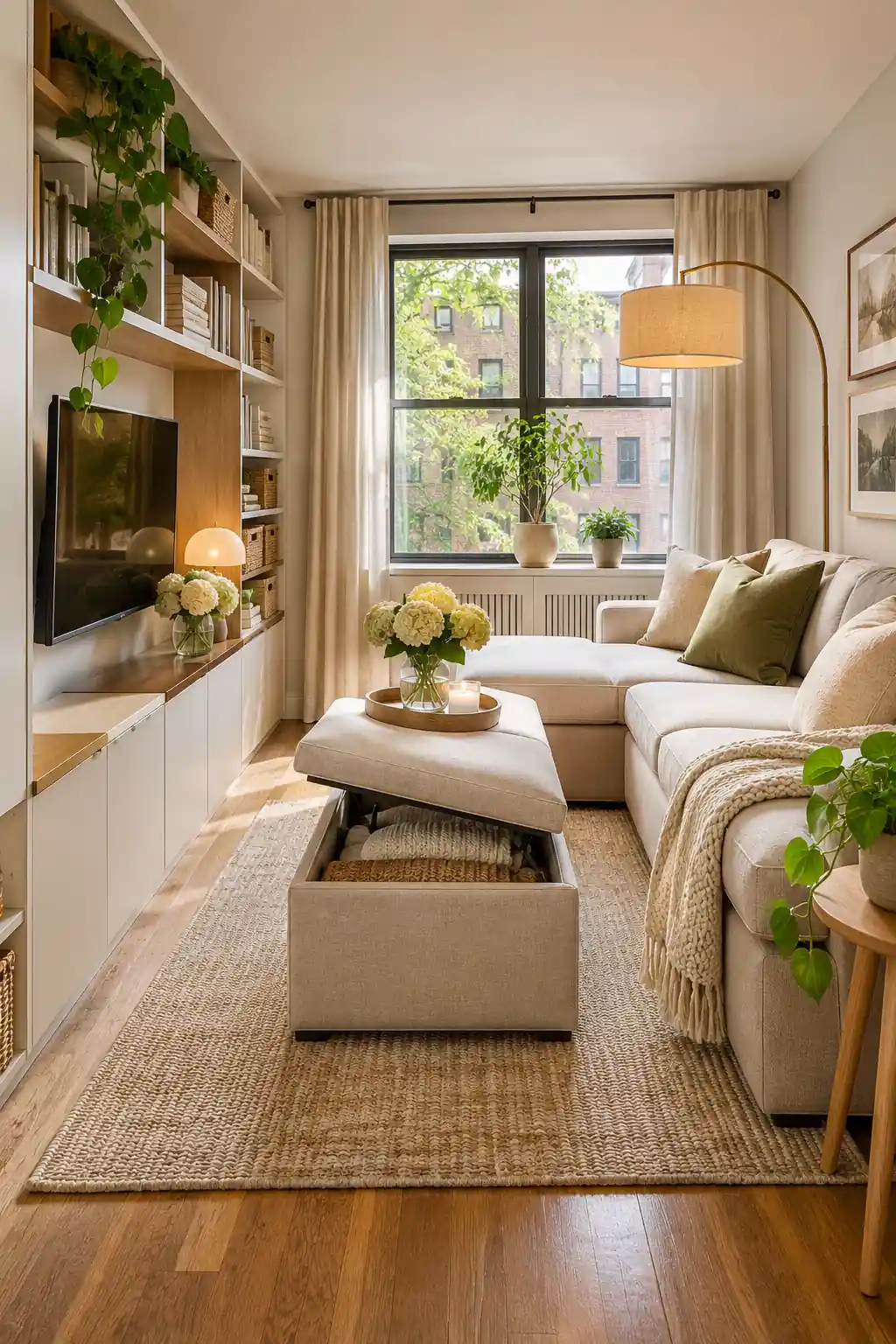
The compact seating area works because storage uses the wall rather than spreading across the floor. Closed lower cabinets hide everyday items, while a few open shelves keep the room from feeling like a wall of cupboards. The sofa and ottoman create one clear place to sit without several extra chairs.
Measure the usable floor area after allowing for doors, drawers and the main walking route. A storage unit that fits the wall can still make the room awkward if its doors open into the seating. Tape the furniture footprint on the floor before ordering a larger piece.
Keep shelf displays sparse and place frequently used items within easy reach. The ottoman can offer a soft surface or extra storage, but its dimensions should leave comfortable access around the sofa. In a small apartment, a few appropriately sized pieces often work better than many tiny ones. Repeat the wall color on cabinetry if you want the storage to feel quieter.
Modern organic shapes and natural wood
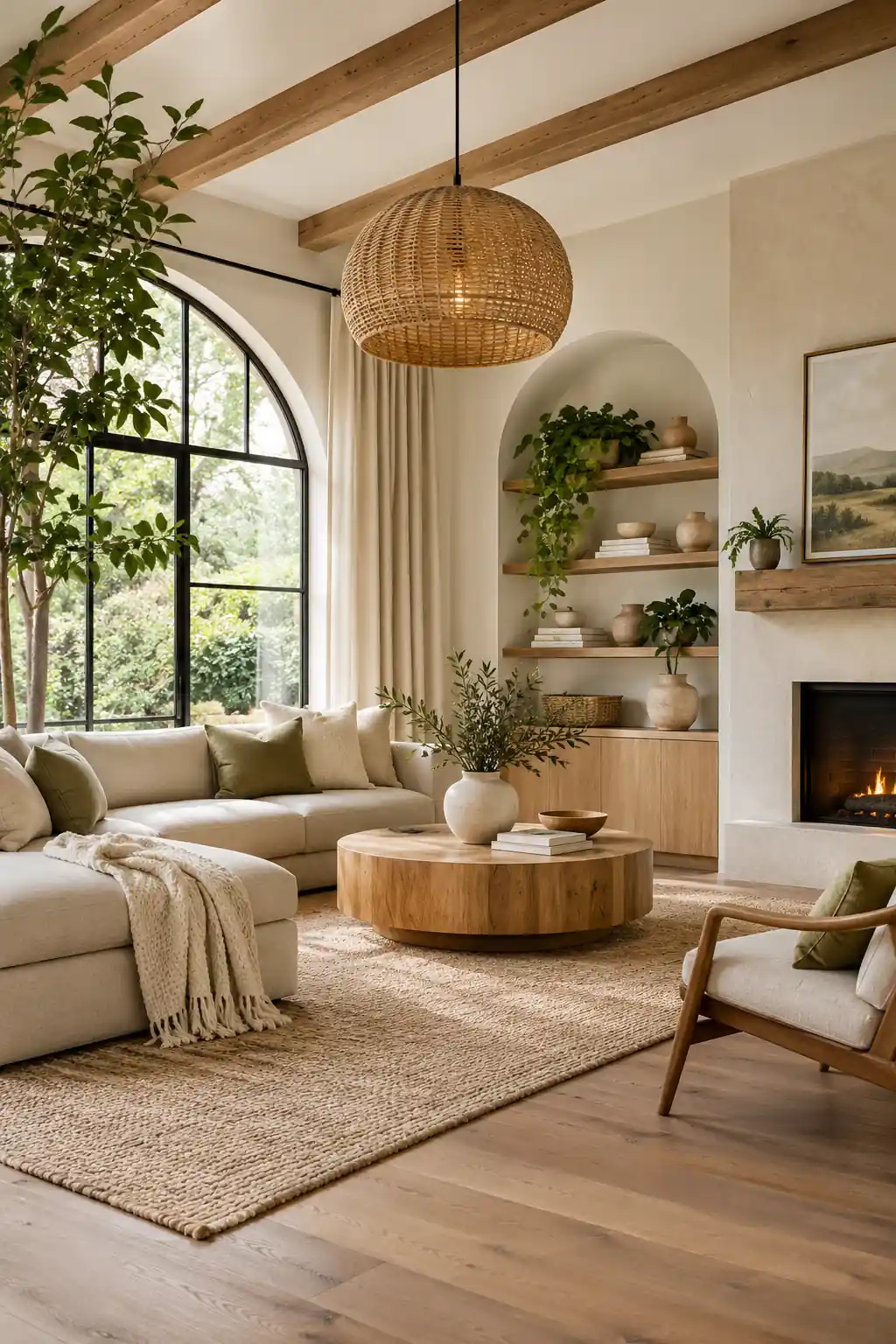
Curved seating and a rounded coffee table soften this room’s clean architecture. Natural wood, woven lighting and pale upholstery create a consistent material story without relying on matching furniture sets. The large window remains a feature because the furnishings do not compete with it through strong patterns or bright colors.
Choose one curved piece as the starting point. Adding curves to every chair, lamp and table can make the room feel overly coordinated. Contrast a rounded sofa with straighter storage or simple shelving so the shapes remain noticeable. Check the real seating depth before choosing furniture for its outline alone.
Use texture at different scales: a broad woven rug, finer upholstery and smoother wood. Plants can add an irregular shape, but place them where their light and care needs can be met. A restrained tabletop arrangement leaves room for daily use. The goal is a comfortable mix of materials, with enough clear space to appreciate each one.
Colorful eclectic seating
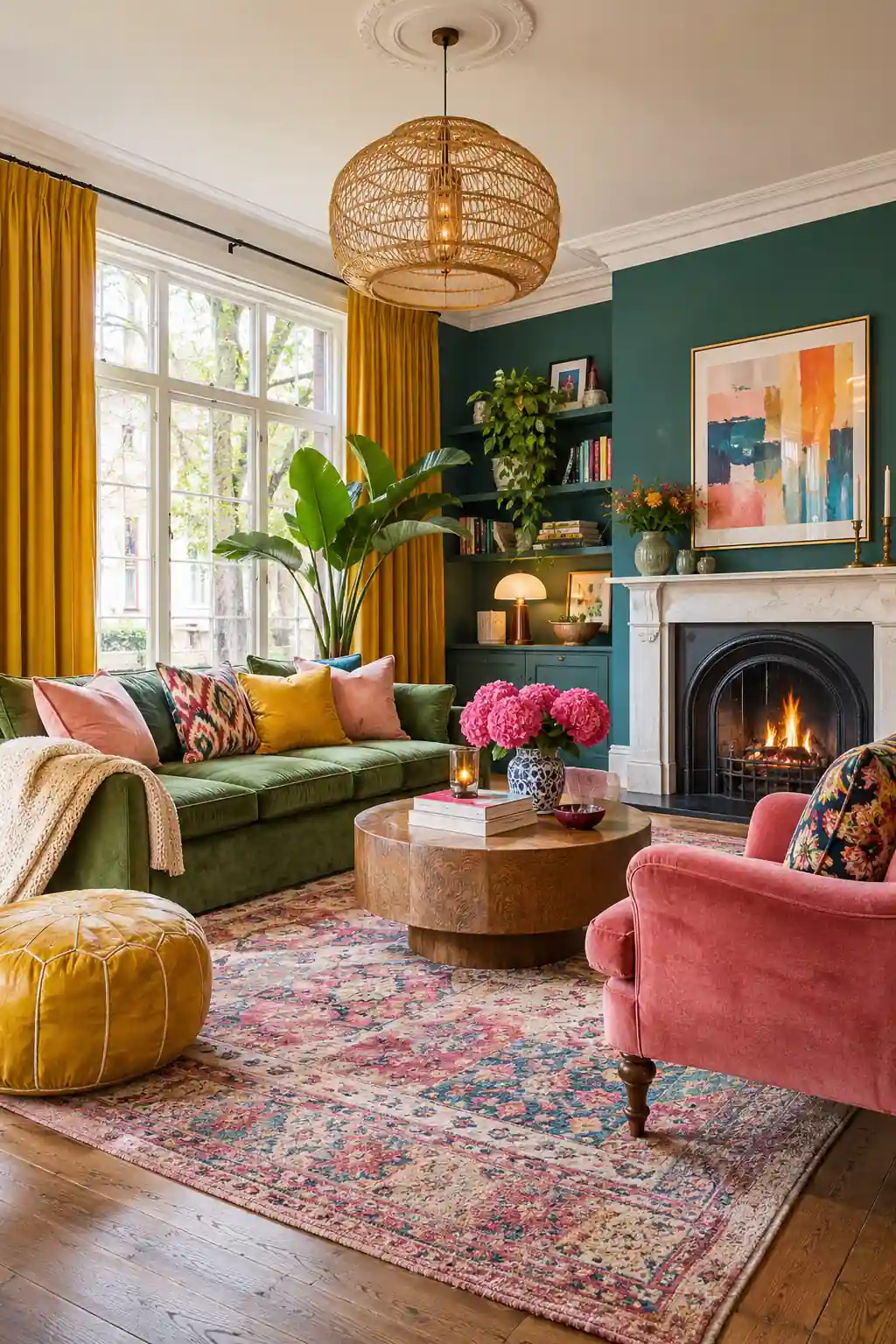
Green seating, a pink chair and a patterned rug give this room several colors without making them feel unrelated. The rug acts as a connecting piece because it repeats shades found elsewhere. Art and cushions add smaller accents, while the wooden table provides a quieter center among the fabrics.
Choose a limited group of colors before buying accessories. One can cover the largest furniture piece, another can appear on an accent chair, and the rest can stay in smaller details. This gives the room a hierarchy instead of letting every item demand equal attention.
Mix patterns at different scales so they do not blur together. A broad rug design can sit beside a smaller cushion print when their colors relate. Leave some surfaces plain, particularly near busy art. If you already own colorful pieces, arrange them first and photograph the room before adding more. An empty corner may be useful visual rest rather than a space that needs another statement object.
Coastal blue and white with relaxed fabrics
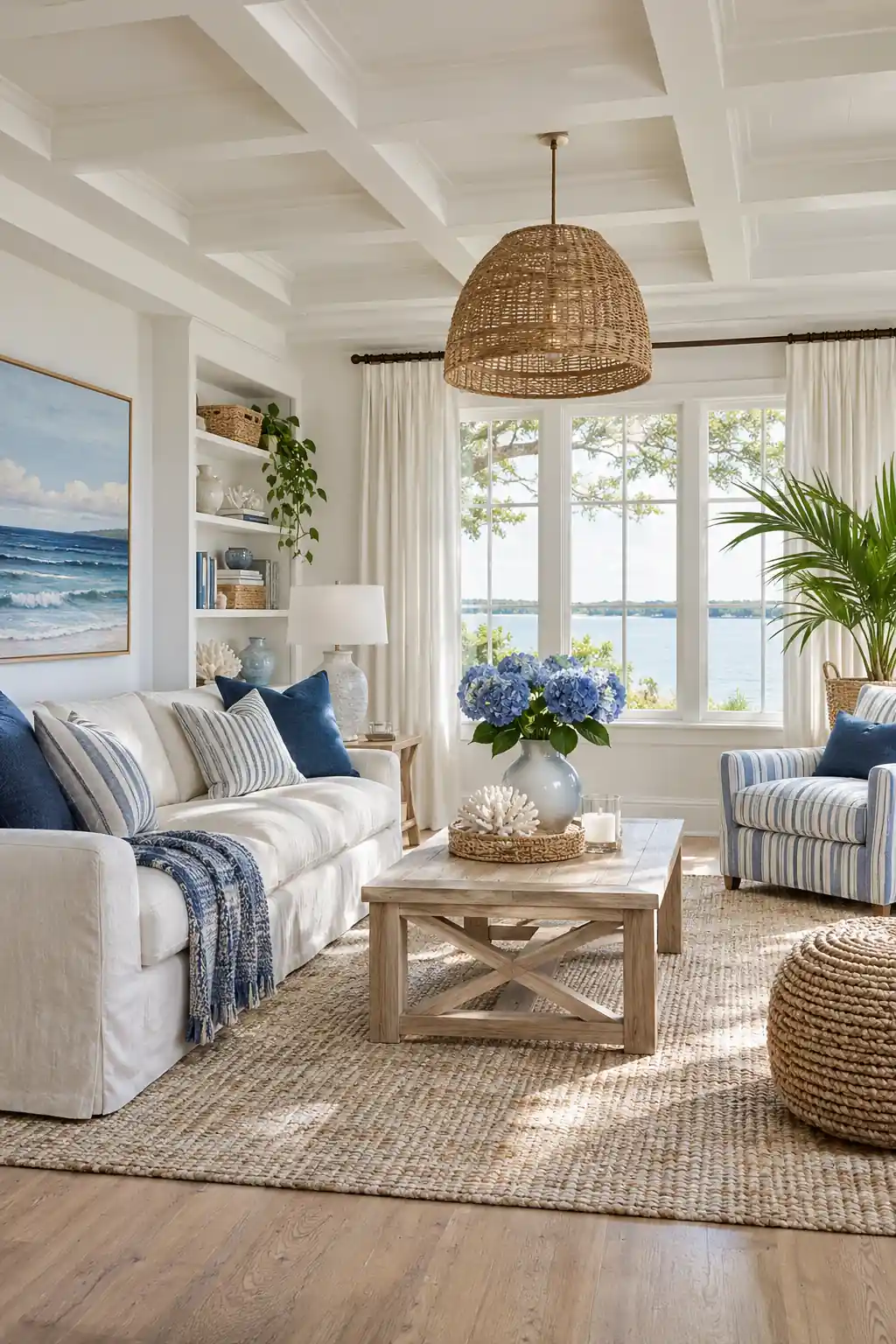
Blue accents, pale upholstery and woven textures give this room a coastal direction without obvious nautical ornaments. The striped chair adds pattern, while the sofa stays mostly plain. Weathered-looking wood and a light rug keep the palette relaxed rather than turning it into a rigid blue-and-white scheme.
Begin with the amount of blue you want to live with daily. Cushions and a chair are easier to change than a large sofa. Compare cool blue fabrics with the room’s existing floor and wall colors so the combination does not feel unexpectedly cold in evening light.
Use baskets and woven shades for texture, but avoid repeating the same weave on every object. Curtains should allow the room’s daylight to remain a feature. A few flowers or a simple landscape can support the mood without adding shells and anchors everywhere. Choose washable or practical upholstery where needed, especially if the room is used heavily by children, pets or visiting family.
Deep green walls around a comfortable sofa
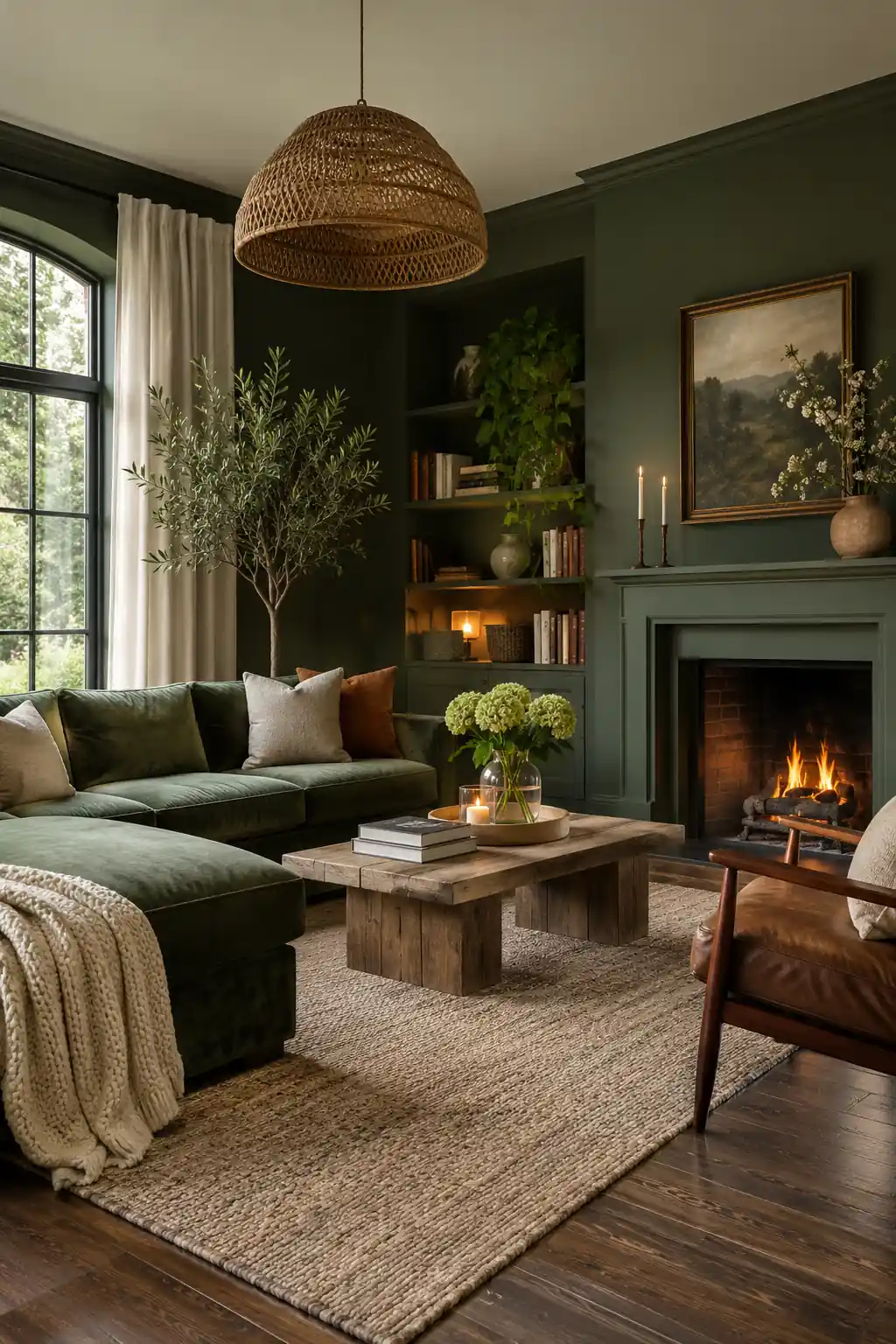
Dark green wraps the walls and seating in one strong color family, while wood and cream details keep the room readable. The lighter rug is especially useful because it separates the furniture from the floor. Without that contrast, several dark pieces could merge together and make the layout feel less clear.
Test a large paint sample on more than one wall. Deep colors change noticeably with window direction and artificial light. Look at the sample beside the sofa fabric and woodwork rather than judging it alone. Keep the ceiling treatment in mind before committing to the same color everywhere.
Layer lighting at different heights so the room does not depend on one overhead fixture. A reading lamp and a softer background lamp can serve different needs. Brass or warm wood details add contrast without requiring a bright accent color. Leave a few shelves lightly filled, allowing the green background to remain visible instead of covering every dark surface with pale ornaments.
Scandinavian light wood and simple seating
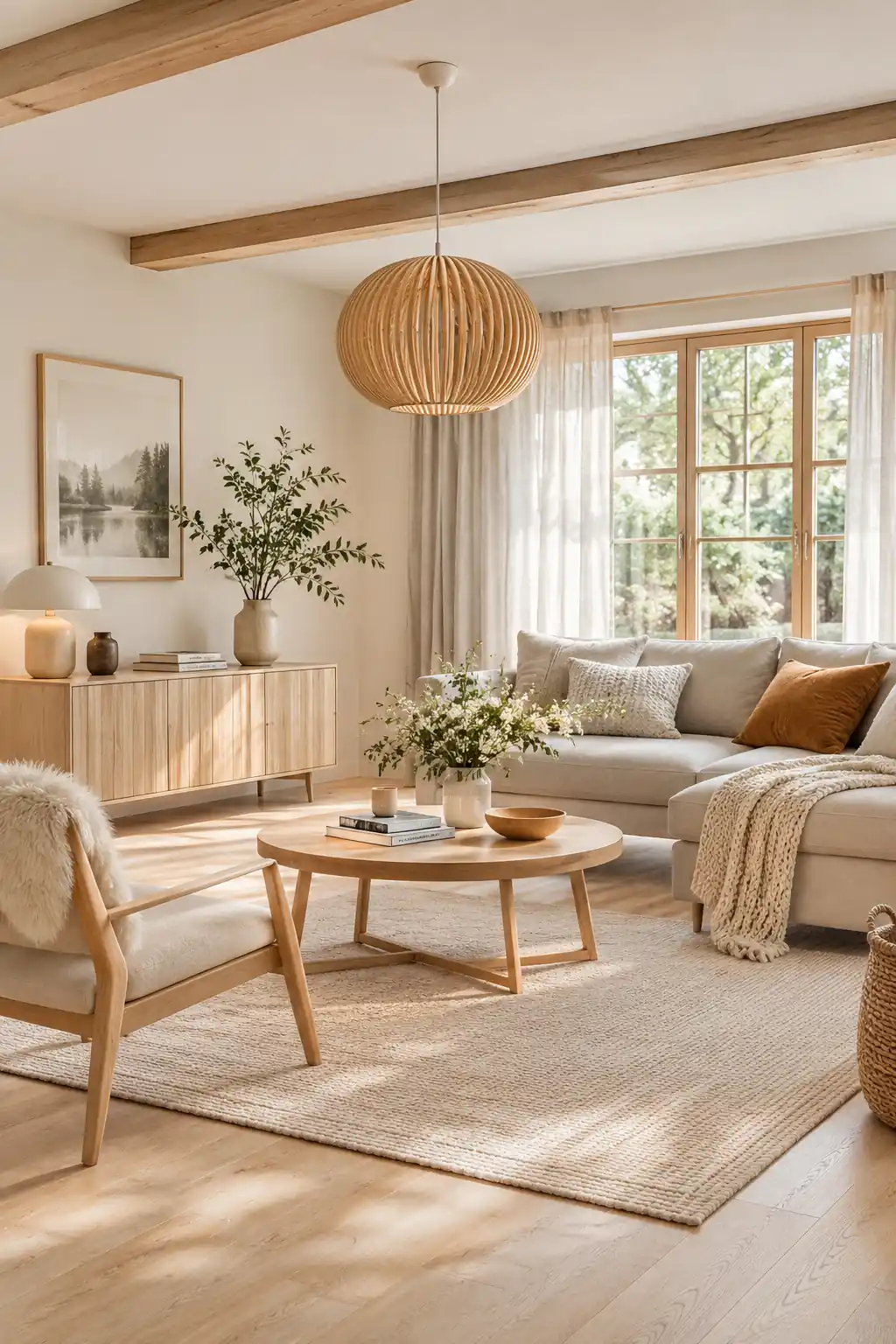
Light wood furniture and a pale rug create an open-looking seating group. The chair frames remain visible rather than being hidden by heavy upholstery, which helps the arrangement feel less bulky. A few muted green cushions connect the furniture with plants and the view outside without turning green into a dominant theme.
Choose pieces for comfortable use before reducing the room to a minimal image. A slim chair still needs a seat height and back angle that suit the people using it. Compare wood finishes together; several pale woods can work, but a strongly orange finish may interrupt the quieter palette.
Keep storage practical and mostly unobtrusive. Baskets can hold small items, while a closed cabinet handles things that look untidy on open shelves. The coffee table should leave enough room to move around the seating. Instead of many small decorations, choose a few useful objects with clear shapes, then let daylight and the material differences provide the rest of the interest.
Mid-century furniture in walnut tones
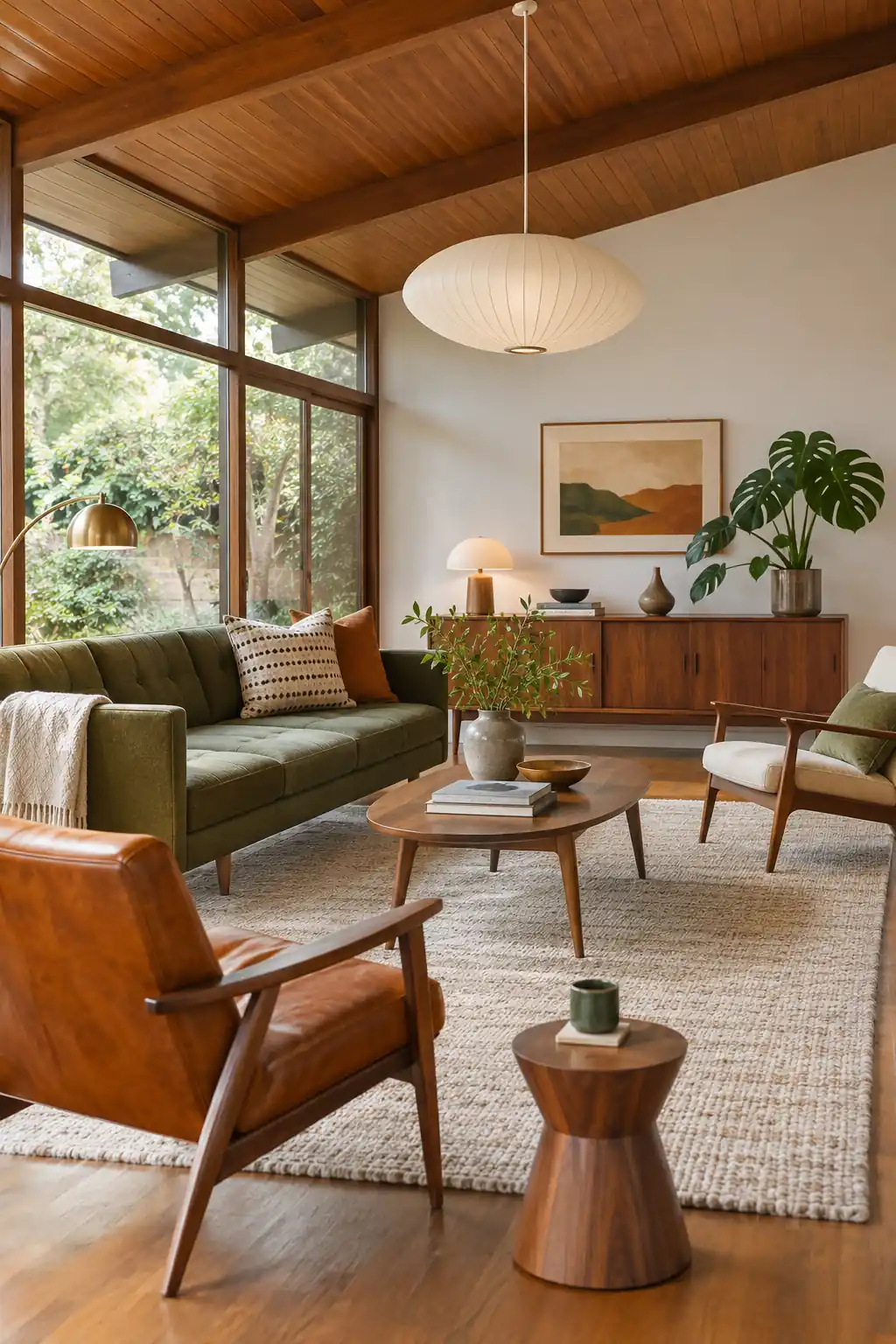
Walnut furniture gives this room a warm base, while tapered legs keep the pieces visually lighter than solid floor-level cabinets. The green sofa and pale chair introduce color without overpowering the wood. A rounded table and simple pendant repeat the softer geometry of the seating.
If you are mixing vintage and new furniture, compare dimensions as carefully as style. Older chairs can sit at different heights from modern sofas. A beautiful pair may feel awkward in conversation if one person sits much lower than everyone else. Measure the intended arrangement before buying a complete set of pieces.
Use a rug to connect the seating, leaving the wood floor visible around it. One or two vintage accents are enough to establish the character; every item does not need to come from the same decade. Check the condition of secondhand furniture in person when possible. Keep the styling simple so the silhouettes and wood grain remain the features you notice first.
Traditional seating around a fireplace
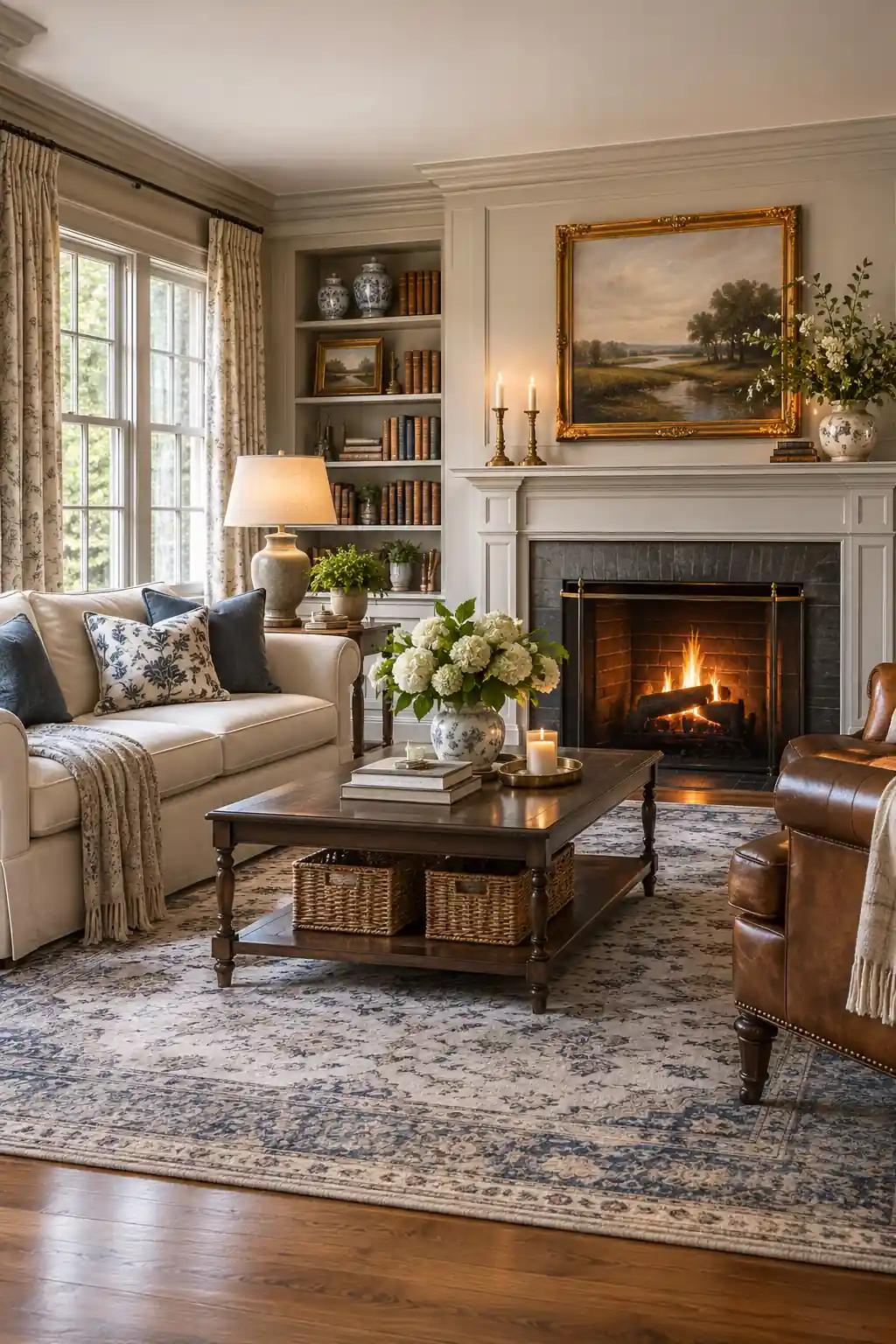
The fireplace provides a clear focal point, and the seating faces inward to support conversation. A pale sofa, leather chair and patterned rug share the room without looking like a matched suite. The built-in shelves add depth, while the mantel stays restrained enough to remain recognizable as the center.
Plan seating around actual use rather than perfect symmetry. Chairs should allow people to talk comfortably and move through the room without squeezing behind one another. If the fireplace is used, follow its clearance requirements and keep furnishings appropriately positioned instead of copying the photograph’s distances.
Traditional rooms can handle pattern well when its scale varies. A detailed rug may need quieter cushions and curtains nearby. Use lamps to make each seat practical for reading, not just to fill matching side tables. Edit shelf displays in groups, leaving some open space around larger objects. A room with classic furniture still benefits from simple organization and clear surfaces for everyday activities.
Low furniture for a Japandi-inspired room
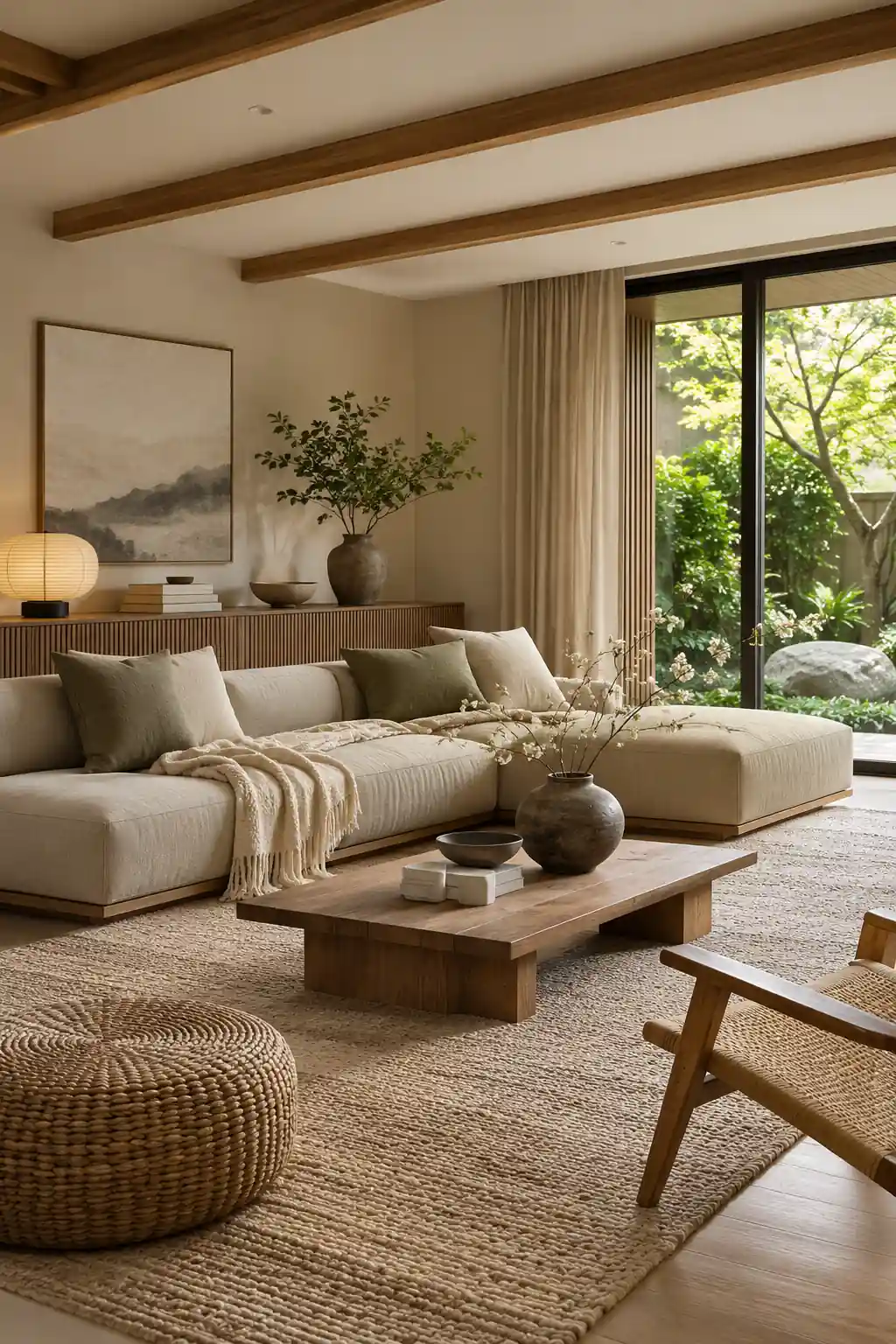
Low seating, pale wood and a simple palette give this room a quiet profile. The furniture does not interrupt the long horizontal lines of the windows and shelving. Texture comes from the rug, upholstery and wood grain rather than decorative layers piled across every surface.
Low furniture is not comfortable for everyone, so try the seat height before choosing it. Consider how easily household members can sit down and stand up. A room can borrow the calm material palette without using a very low sofa or floor-level table throughout.
Keep the layout open and make storage work hard. A few closed compartments help maintain the simple appearance when the room is in daily use. Choose accessories with a purpose, such as a reading lamp or a tray for drinks. Avoid adding objects simply because they look handmade or fit a neutral color scheme. The room feels settled when the pieces are useful, well proportioned and given space.
A rustic cottage room with a stone fireplace
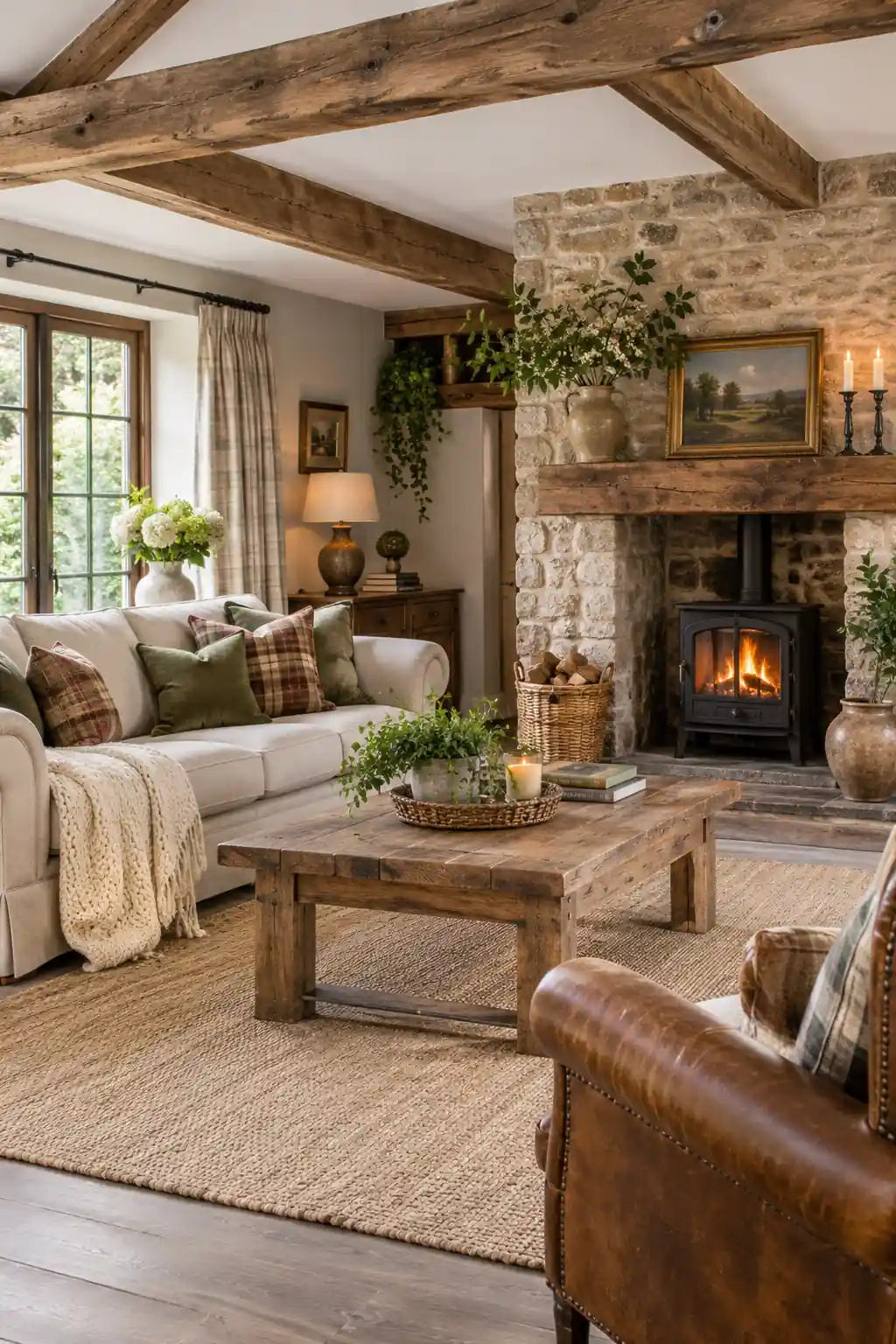
Stone, timber and soft upholstery give this room its cottage character. The rough fireplace contrasts with the smoother sofa fabric, while the wooden table repeats the ceiling’s warmth. A pale rug keeps the seating area from becoming too dark among the heavier materials.
Use the architecture you have rather than adding imitation beams to force the style. A wooden table, textured cushions and relaxed curtains can bring some of this feeling into a simpler room. Keep major furniture shapes fairly straightforward so the material differences remain visible.
Balance rough surfaces with comfortable ones. A heavily textured room still needs soft places to sit and practical surfaces for drinks. Check reclaimed or secondhand wood for stability and finish before bringing it into daily use. Keep objects near a working fireplace within the manufacturer’s guidance. A small number of pottery pieces or a landscape picture can support the cottage mood without filling every shelf with rustic-themed decoration.
Cream and black with clear contrast
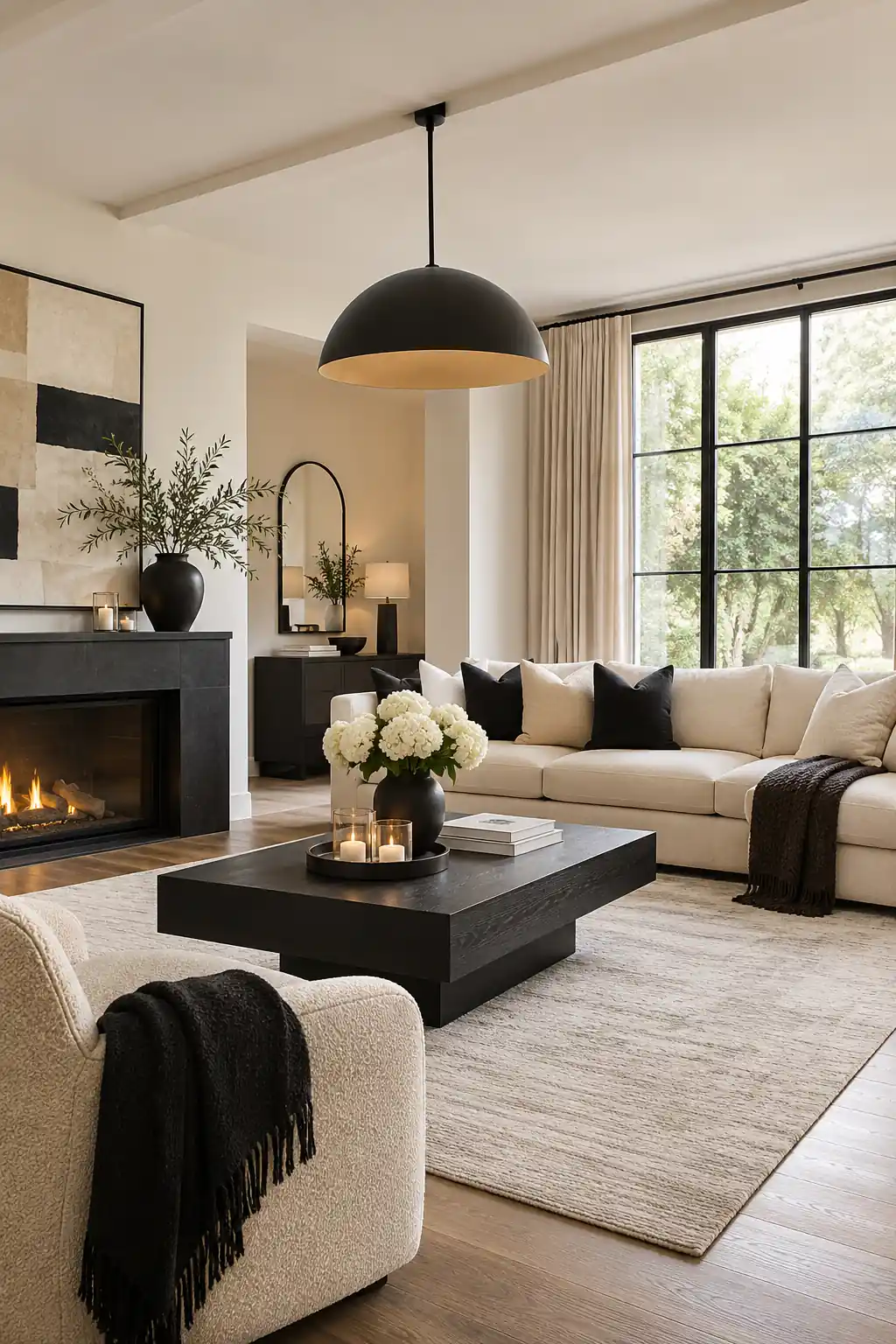
Black tables and lighting give the cream seating a defined outline. The room stays bright because the darker color occupies selected areas rather than covering every large surface. Natural wood underfoot softens the contrast and keeps the scheme from feeling completely monochrome.
Decide where black will repeat before buying accessories. A pendant, table and a small frame may be enough. If every edge becomes black, the room can start to look busy even though the palette is limited. Compare warm cream upholstery with the wall color to avoid an accidental mismatch between yellow and gray undertones.
Keep the furniture arrangement simple and leave the main walking route clear. Smooth tables need texture nearby, such as a woven rug or a knitted throw, to make the room feel comfortable. A single vase or low arrangement can finish the coffee table while leaving room for use. This palette works best when contrast is deliberate rather than added to every available object.
Terracotta walls with Mediterranean warmth
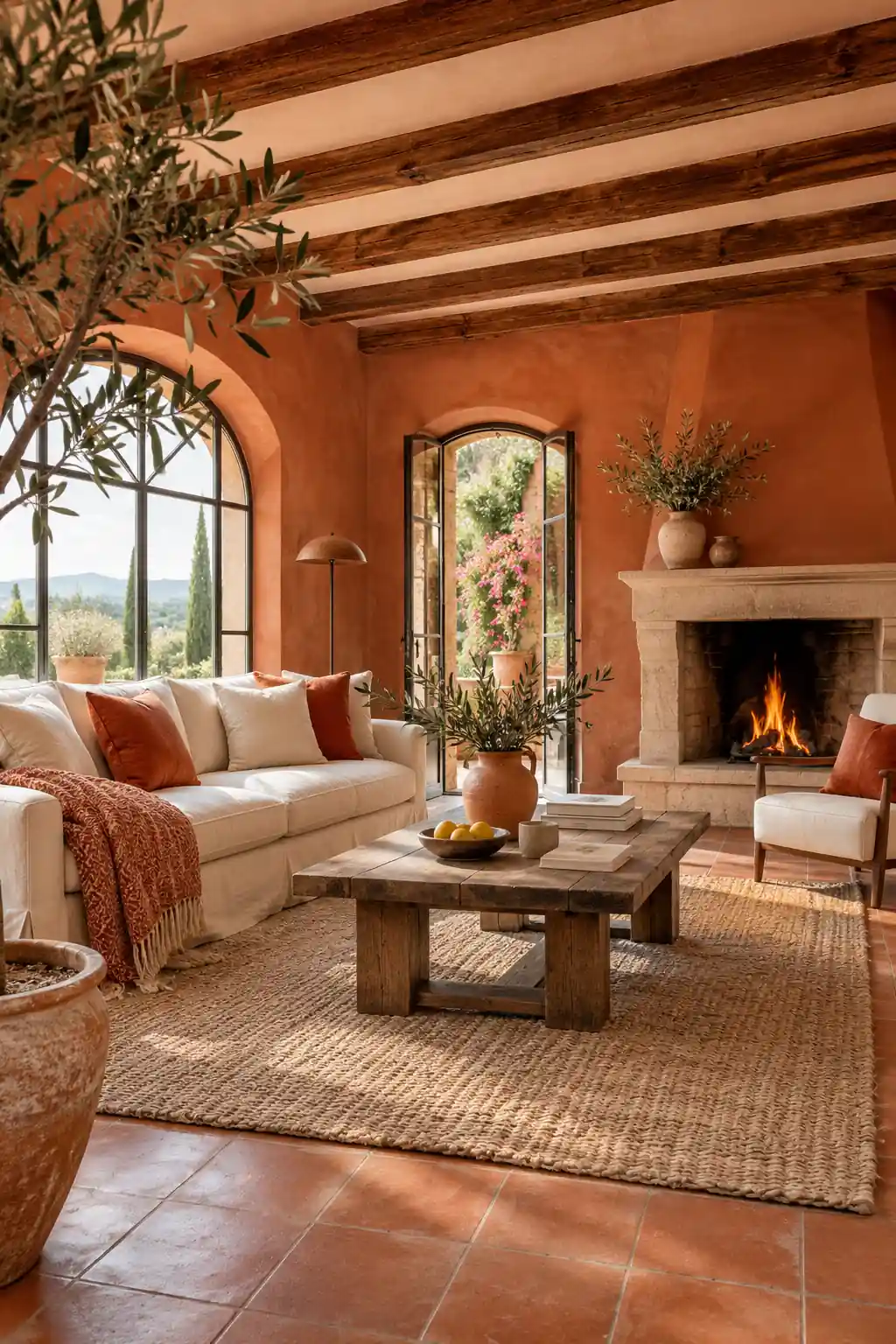
Terracotta color gives this room its strongest identity, while cream seating prevents it from becoming visually heavy. Arched openings, wood and greenery support the warm palette. The floor and wall colors relate closely, so the light rug becomes important in separating the seating area from its surroundings.
Try a large terracotta sample in the room before choosing the final shade. Some versions lean pink, others orange or brown. The floor’s existing undertone will affect which one feels balanced. If painting all the walls feels too strong, begin with textiles or a single architectural area.
Use natural-looking materials without making every piece distressed or rustic. Smooth ceramic, woven fabric and simple wood can provide enough variation. Keep green plants where they can thrive rather than placing them only for color balance. The warmth should come from the palette and surfaces, not a collection of themed ornaments. A few larger pieces usually feel calmer than many small Mediterranean-inspired accessories.
Soft pink with traditional details
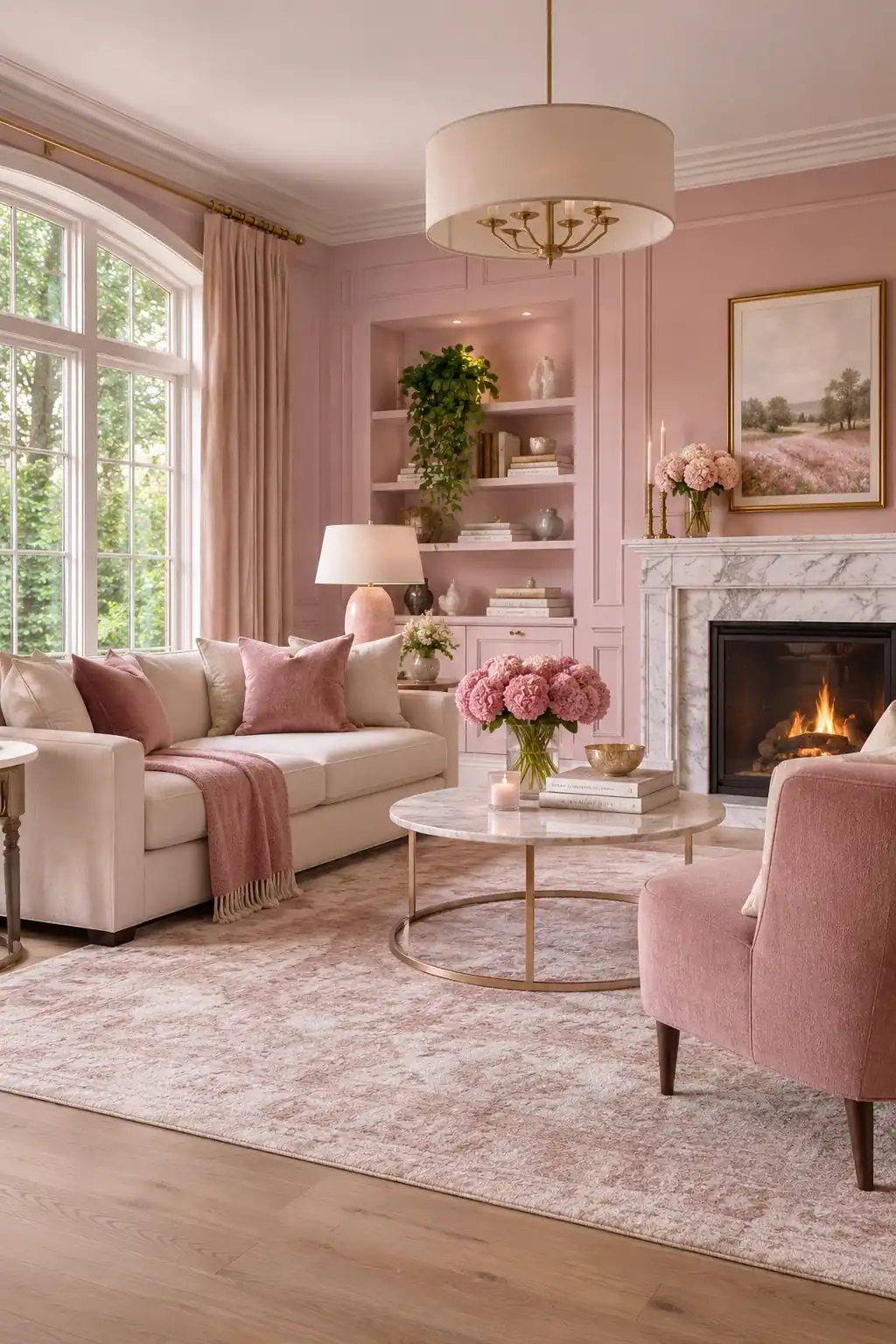
Pink upholstery and pale walls create a gentle room, while the fireplace and framed art give it structure. The color appears in several strengths rather than one exact shade repeated everywhere. Cream surfaces and darker table legs provide enough contrast to keep the arrangement from looking washed out.
Choose the largest pink element first. If that is the sofa, test nearby curtains and cushions against its fabric in daylight. Dusty pink can work well with warm wood and muted neutrals, but a cool gray wall may change how it reads. Samples help prevent an expensive mismatch.
Use flowers or a small patterned cushion as accents rather than adding pink to every accessory. The room still needs useful lighting, storage and clear table space. A simple rug can quiet the combination when the furniture has curved or traditional shapes. If you want a less formal result, keep the same palette but choose plainer lamps and fewer decorative objects on the mantel.
A boho room with layered textiles
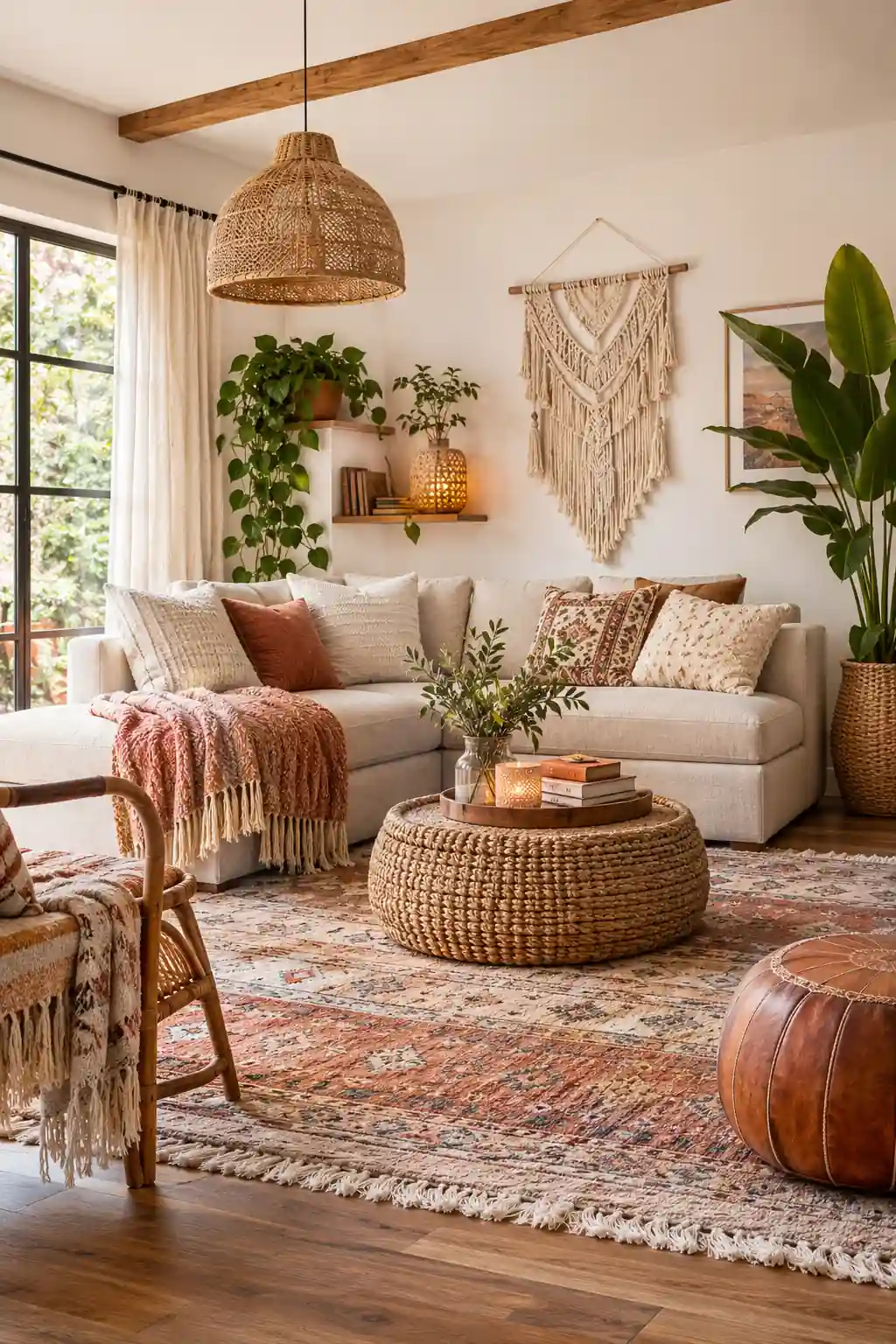
Woven lighting, a patterned rug and warm cushions give this room a relaxed boho direction. The large sofa remains fairly plain, allowing smaller textiles to supply the detail. Plants and a wall hanging add vertical interest without needing a crowded gallery wall.
Layer around a limited palette so different textures still feel connected. Rust, cream and natural wood can work across cushions, throws and baskets. Compare the rug pattern with the wall hanging before adding another print, since both already occupy substantial visual space.
Keep the room comfortable to use. A pouf needs a place where it will not block the walking route, and baskets should hold real items rather than becoming empty props. Check the scale of woven lighting against the ceiling height and seating below. Choose plants for the available light and leave room to water them. The collected appearance works best when each object has a reason to be there, not when every surface is filled.
An industrial loft softened by fabric
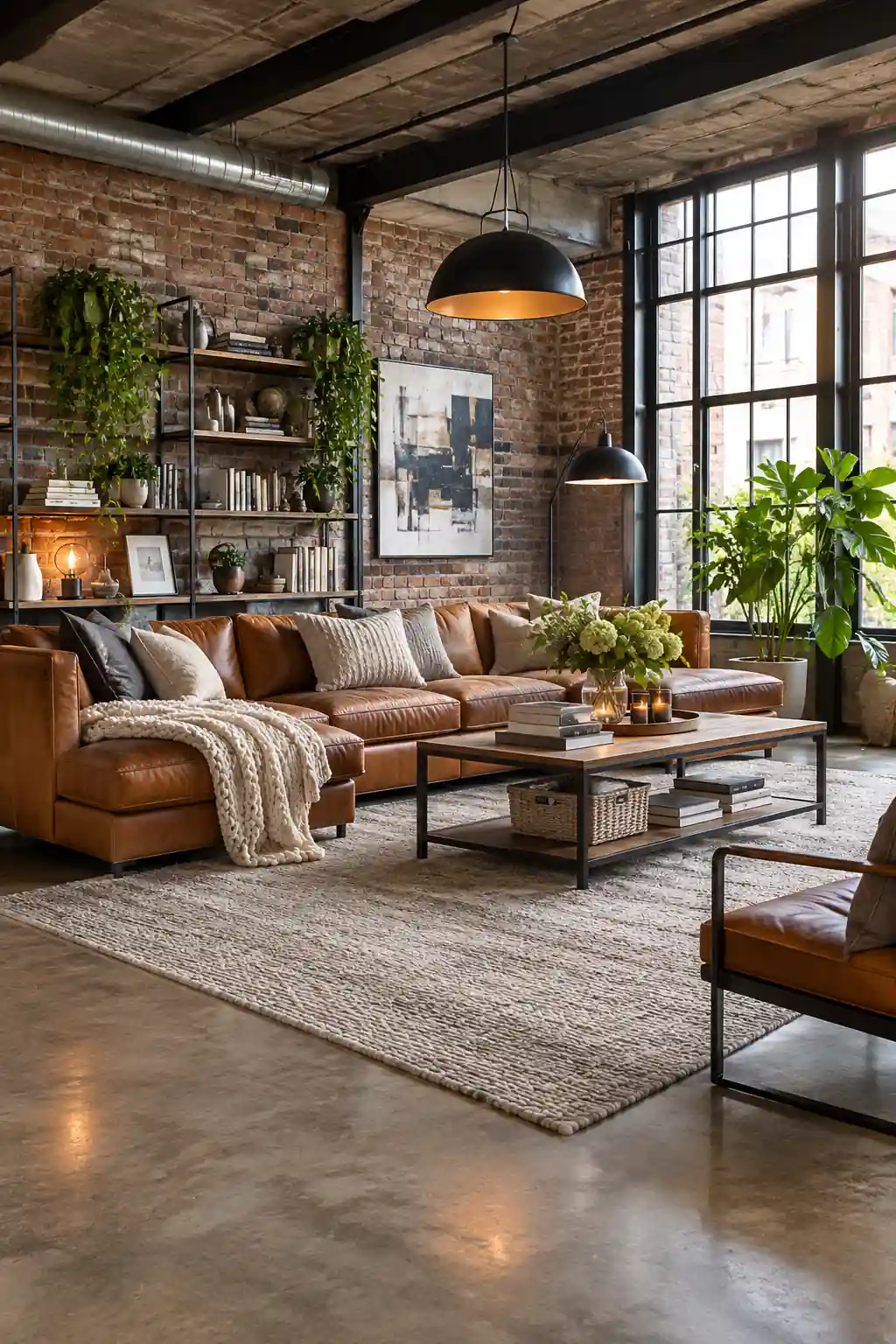
Exposed brick, metal frames and a leather sofa give this room an industrial foundation. The large rug and upholstered chair soften those hard materials, making the seating area feel separate from the wider space. Warm lighting prevents the darker finishes from looking flat in the evening.
In a room without exposed brick, borrow the balance rather than copying every architectural detail. A metal-framed table and a substantial sofa can suggest the style without decorative pipework or imitation factory fittings. Choose finishes that suit the existing floor and windows.
Large open rooms need clear furniture groupings. Position seating close enough for conversation and use the rug to define its boundary. Consider sound as well as appearance; fabric curtains, rugs and upholstery can make a hard-surfaced room feel less echoing. Keep cables and everyday storage organized so the industrial look feels intentional. Visible construction details are different from a room that simply lacks places to put things away.
A collected room with vintage pieces
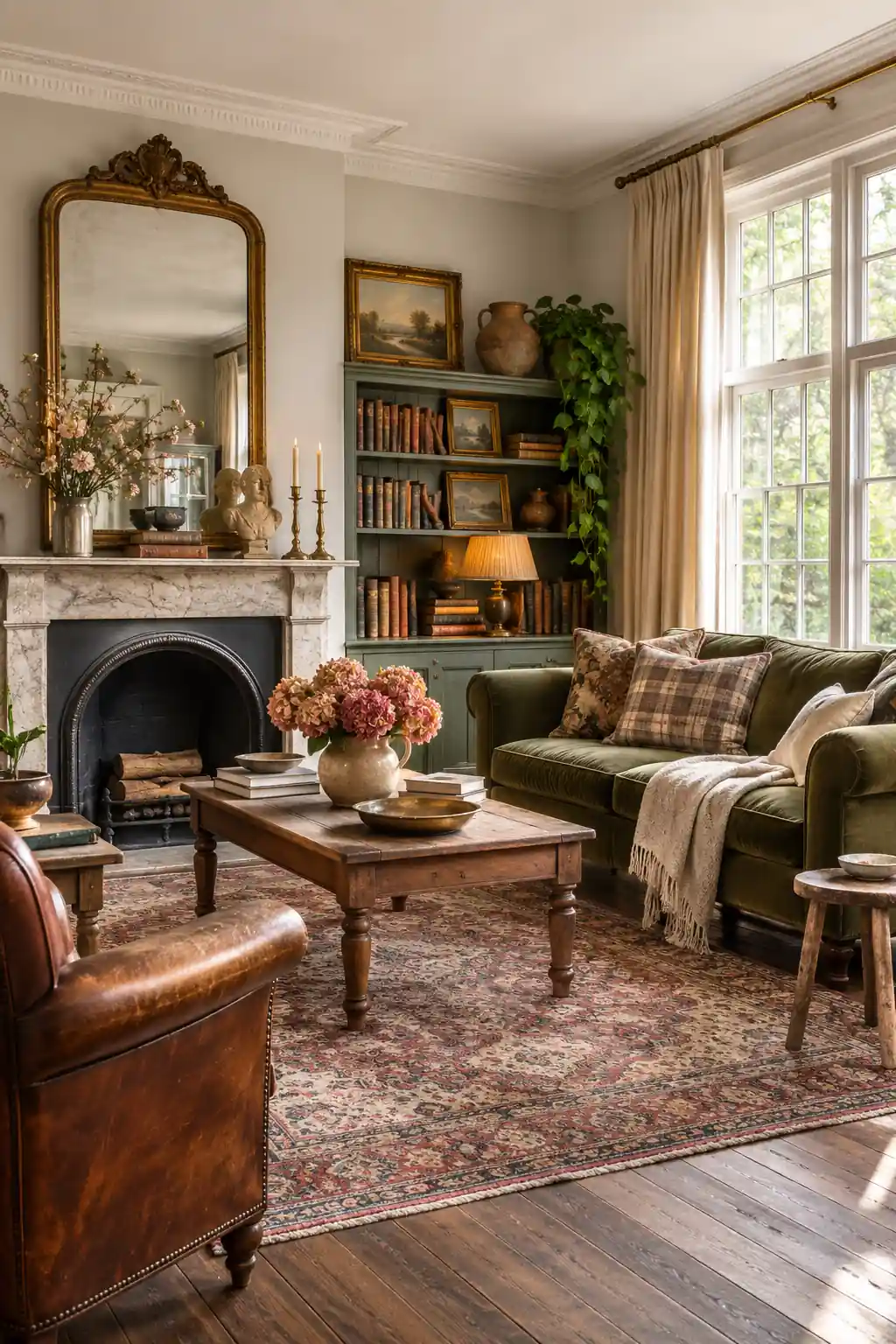
An older-style leather chair, framed pictures and a decorative mirror create a room that looks assembled over time. The pale sofa gives those distinctive pieces a quieter background. A patterned rug connects their different colors without requiring every wood finish or frame to match.
Start with one piece you genuinely like, then consider its scale alongside the furniture you already own. A vintage cabinet may be beautiful but too deep for a narrow room. Measure doorways and the final position before buying, particularly when returns are difficult.
Mix eras through shared color or material rather than trying to create a complete period interior. A simple modern lamp can sit comfortably beside an older table. Check upholstery, joints and finishes before regular use, and budget for any needed repairs. Keep the display selective: fewer interesting pieces with space around them often tell a clearer story than shelves packed with objects chosen only because they look old.
A family room with practical upholstery
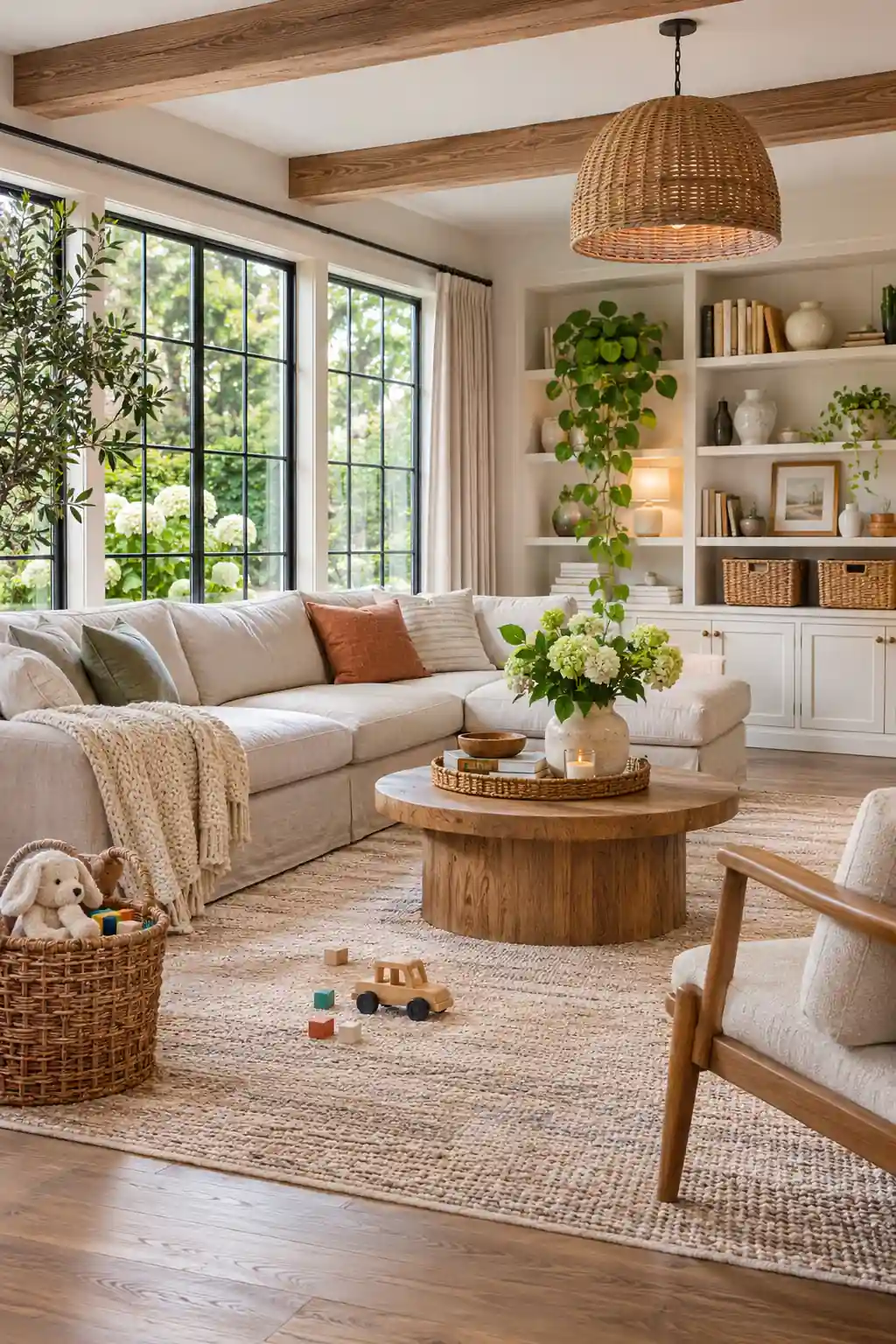
This pale family room relies on accessible storage and comfortable seating rather than elaborate decoration. Baskets near the sofa give small items a place to go, while the rounded table softens the center visually. The layout leaves open floor space that can change with daily activities.
Choose upholstery based on its actual care instructions. A light fabric is not automatically easy to clean, and a dark one does not hide every mark. Removable covers may help if the manufacturer permits washing, but check how they fit and dry before making that the deciding feature.
Keep frequently used toys or blankets in storage that household members can reach. Secure furniture where appropriate and assess the room for the ages of children using it. The image is design inspiration rather than a childproofing plan. A clear route through the room and a simple evening reset can matter more than matching baskets. Allow the arrangement to serve family life rather than expecting it to remain photo-ready all day.
A narrow room with a clear walkway
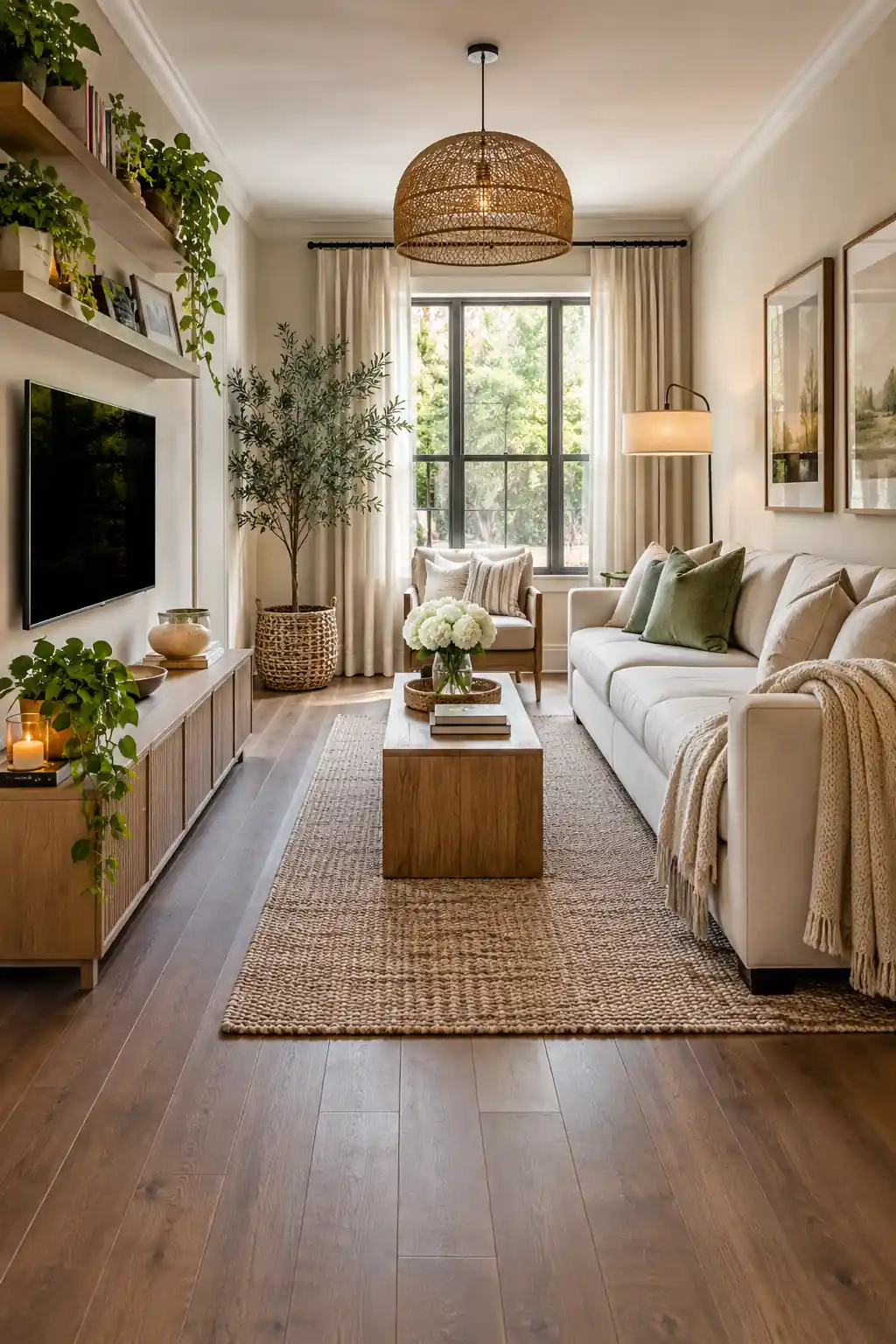
In a narrow room, the route through the space is part of the design. This arrangement keeps the sofa along one side and uses a modest table near the center. The rug draws the seating together while leaving a visible path rather than filling every strip of exposed floor.
Measure the room at its tightest points, including radiator projections, door swings and window access. A sofa that fits the wall may still be too deep for the available width. Compare the overall dimensions rather than relying on a description such as compact or apartment-sized.
A slim side table or wall light can replace bulky furniture beside the sofa. Keep storage shallow where possible and avoid placing decorative objects in the main route. Use a larger piece of art instead of several projecting shelves if the wall needs interest. The aim is not to squeeze in a full furniture checklist; it is to create comfortable seating with enough room to move through the space naturally.
Built-in bookshelves around a focal point
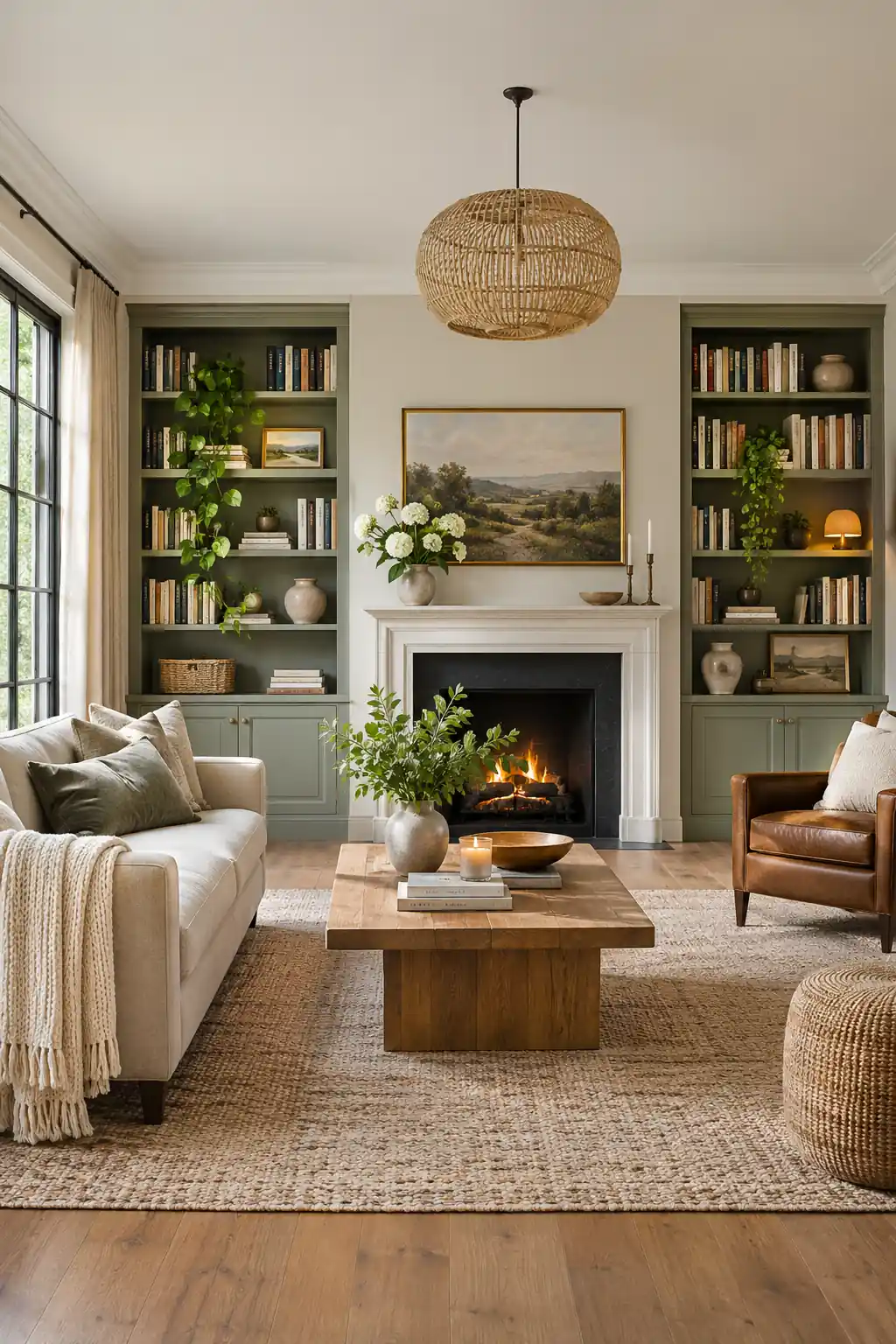
Bookshelves give the wall a useful purpose while framing the fireplace. The green paint connects the shelving sections, and the pale seating keeps the room from becoming too visually dense. Books, objects and empty spaces alternate, which makes the shelves feel organized without looking like a rigid shop display.
Plan shelf heights around what you own rather than a decorative photograph. Large books and everyday storage need different clearances. Closed cupboards below can hide less attractive items, leaving the upper shelves for things you want to see and reach regularly.
Group some books vertically and others in short horizontal stacks, but avoid treating every shelf identically. Larger objects need room around them, while small pieces can disappear among busy spines. Check the load capacity and secure shelving appropriately. Lighting can make the wall useful in the evening, but it should not introduce visible cable clutter. A few clear surfaces keep the room readable even when the shelves hold a substantial collection.
A sunlit room with indoor plants
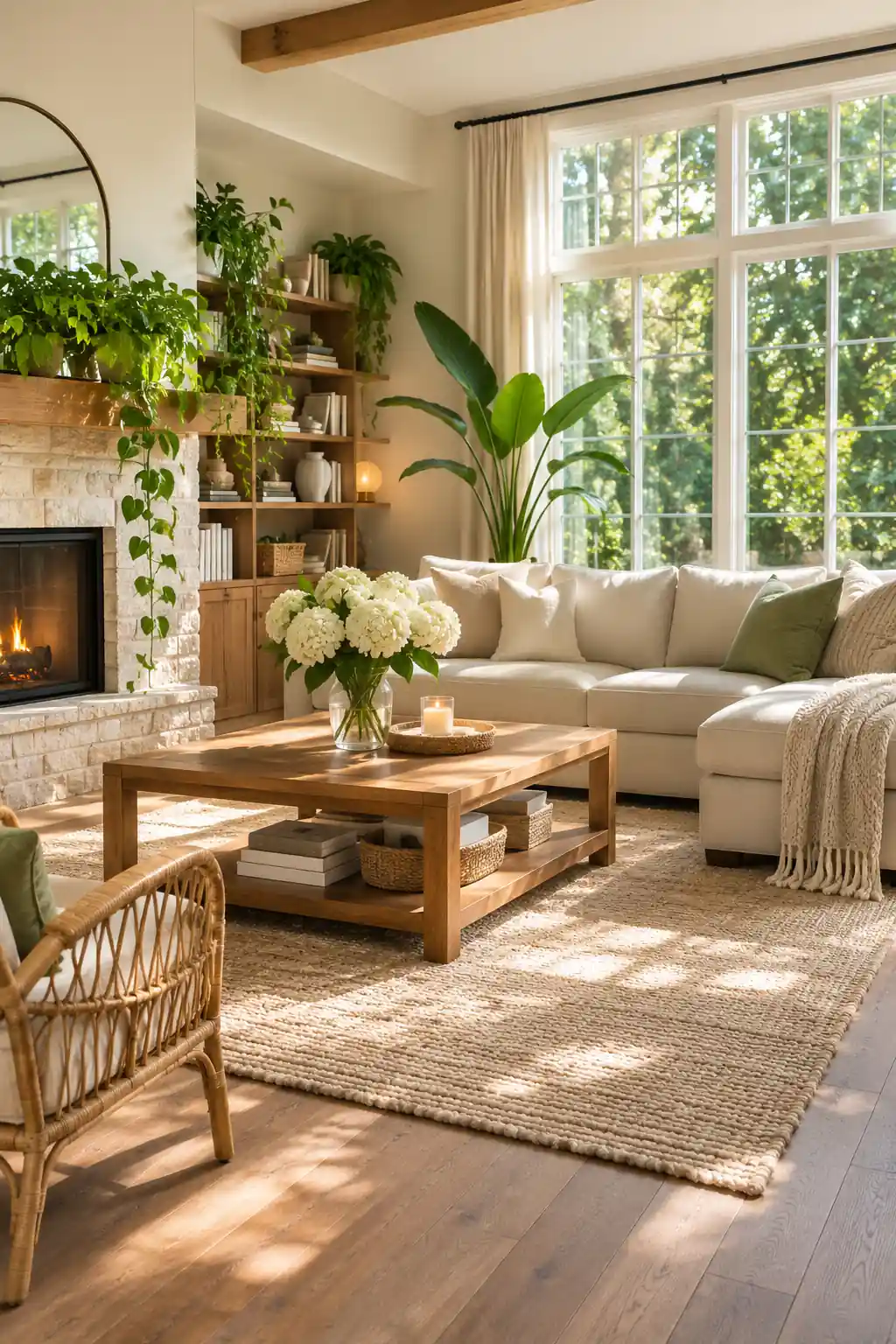
Large windows and pale seating give plants a clear background in this room. Different leaf shapes create variation without needing many decorative accessories. The plants sit at different heights, but they do not all crowd the glass or block the route around the sofa.
Choose each plant for the light available in its actual position. A bright-looking room can still have darker corners, and direct sun differs from bright indirect light. Use suitable containers and protect furniture and floors from drainage water rather than placing nursery pots directly on wood.
Leave access for watering, cleaning windows and opening curtains. A plant that looks good in a photograph may become awkward if it must be moved every day. Keep the furniture palette fairly quiet so the greenery remains the main accent. If pets or children use the room, research plant suitability before buying. Start with a few manageable plants and add more only when their care fits your routine.
A symmetrical room for conversation
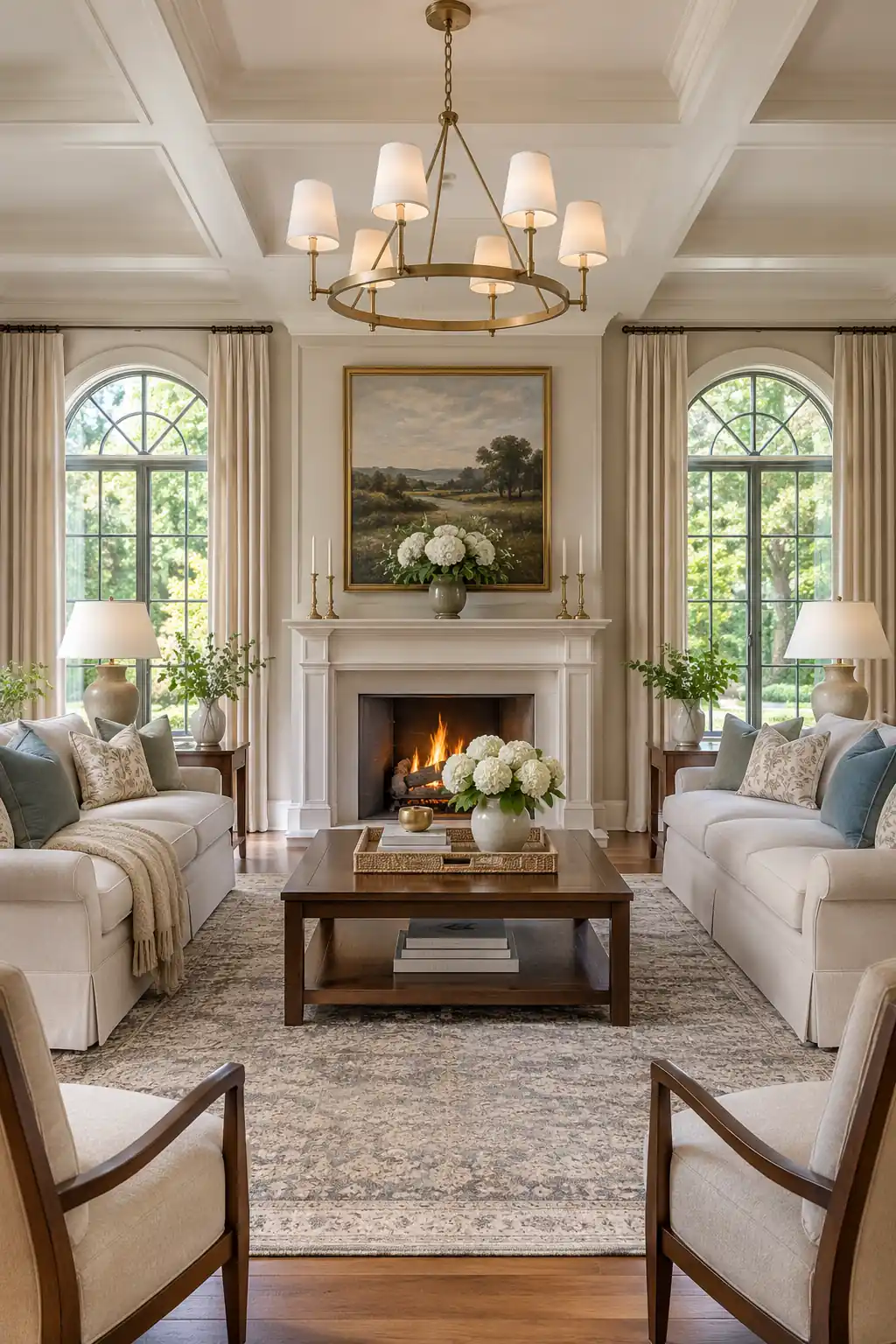
Matching visual weight on either side of the fireplace gives this room a formal balance. The furniture does not need to be identical, but the arrangement feels deliberate because the main pieces relate across the center. A light rug and restrained palette keep the symmetry from looking heavy.
Use the room’s architecture as a guide, then adjust for doors and daily movement. Perfect symmetry is not worth blocking a useful route or placing a chair where nobody wants to sit. Try the layout with temporary markers before moving or buying large pieces.
Add small differences through cushions, books or lamps so the space still feels lived in. Keep conversation distances comfortable and provide a place for drinks near the seating. A large central light can support the composition, but table lamps may be more useful for evening activities. This approach suits a room used for guests, while a television-focused family room may need a less balanced arrangement to function well.
Earthy brown with varied textures
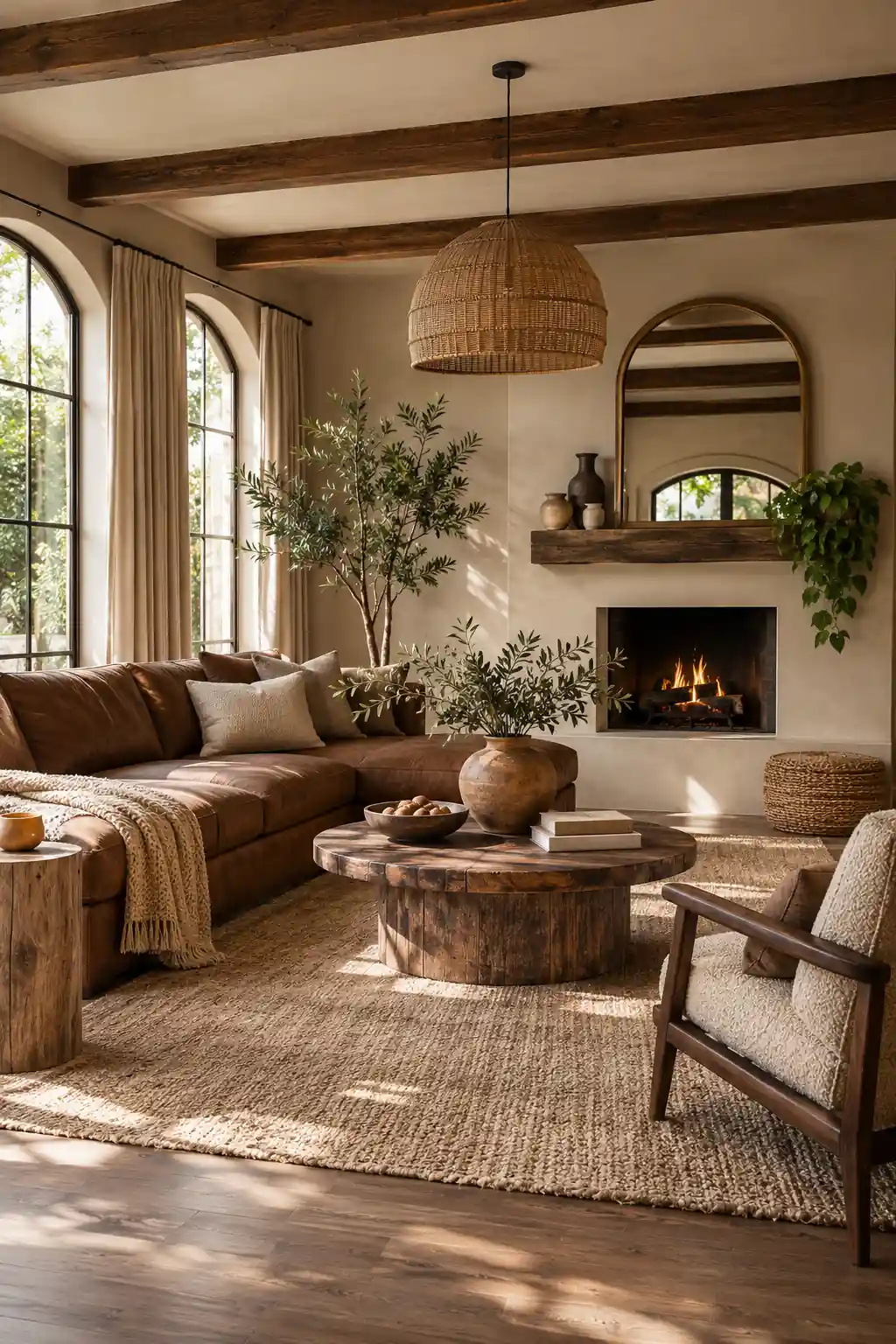
Brown becomes more interesting when it appears in several materials rather than one matching set. This room combines soft seating, wood and a textured rug, with lighter walls preventing the palette from feeling closed in. The darker sofa provides a clear anchor while pale accessories lift small areas.
Compare brown finishes carefully. Red-toned wood, cool taupe fabric and golden leather can work together, but the balance needs intention. Bring samples into the room and view them beside the floor. A large rug can help bridge finishes that otherwise feel disconnected.
Use lighting to reveal texture after dark. A shaded lamp near the seating can soften the room more effectively than a bright overhead fixture alone. Keep a few cream or muted green accents for contrast rather than adding many unrelated colors. Brown does not have to mean rustic; simple furniture shapes and restrained styling can make the same palette feel contemporary, comfortable and easy to maintain.
A minimal room with sculptural lighting
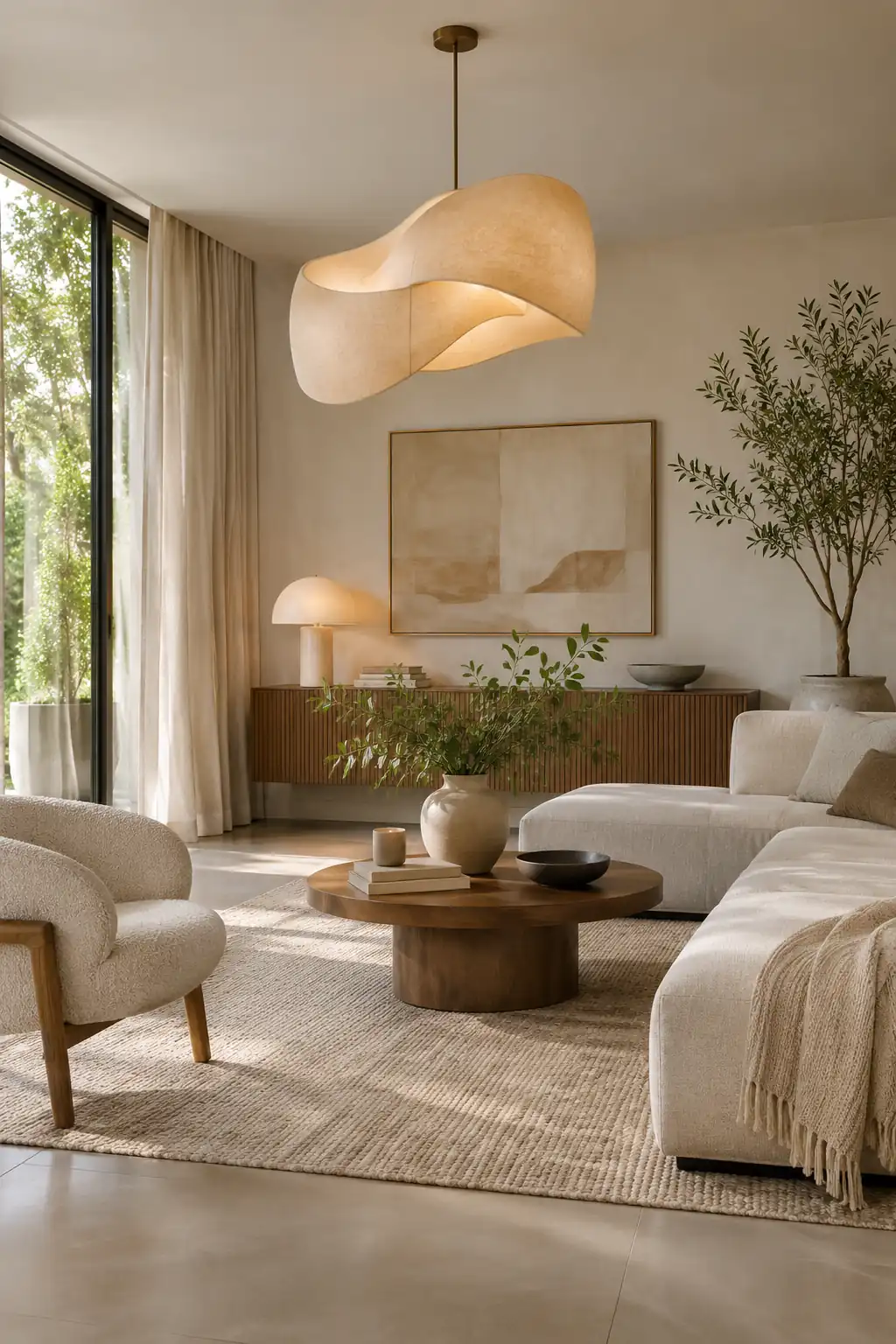
The pendant is the strongest shape in this room, while the sofa and table stay simple. That difference gives the eye a clear place to land without relying on a bright color. Pale surfaces and a limited number of objects make the lighting’s outline easier to appreciate.
Check the fixture’s dimensions against the room before choosing it. A sculptural shade can appear smaller in a product photograph than it does above a coffee table. Consider ceiling height, light distribution and access for cleaning, not just the silhouette. Installation should suit the fixture and the home’s electrical setup.
Keep the rest of the room useful rather than empty for appearance alone. A reading light, storage and comfortable seating still belong in a minimal space. Choose a few objects with different textures so the neutral palette does not look flat. Leave the coffee table mostly clear, allowing the pendant to remain the distinctive feature instead of competing with a large centerpiece directly beneath it.

Written by Stephanie Fallis
Mom and homemaker who shares budget friendly DIY projects, decorating tips and gardening ideas for busy families.
More about me → UncategorizedCottagecore Laundry Rooms: 21 Stunning Ideas for Your Home
 UncategorizedOrganic Modern Dining Room: 19 Stunning Ideas to Try
 UncategorizedCoastal living room ideas for light, seating and color