
Farmhouse kitchen design blends rustic warmth with practical everyday function. This style pairs natural wood, soft whites, and vintage-inspired details throughout the space. It creates a room that feels warm, lived-in, and welcoming to guests. Homeowners choose this look for its timeless, comfortable appeal that never feels dated. The style also adapts easily to both small and large kitchen layouts.
This look draws inspiration from old barns, country cottages, and working farm kitchens across generations. However, modern farmhouse kitchens balance old-world charm with new appliances and layouts. Sturdy materials like wood, stone, and iron anchor the entire space. Additionally, soft textiles and fresh greenery add a homey touch throughout the room. Neutral color palettes keep the design feeling calm, cohesive, and easy to update over time.
Below are twenty farmhouse kitchen design ideas to inspire a fresh, thoughtful look. Each idea covers one specific element, from cabinetry to lighting choices. Meanwhile, extra sections further down cover color palettes and common mistakes to avoid. These ideas work well for kitchens of any size, layout, or budget. Readers can mix and match elements to build a space that fits their own home.
In this post: 20 ideas
- Shiplap Walls for Farmhouse Charm
- Apron-Front Farmhouse Sink
- Open Wood Shelving Display
- Reclaimed Wood Kitchen Island
- White Shaker Cabinets
- Black Iron Pendant Lighting
- Butcher Block Countertops
- Vintage-Style Range Cooker
- Beadboard Cabinet Panels
- Woven Bar Stools
- Farmhouse Kitchen Table Nook
- Exposed Wood Beams Overhead
- Galvanized Metal Accents
- Two-Tone Cabinet Colors
- Checkered or Patterned Backsplash
- Vintage Glass-Front Cabinets
- Copper Hardware and Fixtures
- Farmhouse Window Above the Sink
- Neutral Linen and Cotton Textiles
- Fresh Herbs and Greenery Display
1. Shiplap Walls for Farmhouse Charm
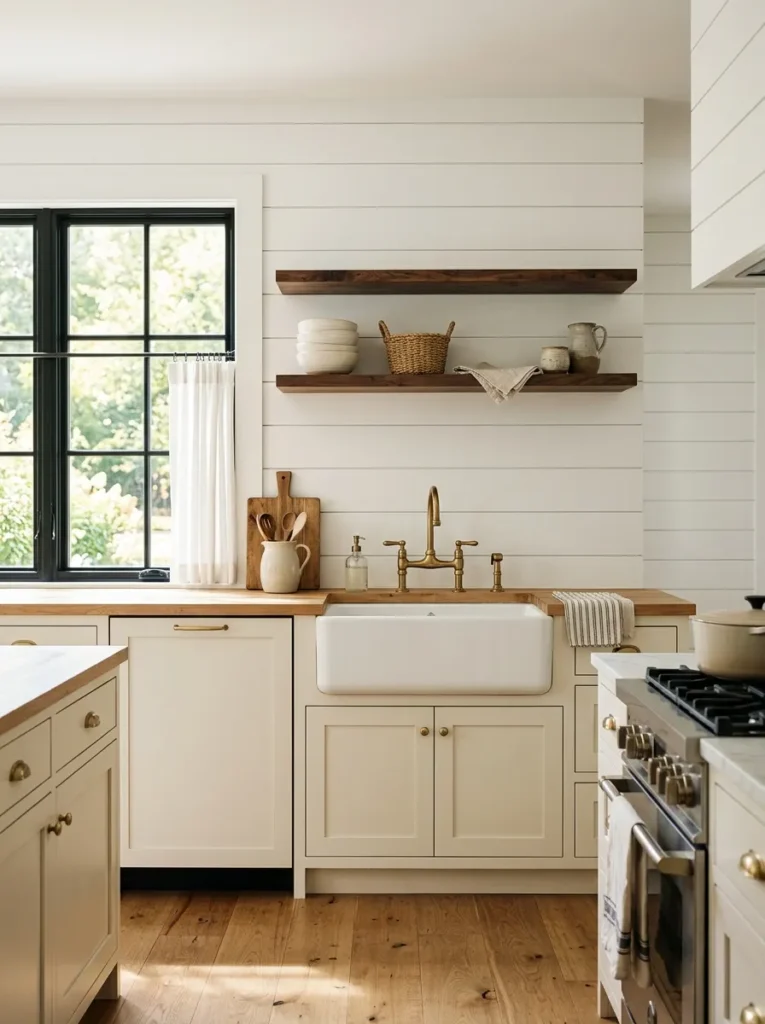
Shiplap paneling remains one of the most recognizable farmhouse features. Horizontal wood planks add texture without overwhelming a small kitchen. Painters often choose crisp white or soft cream tones. This finish pairs well with darker cabinetry for contrast. Additionally, shiplap works as a backsplash alternative behind open shelves. It also softens sharp corners near windows and doorways. Homeowners on a budget can install prefabricated shiplap panels quickly. This approach costs less than full wall renovations.
2. Apron-Front Farmhouse Sink
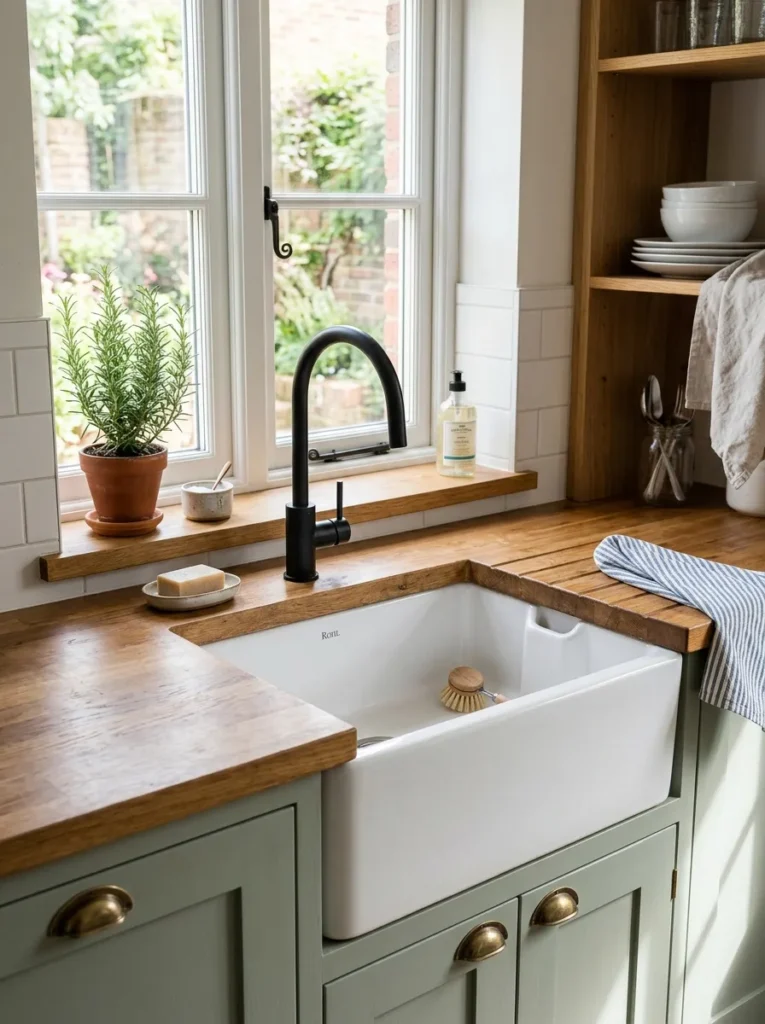
An apron-front sink, also called a farmhouse sink, defines this style instantly. The deep basin handles large pots and baking trays with ease. Materials range from fireclay to stainless steel and cast iron. White fireclay remains the most popular choice for classic looks. Meanwhile, bronze or copper finishes suit warmer color palettes. This sink style exposes its front panel below the counter edge. As a result, it becomes a visual focal point near the window.
3. Open Wood Shelving Display
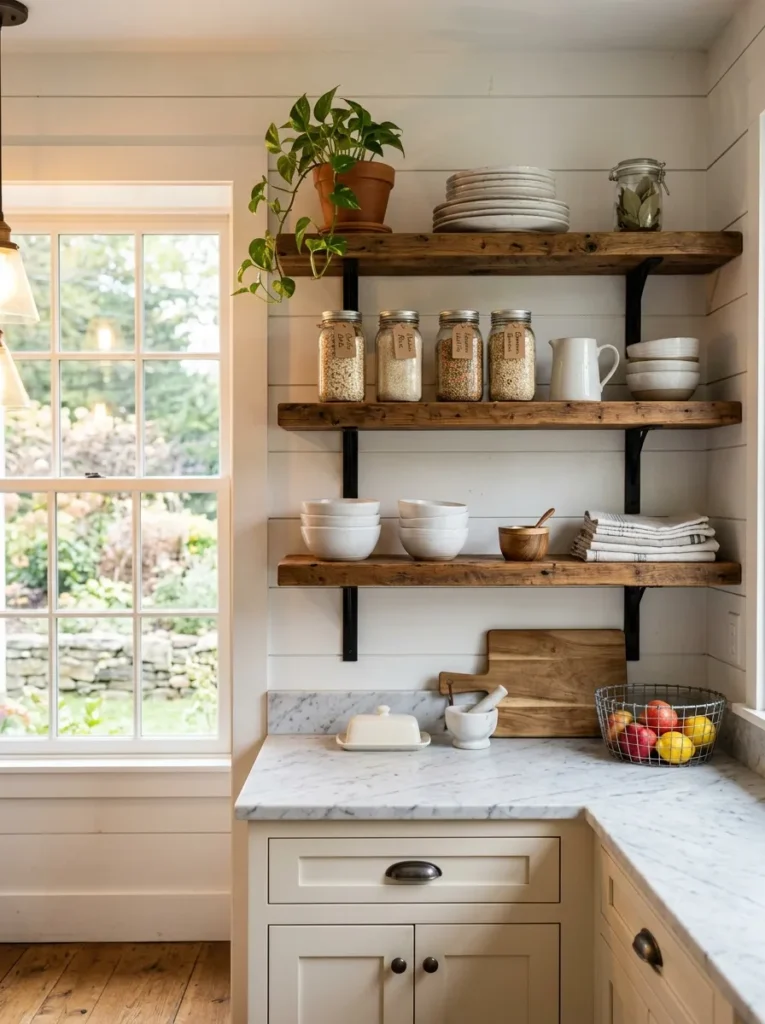
Open shelving replaces upper cabinets in many farmhouse kitchens. Reclaimed wood boards create a rustic, airy feel overhead. Owners display stoneware, glass jars, and woven baskets on these shelves. This approach keeps everyday items within easy reach. However, it requires regular tidying to avoid a cluttered look. Iron brackets add an industrial touch beneath each shelf. This detail works well alongside black hardware elsewhere in the room.
4. Reclaimed Wood Kitchen Island
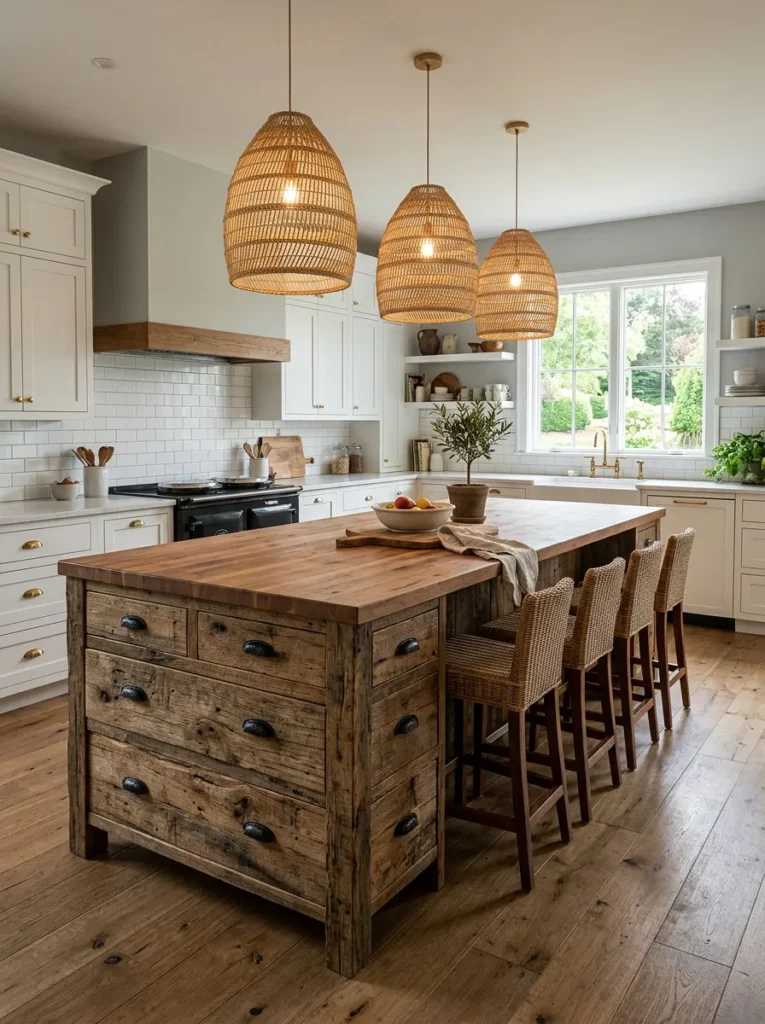
A reclaimed wood island brings history and character into the kitchen. Weathered barn wood shows natural grain, knots, and color variation. This piece often becomes the room’s central gathering spot. Homeowners pair it with a contrasting white perimeter for balance. Additionally, a thick butcher block top adds workable counter space. Iron or brass pulls complete the vintage aesthetic on island drawers. This island suits open-concept kitchens that flow into dining areas.
5. White Shaker Cabinets
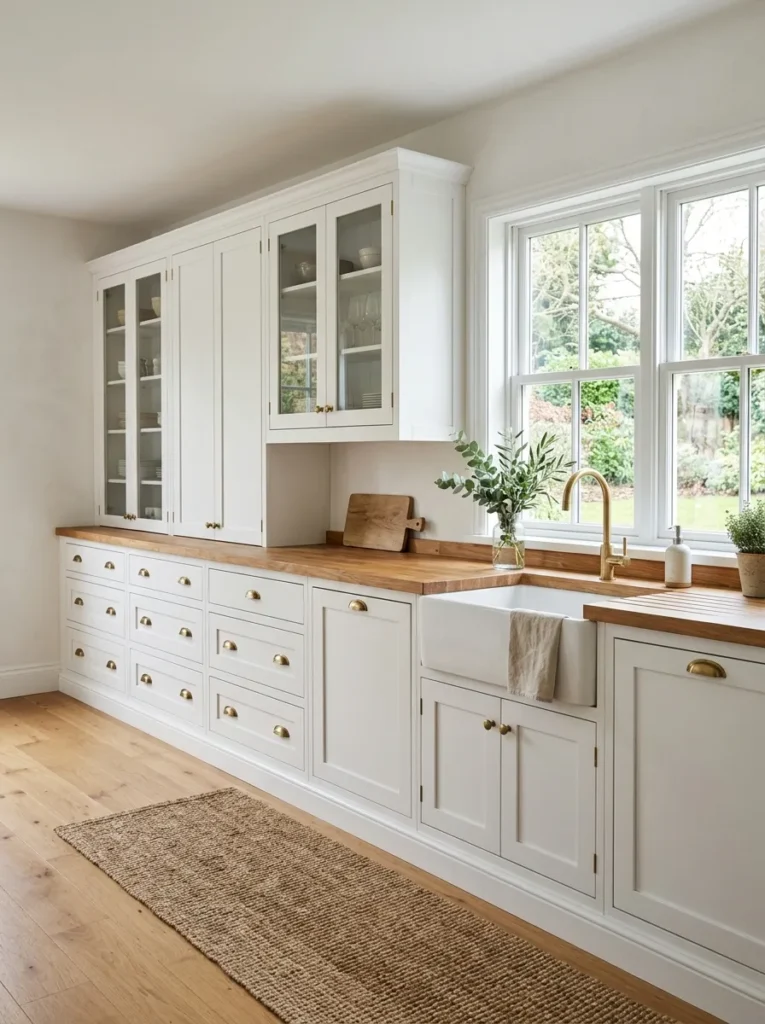
Shaker-style cabinets define the classic farmhouse silhouette. Simple recessed panel doors avoid ornate detailing entirely. White remains the most popular finish for this cabinet style. However, homeowners exploring color can browse <a href=”https://slekhome.com/beige-kitchen-cabinets-ideas/”>beige kitchen cabinets</a> for a softer, warmer alternative. Shaker doors pair naturally with brass or black hardware. This cabinet style photographs well and suits nearly any kitchen layout. It also holds resale value better than trend-driven alternatives.
6. Black Iron Pendant Lighting
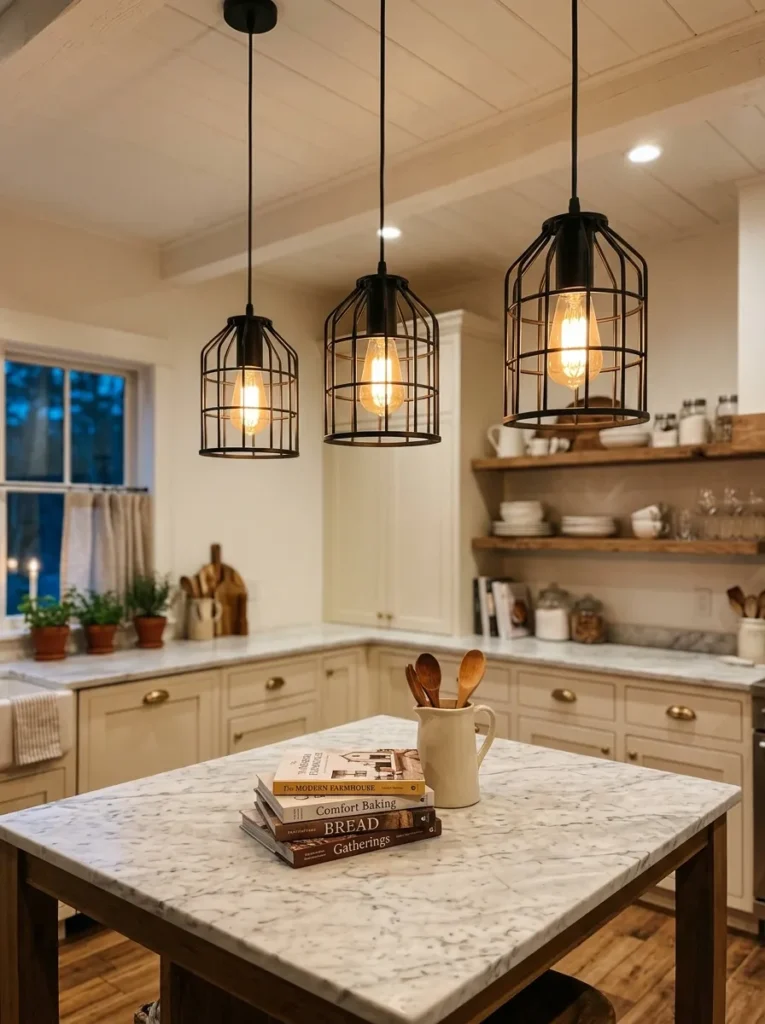
Black iron pendants add contrast above kitchen islands and sinks. Their simple cage or dome shapes echo old barn lanterns. This lighting style pairs naturally with white shiplap and wood beams. Additionally, warm bulb tones keep the mood soft in the evening. Homeowners often hang two or three pendants in a row above the island. This creates rhythm and draws the eye across the room. Iron fixtures also tie together other black accents nearby.
7. Butcher Block Countertops
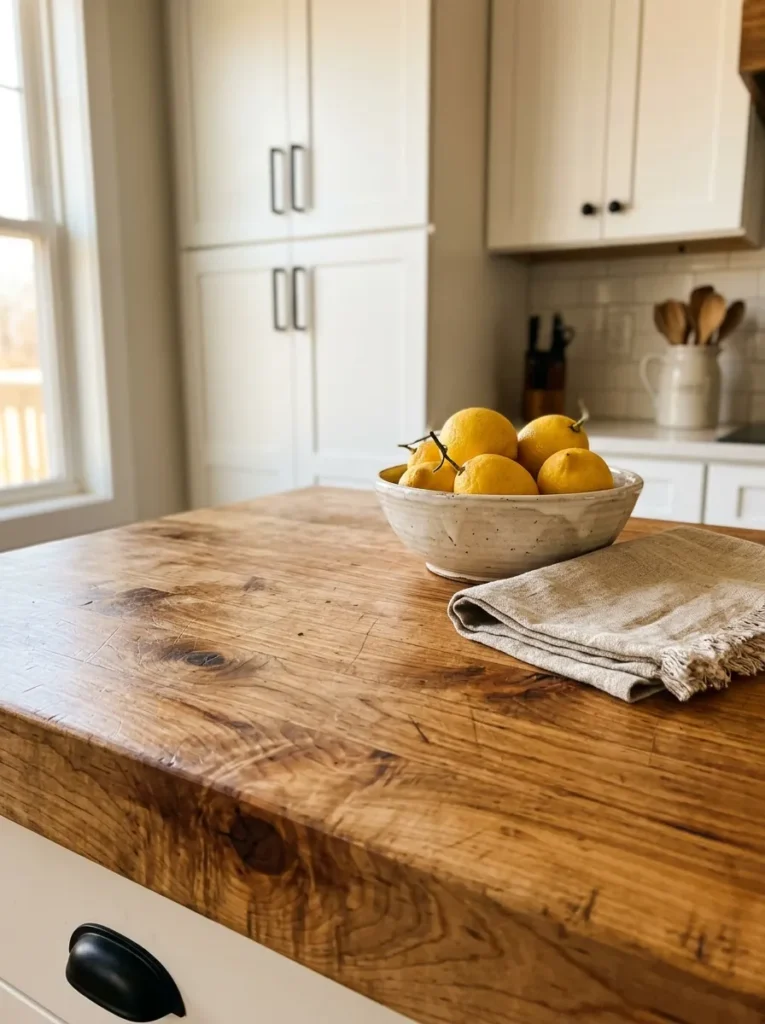
Butcher block countertops bring warmth that stone surfaces cannot match. Maple, walnut, and oak remain the most common wood choices. This surface works well on islands, even when paired with stone elsewhere. However, owners must reseal butcher block regularly to prevent water damage. Additionally, this material scratches more easily than quartz or granite. Many homeowners accept this patina as part of the farmhouse charm. It ages gracefully alongside worn cabinet hardware and open shelving.
8. Vintage-Style Range Cooker

A vintage-style range cooker anchors the kitchen with bold personality. Enamel finishes in cream, black, or forest green suit farmhouse palettes. These ranges often include six burners and a built-in griddle. Additionally, brass control knobs and trim add a polished vintage touch. Many owners frame the range with a tile hood surround. This detail draws the eye upward toward exposed beams. A range cooker works as the kitchen’s clear focal point.
9. Beadboard Cabinet Panels
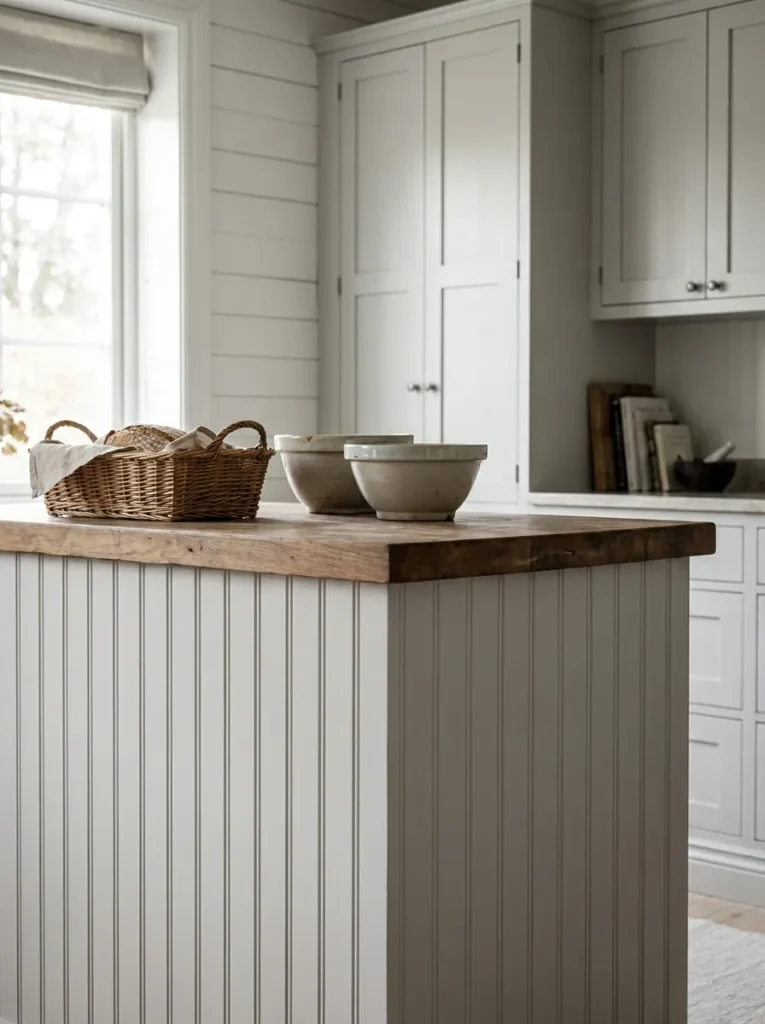
Beadboard paneling adds subtle texture to cabinet doors and kitchen islands. Thin vertical grooves catch light differently than flat surfaces. This detail suits both upper cabinets and island end panels. Additionally, beadboard pairs naturally with shiplap walls for a cohesive look. Painters typically finish beadboard in soft white or pale gray tones. This texture softens a kitchen that might otherwise feel too modern. It remains a budget-friendly upgrade for existing flat-panel cabinets.
10. Woven Bar Stools
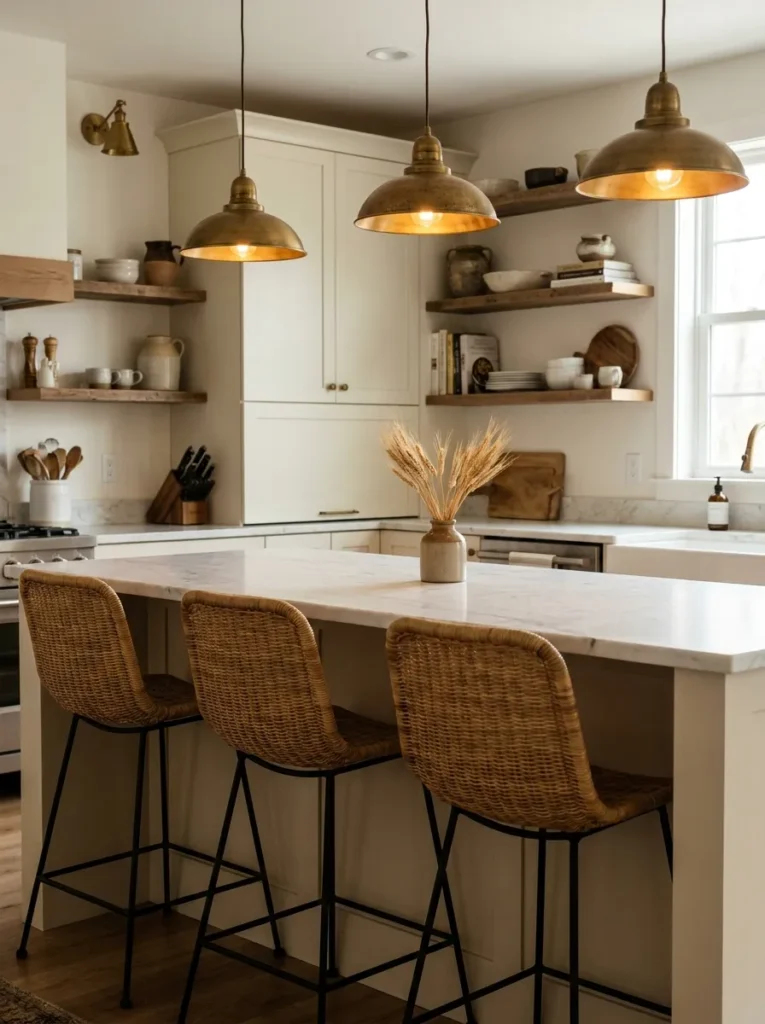
Woven rattan or cane bar stools soften a farmhouse island’s hard edges. Natural fibers add texture without competing with wood or stone. These stools pair well with black or brass metal legs. Additionally, they bring a slightly relaxed, organic feel to the space. Homeowners often choose two or three stools depending on island length. This seating style photographs beautifully against white or cream cabinetry. It also works in smaller kitchens without overwhelming the layout.
 You may also like10 Christmas Chair Decoration Ideas for a Charming Home
11. Farmhouse Kitchen Table Nook
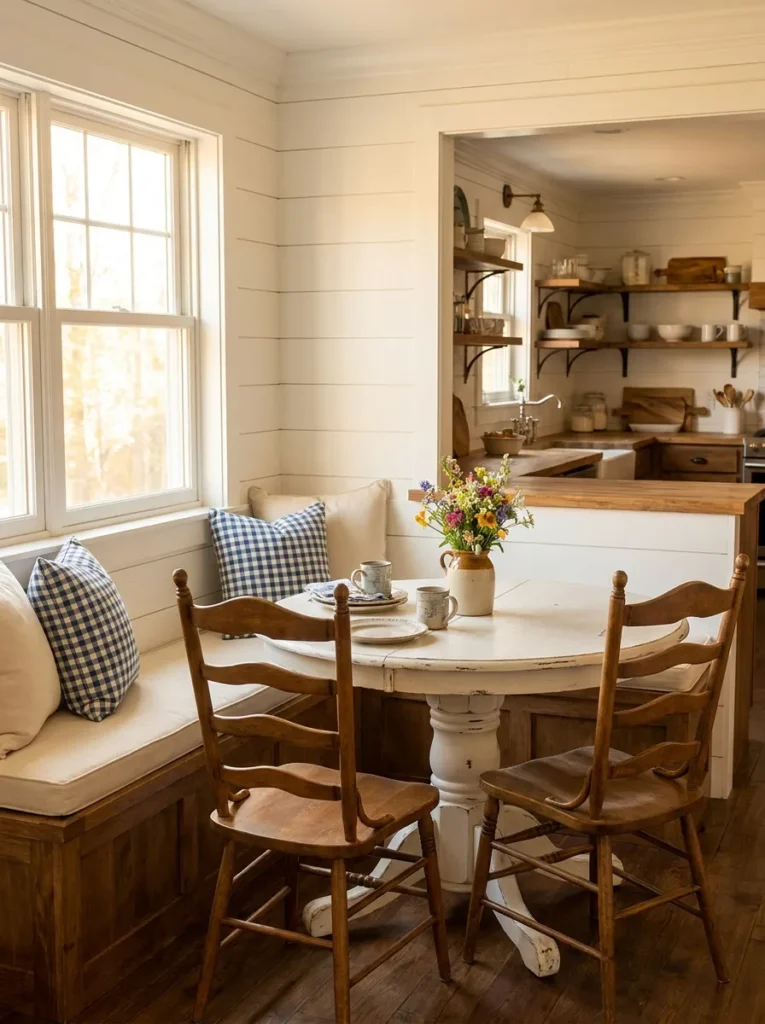
A built-in table nook creates a casual dining spot near the kitchen. Bench seating with cushions maximizes space in tighter corners. Homeowners often pair this nook with a round pedestal table. This layout feels similar to a <a href=”https://slekhome.com/cozy-living-room/”>cozy living room</a> corner. Additionally, gingham or striped cushions add pattern without clashing. Natural light from a nearby window keeps the nook bright. This feature works especially well in eat-in kitchen layouts.
12. Exposed Wood Beams Overhead
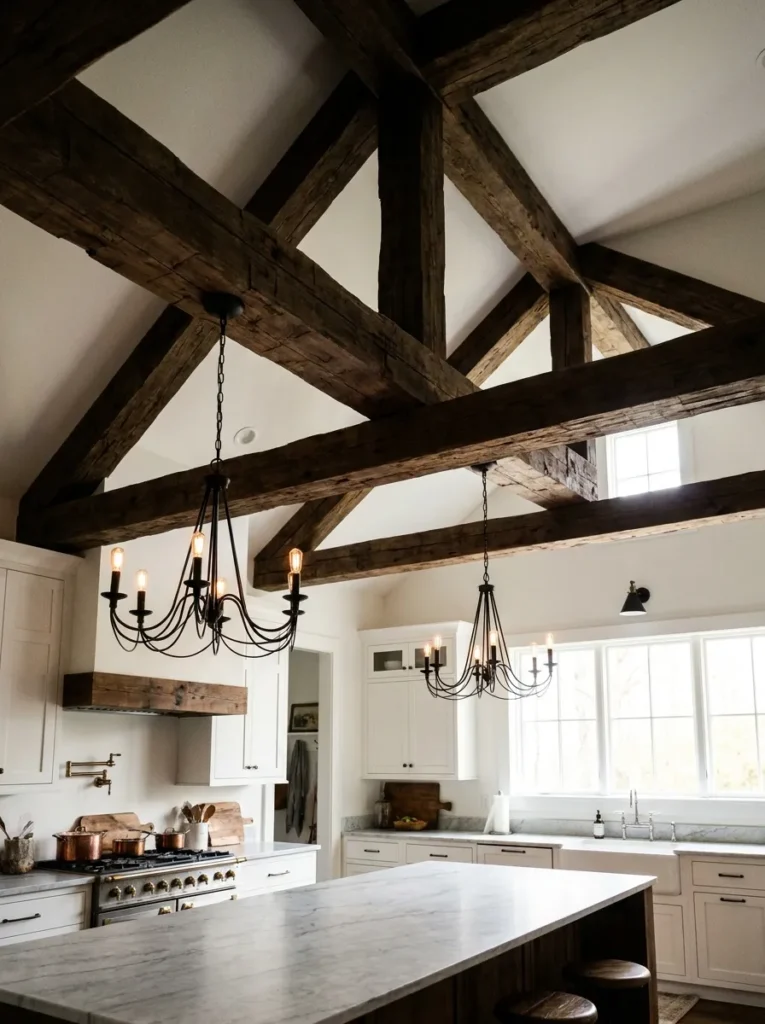
Exposed ceiling beams bring architectural interest to a farmhouse kitchen. Reclaimed timber beams show natural knots and weathered texture. This detail works best in kitchens with higher ceilings. Additionally, beams pair well with hanging pendant lights or iron chandeliers. Homeowners sometimes whitewash beams for a lighter, coastal-adjacent feel. Others keep the wood dark for dramatic contrast against white walls. Either approach adds depth that flat ceilings cannot offer.
13. Galvanized Metal Accents
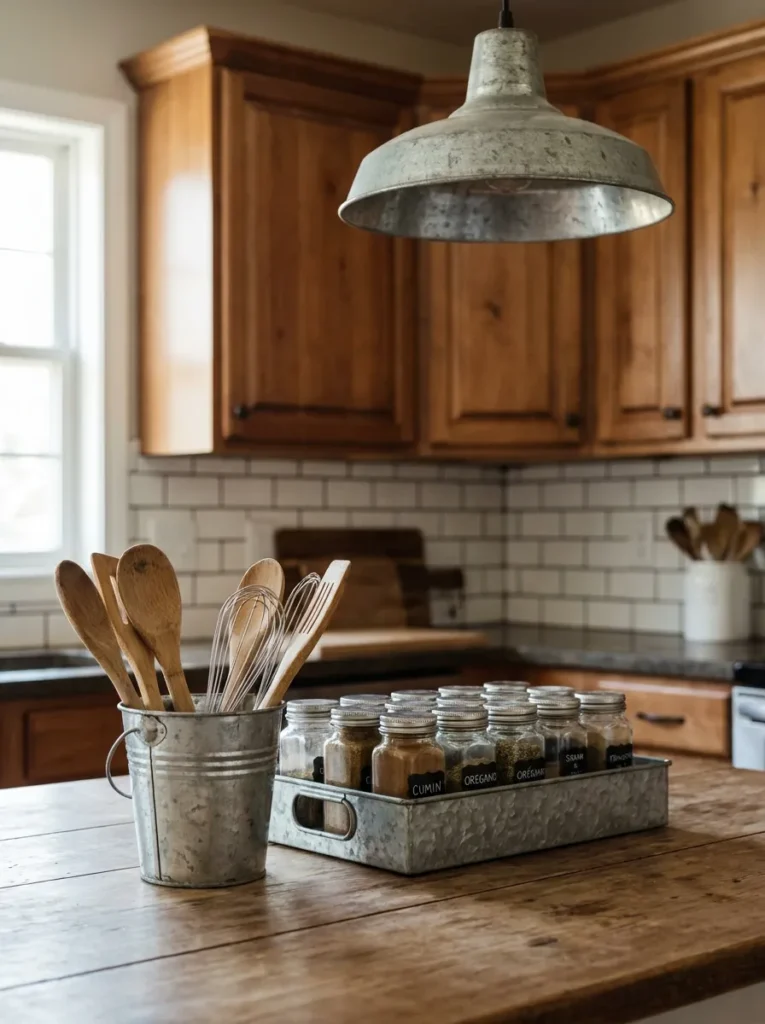
Galvanized metal brings an industrial edge to soft farmhouse palettes. Buckets, pendant shades, and canisters showcase this raw, silvery finish. This material contrasts nicely against warm wood tones and white cabinets. Additionally, galvanized trays organize countertop items with rustic charm. Homeowners often use these accents sparingly to avoid a cold feel. A single galvanized light fixture can balance a room full of wood. This detail keeps the kitchen from feeling overly sweet or precious.
14. Two-Tone Cabinet Colors
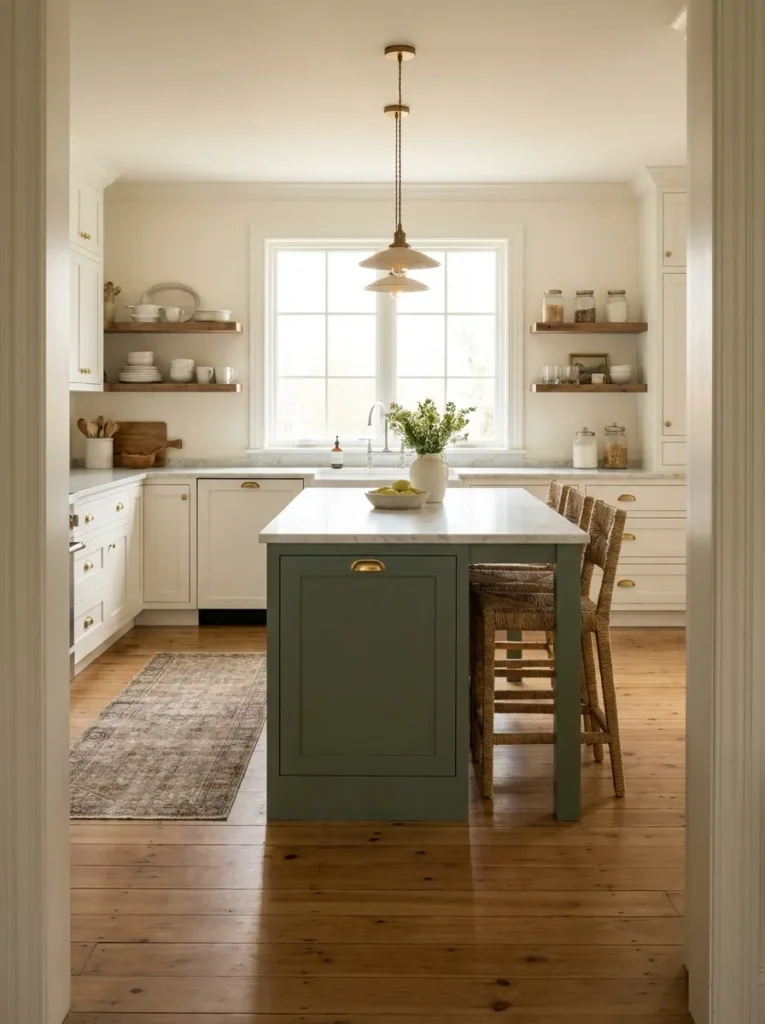
Two-tone cabinetry adds depth without straying from farmhouse roots. Homeowners often paint the island a different shade than perimeter cabinets. Navy, sage, or charcoal islands pair beautifully with white surrounding cabinets. Meanwhile, those drawn to nature-inspired palettes can explore <a href=”https://slekhome.com/green-kitchen-cabinets-ideas/”>green kitchen cabinets</a> for the island alone. This contrast breaks up a large kitchen visually. Additionally, it highlights the island as a functional centerpiece. Brass or black hardware ties both cabinet tones together.
15. Checkered or Patterned Backsplash
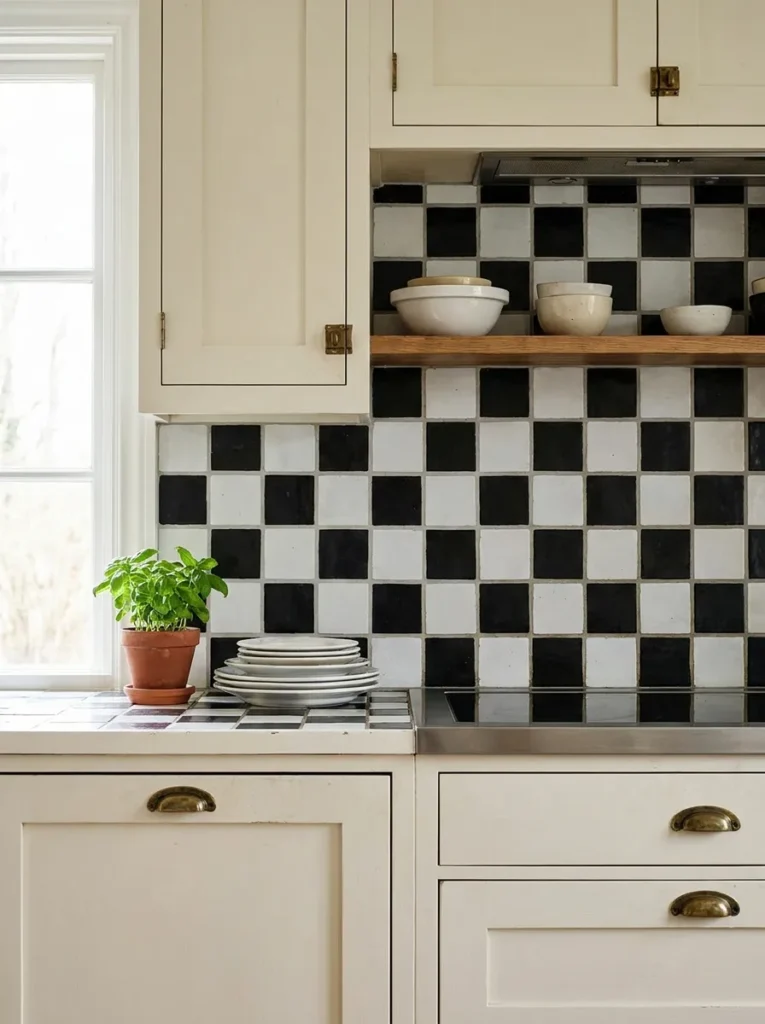
A checkered tile backsplash adds playful pattern to farmhouse kitchens. Black and white tiles remain the most classic combination. This pattern works especially well behind a range or open shelving. Additionally, terracotta and cream checkerboards suit warmer color schemes. Smaller kitchens benefit from this pattern’s ability to draw the eye. Grout lines in a contrasting color sharpen the checkered effect further. This backsplash style pairs naturally with butcher block countertops nearby.
16. Vintage Glass-Front Cabinets
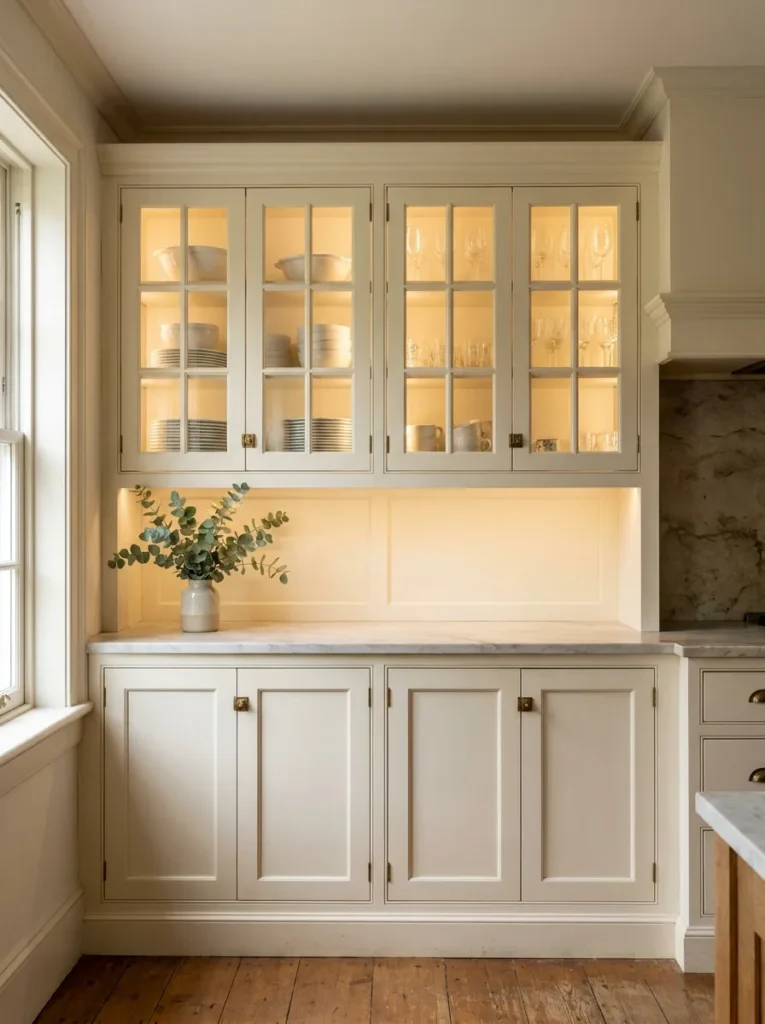
Glass-front cabinet doors display dishware while adding vintage character. Mullioned glass panes echo old farmhouse window styles. Homeowners often use these cabinets for a hutch or corner unit. Additionally, interior cabinet lighting highlights stacked plates and glassware. This detail suits collectors who want to showcase heirloom china. It also breaks up a wall of solid cabinet doors. Glass fronts pair naturally with open wood shelving nearby.
17. Copper Hardware and Fixtures
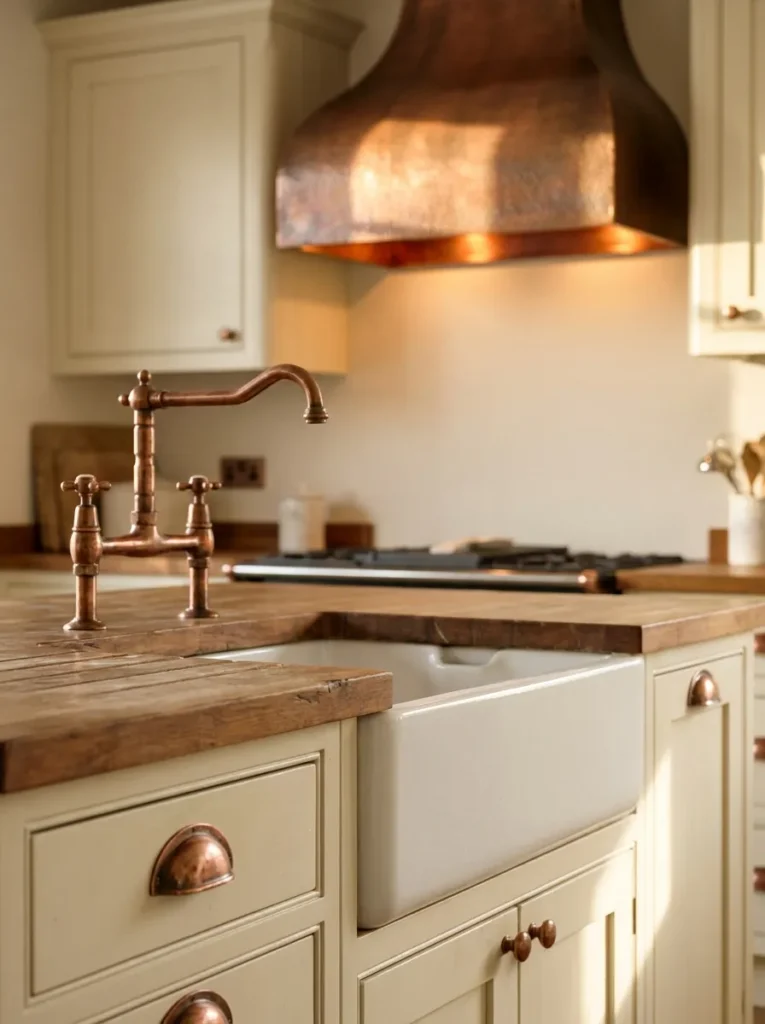
Copper hardware adds warmth that black or brass cannot fully replicate. Cabinet pulls, faucets, and light fixtures all suit this finish. This metal develops a natural patina over time, deepening its character. Additionally, copper pairs beautifully with warm wood tones and cream cabinetry. Homeowners often choose a single copper element as a statement piece. A copper range hood, for example, draws attention upward. This finish photographs warmly under soft pendant lighting.
18. Farmhouse Window Above the Sink
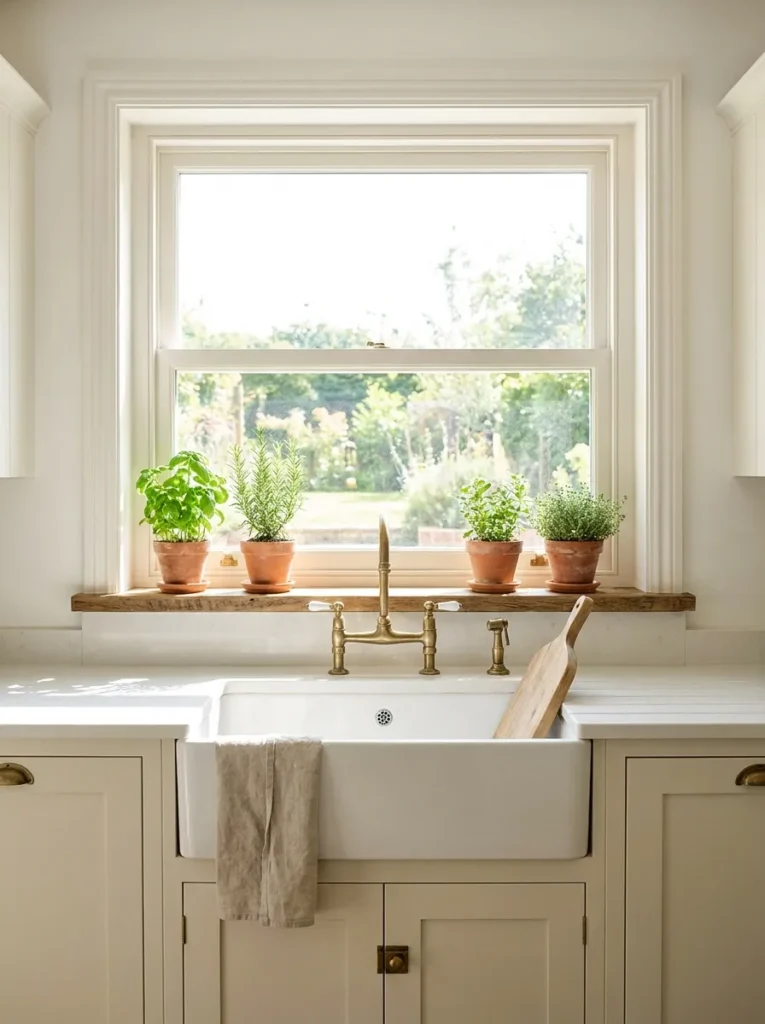
A large window above the sink brings natural light into the workspace. Simple white trim keeps the focus on the view outside. Homeowners often skip heavy curtains in favor of a bare, open look. Additionally, a small shelf beneath the window holds potted herbs. This detail turns a functional task area into a pleasant spot. Natural light also makes the entire kitchen feel larger. This window style pairs naturally with an apron-front sink below.
19. Neutral Linen and Cotton Textiles
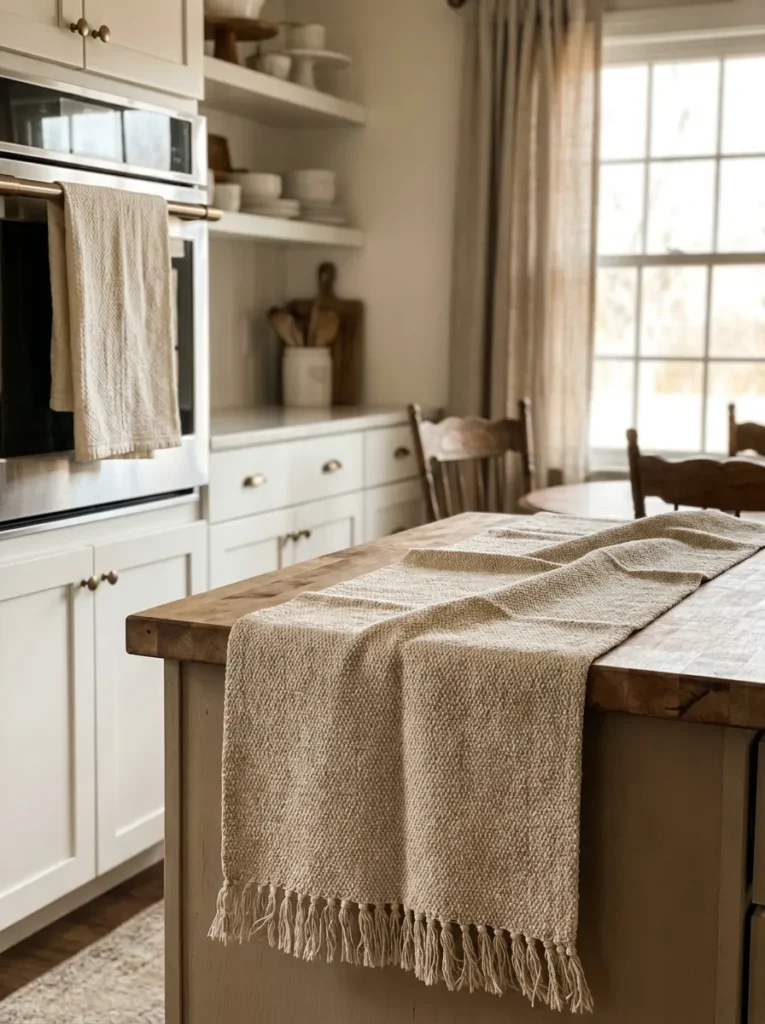
Soft textiles round out a farmhouse kitchen’s overall warmth. Linen tea towels, cotton curtains, and woven table runners add texture. Neutral tones like oatmeal, cream, and soft gray keep the palette calm. This textile approach mirrors ideas found in <a href=”https://slekhome.com/french-country-living-room-ideas/”>French country living room</a> styling. Additionally, layered textiles soften hard surfaces like stone and metal. Homeowners rotate these pieces seasonally for a fresh look. Small changes like this refresh the space without major renovation.
20. Fresh Herbs and Greenery Display
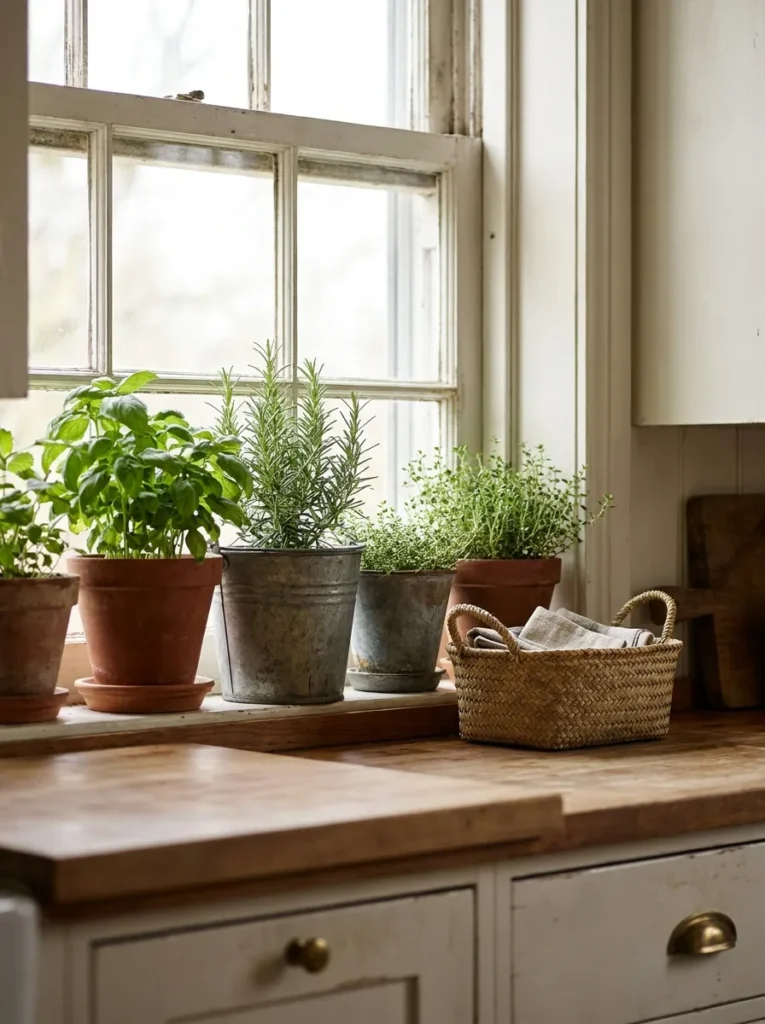
Fresh herbs bring life, scent, and color into a farmhouse kitchen. Potted basil, rosemary, and thyme sit nicely on windowsills. Homeowners often display these plants in galvanized or terracotta pots. Additionally, a hanging herb rack saves counter space in smaller kitchens. This detail connects the kitchen to its practical, working-farm roots. Greenery also softens hard edges from stone counters and metal fixtures. This finishing touch completes the farmhouse kitchen design story.
How to Choose the Right Farmhouse Kitchen Colors
Choosing a farmhouse color palette starts with a neutral base. White, cream, and soft gray work well on walls and cabinets. However, this style also welcomes deeper accent tones like sage or navy. Homeowners often introduce color through the island or backsplash tile. Additionally, warm wood tones balance cool white surfaces throughout the room. Black or brass hardware adds definition without overwhelming the palette. Testing paint swatches under natural light avoids costly color mistakes later.
Common Mistakes to Avoid in Farmhouse Kitchen Design
Overdecorating remains a common mistake in farmhouse kitchen design. Too many rustic accents can quickly feel cluttered and busy. Additionally, mixing too many metal finishes creates visual confusion. Homeowners should choose one or two dominant hardware tones instead. Another mistake involves skipping proper lighting layers throughout the room. Task lighting near counters matters as much as decorative pendants. Finally, ignoring storage needs for the sake of open shelving causes frustration later.
Budget-Friendly Ways to Do It on Your Own
Many farmhouse kitchen updates work well as do it on your own projects. Painting existing cabinets costs far less than full replacement. Additionally, homeowners can install peel-and-stick shiplap panels over a weekend. Swapping cabinet hardware instantly refreshes an outdated kitchen look. Those exploring smaller updates might browse <a href=”https://slekhome.com/ikea-kitchen-ideas/”>budget-friendly kitchen ideas</a> for practical inspiration. Open shelving also costs less than custom cabinetry installations. Small, gradual changes add up to a full farmhouse transformation over time.
FAQs About Farmhouse Kitchen Design
What defines farmhouse kitchen design? This style combines natural materials, neutral colors, and vintage-inspired details. Wood, stone, and iron all play central roles throughout the room.
Is farmhouse kitchen design still popular? Yes, this style remains popular due to its timeless, versatile appeal. It adapts easily alongside modern layouts and updated appliances.
Can farmhouse design work in small kitchens? Yes, open shelving and light colors help smaller kitchens feel airy. Scaling down island size also keeps the layout functional.
How does farmhouse differ from modern farmhouse design? Traditional farmhouse leans rustic and vintage throughout the space. Modern farmhouse blends those elements with cleaner lines, similar to <a href=”https://slekhome.com/japandi-kitchen-decor-and-design-ideas/”>Japandi kitchen design</a> restraint.
What flooring suits a farmhouse kitchen? Wide-plank wood, natural stone, and patterned tile all suit this style. Durability matters most in a high-traffic kitchen space.

Written by Stephanie Fallis
Mom and homemaker who shares budget friendly DIY projects, decorating tips and gardening ideas for busy families.
More about me → Christmas ideas21 Christmas Tray Ideas for a Festive Home
 Christmas ideas21 Blue Christmas Decoration Ideas for a Stunning Home
 Christmas ideas9 Log Christmas Decoration Ideas for a Cozy Home