
Walnut kitchen ideas bring rich, warm character into any home. This deep brown wood tone pairs well with many design styles. Homeowners choose walnut for its natural grain and lasting appeal. Additionally, walnut works in modern, farmhouse, and minimalist kitchens alike. Its color also hides everyday wear better than lighter finishes.
This guide explores nineteen ways to bring walnut into a kitchen space. Each idea highlights a different cabinet style, countertop pairing, or accent choice. Meanwhile, the list covers everything from bold islands to subtle shelving details. Every option balances warmth with function, so the kitchen feels inviting rather than heavy. Some ideas suit a full renovation, while others fit a smaller weekend update.
Walnut suits homeowners who want texture without losing a clean look. As a result, this wood tone fits both cozy and contemporary spaces. The sections below walk through cabinetry, countertops, hardware, and layout choices. Readers can mix and match ideas to fit their own kitchen goals. A few sections also cover color selection, common mistakes, and frequently asked questions. This extra guidance builds confidence before starting any project.
Walnut Kitchen Cabinets for a Warm Foundation
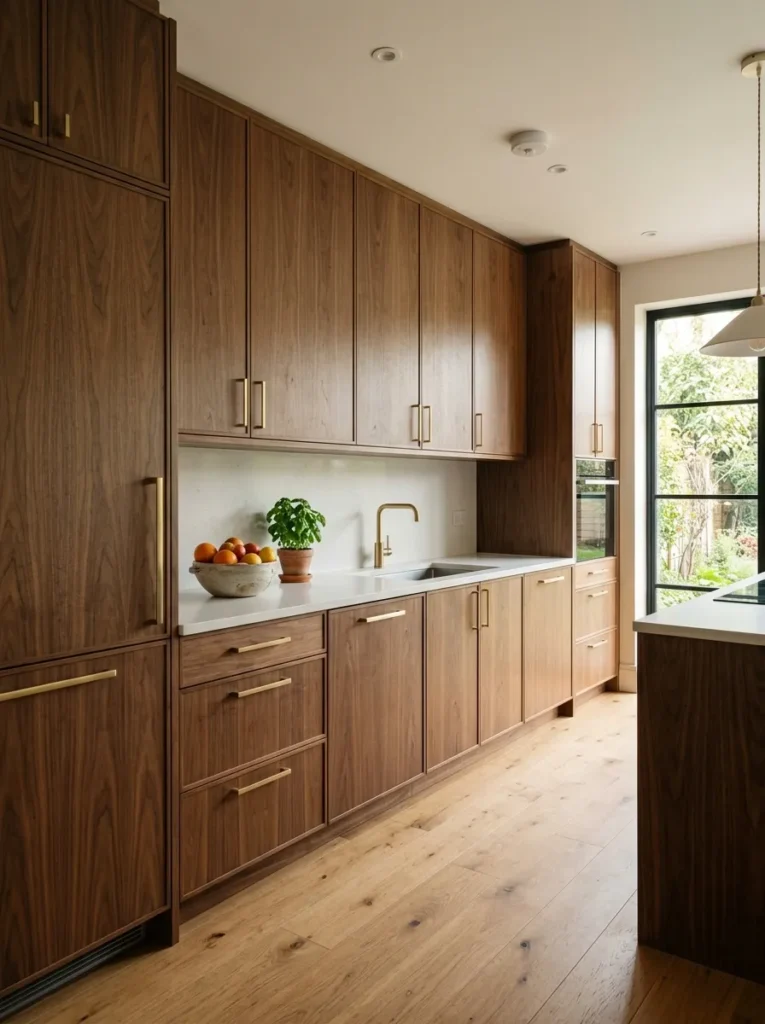
Walnut cabinets set a warm tone the moment someone enters the room. The wood grain adds movement without feeling busy. Additionally, walnut cabinetry pairs naturally with brass, black, or matte white fixtures. This base works well in both small and large kitchens. Homeowners exploring green kitchen cabinet ideas can borrow the same layout logic, swapping green for walnut tones.
Walnut Island as a Statement Centerpiece
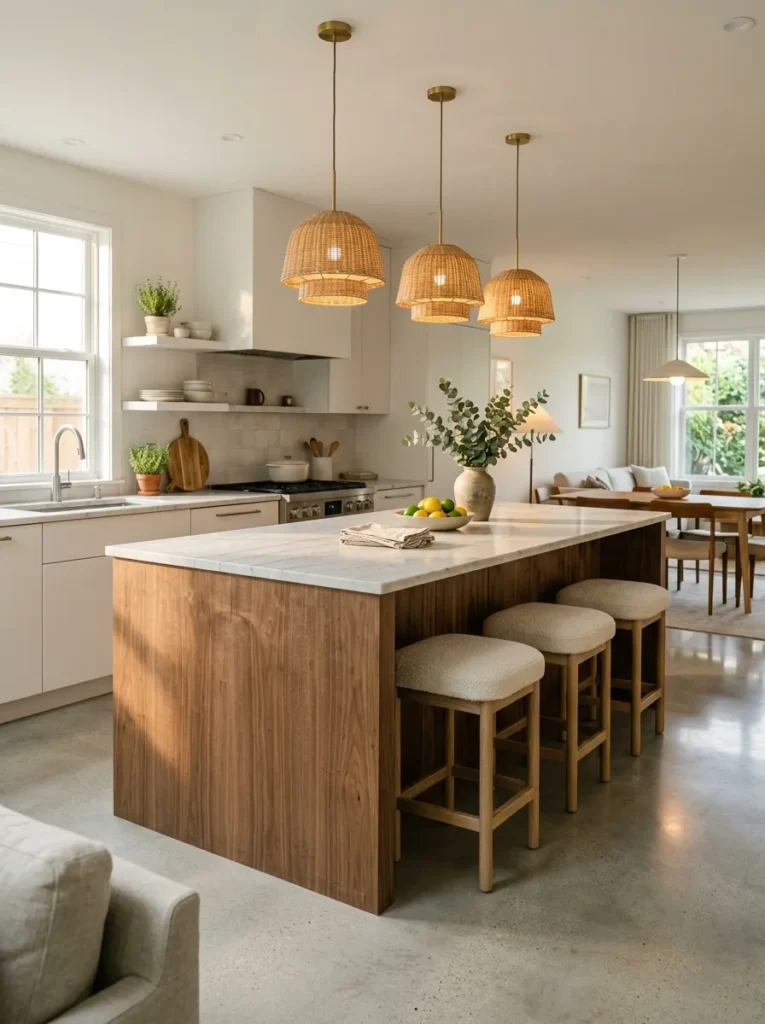
A walnut island draws the eye and anchors the whole kitchen. Surrounding cabinets can stay lighter to let the island stand out. However, matching walnut shelving nearby ties the room together. This idea suits open-plan kitchens with dining space close by. The wood tone also softens stone countertops above it.
Walnut and White Kitchen Combination
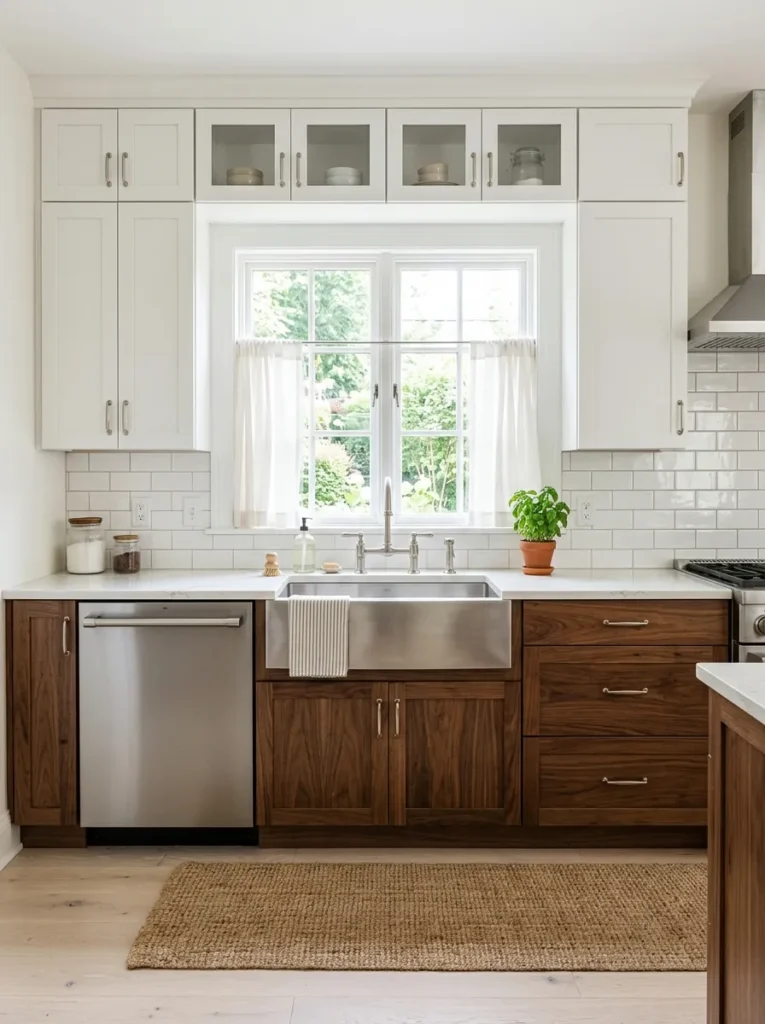
Pairing walnut with white creates a bright, balanced kitchen. White walls and countertops keep the space feeling airy. Meanwhile, walnut lower cabinets ground the room with natural texture. This combination suits kitchens with limited natural light. Homeowners who like this contrast may also enjoy beige kitchen cabinet ideas for a softer neutral base.
Walnut Open Shelving for Display
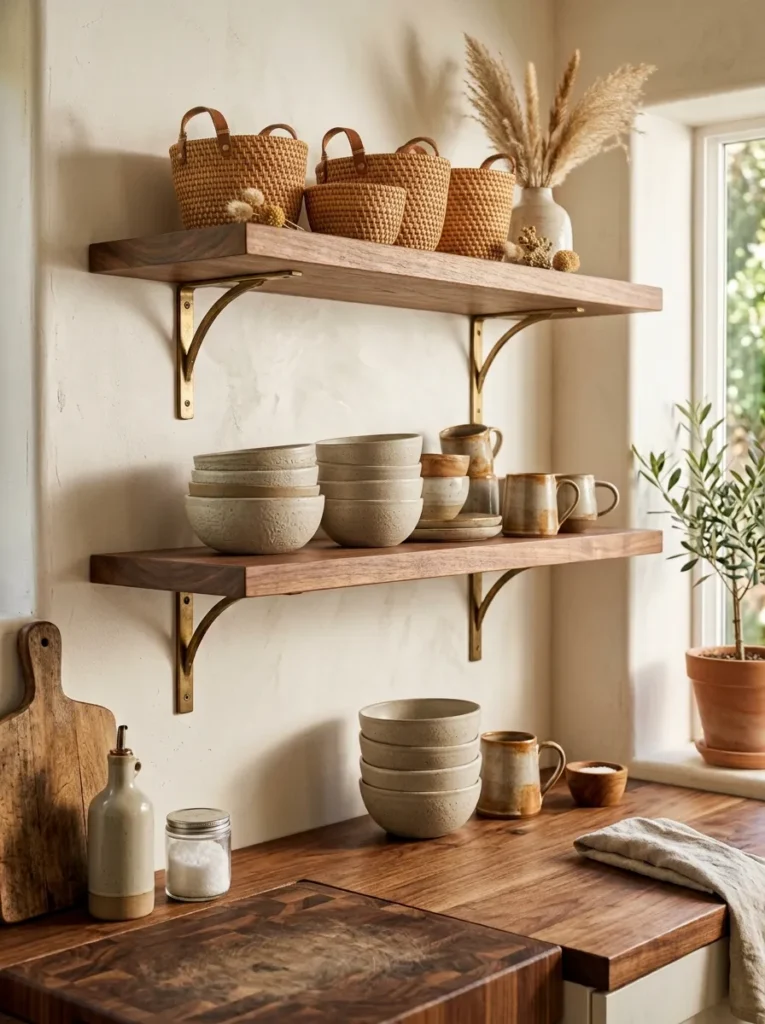
Open walnut shelves show off dishware and cookbooks with warmth. This idea works best in kitchens with a curated collection to display. Additionally, open shelving keeps the room feeling less closed in. Walnut brackets or floating shelves add a handmade touch. Pairing shelves with ceramic vases or woven baskets adds texture.
Walnut Kitchen with Black Hardware
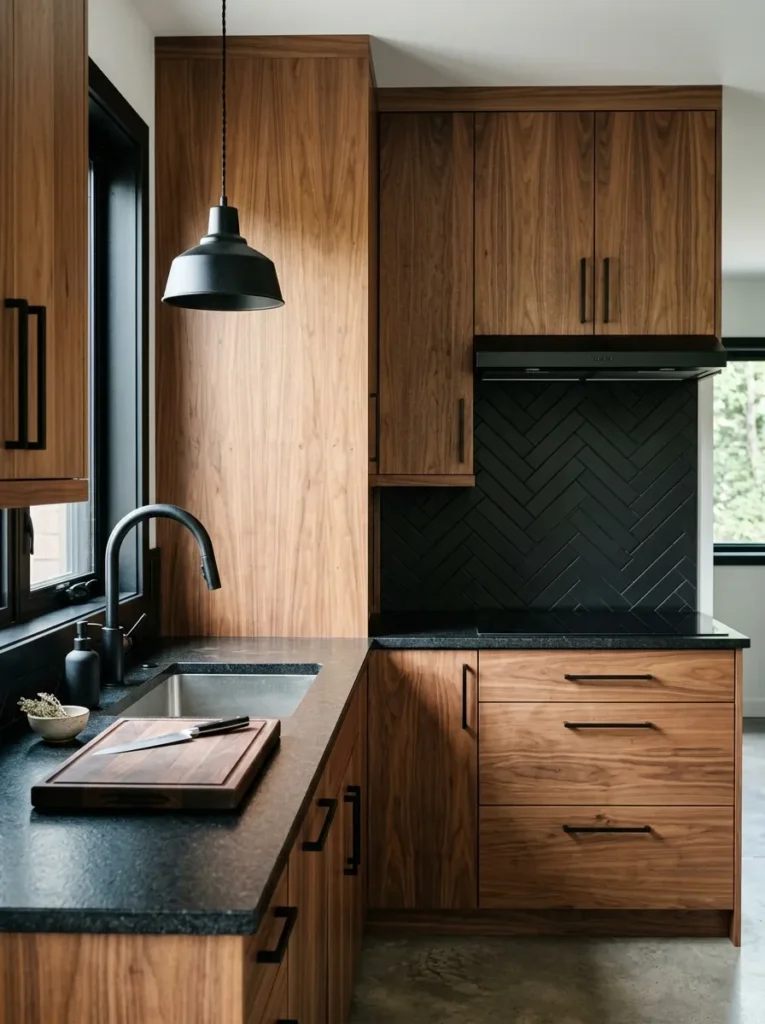
Black hardware against walnut cabinets creates sharp, modern contrast. Matte black handles read as clean and understated. However, brushed black finishes add a slightly softer edge. This pairing suits kitchens leaning toward an industrial or contemporary style. Black faucets and pendant lights complete the look.
Walnut and Marble Countertop Pairing
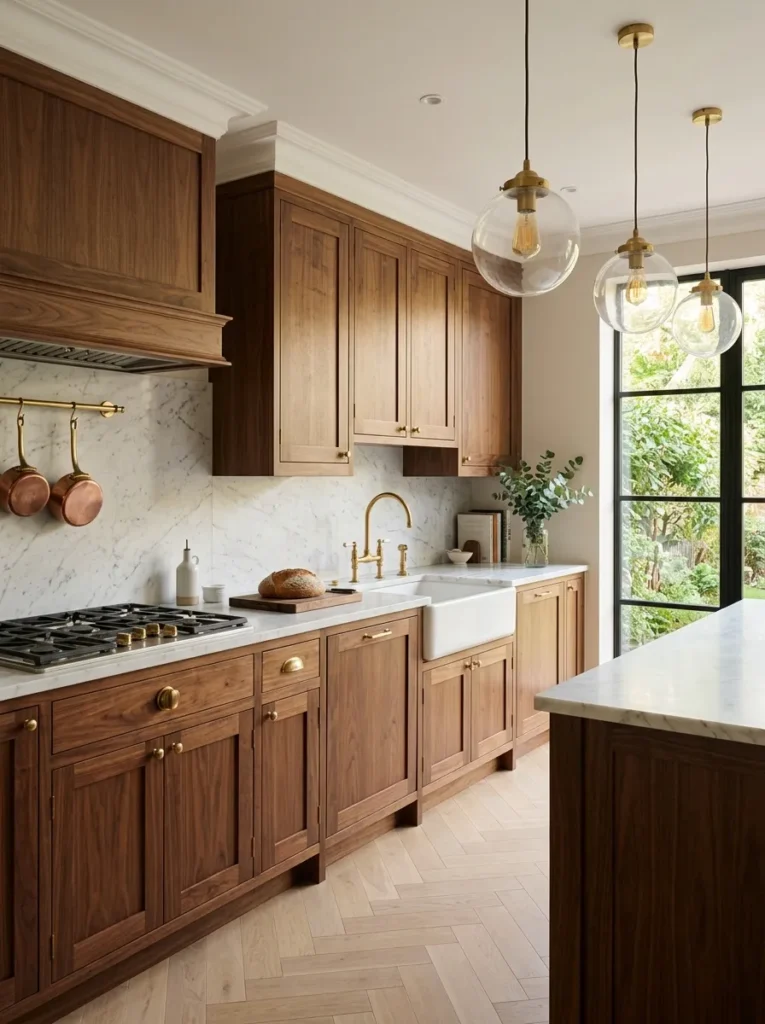
Marble countertops bring cool veining that balances warm walnut tones. White or gray marble keeps the kitchen feeling polished. Meanwhile, the natural stone pattern contrasts with straight wood grain lines. This pairing suits kitchens aiming for a luxurious, timeless feel. A marble backsplash extends the look up the wall.
Walnut Kitchen with Brass Accents
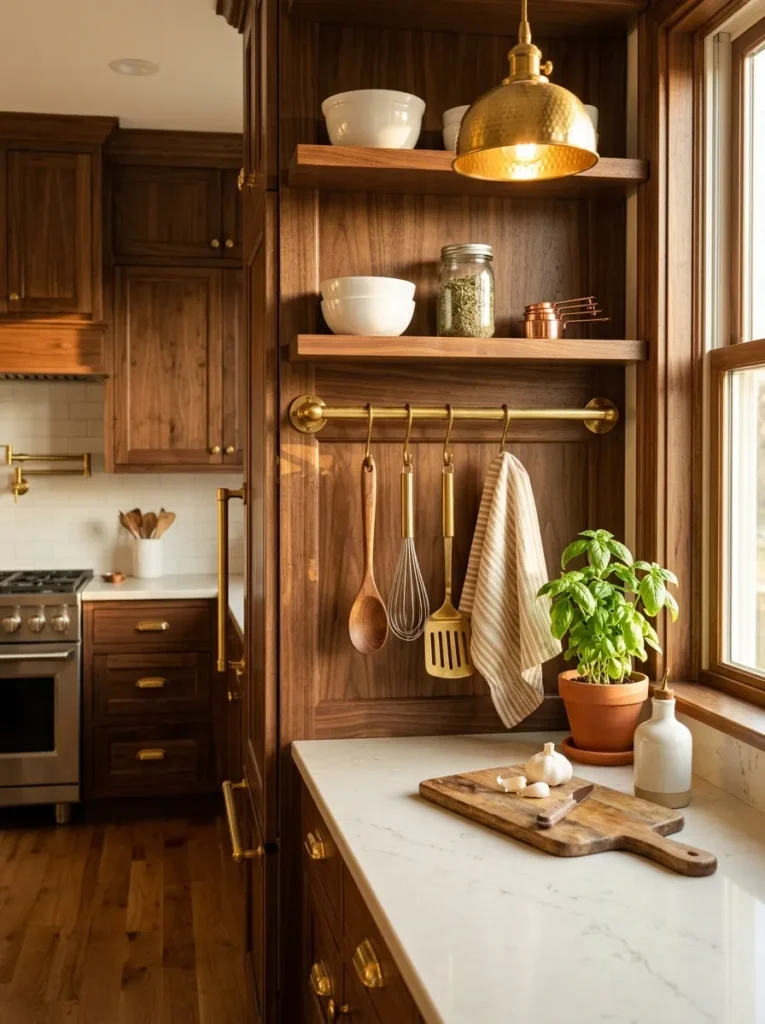
Brass hardware adds a warm metallic glow next to walnut wood. Faucets, cabinet pulls, and pendant lights in brass tie the room together. Additionally, brass ages gracefully alongside natural wood tones. This combination suits traditional and transitional kitchen styles. A brass rail for hanging utensils adds a functional detail.
Two-Tone Walnut and White Cabinets
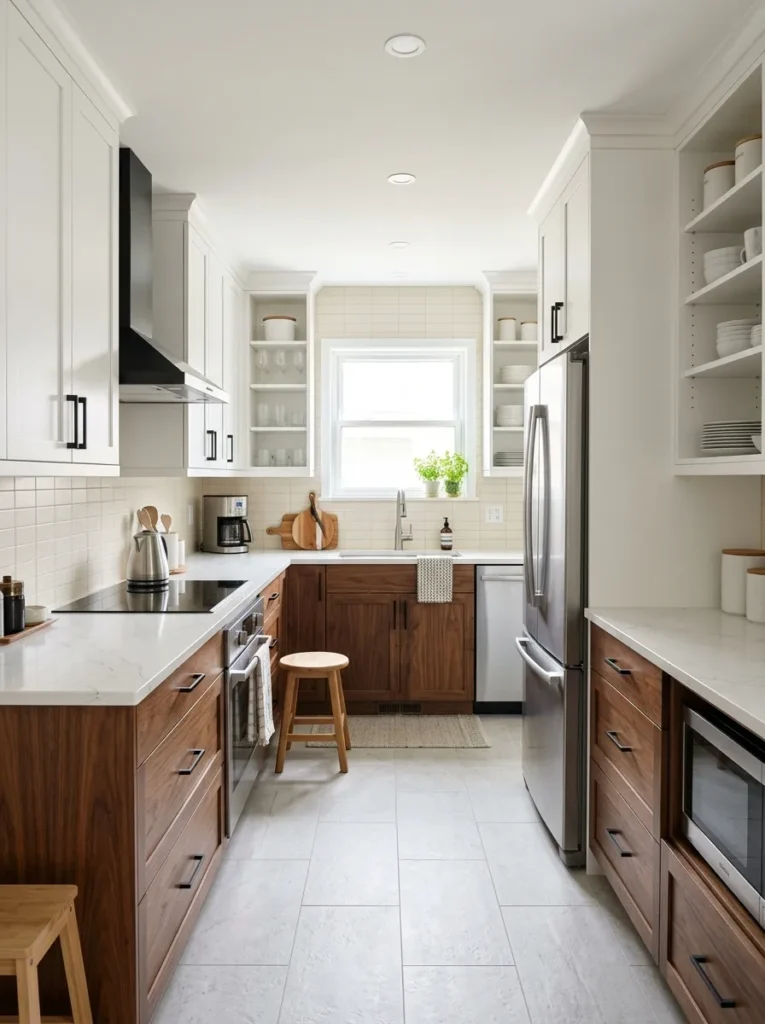
Two-tone cabinetry mixes walnut lowers with white uppers for balance. This layout keeps the kitchen feeling light near eye level. Meanwhile, the walnut base adds grounding warmth below. This idea works well in galley or U-shaped kitchens. Homeowners can also flip the tones for a bolder statement.
Walnut Kitchen with Matte Black Appliances
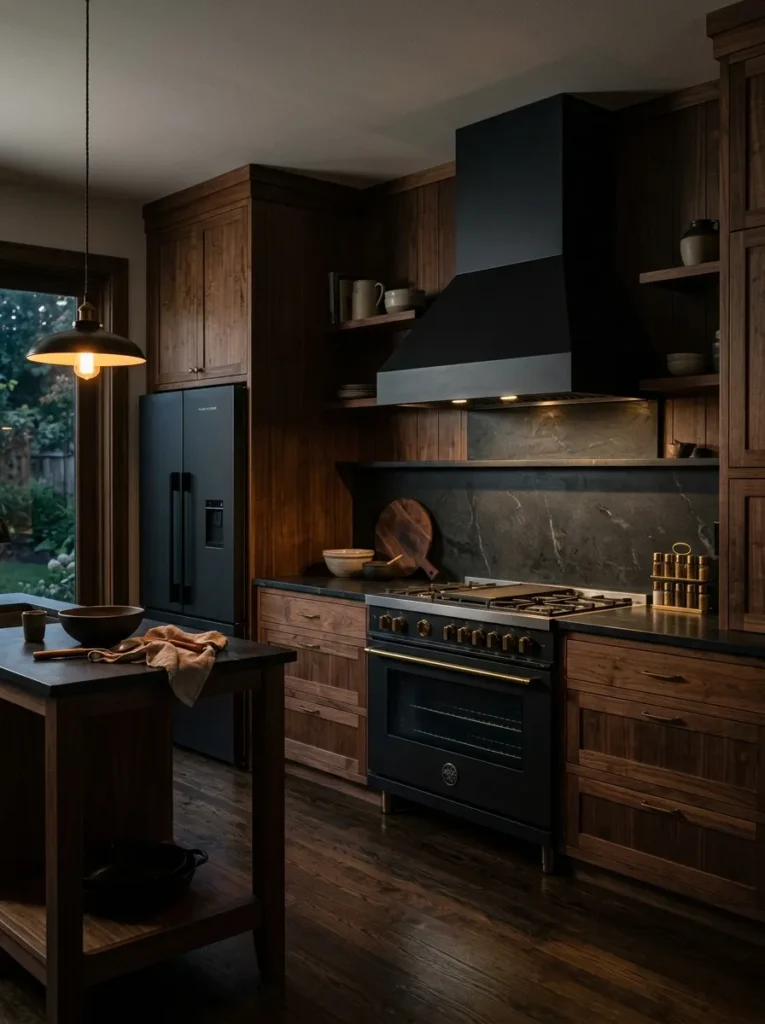
Matte black appliances against walnut cabinetry create a moody, refined look. The dark finish absorbs light rather than reflecting it. Additionally, matte black pairs well with both brass and black hardware. This idea suits kitchens with strong architectural lines. A dark range hood in matching walnut trim completes the effect.
Walnut Slab Countertops
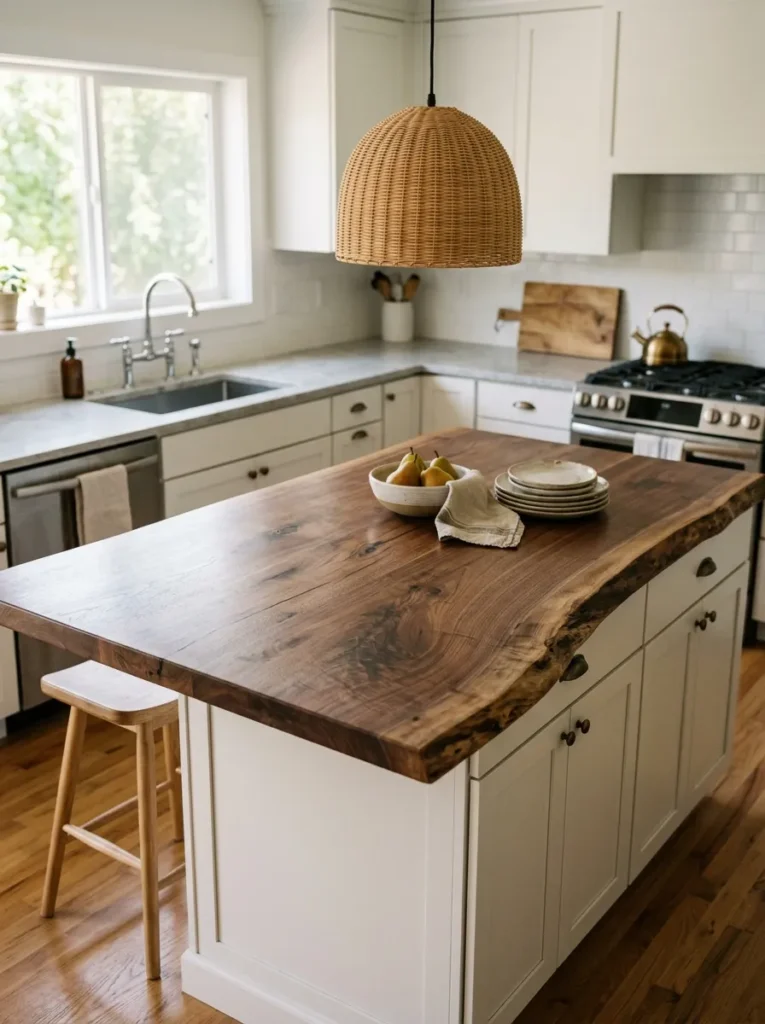
Walnut slab countertops bring the wood tone to a horizontal surface. This choice works best on islands rather than wet areas near sinks. However, proper sealing keeps the wood durable over time. The slab grain becomes a focal point during meal prep. Pairing it with stone perimeter counters balances practicality and style.
Walnut Kitchen with Green Accents
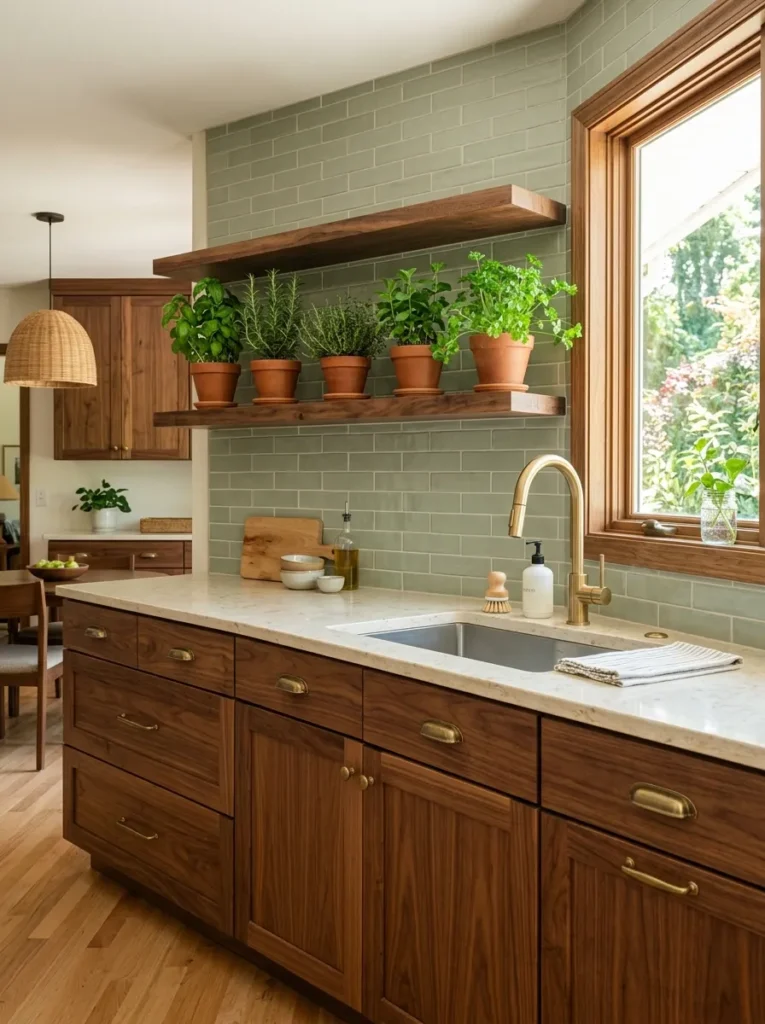
Green accents bring a natural, earthy feel next to walnut wood. Sage or forest green backsplash tile works especially well. Meanwhile, potted herbs on open shelves reinforce the organic mood. This pairing suits kitchens connected to a garden or patio view. Homeowners drawn to this palette may also like ideas from earthy living room decor for matching tones elsewhere in the home.
Minimalist Walnut Kitchen Design
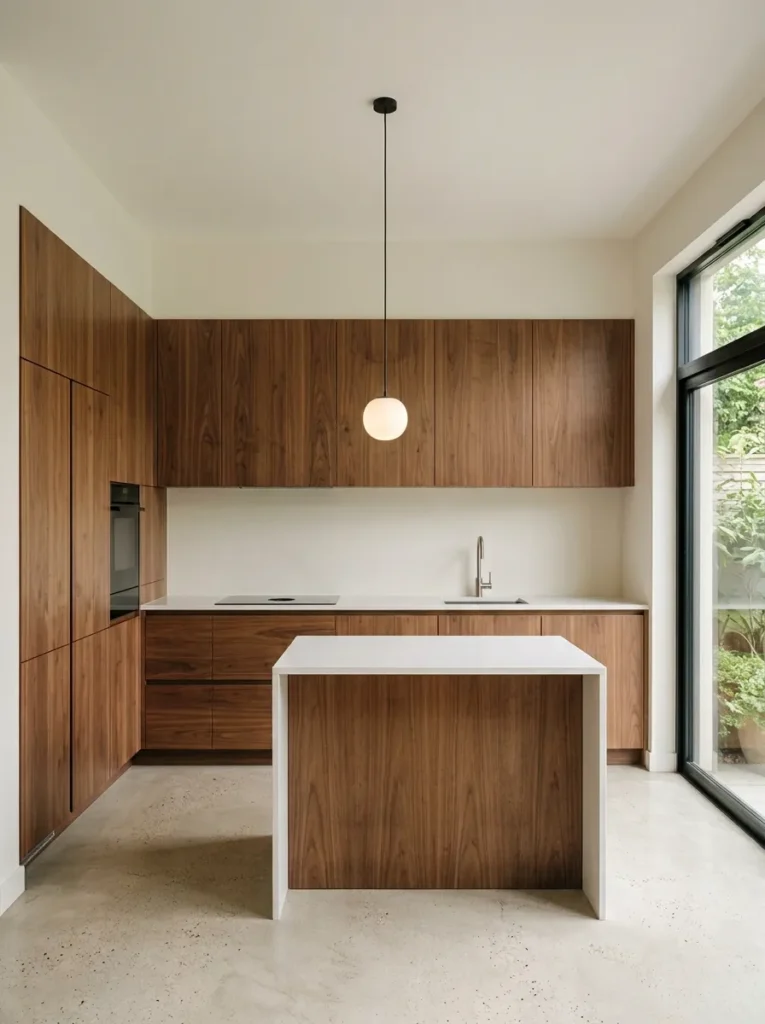
A minimalist walnut kitchen keeps hardware and decor to a minimum. Flat-panel cabinet doors emphasize the clean wood grain. Additionally, hidden storage keeps countertops clear and calm. This style suits homeowners who prefer a quiet, uncluttered space. Neutral walls let the walnut tone do most of the visual work.
Walnut Kitchen with Terracotta Tile
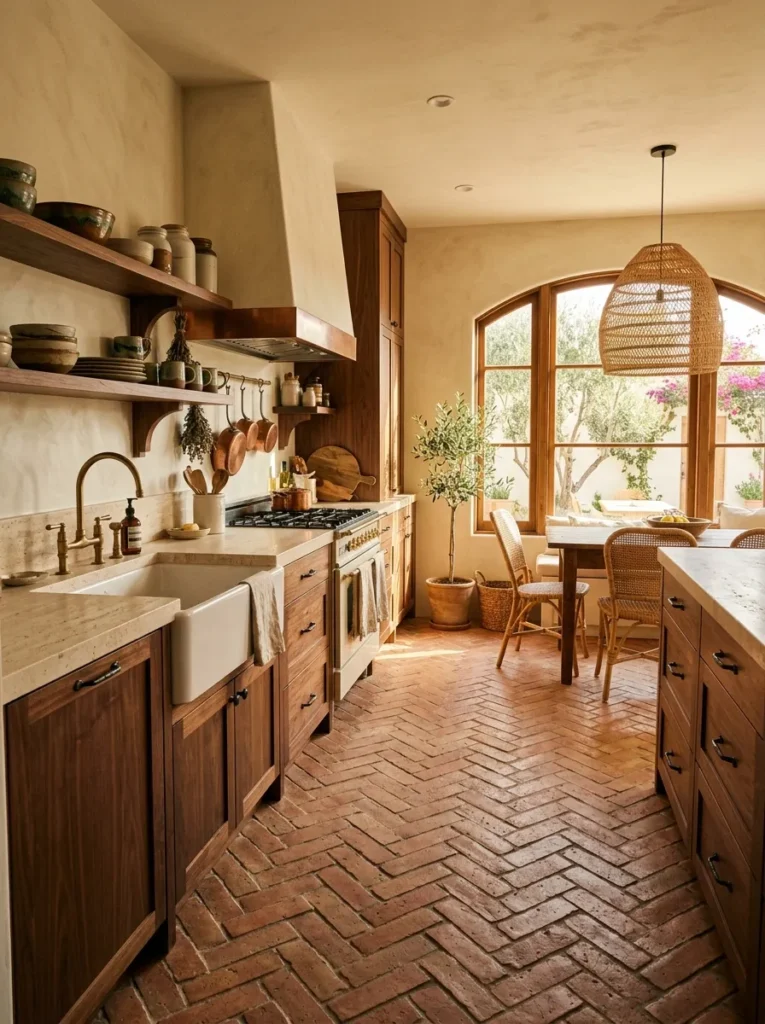
Terracotta floor tile adds warmth that echoes walnut cabinetry above. This pairing feels grounded and slightly rustic. Meanwhile, the two materials share similar undertones without clashing. This idea suits Mediterranean or farmhouse-inspired kitchens. Woven light fixtures add another natural texture layer.
Walnut Pantry Doors
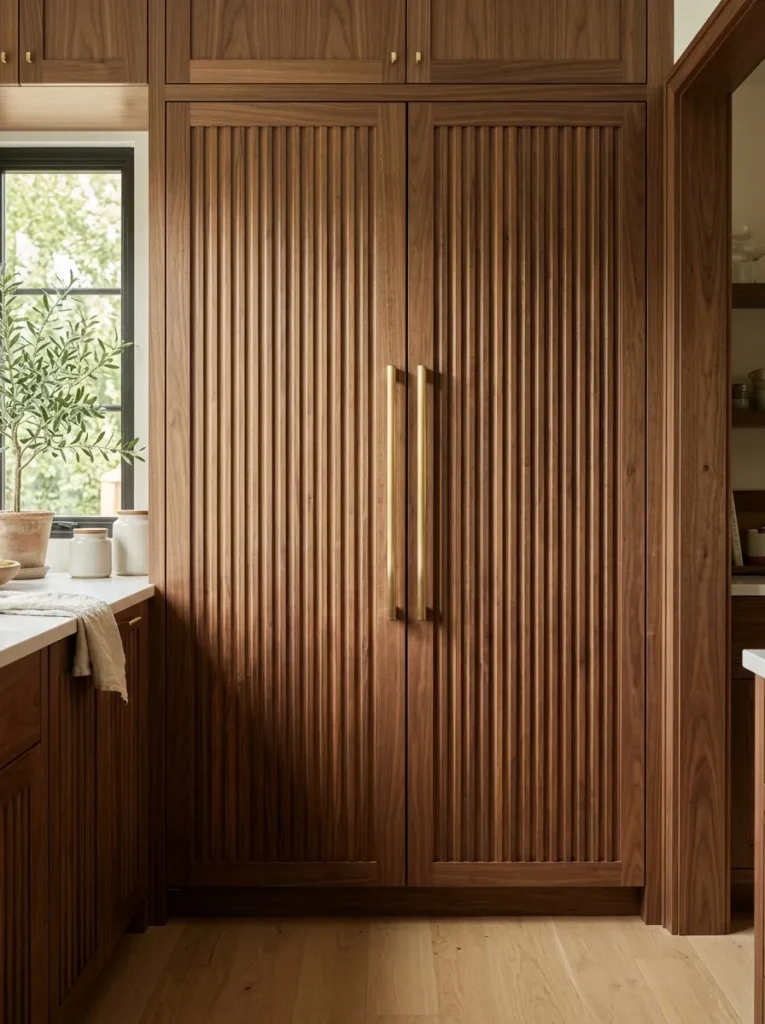
Walnut pantry doors turn a functional space into a design feature. Fluted or paneled detailing adds depth to a flat door surface. Additionally, matching hardware ties the pantry to the main cabinetry. This idea works well in kitchens with a dedicated pantry nook. A glass insert can also showcase pantry contents.
Walnut Kitchen with Skylight and Natural Light
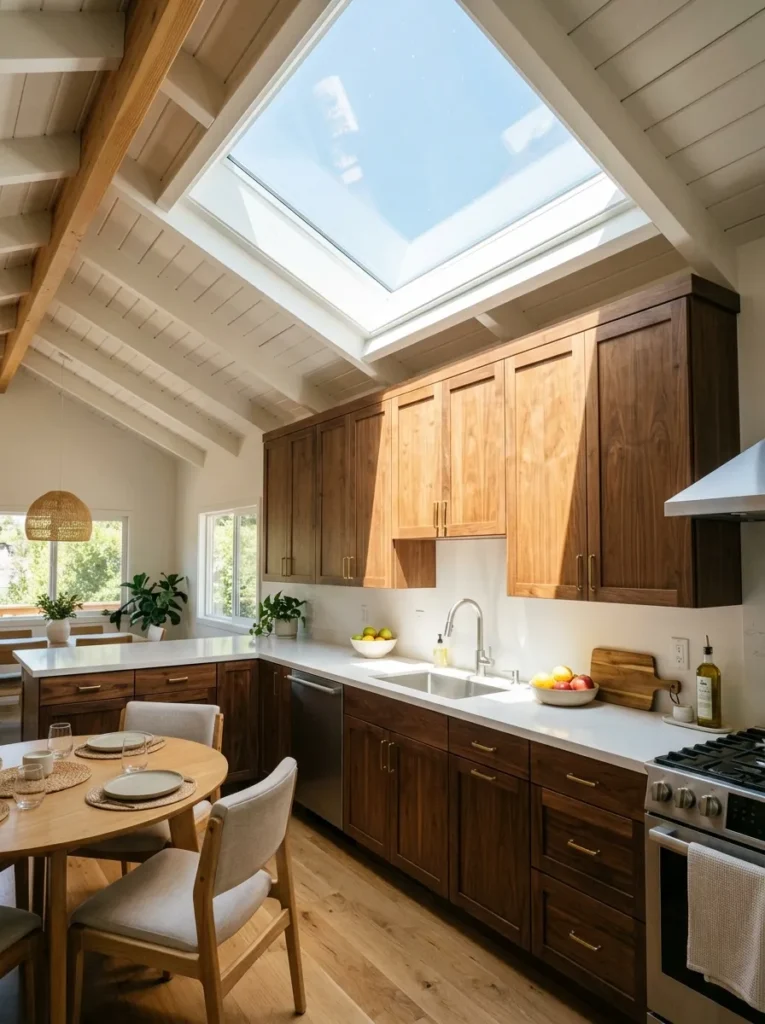
Natural light through a skylight brings out the depth of walnut grain. Sunlight highlights the wood’s warm undertones throughout the day. Meanwhile, this setup reduces the need for heavy overhead lighting. This idea suits kitchens with vaulted or open ceilings. Sheer curtains on nearby windows soften direct afternoon light.
Walnut Kitchen Backsplash
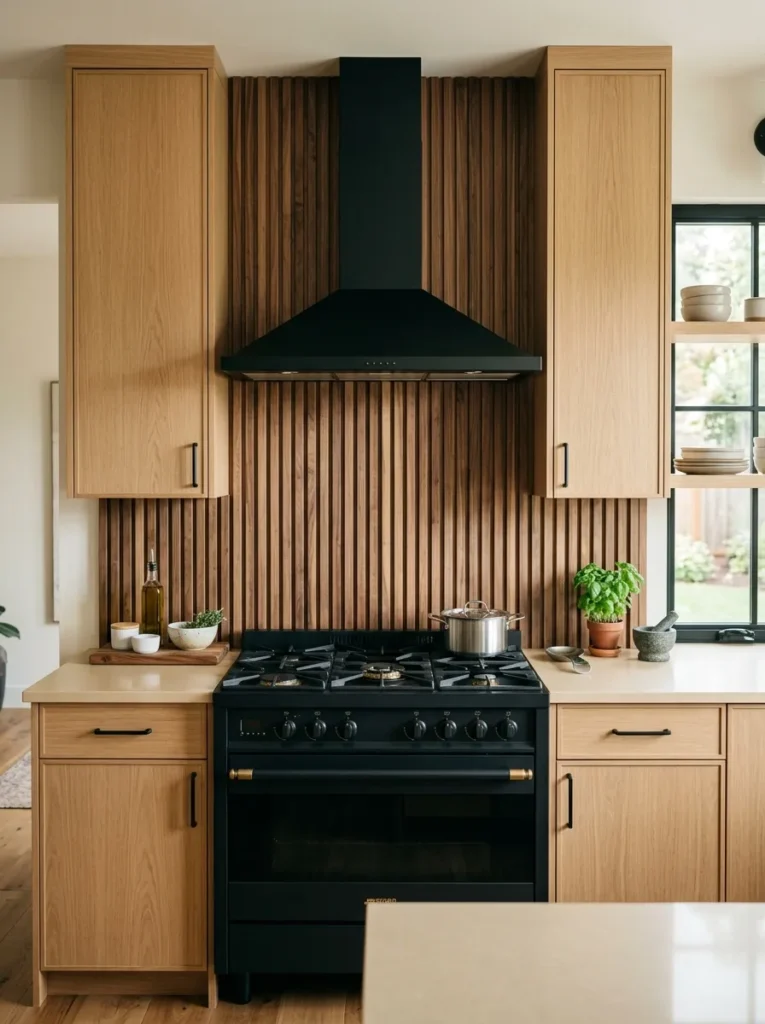
A walnut backsplash extends the wood tone up the wall for cohesion. Thin wood panels or slats create subtle texture behind the stove. However, proper sealing protects the wood from heat and moisture. This idea suits kitchens wanting a fully immersive wood palette. Pairing it with stone counters keeps the space practical.
Walnut Bar Stools and Seating
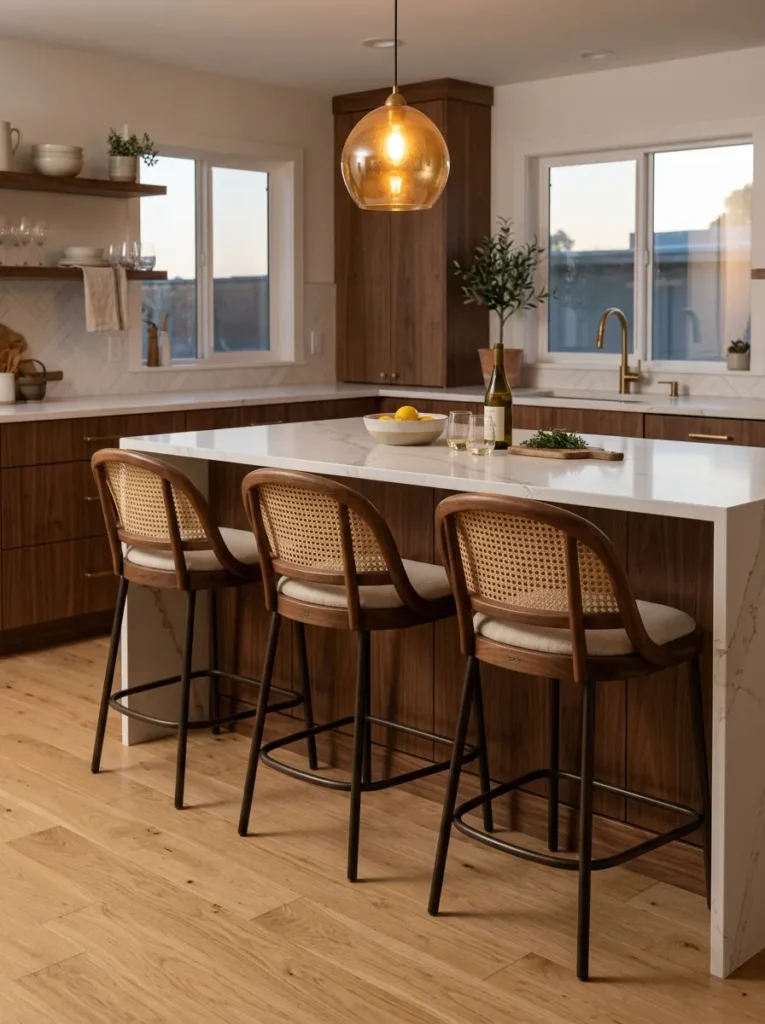
Walnut bar stools bring the wood tone down to seating level. This detail ties island cabinetry to the surrounding furniture. Additionally, curved stool backs soften the kitchen’s overall silhouette. This idea suits kitchens with an island or peninsula for casual seating. Leather or woven seat cushions add extra comfort.
Small Walnut Kitchen Ideas
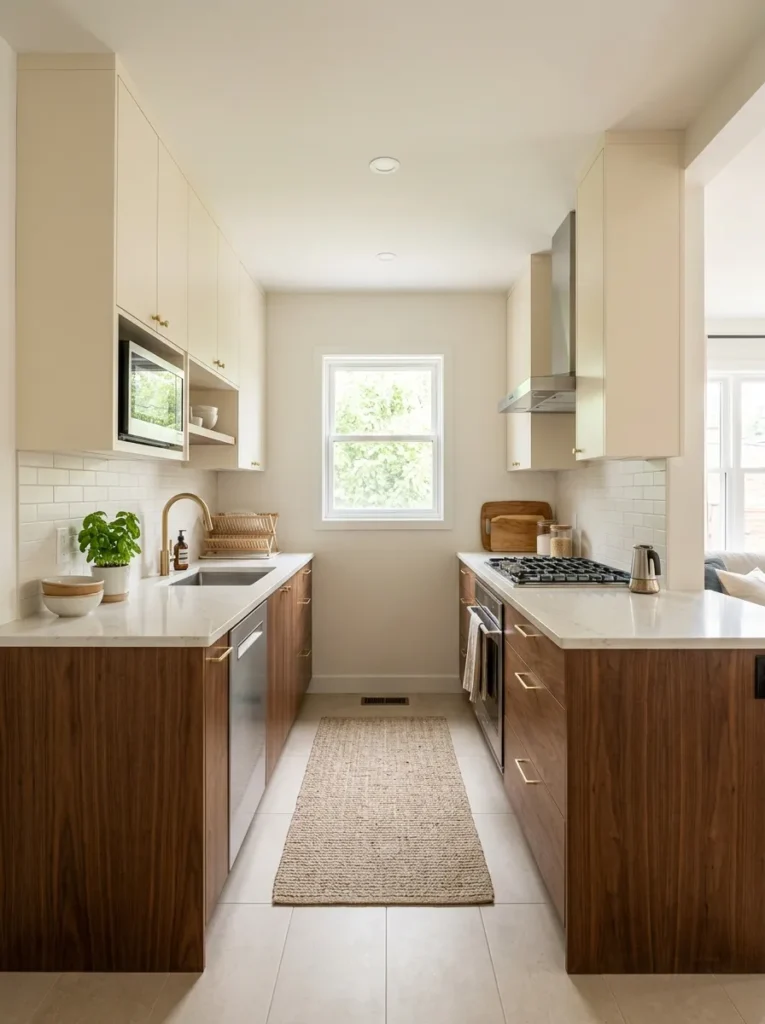
Walnut works in small kitchens when paired with lighter wall colors. Upper cabinets in a pale tone keep the ceiling feeling higher. Meanwhile, walnut lowers add warmth without closing in the space. This idea suits apartment or galley kitchens with limited square footage. Homeowners planning a compact layout may find useful tips in IKEA kitchen ideas for maximizing storage.
DIY Walnut Kitchen Accents
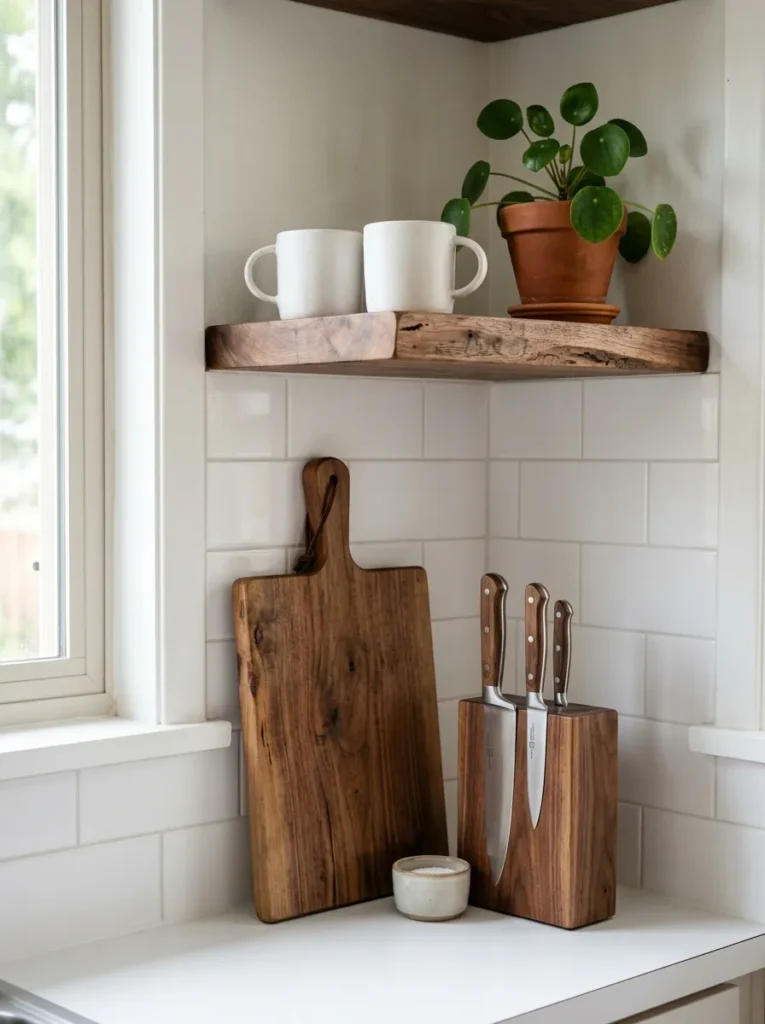
Homeowners can add walnut touches without a full renovation budget. A walnut cutting board display or floating shelf is easy to do on your own. Additionally, walnut drawer pulls or a butcher block topper offer quick updates. This idea suits renters or anyone testing the look before committing. Small changes still bring noticeable warmth to the space.
How to Choose the Right Walnut Tone for Your Kitchen
Walnut ranges from light honey brown to deep chocolate shades. Lighter walnut suits small kitchens that need extra brightness. Meanwhile, darker walnut adds drama to larger, well-lit spaces. Consider the kitchen’s natural light before committing to a shade. Sample boards under real lighting conditions help avoid surprises later. Homeowners exploring wood-forward layouts elsewhere in the home might also review Japandi kitchen design ideas for tone pairing inspiration.
Common Mistakes to Avoid with Walnut Kitchens
Overusing dark walnut in a small, low-light kitchen can feel heavy. Balance is key, so pair walnut with lighter counters or walls. Additionally, skipping proper sealing leaves wood vulnerable to water damage. Mismatched hardware finishes can also disrupt an otherwise cohesive look. Finally, ignoring existing flooring tones may clash with new walnut cabinetry.
FAQs About Walnut Kitchen Ideas
Does walnut work in modern kitchens? Yes, walnut suits modern kitchens when paired with clean lines and minimal hardware.
Is walnut durable for kitchen cabinetry? Walnut is a hardwood known for strength, though proper sealing extends its lifespan near water sources.
What countertop pairs best with walnut cabinets? White or gray marble, quartz, and butcher block all complement walnut cabinetry well.
Does walnut suit small kitchens? Yes, walnut works in small kitchens when balanced with lighter walls or upper cabinets.
How do I keep walnut looking fresh over time? Regular cleaning, occasional oiling, and avoiding direct heat exposure help maintain the wood’s finish.

Written by Stephanie Fallis
Mom and homemaker who shares budget friendly DIY projects, decorating tips and gardening ideas for busy families.
More about me → Christmas ideas10 Christmas Chair Decoration Ideas for a Charming Home
 Christmas ideas11 Christmas Coaster Ideas for a Charming Table
 Christmas ideas13 Christmas Bucket Ideas for a Charming Home