
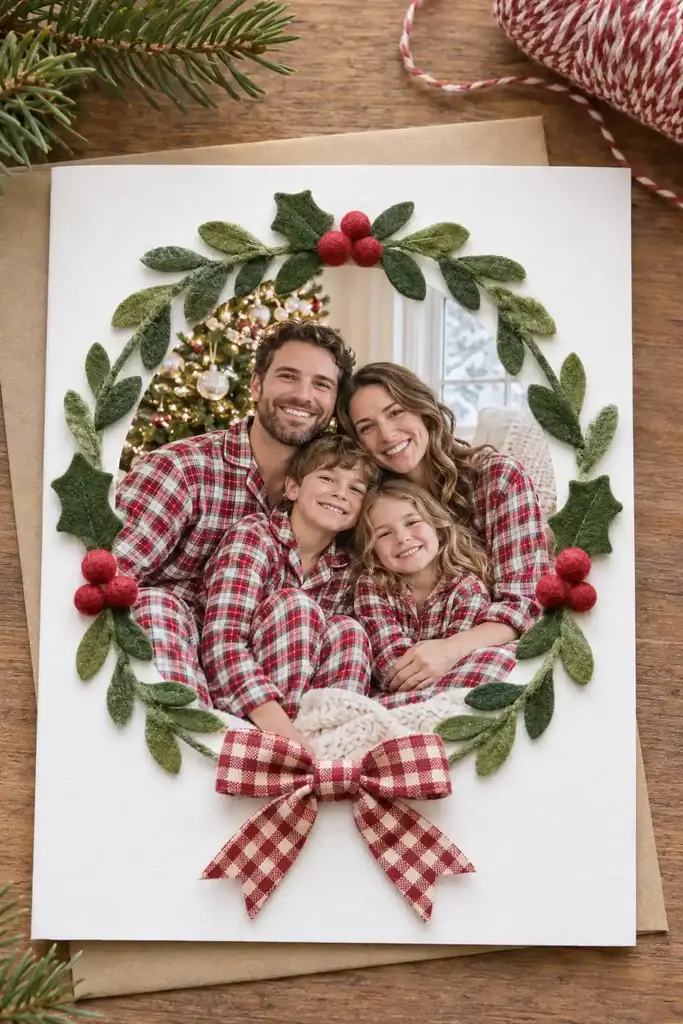
Family Christmas card ideas can begin with a photograph you already like. Choose a layout that fits its orientation and leaves faces clear. A candid moment can work as well as a posed portrait when the crop is simple.
These AI-generated images contain fictional families and illustrate card layouts. They are not real family photographs or tested photo sessions. Use your own images with the agreement of the people pictured, and keep decorative details away from faces.
In this post: 16 ideas
- Matching pajamas inside a leafy frame
- A snowy porch portrait with a plain mount
- A baking photo above a gingham panel
- A family portrait that includes the dog
- A multigenerational portrait with a wide photo area
- A paper silhouette instead of a photograph
- A woodland illustration around a family photo
- One circular photo on a kraft background
- A tree-shaped collage with several moments
- A portrait holding handmade paper stars
- An evergreen outing inside a simple wreath
- A candid tree-decorating photo with a lower paper scene
- A newborn family portrait with generous margins
- A shared-reading moment with a plain frame
- Red scarves as a shared color accent
- An instant-photo-style panel with room for a caption
1. Matching pajamas inside a leafy frame
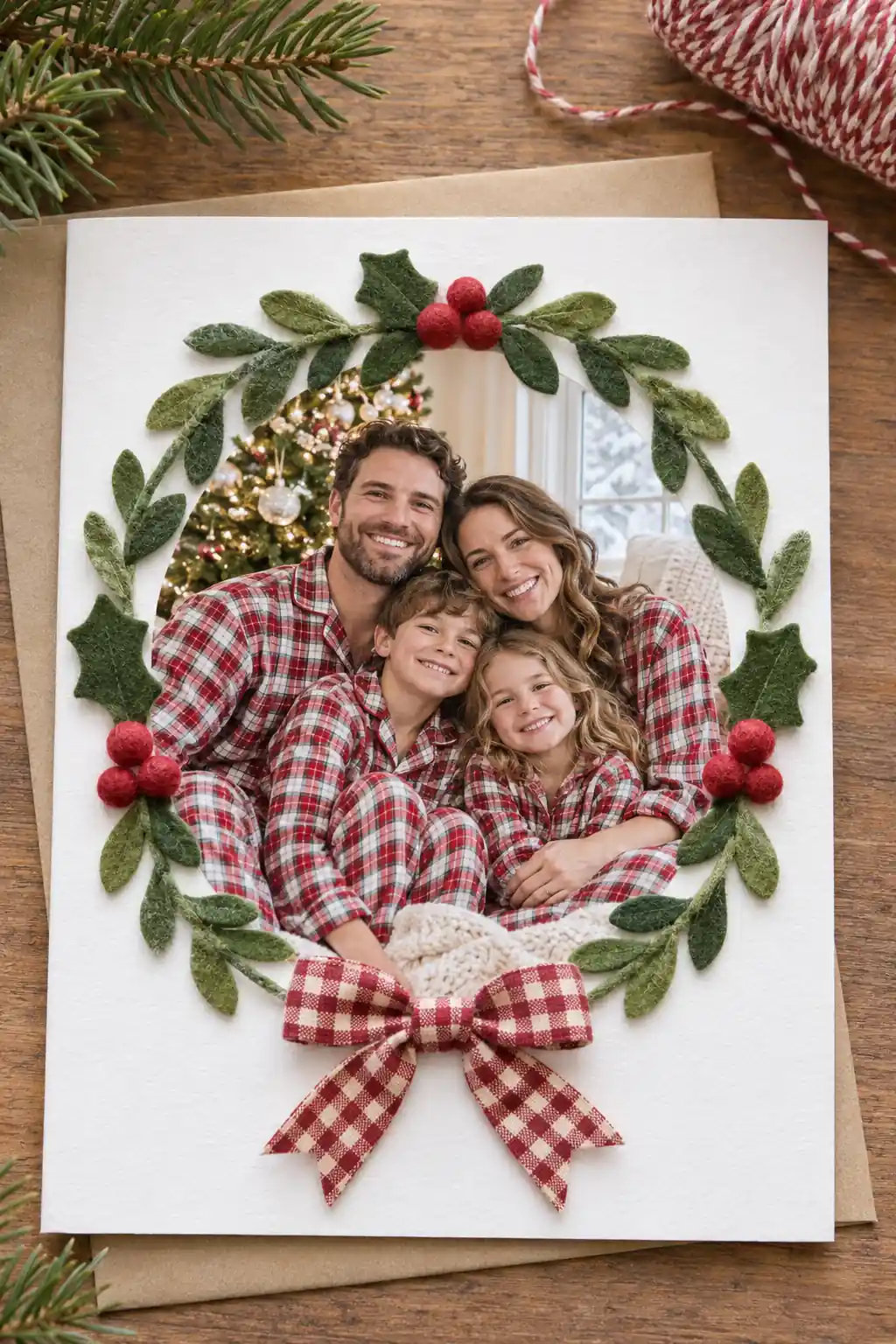
Red plaid pajamas provide the color connection within the photograph. A green wreath-like frame repeats the Christmas setting without covering the faces. Choose a picture with enough space around the group for the crop. If heads touch the original photo edge, use a rectangular frame instead of forcing a circle.
Matching clothing is optional. Similar colors can connect the group without buying identical outfits. Select the photo for clear expressions and a comfortable moment rather than the exact arrangement shown. A white card background gives patterned clothing room without adding another busy print.
The gingham bow can be drawn or printed when the card will be mailed. Real ribbon needs extra envelope clearance. Keep the greeting inside if the front already feels full. Review the small printed proof before ordering a batch, since a face that looks clear on a screen may become too small in the final card layout.
2. A snowy porch portrait with a plain mount
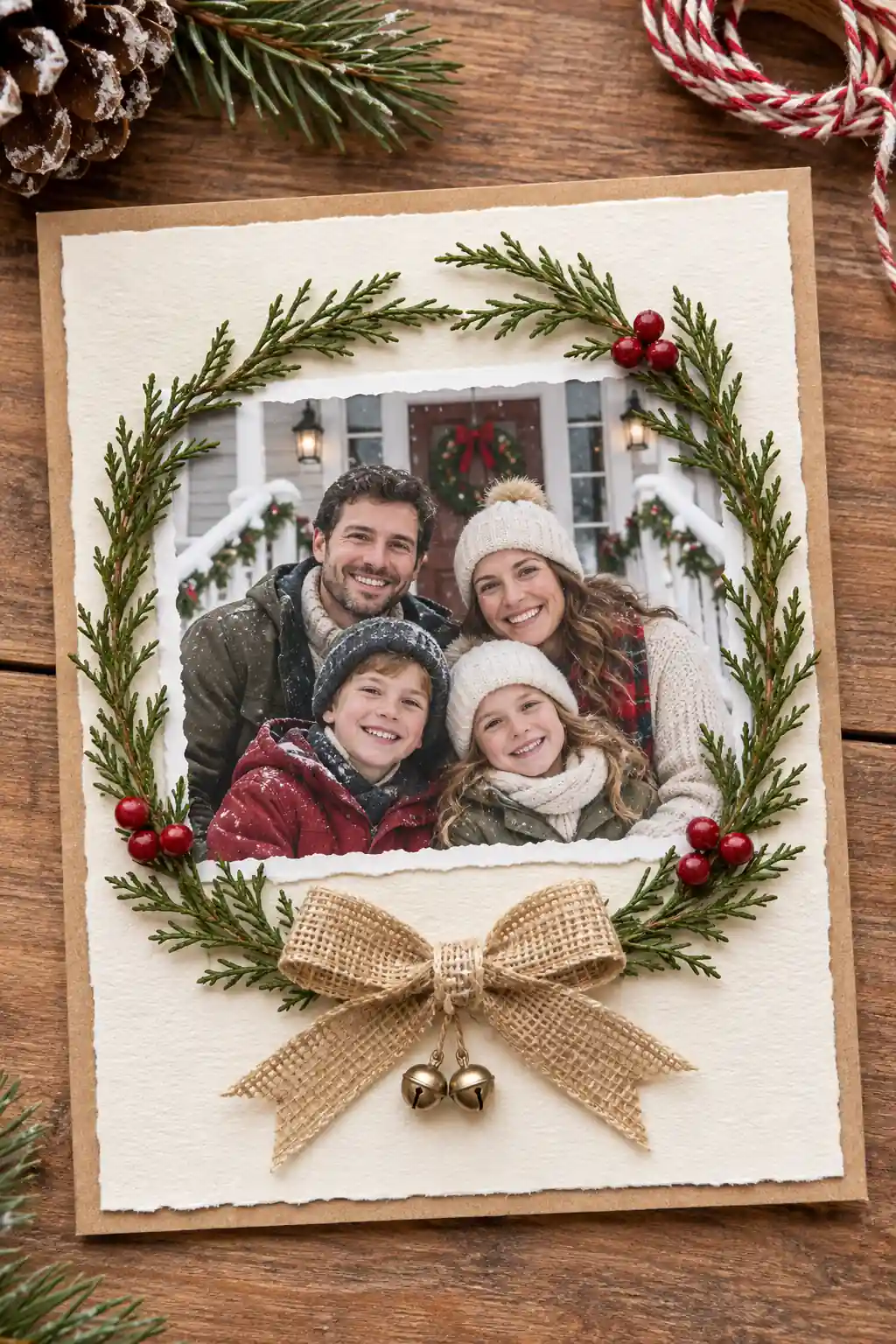
Winter hats and coats make the porch portrait feel seasonal before any border is added. The pale mount separates the photograph from the kraft backing. Choose an outdoor moment that is comfortable for everyone rather than staying outside for a particular look. A brief photo near the doorway can be enough.
Leave the porch background slightly visible so the image has context. Avoid cropping so tightly that hats or shoulders are cut awkwardly. The greenery border can stay thin around the photograph. A plain printed line is an alternative when the picture already contains a wreath or branches.
The bow and small bells in the image are optional card decorations. A flat bow motif makes mailing easier. Add the year on the back or inside so the card becomes identifiable later. If snow is not part of your climate, use the same porch layout with local seasonal details. The family moment matters more than reproducing the pictured weather.
3. A baking photo above a gingham panel
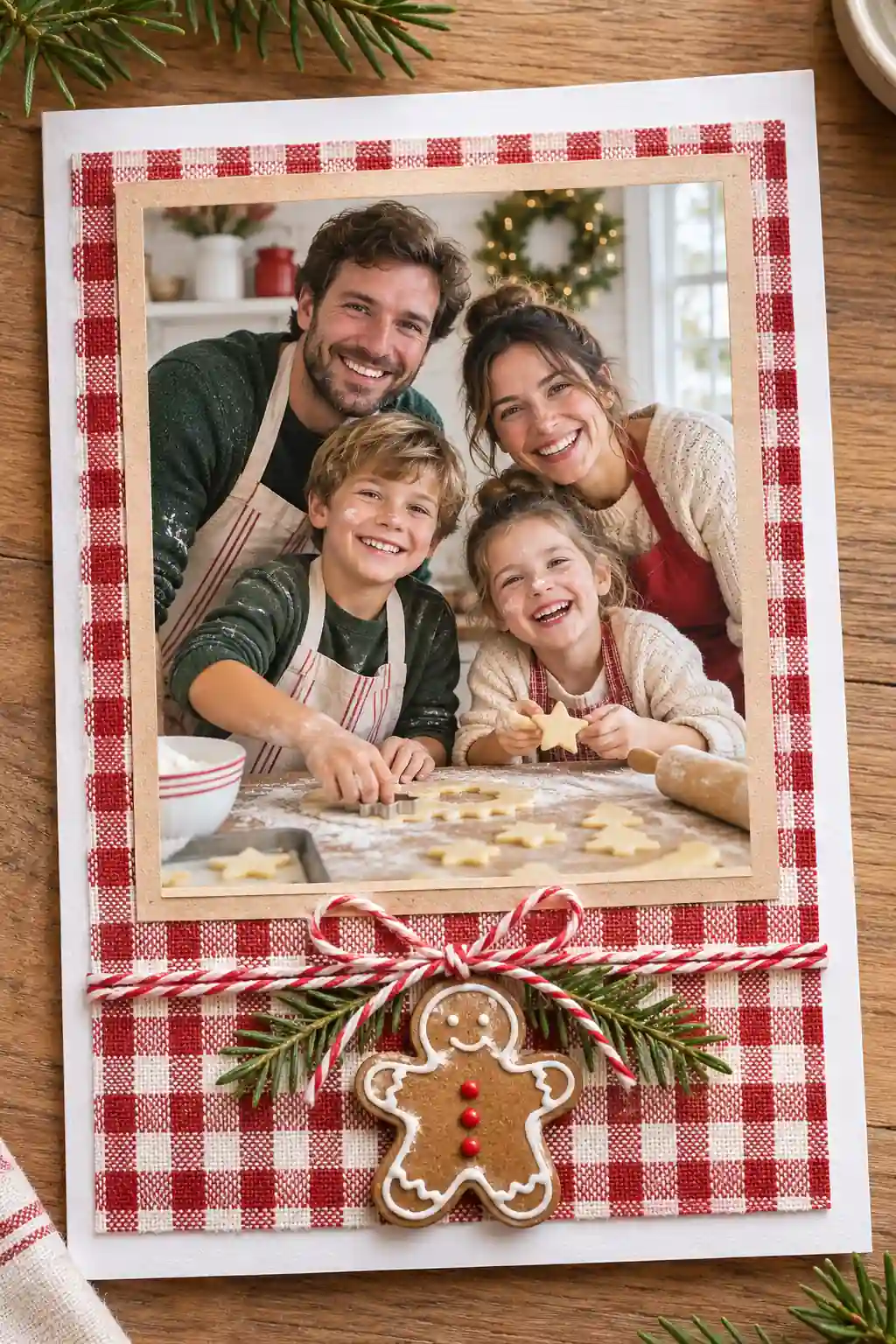
The baking scene fills the upper card, while gingham and a small gingerbread motif occupy the lower section. This layout gives a candid photograph room without surrounding it on every side. Choose an image where hands and faces are visible. A cluttered countertop can be cropped without removing the activity.
Use a photograph from a real shared baking moment rather than staging tasks that feel awkward. The card does not need everyone looking at the camera. A simple caption inside can name the occasion. Keep any visible personal notes or household details out of the crop if you do not want them shared.
A printed gingerbread shape can replace the raised decoration shown. That lets the card fit a standard envelope more easily. Match the gingham scale to the card size so it does not look like a solid red block. Print one sample and check that the photograph remains the strongest element above the patterned panel.
4. A family portrait that includes the dog
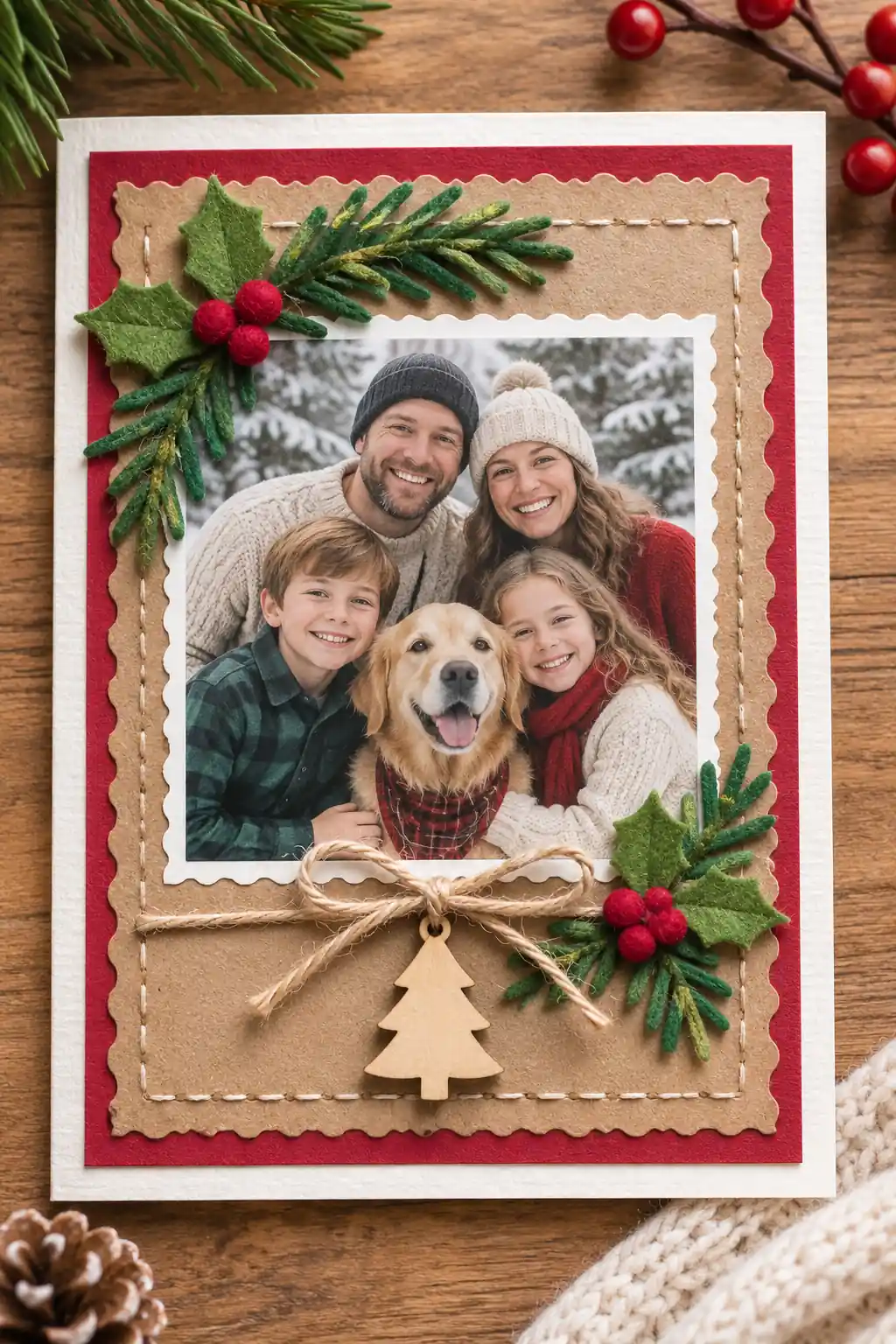
The dog occupies the middle of the group, making the pet part of the family portrait. A kraft mat and thin red backing keep the photo’s colors visible. Choose a comfortable moment for the animal rather than forcing it into a pose. A seated group can be easier to frame than several standing people.
Leave room around ears and heads when cropping. The animal’s expression does not need to match everyone’s gaze for the picture to work. A plain background or distant greenery helps the group remain clear. Use the best single image rather than adding several tiny pet photos around it.
The twine bow and small tree charm can become flat printed details. Keep them below the photograph so they do not cover paws or hands. Ask everyone pictured before sharing the image in a large mailing. Store the original photograph separately from the card design so you retain a version without the decorative border and printed year.
You may also like: Sentimental christmas gifts.
5. A multigenerational portrait with a wide photo area
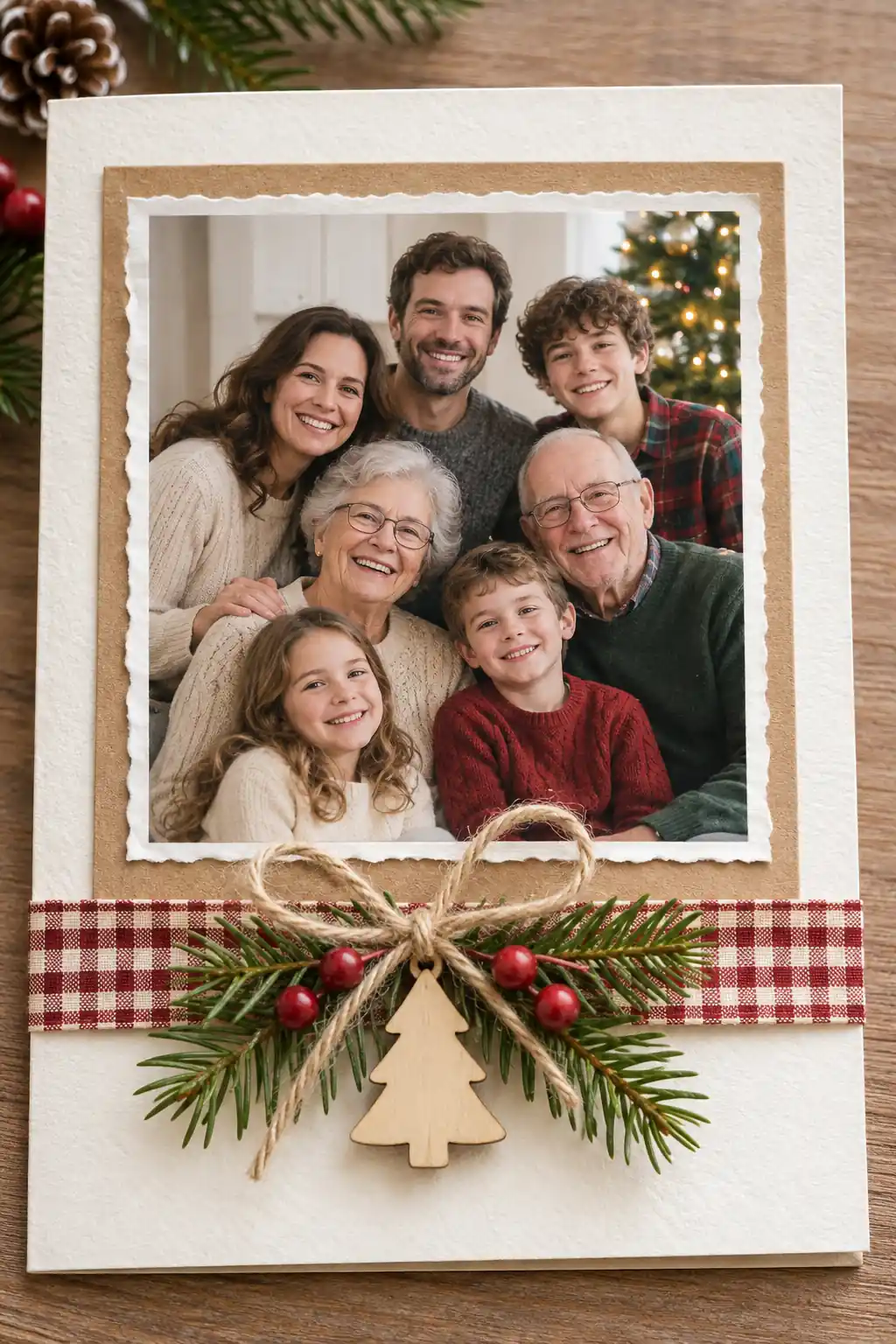
Several generations share one broad photograph, with the decoration concentrated below it. This leaves more room for faces than a narrow circular crop. Choose an image where no one is hidden behind another person. A seated front row and standing or seated back row can fit different heights comfortably.
Do not let the card template force an awkward crop of a valued group photo. Change the layout orientation if needed. Keep the mount plain so the many faces remain the main detail. A small border can be enough when the image already includes Christmas lights or patterned clothing.
Use the inside for names, the year or a short family message. Confirm which details everyone is comfortable sharing. The ribbon band can be printed to keep the card flat. For a keepsake-focused companion gift, these sentimental Christmas gift ideas can help you use a separate copy of the same photograph without altering the original.
6. A paper silhouette instead of a photograph
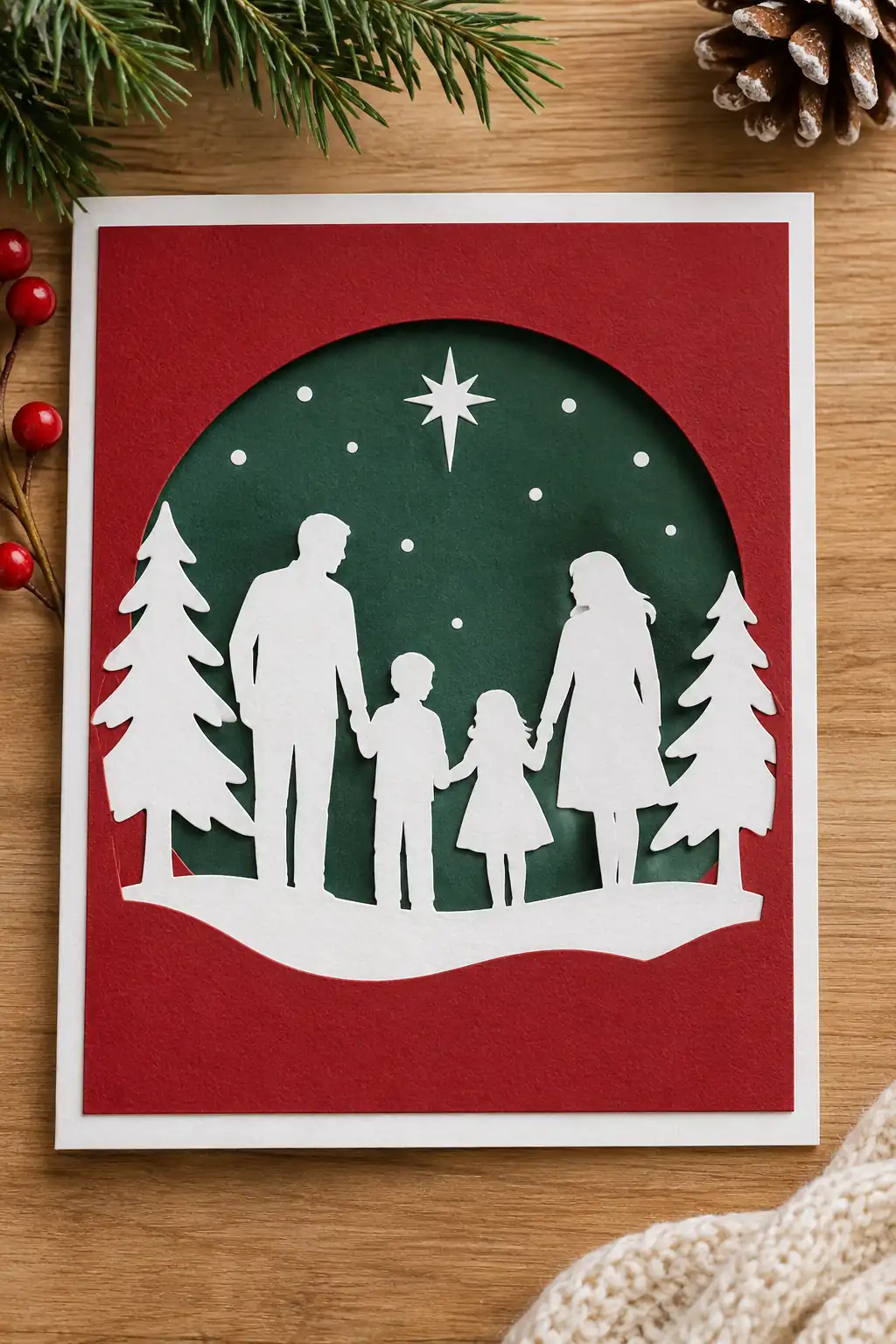
White silhouettes show a family group without using recognizable faces. The green background and red outer card create the Christmas palette. Draw figures that reflect your actual household rather than copying the pictured family size. Pets or other meaningful shapes can be included if they fit the composition.
Use broad connected shapes if cutting by hand. Narrow arms or tiny gaps can tear during assembly. A digital illustration or printed silhouette is another route when paper cutting is not comfortable. Keep the figures large enough that their poses remain clear at the final card size.
The trees and star provide context but should not crowd the group. Leave a little space above the tallest figure. This approach can suit a family that prefers not to share photographs widely. Add names or a greeting inside according to your preference. If using a purchased cutting design, check that its license permits the number and type of cards you plan to make.
7. A woodland illustration around a family photo
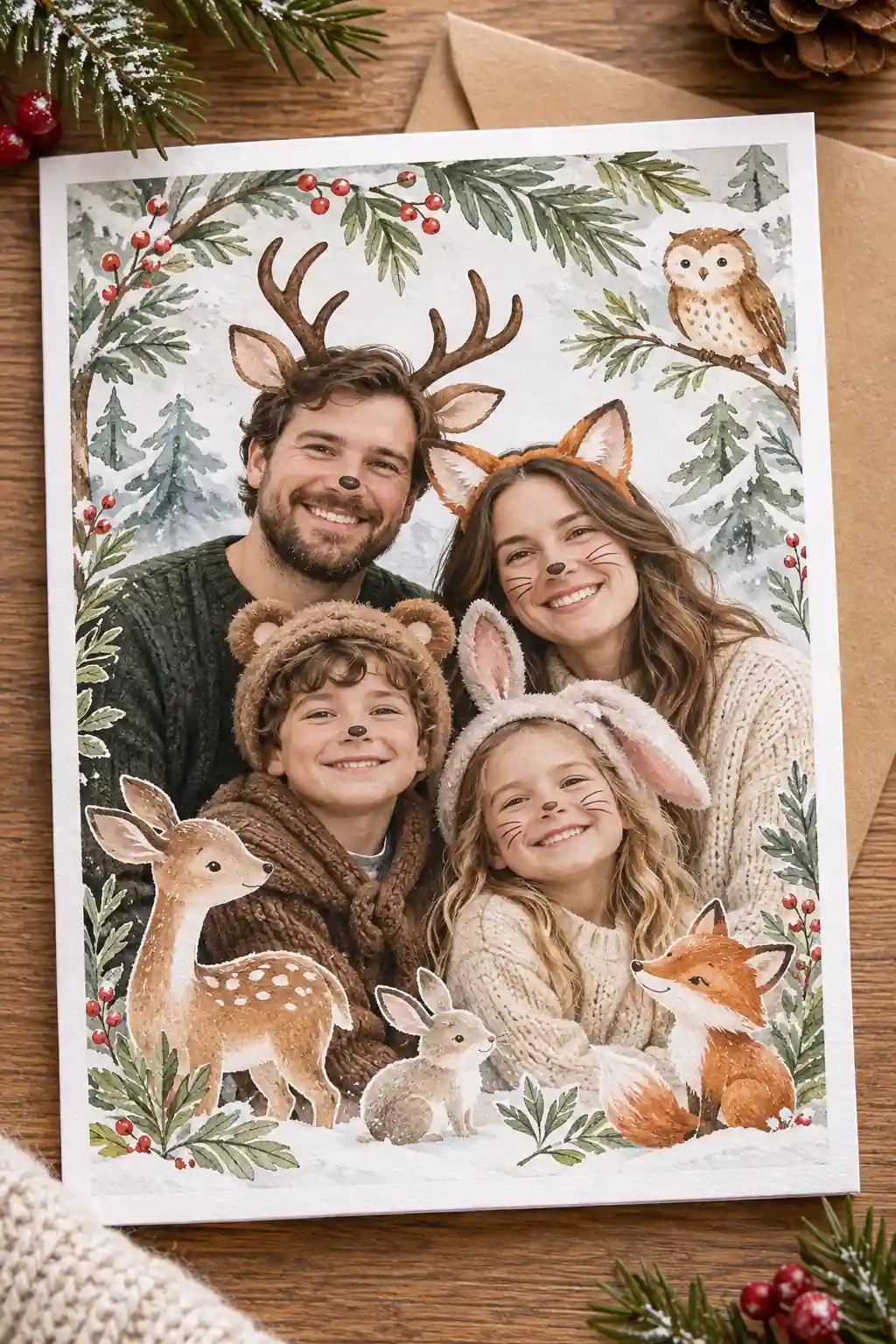
Illustrated animals and branches surround the family photograph, creating a woodland setting. The people remain photographic in this concept, while the border is drawn. Keep the distinction clear in your own design. Use a photograph with enough plain space around the group so the illustration does not compete with faces.
A few animals near the lower corners can provide the theme without filling every margin. The novelty antlers and ears in the image are optional. Do not add digital costume details to someone’s portrait without their agreement. A simple forest border can work with ordinary clothing and expressions.
Check the artwork license if using an illustration pack. Printed detail may become crowded on a small card, so review a full-size proof. Keep text on a plain area inside rather than over the animal illustrations. A larger card can give the mixed styles more space, but the envelope and mailing format should be checked before finalizing the dimensions.
8. One circular photo on a kraft background
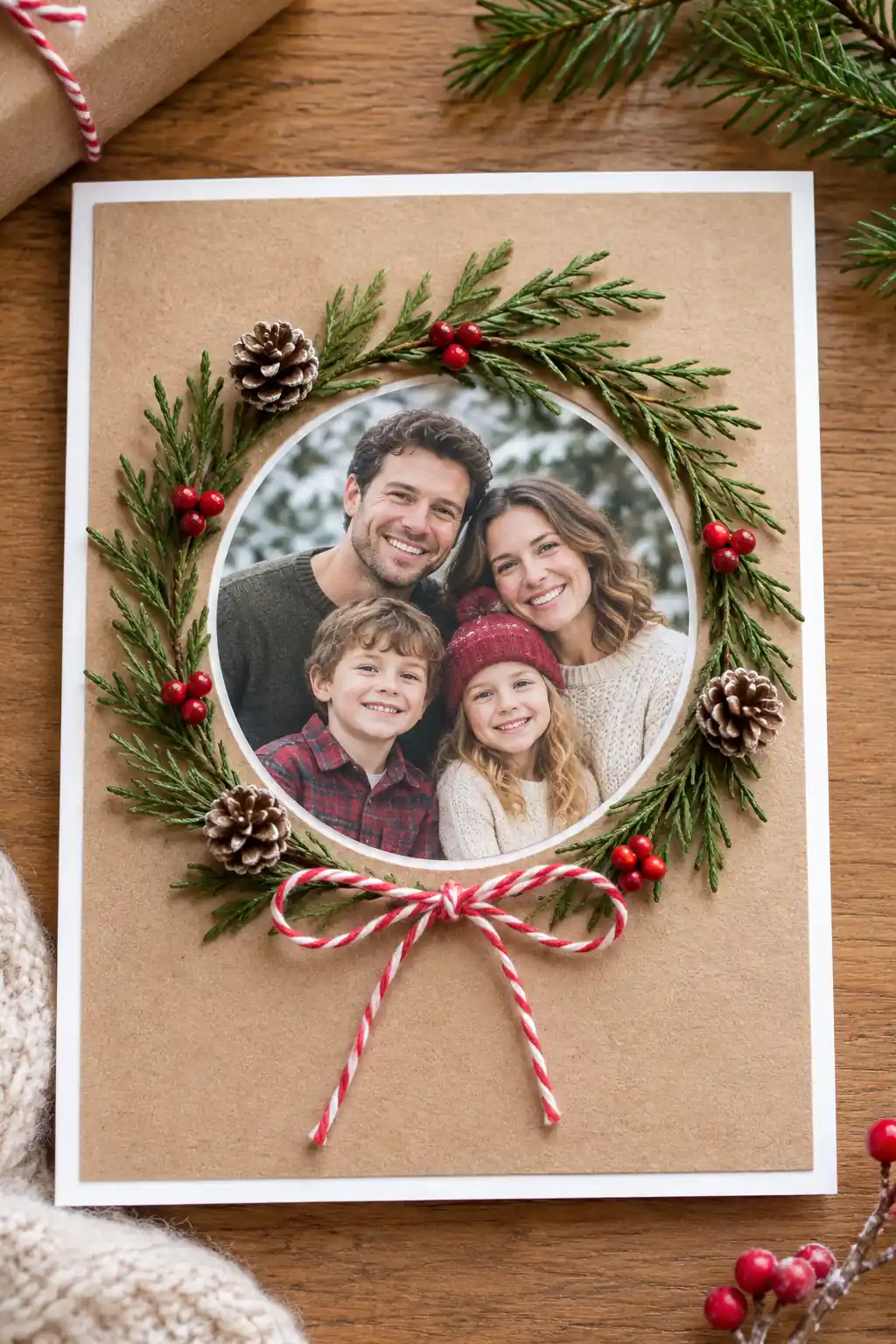
A single circular photo gives this card one clear focal area. The kraft panel and white outer margin frame it without another photograph. Choose an image where all faces fit comfortably within the circle. A wide group may need a rectangular crop even if the rest of the design stays the same.
The pictured greenery ring is fairly detailed. Reduce it to a thin outline or a few lower sprigs if you want a simpler card. Keep any bow below the photo rather than across the lower faces. A printed border is easier to reproduce consistently across a larger batch.
Use the inside for the greeting so the front remains focused on the portrait. Check that the circular crop has not cut off hands or shoulders in distracting places. Print a test at the intended size before deciding the ring thickness. A small face can become hard to recognize when a wide decorative frame takes most of the card width.
You may also like: Christmas frame ideas.
 You may also like17 Christmas Crafts for Kids to Cut, Build and Decorate
9. A tree-shaped collage with several moments
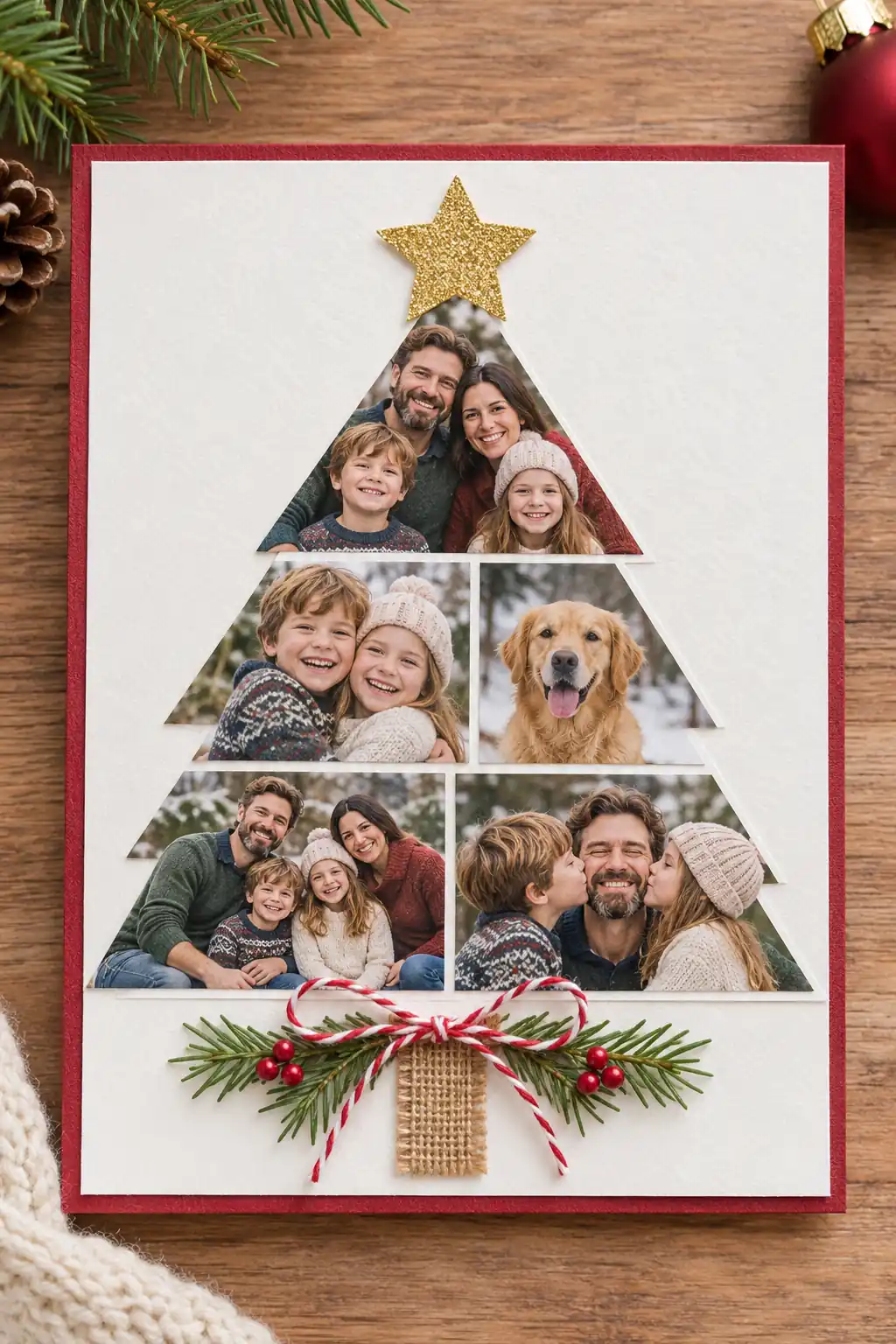
Several photographs fill a triangular tree outline. The top image is smaller, while broader rows below hold more of the year’s moments. Choose a small set of clear photos with varied crops. Repeating almost identical portraits can make the collage feel crowded without adding information.
Keep faces away from the angled outer edges where the tree crop cuts inward. Use one large group picture near the widest section and simpler detail images above. White gaps between photographs can separate the moments. The star and trunk only need to be small shapes.
This design needs a careful printed proof because each image is reduced. If faces become too small, use fewer photographs or a larger format. Avoid adding long captions inside the tree. A short list of occasions can go inside the card. Save the original uncropped images separately, then export the collage at the dimensions required by your chosen printer.
10. A portrait holding handmade paper stars
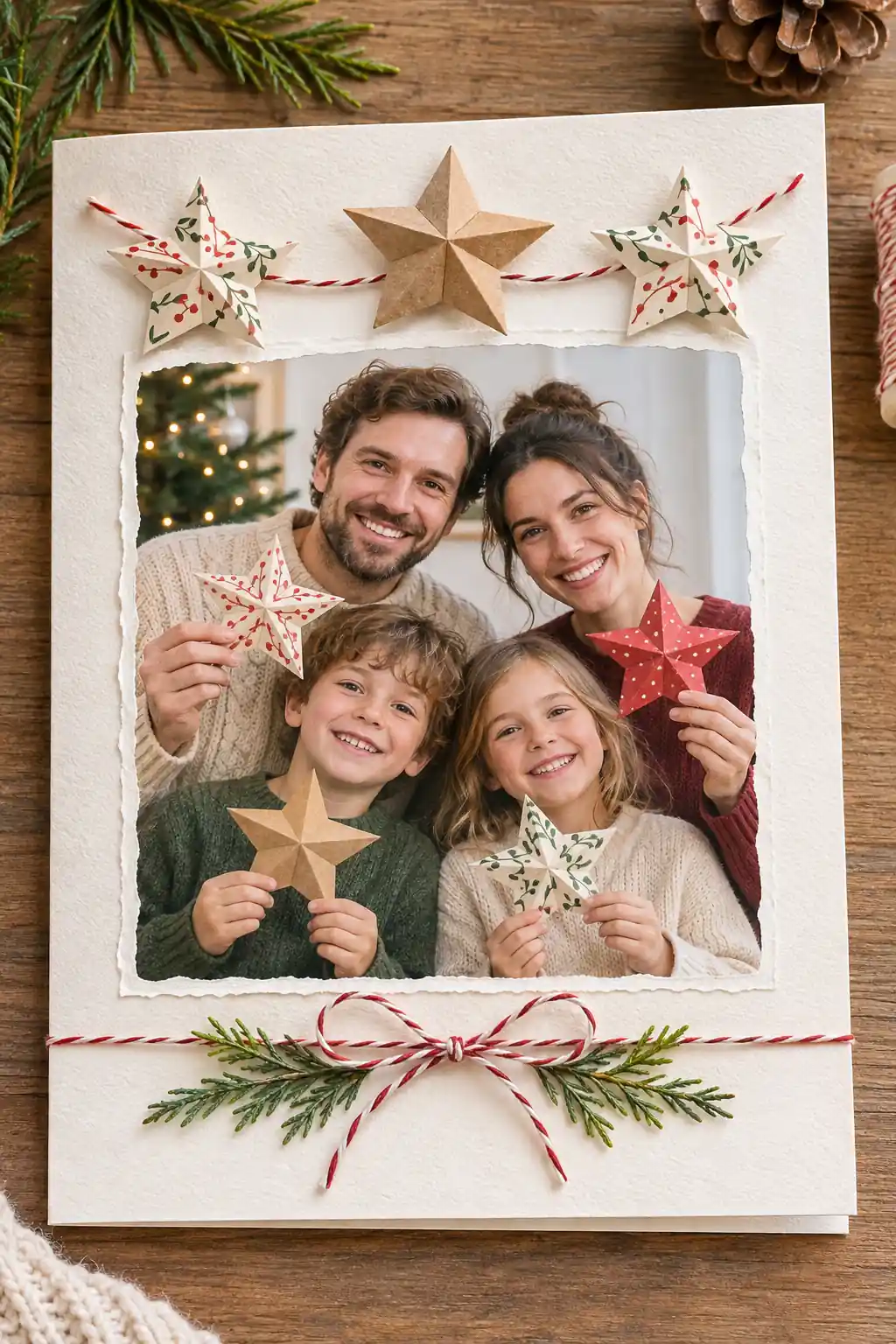
The paper stars in the photograph connect naturally to the card’s small star border. Use a craft the family has made if you want this activity-based approach. The objects can give hands something comfortable to hold without requiring formal poses. Keep the stars below faces so expressions stay clear.
Choose a simple background and avoid too many competing patterns in clothing. The stars can differ in color, especially if each person made their own. A single shared color can connect them without making them identical. The card border should repeat only a few shapes from the photograph.
Flat printed stars are easier to mail than deep folded ones attached to the front. Leave room beneath the image for a short date or greeting if wanted. Check that the photo crop preserves enough of the handmade pieces to explain the activity. A small note inside can describe the making session without turning the card into a long account.
11. An evergreen outing inside a simple wreath
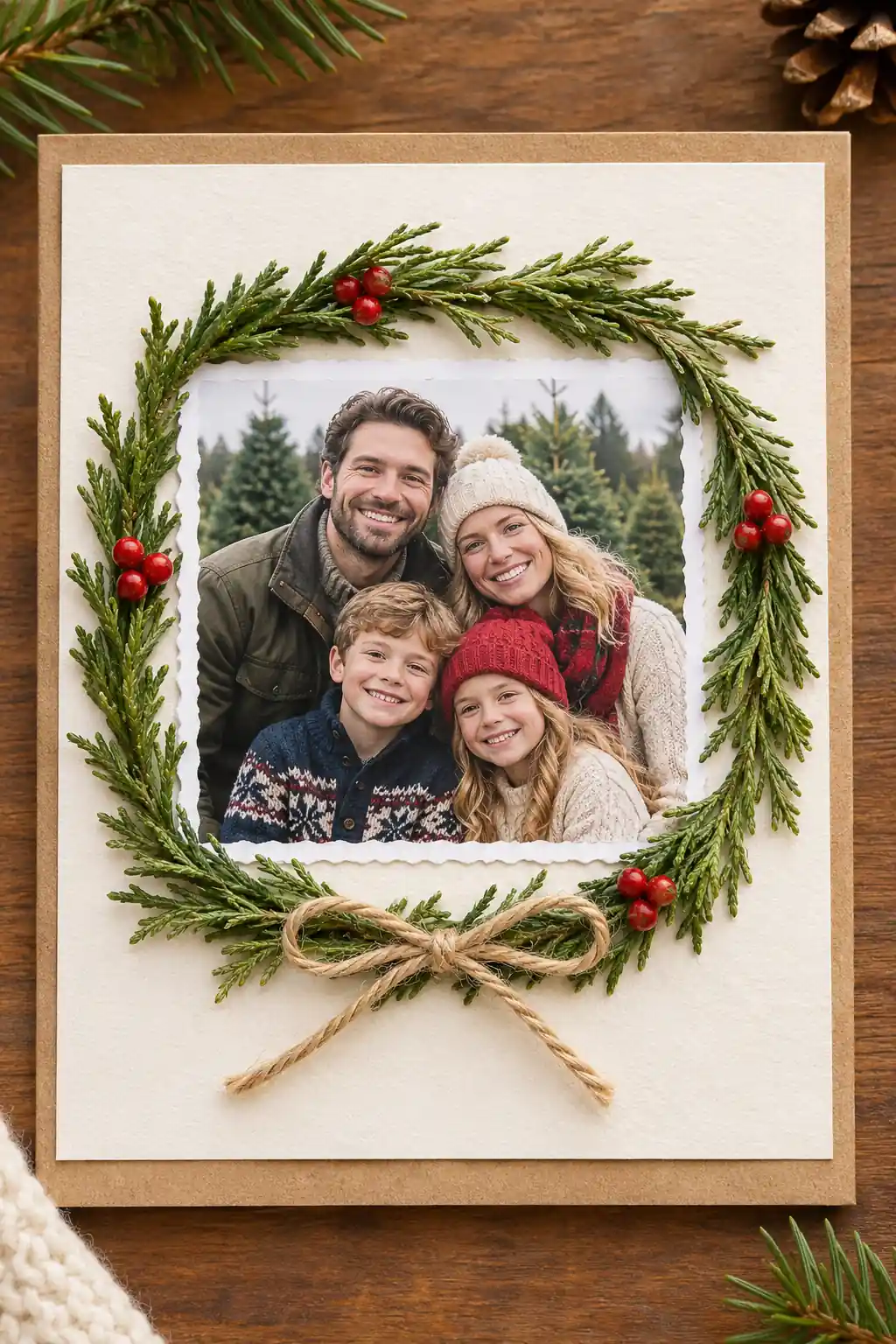
Evergreen trees give the photograph a seasonal background, while the card’s wreath repeats the same shape language. Choose a permitted photo location and follow any venue rules. The card does not need a commercial tree-farm setting; a suitable garden or local outdoor backdrop can work.
Keep the group closer to the camera than the background so faces remain the focus. Use a crop that leaves some trees visible without making the people too small. The wreath border can be thin because the photograph already contains greenery. A plain white mount separates the two.
A small twine bow below the image is optional and can be printed. Choose comfortable clothing appropriate to the conditions rather than a color scheme that makes the session unpleasant. Keep the visit short for children. Review the photograph for visible private location details before sharing. Add the year inside and retain the original image separately from the decorated card file.
12. A candid tree-decorating photo with a lower paper scene
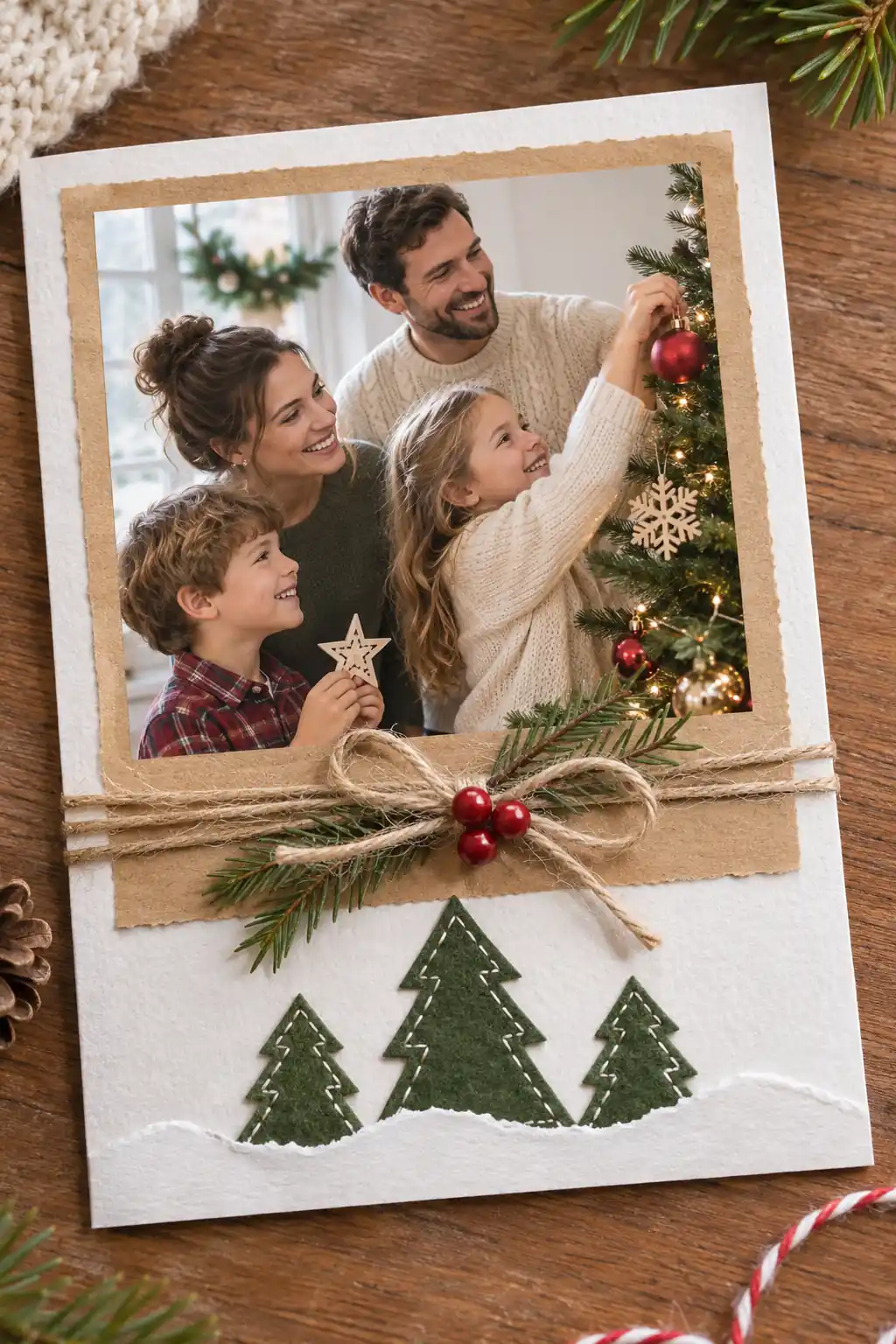
The photograph captures people looking toward the tree rather than directly at the camera. A small paper-tree row below repeats the activity without explaining it in words. Choose a moment where faces are still visible enough to recognize. A photograph of only backs may be meaningful privately but less clear on a mailed card.
Crop away unrelated room clutter while leaving the ornament and tree branch that explain the scene. Keep the lower paper shapes simple. Three broad trees can be enough beneath a photo with many lights and branches. A plain kraft mat separates the photograph from the white card.
Use flat twine or a printed bow if mailing a batch. Avoid attaching real evergreen pieces that may shed or thicken the envelope. A short note inside can mention the year or the ornament being placed. Keep any fragile or heavy ornaments safely handled during the actual activity rather than recreating a pose solely for the photograph.
You may also like: Christmas scrapbook ideas.
13. A newborn family portrait with generous margins
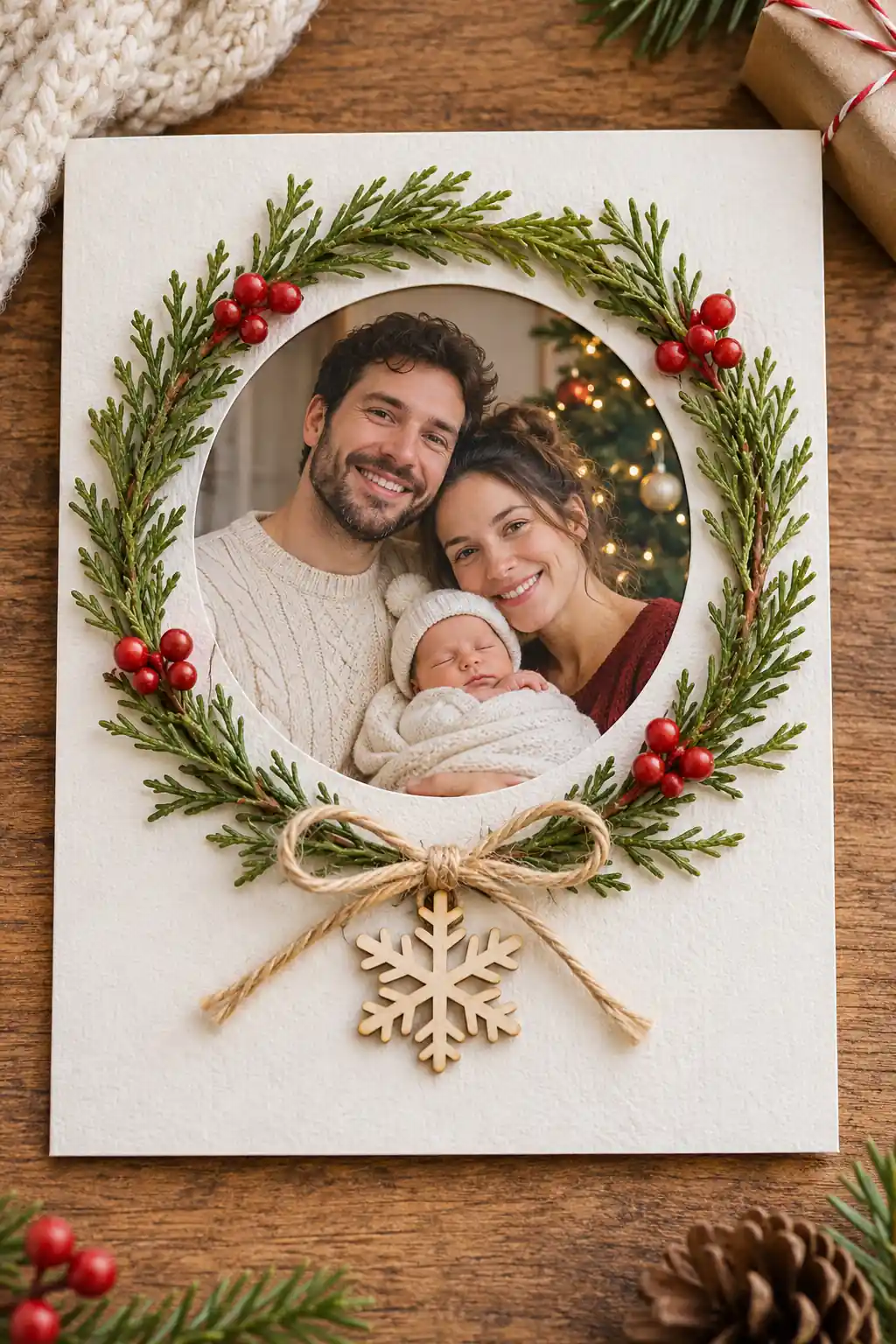
The newborn remains close to the adults in a simple family portrait. A broad pale margin separates the photo from the greenery ring. Use an existing comfortable photograph rather than arranging a complicated seasonal pose. The card layout should fit the baby’s image, not require a new photo session.
Choose a crop that keeps the adults’ hands and the baby’s face clear. Avoid placing a bow or decorative tag across that area. A thinner border can give the portrait more room. The snowflake below the image is optional and can be printed flat.
Share only the personal details the family wants included. A birth date, full name or location is not necessary for a Christmas greeting. Ask before using a newborn photograph in a wider mailing or public post. Keep a high-quality original file without text. For copies sent to relatives, check the printed proof so the baby’s small face remains visible at the final size.
14. A shared-reading moment with a plain frame
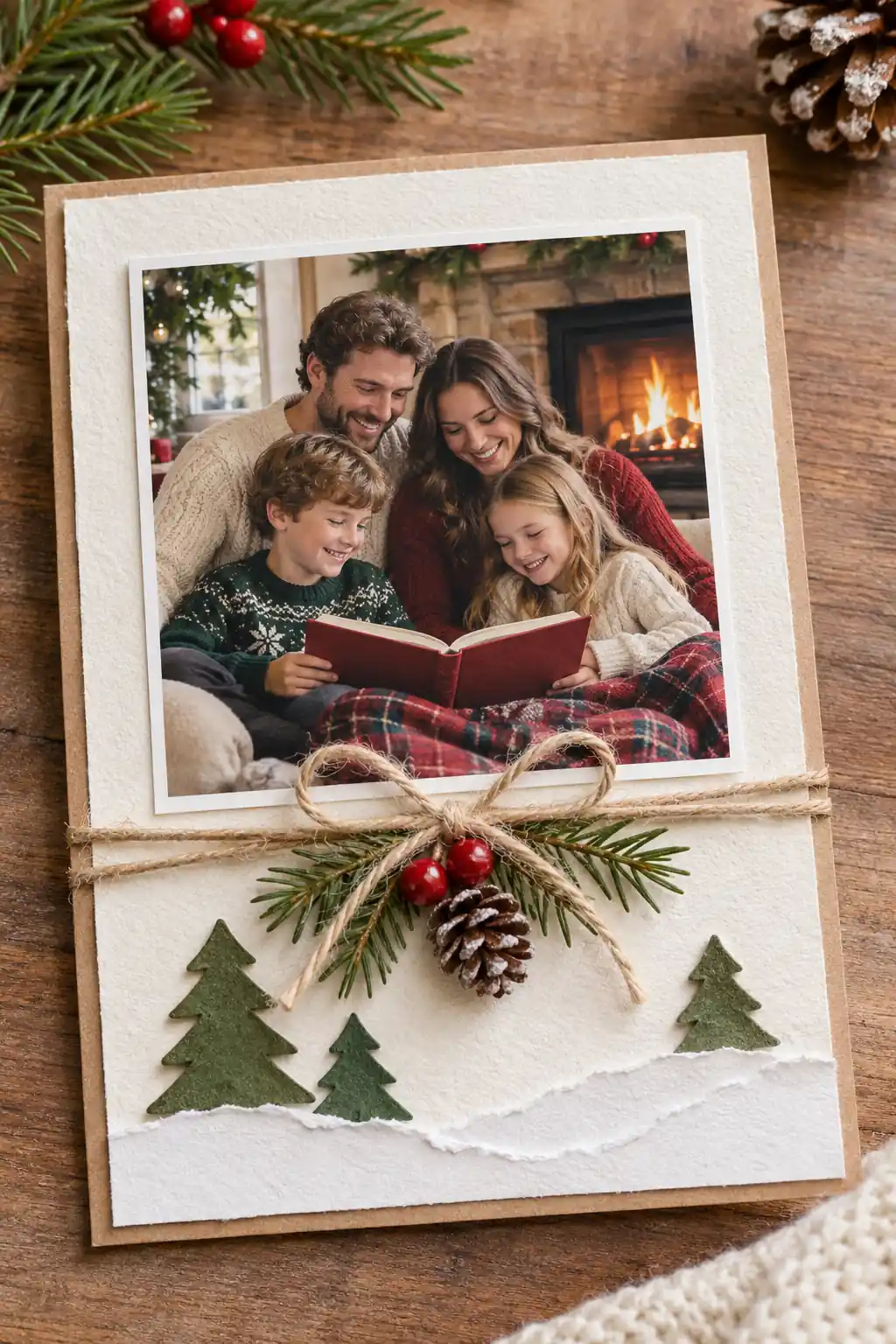
The open book gives the group a shared focus. A plain frame and small lower tree shapes leave the photograph readable. Choose a real reading moment with enough light to show faces. The fireplace in the image is a background detail, not a necessary part of the composition.
Use a comfortable seat and keep everyone clear of heat sources. A window-side reading photograph can provide the same quiet activity without a fire. Crop the book so enough remains visible to explain the moment. Avoid showing a full page of private writing if the family is reading something personal.
The lower decoration can repeat a color from the book cover or clothing. Keep the bow small and below the picture. A short quotation is unnecessary; a personal greeting inside is enough. If you want another photo display for home, these Christmas frame ideas can use a separate copy while the card remains simple.
15. Red scarves as a shared color accent
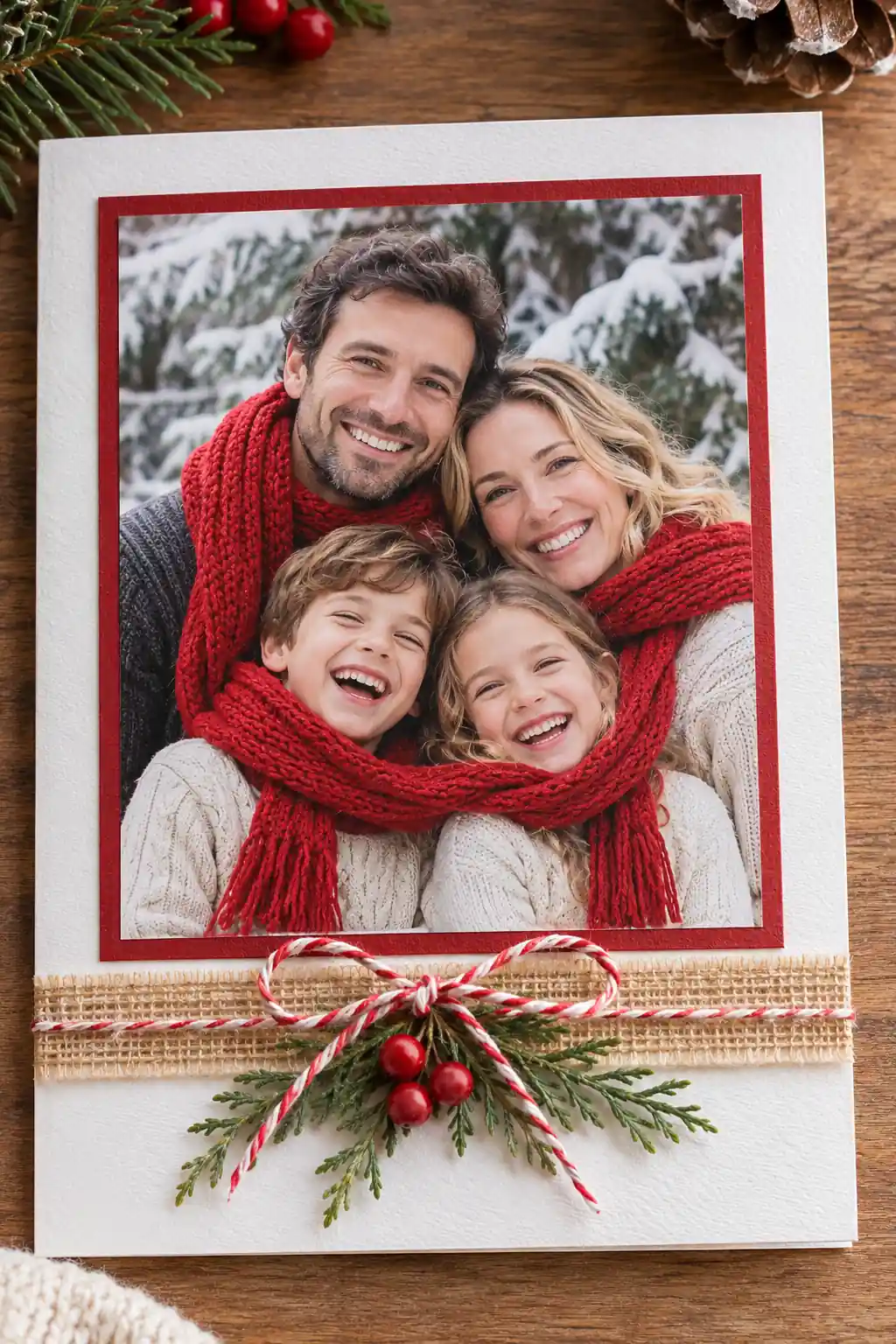
Red scarves connect the family portrait without requiring matching outfits. The card’s thin red mat repeats that color. Use individual scarves worn comfortably rather than wrapping people together. The pictured close grouping is a visual idea, not a pose that needs to be copied exactly.
Choose a photograph with natural expressions and enough space around the group. A plain cream or white card keeps the bright red from competing with other patterns. The lower ribbon band can remain narrow. If the photo already contains a busy winter background, leave the extra greenery off.
A flat printed border is easier to reproduce than a fabric band on every card. Check red tones in a sample print, since they can look different from a bright screen. Keep the greeting inside if the front has little blank space. Save a version without the year so the layout can be reused with a different family photograph later.
16. An instant-photo-style panel with room for a caption
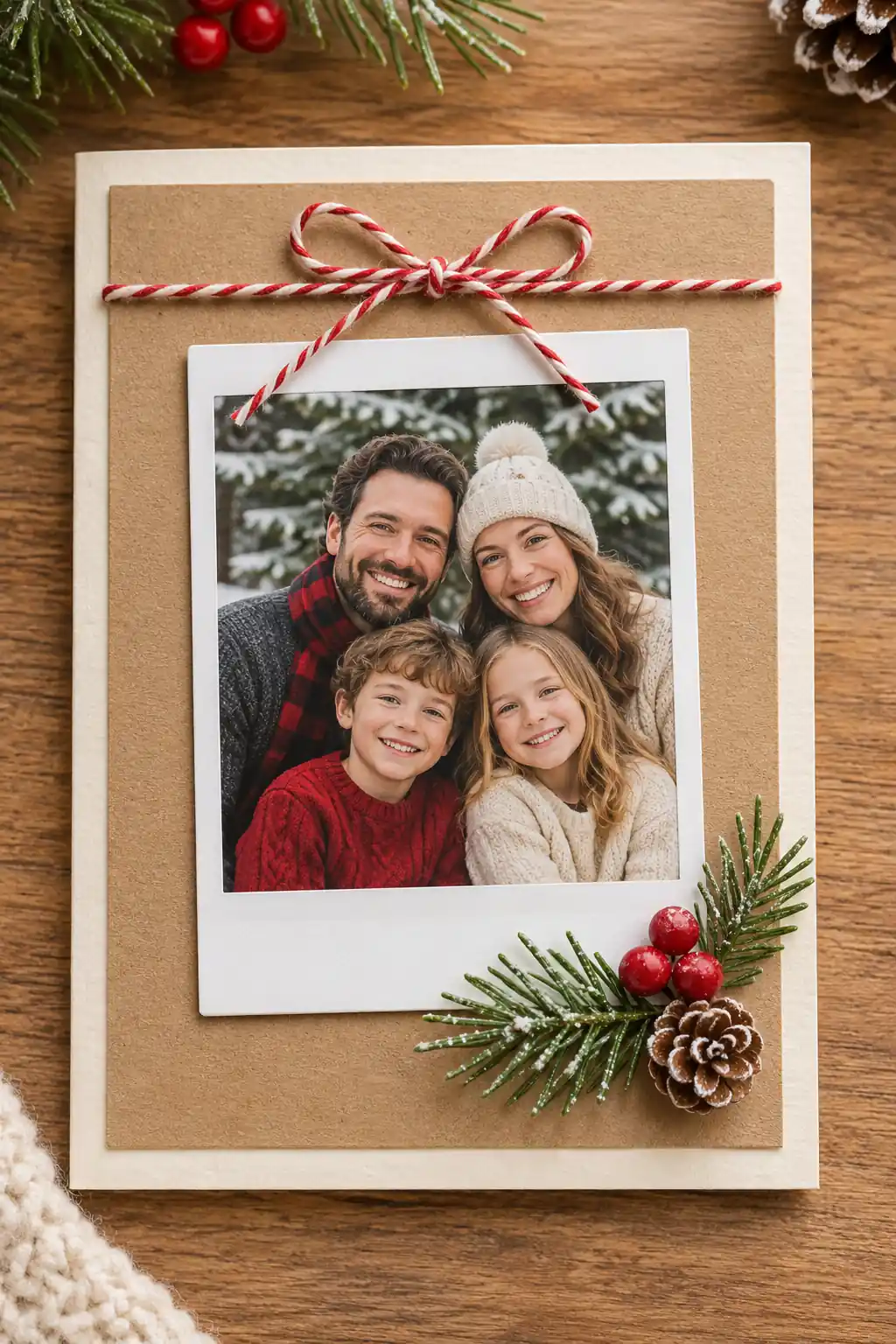
The thick white lower edge gives the photo an instant-print-style frame. A kraft background keeps the layout simple, with one small greenery cluster at the corner. Use a regular photograph inside a drawn or cut-paper frame; an actual instant camera is not required. Keep the photo rectangular if that better fits the group.
The lower white band can hold the year or a short handwritten greeting. Leave it blank until the photo placement is settled. Twine above the panel can be drawn or printed to keep the card flat. Avoid covering the white caption area with a large bow.
This format is useful when you want one image and very little additional design. Check that the apparent frame thickness does not reduce faces too far. A single sprig is enough seasonal decoration. Use a copy of the original photograph when assembling by hand, and choose adhesive that suits photo paper so the corners do not curl after the card is finished.
Choosing photographs for family Christmas card ideas
Start with a clear image and a layout that fits its orientation. Keep faces away from folds, trim edges and decorative overlaps. Review the actual printed size before ordering multiple copies.
Ask the people pictured about sharing preferences. Keep private details out of a version that might be posted publicly. The fictional examples here demonstrate composition rather than a required family size or pose.
Printing and mailing a finished card
Make one sample with the intended paper, image size and decoration. Check that it folds and fits the envelope. Raised bows and ornaments may need different packaging than a flat printed card.
Keep the original photo file and a separate final card file. Record the year on the inside or reverse. That makes the card easier to identify in family storage without placing extra text across the photograph.

Written by Stephanie Fallis
Mom and homemaker who shares budget friendly DIY projects, decorating tips and gardening ideas for busy families.
More about me → Christmas ideas21 Farmhouse Christmas Decor Ideas: Simple and Rustic
 Christmas ideas13 Christmas junk journal ideas for pages and pockets
 Christmas ideas10 Christmas Chair Decoration Ideas for a Charming Home