
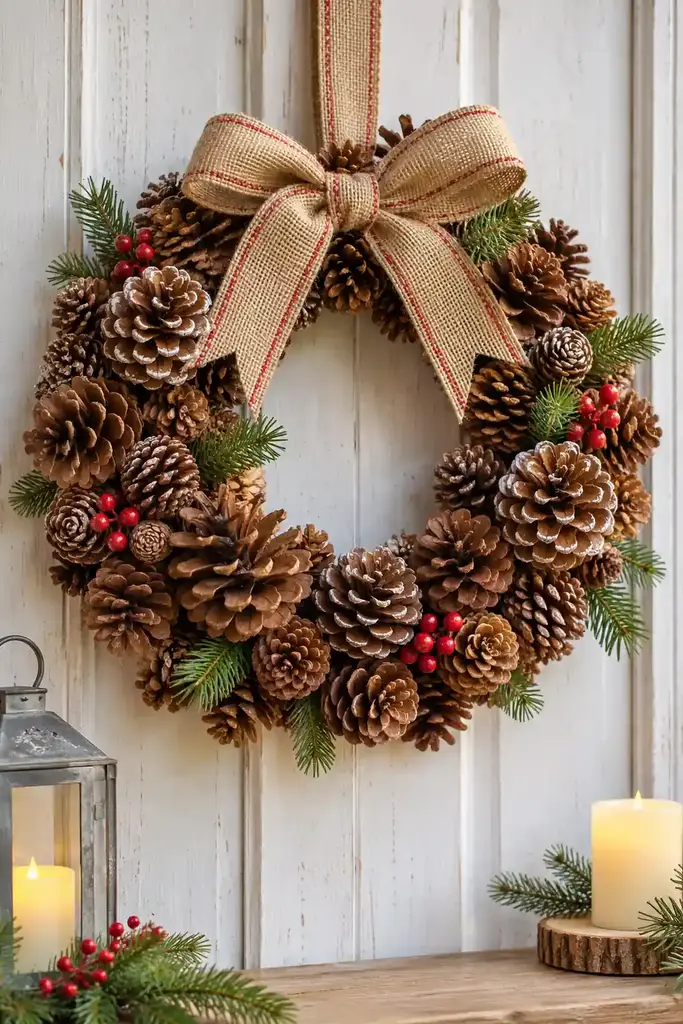
Christmas wreath material ideas are easier to compare when you know where the wreath will hang. Paper and fabric need a dry setting. Heavier bells or wood pieces need a suitable base and hanger. Choose the material before choosing the bow.
These AI-generated images are design inspiration, not tested assembly plans. Their front views do not show the backing or fixings. Use a construction method and attachments suitable for the actual materials, weight and display surface.
In this post: 16 ideas
- Pinecones with varied sizes and open texture
- Dried orange slices with visible centers
- Felt leaves with stitched outlines
- Red yarn balls over a hidden base
- Wooden beads with a small lower cluster
- Paper stars in a limited palette
- Fabric scraps tied into a dense ring
- Wine corks arranged in separate rows
- Evergreen branches with a restrained accent group
- Eucalyptus leaves with an open center
- Burlap loops with a matching bow
- Baubles arranged by size and color
- Cinnamon sticks in a radial pattern
- Ribbon loops mixing plain and patterned bands
- Jingle bells on a weight-appropriate frame
- Crocheted snowflakes supported on a ring
1. Pinecones with varied sizes and open texture
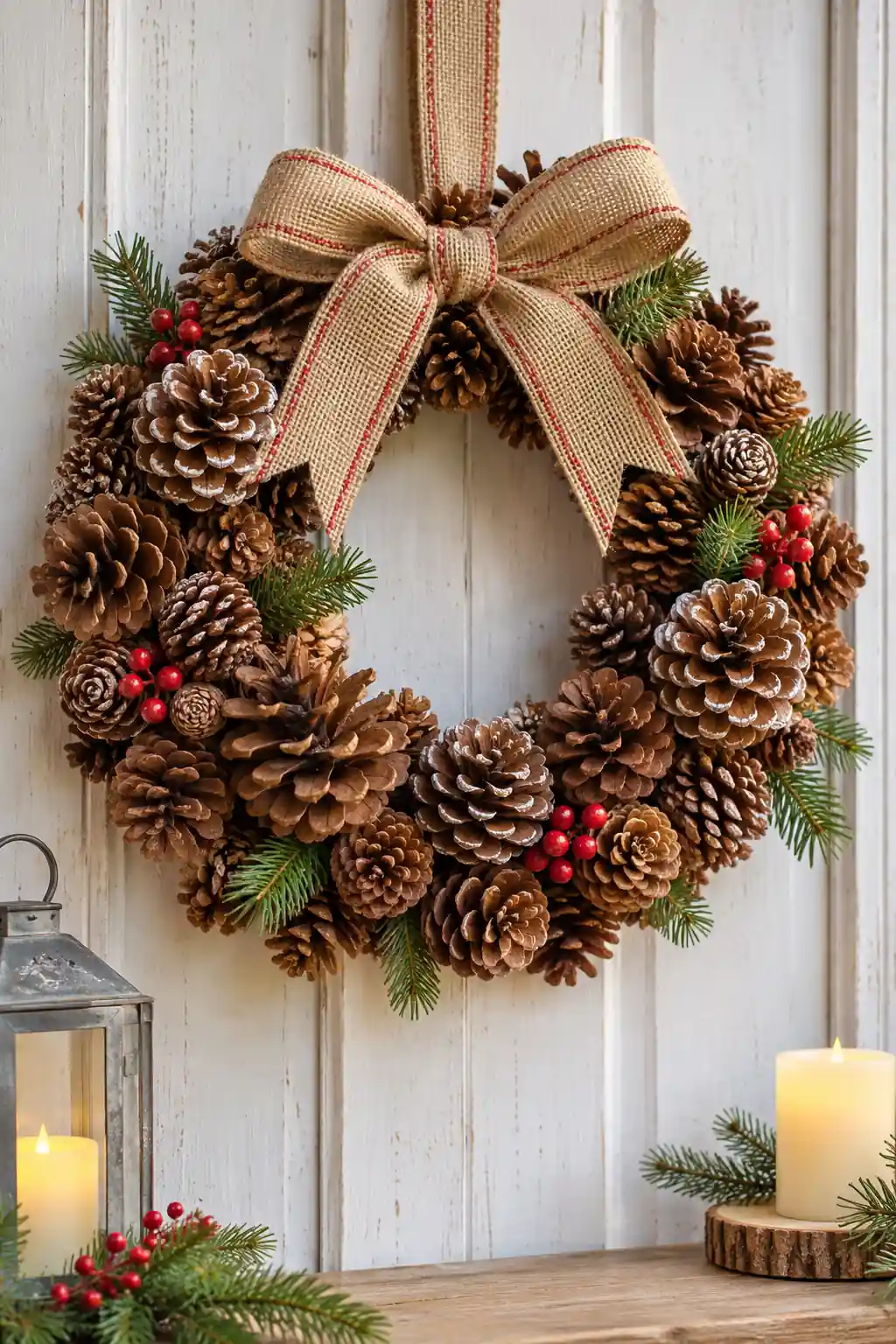
Different pinecone sizes fill the ring without making a uniform surface. Larger cones establish the main shape, while smaller ones close selected gaps. Lay them around the base before attaching anything. Their irregular backs may need more support than the front view suggests.
Use clean, dry materials and a base suited to their combined weight. Avoid relying on a single tiny glue contact for a heavy cone. Choose an attachment method appropriate to the structure, and protect the door from rough backs or wire ends. The green sprigs can remain limited to a few gaps.
A broad plain bow gives the textured ring a clear top. Leave some cone surfaces undecorated so their shapes remain visible. Use the wreath in a location suitable for all its components rather than assuming natural materials tolerate every weather condition. Check attachments before hanging each season, and store it in a rigid box that prevents the cones from being crushed.
2. Dried orange slices with visible centers
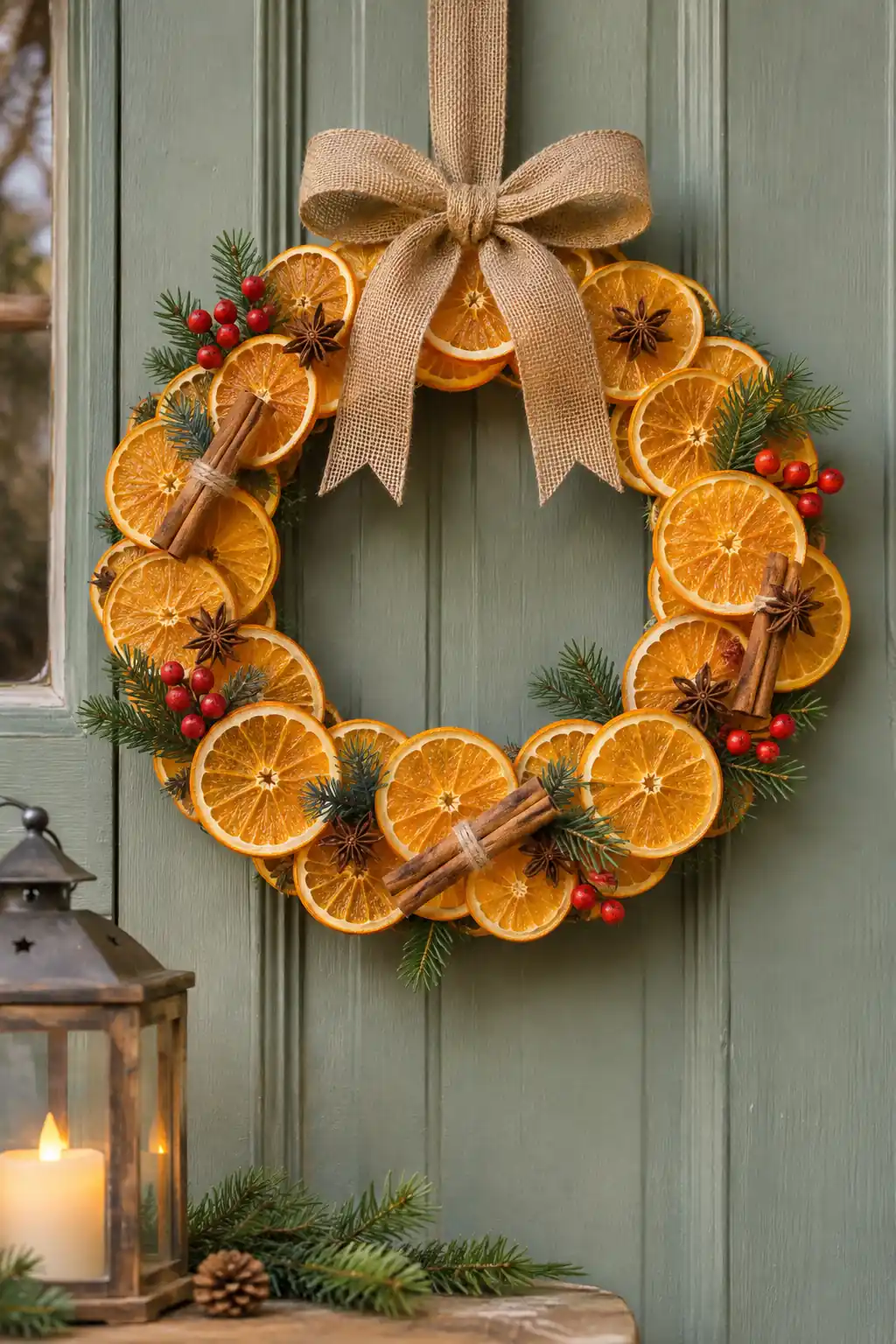
The orange slices create a ring of repeated circles with translucent-looking centers. Cinnamon accents and a plain bow add smaller changes in shape. Use fully dried slices suited to decorative use, or choose artificial pieces for more predictable storage. The image does not establish a drying method or shelf life.
Arrange the slices before attaching them so larger circles are distributed around the ring. Overlap enough to hide the base without covering every center. Thin slices can be fragile, so use a method that supports them rather than forcing holes near their edges. Keep the wreath away from damp conditions.
Do not treat decorative dried fruit as edible after assembly. Glue, dust and handling change its intended use. A few green sprigs can break up the orange color without crowding the ring. Inspect natural pieces before storing and again before reuse. If the slices become damaged or show signs of deterioration, replace them rather than sealing the problem under more decoration.
3. Felt leaves with stitched outlines
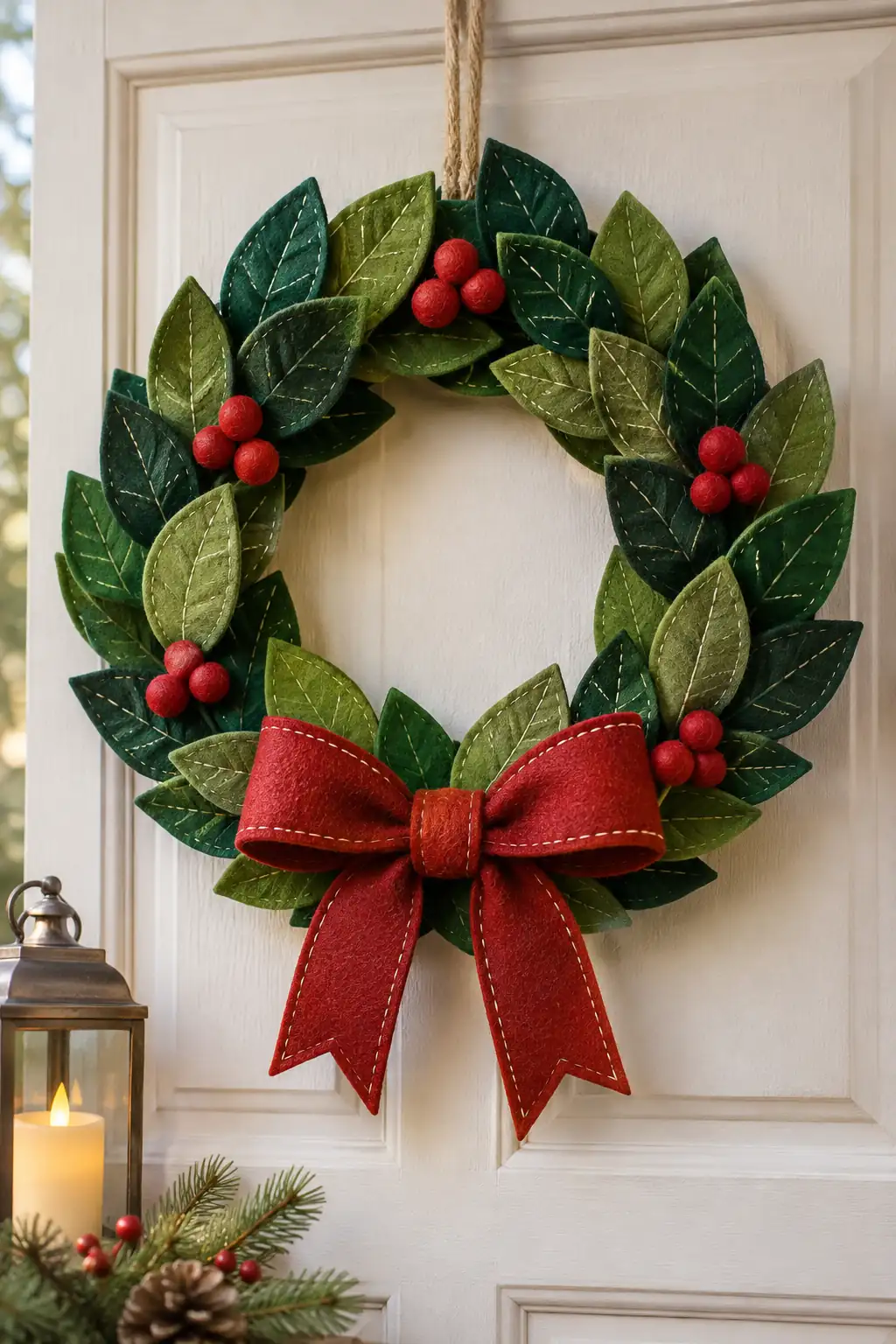
Several shades of green give the felt leaves definition. Light stitching outlines each shape without adding another material. Cut a few paper templates before preparing the full set. Slightly different leaf sizes can help the ring look less rigid while keeping a consistent style.
Attach the leaves to a suitable covered base or backing rather than expecting the fabric alone to hold a circle. Work in one direction around the ring, overlapping the leaf bases. Test the spacing before sewing or gluing the final pieces. A darker background can hide small gaps between leaves.
The red berry-like pieces can become embroidered circles if you want fewer loose attachments. A plain bow at the bottom leaves the upper outline clear. Felt is best kept dry unless the actual product and construction allow otherwise. Store the wreath flat or supported so the leaves do not fold permanently. A smaller version can use fewer leaves without losing the repeated pattern.
4. Red yarn balls over a hidden base
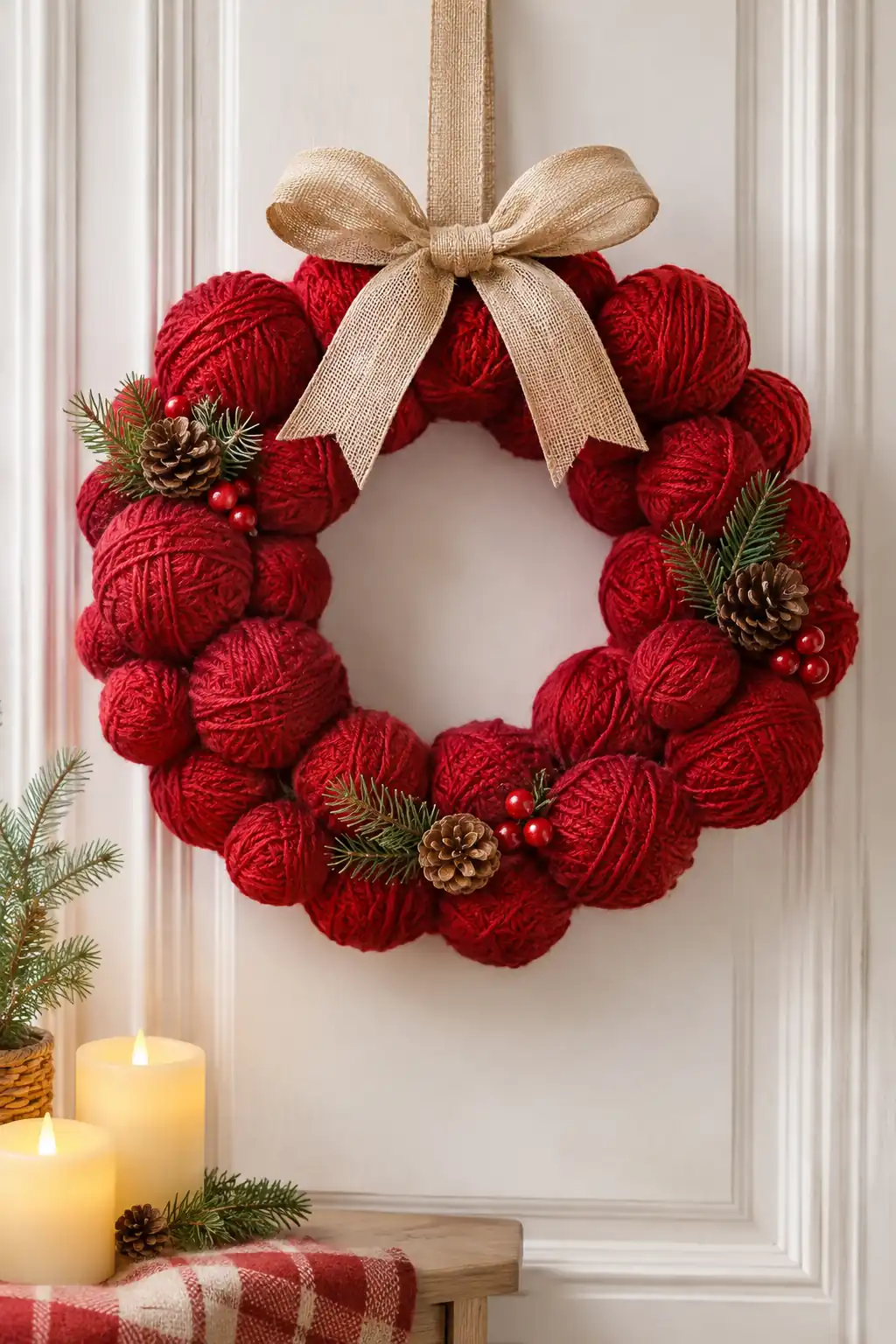
Rounded yarn shapes give this wreath a strong repeated texture. Red covers nearly the whole ring, so a plain natural-colored bow provides contrast. Consider wrapping lightweight forms rather than using full balls of usable yarn. That can reduce weight and avoid tying up large quantities of material.
Make the wrapped shapes in several sizes and test their arrangement before attaching them. Secure the yarn ends so they do not unravel during handling. The base needs to support each ball at more than a loose surface strand. Use a construction method suited to the chosen forms and backing.
Keep the small greenery cluster off to one side so the yarn remains the focus. Display the wreath indoors in a dry place, away from heat and pets that may pull at yarn. Check the hanger against the finished weight. Store it where the round forms will not be flattened beneath other decorations or snagged by exposed ornament hooks.
You may also like: Paper christmas ornament ideas.
5. Wooden beads with a small lower cluster
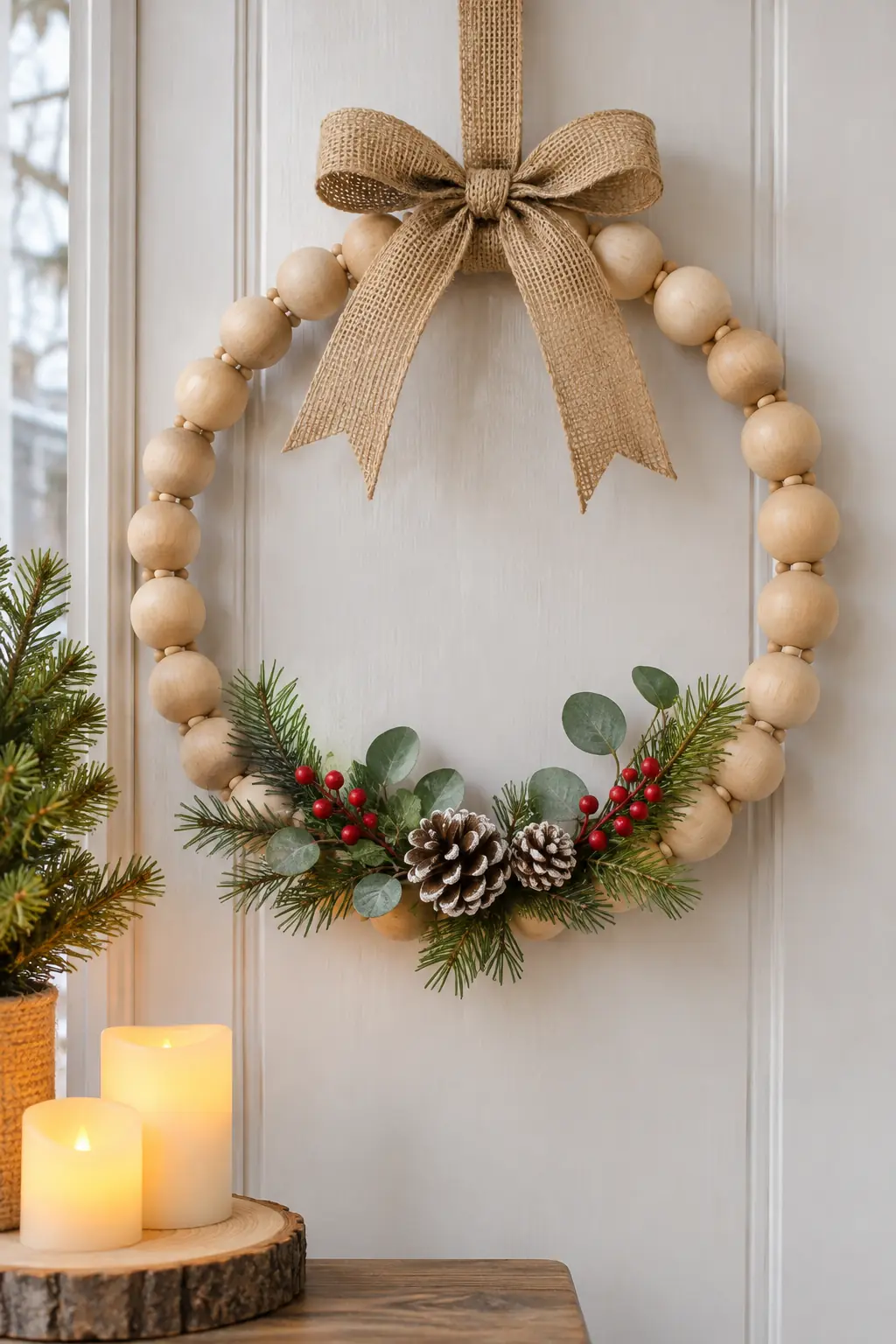
Large pale beads create a mostly open ring. A small greenery cluster at the bottom gives the wreath a focal area without covering the bead pattern. Choose beads and a supporting form that work together. A string of beads alone may not hold a circular shape when hung.
Check the bead holes before buying the full quantity. They need to fit the intended frame or cord without forcing. Keep the join near a decoration if you want it less visible, but do not let the bow substitute for a structural closure. The finished ring should remain stable when lifted.
A few leaves and red accents are enough beneath the opening. The natural wood can stay plain if that suits the surface finish and location. Protect the door from any metal ends on the back. This design can be lighter visually than a dense foliage wreath, but its actual weight still depends on bead size and material.
6. Paper stars in a limited palette
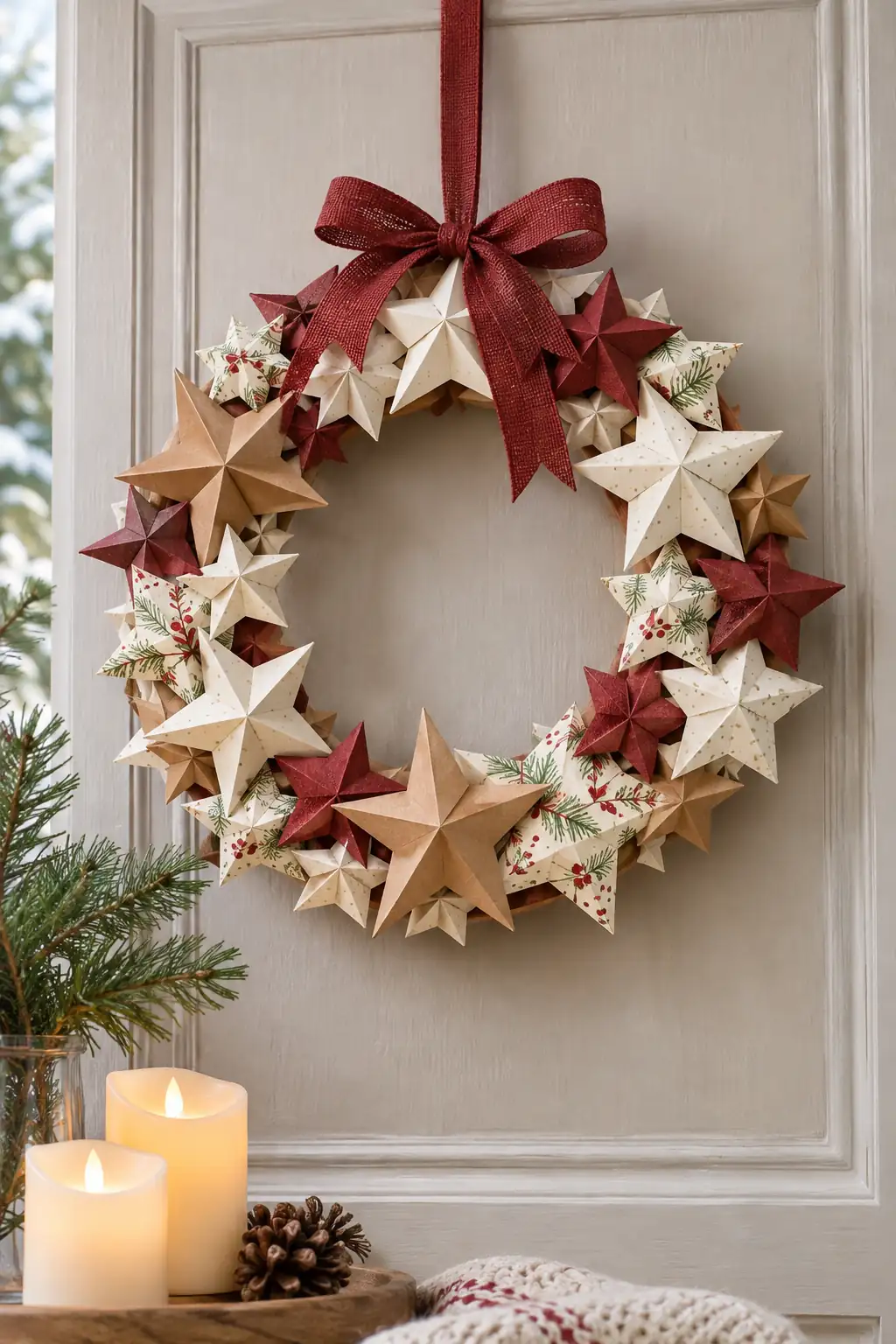
Folded stars overlap around the ring in cream, kraft and dark red. Their points create a varied outer edge without greenery. Choose paper that holds the intended folds without cracking. Make one star at the planned size before preparing enough for a wreath.
Arrange larger stars first and fill selected gaps with smaller ones. A firm backing ring should support the paper shapes. Keep adhesive away from visible folds so the surface stays clean. The top bow can cover the hanger, but it should not pull on a delicate star point.
This is an indoor material choice for a dry location. Paper can soften or curl in damp air and is unsuitable near flames or heat. A shallow storage box protects the projecting points. For more ways to use the same paper supply, compare these paper Christmas ornaments. Choose a simpler folded shape if making a large number of stars becomes too time-consuming.
7. Fabric scraps tied into a dense ring
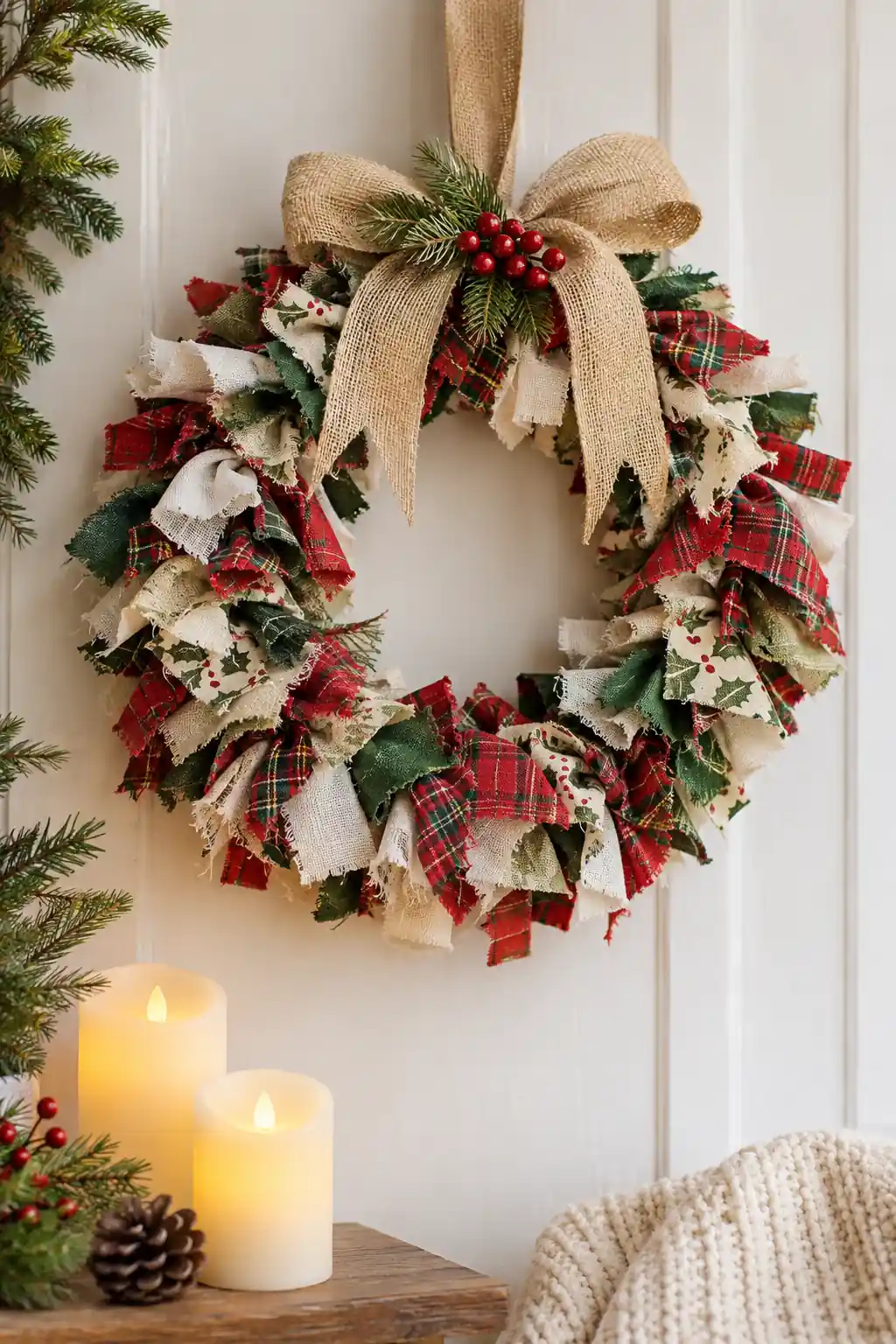
Short fabric strips create a full ring with a loose outer edge. Plaid and small printed patterns share red, green and cream colors. Sort the scraps before cutting so similar prints can be spread around the wreath. Different fabric weights may hang differently, so test a few strips first.
Use a suitable ring and knotting method for the strip length. The knots need enough fabric to hold without leaving very long tails. Trim only after the ring is filled so you can judge the final outline. A lighter fabric can create volume without the weight of thick upholstery scraps.
The plain bow provides a quiet area against the busy fabric. Keep the wreath dry and away from heat. Check whether loose threads need trimming before display. For storage, avoid crushing the fabric under heavy decorations. A hanging cover or roomy box can protect the shape. Record the fabrics used if washing might be considered later, since mixed scraps can have different care needs.
8. Wine corks arranged in separate rows
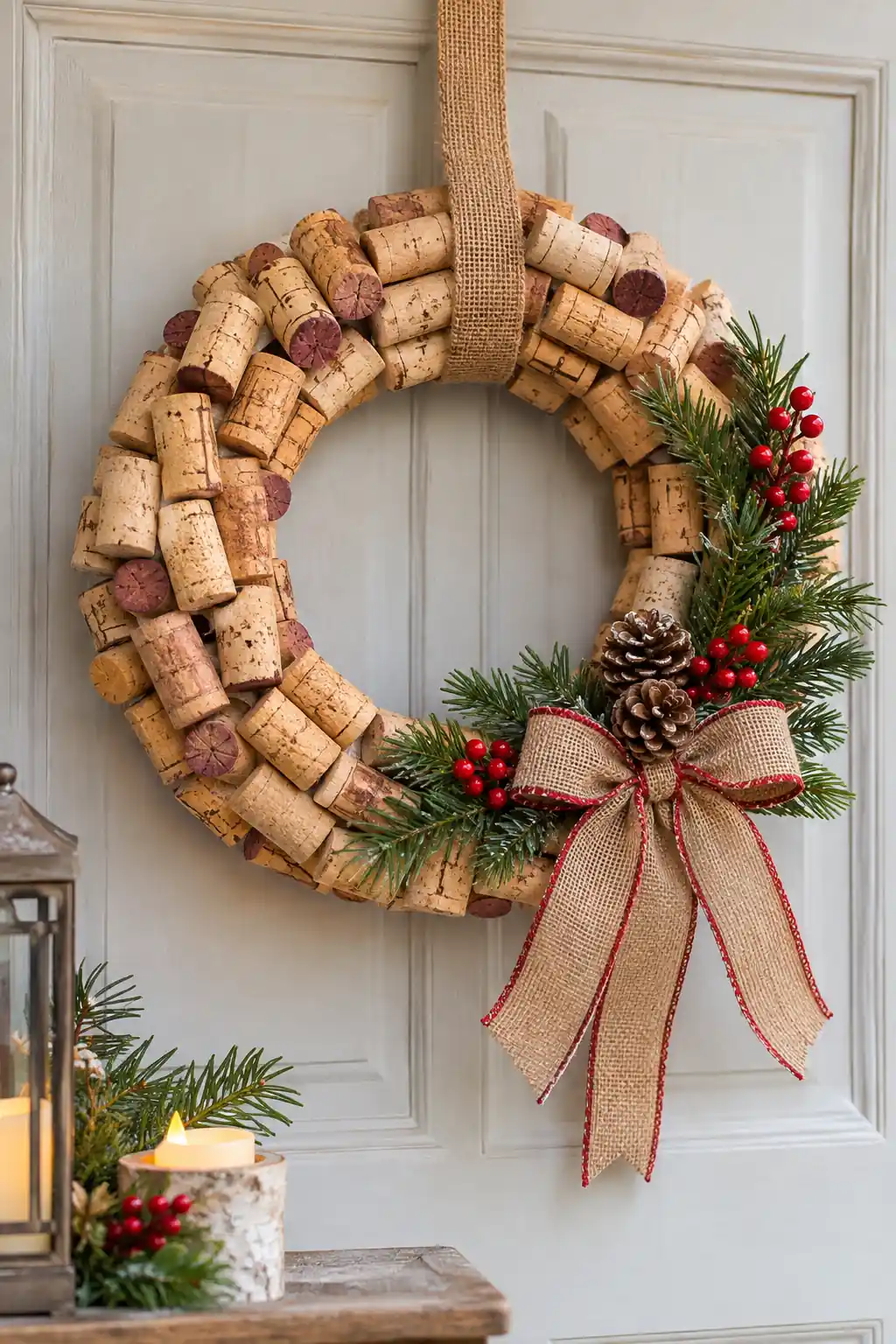
Rows of corks create a broad textured ring. Their pale surfaces and occasional darker ends provide variation without paint. Use clean, dry corks of similar size for a more regular layout. Different cork types may attach differently, so test the construction before assembling the whole ring.
A strong backing matters because the finished wreath can be heavier than its appearance suggests. Lay out the corks and check the overall diameter before fixing them. Avoid cutting corks unless you have suitable tools and a stable method. Whole corks can still create a clear circular design.
The greenery and bow occupy one lower side rather than covering the entire ring. This leaves the material visible. Protect the door from rough backing or attachment points. Use a hanger rated for the finished weight and the intended surface. Keep the wreath in a dry display area and inspect the joints before seasonal reuse, especially if it has been stored in changing temperatures.
You may also like: Christmas baubles ideas.
 You may also like24 Real Christmas tree decoration ideas to try
9. Evergreen branches with a restrained accent group
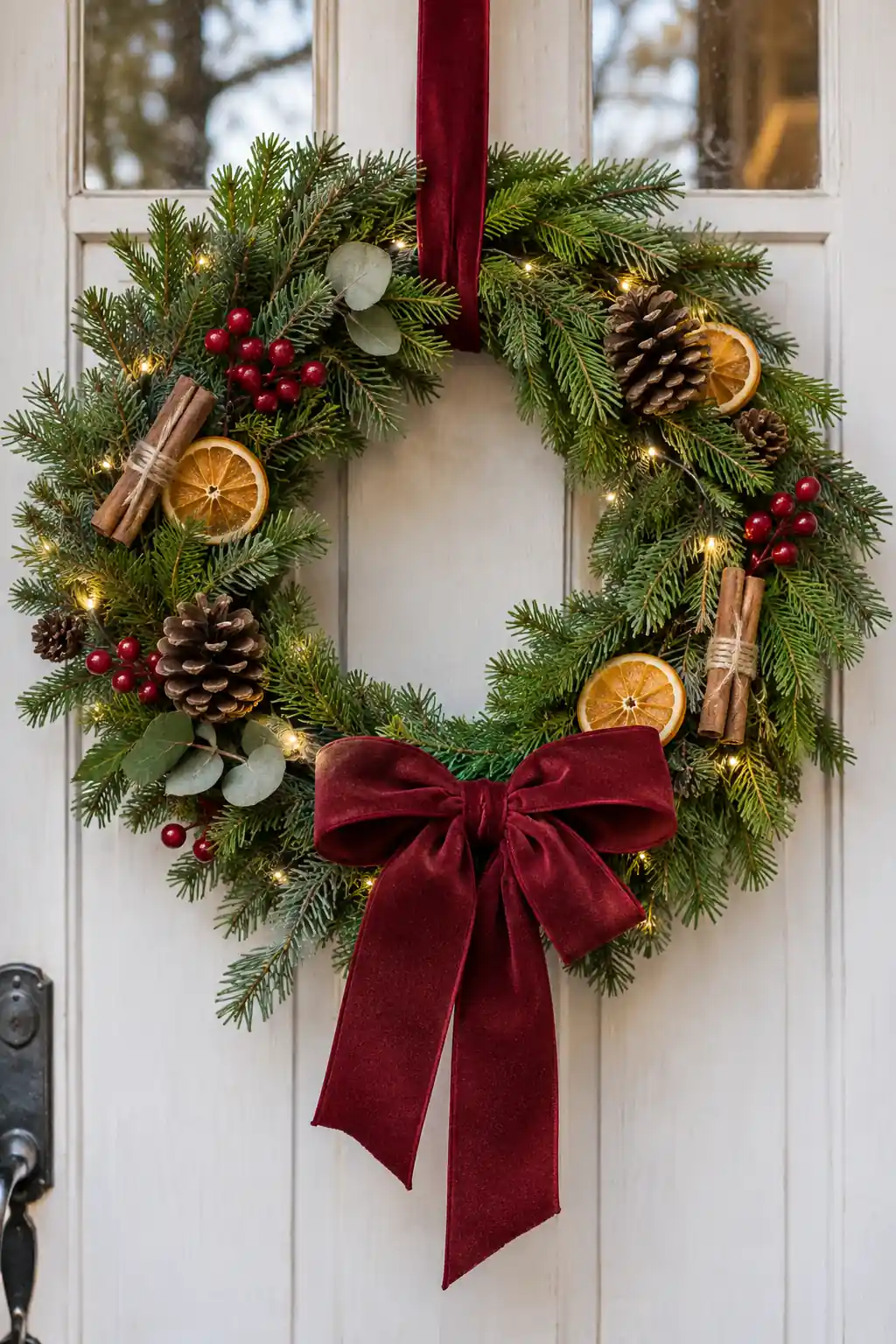
Different evergreen textures create the wreath’s main volume. Orange slices, cones and a red bow provide accent shapes. Choose fresh or artificial greenery deliberately because their care and storage differ. The image alone cannot establish which branches will last in your conditions.
For fresh material, follow species-appropriate care advice from the supplier and check it regularly. Keep it away from heat and ignition sources. Artificial greenery also needs suitable use and location guidance. Attach the branches to a base designed for the chosen material rather than relying on the visible bow.
Work in a consistent direction around the ring so the branch tips follow the circle. Leave the inner opening clear enough to show its shape. Add the heavier accents only after the greenery is secure. A small cluster is easier to balance than decorations on every branch. Confirm the finished depth allows the door to operate without scraping a storm door or adjacent surface.
10. Eucalyptus leaves with an open center
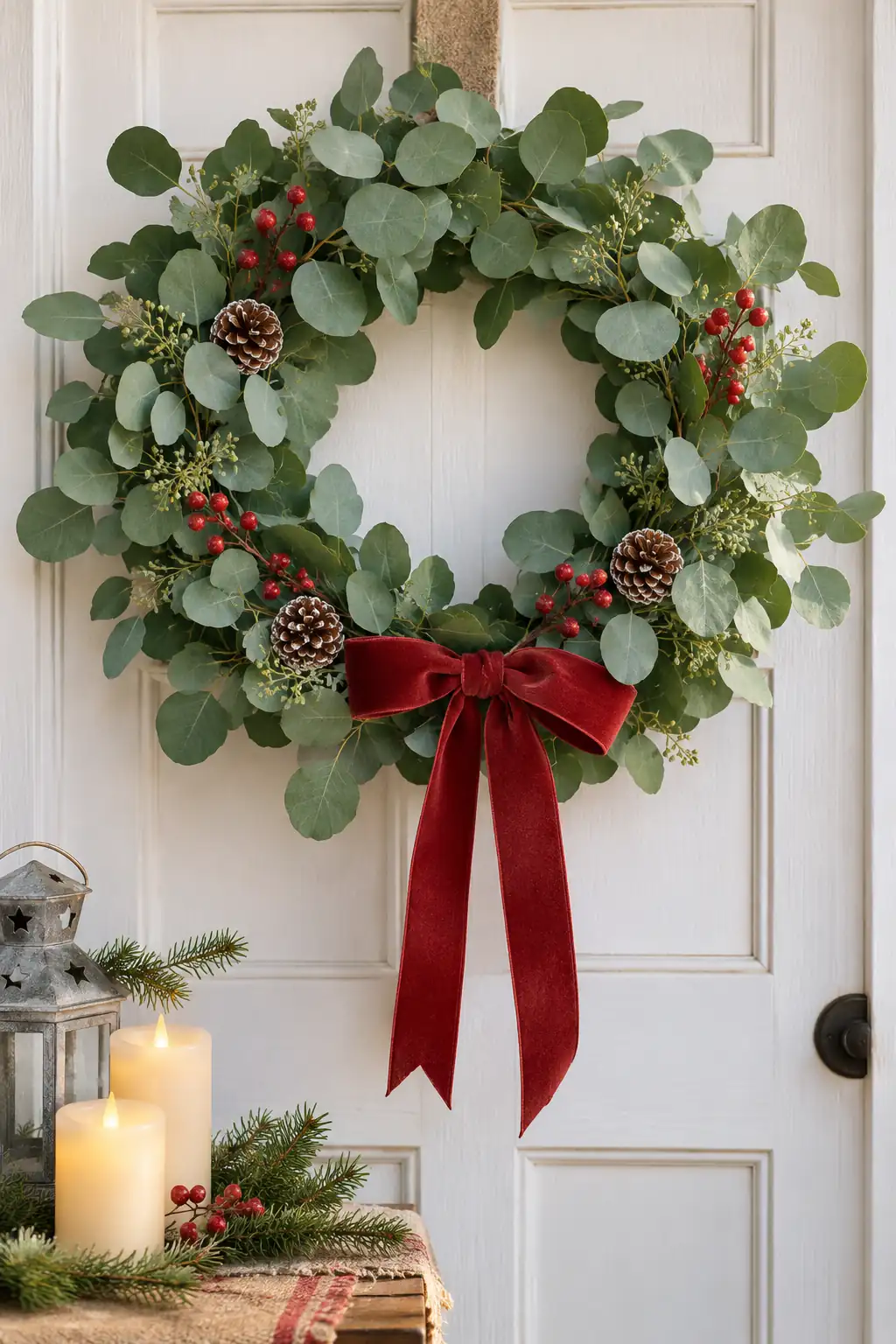
Rounded eucalyptus leaves give this wreath a different texture from pointed pine needles. The ring remains open at the center, with small red accents and a bow below. Choose fresh, preserved or artificial material based on the intended display. Those options do not share the same care or lifespan.
Arrange the stems so the leaves face outward rather than flattening every stem against the base. A consistent direction helps the ring read clearly. Keep the lower bow narrow enough that it does not cover most of the opening. A few cones can add shape contrast without making the wreath dense.
Follow supplier guidance for the actual foliage and keep it away from pets or children who may handle or chew it. Protect the hanging surface from moisture or color transfer where relevant. The finished weight and backing determine the hanger. For a long seasonal display, consider a tested artificial option rather than assuming fresh leaves will stay unchanged throughout the month.
11. Burlap loops with a matching bow
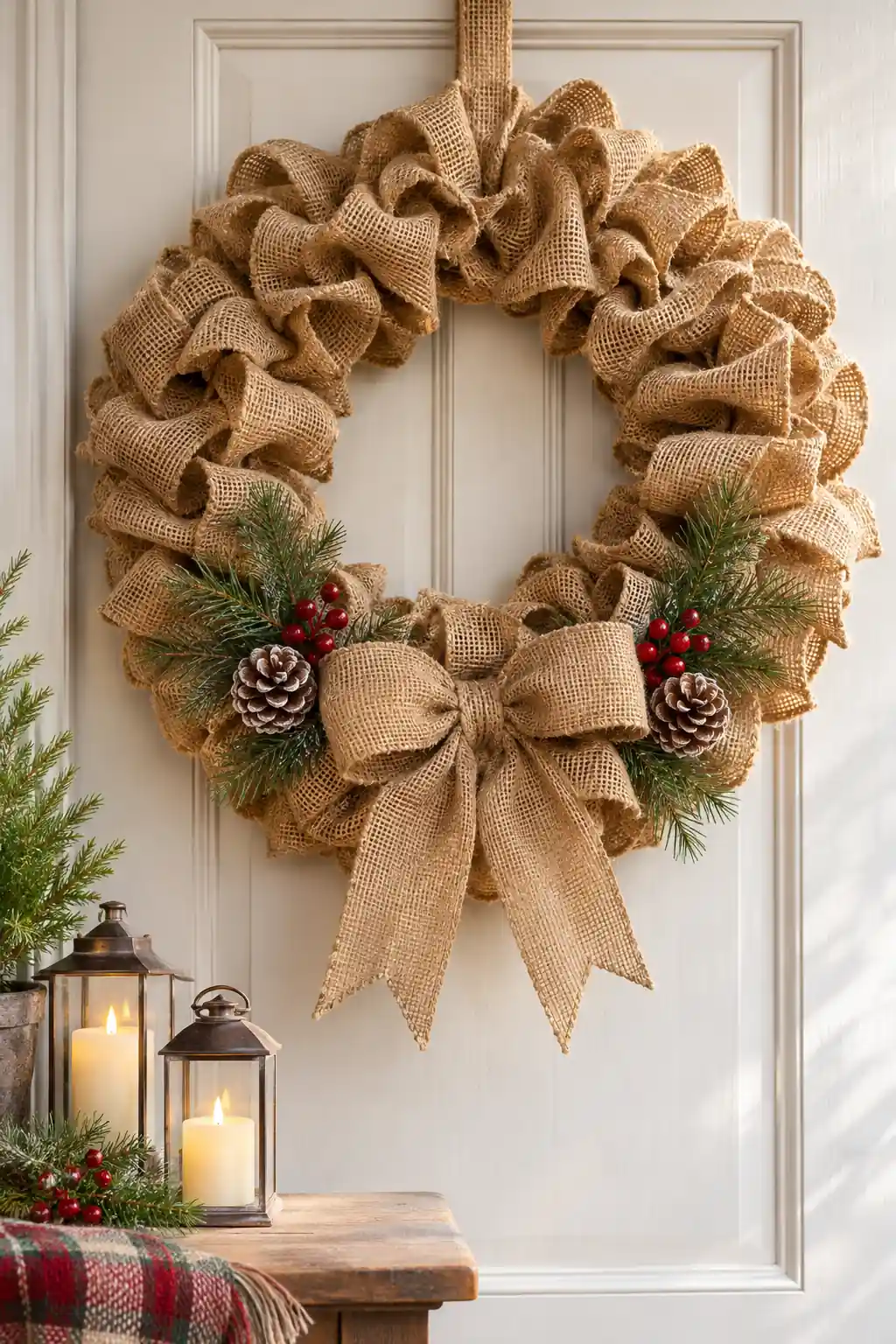
Repeated burlap loops create the full ring, while a bow uses the same material in a more defined shape. The rough weave provides enough texture without several patterns. Choose a ribbon width suited to the frame and planned diameter. Make a short sample section before cutting the whole roll.
Keep the loops similar in height so the wreath does not become lopsided. The frame should remain hidden without being packed so tightly that the fabric cannot hold its shape. Secure the ribbon ends using the construction method for your chosen base. Trim stray fibers after assembly rather than repeatedly pulling them.
A small green-and-red cluster can distinguish the lower edge from the rest of the ring. Burlap is not automatically weatherproof or flame-resistant, so use it in a suitable dry location away from heat. Allow enough storage room for the loops. Flattening the wreath under a heavy box can make the repeated texture difficult to restore.
12. Baubles arranged by size and color
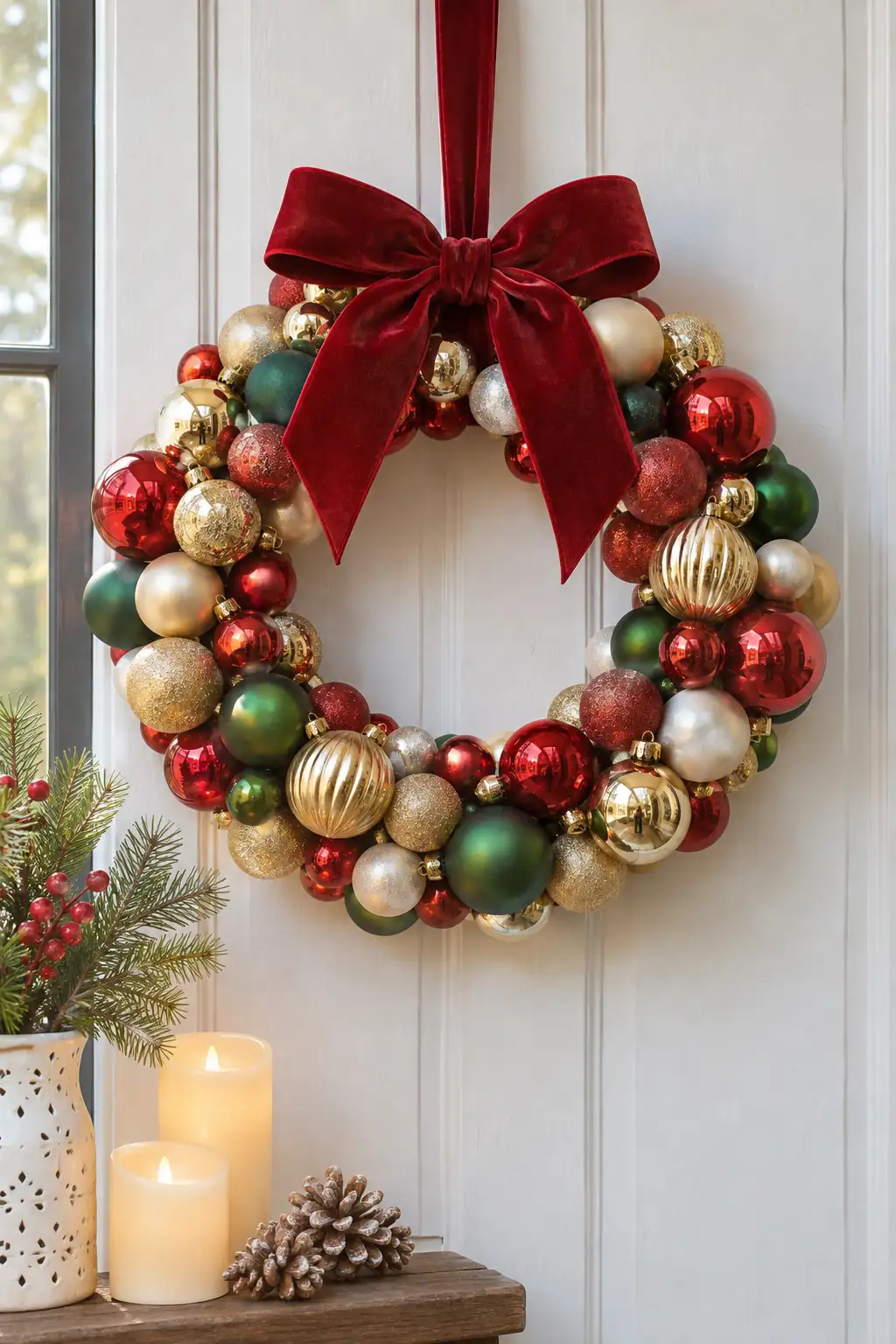
Mixed bauble sizes fill gaps while the red, gold and green palette keeps the ring connected. Choose a few larger ornaments as anchors, then place smaller ones around them. Lay out the color distribution before attaching anything. Clusters of one color can be deliberate rather than accidental.
The base and attachment method need to suit the actual ornament material. Glass baubles are fragile; lighter shatter-resistant alternatives may suit some locations better. Do not assume the ornament caps alone can carry structural loads. Follow a tested construction method and check every attachment after curing or assembly.
Keep the large bow separate from the weight-bearing hanger. The back should not press sharp or hard points into the door. A roomy box with padding between projecting ornaments helps during storage. For more color combinations, compare these Christmas bauble ideas before choosing a palette. Fewer colors can make a mixed collection look more deliberate.
You may also like: Diy christmas wreath ideas.
13. Cinnamon sticks in a radial pattern
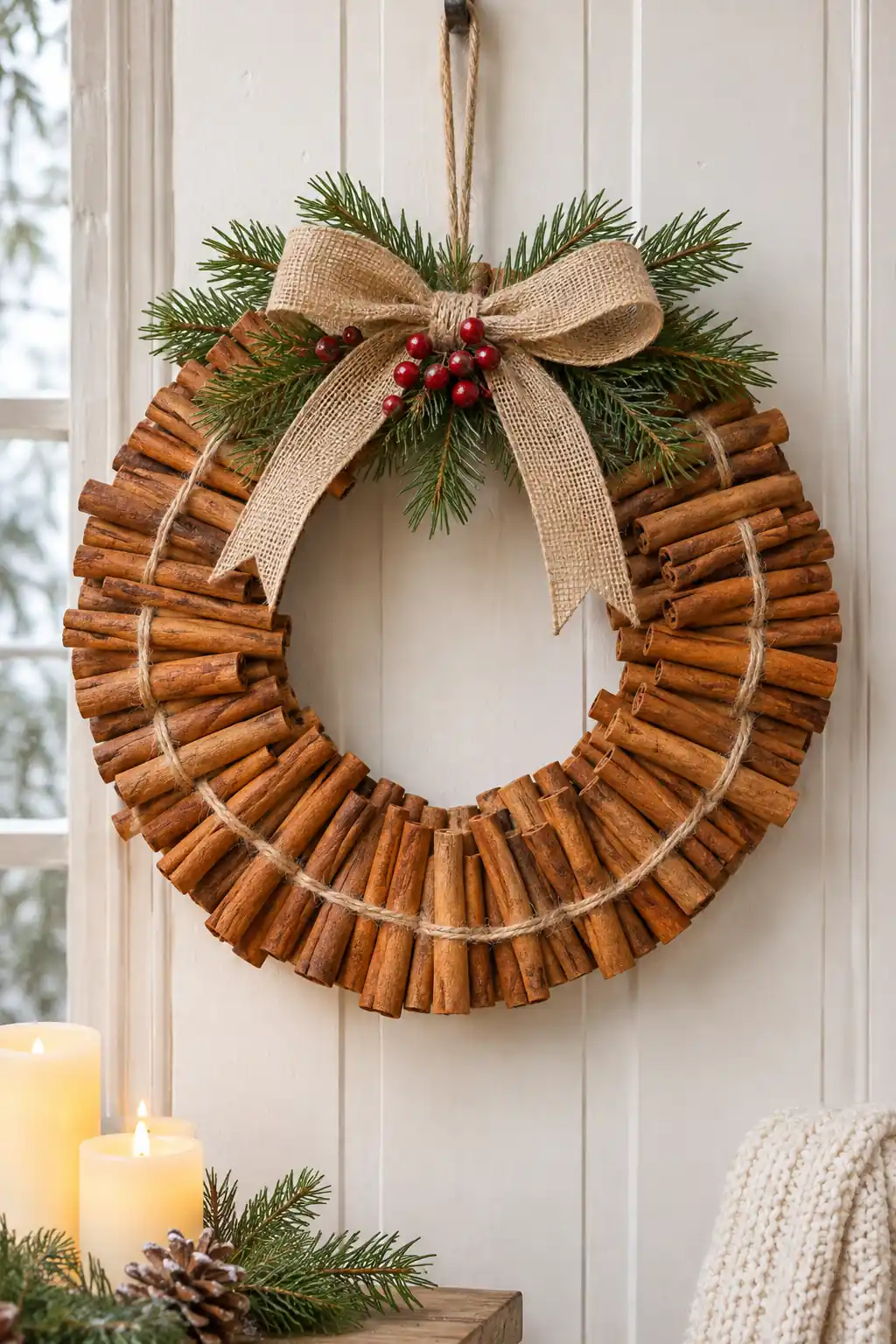
The cinnamon sticks point outward from the center, creating a repeated spoke pattern. Their brown color makes the ribbon and greenery secondary details. Sort sticks by length before arranging them. A relatively even inner edge helps the wreath look circular despite natural size differences.
Use a suitable backing ring and attachment method for the weight and irregular surfaces. The visible cord in the image should not be assumed to hold every stick securely by itself. Dry-fit the full ring before committing to the pattern. Leave room for the hanger behind the top section.
Treat the sticks as decorative once they are assembled with adhesives and handled for display. Do not return them to food use. Avoid strong fragrance if that bothers people in the household. Keep the wreath dry and away from heat. A small cluster of greenery can interrupt the repeated brown pattern, but too many extras will hide the material that makes this design distinct.
14. Ribbon loops mixing plain and patterned bands
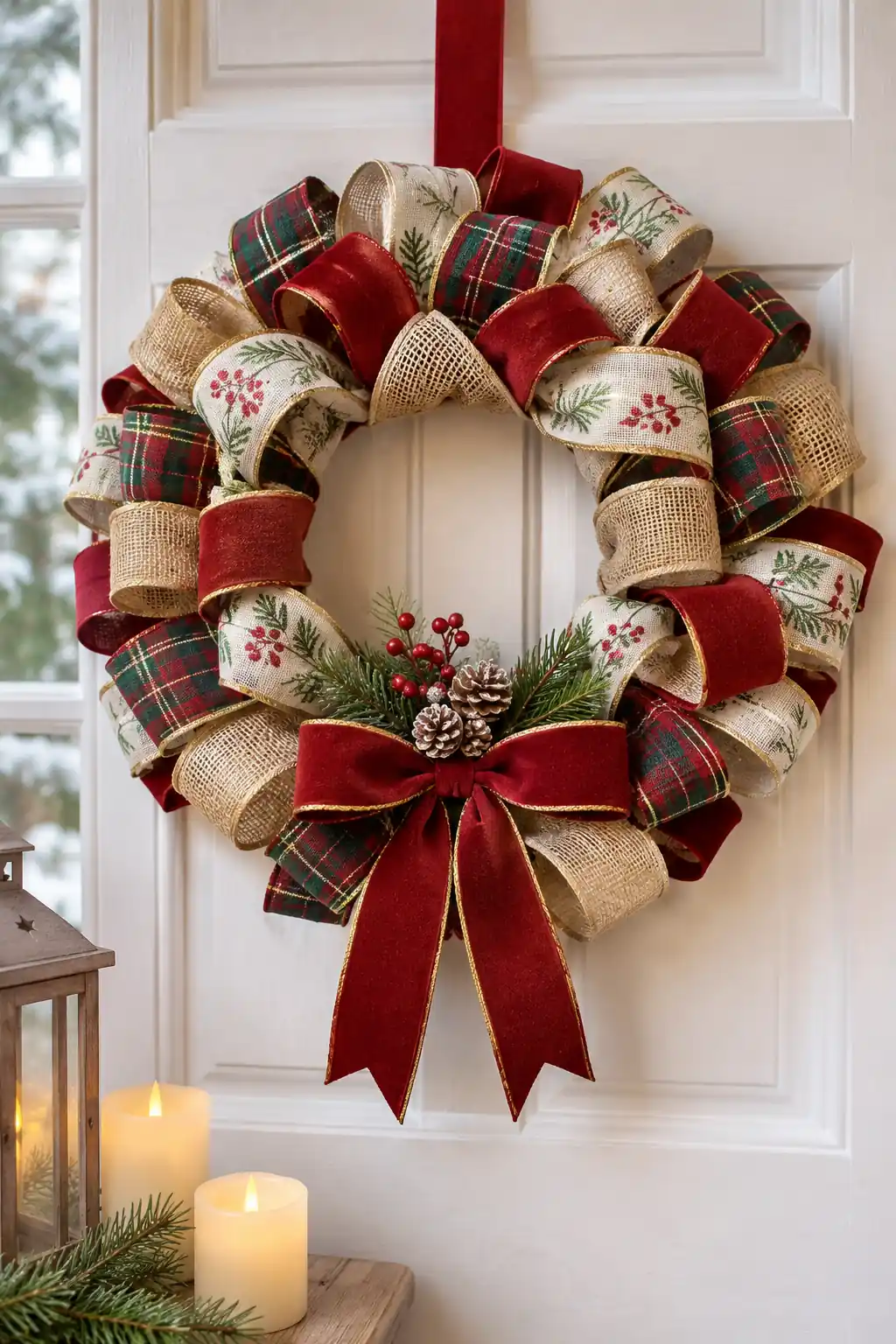
Loops of different ribbons create a full ring without a single dominant material. Red plaid, cream print and plain burlap repeat at intervals. Choose ribbons with compatible widths and enough body for the intended shape. Very soft ribbon may collapse beside a stiff wired ribbon.
Arrange the pattern sequence before attaching loops so one print does not gather on a single side. Keep the loops similar in height while allowing slight variation in width. Secure any wire ends according to the construction method. They should not project from the back or catch on hands.
The lower bow can use one plain ribbon to simplify the busy ring. A small greenery accent is optional. Check the finished depth before hanging on a door with a close-fitting outer door. Store the wreath with room around the loops rather than compressing it. If using mixed materials, keep it in a dry setting unless every component is rated for the intended exposure.
15. Jingle bells on a weight-appropriate frame
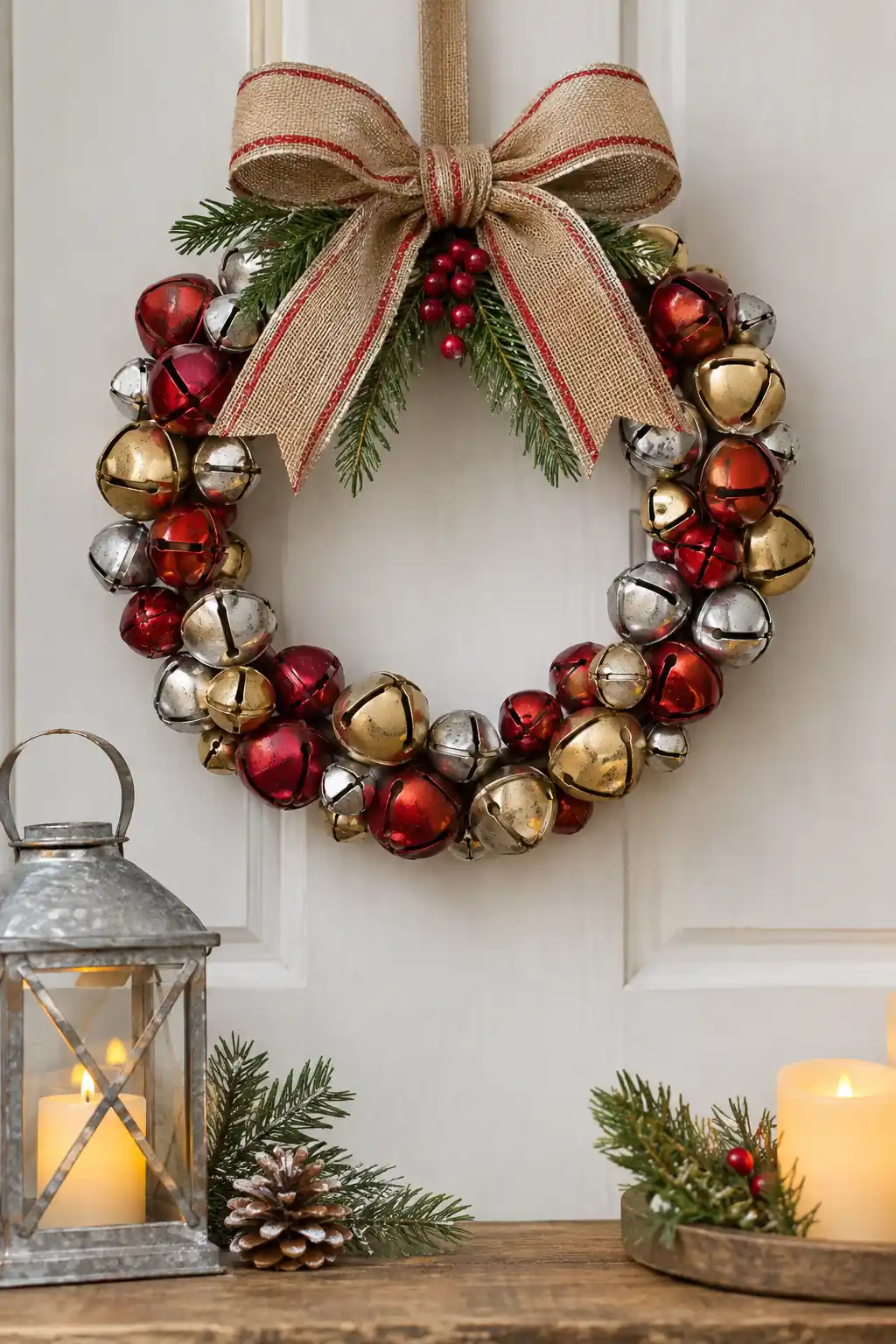
Metal bells create both the ring’s shine and its sound when moved. Red, gold and silver repeat around a mostly open center. Check the weight of the full bell collection before selecting the frame. A small ring can become heavier than a fabric or paper wreath of similar size.
Use an attachment method suited to the bell loops and supporting frame. Do not rely on decorative ribbon to carry the entire assembly. Keep connections secure and cover any sharp wire ends. Lift the finished wreath over a protected surface to test its balance before hanging.
A door that moves frequently will make the bells sound more often. Choose a wall location if that would be distracting. Protect the painted surface behind the metal pieces from rubbing. The bow can soften the appearance without covering the bells. Store the wreath so the metal does not scrape delicate ornaments. Check for loosened connections before putting it up again.
16. Crocheted snowflakes supported on a ring
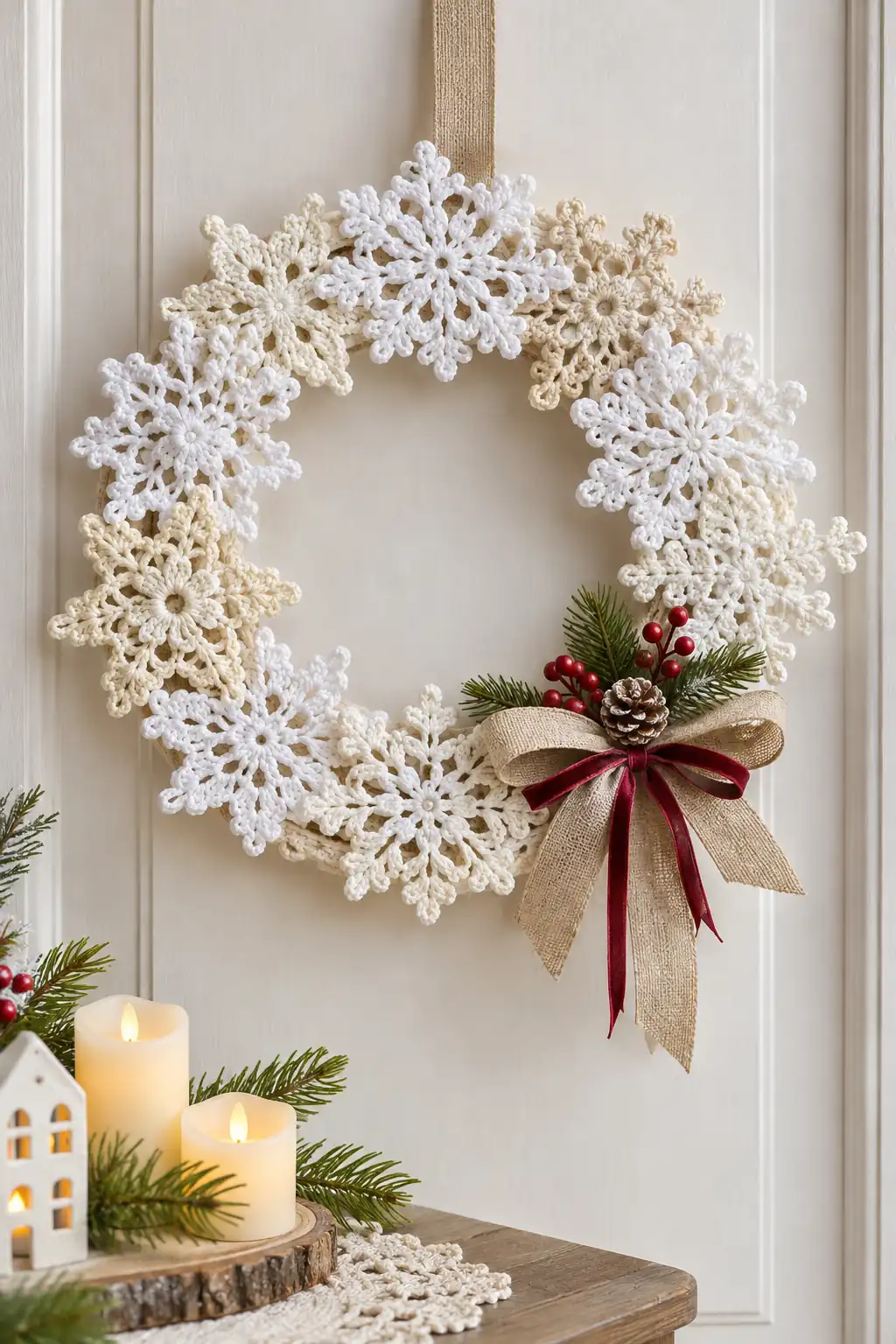
White crocheted snowflakes overlap to create the ring’s outline. Their open patterns keep the wreath visually light. Choose snowflake patterns that produce compatible sizes, or plan a deliberate mix of large and small pieces. The photo does not supply stitch counts or a stiffening method.
Make one sample and finish it according to the pattern before estimating how many are needed. Unfinished crochet may not hold the flat shape shown. Attach the snowflakes to a suitable ring without pulling their points out of shape. Keep the center open by checking the arrangement before fixing every piece.
The small greenery cluster gives the eye one focal area, but the crochet can also remain plain. Use the wreath in a dry indoor location and follow the yarn’s care guidance. Store it flat with support beneath the snowflakes. A loose bag can let their points fold or snag. Keep any finishing product instructions with the project for future cleaning decisions.
Comparing Christmas wreath material ideas by location
Choose the display location before buying materials. Paper, yarn and many fabrics need dry conditions. Natural foliage and dried fruit require inspection and care suited to the actual material. Outdoor suitability must apply to every component, including the backing and ribbon.
Check finished weight and depth before choosing a hanger. Protect the door from rough surfaces, wire and moisture. Keep all wreaths away from ignition sources and preserve normal door operation.
Making a small construction sample
Attach a few pieces to a spare section of the intended base. Check the joint after the adhesive cures or the fastening is complete. A front-view inspiration image does not reveal the support needed behind it.
Store the wreath with enough room for projecting parts. Label fragile materials and keep the hanger with the project. Inspect attachments before reuse rather than assuming last year’s assembly remains secure.

Written by Stephanie Fallis
Mom and homemaker who shares budget friendly DIY projects, decorating tips and gardening ideas for busy families.
More about me → Christmas ideas16 DIY Christmas Ornaments That Are Simple to Make
 Christmas ideas19 Christmas Jewelry Ideas That Are Simple to Make
 Christmas ideas15 Christmas classroom door ideas to adapt for approved displays