
Contemporary bedroom ideas focus on clean lines, soft neutrals, and purposeful details. This style favors simplicity over clutter, yet it never feels sparse. Homeowners choose it for rooms that feel calm, current, and effortless. Unlike fixed decor styles, contemporary design shifts gradually with the times. It borrows the best of minimalism, industrial accents, and organic modern touches. As a result, no two contemporary bedrooms look exactly alike.
A well-planned bedroom balances comfort with visual clarity. Materials like natural wood, matte metals, and soft textiles work together. Additionally, color choices lean toward warm neutrals, soft grays, and occasional bold accents. Furniture stays low-profile, with sleek silhouettes that avoid heavy ornamentation. Lighting plays a central role, since it sets mood and highlights architectural details. Meanwhile, negative space allows each piece to stand out without competing for attention.
This guide walks through seventeen distinct approaches to contemporary bedroom design. Each idea covers color, furniture, and styling choices for a modern retreat. Readers can mix elements freely, since contemporary design values personal expression within a cohesive frame. From bold accent walls to built-in storage, these ideas suit bedrooms of any size. However, small details often make the biggest difference in the final result.
In this post: 17 ideas
- Neutral Color Palette with Bold Accents
- Sleek Platform Bed as the Focal Point
- Floating Nightstands for a Streamlined Look
- Statement Lighting Fixtures
- Textured Accent Wall
- Monochrome Bedroom Styling
- Mixed Metal Finishes
- Minimalist Wall Art and Gallery Display
- Layered Textiles for Warmth
- Built-In Wardrobe Storage
- Curved Furniture Silhouettes
- Large Windows and Natural Light
- Statement Headboard Design
- Indoor Plants for Organic Touches
- Multi-Functional Furniture Pieces
- Smart Technology Integration
- Cozy Reading Nook Corner
1. Neutral Color Palette with Bold Accents
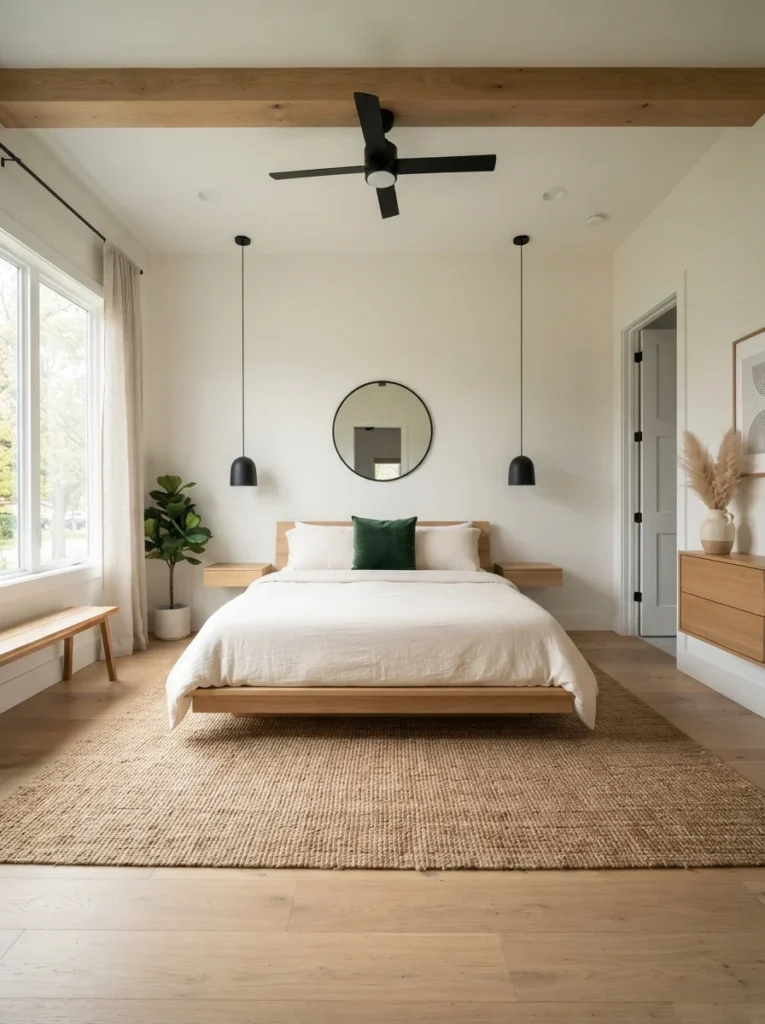
A neutral color palette forms the backbone of most contemporary bedrooms. Soft whites, warm grays, and gentle taupes create a peaceful base. However, a single bold accent keeps the room from feeling flat. A deep emerald throw pillow or a black-framed mirror adds contrast instantly. Homeowners drawn to warm, sandy tones often explore beige color schemes for extra warmth. Additionally, textured linens in the same neutral family add depth without extra color. This approach works well in small and large bedrooms alike. As a result, the space feels open, current, and easy to update over time.
2. Sleek Platform Bed as the Focal Point
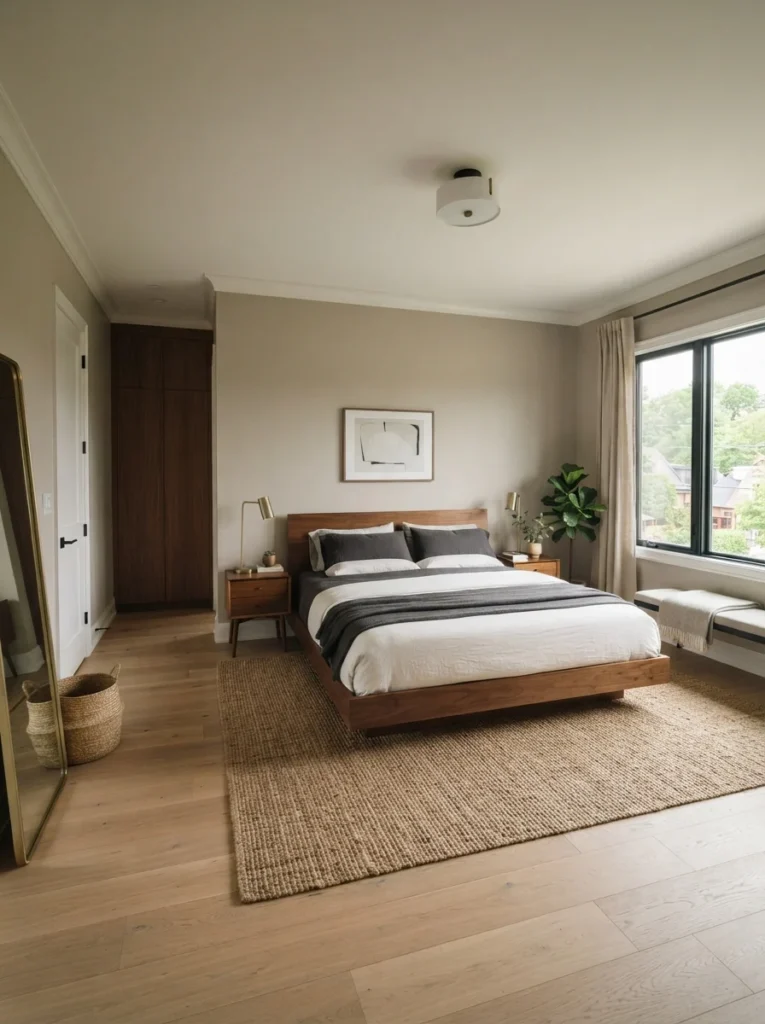
A platform bed anchors the contemporary bedroom with clean, low lines. Its minimal frame lets other design elements take center stage. Wood, upholstered, or metal frames all suit this style equally well. Meanwhile, low-profile beds make ceilings feel higher in smaller rooms. Pairing a platform bed with crisp white or gray bedding keeps the look sharp. For larger primary suites, a king-size bedroom layout gives this piece room to breathe. Additionally, floating the bed away from the wall creates a modern, gallery-like feel. This idea suits people who want restful simplicity above all else.
3. Floating Nightstands for a Streamlined Look
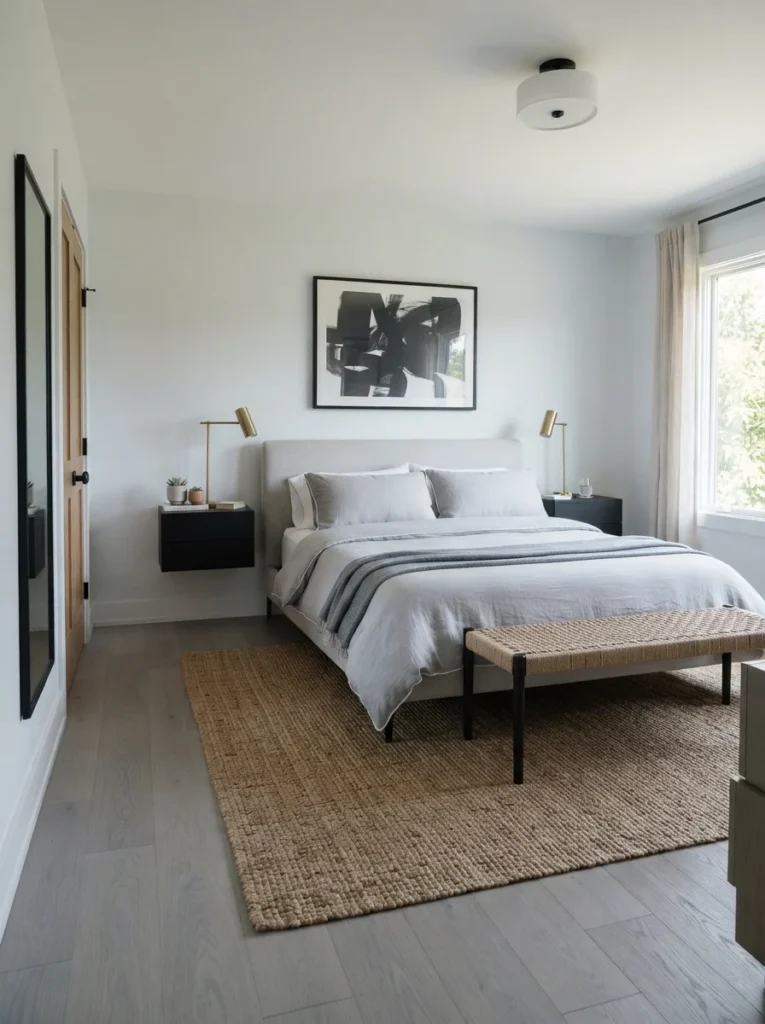
Floating nightstands remove visual clutter from the bedroom floor. Wall-mounted shelves in wood or matte black keep surfaces open. This detail suits a minimalist bedroom design that favors function over ornament. Additionally, floating pieces make cleaning easier and rooms feel more spacious. Pair them with slim table lamps for balanced proportions. Furthermore, this idea works especially well in compact apartments. A floating nightstand can also double as a charging station with hidden outlets. As a result, the nightstand supports both style and daily routine.
4. Statement Lighting Fixtures
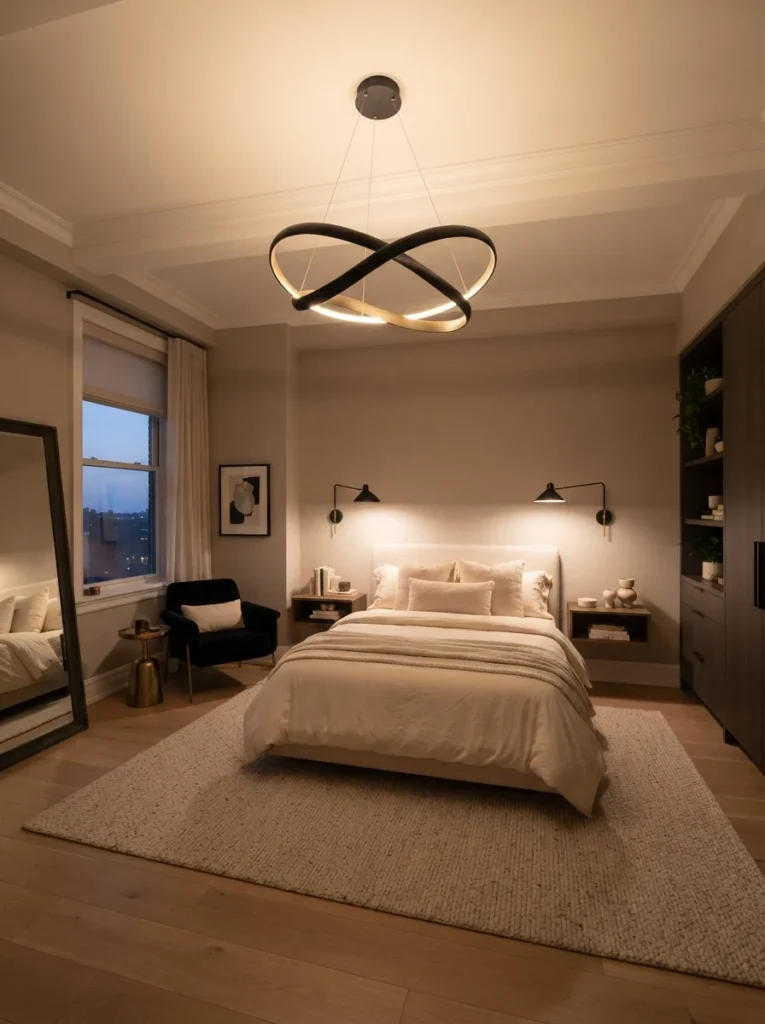
Statement lighting turns a simple bedroom into a designed space instantly. Sculptural pendants, linear chandeliers, or oversized floor lamps draw the eye upward. This detail supports the overall neutral color palette without adding clutter. Additionally, warm-toned bulbs keep the mood relaxed rather than clinical. Layered lighting, including sconces and lamps, adds flexibility for reading or relaxing. Meanwhile, dimmable fixtures let homeowners adjust brightness through the day. A single striking fixture above the bed often replaces the need for extra wall art. This idea proves that lighting can function as sculpture.
5. Textured Accent Wall
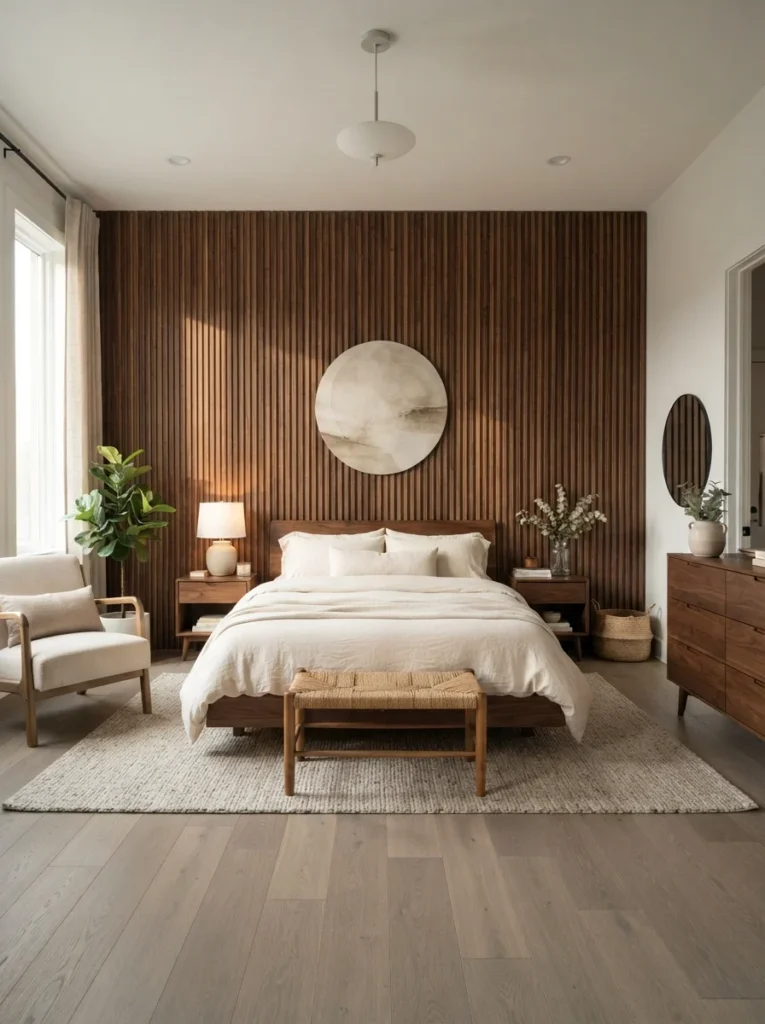
A textured accent wall adds depth without relying on bright color. Options include shiplap, limewash plaster, or fluted wood panels. This detail pairs naturally with a light gray bedroom palette for a soft, layered look. Additionally, texture catches natural light differently throughout the day. Placing the accent wall behind the headboard creates instant visual weight. Meanwhile, keeping the rest of the room simple lets the wall stand out. This approach suits bedrooms that want personality without heavy patterns. As a result, the room feels curated rather than plain.
6. Monochrome Bedroom Styling
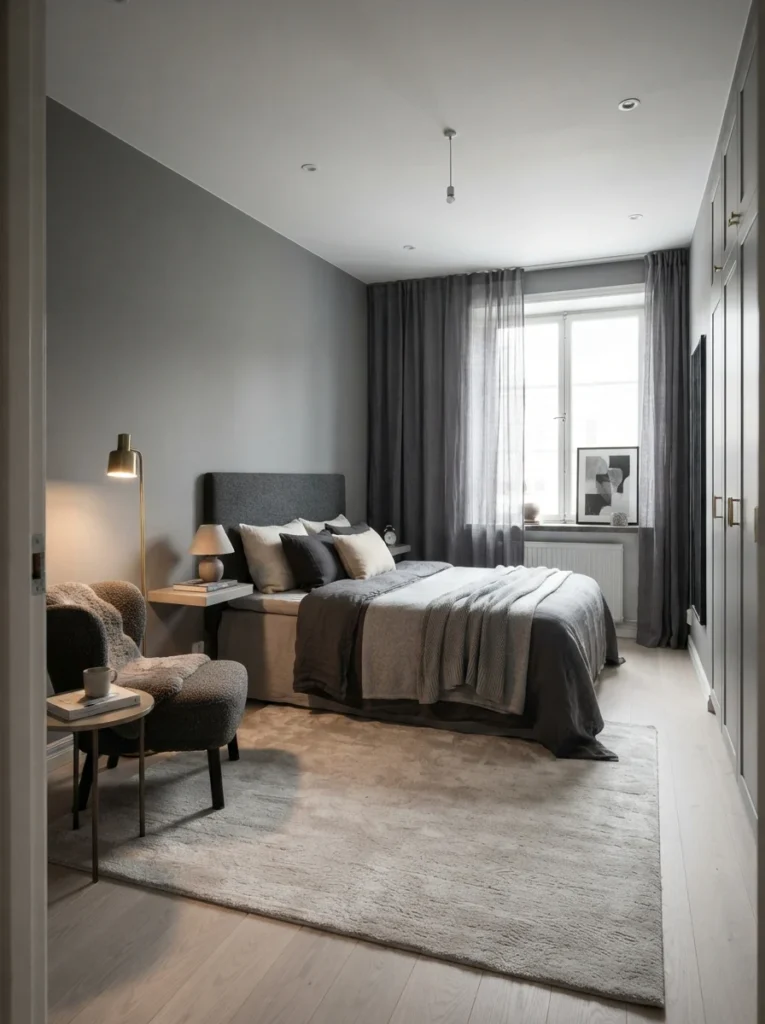
A monochrome bedroom uses one color family in varying shades and textures. Charcoal, cream, or soft blue all work well as a base tone. This approach relies on texture, not pattern, to keep the room interesting. Additionally, varied fabrics like linen, velvet, and wool add contrast within the same hue. Furniture and decor stay within the chosen palette for a cohesive result. Meanwhile, one metallic accent, such as brass or nickel, adds subtle shine. This idea suits homeowners who prefer calm, controlled spaces. As a result, the bedroom feels intentional and restful.
7. Mixed Metal Finishes
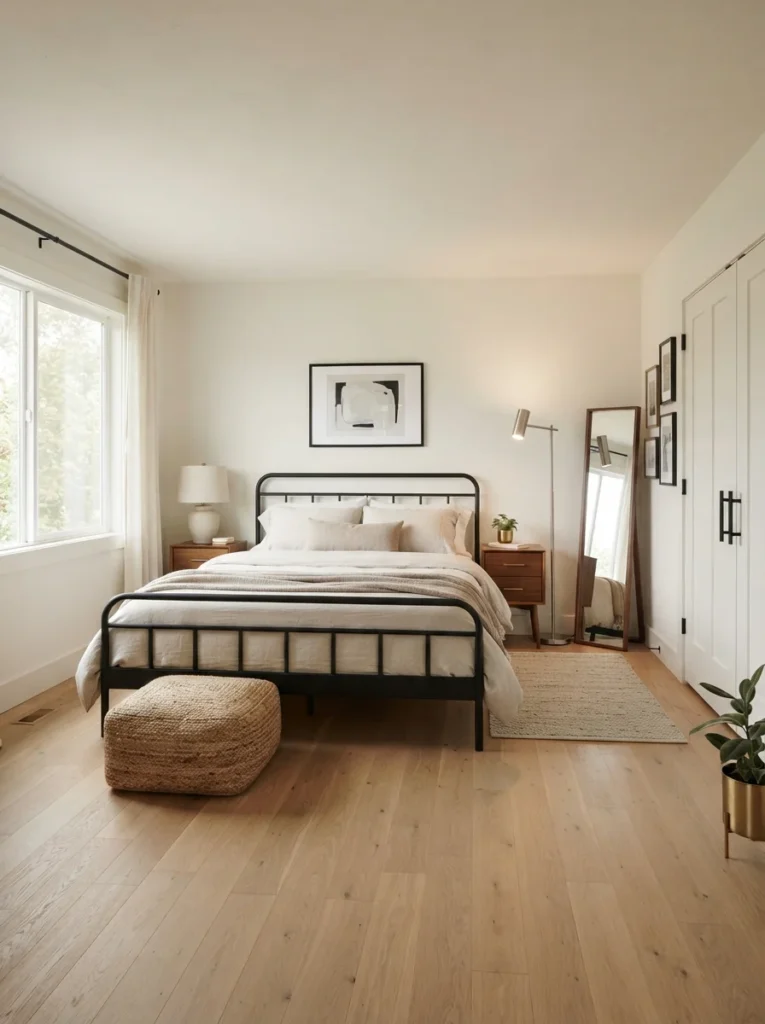
Mixed metal finishes bring subtle contrast to contemporary bedroom hardware. Brushed nickel, matte black, and warm brass can coexist in one room. This detail appears in door handles, lamp bases, and drawer pulls. Additionally, mixing metals prevents the space from feeling too matched or predictable. However, one metal should lead while the others play a supporting role. Meanwhile, consistent finishes on larger pieces, like bed frames, keep the look grounded. This idea adds richness without requiring bold color choices. As a result, small details carry noticeable design weight.
8. Minimalist Wall Art and Gallery Display
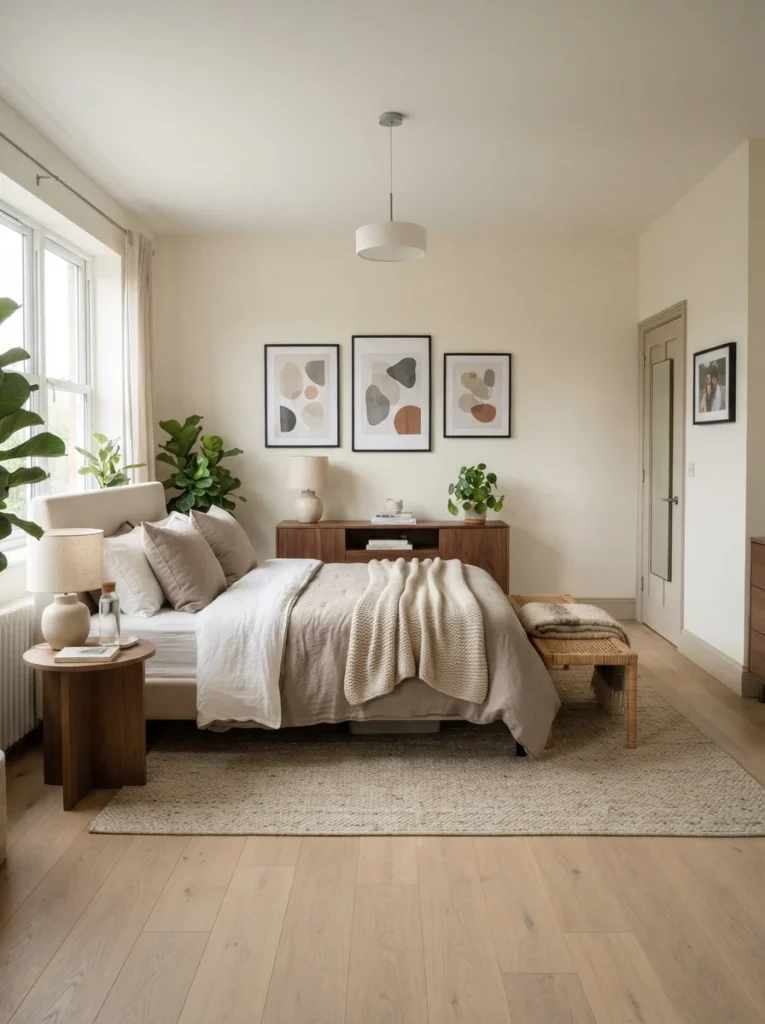
Minimalist wall art keeps the bedroom visually calm while adding personality. Abstract prints, black-and-white photography, or single oversized pieces work well here. Additionally, a small gallery wall with matching frames feels organized rather than busy. This detail supports a minimalist bedroom design without leaving walls bare. Meanwhile, oversized negative space around each piece gives the eye room to rest. Choosing two or three pieces, rather than many, keeps the wall from feeling cluttered. This idea suits contemporary spaces that value restraint. As a result, the art becomes a quiet focal point.
 You may also like20 DIY Christmas Earrings That Are Quick to Make
9. Layered Textiles for Warmth
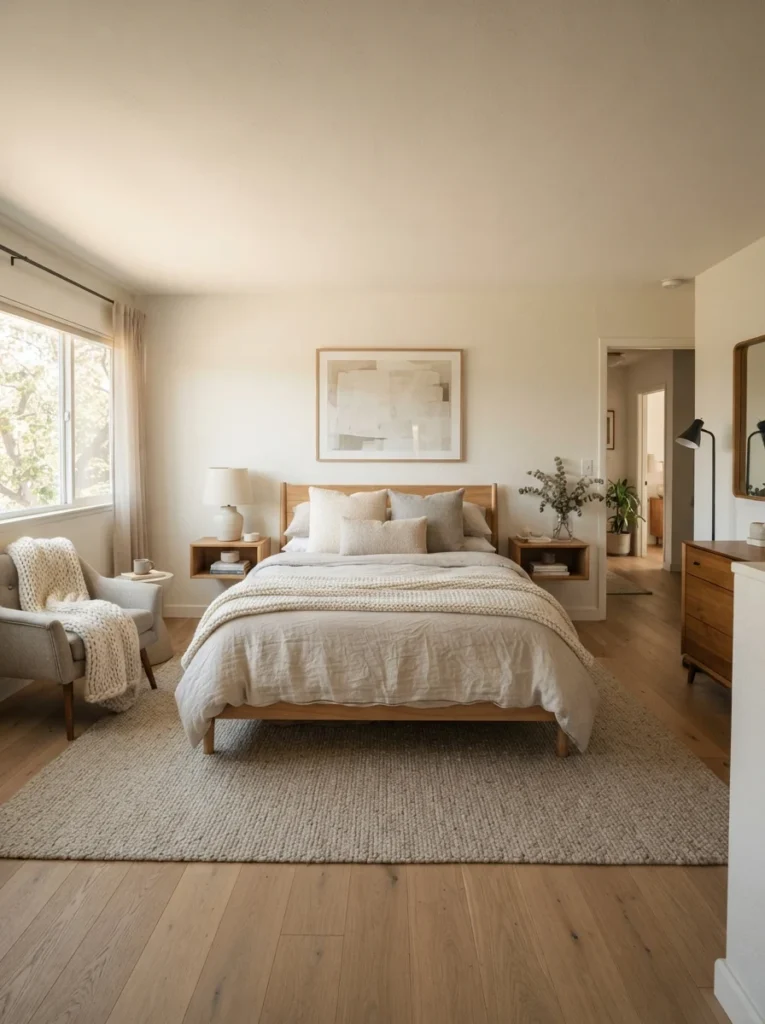
Layered textiles soften the clean lines found throughout contemporary bedrooms. A wool throw, linen duvet, and textured pillows add tactile variety. Additionally, mixing weights and weaves prevents the bedding from feeling flat. Furthermore, a low-pile rug beneath the bed grounds the space visually. Neutral or tonal colors keep the layers cohesive with the room’s overall palette. Meanwhile, seasonal swaps, like heavier throws in winter, keep the room adaptable. This idea proves that comfort and modern design can coexist easily. As a result, the bedroom feels inviting rather than sterile.
10. Built-In Wardrobe Storage
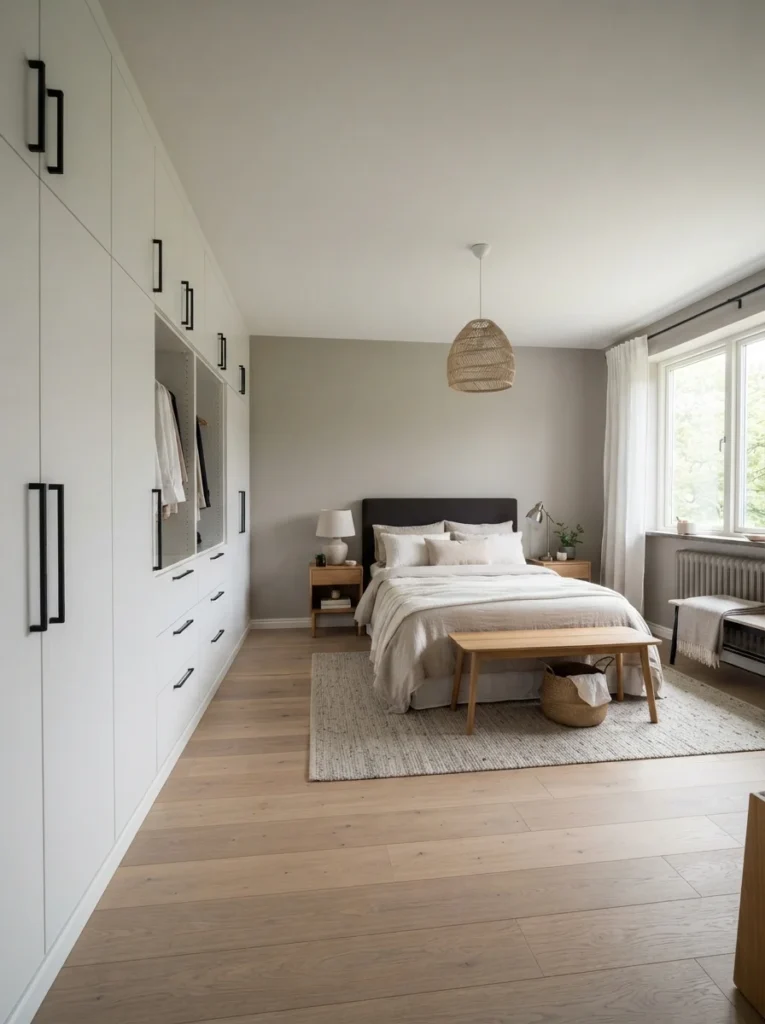
Built-in wardrobe storage keeps contemporary bedrooms free of visual clutter. Floor-to-ceiling cabinetry blends into the wall for a streamlined finish. This detail works well alongside broader wall storage solutions throughout the room. Additionally, hidden storage behind flush doors keeps daily items out of sight. Furthermore, built-in units can incorporate a vanity or a small desk nook. Homeowners planning a full closet redesign often review closet organization layouts for inspiration. Meanwhile, matte finishes on cabinetry match the room’s understated palette. As a result, the bedroom stays functional without sacrificing style.
11. Curved Furniture Silhouettes
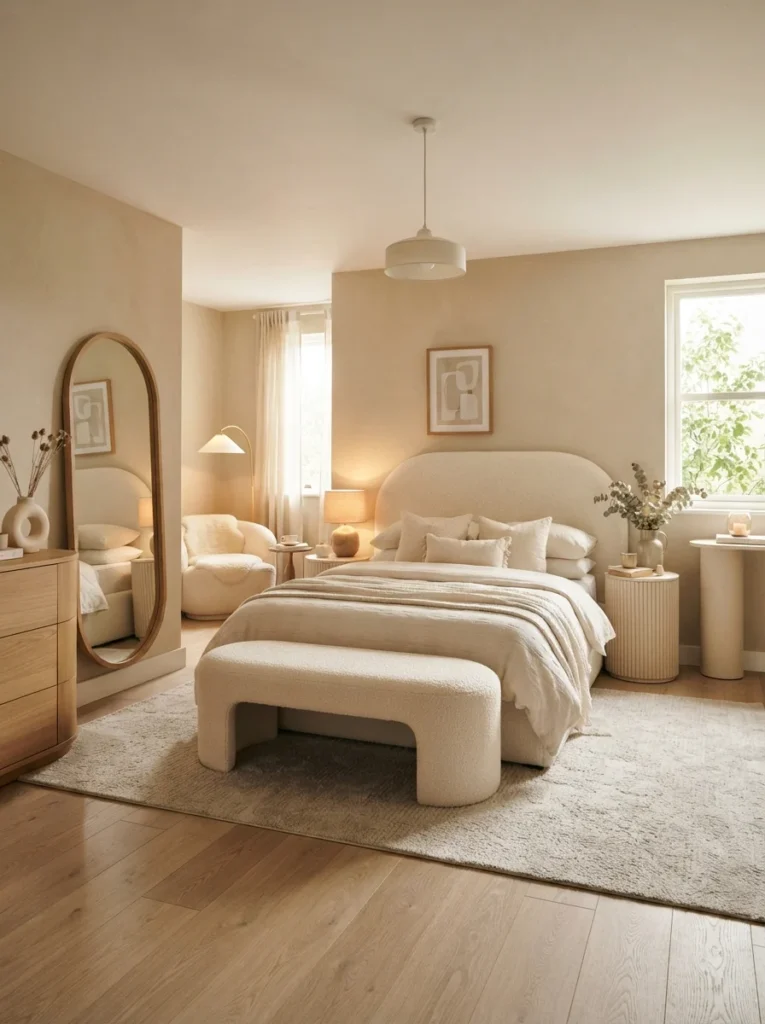
Curved furniture silhouettes soften the sharp lines common in modern design. Rounded nightstands, oval mirrors, and curved headboards add gentle contrast. Additionally, these shapes feel more organic and less rigid than boxy furniture. Furthermore, curves photograph beautifully against straight-lined walls and windows. This detail suits bedrooms that want warmth without extra color or pattern. Meanwhile, a curved bench at the foot of the bed adds both function and shape. This idea works particularly well in rooms with strong architectural lines. As a result, the space feels balanced and considered.
12. Large Windows and Natural Light
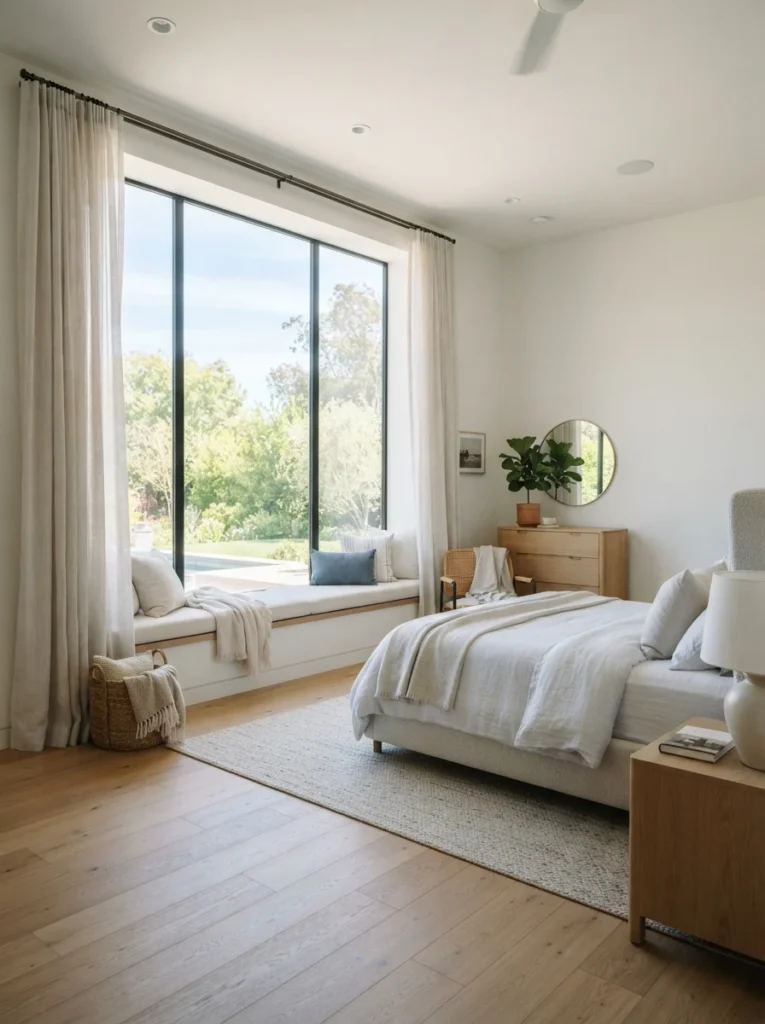
Large windows bring natural light into the heart of a contemporary bedroom. Sheer curtains or simple linen panels let daylight filter through softly. Additionally, unobstructed views connect the room to the outdoors. Furthermore, a window seat or bench makes the space feel purposeful, not wasted. Natural light also enhances the light and airy palettes many homeowners favor for this style. Meanwhile, blackout linings behind sheer panels support better sleep at night. This idea suits homeowners who want a bright, airy retreat. As a result, the bedroom feels connected to its surroundings.
13. Statement Headboard Design
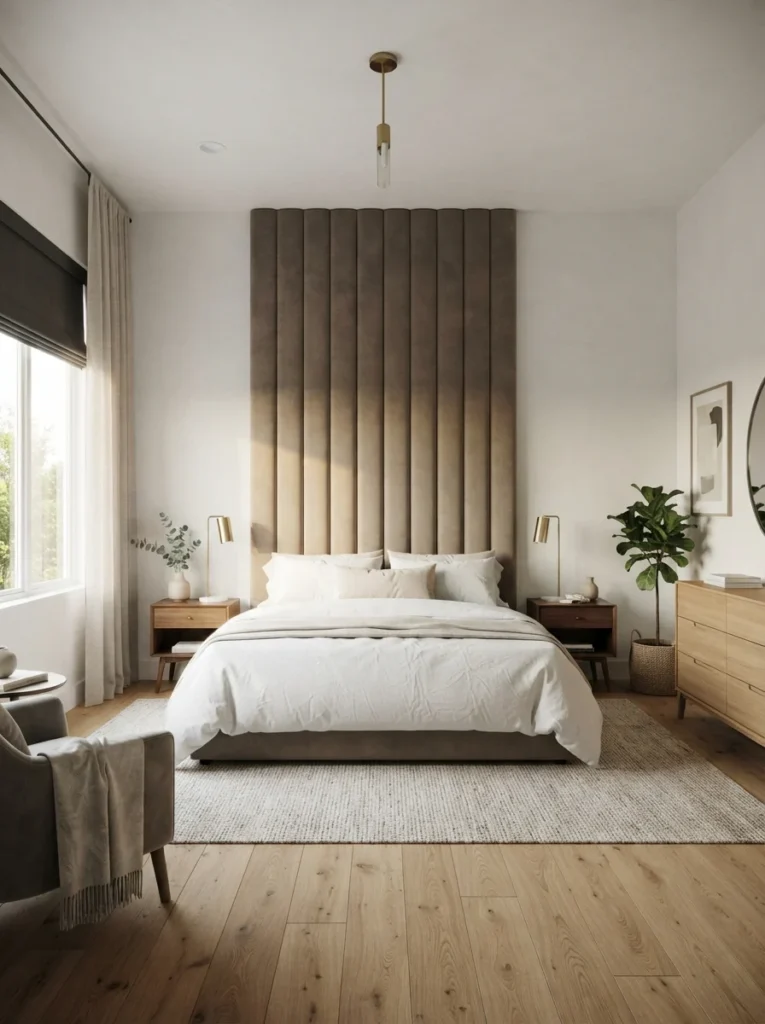
A statement headboard gives the bed presence without added clutter. Channel-tufted upholstery, wood paneling, or an oversized frame all work well. Additionally, an extra-tall headboard draws the eye upward and adds drama. Furthermore, a textured or patterned headboard can replace the need for wall art above the bed. This detail pairs naturally with simple, unadorned bedding. Meanwhile, a headboard in a contrasting neutral tone adds subtle depth. This idea suits bedrooms that want one clear focal point. As a result, the whole room feels anchored around the bed.
14. Indoor Plants for Organic Touches
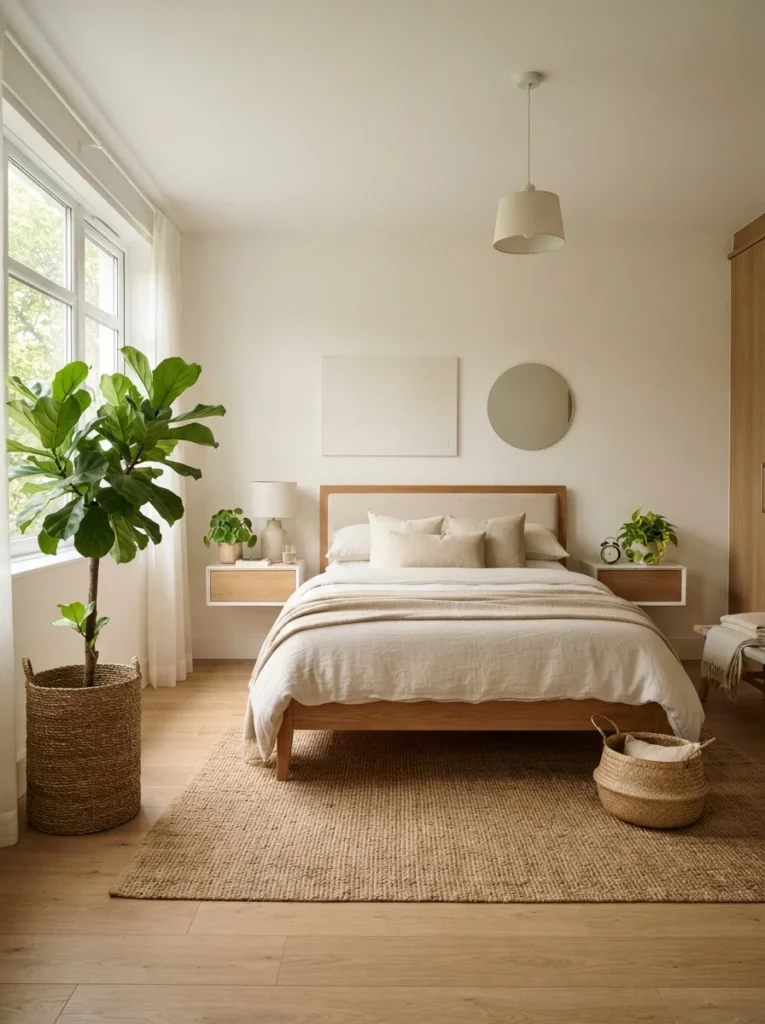
Indoor plants soften the structured lines found in contemporary bedroom design. A fiddle leaf fig or snake plant adds height and organic texture. Additionally, smaller plants on a floating nightstand bring life to tight corners. Furthermore, greenery balances matte metals and cool neutral tones throughout the room. Low-maintenance varieties suit bedrooms with limited natural light. Meanwhile, a woven or ceramic planter ties the plant into the room’s material palette. This idea adds warmth without introducing extra pattern or color. As a result, the bedroom feels calmer and more grounded.
15. Multi-Functional Furniture Pieces
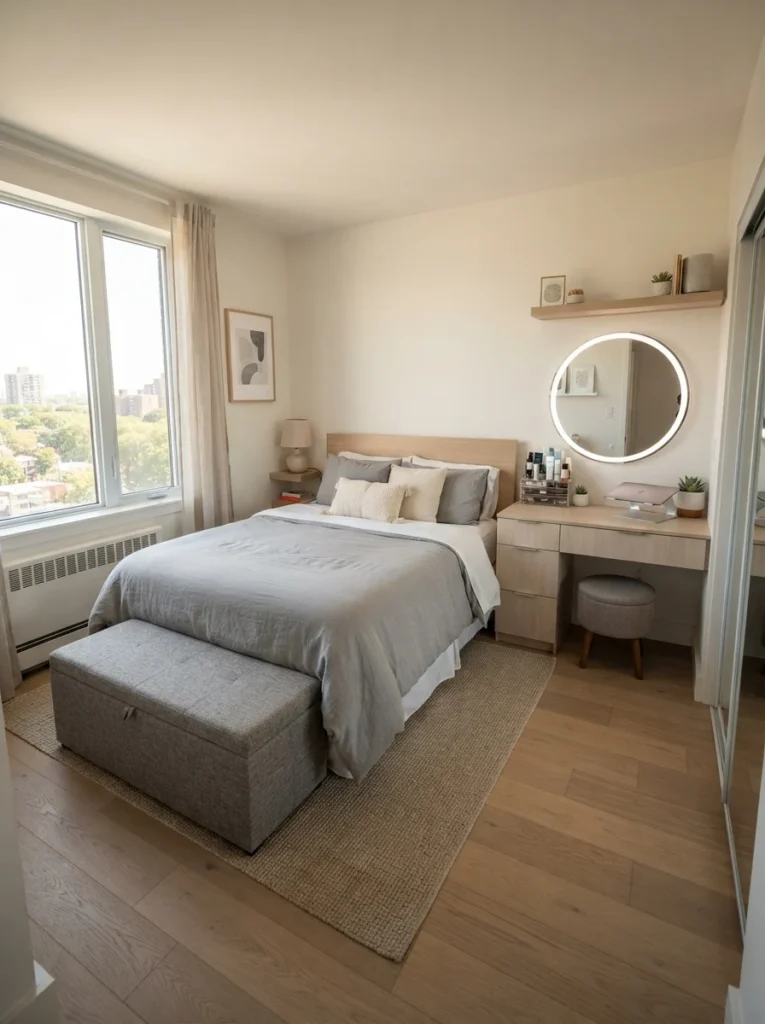
Multi-functional furniture supports contemporary bedrooms with limited square footage. A storage bench, ottoman with hidden compartments, or bed with built-in drawers all help. Additionally, a desk that doubles as a vanity saves valuable floor space. Furthermore, nesting tables offer flexibility for small seating areas. This idea suits studio apartments and compact primary bedrooms equally well. Meanwhile, choosing pieces with clean lines keeps the room from feeling crowded. Every item earns its place through both looks and daily use. As a result, the bedroom stays organized and visually light.
16. Smart Technology Integration
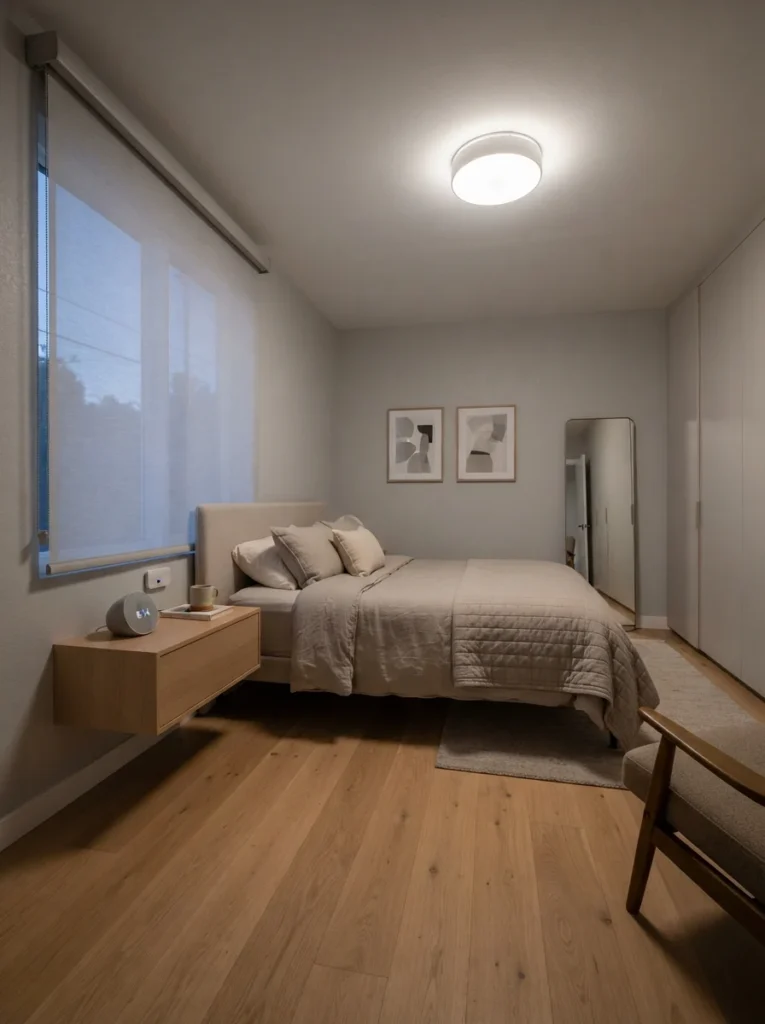
Smart technology blends into contemporary bedrooms without disrupting the calm aesthetic. Hidden charging stations, app-controlled lighting, and smart blinds all reduce visual clutter. Additionally, voice-controlled thermostats adjust comfort without extra switches on the wall. Furthermore, a slim smart speaker fits naturally on a floating nightstand. This idea suits homeowners who want convenience without visible cables or gadgets. Meanwhile, motorized window treatments support both privacy and natural light control. Discreet technology keeps the room focused on rest rather than devices. As a result, the bedroom feels current and effortlessly functional.
17. Cozy Reading Nook Corner
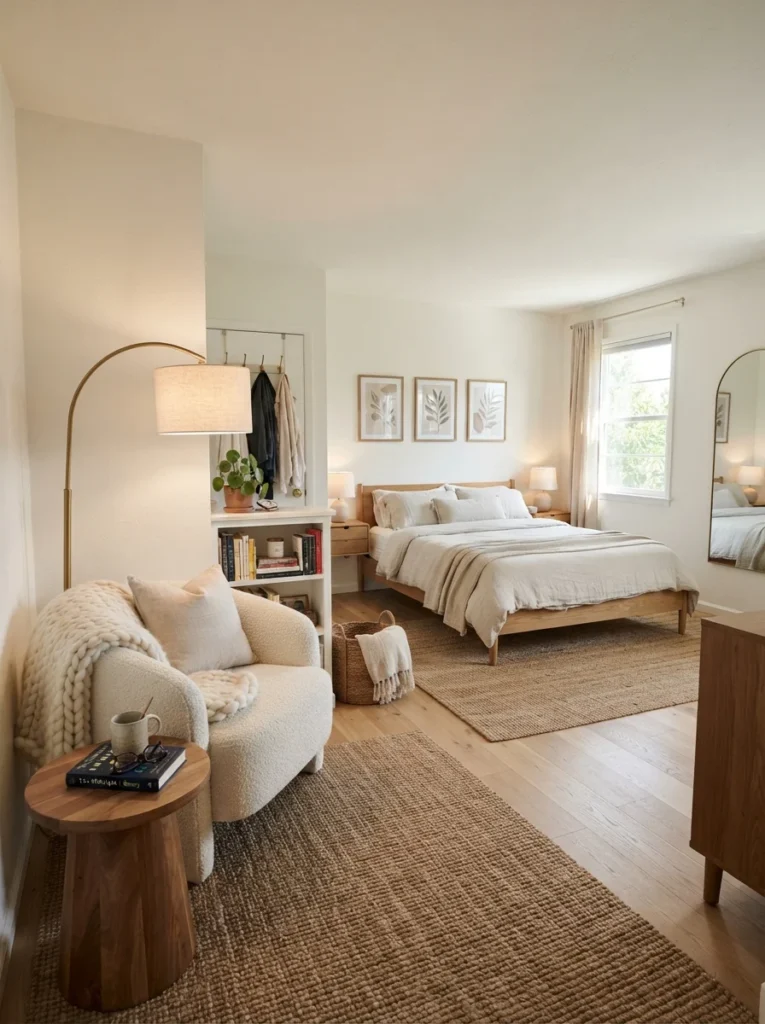
A reading nook corner adds a personal retreat within the contemporary bedroom. A single accent chair, small side table, and floor lamp create the setup. Additionally, placing the nook near a window makes use of natural daylight. Furthermore, a soft throw and one or two pillows keep the corner inviting. This idea works well in larger bedrooms with unused corner space. Meanwhile, a small bookshelf nearby keeps favorite reads within easy reach. The nook offers a quiet space separate from the bed itself. As a result, the bedroom serves more than one purpose.
How to Choose a Contemporary Bedroom Color Palette
Choosing a contemporary color palette starts with a neutral base. White, gray, taupe, and soft beige all work as anchor tones. Additionally, homeowners should pick one or two accent colors for contrast. Deep green, navy, or terracotta all pair well with neutral walls. Furthermore, matching undertones between wall paint, flooring, and furniture keeps the room cohesive. Testing paint swatches in natural and artificial light helps avoid surprises. Meanwhile, limiting the palette to three or four core colors prevents visual chaos. This approach keeps the bedroom flexible for future updates.
Common Mistakes to Avoid in Contemporary Bedroom Design
Overcrowding the room with furniture ranks among the most common mistakes. Contemporary design relies on open space to feel intentional. Additionally, mixing too many accent colors can make the room feel busy. Choosing trendy pieces over timeless ones often leads to a dated look within a few years. Furthermore, skipping proper lighting layers leaves the room feeling flat and uninviting. Ignoring storage needs also creates clutter that works against the clean aesthetic. Meanwhile, hanging art too high or too low disrupts the room’s visual balance. Avoiding these missteps keeps the design polished and lasting.
More ideas: If you enjoyed this list, you will also like these earthy bedroom ideas.
FAQs About Contemporary Bedroom Ideas
What colors work best in a contemporary bedroom? Neutral tones with one or two bold accents work best for this style.
Is contemporary design the same as modern design? No, contemporary design changes with current trends, while modern refers to a specific mid-century style.
What furniture suits a contemporary bedroom? Low-profile, clean-lined pieces in wood, metal, or upholstered finishes suit this style well.
How much does a contemporary bedroom makeover cost? Costs vary widely based on furniture choices, finishes, and overall room size.
Can small bedrooms use contemporary design? Yes, this style suits small spaces well, since it favors open, uncluttered layouts.

Written by Stephanie Fallis
Mom and homemaker who shares budget friendly DIY projects, decorating tips and gardening ideas for busy families.
More about me → Christmas ideas21 DIY Christmas Cards That Are Fun to Make
 Christmas ideas22 Christmas Plants for a Festive Green Home
 Christmas ideas21 Farmhouse Christmas Decor Ideas: Simple and Rustic