
A nursery in parents bedroom layout keeps a newborn within arm’s reach during the early months. Many parents choose this setup over a separate baby room. It shortens nighttime feeds and calms bedtime routines. It also saves square footage in smaller homes. Parents can watch over their baby without leaving the room. The right layout blends comfort, function, and calm design.
Soft, neutral tones work well for this kind of shared space. Cream walls, natural wood, and gentle textiles create a calm mood. A crib nook near a window brings in soft morning light. Meanwhile, a folding screen or curtain divider adds gentle privacy. This style suits Scandinavian, boho, and modern farmhouse bedrooms alike. Warm lighting and layered textures tie the nursery corner into the rest of the room.
Below are eighteen practical ideas for building a nursery inside a parents bedroom. Each idea covers layout, furniture, and styling choices for small or large rooms. Some ideas focus on storage, while others highlight lighting or privacy. As a result, parents can mix and match based on their space. These ideas work for co-sleeping families, small apartments, and larger primary suites. Each section includes a simple way to bring the concept to life at home.
In this post: 18 ideas
- Corner Crib Nook with a Curtain Divider
- Bassinet Beside the Bed for Easy Night Feeds
- Closet Conversion for a Compact Nursery Corner
- Room Divider Screen for a Private Nursery Zone
- Under-Window Nursery Nook with Natural Light
- Neutral Palette That Blends Nursery and Bedroom Decor
- Vertical Storage Wall for Nursery Essentials
- Floating Shelves Above the Crib for Display and Storage
- Canopy Crib for a Soft Visual Boundary
- Compact Changing Station on a Repurposed Dresser
- Shared Blackout Curtains for Better Rest
- Layered Rugs to Define the Nursery Corner
- Wall Decal Accent Behind the Crib
- Multi-Purpose Furniture for Small Nursery Corners
- Layered Lighting for Nighttime Feedings
- Bookshelf Nook for Bedtime Stories
- Foldaway Nursery Setup for Studio Bedrooms
- Gliding Chair Corner for Nursing and Bonding
1. Corner Crib Nook with a Curtain Divider
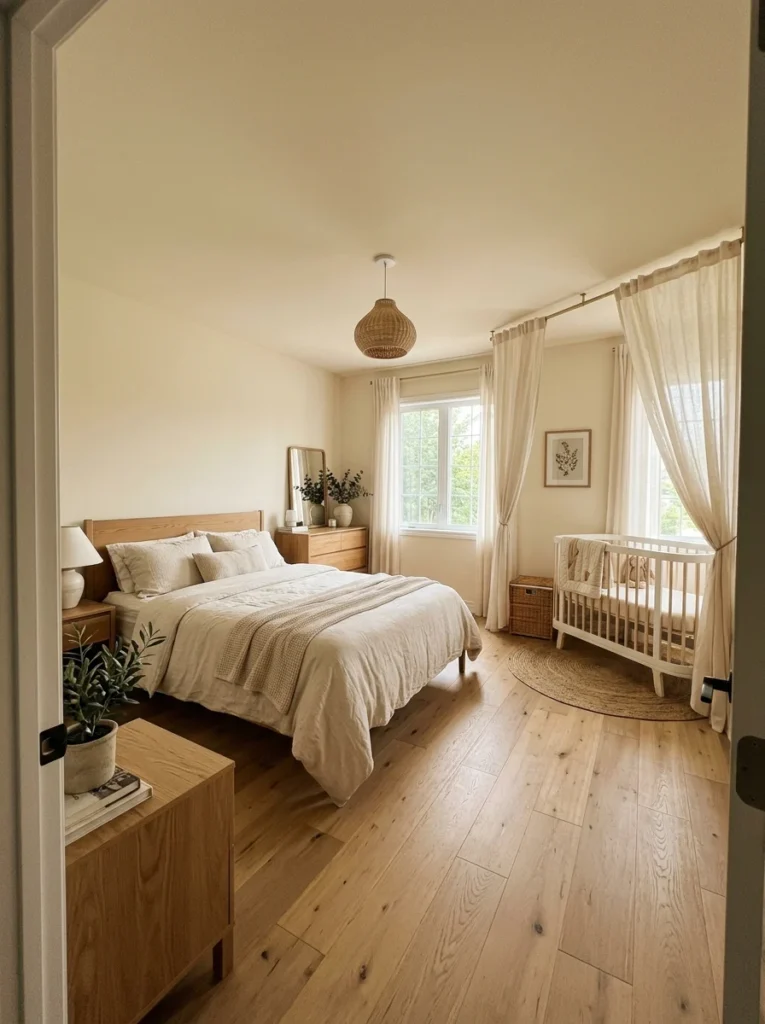
A corner crib nook keeps the nursery in parents bedroom feeling separate yet close. Pick a quiet corner away from the door for less foot traffic. Hang a sheer curtain on a tension rod to frame the space. This soft boundary blocks light without closing off sound. A small rug under the crib adds warmth underfoot. Pair the curtain with a matching valance for a finished look. This setup suits primary suites with generous square footage, much like the roomy layouts featured in ideas for a large bedroom. Keep the crib away from cords, blinds, and heavy furniture for safety.
2. Bassinet Beside the Bed for Easy Night Feeds
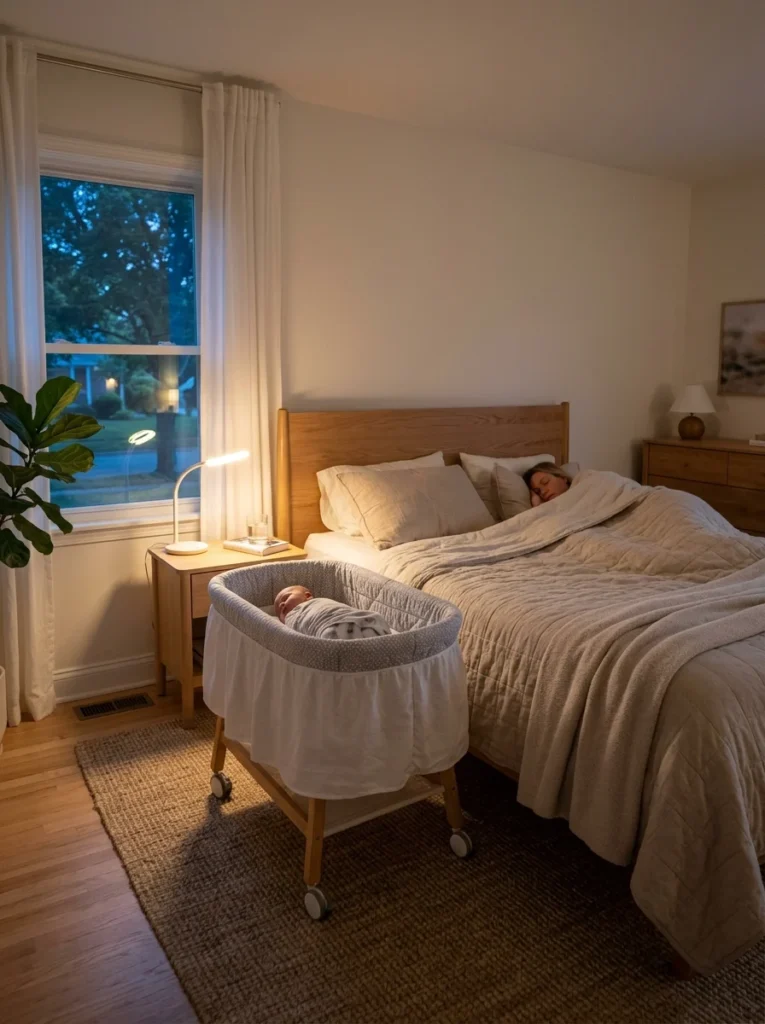
A bedside bassinet supports quick, quiet feeds without a long walk across the room. Choose a bassinet with wheels for easy repositioning during the day. Keep it at mattress height so parents can reach the baby without standing. A small clip-on light helps with late-night checks. Natural cotton bedding keeps the space soft and breathable. This idea fits almost any bedroom footprint, even compact apartments. Additionally, a bassinet skirt in a matching fabric keeps the corner looking tidy. Swap the bassinet for a crib once the baby grows past newborn size.
3. Closet Conversion for a Compact Nursery Corner
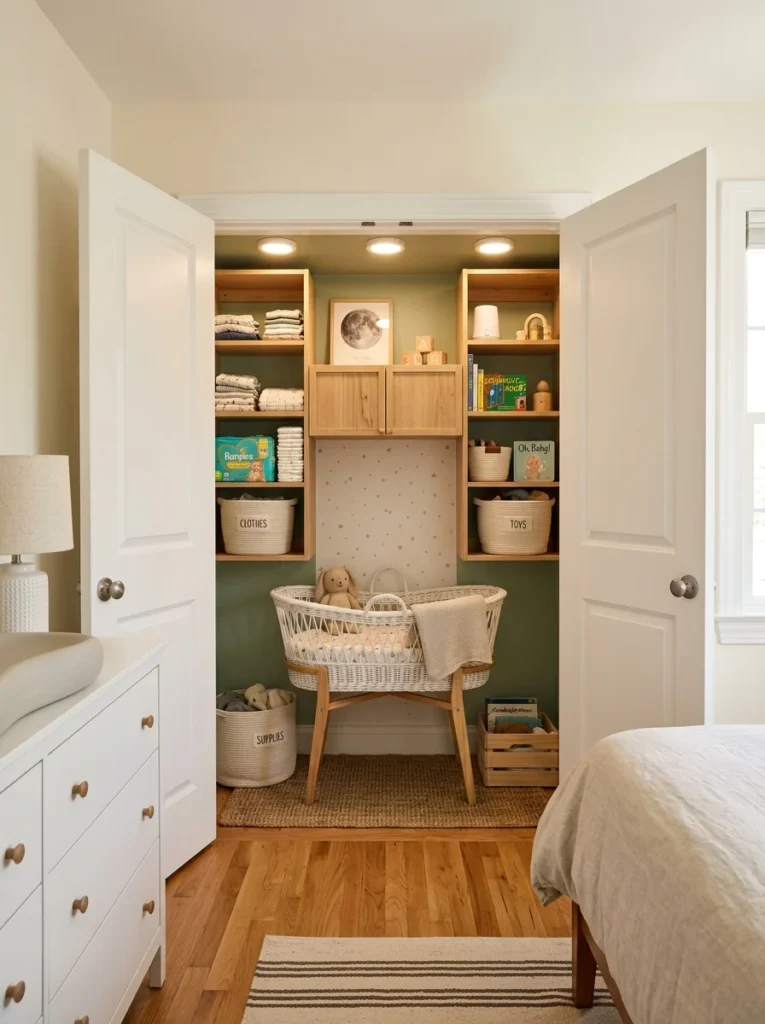
A walk-in or reach-in closet can become a mini nursery with a few changes. Remove hanging rods and add open shelving for baby essentials. Paint the interior a soft, calming shade to define the space. Add a small crib or bassinet along the back wall. Battery-powered puck lights offer soft illumination without new wiring. This closet nursery idea keeps clutter contained and out of view. Leave the closet doors open during the day for airflow and light. At night, a curtain can replace the doors for a softer feel.
4. Room Divider Screen for a Private Nursery Zone
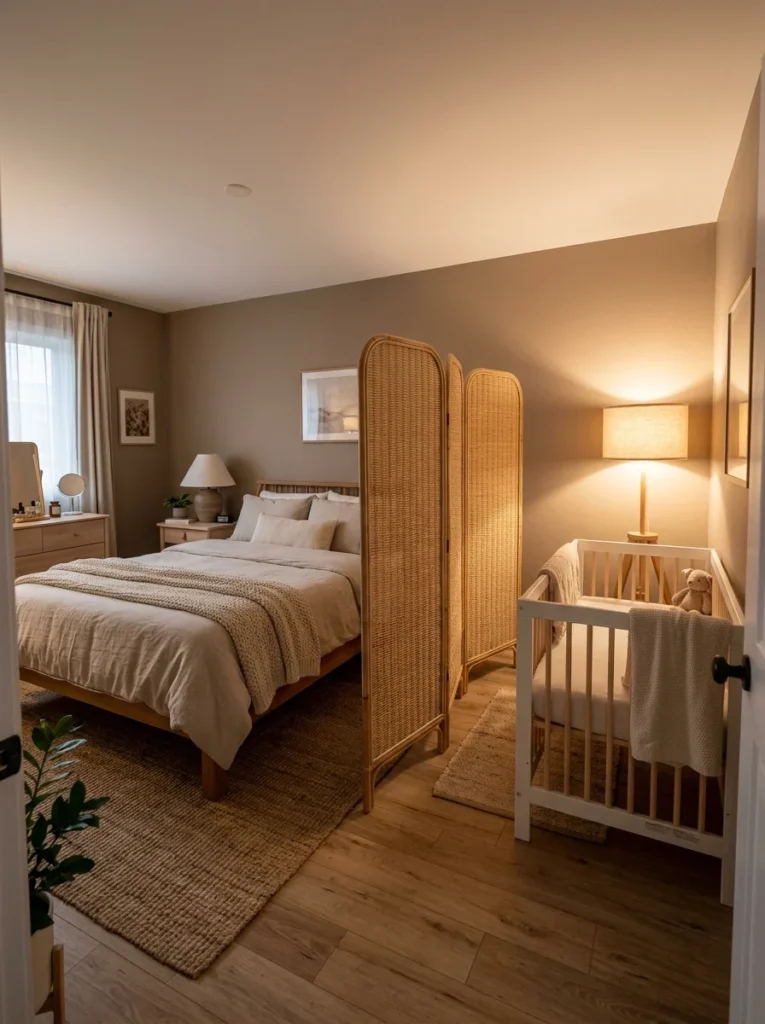
A folding screen divider creates an instant, movable boundary. Choose a screen in rattan, wood, or fabric to match the bedroom decor. Place it between the bed and the crib for a visual break. This option works well for renters who cannot alter walls. A screen also folds flat for storage once the nursery phase ends. Pair it with a floor lamp for soft, indirect lighting nearby. This layout gives structure without permanent construction. It also keeps the nursery in parents bedroom feeling like two distinct zones.
5. Under-Window Nursery Nook with Natural Light

Placing the crib beneath a window brings in gentle daylight for naps. Add blackout curtains or a cellular shade for better sleep control. A window seat cushion nearby doubles as a changing spot. Keep cords and blinds tied up high, away from the crib. Natural light also helps parents monitor the baby’s mood during the day. This nook suits bedrooms with a wide window wall. Layer sheer curtains under the blackout panel for daytime softness. The combination keeps the space bright yet restful when needed.
6. Neutral Palette That Blends Nursery and Bedroom Decor
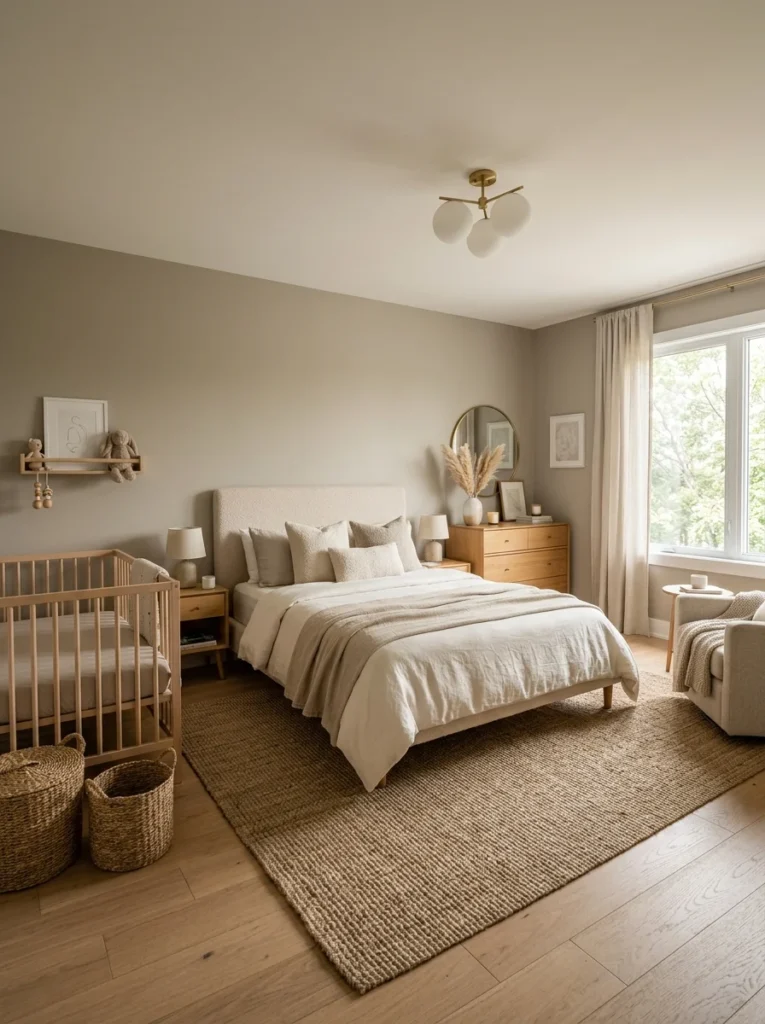
A shared neutral palette keeps the nursery from feeling like a separate room. Warm greige, oat, and soft taupe tones work across both zones. Add texture through boucle, linen, and woven baskets instead of bold color. This approach mirrors the calm tones shown in grey master bedroom ideas. A neutral base also makes it easier to swap in colorful accents later. Wooden furniture in matching finishes ties the crib to the bed frame. This idea suits parents who want one cohesive, grown-up feeling room. The nursery blends in rather than standing apart.
7. Vertical Storage Wall for Nursery Essentials
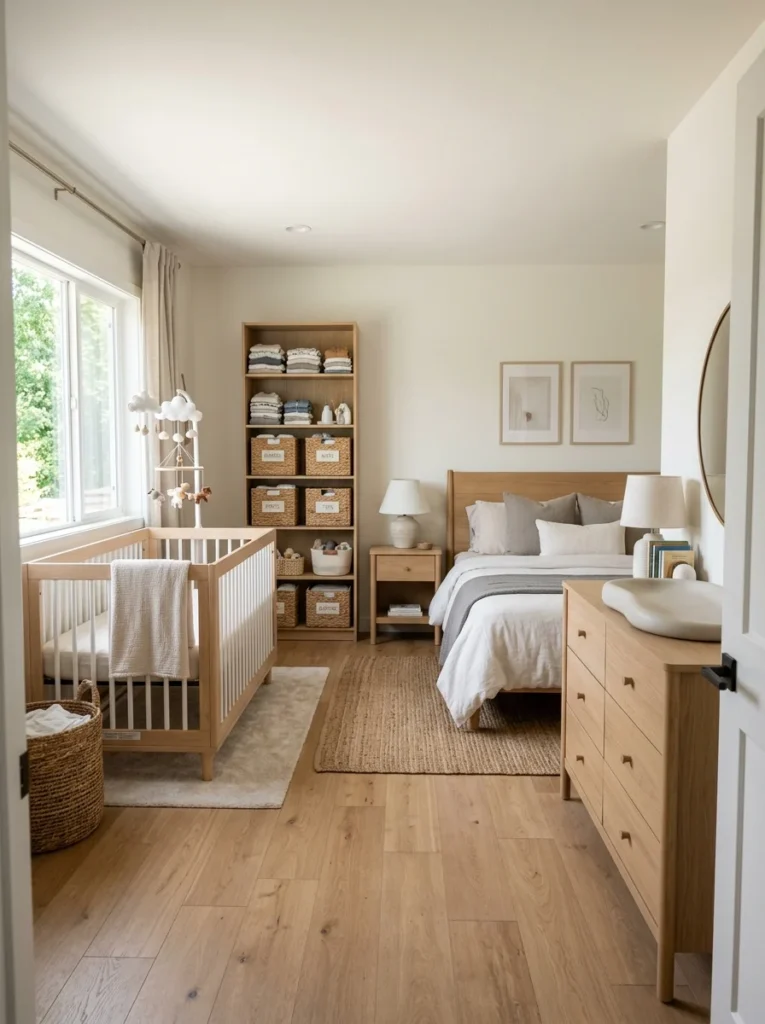
Floor space stays limited in a shared bedroom, so storage should go up. A tall, narrow shelving unit holds diapers, wipes, and folded clothes. Woven bins keep small items organized and out of sight. A pegboard section can hold burp cloths and swaddles within reach. This vertical approach saves precious square footage near the crib. Choose a unit in a finish that matches the dresser or nightstands. Labeling each bin speeds up nighttime routines for tired parents. A vertical wall keeps everything close without crowding the walkway.
8. Floating Shelves Above the Crib for Display and Storage
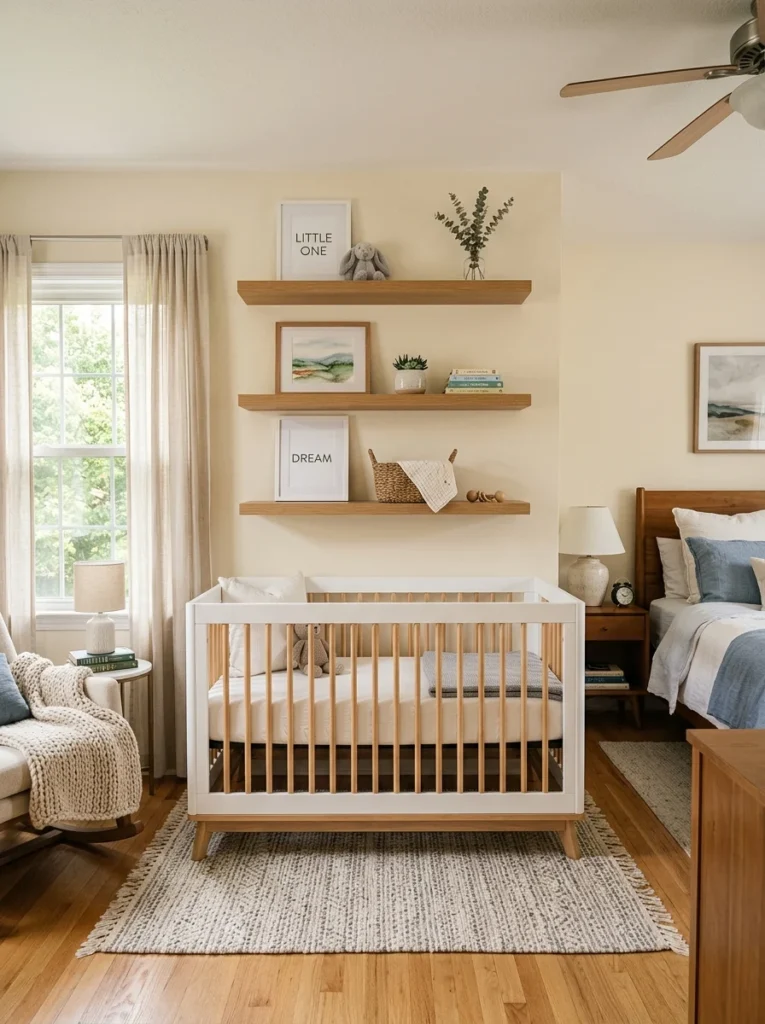
Floating shelves above the crib area hold books, small lamps, and keepsakes. Mount shelves securely and out of the baby’s reach as they grow. A row of three shelves at different heights adds visual interest. Style them with woven baskets, framed prints, and soft plush toys. This idea works well in bedrooms with limited floor space for a dresser. Keep the shelf styling simple to avoid visual clutter near the crib. A neutral shelf finish blends with most bedroom color schemes. This detail adds function without taking up any floor area.
9. Canopy Crib for a Soft Visual Boundary
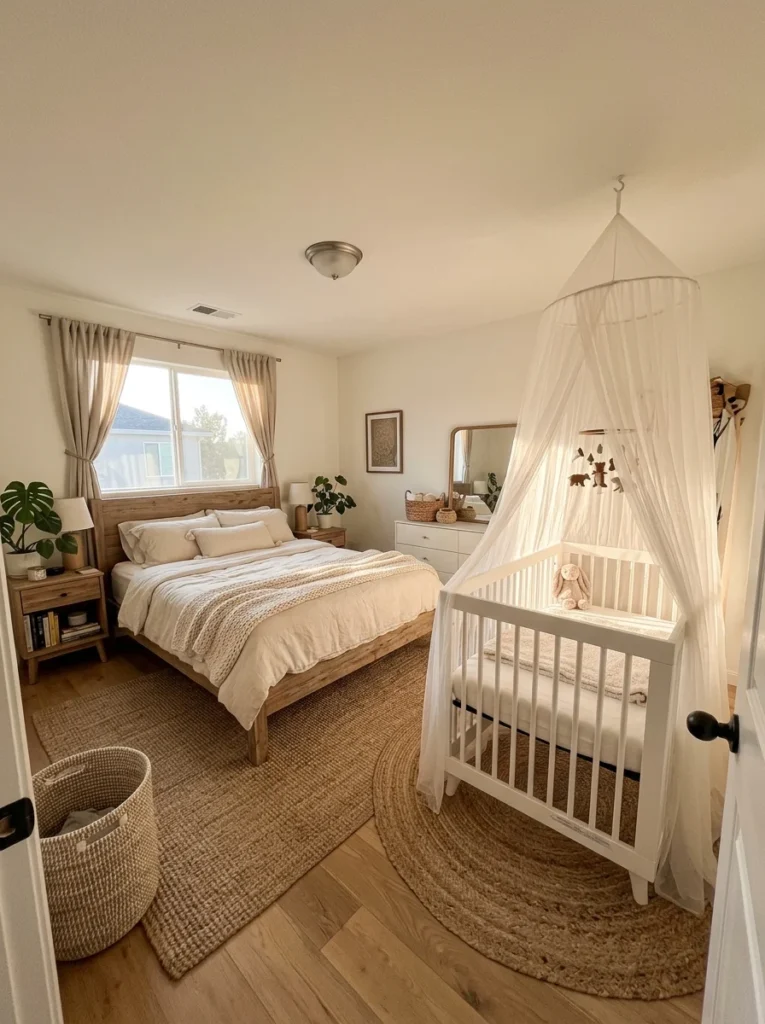
A canopy over the crib creates a gentle sense of separation. Sheer fabric in white or cream keeps the look airy and light. Mount the canopy frame to the ceiling or a nearby wall. This detail softens the crib’s presence within the larger bedroom. It also adds a touch of romance to a shared adult space. Choose flame-retardant, breathable fabric for safety around the baby. A canopy pairs nicely with coquette or cottage-style bedrooms. This idea gives the nursery in parents bedroom a dreamy, layered look.
 You may also like20 DIY Christmas Earrings That Are Quick to Make
10. Compact Changing Station on a Repurposed Dresser
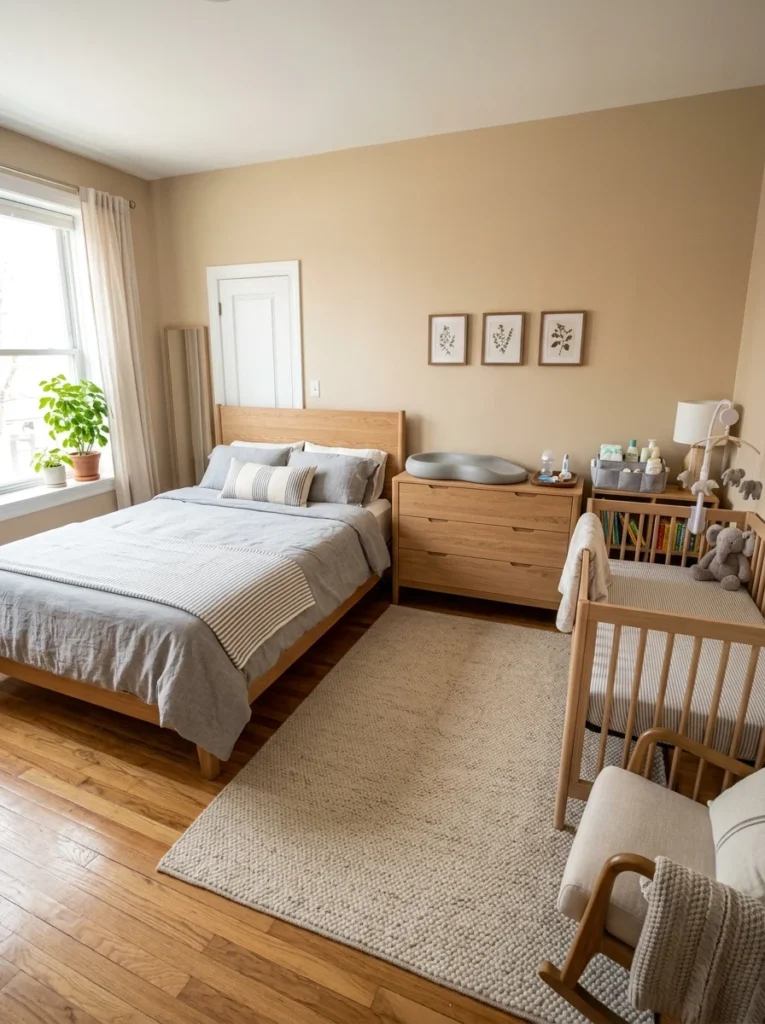
A dresser already in the bedroom can double as a changing station. Add a contoured changing pad to the top surface with safety straps. Store diapers and creams in the top drawer for quick access. This setup avoids buying extra furniture for a small nursery corner. A small tray keeps wipes and lotion within easy reach. Choose a dresser height that limits bending during late-night changes. This multi-use piece keeps the room efficient and clutter-free. It also transitions easily back to a regular dresser later on.
11. Shared Blackout Curtains for Better Rest
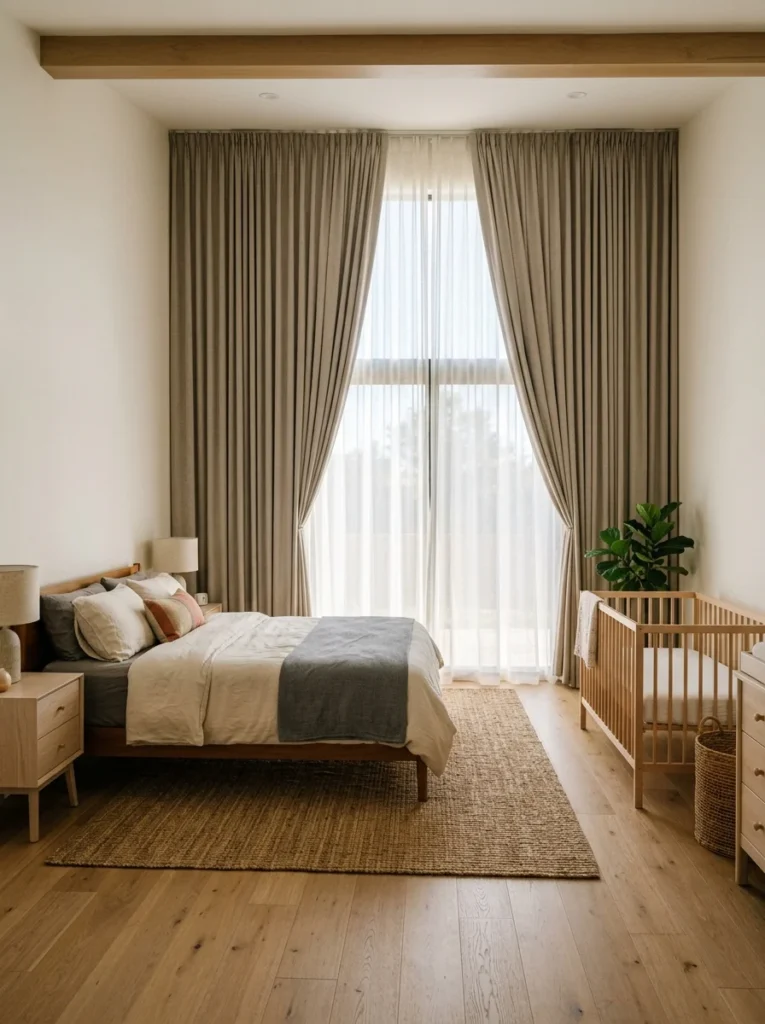
Blackout curtains benefit both the baby and the parents sharing the room. Choose a single, wide curtain panel to cover the full window wall. This keeps morning light from waking the baby too early. Layer a sheer curtain underneath for daytime softness and airflow. Blackout lining also helps reduce outside noise during naps. Pick a neutral curtain color that matches both nursery and bedroom decor. This shared solution avoids installing separate window treatments. It keeps the whole room dark and quiet during sleep hours.
12. Layered Rugs to Define the Nursery Corner
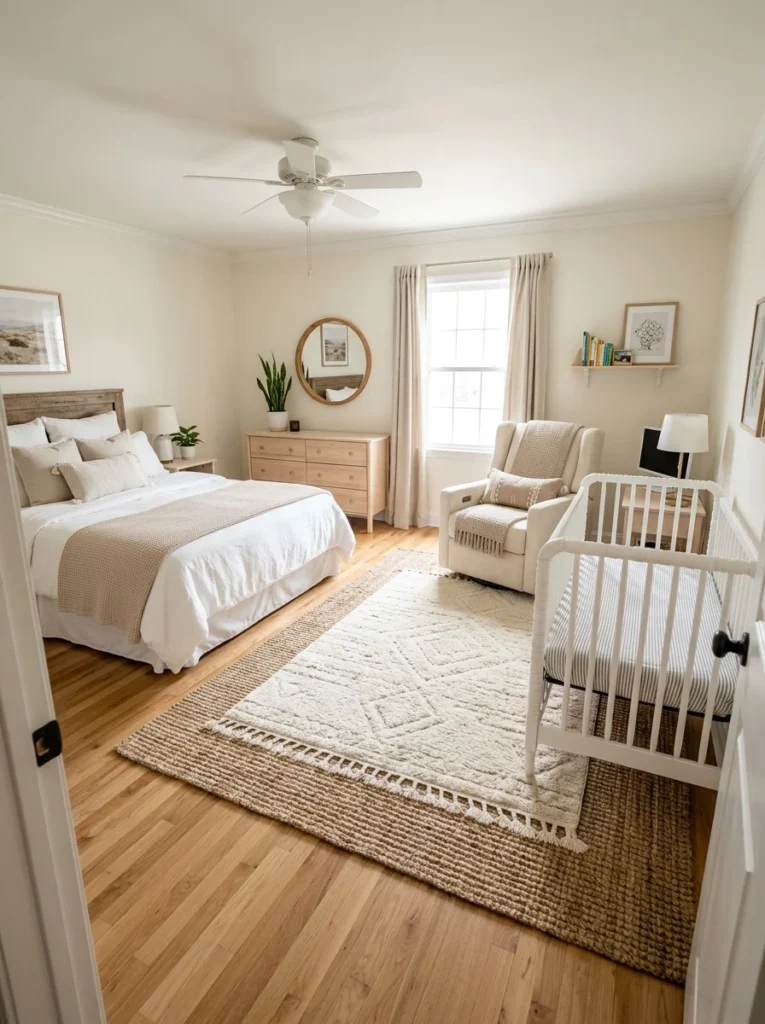
A layered rug marks the nursery zone without a physical wall. Place a jute or sisal rug as the base layer. Add a smaller, softer rug on top near the crib and glider. This layering trick works in open-plan primary suites and studio bedrooms. It also adds warmth and texture underfoot during nighttime visits. Choose rugs with a low pile for easy vacuuming and cleaning. The rug boundary works well alongside the flexible layouts shown in master suite floor plan ideas. This subtle divider keeps both zones connected yet distinct.
13. Wall Decal Accent Behind the Crib
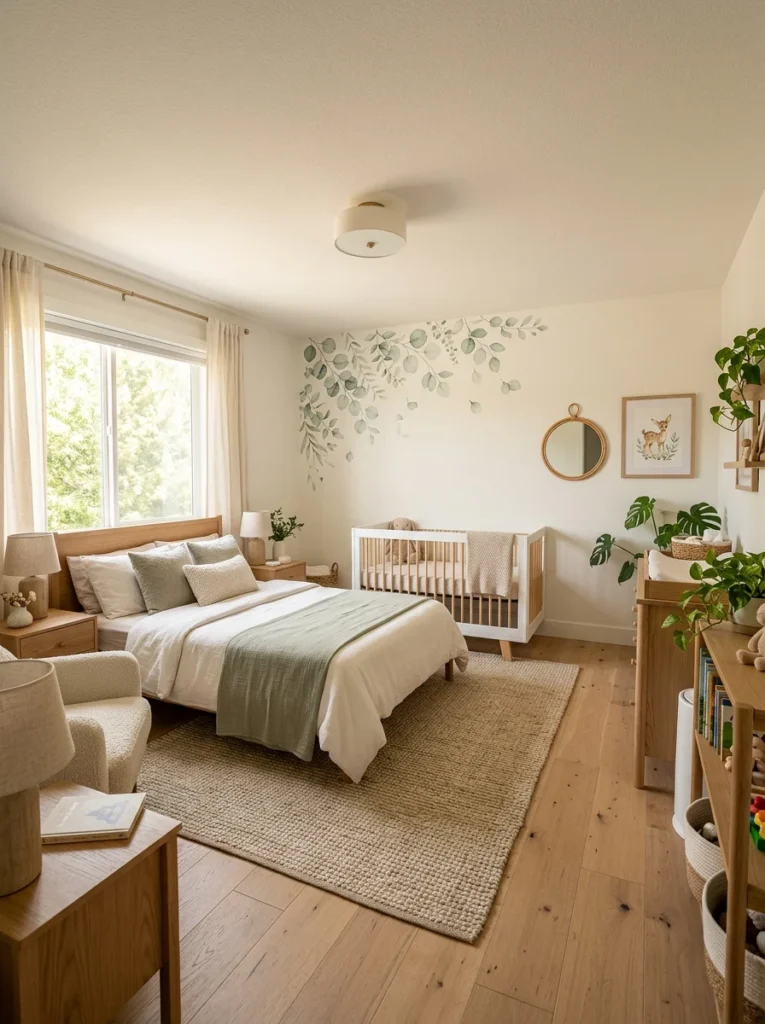
A removable wall decal adds personality without a full repaint. Choose a soft botanical, cloud, or geometric pattern for the crib wall. Decals peel off cleanly, which suits renters and growing families. This accent draws a gentle line between the nursery and the rest of the room. Pair the decal with a small round mirror or framed print nearby. Keep the color palette close to the existing bedroom walls. This idea adds charm similar to the soft accent walls in blue rooms ideas. A single accent wall keeps the space calm rather than busy.
14. Multi-Purpose Furniture for Small Nursery Corners
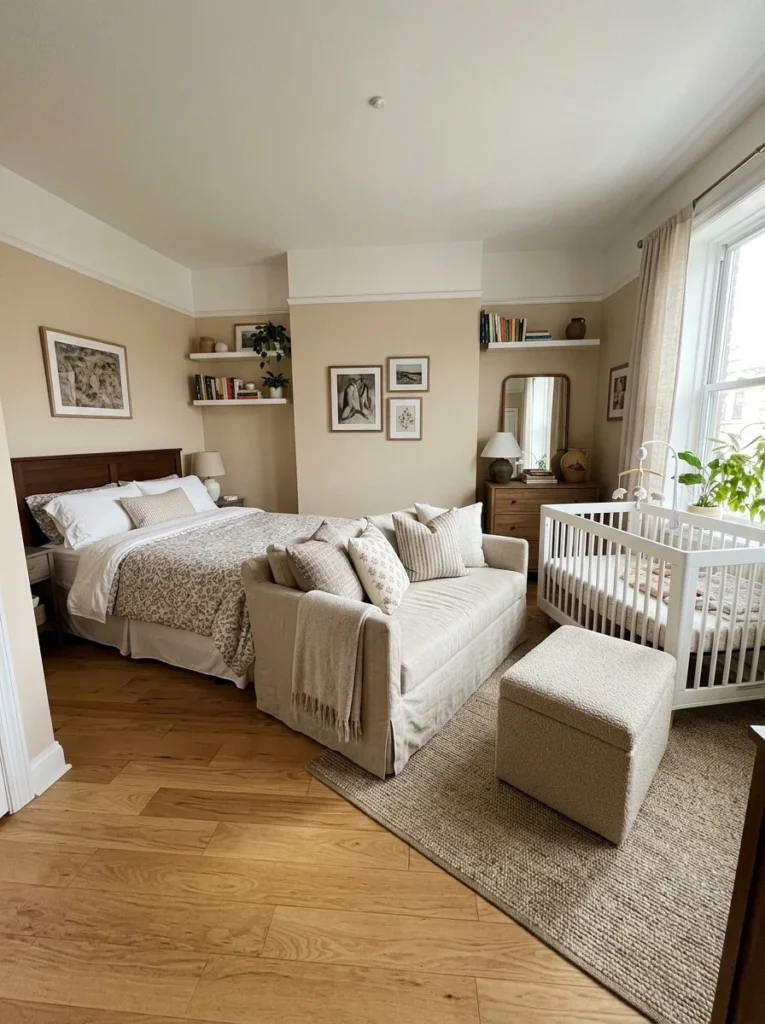
Furniture that serves two purposes saves space in a shared bedroom. A storage ottoman can double as extra seating and a toy bin. A daybed near the crib works as a nursing spot and guest seat. This flexible approach mirrors the space-saving thinking behind minimalist bedroom office combo ideas. Choose furniture on casters for easy rearranging as needs change. A fold-down shelf can serve as a changing surface when needed. This idea keeps the room adaptable through each stage of infancy. Multi-purpose pieces reduce the total furniture footprint significantly.
15. Layered Lighting for Nighttime Feedings
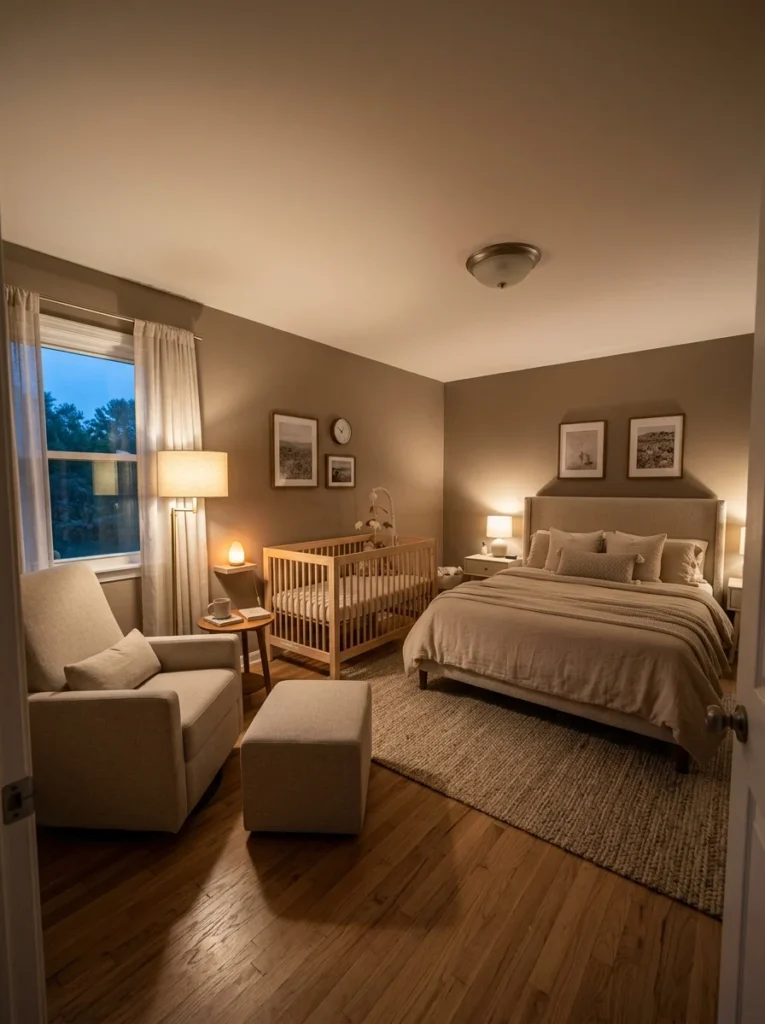
Good lighting layers make nighttime routines easier on tired parents. A dimmable floor lamp near the glider offers soft, adjustable light. A small nightlight near the crib helps with diaper changes. Avoid bright overhead lighting, which can startle a sleepy baby. Warm bulb tones between 2700K and 3000K feel calmer at night. Place a lamp switch within easy reach of the glider or bed. This layered approach supports rest for both baby and parents. Soft lighting also keeps the whole bedroom feeling cozy after dark.
16. Bookshelf Nook for Bedtime Stories
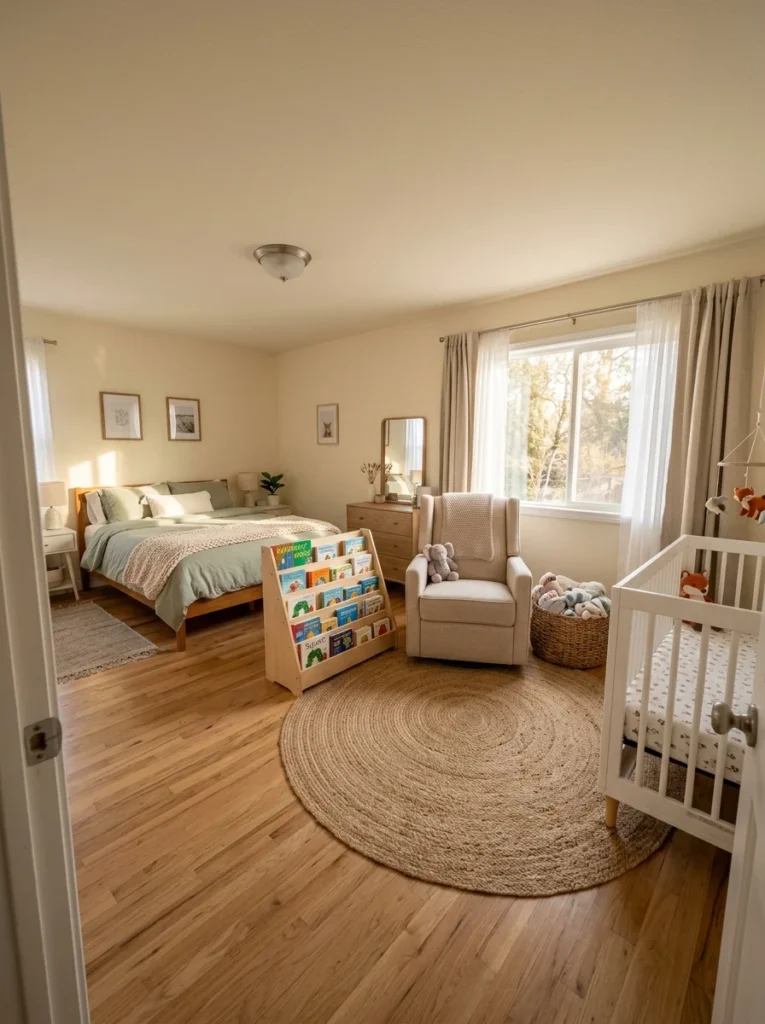
A small bookshelf near the crib supports a calm bedtime routine. Choose a low, sturdy shelf so board books stay within reach. Add a soft chair or floor cushion for reading time together. This nook works well tucked beside a window or in a corner. Rotate books seasonally to keep the collection fresh and engaging. A small woven basket can hold extra blankets or stuffed toys. This reading corner adds warmth to the nursery in parents bedroom setup. It also gives the space a purpose beyond sleep alone.
17. Foldaway Nursery Setup for Studio Bedrooms
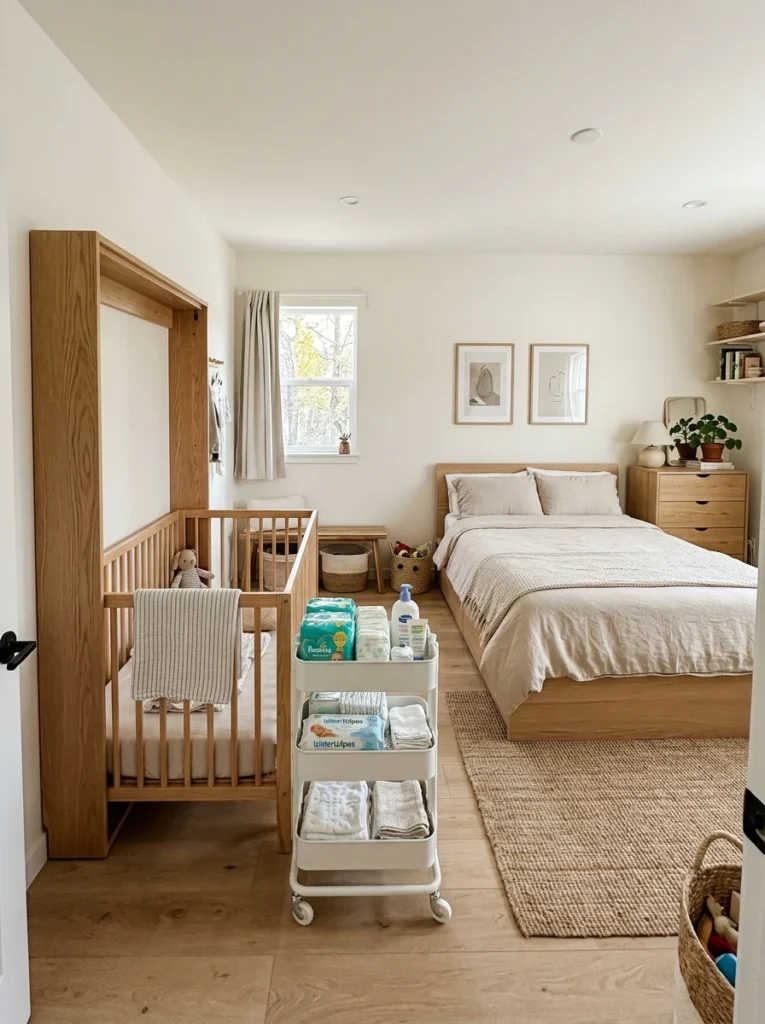
Studio and small bedrooms benefit from a nursery that folds away. A wall-mounted, fold-down crib saves floor space during the day. Pair it with a fold-out changing pad stored inside a nearby cabinet. This approach borrows ideas from space-saving built-in daybed ideas used in compact rooms. Choose furniture with a matching finish to keep the look cohesive. A slim rolling cart can hold diapers and wipes when needed. This setup keeps the room open and flexible most of the day. It works well for growing families in tighter square footage.
18. Gliding Chair Corner for Nursing and Bonding
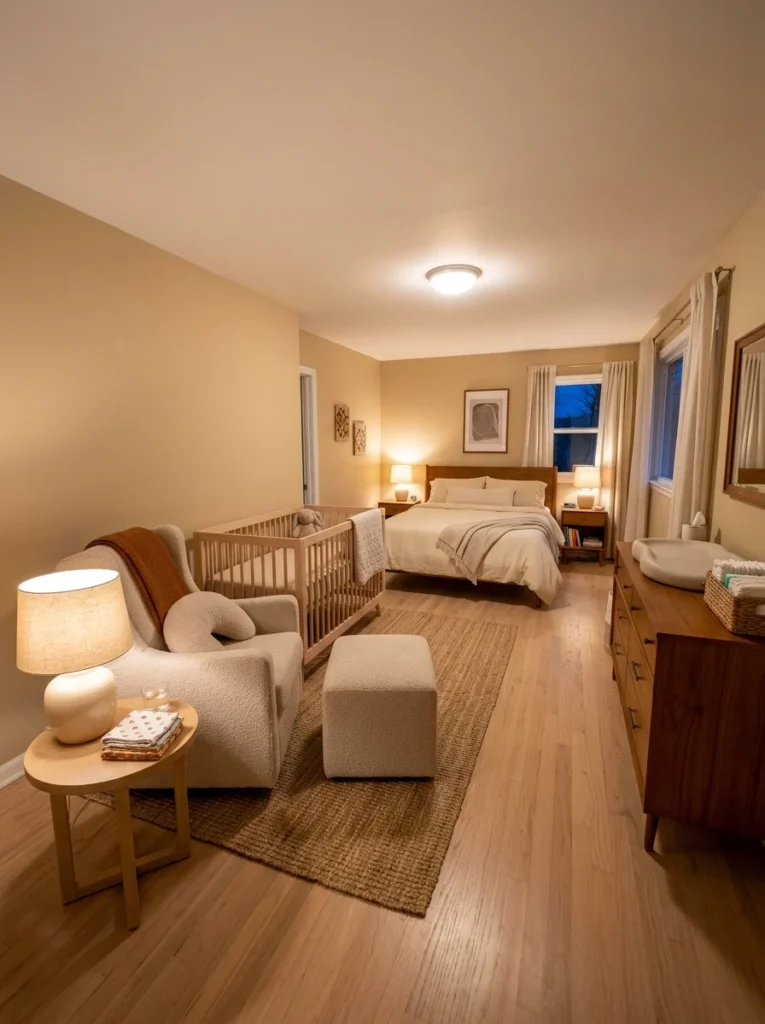
A gliding chair corner gives parents a comfortable spot for feeding and bonding. Place the glider near the crib but away from direct window drafts. Add a small side table for water, burp cloths, and a lamp. A soft ottoman completes the corner for propping up tired feet. This cozy setup echoes the layouts found in small sitting area in bedroom ideas. Choose a chair with a wide seat and supportive back cushion. A washable slipcover helps the glider handle daily wear. This corner becomes a favorite spot during those early months.
How to Choose Colors for a Nursery in a Parents Bedroom
Color choice matters when a nursery and bedroom share one space. Stick to a soft, neutral base across the whole room first. Warm whites, sand, and pale sage all work well together. Add one gentle accent color through bedding, art, or a rug. Avoid strong contrast, since a busy palette can overstimulate a newborn. Matching wood tones between the crib and bedroom furniture ties the look together. For more direction on cohesive palettes, browse bedroom ideas for inspiration across different styles. A calm color story keeps the whole room feeling restful.
Common Mistakes to Avoid When Adding a Nursery to a Bedroom
Overcrowding the room with too much furniture is a common mistake. Keep only the essentials, such as a crib, glider, and small storage piece. Skipping blackout curtains often leads to disrupted naps and early wake-ups. Placing the crib too close to cords or blinds also creates safety risks. Ignoring airflow around the crib can make the corner feel stuffy. Ignoring noise control, such as a rug or soft curtain, adds unnecessary stress. Finally, avoid choosing a theme so bold it clashes with the rest of the decor. A simple, functional layout prevents most of these issues.
How Much Space Does a Bedroom Nursery Need
A functional nursery corner needs roughly forty to sixty square feet. This space should fit a crib, a small dresser, and a chair. Smaller bedrooms can still work with a compact bassinet and wall shelving instead. Leave at least two feet of clearance around the crib for safety. A room divider or curtain does not need much additional space to install. Vertical storage helps stretch a tight footprint without adding bulk. Careful furniture selection matters more than total square footage in most cases.
More ideas: For more inspiration, take a look at these yellow and grey bedroom ideas.
FAQs About Nursery in Parents Bedroom Ideas
Is it safe to keep a baby’s crib in the parents’ bedroom? Yes, many pediatric guidelines support room-sharing for the first several months of life.
How long should a baby stay in the parents’ room? Most families keep the setup for six months to a year, depending on comfort and space.
What is the best crib size for a shared bedroom? A compact crib or bassinet works best for smaller rooms, while a full crib suits larger primary suites.
Can a nursery corner work in a small bedroom? Yes, vertical storage, a curtain divider, and a bedside bassinet all help small rooms function well.
Does the nursery need a separate color scheme? No, a shared neutral palette with soft accents usually keeps the whole room cohesive.

Written by Stephanie Fallis
Mom and homemaker who shares budget friendly DIY projects, decorating tips and gardening ideas for busy families.
More about me → Christmas ideas21 DIY Christmas Cards That Are Fun to Make
 Christmas ideas22 Christmas Plants for a Festive Green Home
 Christmas ideas21 Farmhouse Christmas Decor Ideas: Simple and Rustic