
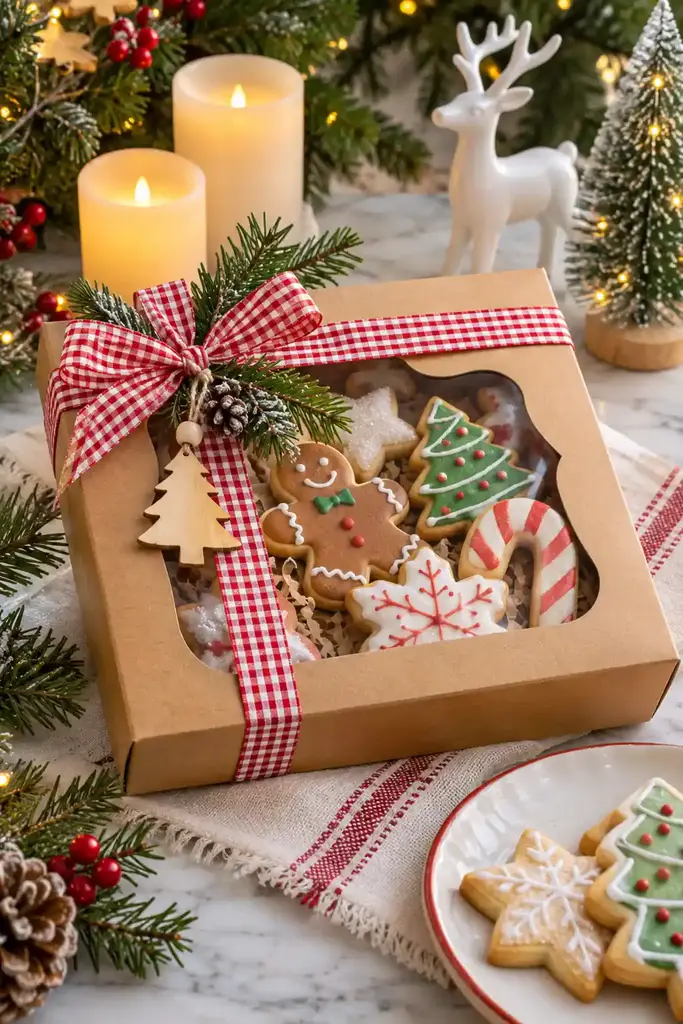
Christmas treat box ideas should start with the food you plan to give. Fragile biscuits need a shallow box, while wrapped snacks can use a taller handled carton. Choose food-contact packaging before adding decorative paper or ribbon.
These AI-generated images are packaging inspiration, not tested box templates or recipes. Keep glue, glitter, foliage and decorative fabric outside the food compartment. Add ingredient and storage information that matches the actual treats.
In this post: 14 ideas
- A kraft window box for decorated cookies
- A gingerbread-house carton with an opening roof
- A red Santa-belt carrier
- A blue snowflake box with a silver bow
- A divided plaid box for fudge
- A tree-shaped package with a window
- A shallow pink box for macarons
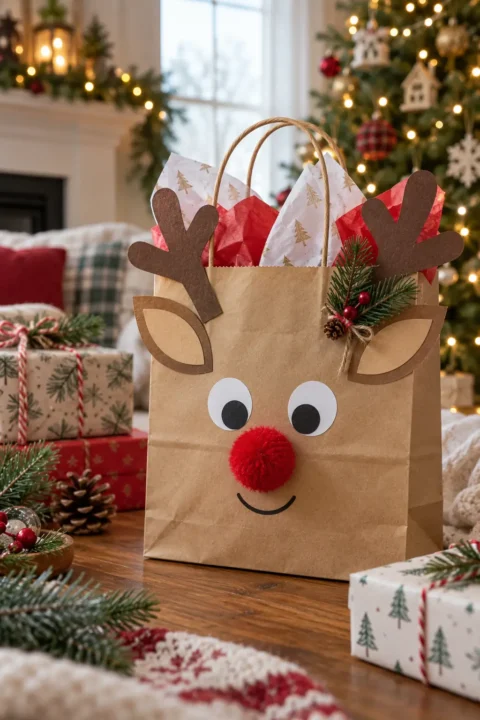
- A reindeer carrier with flat paper antlers
- A star-shaped box for truffles
- A clear snowman carton for wrapped marshmallows
- A striped cookie box with a lift-up lid
- A stocking sleeve around a treat bag
- A woodland animal on a kraft carton
- A holly-patterned keepsake-style biscuit box
1. A kraft window box for decorated cookies
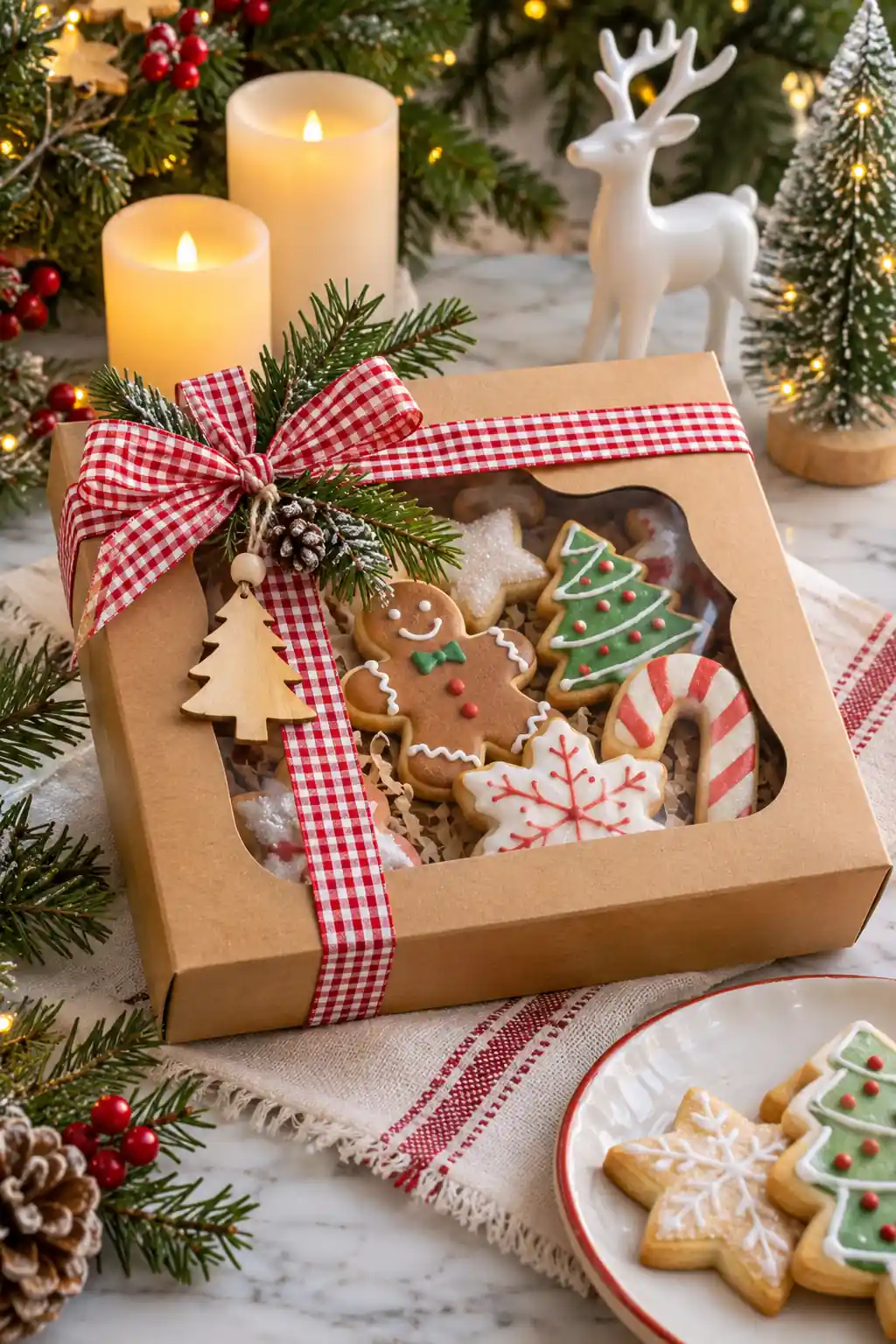
A clear window shows the decorated biscuits before the box opens. The kraft border gives the bright icing a plain background. Choose a shallow food-safe box that holds the cookies in one layer. This reduces movement and keeps raised icing from rubbing against another biscuit.
Let the icing set according to your recipe before packing. Use suitable liners or individual wraps where needed, especially when flavors or textures should stay separate. Arrange the most detailed cookies beneath the window, then check the lid closes without touching them. Do not force a taller cookie into the available depth.
Tie the ribbon around the closed box, keeping its knot away from the window. The greenery shown can be replaced with a printed gift tag. Label the contents on the back or underside without hiding storage instructions. Carry the finished box level in a larger bag or tray so the window display survives the trip.
2. A gingerbread-house carton with an opening roof
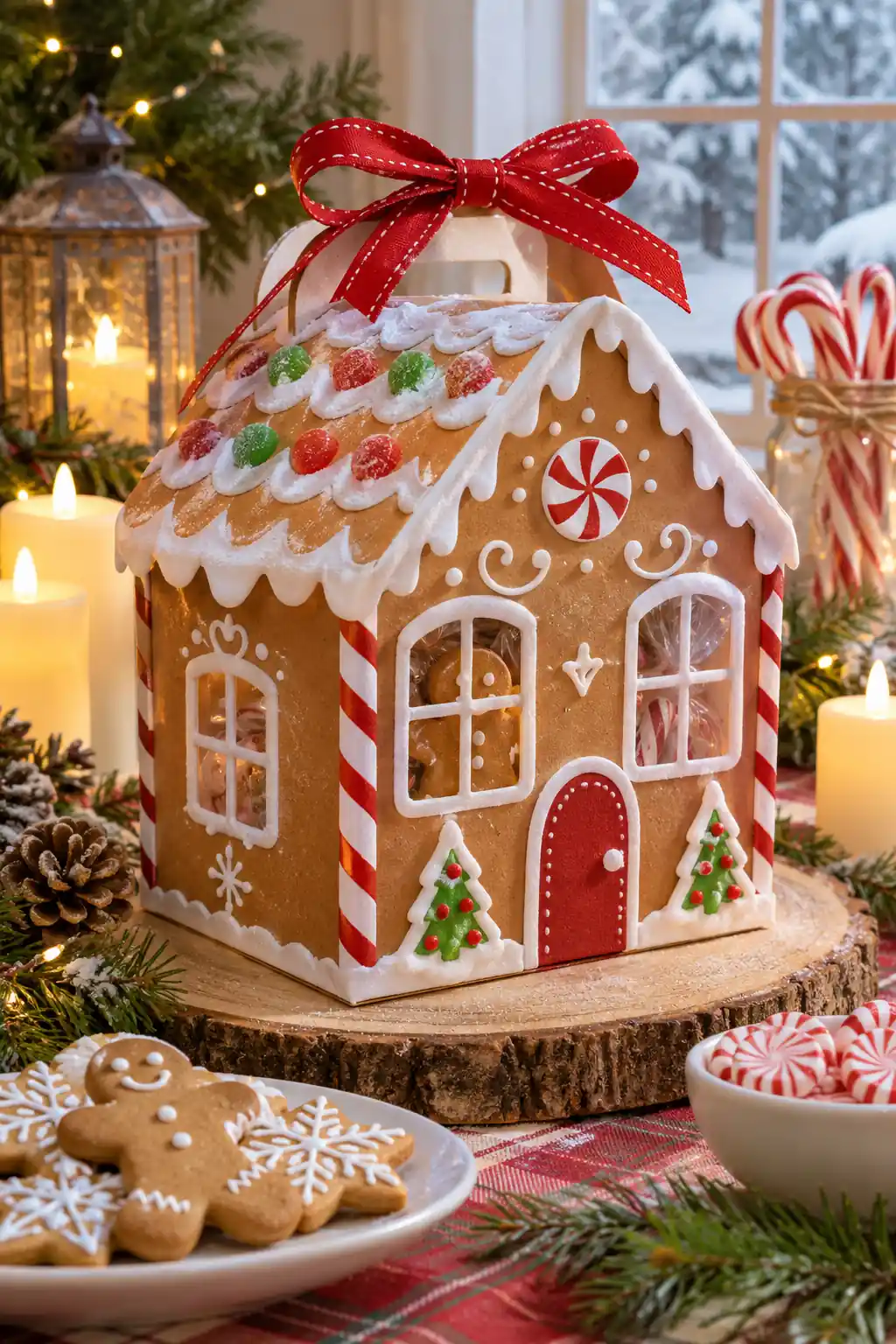
The house-shaped carton uses printed icing and candy motifs to suggest gingerbread. Its peaked roof makes the packaging part of the gift. Start with a purpose-made food-safe house box rather than assuming decorative card is suitable for food contact. Pack the treats in appropriate inner bags if the outer carton is purely decorative.
Check how the roof opens before attaching ribbon. A bow across the closure can make the recipient pull apart the whole design. Keep the handle clear and avoid loading the carton beyond its intended capacity. Small wrapped cookies fit more predictably than a pile of loose, delicate biscuits.
The house illustration already contains plenty of pattern, so extra ornaments are unnecessary. Add a small name label to one side instead. If the carton will travel, place it upright inside a plain transport box. The pointed roof and chimney can bend when packed tightly beneath other gifts. Keep any perishable filling chilled as its recipe requires.
3. A red Santa-belt carrier
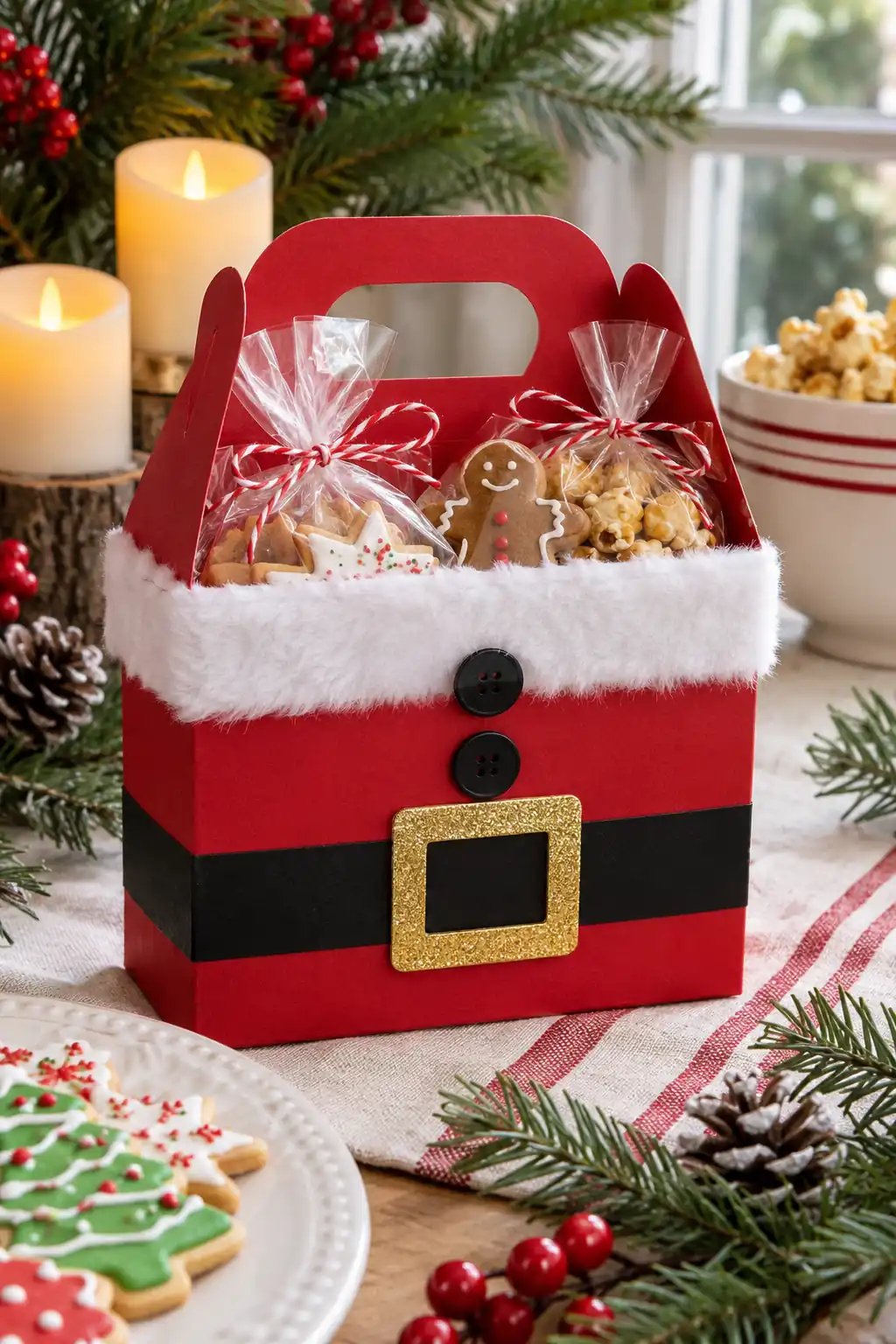
A black belt and gold buckle make the red carrier read as Santa’s suit. The open top holds individually wrapped treats, which are easier to arrange than loose food. Choose a food-safe inner bag for each snack. The decorative outer carrier can then stay separate from the edible contents.
Place heavier packets at the bottom and lighter biscuits above them. Check that the handle does not pinch or tear when lifted. A paper buckle and painted buttons are lighter than thick decorations. Keep the white trim on the outside so fibers cannot fall into open bags.
This format suits mixed treats when each packet has its own ingredient information. Avoid combining strong mint sweets with plain biscuits in one unsealed compartment. Tie the packets securely before placing them in the carrier. If giving the box to a child, remove small bells or loose buttons from the decoration. A printed belt creates the same appearance with fewer attachments.
4. A blue snowflake box with a silver bow
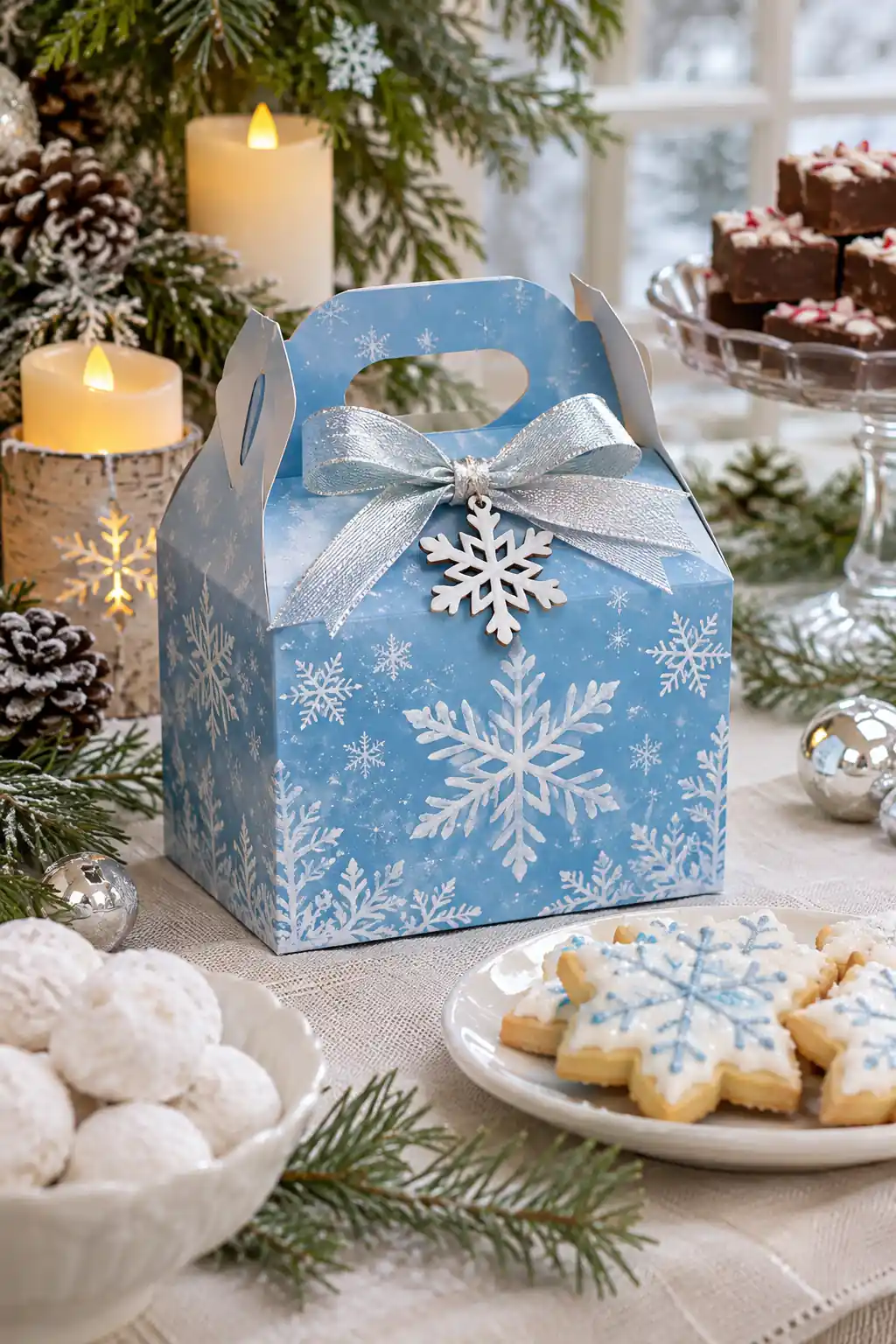
White snowflakes cover the blue carton, while a silver bow closes the top visually. This winter palette works with pale cookies or wrapped sweets without requiring matching icing. Select the box size by the food rather than the decoration. A large empty carton lets fragile contents move during transport.
Use a fitted insert or separate food-safe bags to control movement. Keep the bow clear of the handle so the box remains easy to carry. A paper snowflake tag is lighter than a hard hanging ornament. Attach it outside the closure, where it cannot fall into the food.
The blue pattern can be printed paper wrapped around a plain food box, provided the wrap stays outside. Do not cover ventilation or closure features the packaging needs. Add the recipient’s name on a plain white label for readability. Store the finished boxes away from damp conditions, which can soften paper and make the ribbon or ink transfer.
You may also like: Christmas gift box ideas.
5. A divided plaid box for fudge
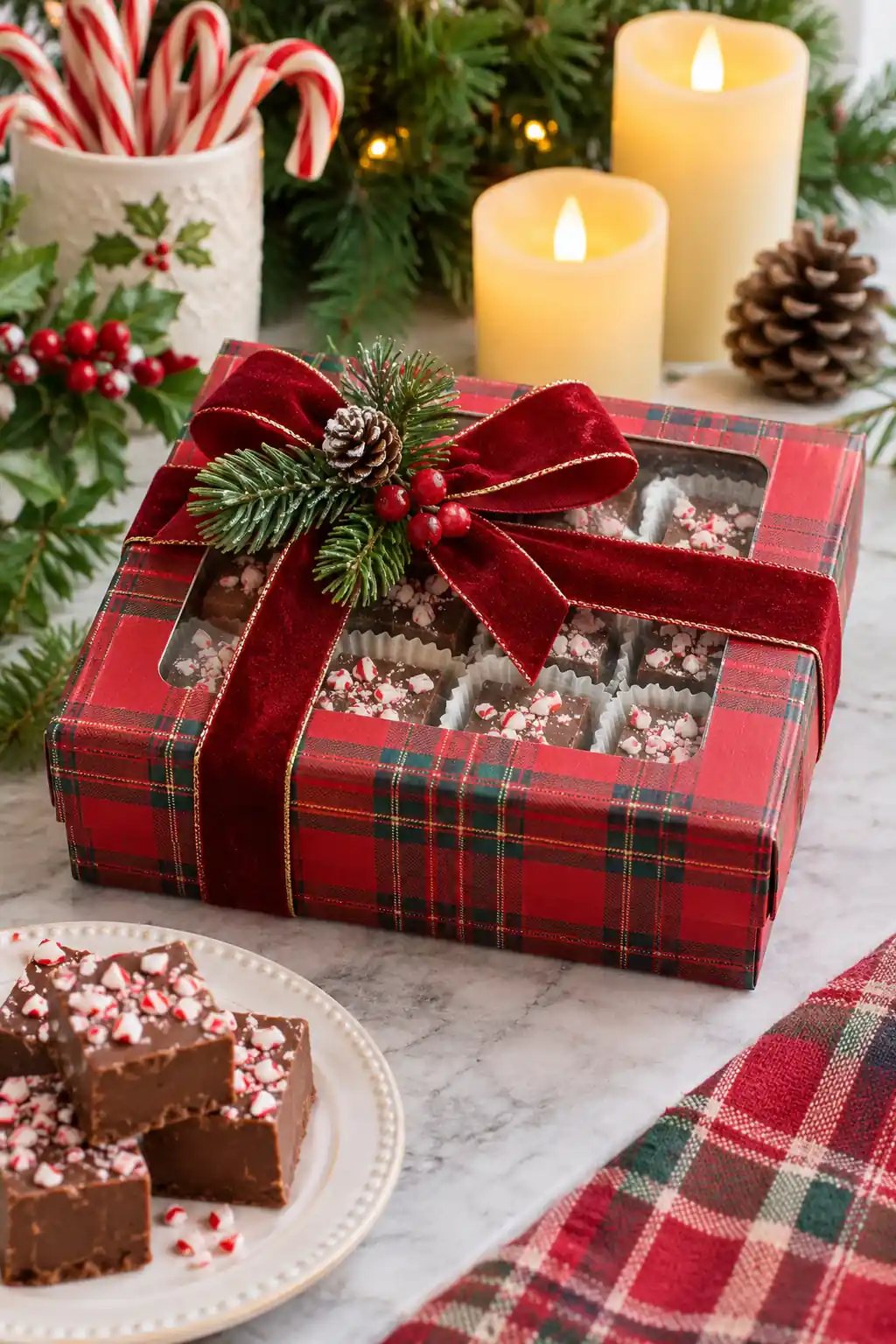
Small paper cups keep the fudge portions separate beneath the clear lid. Red plaid makes the box decorative without changing the food itself. Choose a tray with enough depth for the tallest topping. The lid should close without pressing peppermint pieces or nuts into neighboring portions.
Use food-safe cups or dividers sized to the actual pieces. A snug arrangement reduces sliding, but leave enough room to lift one portion. Keep different flavors identifiable with a small diagram or labels. Ingredient information matters especially when several toppings look similar through the window.
The large bow belongs on the exterior and can be removed before opening. Avoid tucking fresh greenery into the seam. Follow your fudge recipe’s storage guidance rather than assuming every version can stay at room temperature. For other container shapes, compare these Christmas gift box layouts while keeping the food compartment separate from decorative packing materials.
6. A tree-shaped package with a window
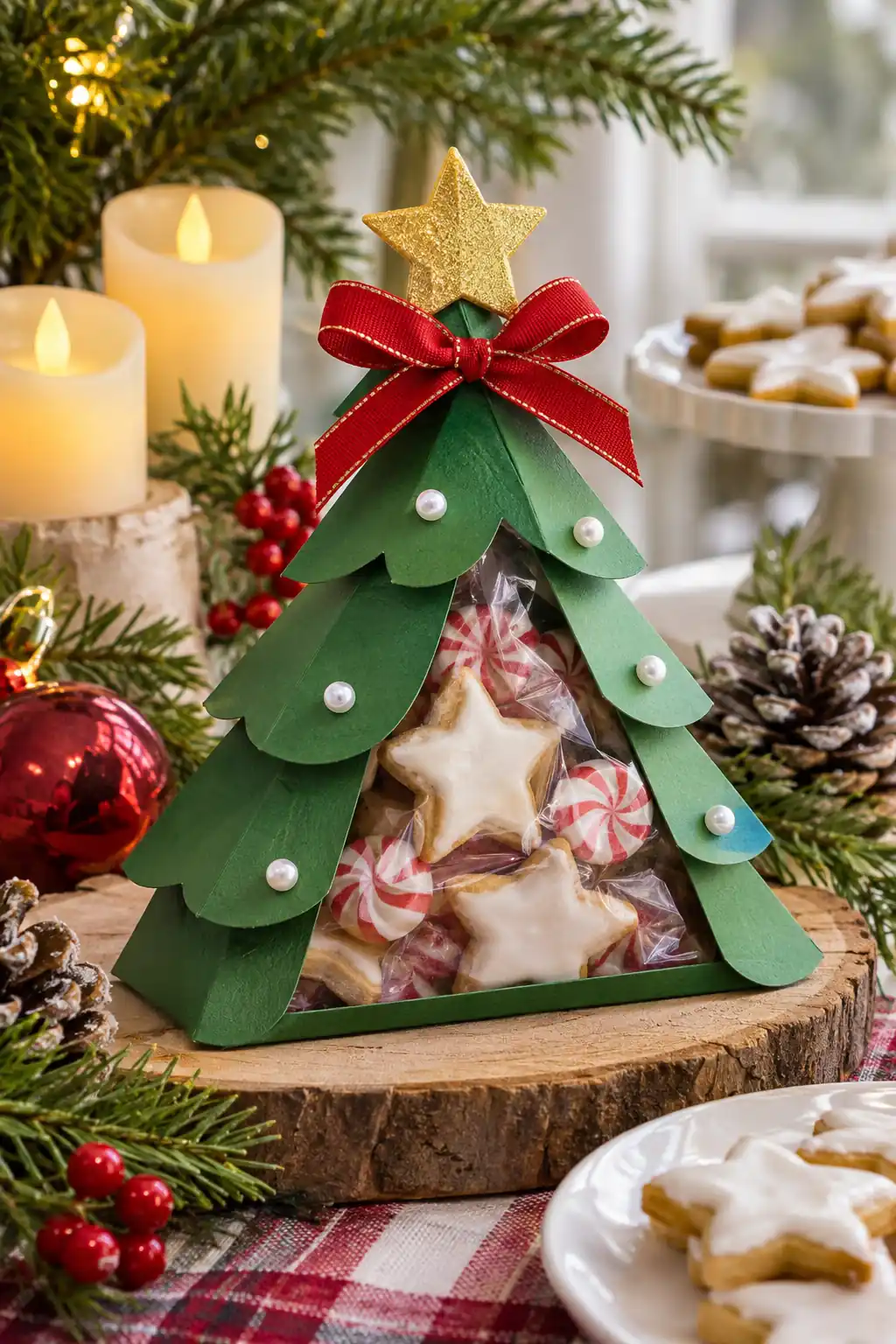
The green tree outline surrounds a clear triangular window. Cookies inside become part of the visible design, while a red bow marks the top. A purpose-made tree carton is the simplest starting point. The narrow upper section limits what will fit, so test the contents before buying several boxes.
Use a sealed food-safe inner package if the outer tree is handmade. The window should not expose unwrapped food to decorative glue or card edges. Place heavier treats near the wider base and keep the top light. Do not rely on the star or bow as a carrying handle.
Painted dots can replace the small pearl-like decorations shown. Keep the tree’s outline clear instead of covering it with extra trim. A single large biscuit may display better than several overlapping ones. Add a label on the back with the treat name and storage guidance. Transport the box upright with side support so its pointed top does not fold.
7. A shallow pink box for macarons
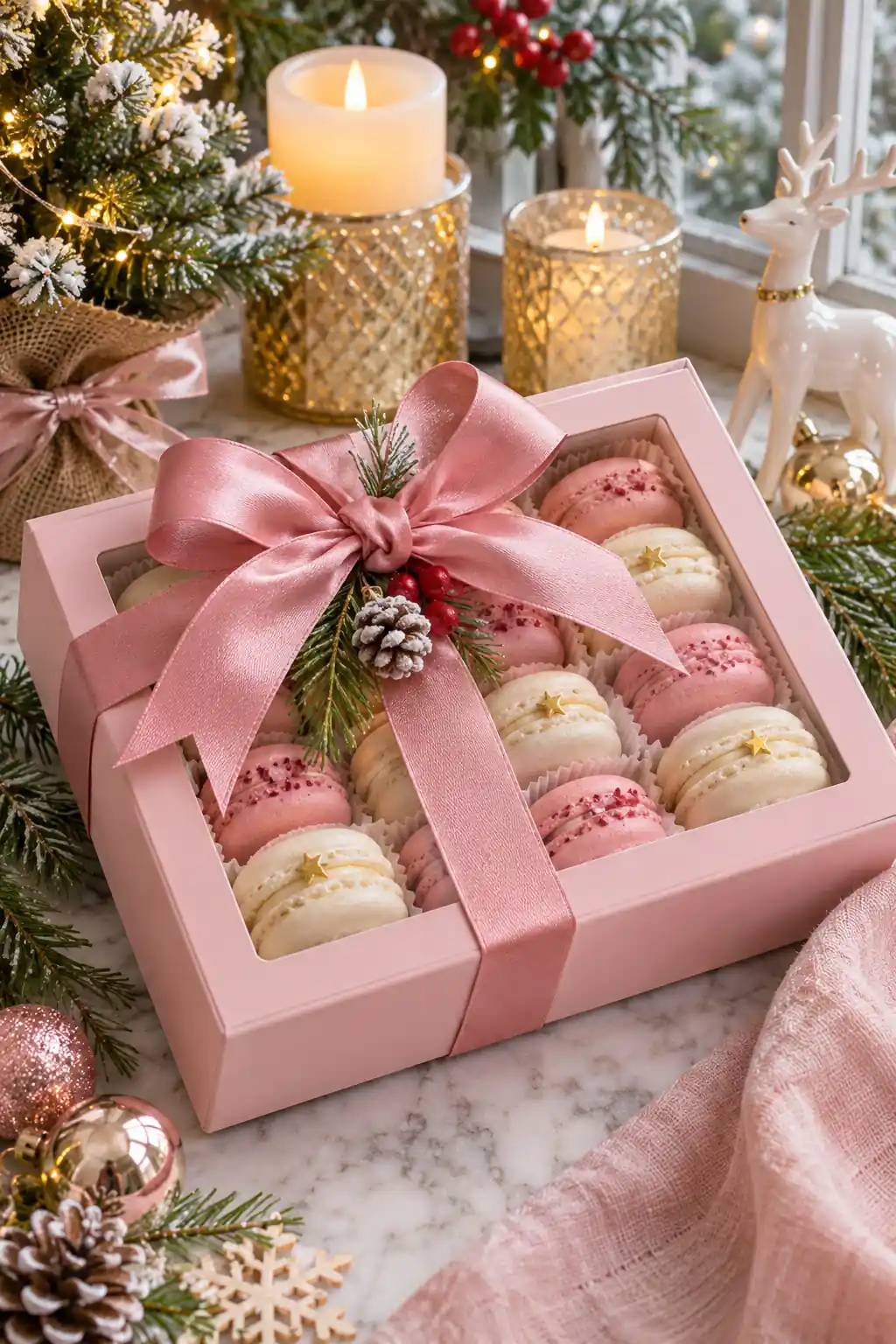
Rows of pink and cream macarons create the pattern inside this shallow box. The wide ribbon repeats the color without hiding the full window. Choose packaging designed to keep each macaron upright or separated. Their shells can chip when they rub against one another.
Check the insert spacing against the actual macarons rather than relying on the stated box capacity alone. Fillings and shell sizes vary. Keep the box level while arranging the rows, then close it gently to check clearance. A smaller fitted box is better than a large one with loose gaps.
The ribbon should slide off without bending the lid. Keep decorative pinecones and foliage outside, or replace them with a flat tag. Follow the maker’s storage and transport instructions for the specific filling. A cold filling does not become shelf-stable because the box looks ready for gifting. Label flavors clearly when similar colors contain different ingredients.
 You may also like19 Personalized Christmas gift ideas with names and photos
8. A reindeer carrier with flat paper antlers
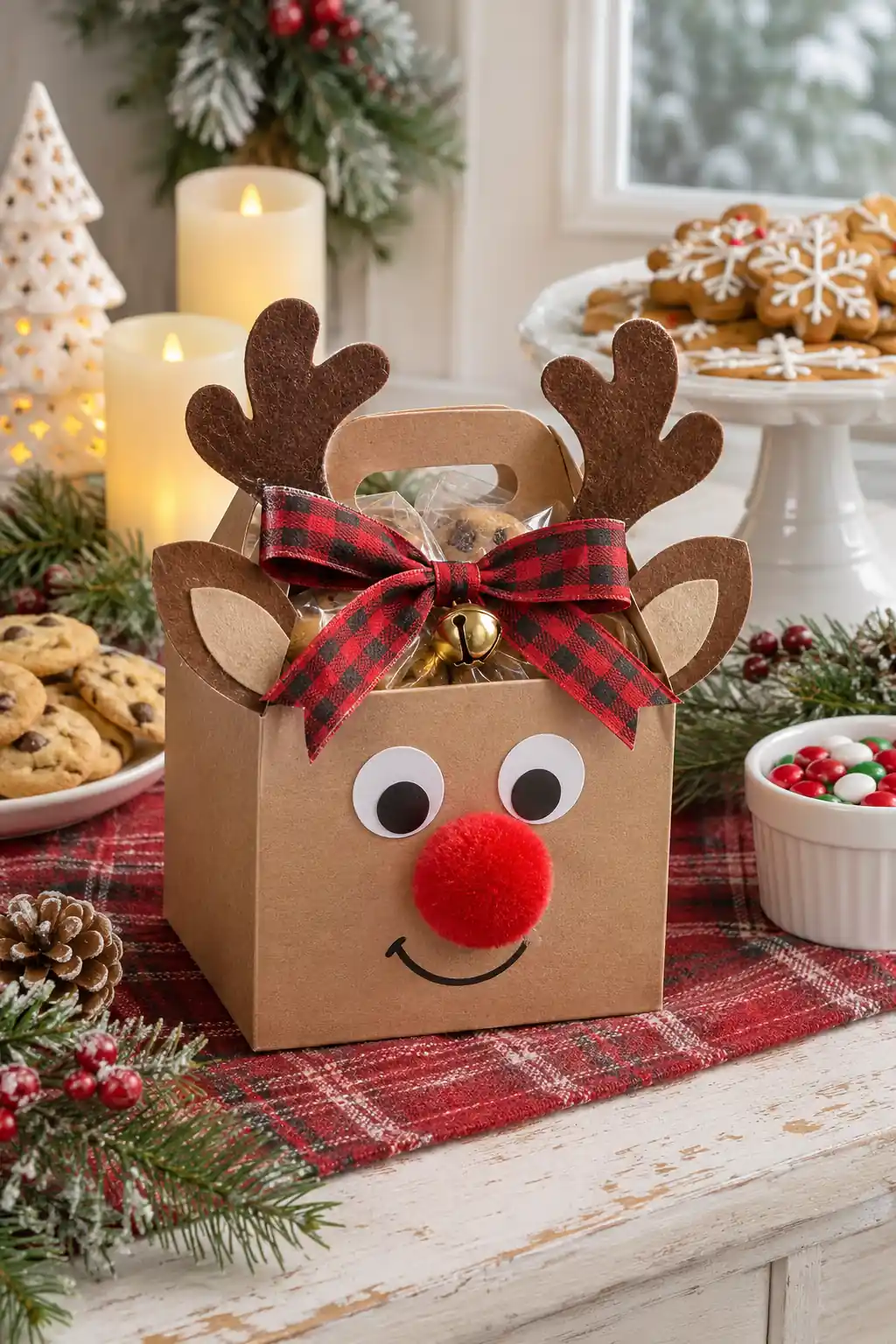
The kraft carton supplies the reindeer’s face color. Brown antlers rise above the handle, and a red nose anchors the front. Draw the face directly on the box or use flat paper shapes. That keeps the decoration lighter than the large pompom and separate eyes in the image.
Leave the handle opening clear when positioning the antlers. Tall antlers are likely to bend inside a gift bag, so keep them short for transport. Individually wrapped treats can fill the carrier without touching the decorative face. Check the bottom closure before adding anything heavy.
A plaid bow can go on the side if it interferes with lifting. Add the name to a plain tag attached below the handle. This design can be repeated across a batch with different facial expressions, but keep ingredient labels consistent. For young recipients, omit small bells and detachable decorations. The box is packaging, so it does not need to double as a toy afterward.
You may also like: Christmas candy jar ideas.
9. A star-shaped box for truffles
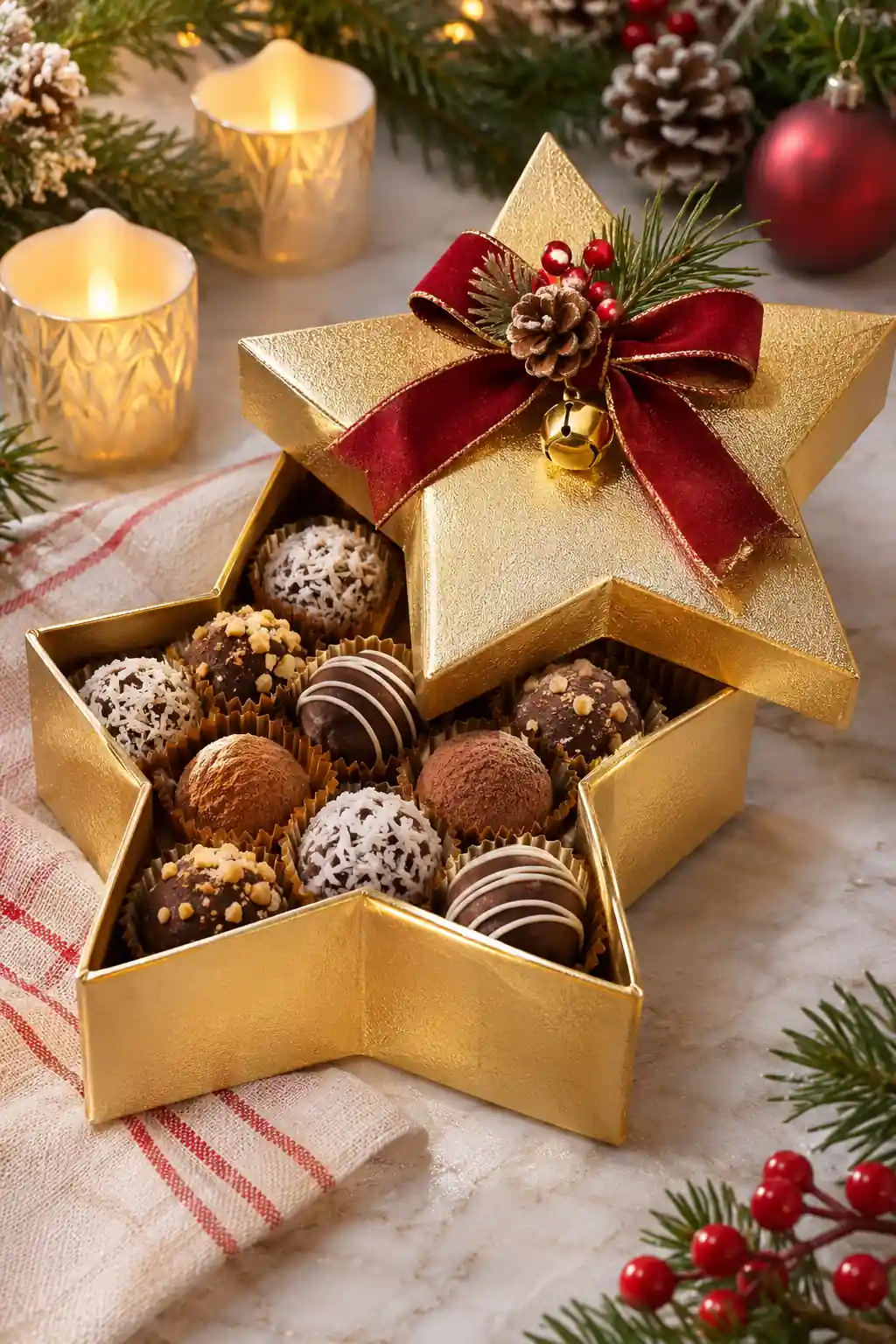
The star-shaped lid gives the truffle box its Christmas identity. Inside, individual cups separate the chocolates and help preserve their coatings. Measure the usable center and points before choosing the number of truffles. A star box has less regular packing space than a rectangle of similar width.
Use a food-safe insert or cups, not decorative shredded paper directly against the chocolates. Keep the portions in one layer so the lid does not press onto them. If the points are too narrow, leave them empty or use an appropriate insert. Do not force a chocolate into a tight corner.
A flat bow makes the lid easier to remove than a large cluster of ornaments. Label fillings when the chocolates look alike, and retain allergen details. Follow the specific truffle recipe’s storage instructions. Keep the box away from heat during transport. Metallic-looking packaging is a visual finish, so check its actual food-contact suitability rather than judging by appearance.
10. A clear snowman carton for wrapped marshmallows
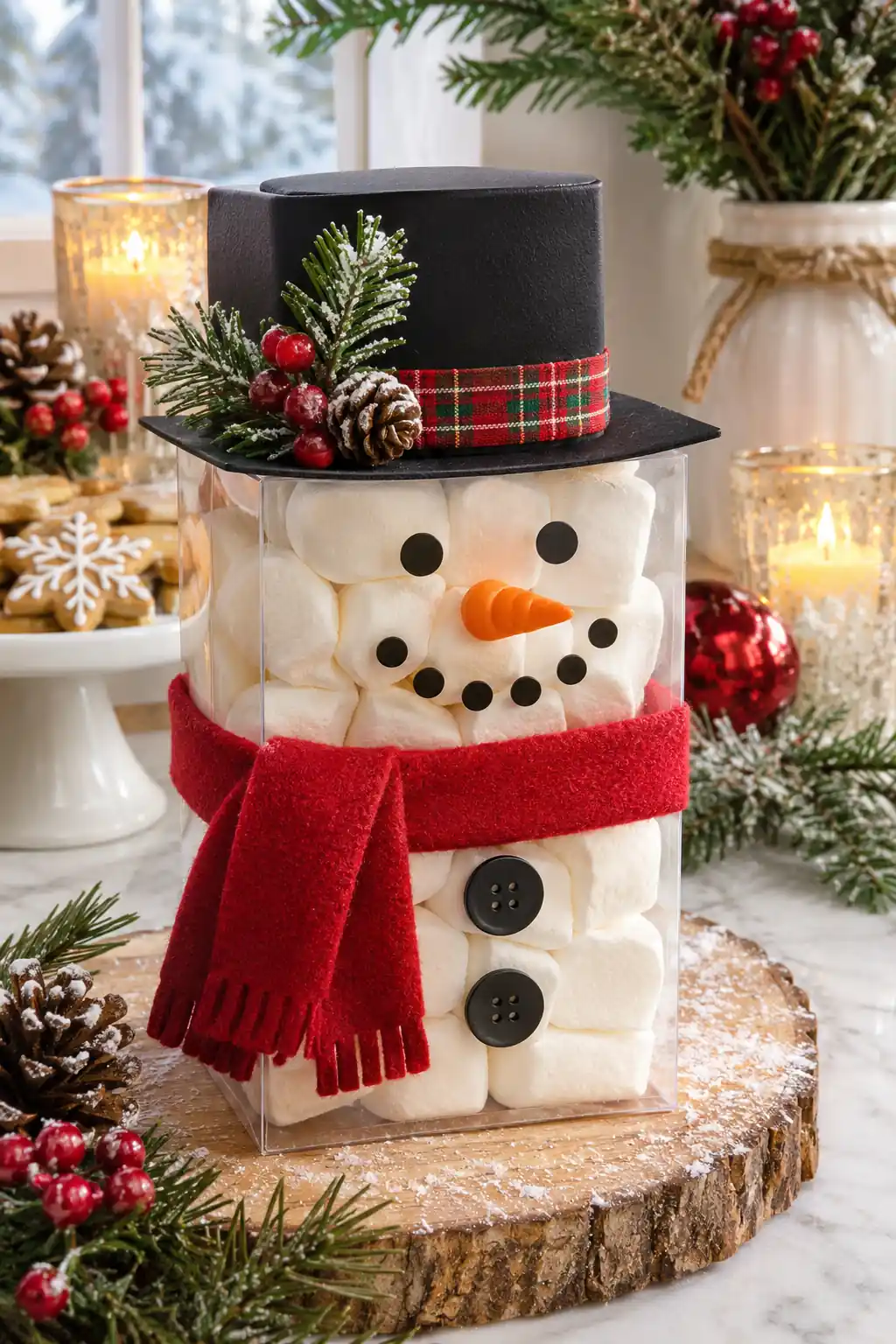
White marshmallows supply the snowman’s body color through the clear container. A black hat, orange nose and scarf complete the face. Use a container intended for food contact with a secure closure. The hat in the image is decorative and should not be the only lid.
Apply any paint, adhesive or paper features to the outside. Keep the opening clean so decoration does not enter the food when it is poured. A paper scarf can replace felt if you want a flatter finish. Draw buttons instead of attaching small separate pieces.
If the outer carton is not food-safe, place a sealed food-safe bag inside it. Label flavored or filled marshmallows rather than assuming the white color explains the ingredients. Consider the recipient’s age and suitability of the food before gifting. For another transparent container approach, see these Christmas candy jar ideas and adapt only the exterior decoration.
11. A striped cookie box with a lift-up lid
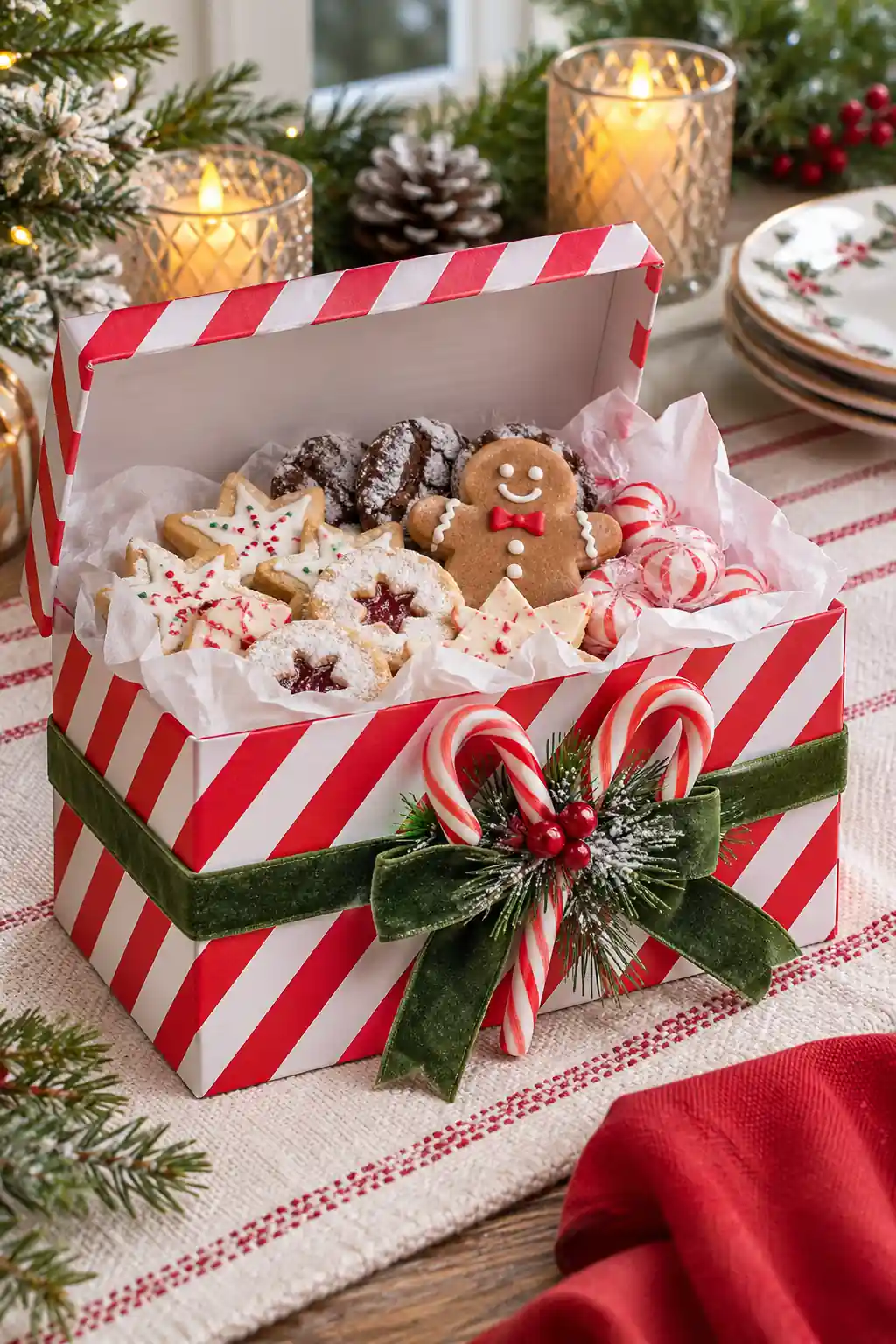
Diagonal red stripes give this rectangular box a candy-cane pattern. The green ribbon provides contrast while the open lid shows several cookie shapes. A shallow base works best when you want recipients to see the assortment at once. Use suitable liners or dividers between foods that should remain separate.
Avoid stacking soft cookies directly against crisp ones if texture matters. Strongly flavored treats can also affect neighboring biscuits when left unwrapped. Pack similar types together or use individual bags. Keep icing surfaces away from the lid and from rough decorative tissue.
The candy canes tied to the front are optional and should stay wrapped if included as food. A printed candy-cane tag is easier to transport. Tie the ribbon so the recipient can untie it without tipping the box. Add a contents list beneath the lid or on the exterior. Keep storage directions visible after the decorative ribbon has been removed.
12. A stocking sleeve around a treat bag
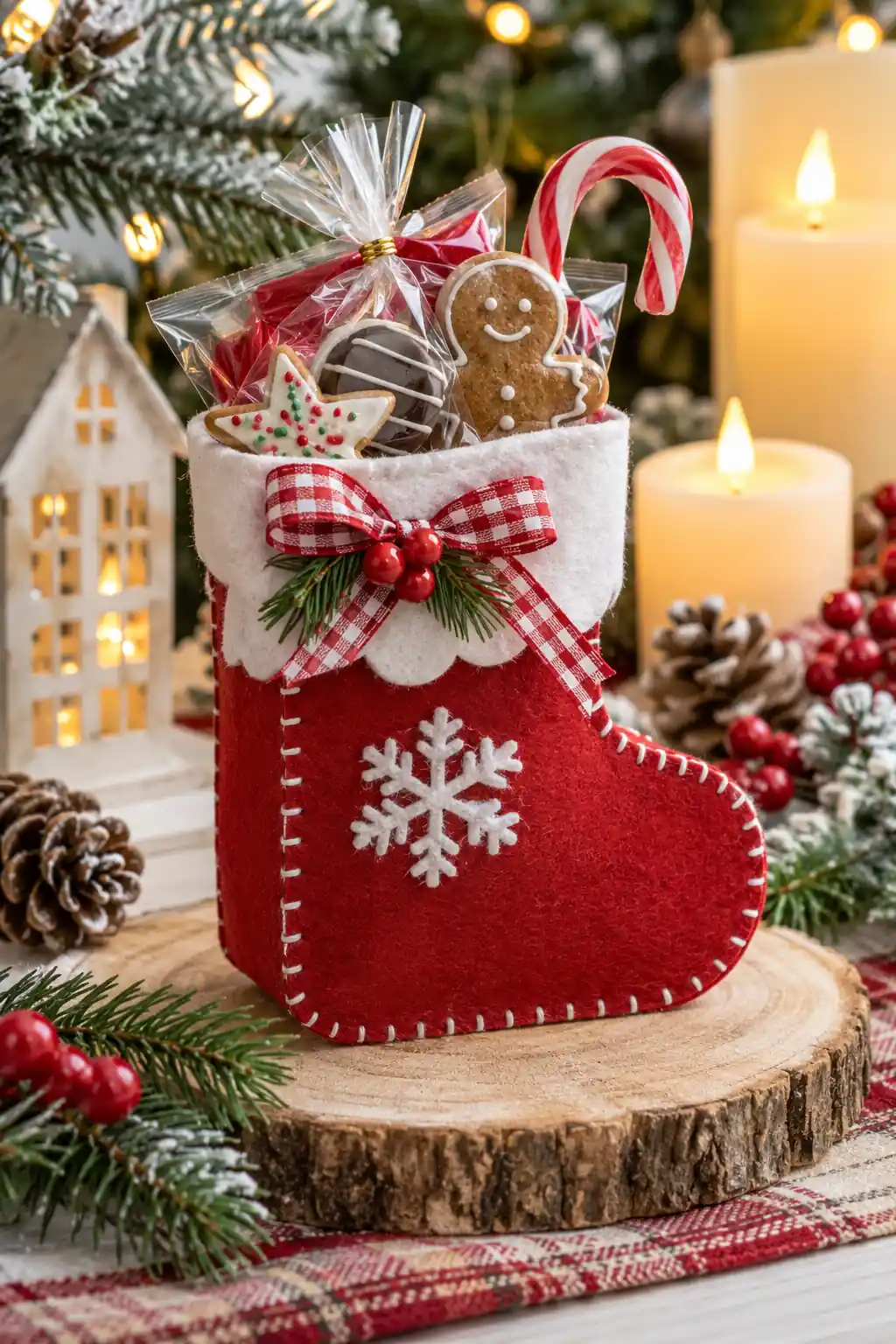
The stocking shape gives the package a fabric appearance, with white stitching and a cuff. Wrapped cookies extend from the top. Treat this outer piece as a decorative sleeve rather than a direct food container. A sealed food-safe bag should hold the edible contents inside.
Check the sleeve’s base before filling it. The pictured stocking appears upright, but a soft fabric version may need a separate support or must lie flat. Do not overfill it to force it to stand. Keep tall candy canes from pressing through the inner bag or bending against the cuff.
A flat embroidered or printed snowflake adds detail without loose pieces. The bow can be tied around the outside of the sealed bag if the sleeve has no attachment point. Include a small contents card so the recipient knows what is inside before opening. Store the decorative sleeve separately after use rather than leaving food crumbs in the fabric.
You may also like: Christmas gift tag ideas.
13. A woodland animal on a kraft carton
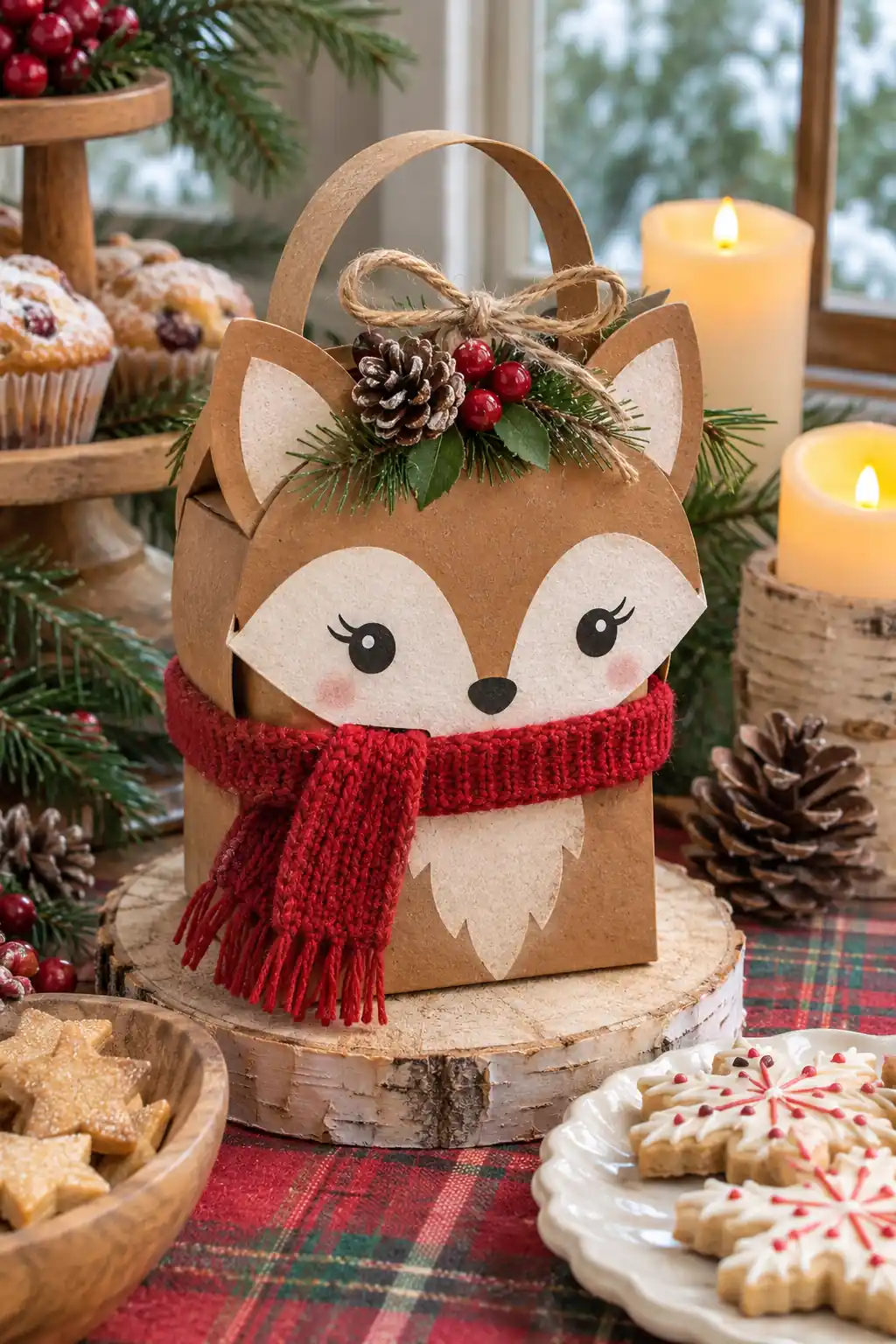
White face patches and pointed ears turn the kraft carton into a woodland fox. The red scarf supplies the Christmas detail. Start with a plain handled box and place the face below the handle opening. Keep the ears short enough that they do not obstruct lifting or closing.
Paper shapes are easier to attach flat than thick felt pieces. Draw the eyes and nose so there are fewer small parts to loosen. The scarf can be a printed red band instead of knitted fabric. Keep all decoration outside the food compartment and away from its closing tabs.
Use the same carton size for a group of gifts, then vary the animal faces if desired. Sealed inner bags make it easier to separate cookies and other snacks. Label each bag when ingredients differ. A flat leaf tag can replace the greenery cluster on top. Carry several cartons in a shallow tray so the handles and ears remain uncovered.
14. A holly-patterned keepsake-style biscuit box
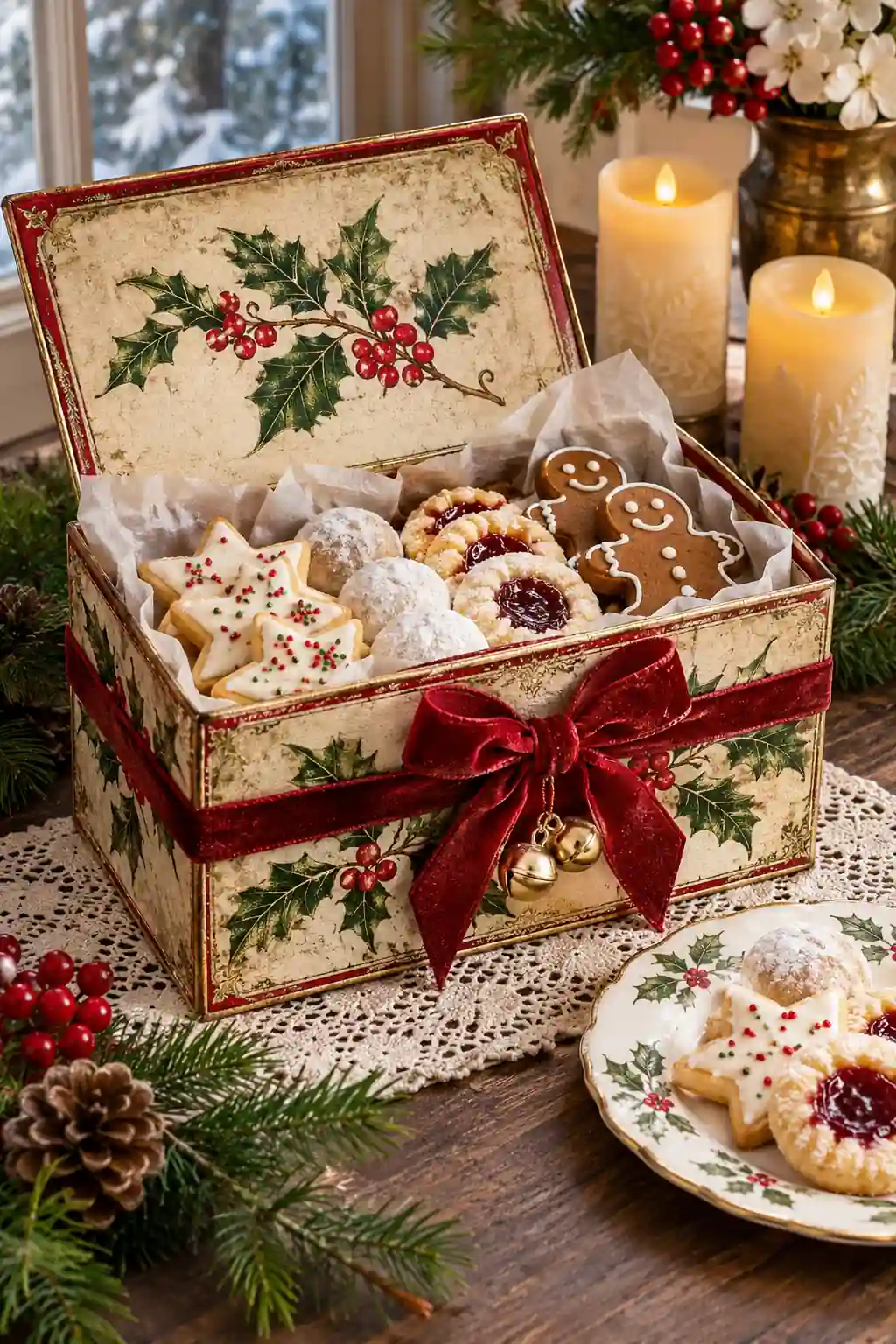
The holly print covers both the outside and the raised lid, making the box decorative after opening. Its aged-paper look gives the biscuits a plain green-and-cream background. Choose a new food-safe box for direct contact. An older decorative box should hold a separate sealed food container instead.
Use individual liners to separate iced biscuits and jam-filled cookies. Check that the lid closes without scraping the tallest pieces. A hinged box needs enough space behind it to open fully, so avoid tying the ribbon through the hinge. Wrap the ribbon around the closed box for removal.
Do not assume the vintage look means the box can be washed or reused for food. Follow its material guidance. A flat gift tag can explain the contents and any required refrigeration. Keep heavy decorative bells off the lid if the box is light. For transport, cushion the exterior in a larger carrier without putting non-food packing material among the biscuits.
Matching Christmas treat box ideas to the food
Choose shallow compartments for fragile decorated cookies and fitted inserts for chocolates or macarons. Taller carriers work better with sealed individual portions. Pack one trial box before preparing the whole batch.
Food-safe packaging must suit the actual contents. Keep decorative tissue, paint and glue outside direct food contact. Retain purchased-food labels and add an ingredient list for homemade items.
Storage and delivery notes to include
Write storage directions based on the recipe or maker’s instructions. Do not describe a mixed box as shelf-stable unless every item supports that claim. Plan chilled transport for foods that need refrigeration.
The FDA’s food-safety guidance uses a two-hour room-temperature limit for perishables, or one hour above 90°F. Decorative packaging does not extend that limit. Deliver promptly and tell recipients when chilled food needs refrigerating.

Written by Stephanie Fallis
Mom and homemaker who shares budget friendly DIY projects, decorating tips and gardening ideas for busy families.
More about me → Christmas Gifts20 DIY Christmas Gifts for Teachers to Make
 Christmas ideas19 Crochet Christmas gift ideas to plan and make
 Christmas Gifts17 Christmas Gift Bag Ideas You Will Love