
First birthday gift ideas are easier to choose when you ask the caregivers what the child enjoys and what the home needs. A small, well-chosen present can be more useful than a large toy that has no place to go. Development and interests vary, so follow the product’s age guidance rather than assuming every one-year-old needs the same thing.
These AI-generated images illustrate gift categories, not safety-tested products. Review labels and the CPSC toy-safety guidance, and check recalls before buying. Packaging ribbons and decorative props are for adults to remove. If you are planning the celebration too, see these winter first birthday ideas.
For older family members celebrating too, keep their presents separate and explore these fun birthday gift ideas.
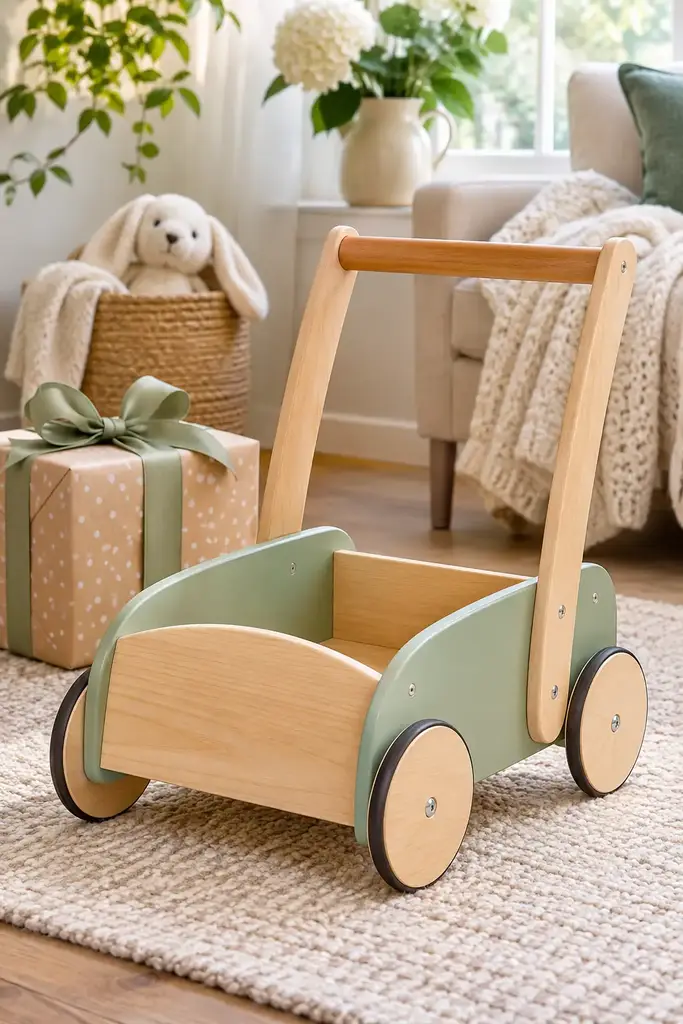
A sturdy push-along walker
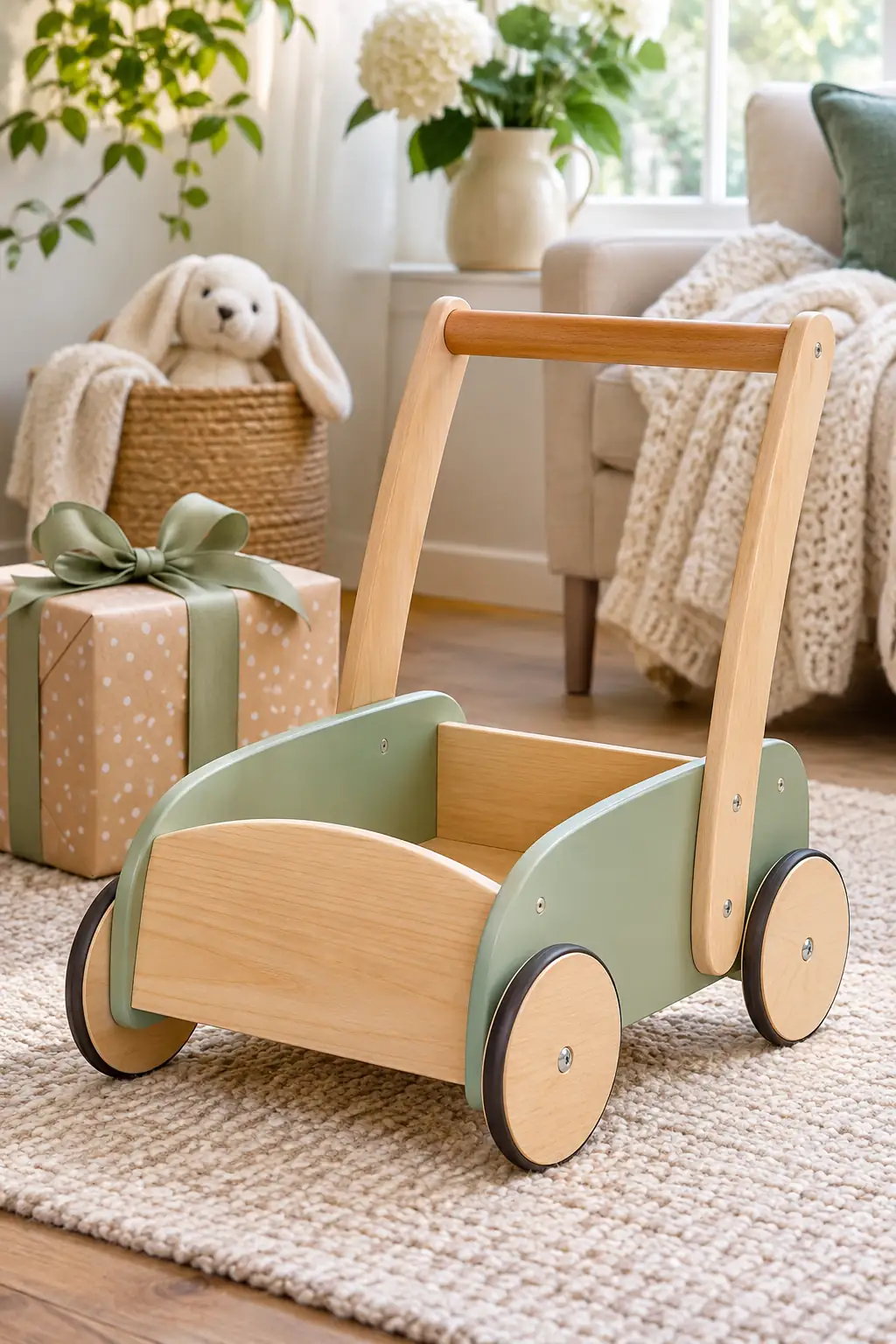
A push-along toy can interest a child who is already beginning to move while holding support. It should be selected with the caregiver, since readiness and the home’s floor surfaces matter. The wooden appearance in this image is a style reference, not proof that a particular walker is stable or suitable.
Look at the actual product’s age guidance, handle position and instructions for use. Check how it moves on the floor where it will be used, and choose a design intended for the child’s stage. Do not confuse a push toy with a seated wheeled baby walker; they are different products.
For the gift presentation, keep the toy assembled only if the manufacturer allows it to travel safely that way. Include all instructions and packaging information. A gift receipt is helpful if the family already owns something similar. The present should support play the caregiver welcomes, rather than imply that the child needs to reach a walking milestone by the birthday.
Large soft stacking blocks
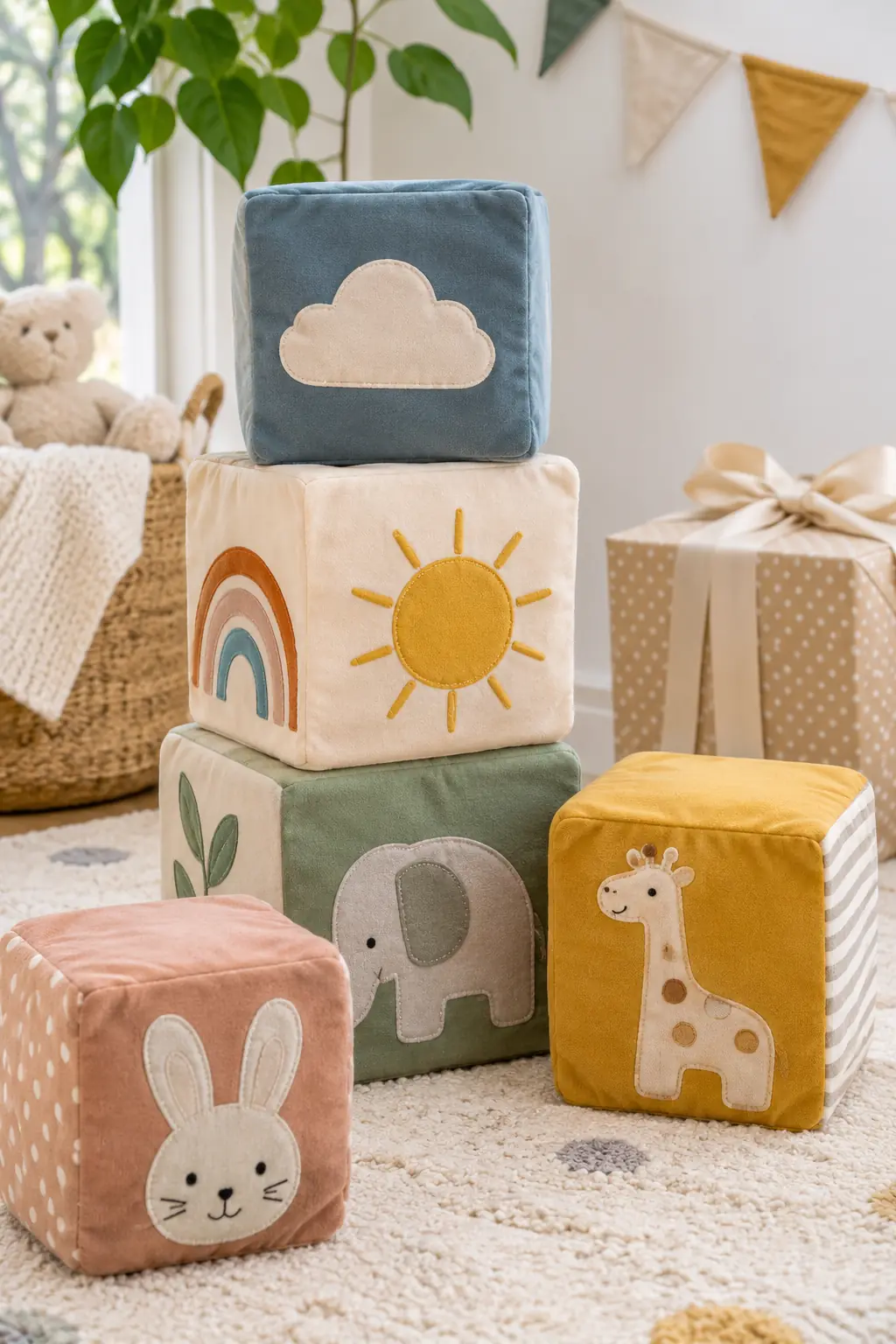
Soft blocks offer a simple way to explore stacking, knocking down and moving objects between hands. The fabric textures and clear pictures in this example create interest without a complicated mechanism. Choose a set with large pieces and construction appropriate to the child’s age rather than buying decorative nursery blocks.
Check seams, care instructions and whether any surface details can detach. A washable set may be useful, but follow the actual cleaning directions instead of assuming all fabric blocks can go into a machine. Ask the caregivers about storage so the set fits easily into the child’s play area.
A few blocks can be enough for a first gift. Arrange them in a reusable bag or box, with all gift ribbons removed before play. The adults can build a short tower and let the child respond in their own way. There is no need to turn the activity into a lesson about colors or numbers; the gift can simply provide an open-ended object to handle and explore.
Chunky stacking rings
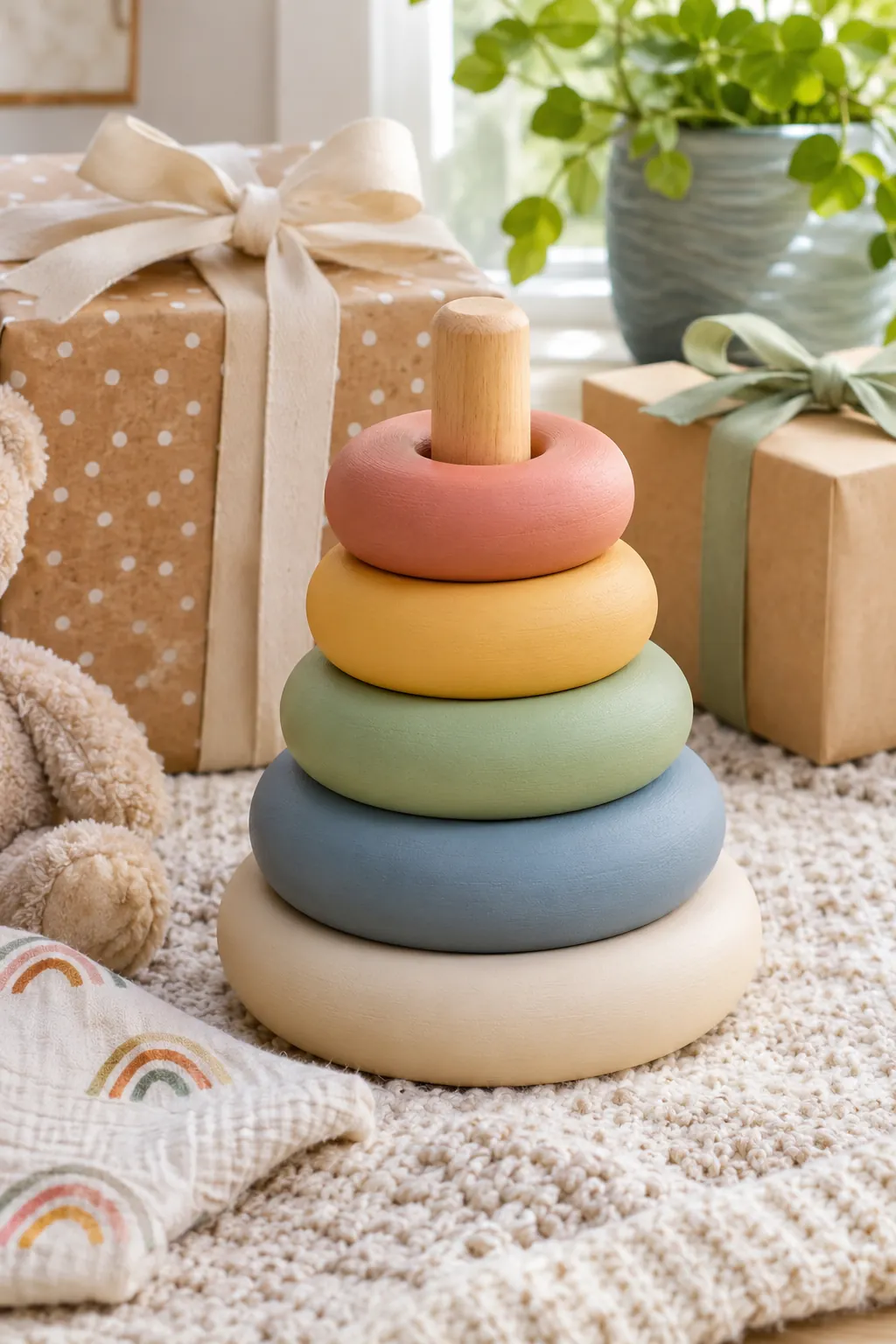
Stacking rings are recognizable, compact and easy to store, making them a practical option for a first birthday. The set in the image uses soft colors, but the shape and construction matter more than the palette. Choose an age-appropriate product with parts designed for young children to handle.
Check the base and central post, along with the size and condition of each ring. Follow the manufacturer’s guidance rather than judging safety from a photograph. A compact set may fit the family’s shelves better than a large version, and it can be easier to move between a play mat and storage.
The gift does not need to be presented as a task the child must complete correctly. Taking rings off, holding them and exploring their shapes can be part of the play. Keep the product information with the present and remove decorative packaging before handing it over. If the family already has a similar toy, a book or everyday item may add more variety than another stacking set.
Nesting cups in a compact set
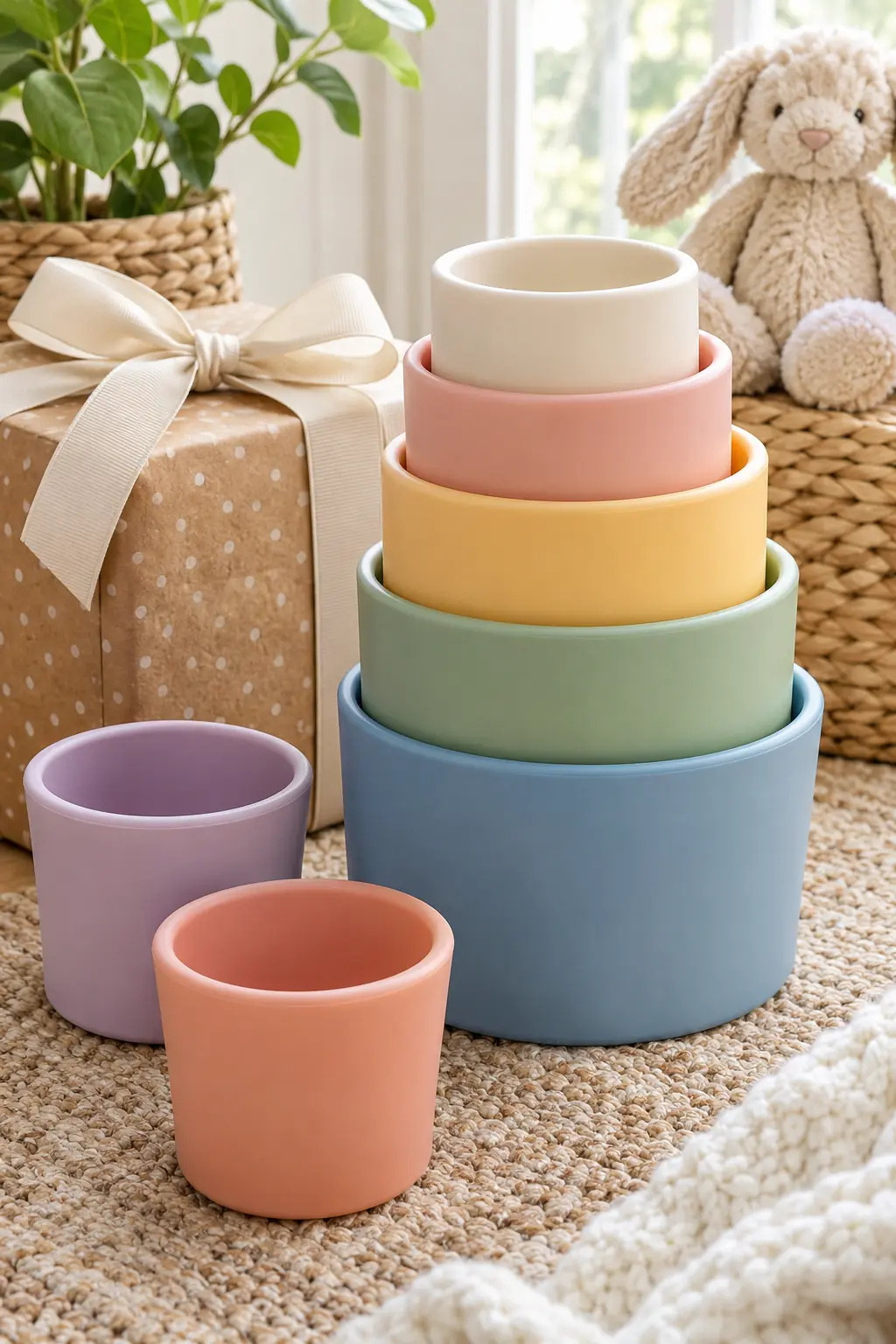
Nesting cups offer several ways to play while taking up little storage space. They can be stacked, fitted together or placed beside one another. Choose a set intended for the child’s age, with pieces that are easy for small hands to grip and no detachable decorative additions.
Look at the full set rather than just the largest cup. The smallest piece also needs to meet the product’s intended age use. Smooth edges and clear cleaning instructions matter because these items are handled closely and may be mouthed. Keep the original packaging so caregivers can review those details.
This gift is easy to pair with a small board book without becoming bulky. Pack the cups nested together and use the gift bag for presentation rather than tying ribbons around individual pieces. Adults can demonstrate a simple stack, then allow the child to explore without needing to finish a pattern. A compact, straightforward toy can fit daily play more easily than a large activity center.
Washable cloth picture books
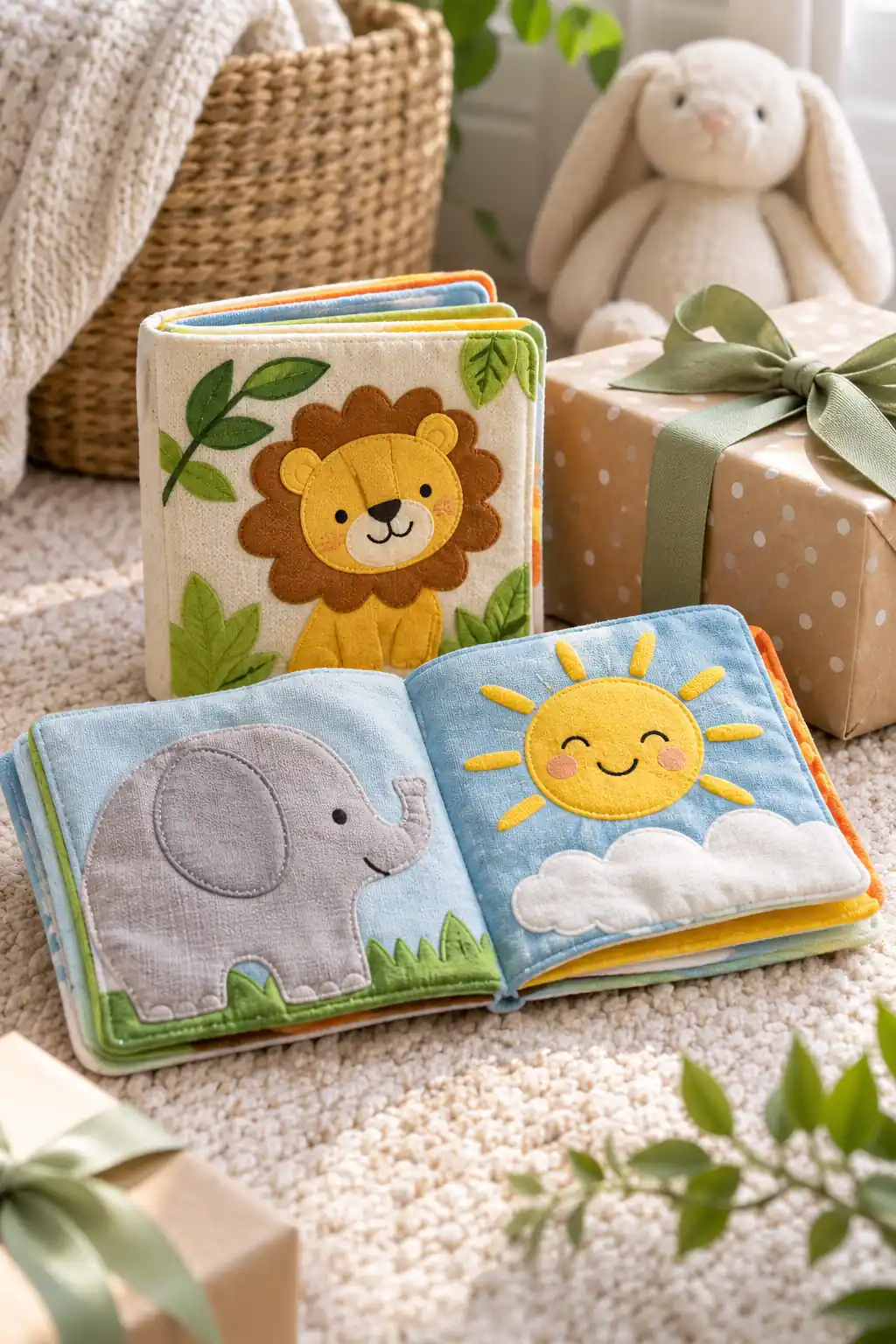
Cloth books can be a comfortable introduction to turning pages and looking at simple pictures. The padded pages in this example show familiar animals and shapes. Choose a book made for babies, with securely attached details and care instructions that suit the family’s routine.
Look beyond the cover before buying. Check the page attachments and any tabs, loops or textured features. Decorative handmade books may have different intended uses from tested baby products. A clear, uncluttered picture on each page can be easier to share than many tiny details packed into one scene.
The gift becomes more personal when you choose a subject connected with the child’s interests, such as animals they notice or everyday objects. A short message can go on a separate card if the fabric cannot be written on safely. Keep wrapping simple and remove ribbons before reading time. The book can be enjoyed through touching, looking and hearing an adult talk, without expecting the child to follow a complete story.
Sturdy board books for shared reading
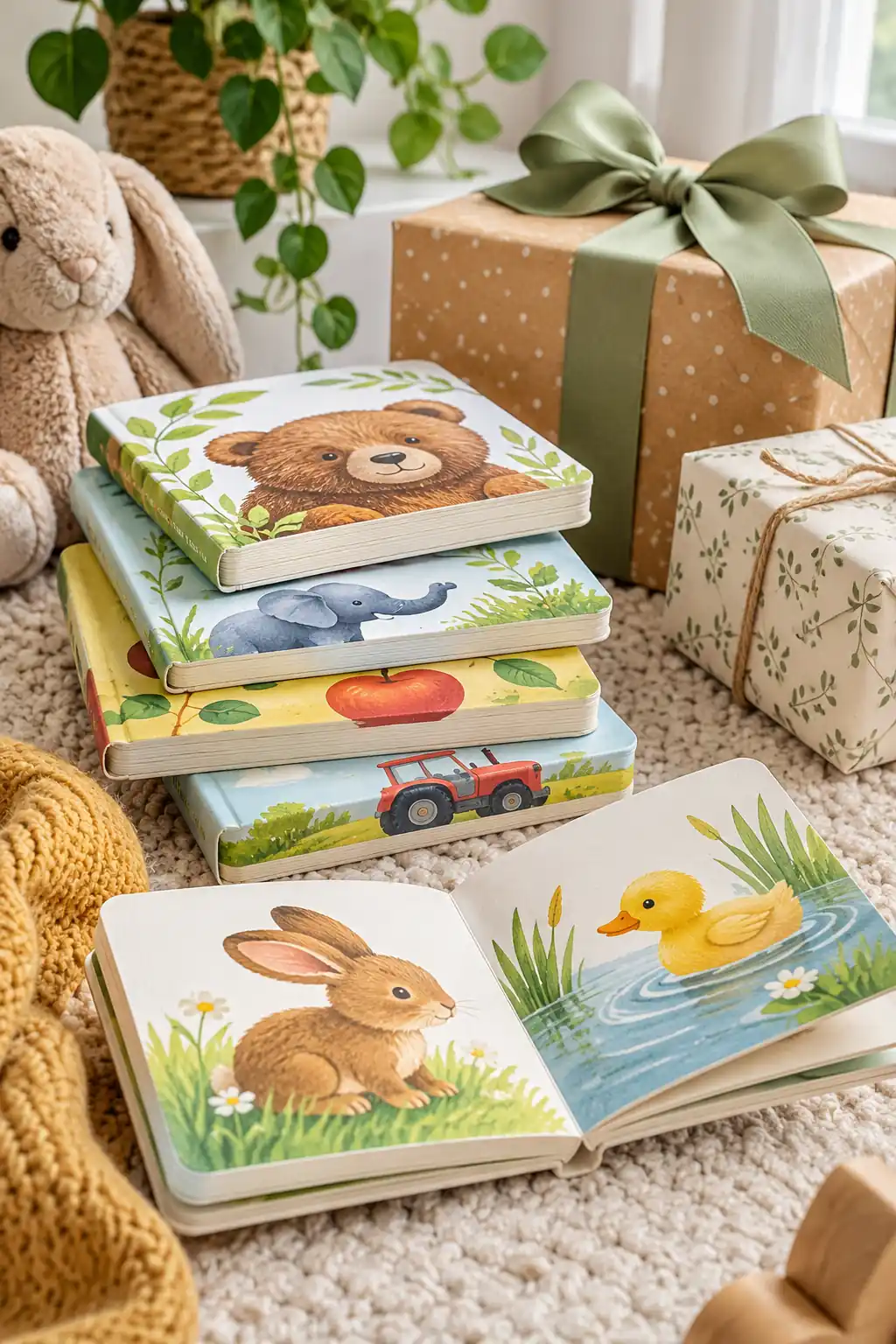
Board books make a useful gift because they can become part of an ordinary daily routine. Thick pages are easier to handle than delicate paper, and a short story can be read repeatedly. Choose clear illustrations and language the caregivers will enjoy sharing rather than buying a large set solely for its matching covers.
Browse the inside pages before choosing. A book about familiar activities, animals or family routines can invite simple conversation. Check that any flaps or moving pieces are appropriate for the stated age and inspect their construction. A plain board book may be a better choice than a fragile novelty version.
Two carefully selected books can feel more thoughtful than a heavy bundle. Add a gift message on a suitable inside page or use a card if the family may exchange duplicates. Let the caregivers decide how to use them. The value is in shared attention and repetition, not in promising that a particular book will produce an early learning result or milestone.
A soft toy with embroidered features
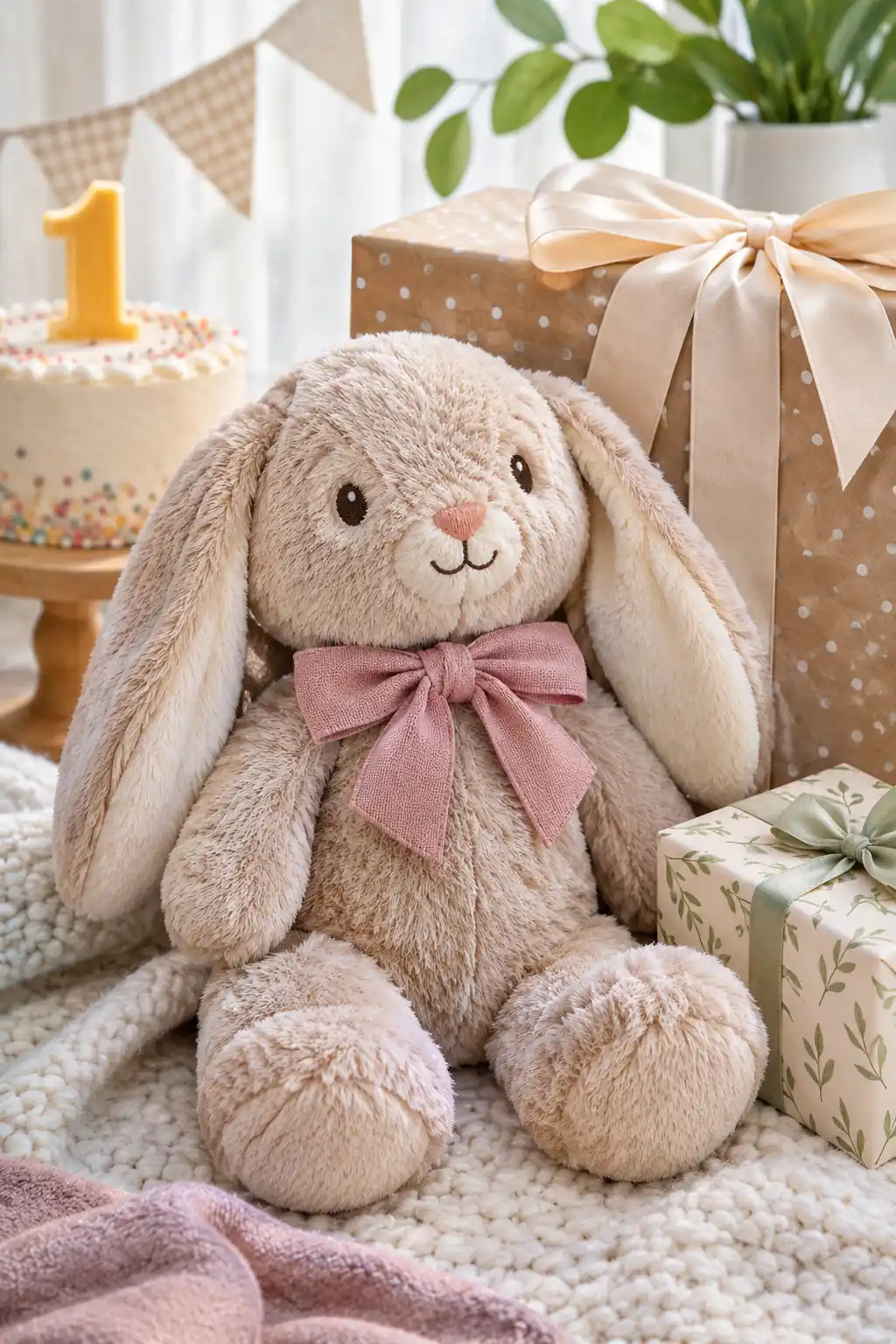
A soft toy can become a familiar companion during supervised play, but choose it by construction as well as appearance. The embroidered face in this example avoids separate plastic-looking eyes. Still, the actual product needs suitable age guidance, secure seams and care information rather than relying on the image’s gentle look.
Check the size, fabric and any removable clothing or ribbons. Decorative accessories shown in a styled gift photograph should not be assumed part of a child-safe toy. Ask the caregivers what they prefer, especially if the child already has several soft animals or the family avoids bulky gifts.
Present the toy with its labels available and remove wrapping before it reaches the child. Do not add it to a sleep space as part of the gift setup; caregivers should follow their established safe-sleep guidance. A simple washable toy with a familiar animal shape may be more practical than a large elaborate character that is difficult to clean, store or take along on outings.
A shape sorter with oversized pieces
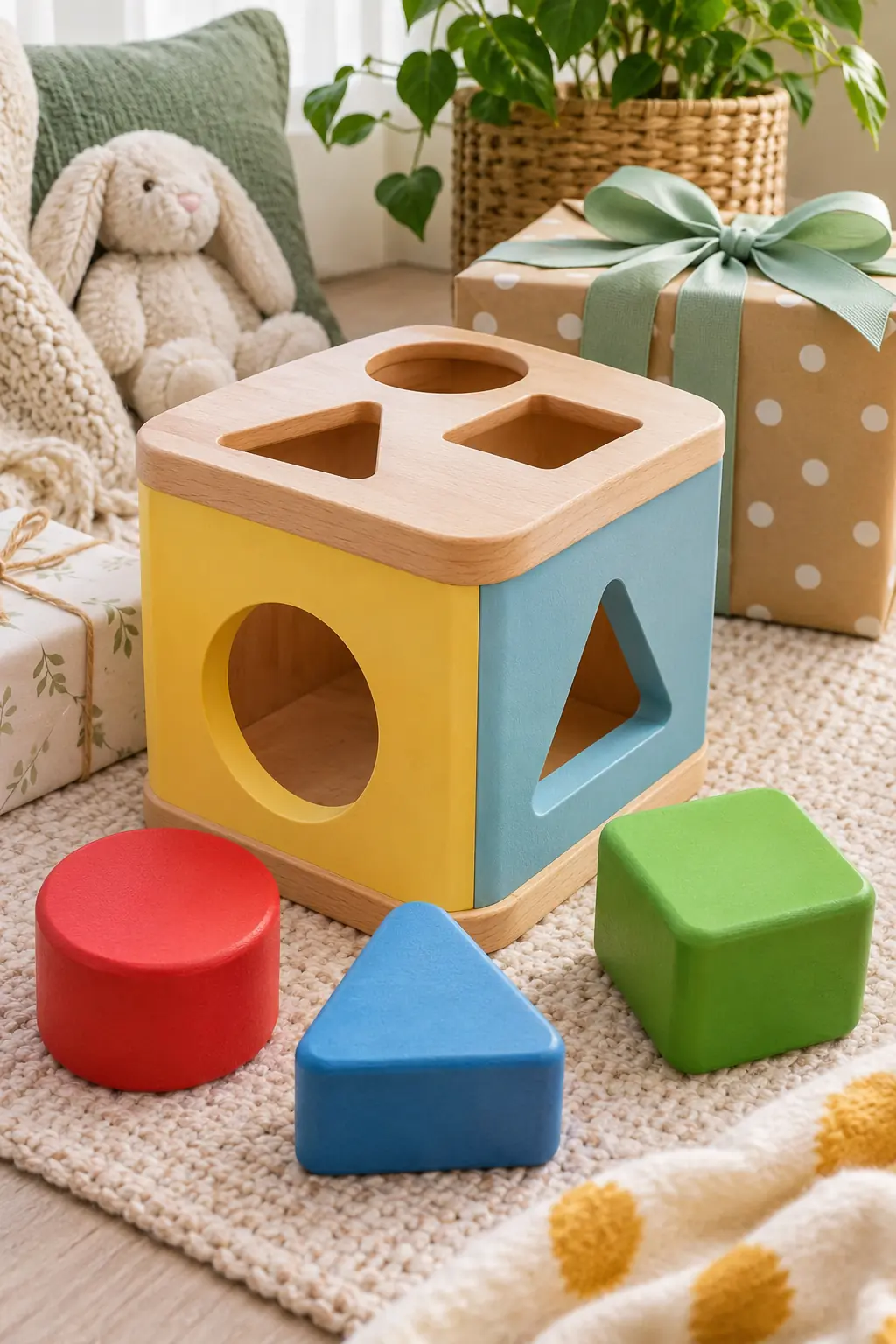
A shape sorter offers objects to hold, move and place in openings. The colorful pieces make the toy easy to recognize, but the product should be chosen for the child’s age and current interests. A simple design can be less frustrating than a complicated sorter with many similar openings and small parts.
Check every piece, the lid and the container’s edges. The photograph cannot confirm dimensions or safety, so use the manufacturer’s information and inspect the actual item. A lid that adults can open easily helps retrieve pieces without turning the toy into a difficult puzzle for the caregiver too.
Play does not need to begin with matching every shape correctly. The child may enjoy filling and emptying the container first. Keep the pieces together in the original box or a suitable storage bag when gifting. Ask whether the family already owns a sorter, since another toy category may offer more variety. The best present fits the child rather than an imagined sequence of skills they should demonstrate.
Bath stacking cups with simple shapes
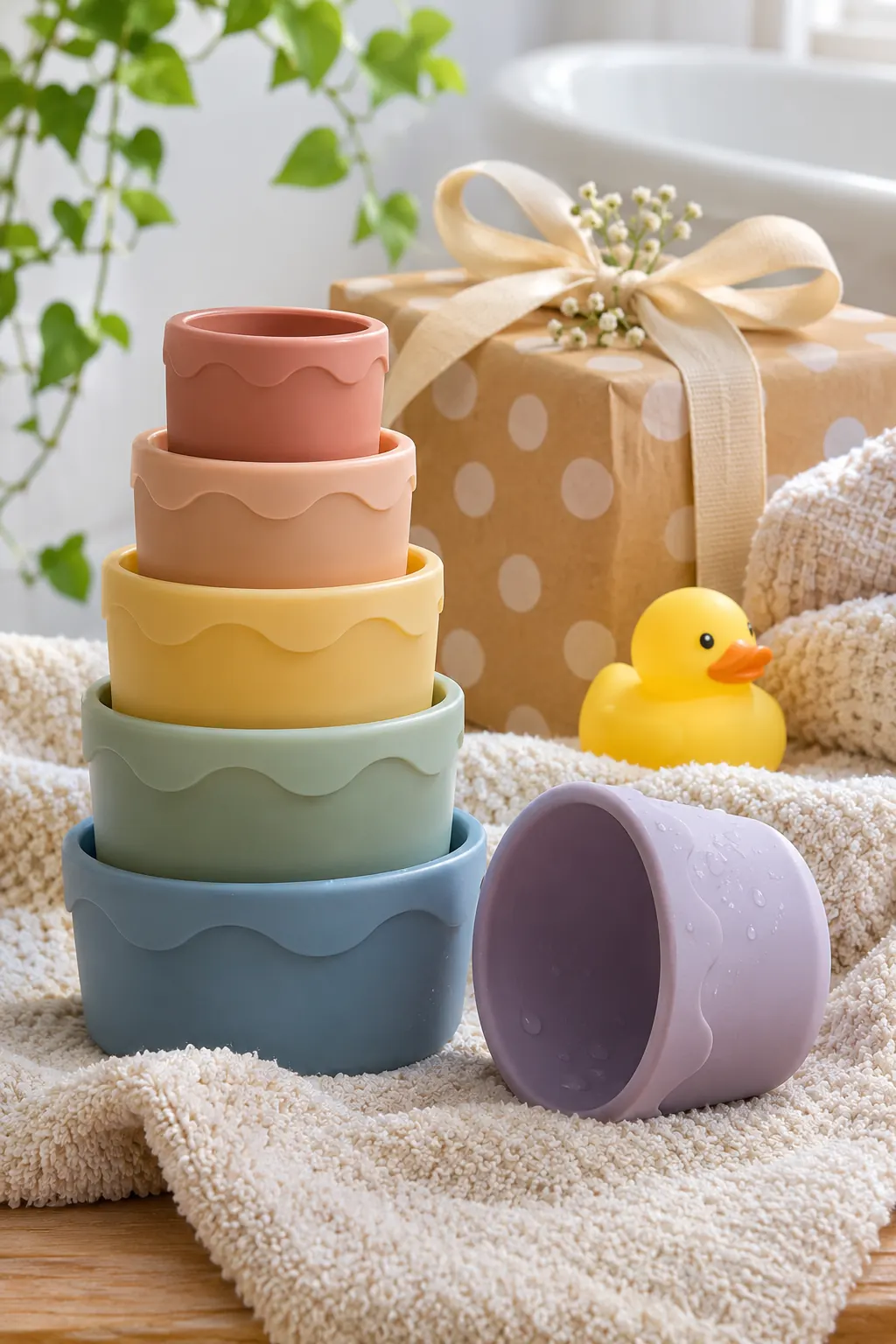
A dedicated set of bath cups can make water play straightforward without adding complicated moving parts. Choose a product designed for the intended age and bath use. Cups with accessible surfaces may be easier for caregivers to rinse and dry than enclosed toys that trap water inside.
Read the cleaning and storage instructions before buying. The smallest cup, any openings and any decorative parts still need to be appropriate for the child. Do not assume a general stacking toy belongs in the bath just because it is made from plastic or silicone.
This gift can pair with a practical towel rather than several additional toys. Keep the cups in their packaging so the caregiver can review how they should be used. Bath toys do not replace constant adult supervision, and the present should never be described as a way to leave a child occupied alone. A small set that dries and stores neatly may be more welcome than a large collection that crowds the bathroom.
A low ride-on toy chosen with the family
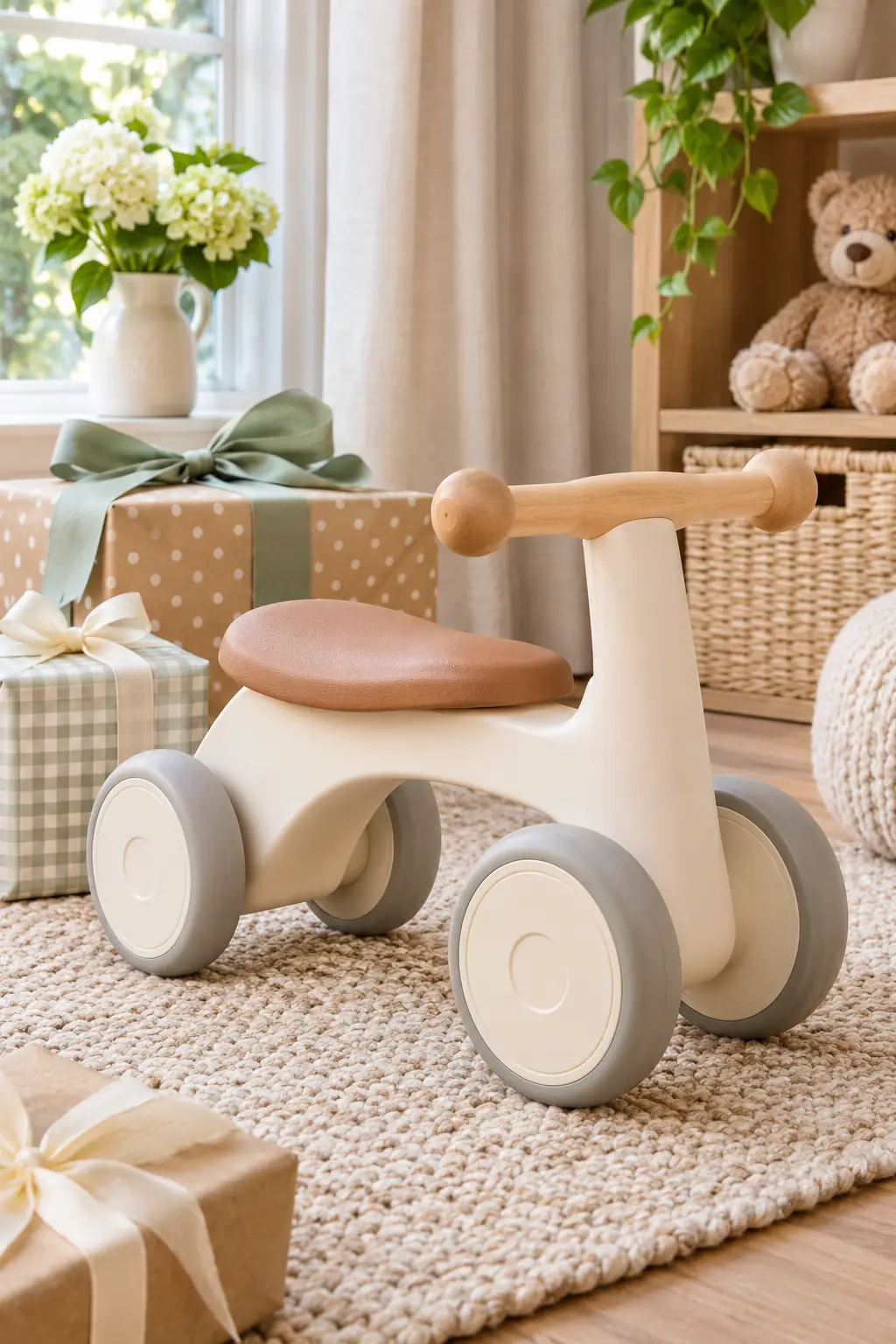
A ride-on toy is a larger purchase, so it is worth choosing with the caregivers. The child needs a product appropriate to their stage, and the home needs room to use and store it. A compact appearance in a photograph can be misleading without the actual dimensions.
Check the stated age range, seat height, weight limits and intended surfaces. The design should suit how the child will sit and move, following the manufacturer’s guidance. Avoid assuming that a toy will work indoors and outdoors equally well or that all versions offer the same stability.
Keep assembly instructions and spare parts safely with the adults. A gift receipt gives the family flexibility if the fit is wrong. For presentation, a simple bow can be removed before use rather than adding decorations around the wheels or handles. This is a good category for a shared family gift when everyone agrees on the choice, instead of a surprise that takes up space or arrives before the child is ready.
Soft climbing shapes for an indoor play area
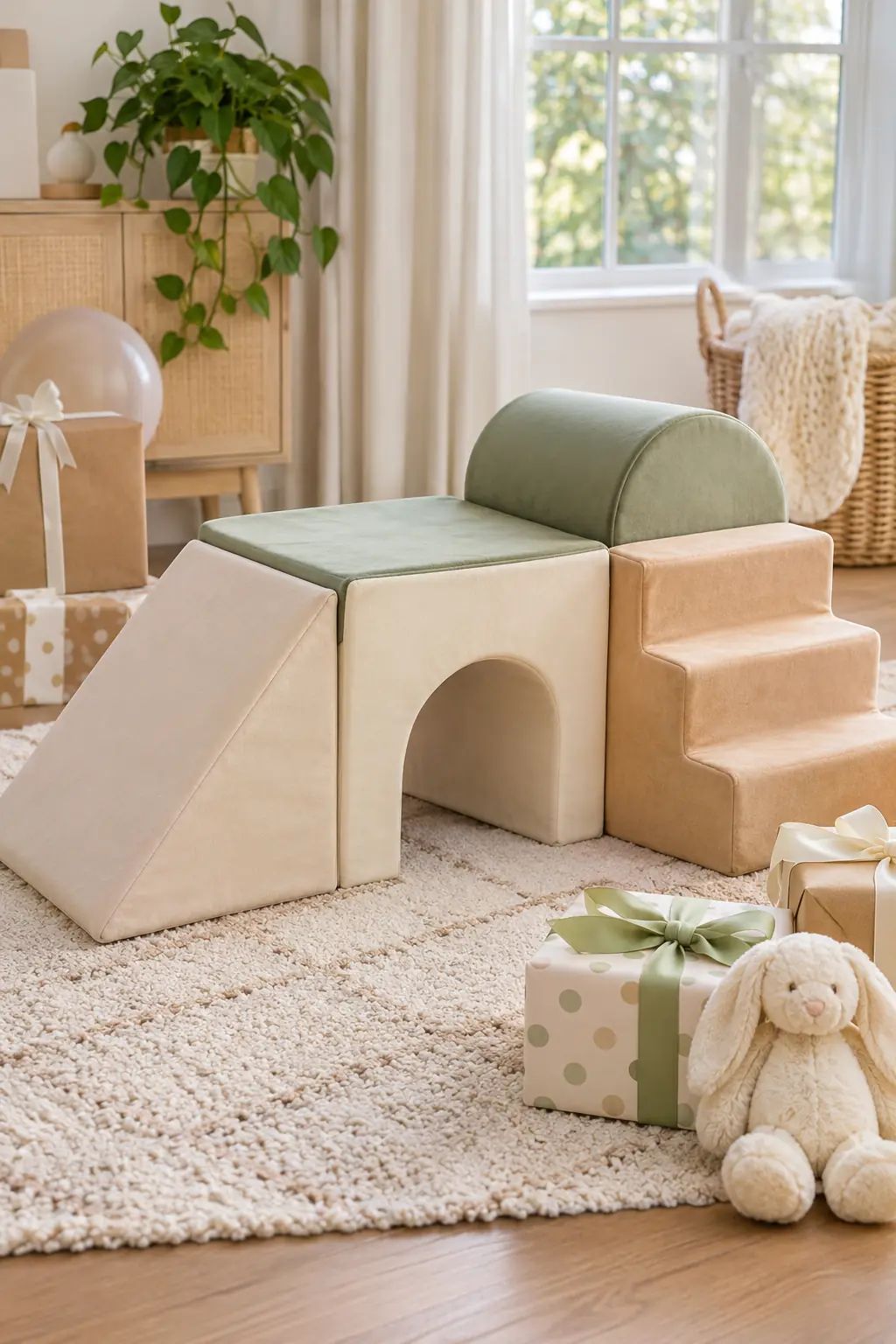
Foam play shapes can create a flexible floor activity, but they need more space than a small toy. Ask the family before buying and check the actual dimensions of the set. The shapes in the image illustrate a possible arrangement rather than a layout that is suitable for every child or room.
Choose equipment with appropriate age guidance and follow the manufacturer’s setup instructions. Consider the surrounding floor, nearby furniture and the supervision needed. Covers, seams and cleaning requirements matter because the pieces may be used frequently and stored against one another.
A smaller set may be easier to use than a large collection of ramps and blocks. The caregivers can arrange it around the child’s abilities rather than reproducing a dramatic climbing scene. Keep gift packaging and decorative props out of the play area. If space is limited, a contribution toward an activity the family already wants may be more useful than equipment they must find a place for immediately after the birthday.
A fabric play tunnel
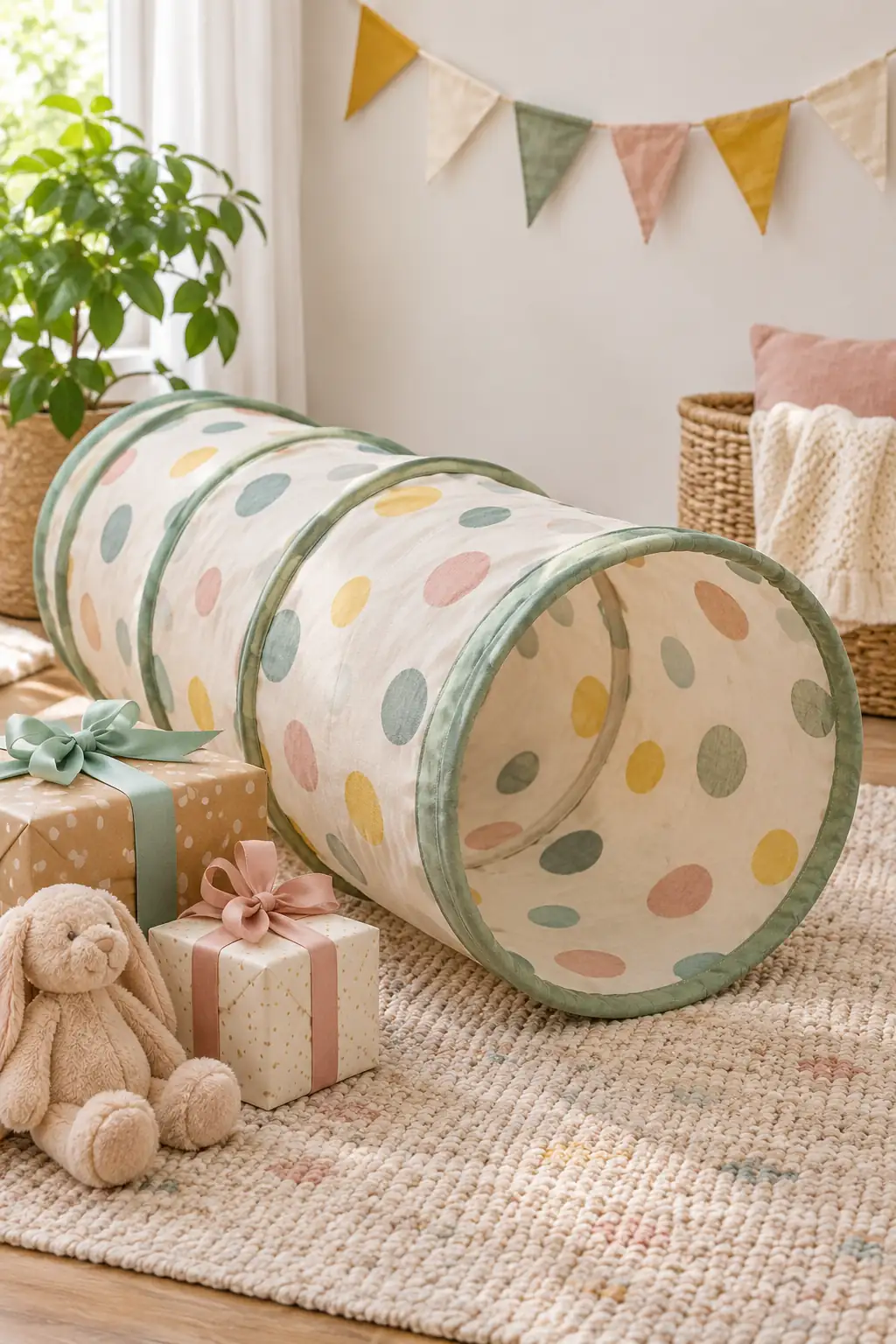
A play tunnel can offer a change of scene without becoming permanent furniture, provided the family has suitable space. Look at its open size and folded storage size before choosing one. The actual product should be intended for the child’s age and used according to its instructions.
Check the support structure, fabric and openings rather than judging only the cheerful print. Some tunnels spring open during setup, so adults should handle assembly and storage. Keep the tunnel away from stairs, unstable furniture and crowded walkways, with supervision throughout play.
Ask whether the child enjoys enclosed play spaces before making this the main gift. They may prefer watching from the entrance rather than crawling through, and there is no need to push the activity. A simple design with clear visibility can be easier for adults to manage. Present it in its carrying bag with instructions included, leaving decorative ribbons outside the equipment and removing them before the tunnel is opened.
A toddler drum for simple sound play
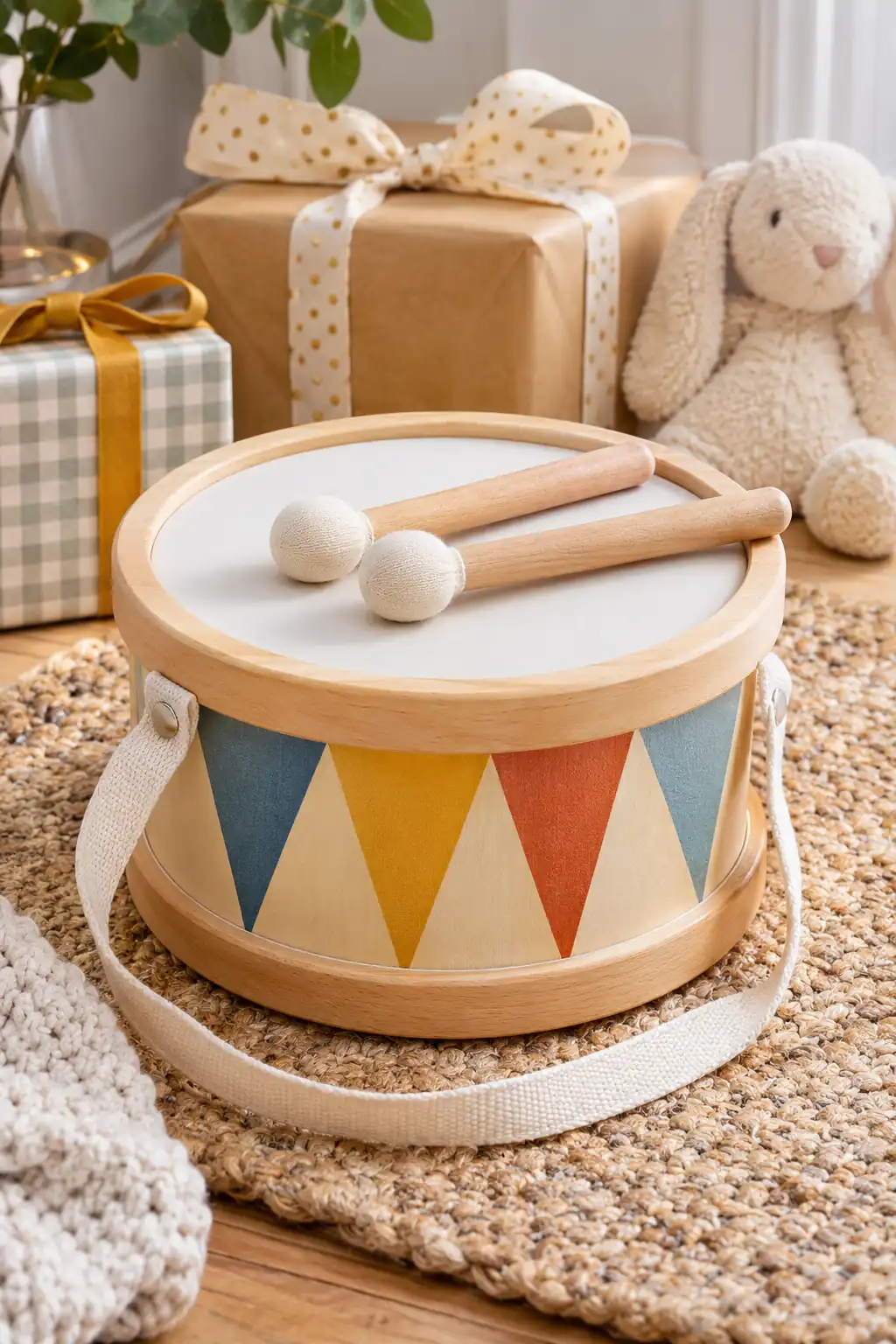
A small drum can interest a child who enjoys tapping and exploring sound. Choose an instrument designed for the stated age rather than a decorative miniature drum. The drum surface, edges and any beaters need to be assessed as part of the actual product, not just its colorful appearance.
Ask the caregivers about their preferences for sound toys before buying. A simple instrument may be welcome, while an electronic toy with fixed songs may not fit the household. Check whether the drum is intended for hand play or includes age-appropriate accessories, and follow the supplied instructions.
Keep the gift focused instead of adding several unrelated instruments. Adults can join with a short rhythm and allow the child to respond without expecting a performance. The product’s care directions should stay with the family. Avoid claims that musical toys guarantee developmental benefits; the practical value here is an activity the child may enjoy sharing with someone who is paying attention to their interest and comfort.
Large textured balls
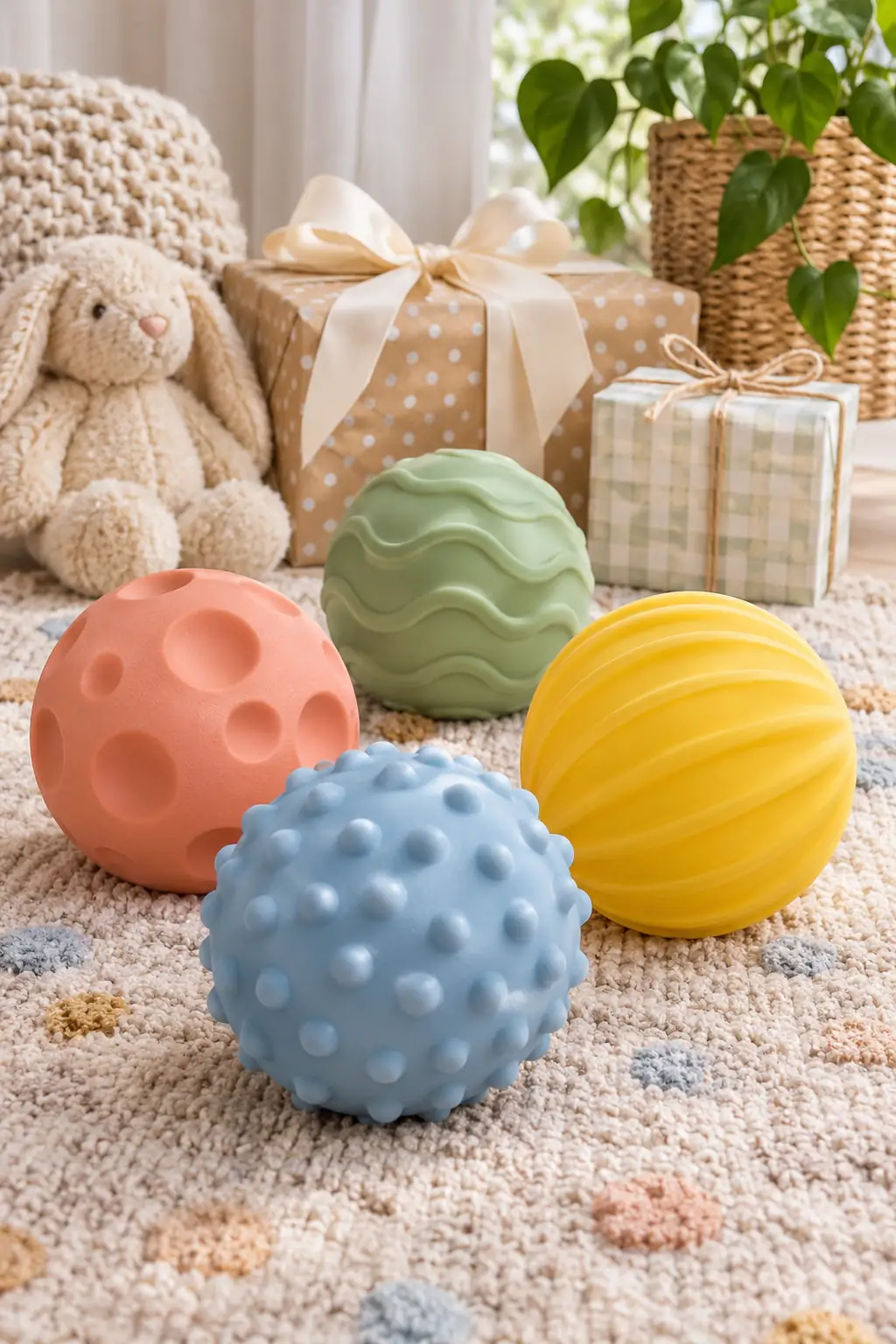
Textured balls provide different surfaces to hold and explore, with simple rolling play as another option. Choose products explicitly intended for the child’s age and check the size of every ball in the set. A photograph cannot establish whether a small-looking item is appropriate for a one-year-old.
Inspect the material, seams and any valves or removable pieces according to the product guidance. Avoid substituting decorative balls, pet toys or stress toys for baby play products. Cleaning instructions are important because the surfaces may collect dust and will be handled closely.
A small set with clearly different textures can be enough. Store the balls together in a suitable container rather than leaving them across a walking route. For gift presentation, keep packaging separate from play and retain the manufacturer’s details. A caregiver can roll one ball slowly across a clear floor and let the child engage at their own pace. There is no need to turn the gift into a structured exercise routine.
A compact activity cube
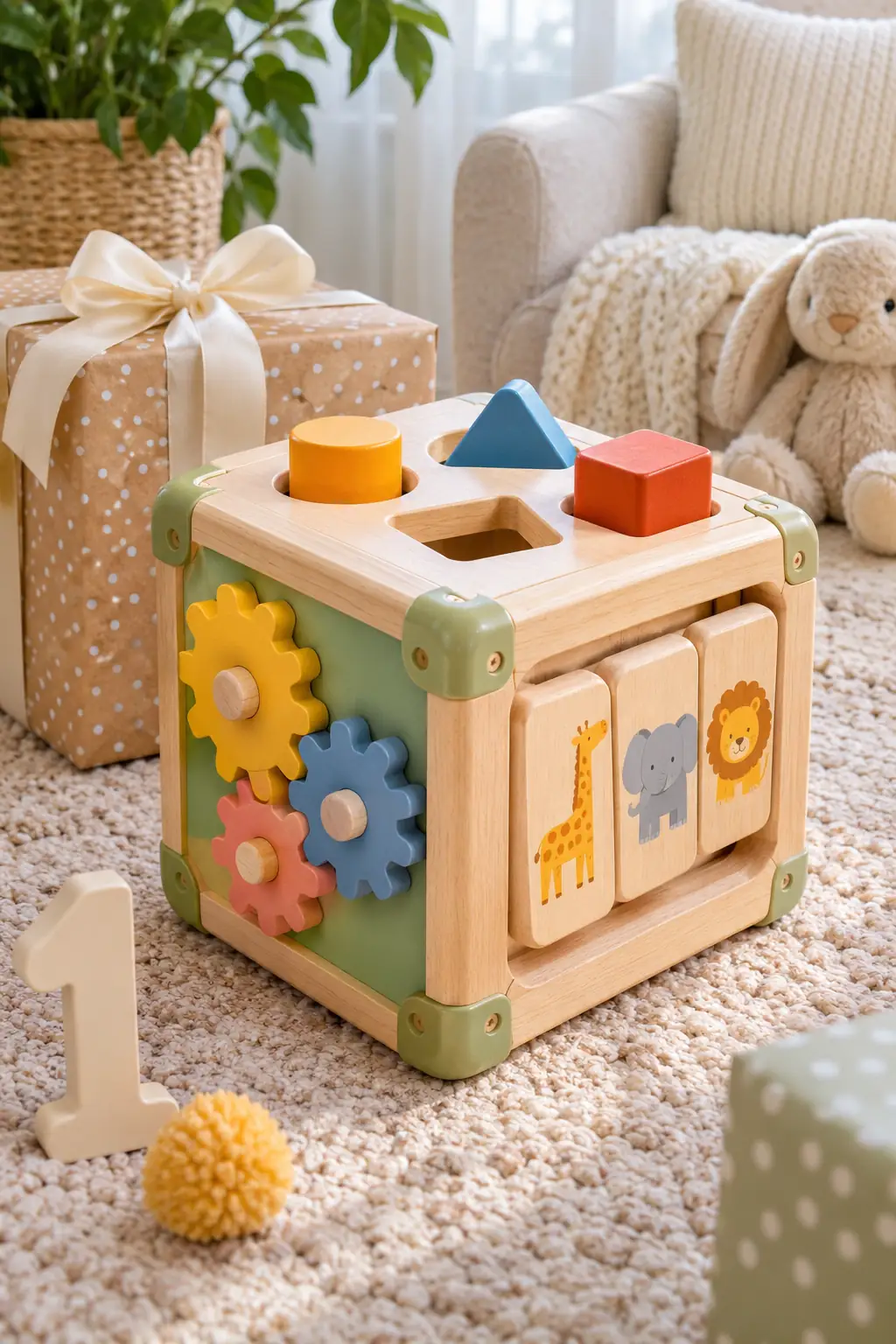
An activity cube brings several play surfaces into one object, which can be useful when storage is limited. However, the number of activities is not the only consideration. Look at the stated age guidance, stability and construction of each side before deciding whether the cube fits the child.
Check for small removable parts and review how any moving components are attached. The top of the cube may be separate, fixed or reversible depending on the model, so confirm the actual design. A wooden appearance does not by itself establish durability or safety.
Measure where it will be used and stored. A cube that looks compact online may be heavy or awkward to move around a small room. Keep instructions and product information with the gift, and let the caregivers introduce one activity at a time if that suits the child. A simpler toy can be equally thoughtful when it matches an existing interest; the goal is useful play, not the largest possible collection of features.
A small reading chair
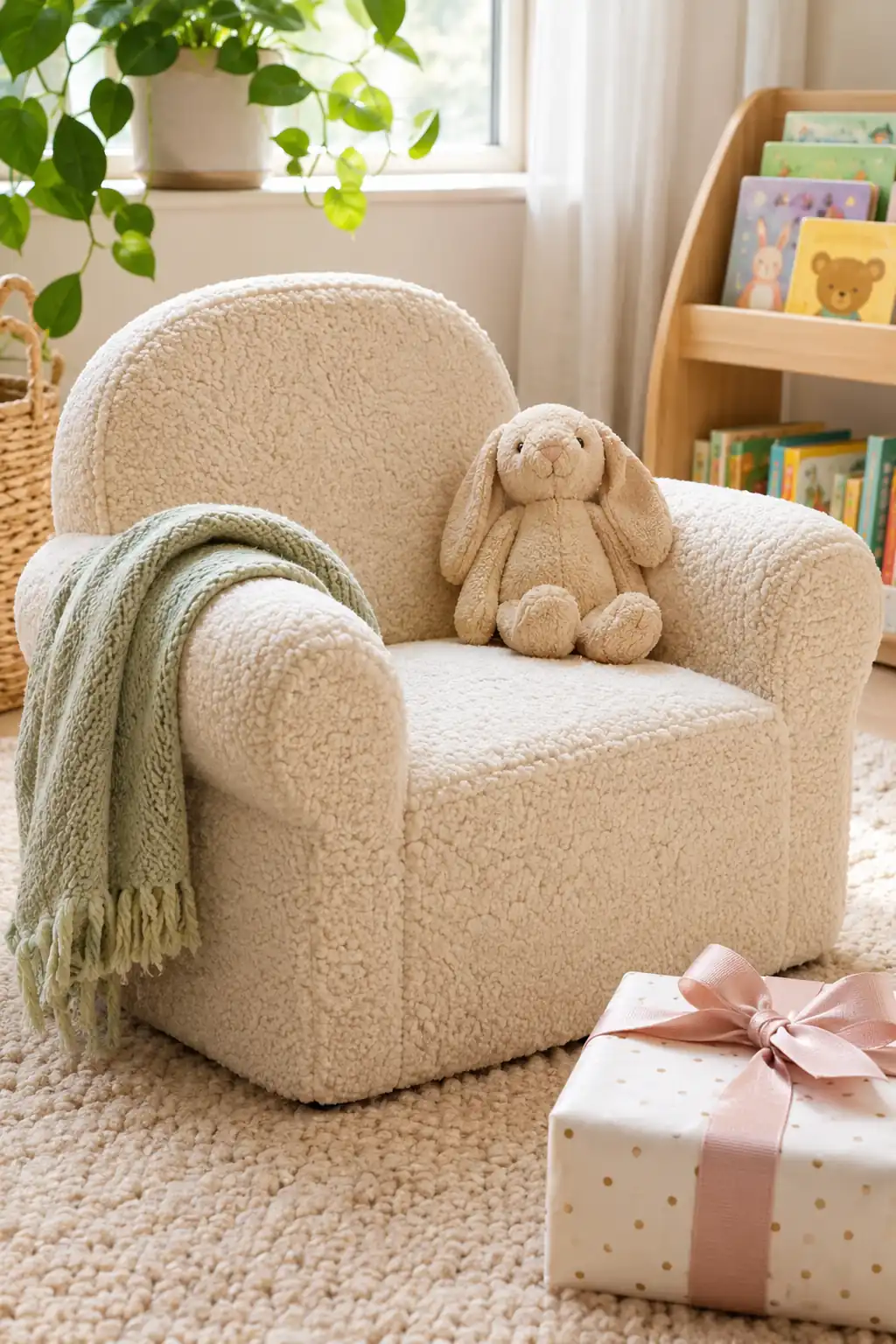
A child-sized chair can help define a reading corner, but it is a piece of furniture rather than a standard toy. Ask the caregivers about space, preferred materials and whether they want one before buying. The chair’s actual dimensions and intended age range matter more than its soft appearance.
Check stability, cleaning instructions and any removable covers. A light chair may move easily, while a larger one may be difficult to store. Place it according to the manufacturer’s guidance and away from anything that could become a climbing route to an unsafe area.
Pairing the chair with one board book gives it a clear purpose without filling it with decorative cushions. Remove wrapping and ribbons before use. The family can decide when the child is comfortable sitting there, with an adult nearby. If the room is already crowded, books or a smaller practical gift may be a better fit than furniture that needs a dedicated place from the day it arrives.
A keepsake box for the caregivers
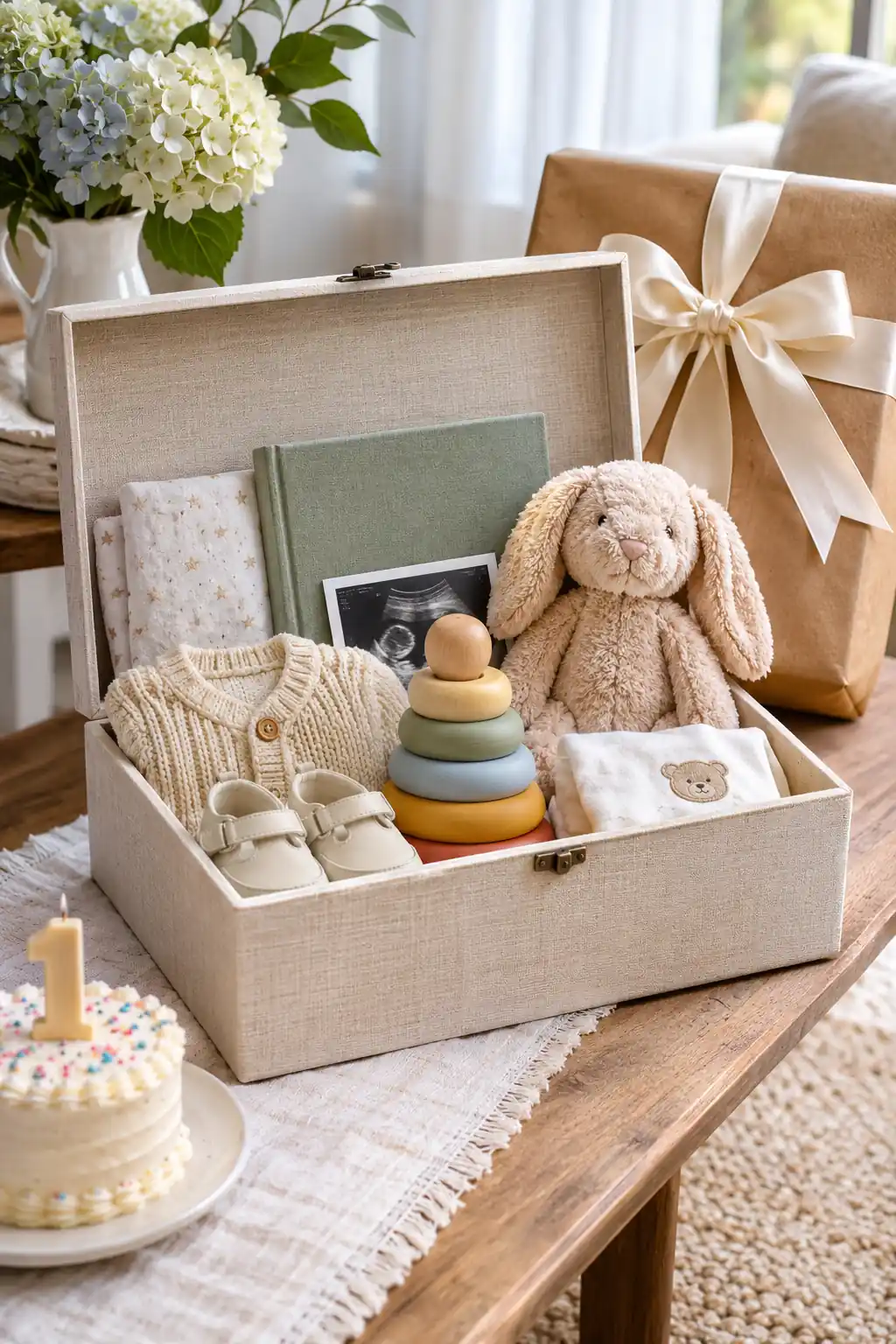
A keepsake box is a first birthday gift for the family to manage rather than a toy for the child. It can hold cards, small photographs and selected mementos from the first year. Choose a manageable size so it encourages keeping meaningful items instead of storing every piece of packaging.
Look at the closure, interior space and material before buying. A simple box with a secure lid can be easier to organize than one divided into many tiny compartments. Keep delicate papers protected appropriately and avoid pressing damp or recently cleaned objects into storage.
You can include a card describing one real memory of the child’s first year. Leave space for the caregivers’ own choices rather than filling the box with generic milestones. Small contents and decorative fastenings should stay in adult storage, outside the child’s play area. This gift works particularly well when the family already has enough toys and would appreciate a place to collect a few personal records over time.
A first-year photograph album
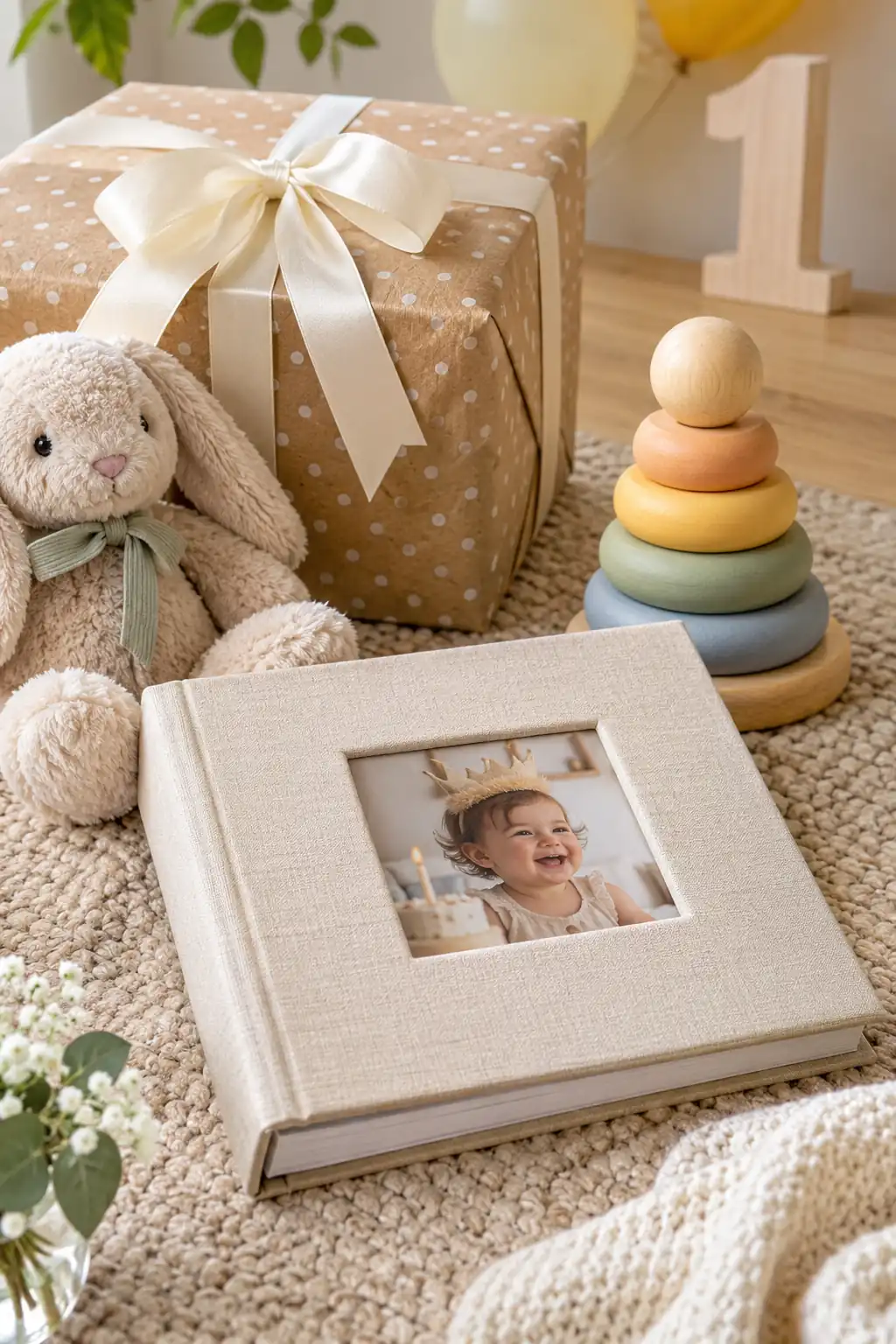
A photograph album offers a way to revisit the first year without relying only on a phone gallery. Choose a format that suits the family’s existing pictures and printing habits. An album with flexible pages may be easier to use than one that requires a very specific number of images.
Ask before printing or sharing family photographs, and use only pictures you have permission to include. A small selection of clear moments is more meaningful than filling every page with nearly identical shots. Leave room for captions that record real dates or details the caregivers can confirm.
The album is a family keepsake, not necessarily an object for unsupervised baby handling. Keep loose prints, page protectors and decorative attachments secure. A simple cover can age well as the child grows, while a handwritten note makes the gift personal. If you do not have suitable photographs, give the empty album with a printing contribution rather than inventing a finished story from images the family has not chosen.
A soft hooded bath towel
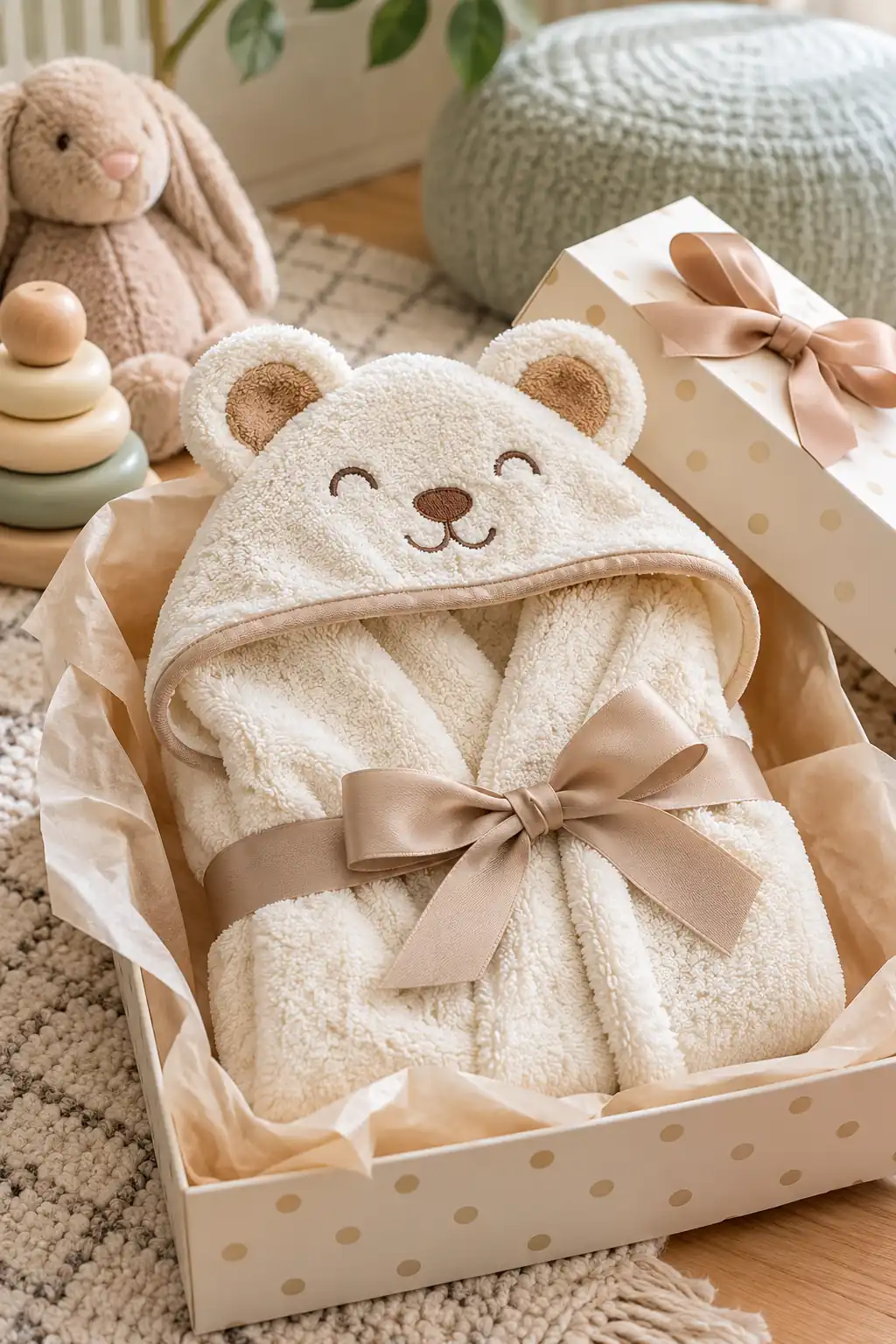
A hooded towel is a practical birthday present that can be used in an existing routine. Choose a size with room to wrap the child comfortably, checking the actual measurements rather than relying on a label such as baby or toddler. The animal hood adds a playful detail without needing several accessories.
Look at the fabric, care instructions and any decorative attachments. A towel that washes easily may be more useful than one chosen only for its photograph. Avoid making claims about softness or absorbency from appearance alone; read the product information and, when possible, feel the material before buying.
Fold the towel into a simple box and keep ribbons outside the fabric folds so they are easy for adults to remove. A board book can be a small companion gift if desired, but the towel does not need a large hamper around it. Ask about color preferences or duplicates when practical. Everyday gifts often feel most thoughtful when they solve a real need for the household.
A toddler dish set with a bib
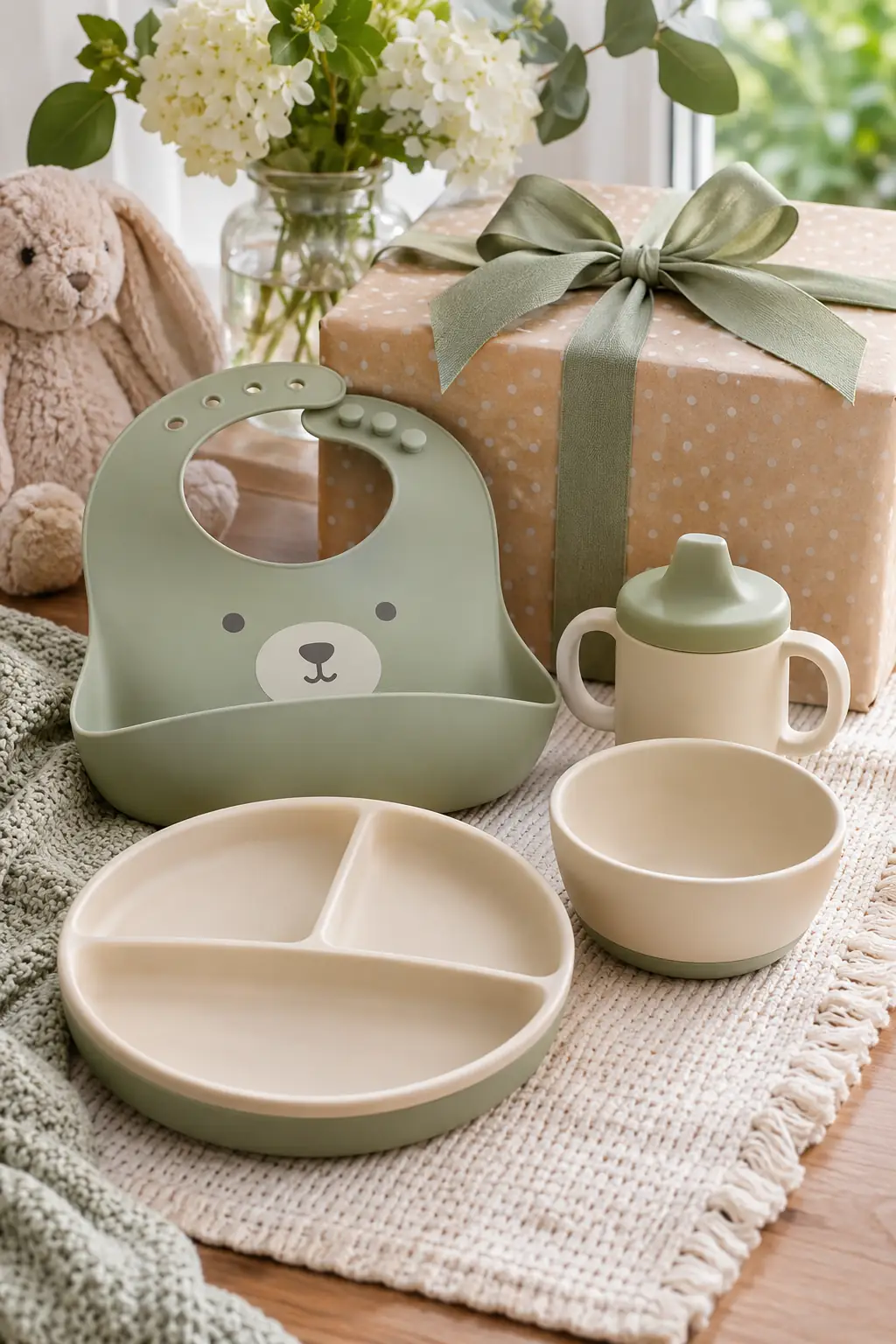
A dish set can be useful when it matches the family’s mealtime routine. Bowls, cups and bibs vary widely, so ask what the caregivers already use before choosing a matching collection. The coordinated colors in this image are attractive, but compatibility with their table, chair and cleaning routine matters more.
Read the product’s age guidance and food-contact information. Check whether the pieces are suitable for the dishwasher, microwave or other intended use rather than assuming all silicone items behave the same way. A divided plate may suit some meals, while a simple bowl may be more useful for others.
Keep the original packaging and care instructions with the gift. Remove decorative ribbons before any item is used. A bib should fit according to its design without substituting for normal mealtime supervision. If the family already has a preferred set, a single useful replacement piece can be better than a complete new collection that occupies cupboard space but rarely reaches the table.

Written by Stephanie Fallis
Mom and homemaker who shares budget friendly DIY projects, decorating tips and gardening ideas for busy families.
More about me → Gift IdeasBirthday Gift Ideas for Your Boyfriend That Fit His Interests
 Gift IdeasCraft Gift Basket Ideas for Creative Projects They Can Actually Start
 Gift IdeasThoughtful Fiftieth Birthday Gift Ideas That Feel Personal