
A japandi bathroom blends Japanese calm with Scandinavian simplicity, creating a warm and uncluttered wash space. This style pairs natural wood, matte stone, and soft neutral tones for a grounded look. Homeowners choose a japandi bathroom for its balance of texture and function. Every material serves a purpose, from woven storage baskets to unglazed ceramics. The result feels quiet, intentional, and lasting.
This layout works well in small powder rooms and full primary suites alike. Additionally, the style borrows heavily from wabi-sabi philosophy, valuing imperfect textures over polished surfaces. Warm oak, linen, and stone replace glossy tile and chrome. Meanwhile, a muted palette of clay, sand, and charcoal keeps the room feeling settled. This approach suits homeowners who want a spa-like room without cold minimalism.
The following list gathers twenty-one japandi bathroom ideas for every budget and layout. Each idea covers a material, fixture, or layout choice that fits the aesthetic. Readers can mix a few elements or commit to a full remodel. As a result, this guide offers flexible starting points for any renovation stage. Practical tips and common pitfalls follow at the end.
In this post: 21 ideas
- Natural Wood Vanity with Stone Basin
- Neutral Color Palette with Warm Beige and Charcoal
- Freestanding Soaking Tub as a Focal Point
- Matte Black Fixtures for Contrast
- Woven Textures with Rattan and Bamboo Accents
- Minimalist Open Shelving for Storage
- Large Windows with Sheer Linen Curtains
- Stone Tile Flooring in Earthy Tones
- Floating Vanity for a Clean Silhouette
- Botanical Touches with Potted Greenery
- Warm Wood Slat Wall Paneling
- Soft Ambient Lighting with Paper Lantern Pendant
- Terrazzo or Pebble Accent Wall
- Ceramic Vessel Sink with Organic Shape
- Walk-In Shower with Frameless Glass
- Textured Linen Towels and Bath Mats
- Sunken or Step-Down Bathtub
- Wabi-Sabi Inspired Imperfect Ceramics
- Bamboo Ladder Towel Rack
- Neutral Stone Countertop with Wood Cabinetry
- Zen Garden Window Box or Pebble Tray
1. Natural Wood Vanity with Stone Basin
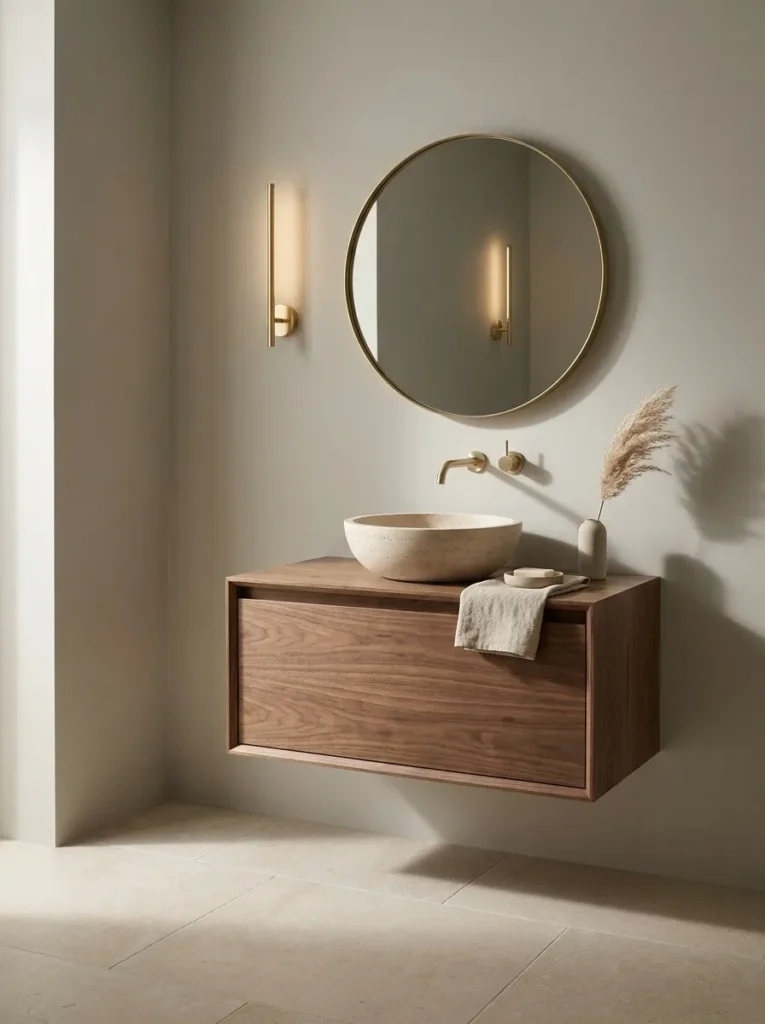
A wood vanity anchors a japandi bathroom with warmth and texture. Oak or walnut cabinetry pairs naturally with a matte stone basin on top. This combination softens the room and avoids a clinical feel. Additionally, exposed wood grain adds visual interest without extra decor. A concrete or travertine countertop completes the earthy base. Homeowners with tight square footage can browse this small bathroom idea guide for compact layouts.
2. Neutral Color Palette with Warm Beige and Charcoal
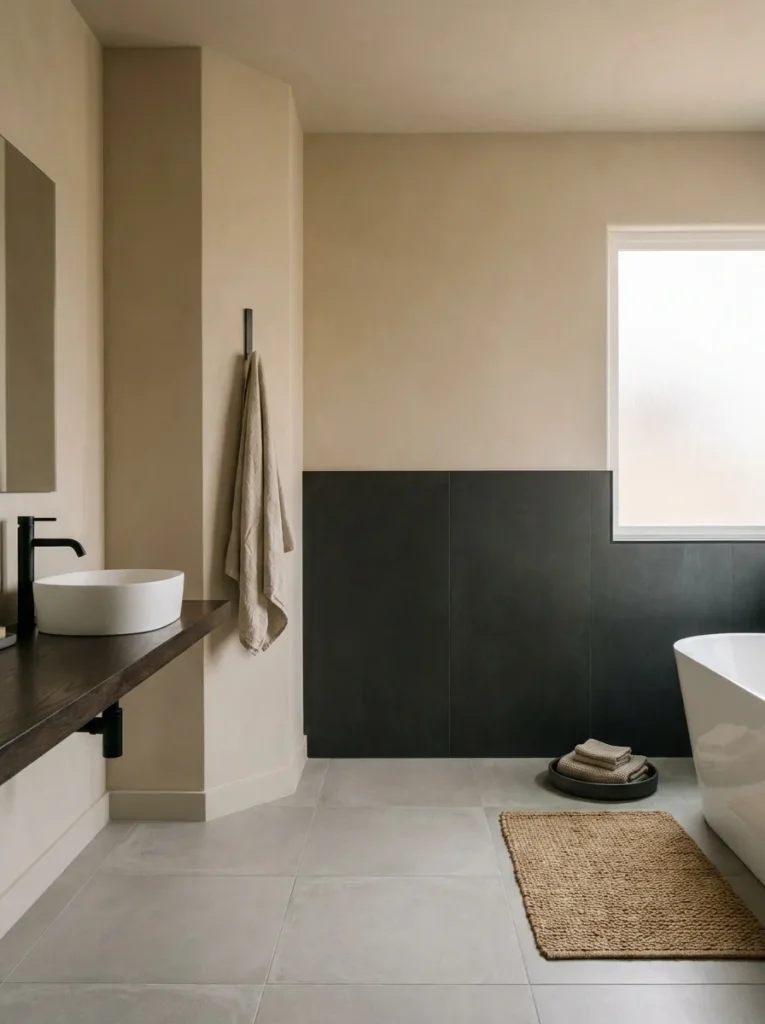
A neutral palette sets the tone for any japandi bathroom design. Warm beige walls pair with charcoal accents for depth and contrast. This combination avoids stark white, which can feel sterile. Instead, layered neutrals create a cozy, grounded mood. Matte finishes read as more organic than glossy ones. Sand, taupe, and soft gray tiles work well together, echoing the restraint in this minimalist living room decor guide.
3. Freestanding Soaking Tub as a Focal Point
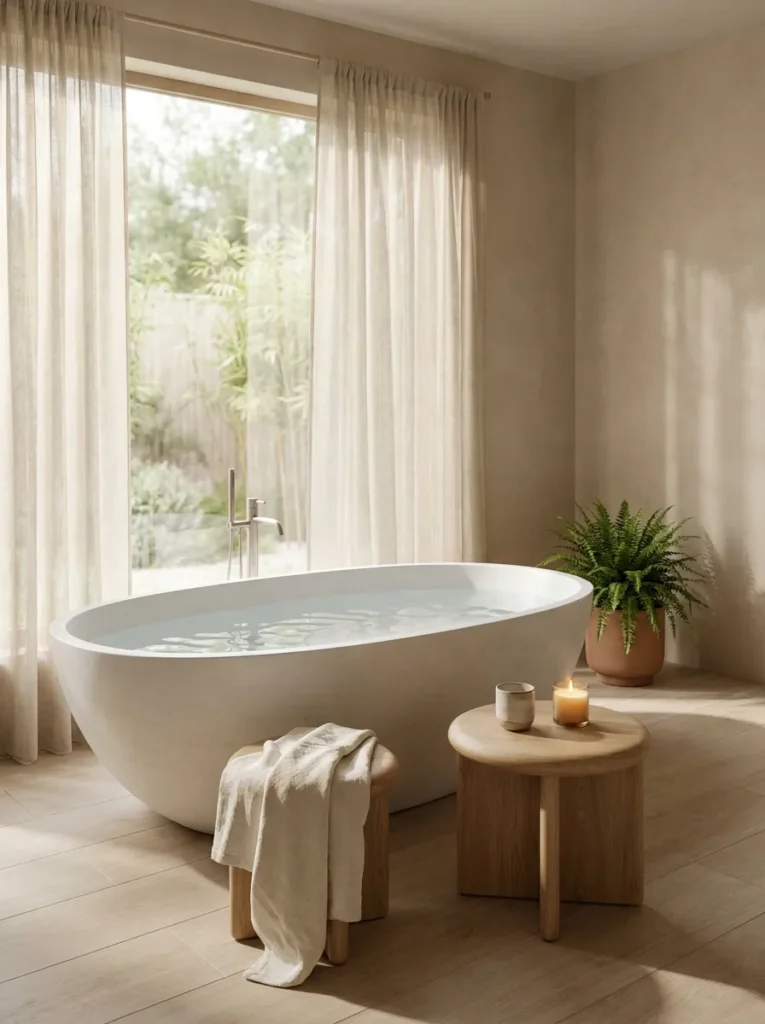
A freestanding tub gives any japandi bathroom a clear focal point. Its rounded shape softens the room’s straight lines and angles. Stone or matte resin tubs suit this style better than acrylic. Place the tub near a window for natural light and calm views. A low wooden stool beside it adds function and warmth. This layout draws inspiration from traditional Japanese soaking rituals.
4. Matte Black Fixtures for Contrast
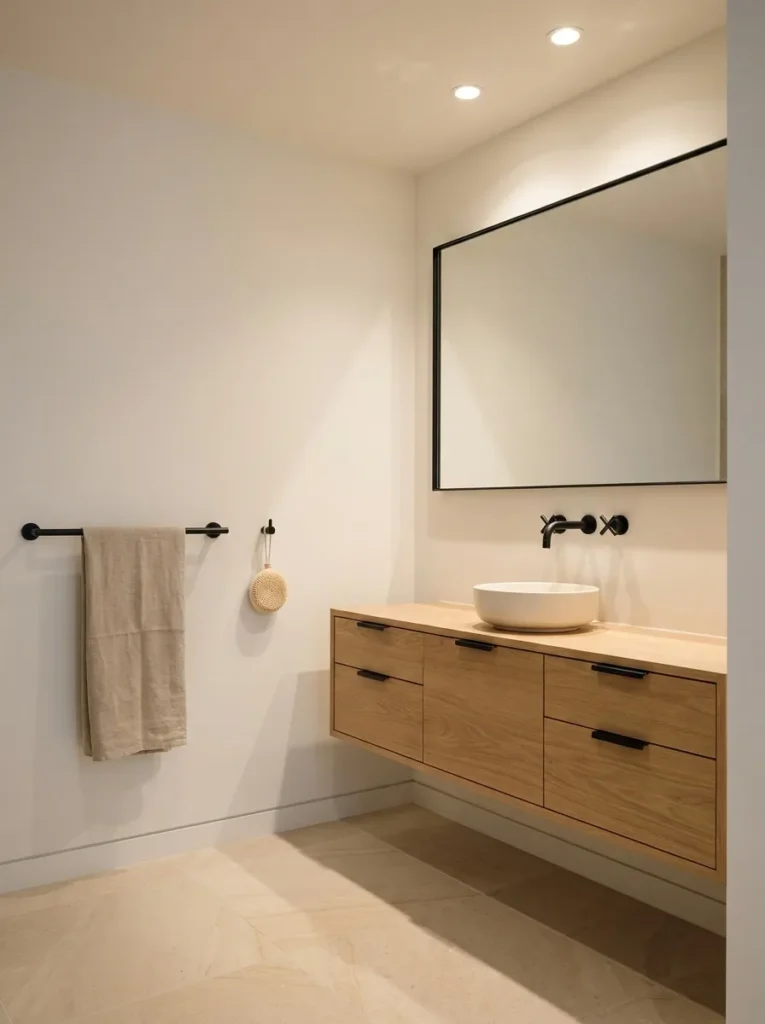
Matte black faucets and hardware add quiet contrast to a japandi bathroom. This finish grounds a light, neutral palette without feeling harsh. Pair black fixtures with warm wood tones for balance. Additionally, black framing on mirrors sharpens the room’s overall structure. This detail works in both compact and spacious layouts. A single black element often carries the whole design.
5. Woven Textures with Rattan and Bamboo Accents
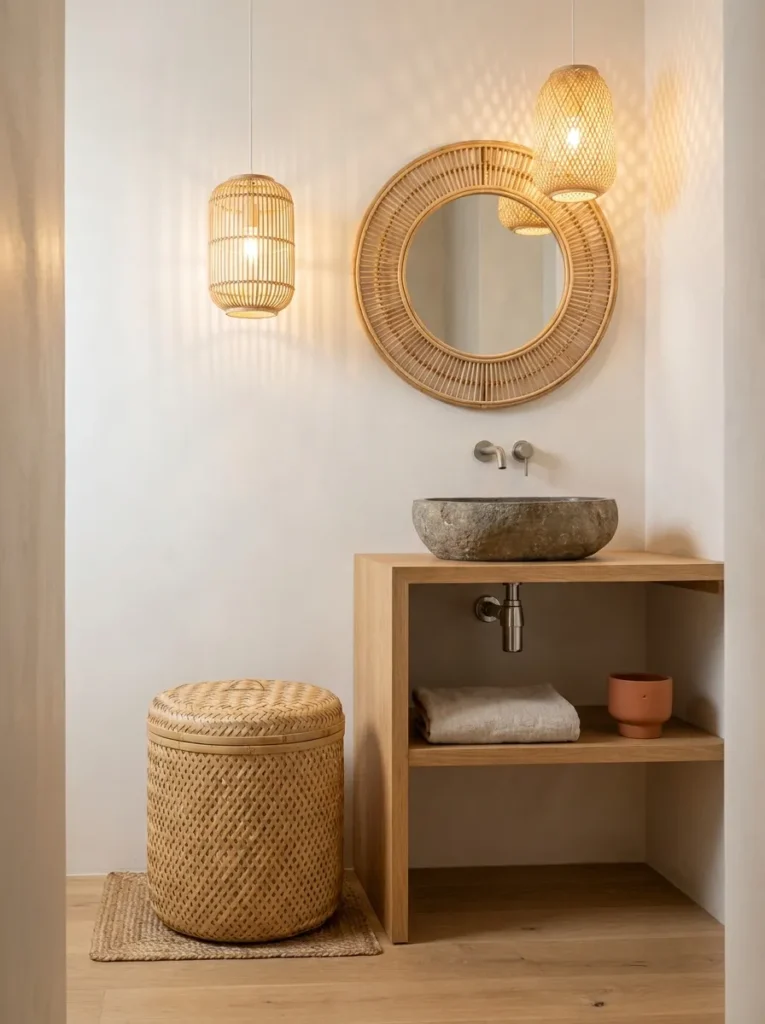
Woven rattan baskets and bamboo trays bring texture to a japandi bathroom. These natural materials echo Scandinavian craft traditions within a Japanese-inspired space. A rattan mirror frame or pendant shade adds subtle pattern. Additionally, woven laundry baskets keep storage functional and visually soft. This detail pairs well with the layered natural textures found in this organic modern living room guide.
6. Minimalist Open Shelving for Storage
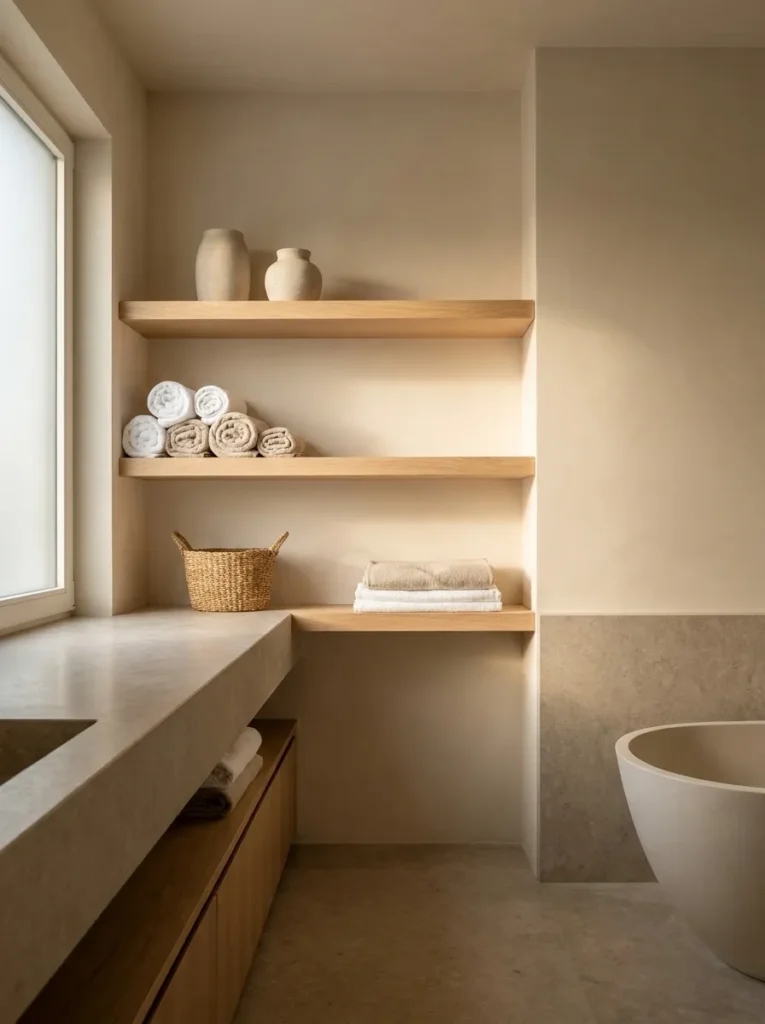
Open shelving keeps a japandi bathroom functional without clutter. Floating wood shelves display folded towels and simple ceramics. This storage method avoids bulky cabinetry that can crowd a small room. Additionally, open shelves encourage a more curated approach to bathroom items. Fewer, better objects suit this restrained aesthetic. Rolled linen towels add softness to the display.
7. Large Windows with Sheer Linen Curtains
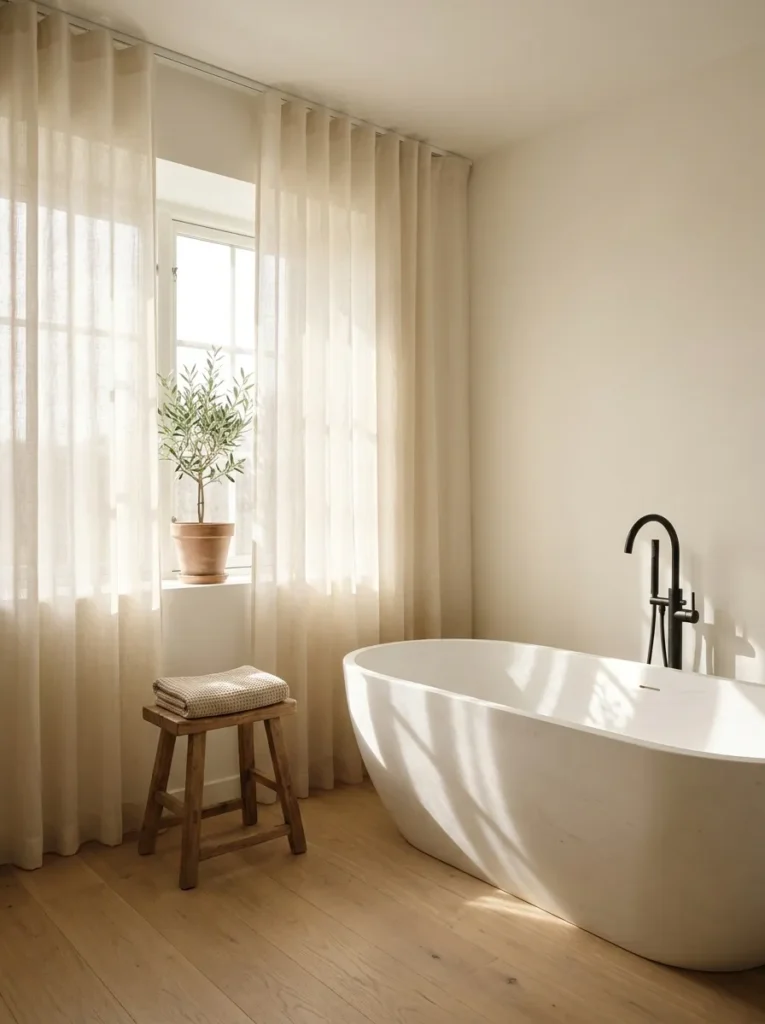
Large windows bring daylight into a japandi bathroom and support its calm mood. Sheer linen curtains filter harsh sun while keeping the room bright. This detail nods to Scandinavian design, which prioritizes natural light. Additionally, linen adds soft texture against hard stone and tile. Frosted glass works well for privacy without blocking light. Morning light through linen creates a gentle, diffused glow.
8. Stone Tile Flooring in Earthy Tones
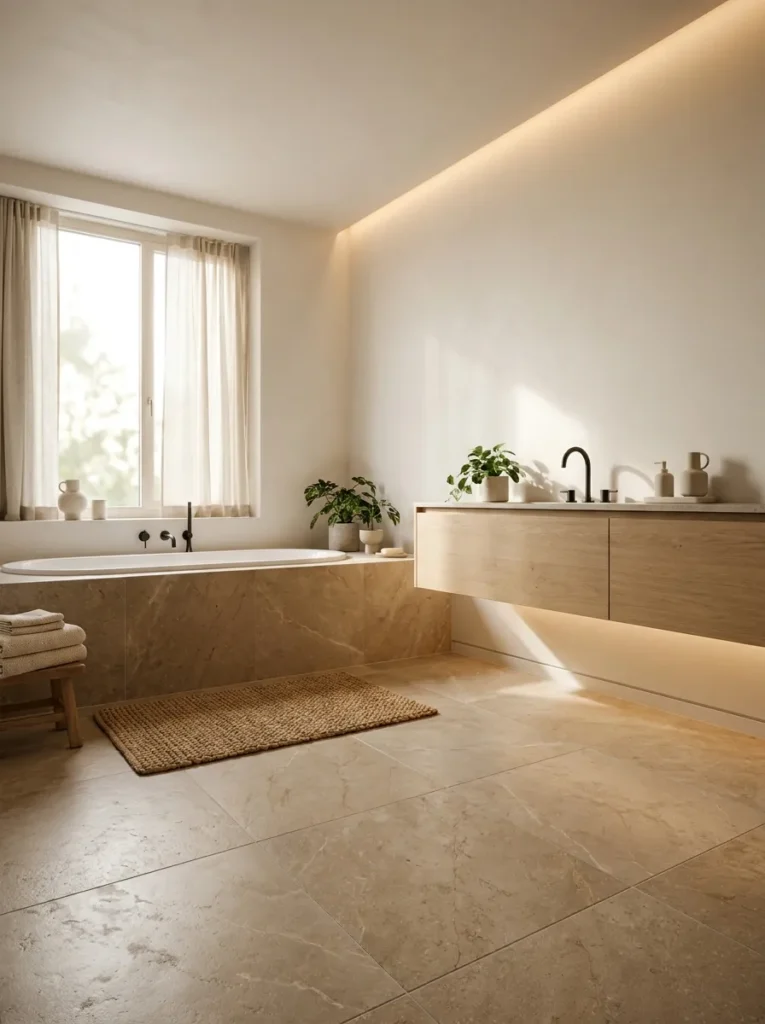
Stone tile flooring grounds a japandi bathroom in earthy, natural tones. Limestone, travertine, and slate all suit this restrained palette. Matte finishes feel more organic than polished stone. Additionally, large-format tiles reduce grout lines for a cleaner look. Underfloor heating keeps stone floors comfortable in colder months. This flooring choice pairs well with wood cabinetry above.
9. Floating Vanity for a Clean Silhouette
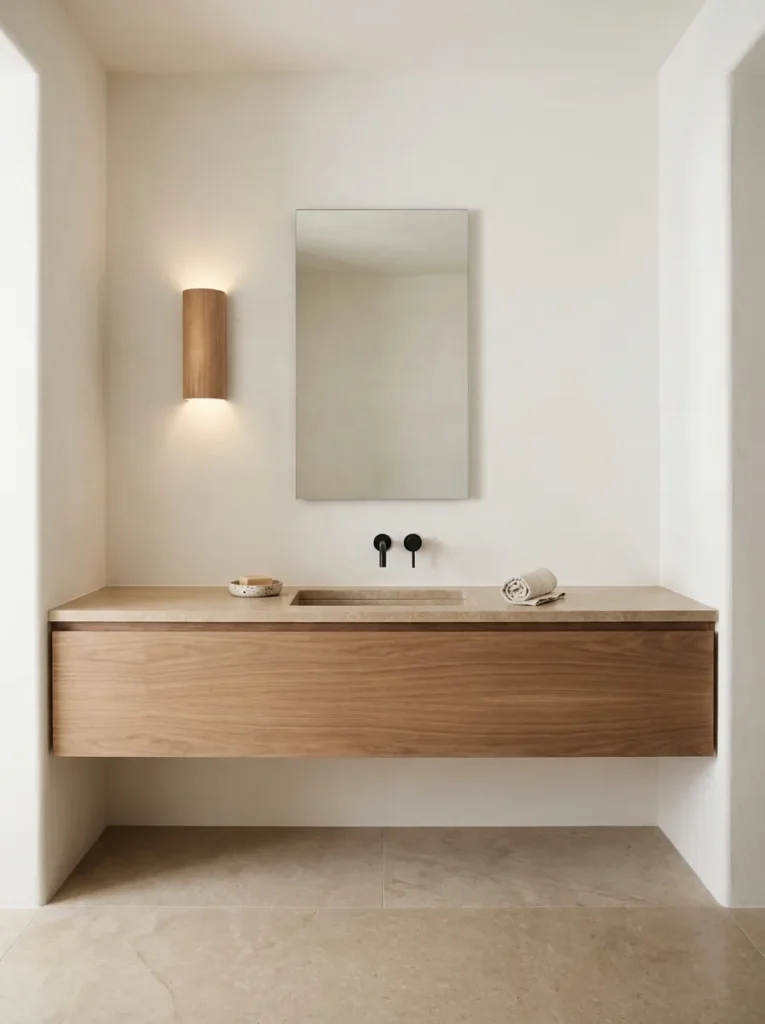
A floating vanity gives a japandi bathroom a lighter, cleaner silhouette. This design lifts the cabinet off the floor for visual space. Wall-mounted vanities also make small rooms feel larger. Additionally, this style simplifies cleaning around the base of the unit. Choose a wood finish with visible grain for warmth. Slim brass or black hardware completes the look.
10. Botanical Touches with Potted Greenery
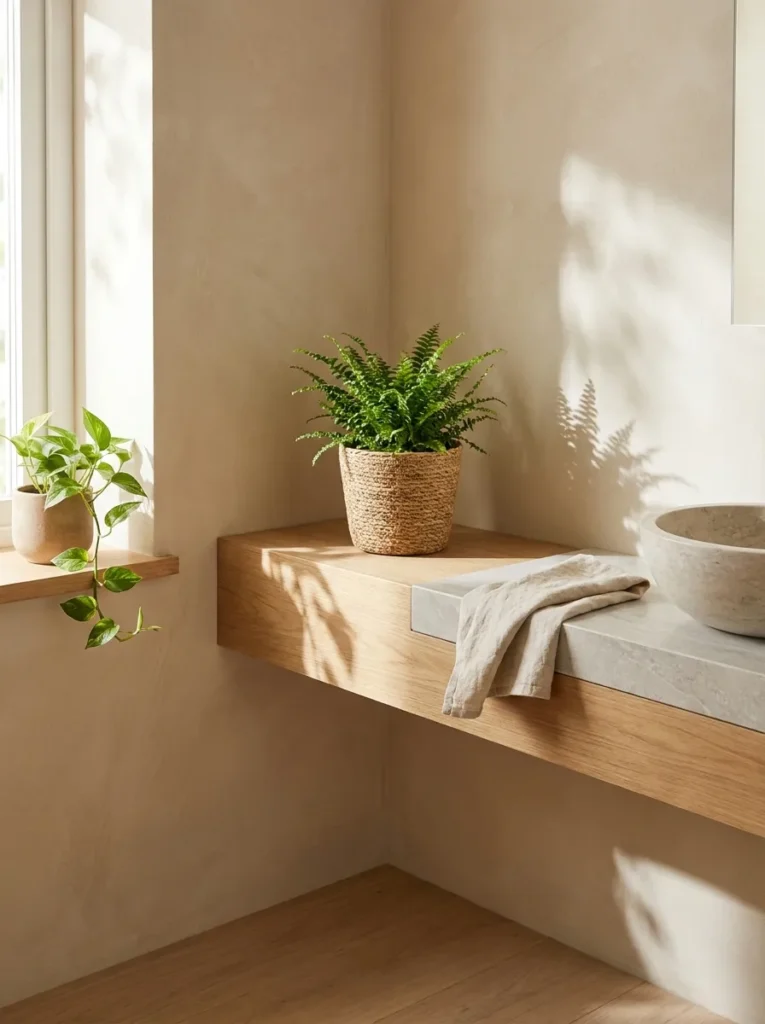
Potted plants bring life and softness into a japandi bathroom. Ferns, pothos, and eucalyptus thrive in humid bathroom conditions. A single well-placed plant softens hard stone and wood surfaces. Additionally, greenery echoes the connection to nature found in both design traditions. Ceramic or woven planters keep the look consistent with the room’s materials. This detail costs little and adds instant warmth.
 You may also like10 Christmas Chair Decoration Ideas for a Charming Home
11. Warm Wood Slat Wall Paneling
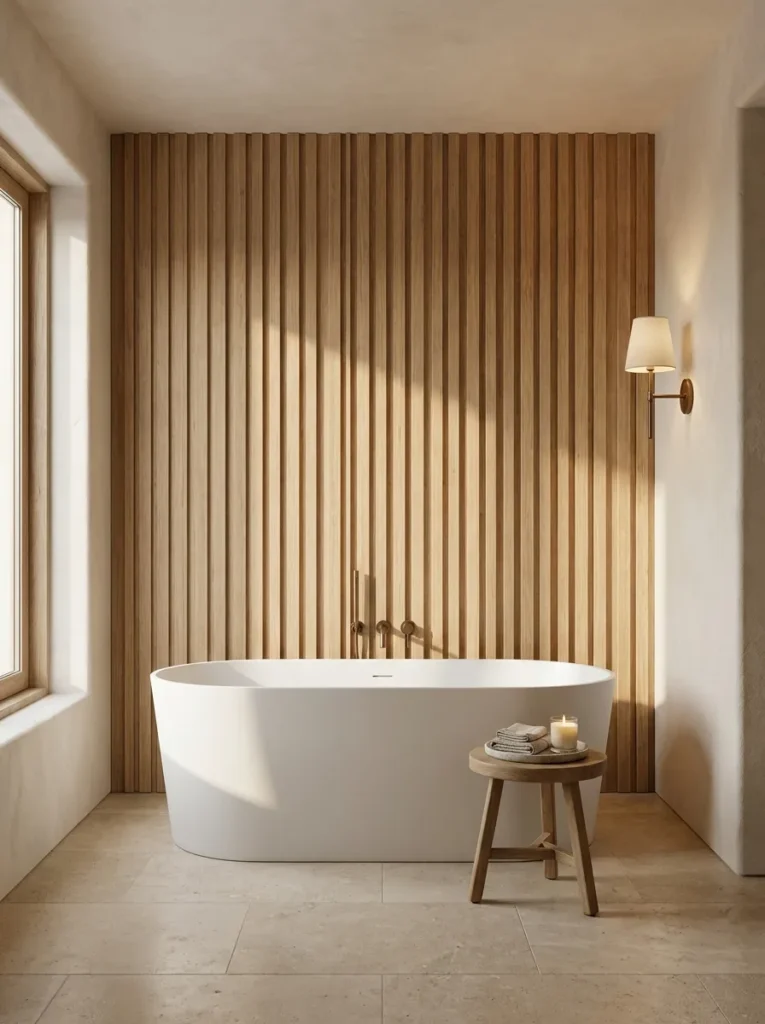
Wood slat paneling adds texture and rhythm to a japandi bathroom wall. This detail works especially well behind a tub or vanity. Slats create shadow lines that add depth without heavy pattern. Additionally, this treatment pairs naturally with wood ceilings or shelving. Homeowners on a budget can do it on your own with pre-made slat panels from most hardware stores. Sealed oak or ash slats resist bathroom humidity well.
12. Soft Ambient Lighting with Paper Lantern Pendant
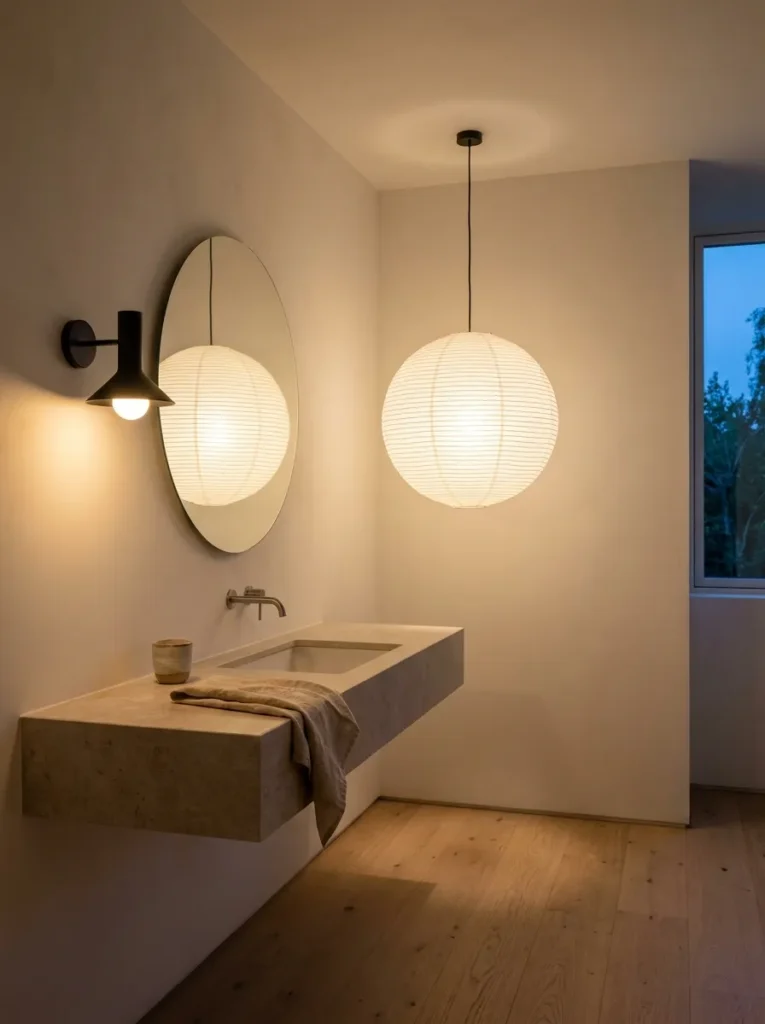
Soft ambient lighting shapes the mood of a japandi bathroom at night. A paper lantern pendant adds gentle, diffused light overhead. This fixture nods directly to traditional Japanese lighting design. Additionally, warm bulb temperatures keep the room feeling cozy rather than clinical. Layer this with a small wall sconce near the mirror. Dimmable lighting supports both morning routines and evening baths.
13. Terrazzo or Pebble Accent Wall
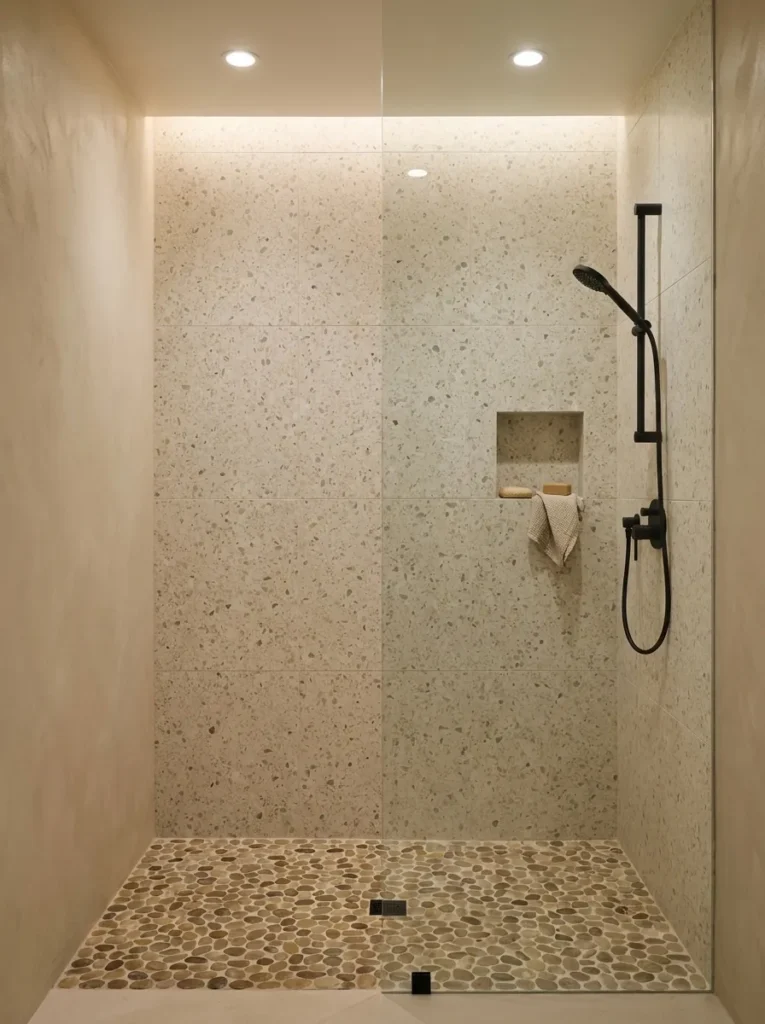
A terrazzo or pebble accent wall adds subtle texture to a japandi bathroom. This detail works well inside a walk-in shower or behind a tub. Neutral terrazzo chips keep the pattern quiet rather than busy. Additionally, river pebble tile brings an organic, spa-like feel underfoot. Choose muted tones over bright colors to match the palette. This feature becomes a natural focal point in the room.
14. Ceramic Vessel Sink with Organic Shape
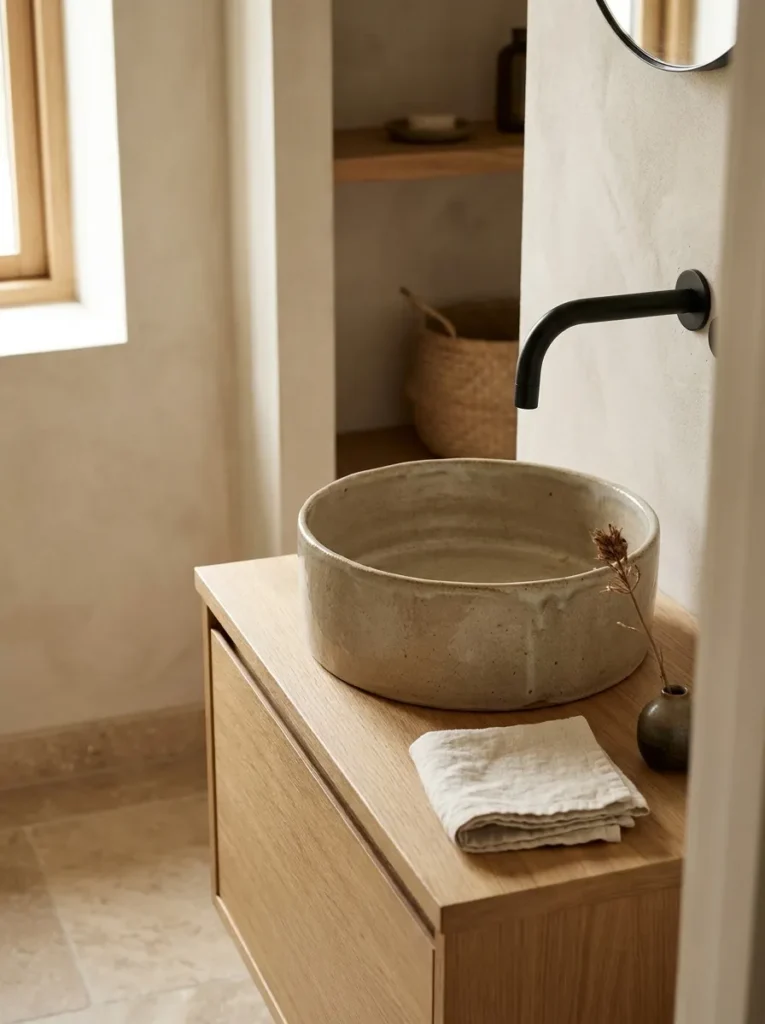
An organic ceramic vessel sink softens the straight lines of a japandi bathroom. Handmade, slightly irregular shapes reflect wabi-sabi values around imperfection. This detail pairs beautifully with a wood or stone vanity top. Additionally, matte glazes in sand or clay tones suit the palette best. A slim gooseneck faucet keeps the fixture from overwhelming the sink. This piece often becomes the room’s quiet centerpiece.
15. Walk-In Shower with Frameless Glass
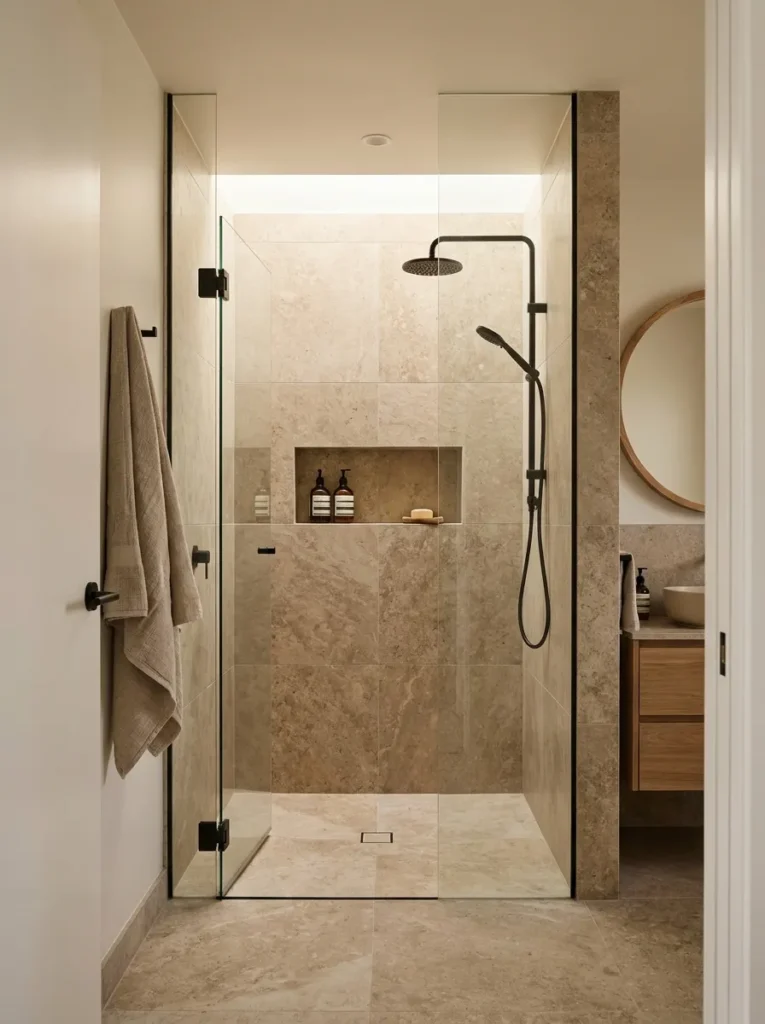
A frameless glass shower keeps a japandi bathroom feeling open and light. This layout removes visual barriers between the shower and the rest of the room. Stone tile walls inside the shower continue the earthy palette. Additionally, a recessed niche holds bottles without adding visible clutter. Matte black hardware frames the glass for subtle contrast. This layout suits both small and large bathroom footprints.
16. Textured Linen Towels and Bath Mats
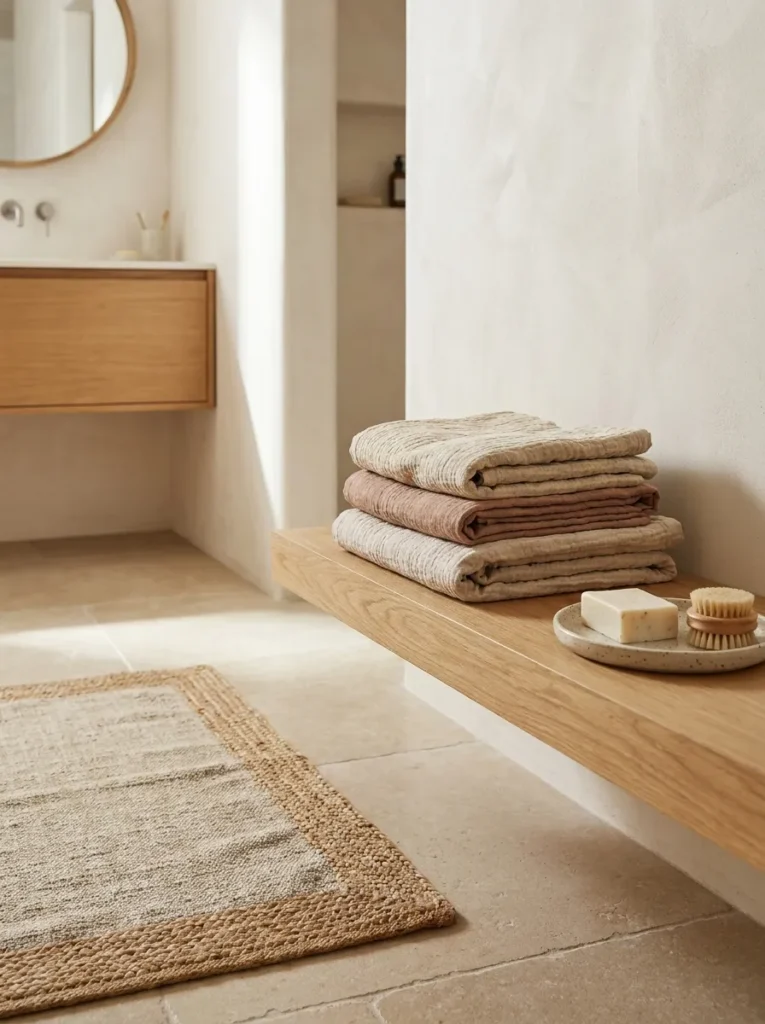
Textured linen towels bring softness into a japandi bathroom without extra color. Neutral tones like oat, clay, and stone match the room’s palette. Additionally, linen bath mats add warmth underfoot compared to cold tile. Rolled or stacked towels on open shelving keep the display simple. This detail costs little but changes the room’s overall feel. Choose heavier weaves for both comfort and durability.
17. Sunken or Step-Down Bathtub
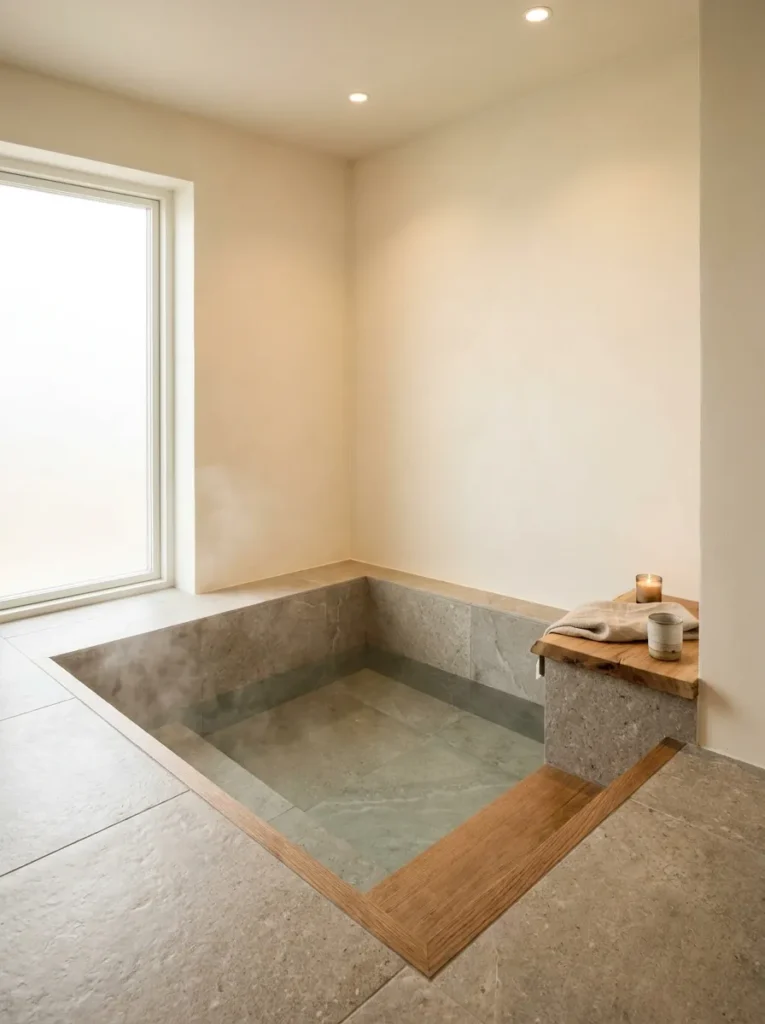
A sunken tub gives a japandi bathroom a distinct architectural feature. This layout draws from traditional ofuro-style Japanese soaking tubs. Stone or tile surrounds the sunken area for a cohesive look. Additionally, this feature works best in larger primary bathrooms with structural flexibility. A low step or ledge adds both safety and seating. This detail turns bathing into a slower, more deliberate ritual.
18. Wabi-Sabi Inspired Imperfect Ceramics
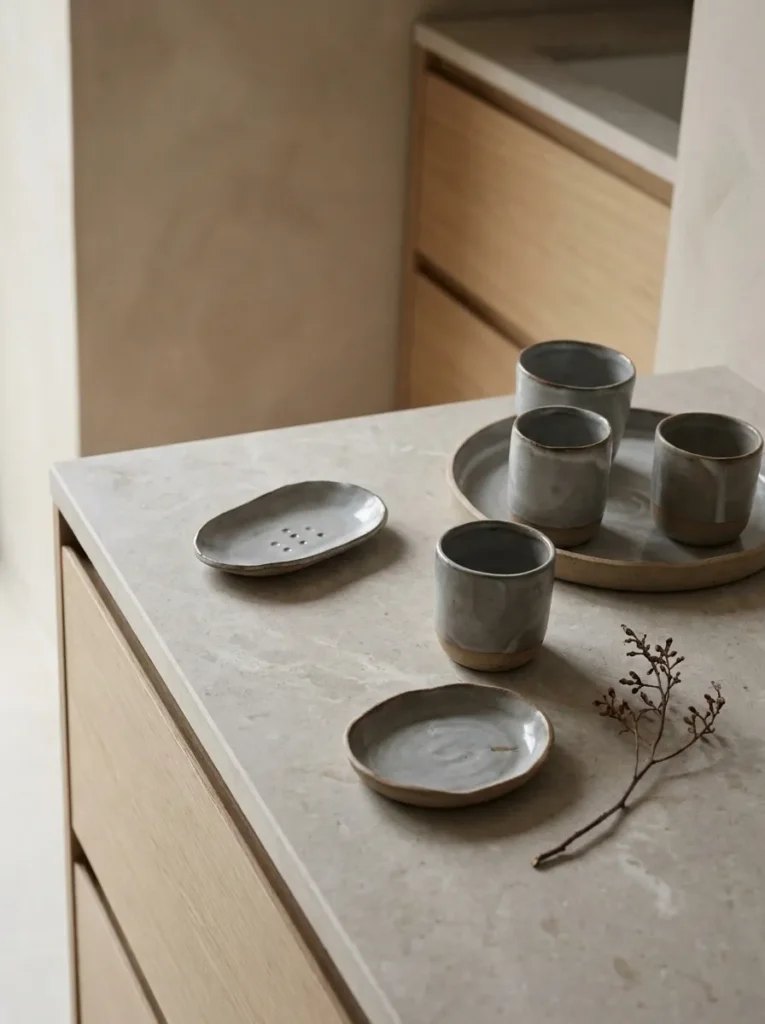
Imperfect ceramic accessories reflect the wabi-sabi roots of a japandi bathroom. Hand-thrown soap dishes, cups, and trays show subtle variation in shape. This detail contrasts nicely with sleek stone and wood surfaces. Additionally, muted glazes in gray, clay, or off-white suit the palette. Readers exploring this idea further can browse this wabi-sabi interior decor guide for more styling direction. These small objects carry outsized character in the room.
19. Bamboo Ladder Towel Rack
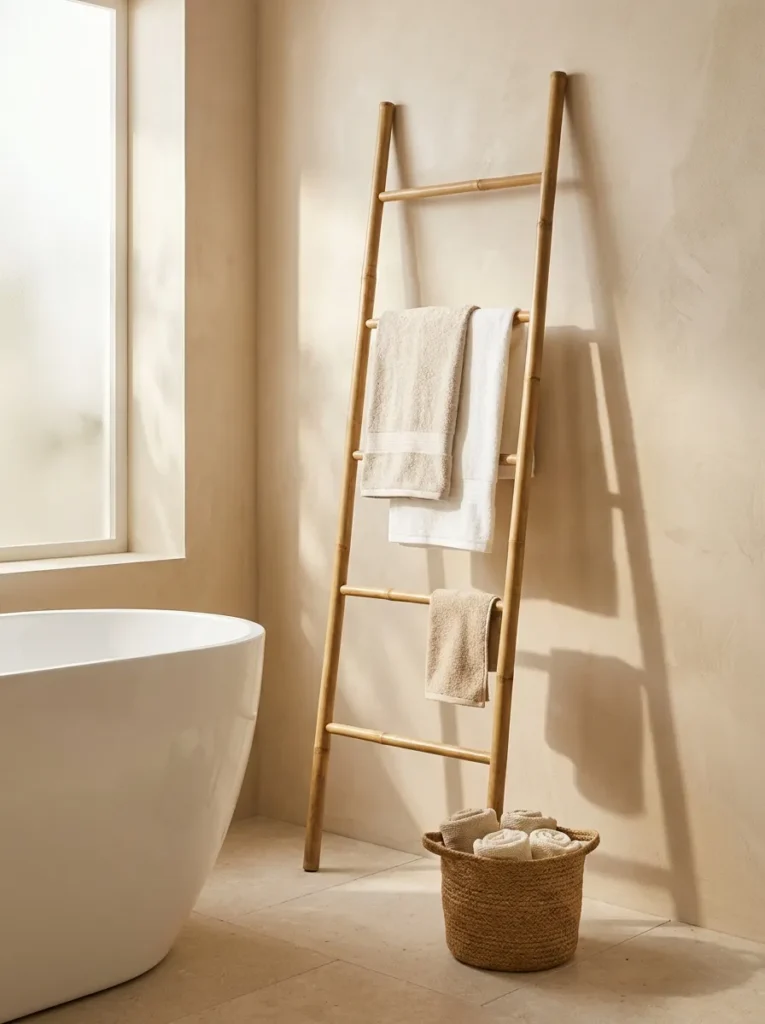
A bamboo ladder rack adds function and texture to a japandi bathroom. This piece leans against the wall instead of requiring installation. Towels drape over each rung for easy access and display. Additionally, bamboo brings a lighter tone than dark walnut or oak. This detail suits small bathrooms that lack built-in storage space. A ladder rack also works well beside a freestanding tub.
20. Neutral Stone Countertop with Wood Cabinetry
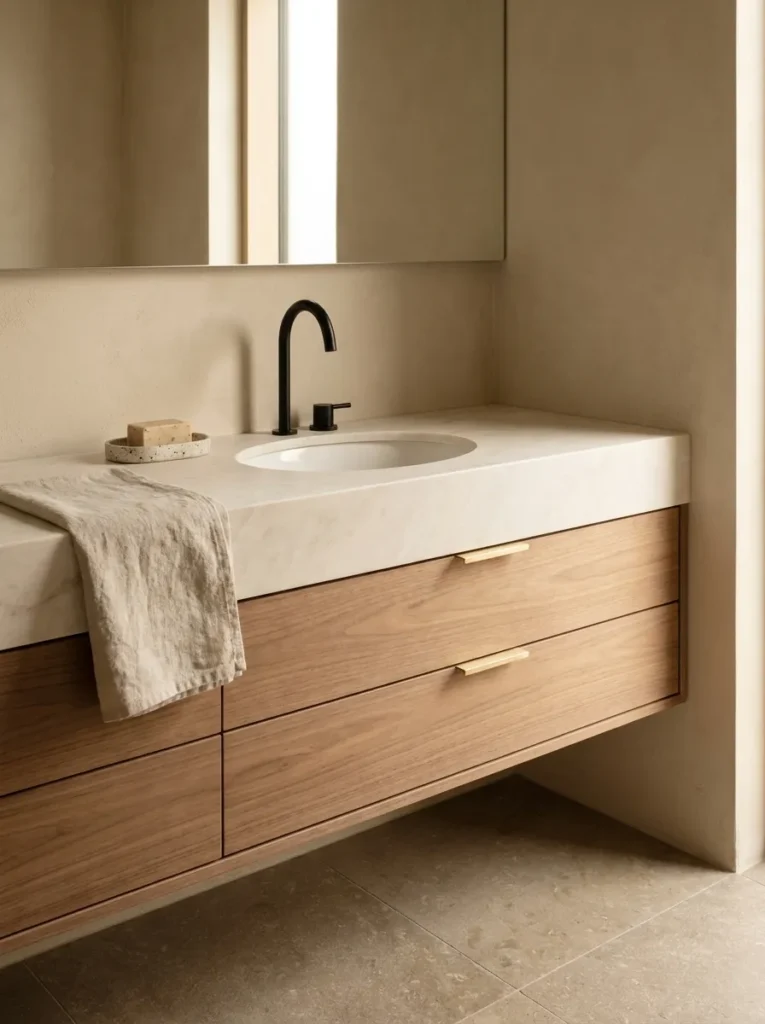
Pairing a neutral stone countertop with wood cabinetry defines many japandi bathroom vanities. Honed marble, limestone, or quartz keeps the surface matte and soft. Additionally, this combination echoes the material mix found in a well-designed japandi kitchen space. Warm wood grain balances the coolness of stone. This pairing suits both minimalist and organic modern layouts. Choose a honed rather than polished finish for a quieter look.
21. Zen Garden Window Box or Pebble Tray
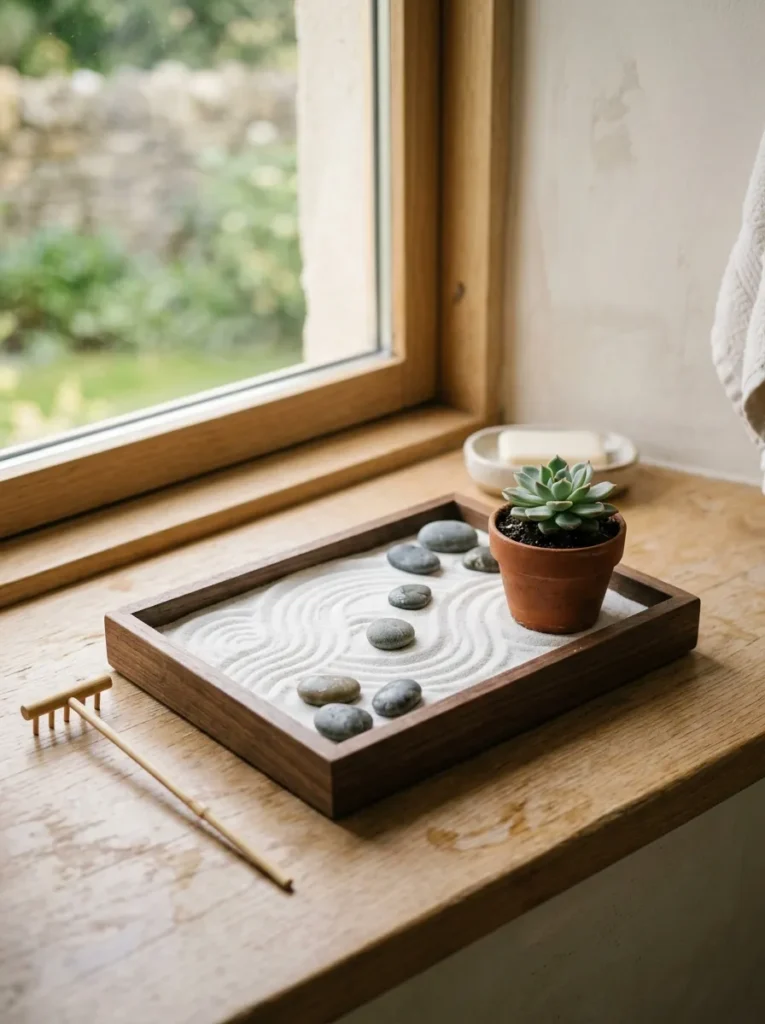
A small zen garden tray adds a meditative detail to a japandi bathroom windowsill. Smooth stones, sand, and a single small plant create quiet visual interest. This detail suits a windowsill, shelf, or corner of the counter. Additionally, this feature costs little and works in nearly any layout. Homeowners who enjoy hands-on projects can do it on your own with items from a garden center. This small touch reinforces the room’s connection to nature.
How to Choose Japandi Bathroom Colors
Choosing colors for a japandi bathroom starts with a neutral base. Warm whites, beige, and sand tones work best on walls and tile. Layer in charcoal, black, or deep green for contrast. Additionally, avoid cool grays, which can feel closer to industrial design. Wood tones should stay warm rather than gray-washed for authenticity. Test samples in natural light before committing to a full room. This approach keeps the palette cohesive from floor to ceiling.
Common Mistakes to Avoid in a Japandi Bathroom
Overcrowding surfaces is one of the biggest mistakes in a japandi bathroom. This style depends on restraint, so extra decor disrupts the calm. Mixing too many wood tones also breaks the room’s cohesion. Additionally, cold white tile without any warm material can feel sterile rather than serene. Skipping texture is another common error, since flat surfaces lose visual interest. Balance hard materials like stone with soft ones like linen and wood.
FAQs About Japandi Bathroom Design
What defines a japandi bathroom style? A japandi bathroom mixes Japanese minimalism with Scandinavian warmth. It favors natural materials, muted colors, and functional layouts over ornate detail.
Is a japandi bathroom expensive to create? Cost varies widely based on materials chosen. Wood accents, linen textiles, and ceramic accessories offer an affordable starting point before a full remodel.
Can a small bathroom use this style? Yes, this style suits small spaces particularly well. Open shelving, floating vanities, and light wood tones help compact rooms feel calmer and larger.
What materials work best in this design? Natural wood, matte stone, linen, and handmade ceramics form the core material palette. Avoid glossy finishes and bright, saturated colors.

Written by Stephanie Fallis
Mom and homemaker who shares budget friendly DIY projects, decorating tips and gardening ideas for busy families.
More about me → Christmas ideas21 Christmas Tray Ideas for a Festive Home
 Christmas ideas21 Blue Christmas Decoration Ideas for a Stunning Home
 Christmas ideas9 Log Christmas Decoration Ideas for a Cozy Home