
Hide away bed ideas solve a common problem in small homes. A bedroom does not need a permanent bed frame to feel complete. Many homeowners now choose beds that fold, slide, or tuck away when not in use. This approach frees up floor space for work, play, or guests. A studio apartment, guest room, or home office can double as a sleeping space overnight. Hide away bed ideas work well for renters, growing families, and anyone short on square footage.
Modern hideaway beds come in many styles, from sleek Murphy beds to rustic cabin bunks. Materials range from warm oak to painted MDF panels. Color palettes vary too, spanning crisp white minimalism to moody charcoal tones. Additionally, some designs blend a wall bed with built-in shelving or a home office desk. This flexibility lets each idea suit a distinct room and lifestyle.
The list below covers sixteen practical hideaway bed ideas for bedrooms, studios, and multi-use rooms. Each idea highlights furniture types, materials, and layout tips that fit different space sizes. Meanwhile, several ideas mention DIY-friendly builds for hands-on homeowners. A few also link to related bedroom styling posts on SlekHome. Readers can browse each idea and pick concepts that match their own space and taste.
In this post: 15 ideas
- Murphy Wall Bed with Built-In Shelving
- Loft Bed with a Desk Below
- Sofa Bed for a Multi-Purpose Living Room
- Trundle Bed for Small Guest Rooms
- Cabinet Bed That Folds Into a Wardrobe
- Under-Stair Hideaway Bed Nook
- Fold-Down Wall Bed with Mirror Front
- Daybed with a Pop-Up Trundle
- Ottoman Bed with Lift-Up Storage
- Cabin-Style Bed with Built-In Bookshelf
- DIY Murphy Bed Frame Project
- Hideaway Bed Inside a Home Office
- Convertible Table Bed for Small Studios
- Hidden Bed Behind Sliding Doors
- Camper-Style Fold-Out Bed for Tiny Homes
1. Murphy Wall Bed with Built-In Shelving
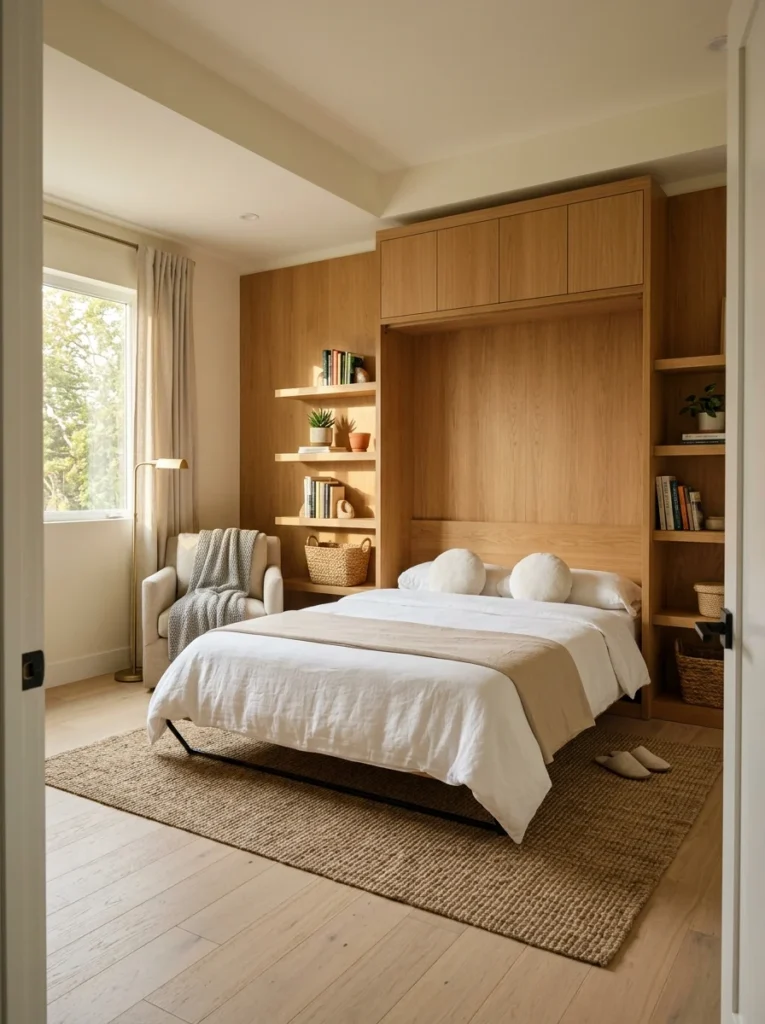
A Murphy wall bed remains one of the most reliable hide away bed ideas for compact bedrooms. It folds flat against the wall and hides behind a paneled cabinet front. Built-in shelving on either side adds storage for books, baskets, or a small television.
This setup works best in oak, walnut, or painted white finishes. The shelving keeps the room functional even when the bed stays open for guests. As a result, a single room can serve as an office by day and a bedroom by night.
2. Loft Bed with a Desk Below
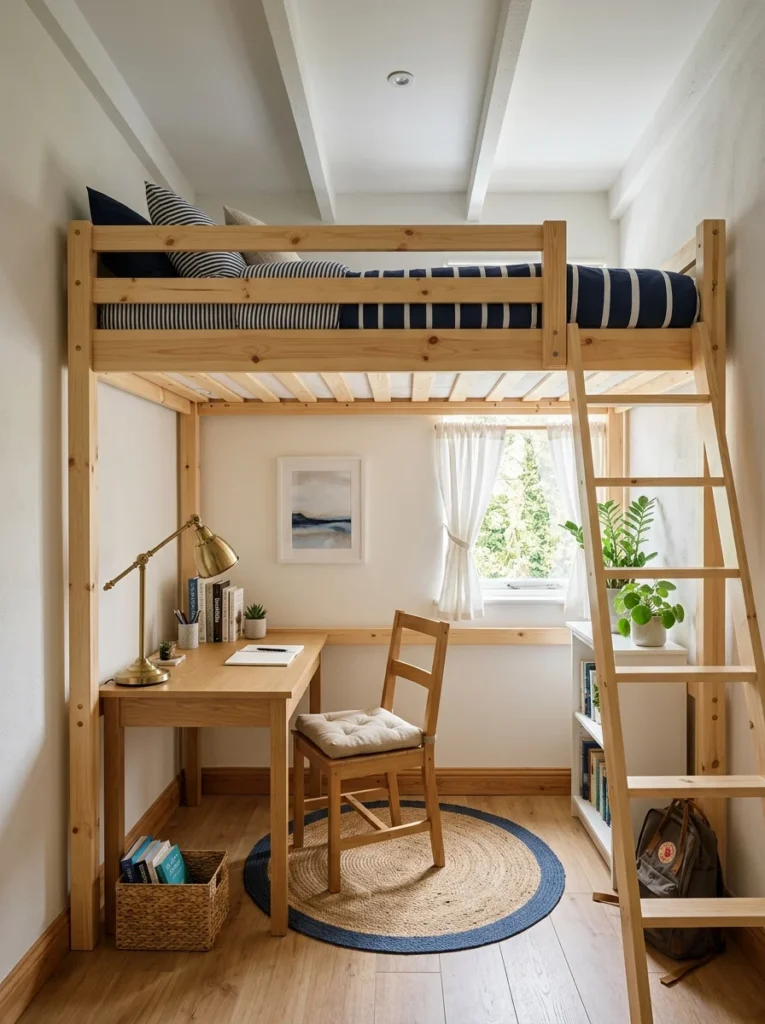
A loft bed lifts the mattress above a functional desk or seating nook. This hide away bed idea suits kids’ rooms, dorms, and small apartments alike. A wooden ladder or built-in staircase connects the two levels safely.
Natural wood tones and simple metal frames keep the look clean. Additionally, a woven rug and desk lamp below add warmth to the workspace. This layout maximizes floor space without sacrificing a full-size sleeping area.
3. Sofa Bed for a Multi-Purpose Living Room
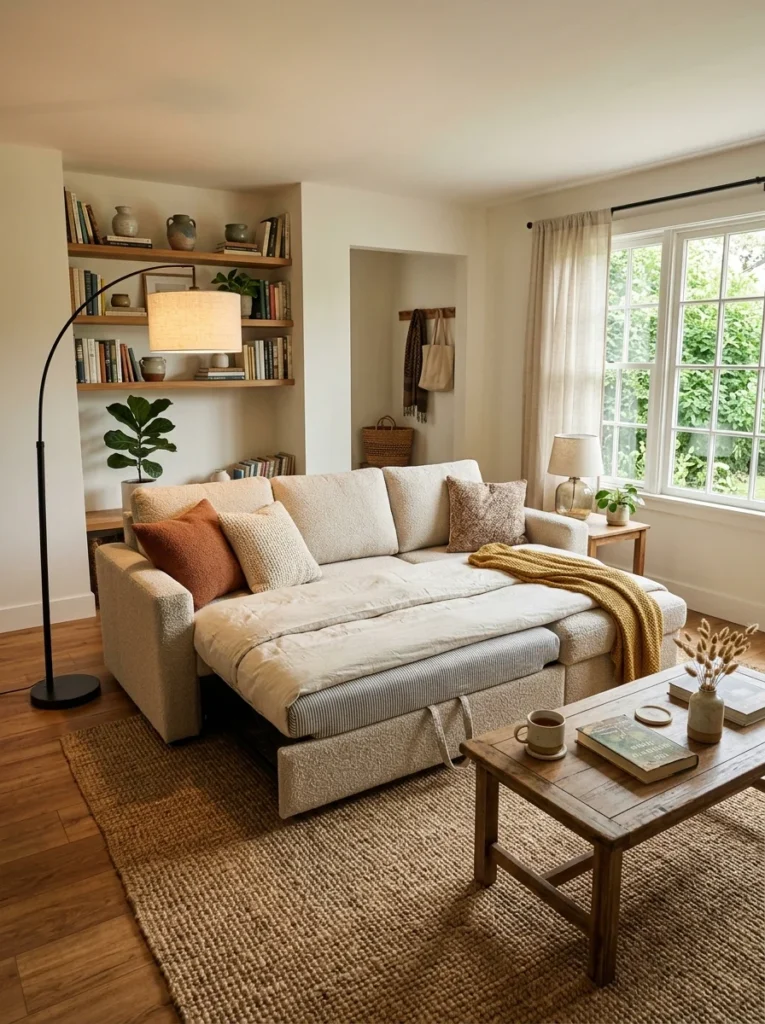
A sofa bed turns a living room into a guest room within minutes. During the day, it functions as regular seating with throw pillows and a linen slipcover. At night, it unfolds into a full mattress for overnight visitors.
Neutral fabrics like boucle or performance linen hide wear well over time. For more flexible seating and sleeping options, this collection of bed alternatives offers additional layouts worth exploring. A sofa bed suits studio apartments and small guest rooms equally well.
4. Trundle Bed for Small Guest Rooms
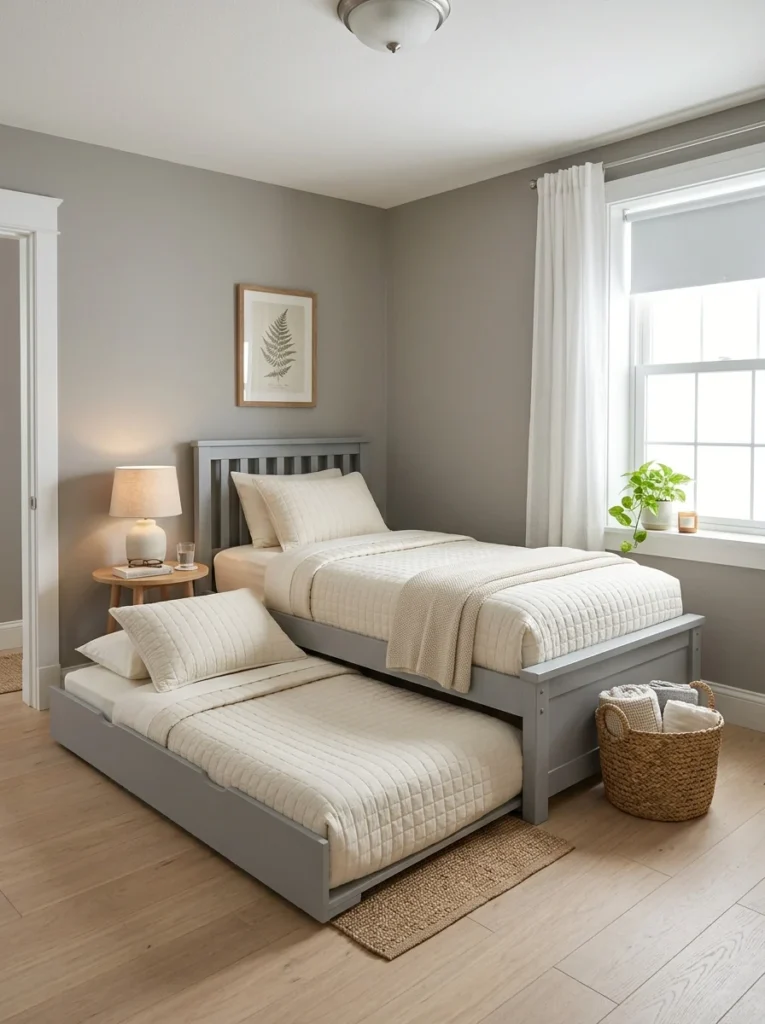
A trundle bed slides a second mattress underneath the main bed frame. This hide away bed idea works well for shared kids’ rooms or occasional guest stays. The lower bed pulls out on casters and tucks away when not needed.
Painted wood frames in soft gray or cream keep the room feeling airy. A matching quilt set on both mattresses ties the look together. This option adds a full sleeping space without adding a second bedroom.
5. Cabinet Bed That Folds Into a Wardrobe
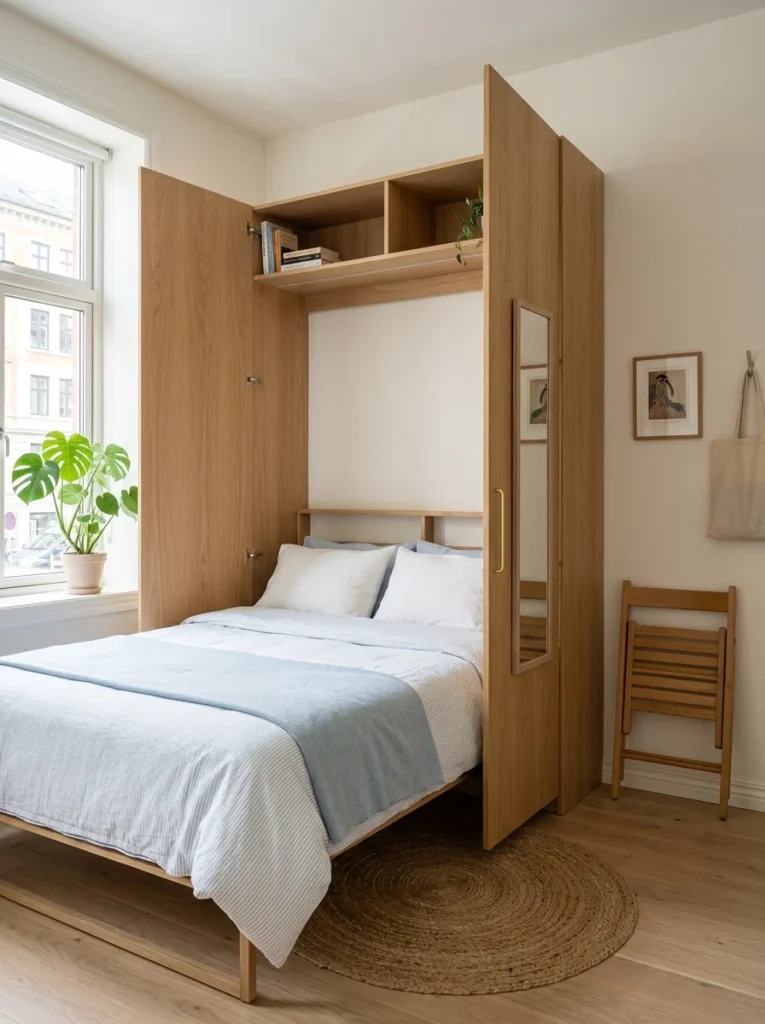
A cabinet bed disguises a full mattress inside a tall wardrobe-style cabinet. Doors close completely over the folded bed, leaving no visible hardware. This idea suits small studios where a bedroom must double as a living space.
Light oak veneer or matte white lacquer finishes blend into most interiors. Anyone furnishing a compact home can review these studio apartment layout ideas for more space-saving inspiration. The cabinet bed keeps the room looking tidy at all times.
6. Under-Stair Hideaway Bed Nook
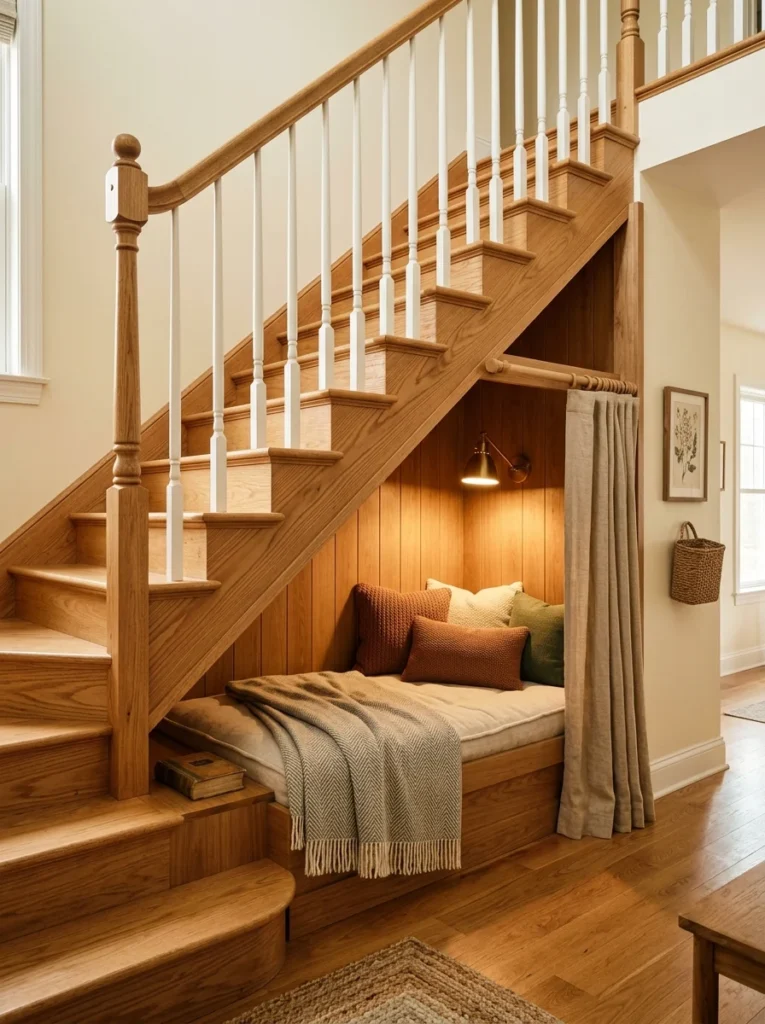
An under-stair nook turns unused space into a cozy sleeping corner. A low platform mattress slides beneath the stair angle, framed by wood paneling. Curtains or a sliding panel close off the nook during the day.
Warm lighting and a small reading lamp make the space feel intentional. This layout suits cottages, cabins, and homes with awkward stair landings. It transforms wasted square footage into a functional guest bed.
7. Fold-Down Wall Bed with Mirror Front
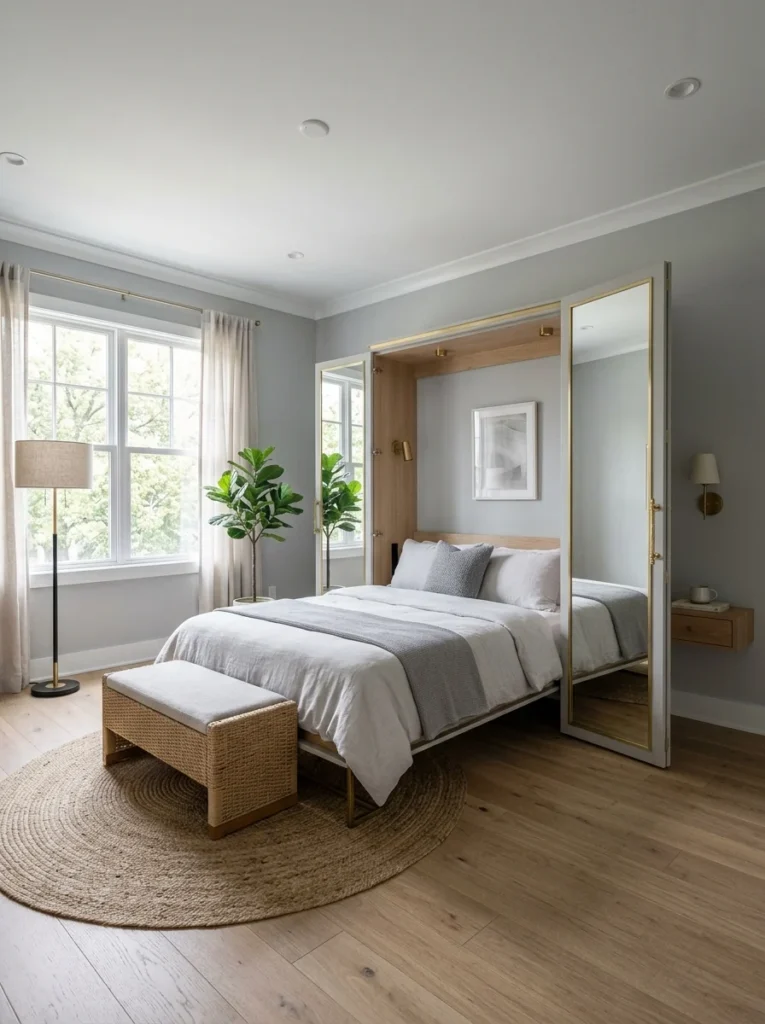
A fold-down wall bed with a full-length mirror front serves two purposes at once. Closed, it functions as a dressing mirror. Open, it reveals a queen-size mattress ready for sleep.
Soft gray walls pair beautifully with this style, and this guide on light gray bedroom palettes shows similar color pairings in more detail. Brass hardware on the mirror frame adds a subtle upgrade. This idea suits bedrooms that double as dressing rooms.
 You may also like20 DIY Christmas Earrings That Are Quick to Make
9. Daybed with a Pop-Up Trundle
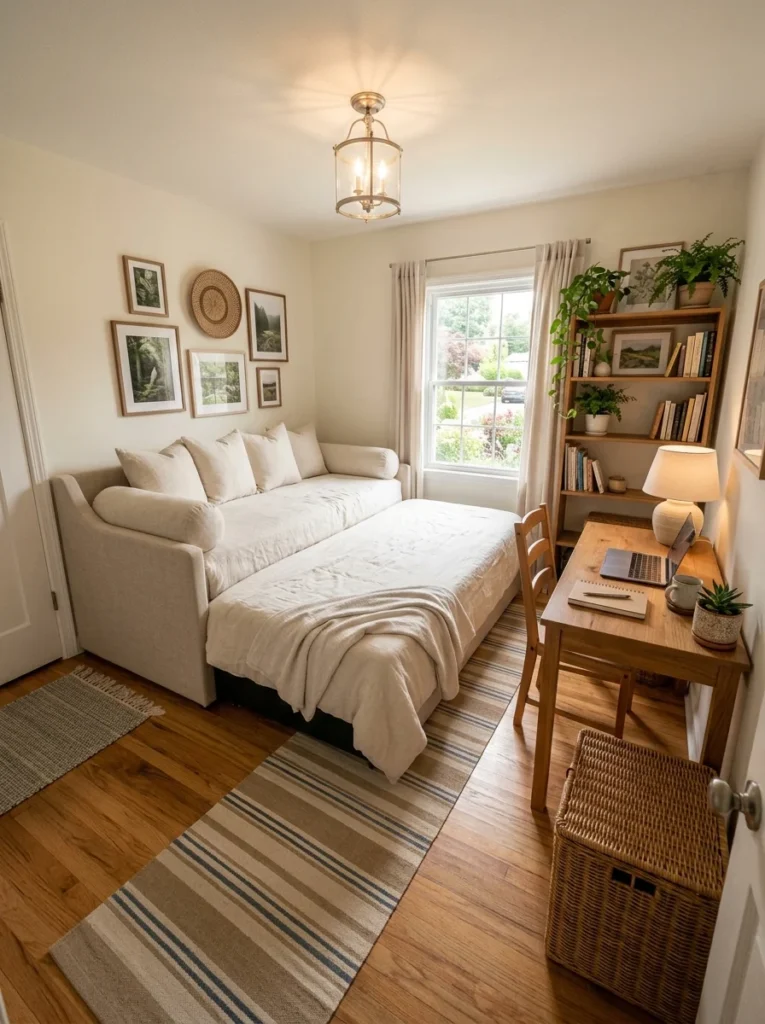
A daybed with a pop-up trundle functions as a sofa first and a bed second. The lower mattress lifts on a scissor frame until it matches the top mattress height. This creates a full-size bed for overnight guests.
Linen bolster pillows and a woven throw keep the daybed looking finished as seating. This idea fits home offices, reading nooks, and small guest rooms. It adds flexible sleeping space without a bulky frame.
10. Ottoman Bed with Lift-Up Storage
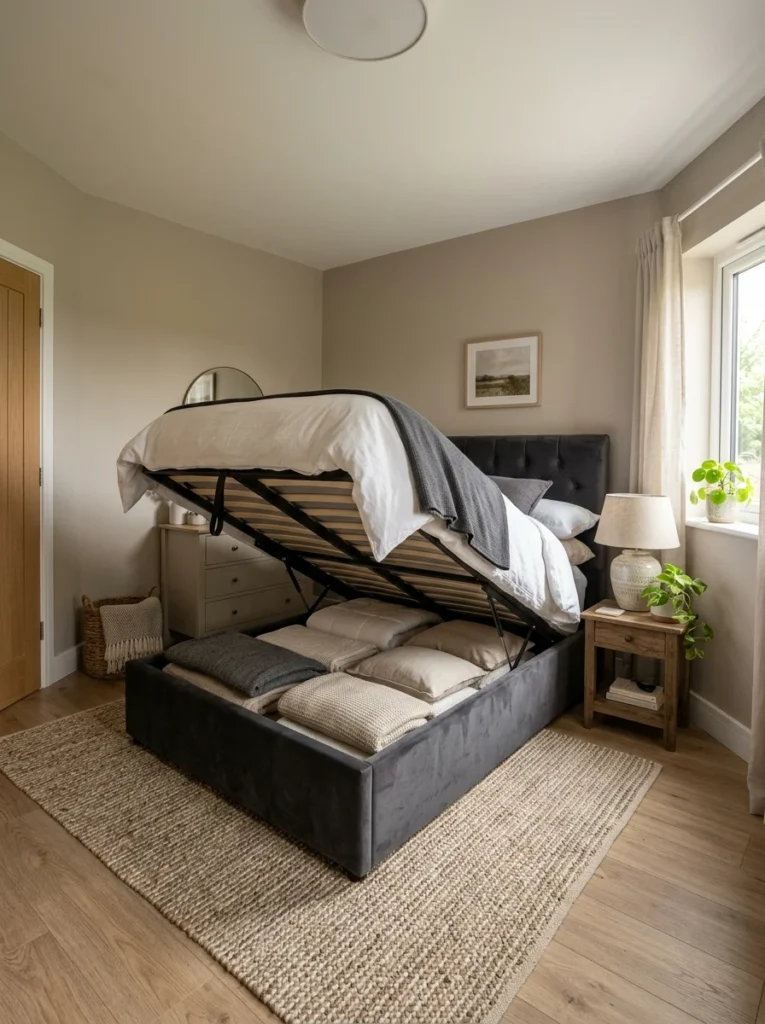
An ottoman bed lifts on a hydraulic frame to reveal deep storage underneath. This hide away bed idea hides bulky items like out-of-season bedding or luggage. The mattress sits flush with the frame, so the room still looks streamlined.
Upholstered fabric in velvet or boucle adds a soft, tailored look. For bedrooms without a visible frame at all, these bedrooms styled without a traditional bed frame offer a related minimalist direction. Ottoman beds suit small bedrooms that need extra storage.
11. Cabin-Style Bed with Built-In Bookshelf
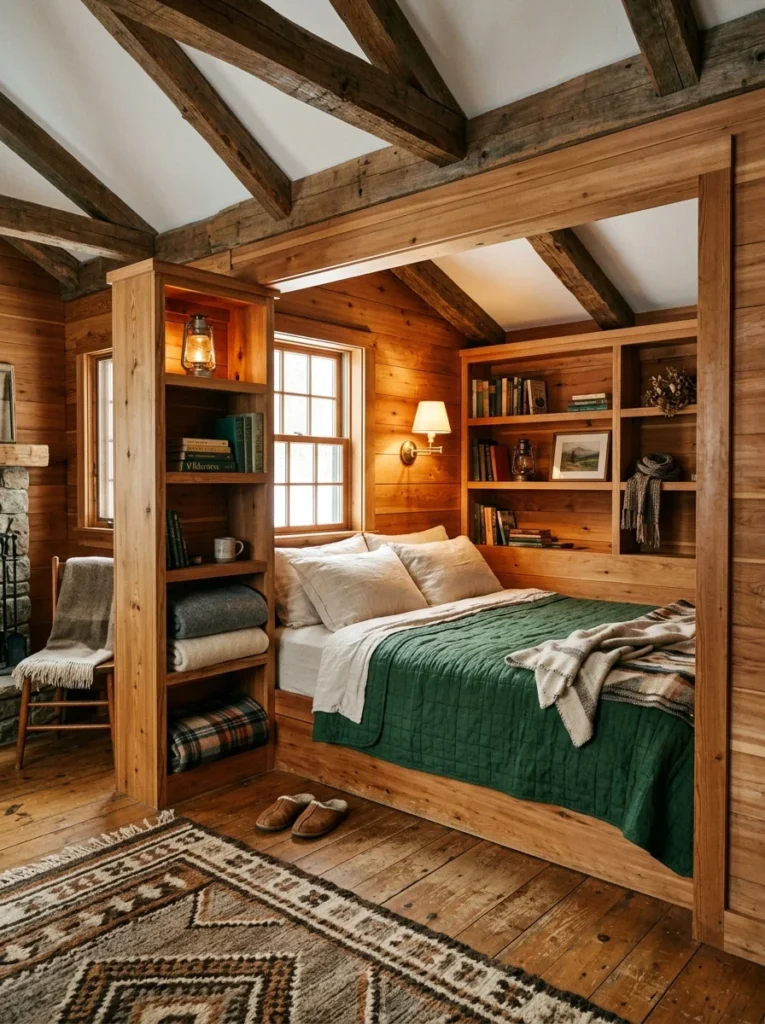
A cabin-style hideaway bed tucks a mattress into a wood-paneled alcove lined with shelving. Built-in bookshelves flank the sleeping nook, holding blankets, lanterns, and favorite reads. This idea suits lake houses, cabins, and rustic guest rooms.
Cedar or pine paneling adds warmth and texture to the space. Readers who enjoy this look can browse more wood bedroom design ideas for matching furniture pairings. A wool blanket and brass sconce complete the cozy feel.
12. DIY Murphy Bed Frame Project
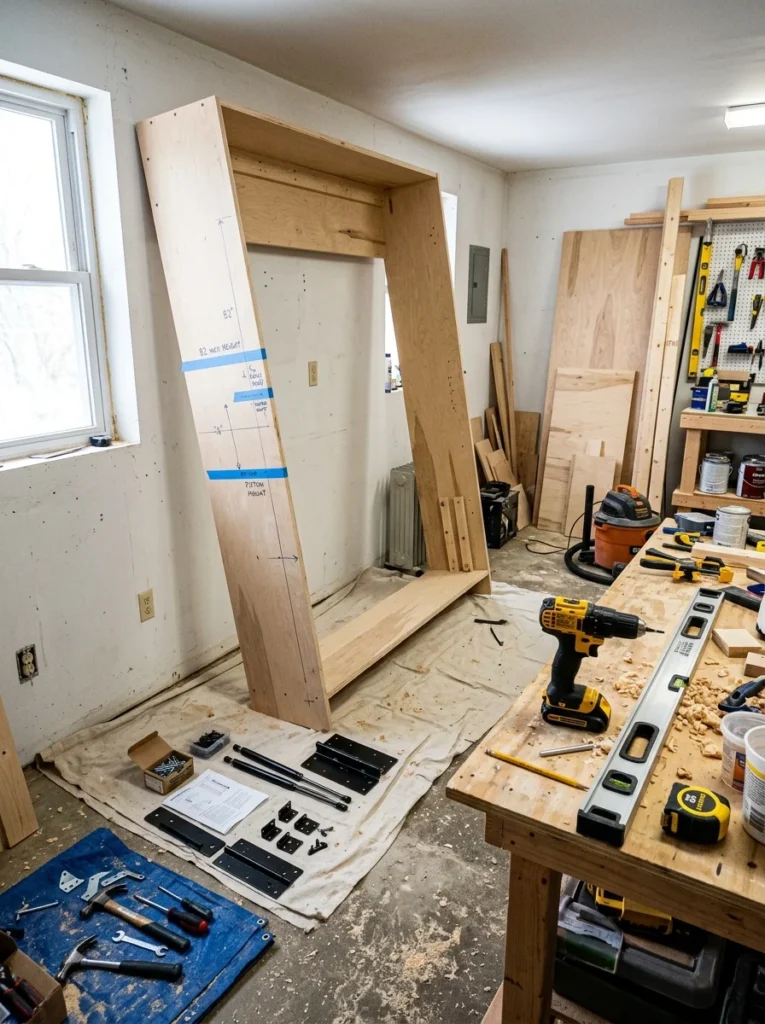
Building a Murphy bed frame from a kit lets homeowners do it on your own with basic tools. Plywood panels, piston hinge hardware, and a mattress bracket form the core structure. A weekend project can transform a home office into a guest room.
Pairing the finished frame with these rustic nightstand pairings rounds out the bedside styling. Painted MDF fronts keep the build budget-friendly. This DIY approach suits anyone comfortable with a drill and a level.
13. Hideaway Bed Inside a Home Office
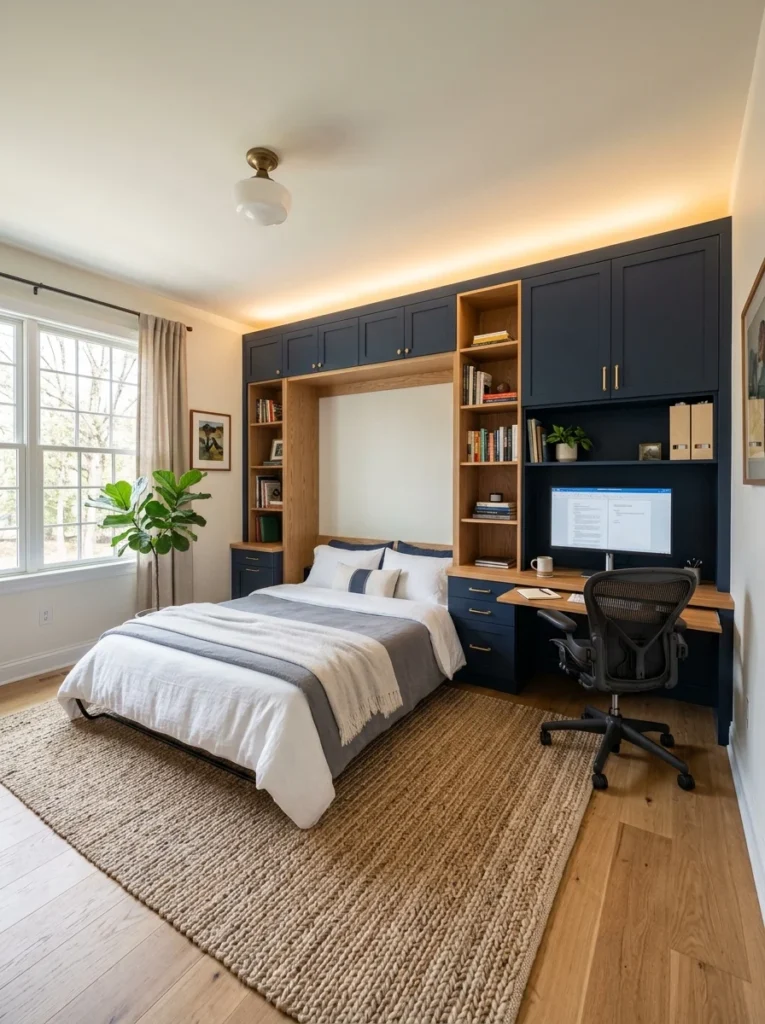
A hideaway bed built into a home office cabinet keeps work and rest separate. Closed, the cabinet holds a desk, monitor, and shelving. Opened, it reveals a full mattress ready for guests.
Two-tone cabinetry in navy and oak balances a professional look with warmth. This layout suits remote workers who occasionally host visitors. It proves a single room can serve two very different functions.
14. Convertible Table Bed for Small Studios
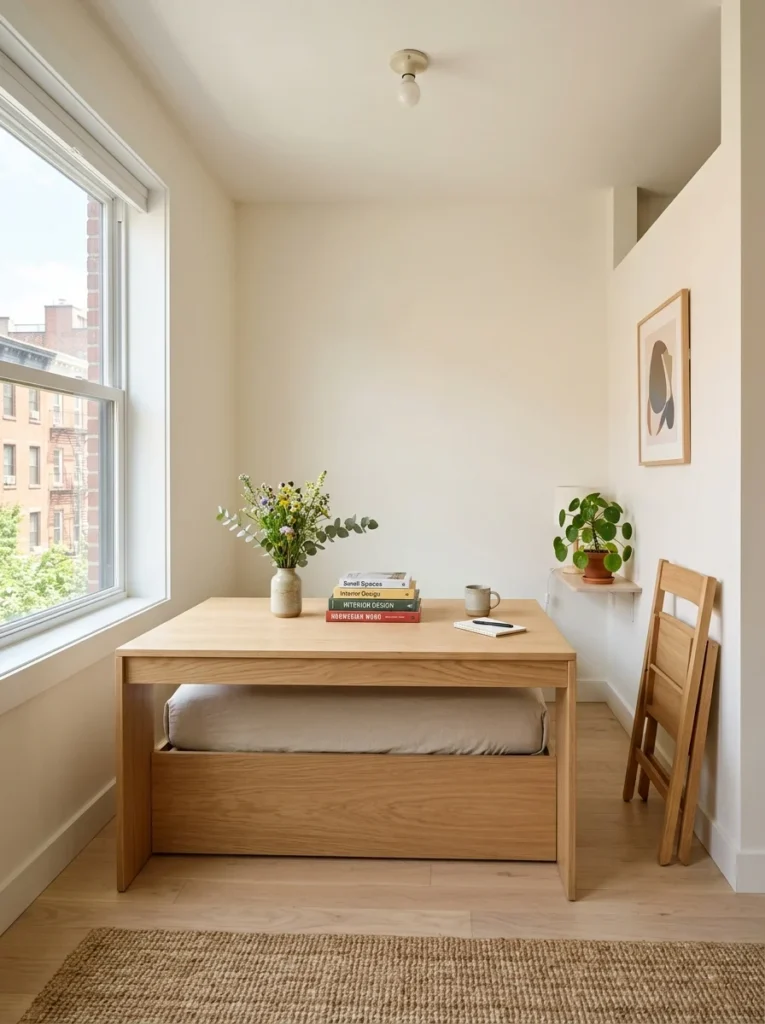
A convertible table bed folds a dining or work table down over a hidden mattress. During the day, the room functions as a dining or study space. At night, the table lifts away to reveal the bed underneath.
Light wood tones and a compact folding chair set keep the footprint small. This idea suits micro-apartments where every surface needs double duty. It works especially well alongside a fold-down wall bed nearby.
15. Hidden Bed Behind Sliding Doors
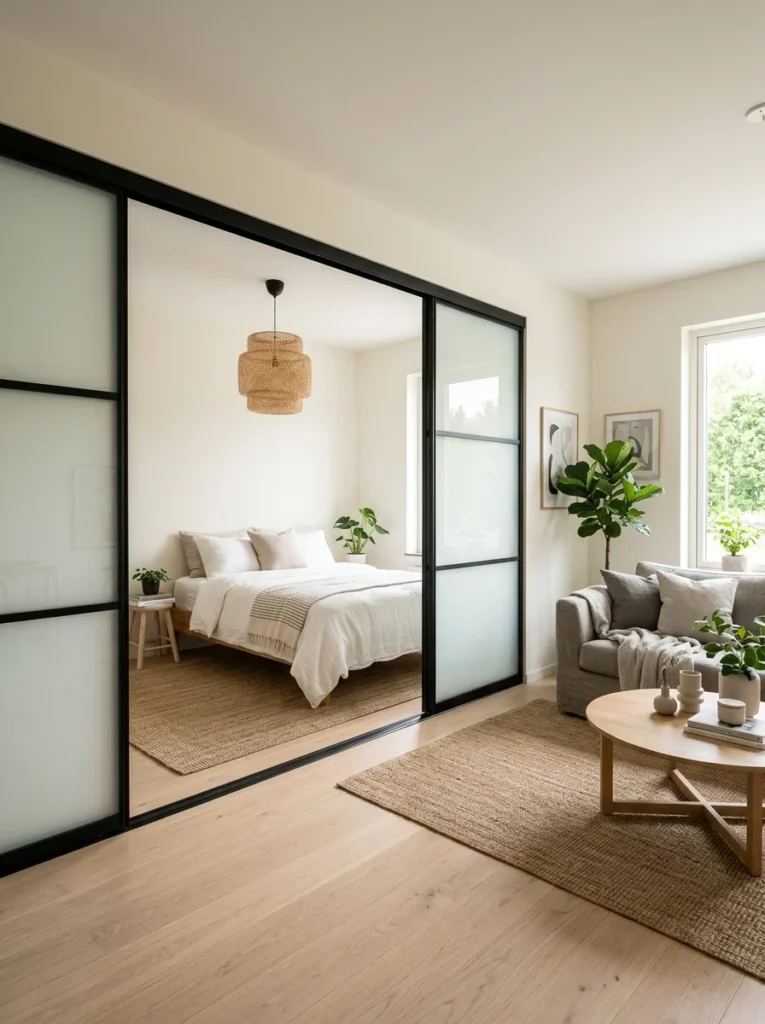
Sliding doors can conceal an entire bed alcove within a hallway or living room. Frosted glass or wood-slat panels glide shut to hide the mattress completely. This hide away bed idea suits open-plan homes that still need a private sleeping corner.
Black metal door tracks add a modern industrial detail. A woven rug and pendant light inside the alcove make the space feel considered. This layout keeps sleeping quarters visually separate from shared living areas.
16. Camper-Style Fold-Out Bed for Tiny Homes
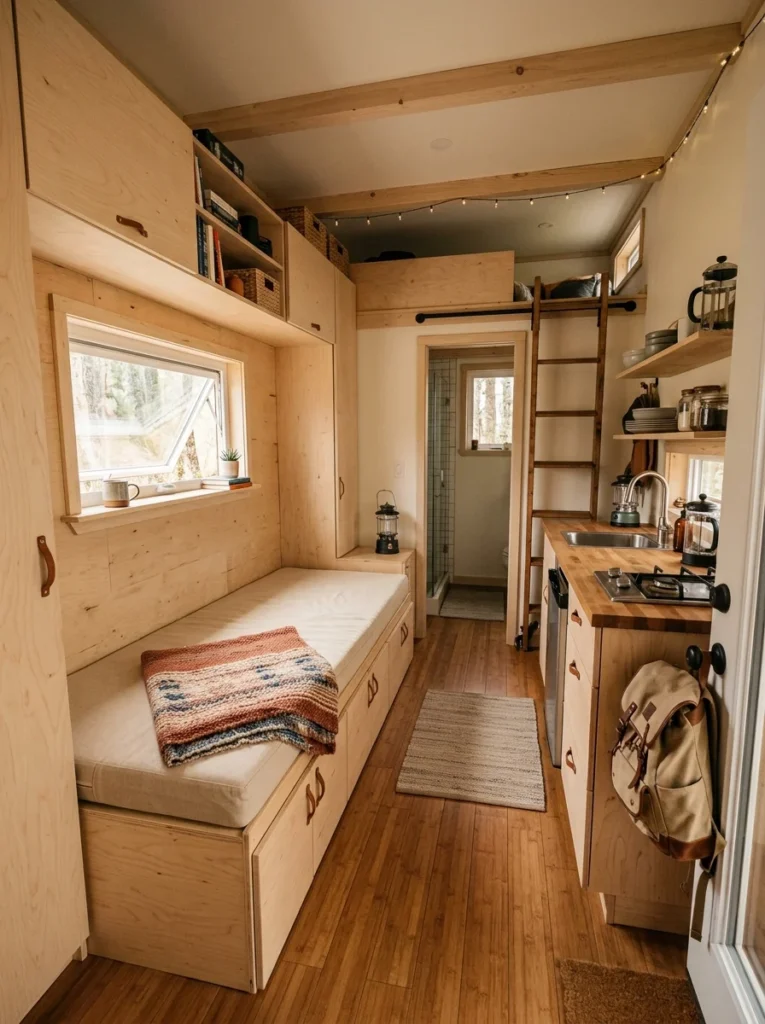
A camper-style fold-out bed borrows from RV design to save space in tiny homes. The mattress folds up against the wall or into a bench seat during the day. At night, it unfolds flat across a dedicated sleeping nook.
Marine-grade plywood and canvas cushions keep the build lightweight and durable. This idea suits tiny homes, cabins, and converted vans alike. It brings a full-size bed into spaces that measure only a few square feet.
How to Choose the Right Hideaway Bed for Your Space
Room size matters most when selecting a hideaway bed style. A narrow bedroom suits a wall bed, while an open living area suits a sofa bed or daybed. Ceiling height also affects loft and bunk bed options.
Traffic flow deserves attention too. A folding bed should open without blocking doors or walkways. Additionally, storage needs often decide between an ottoman bed and a simple trundle. Matching the bed type to daily habits leads to a better long-term fit.
Materials and Colors That Work Best for Hideaway Beds
Light wood tones like oak and ash keep small rooms feeling open. Meanwhile, painted MDF panels in white or soft gray suit modern minimalist spaces. Darker woods like walnut work well in larger rooms with more natural light.
Upholstered frames in linen or boucle add texture without visual bulk. Metal hardware in brass or matte black finishes the look. Choosing one consistent material palette across the room ties the hideaway bed into the overall design.
Common Mistakes to Avoid with Hideaway Beds
Skipping proper wall anchoring ranks among the most common mistakes with Murphy beds. A poorly mounted frame risks sagging or detaching over time. Professional installation or sturdy hardware prevents this issue.
Overcrowding the surrounding space causes problems too. A folding bed needs clear floor space to open fully. Additionally, choosing a mattress that is too thick can prevent cabinet doors from closing properly. Measuring twice before purchase avoids most of these setbacks.
More ideas: For more inspiration, take a look at these hide CPAP machine ideas.
FAQs About Hideaway Bed Ideas
Do hideaway beds fit standard mattresses? Most wall beds and cabinet beds fit standard twin, full, or queen mattresses. However, thickness limits often apply, so checking manufacturer specifications first helps avoid returns.
Are DIY Murphy bed kits sturdy enough for daily use? Quality kits with proper piston hardware hold up well under daily use. Correct wall anchoring remains essential for long-term stability.
Can a hideaway bed work in a rental apartment? Freestanding options like cabinet beds, daybeds, and trundle beds suit rentals well. They avoid permanent wall mounting and stay easy to remove later.
What room sizes suit a loft or bunk-style hideaway bed? Rooms with at least eight feet of ceiling height generally suit loft and bunk styles best. Lower ceilings work better with wall beds or ottoman beds instead.

Written by Stephanie Fallis
Mom and homemaker who shares budget friendly DIY projects, decorating tips and gardening ideas for busy families.
More about me → Christmas ideas21 DIY Christmas Cards That Are Fun to Make
 Christmas ideas22 Christmas Plants for a Festive Green Home
 Christmas ideas21 Farmhouse Christmas Decor Ideas: Simple and Rustic