
Bearded dragon bed ideas turn a basic terrarium into a cozy retreat. Every dragon needs a warm, secure spot to rest and dig. Thoughtful bedding design supports natural behavior and calms a nervous reptile. Home decor principles apply here too. Texture, color, and layout matter inside a tank, just like in a living room. A well-planned bed also makes the whole enclosure look intentional, instead of thrown together.
This guide gathers fourteen creative bed setups for bearded dragon owners. Each idea borrows from natural materials, including wood, stone, and woven fiber. Every option still fits a reptile’s specific needs for heat, grip, and hiding space. Meanwhile, muted tones such as tan, terracotta, and moss keep the look natural. Additionally, several ideas use compact layouts that suit smaller enclosures without crowding the space.
The list below moves from simple caves to layered burrows and elevated hammocks. Meanwhile, later sections cover color choices, common mistakes, and frequent questions. Readers can mix a few concepts or commit fully to one style. This approach works well for beginners and experienced keepers alike. As a result, any enclosure can feel both functional and visually pulled together.
In this post: 14 ideas
- Naturalistic Desert Cave Hide Bed
- Cork Bark Hammock Bed
- Flat Sandstone Basking Ledge Bed
- Woven Reed Hammock Bed
- Driftwood Branch Perch Bed
- Moss-Lined Burrow Bed
- Ceramic Log Hide Bed
- Rope and Vine Sling Bed
- Half-Log Wooden Hide Bed
- Cholla Wood Nest Bed
- Slate Tile Platform Bed
- Hammered Copper Basking Dish Bed
- Repurposed Terracotta Pot Cave Bed
- Layered Substrate Burrow Bed
1. Naturalistic Desert Cave Hide Bed
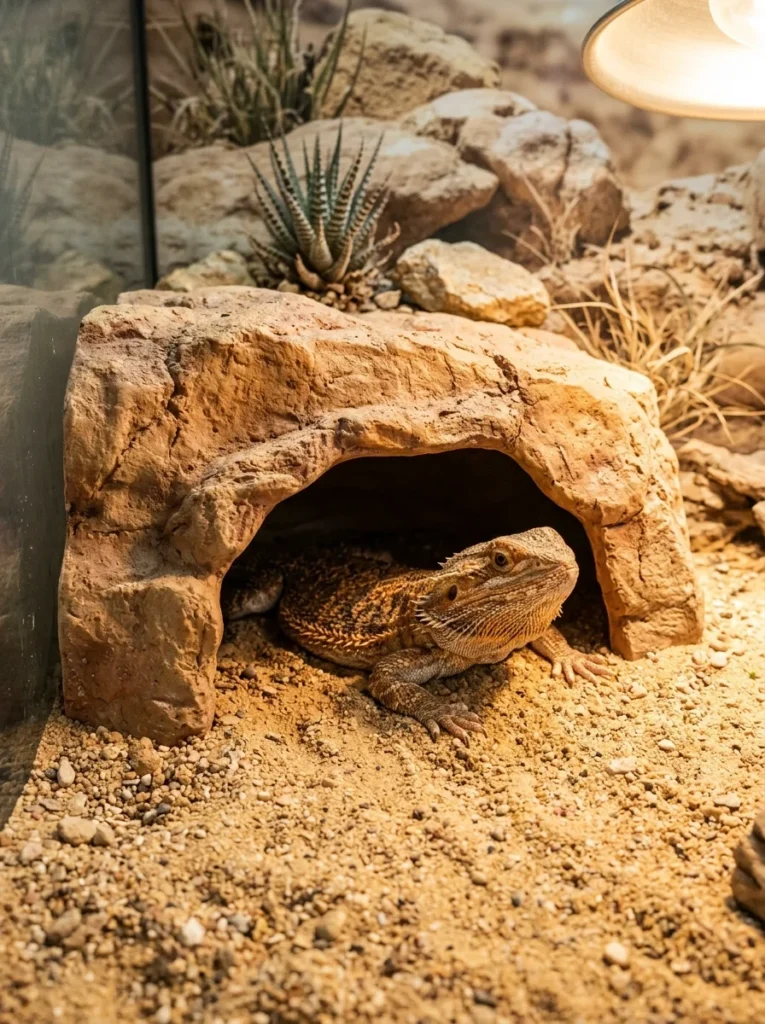
A desert cave hide creates a shaded retreat inside the enclosure. Builders often shape rough sandstone or resin rock into a low arch. This style suits any bearded dragon bed idea centered on a warm, dry biome. The cave blocks bright light and traps gentle heat near the floor. Bearded dragons burrow into the sand base and rest against the cool stone wall. Owners can add a thin layer of reptile-safe sand for digging. This setup also hides a heat mat without disturbing the visual layout. Muted tan and rust tones keep the piece looking authentic and calm.
2. Cork Bark Hammock Bed
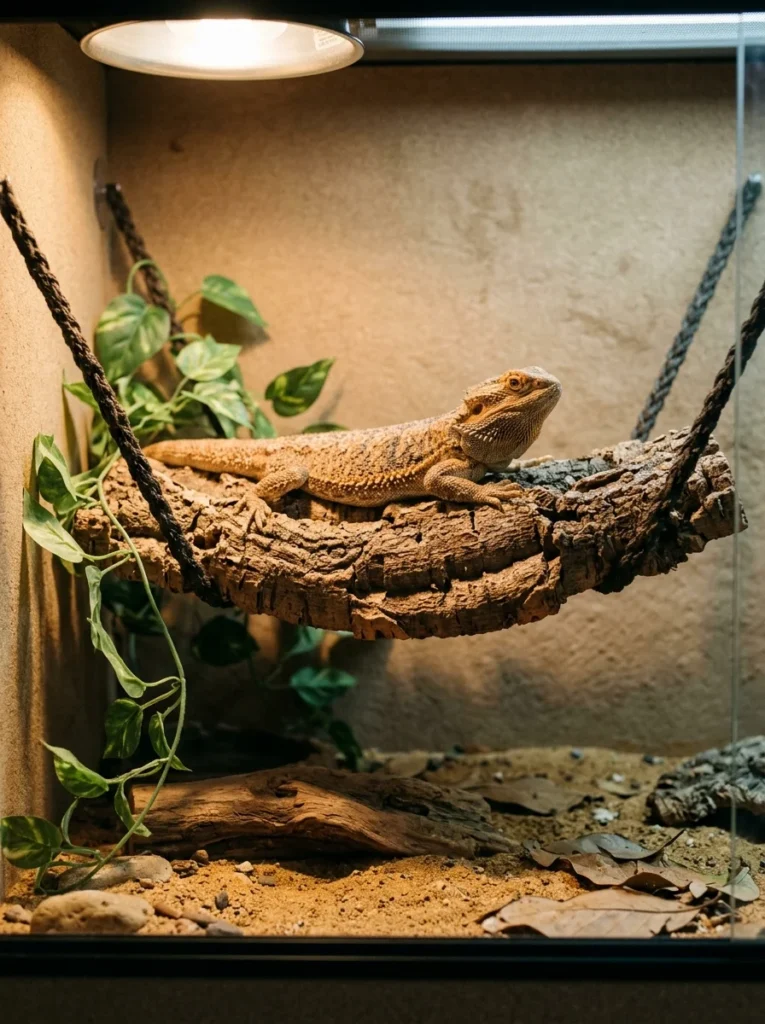
Cork bark brings warm, textured wood grain into the habitat. A curved slab of bark suspended above the substrate forms a natural hammock bed. Bearded dragons climb onto the bark to bask under an overhead lamp. The rough surface also gives claws a secure grip during rest. This bed idea works well in taller enclosures with vertical space to spare. Pair the bark with a woven vine or two for extra texture. Warm browns and soft grays keep the piece from feeling too busy. The result reads as a small piece of forest floor inside glass walls.
3. Flat Sandstone Basking Ledge Bed
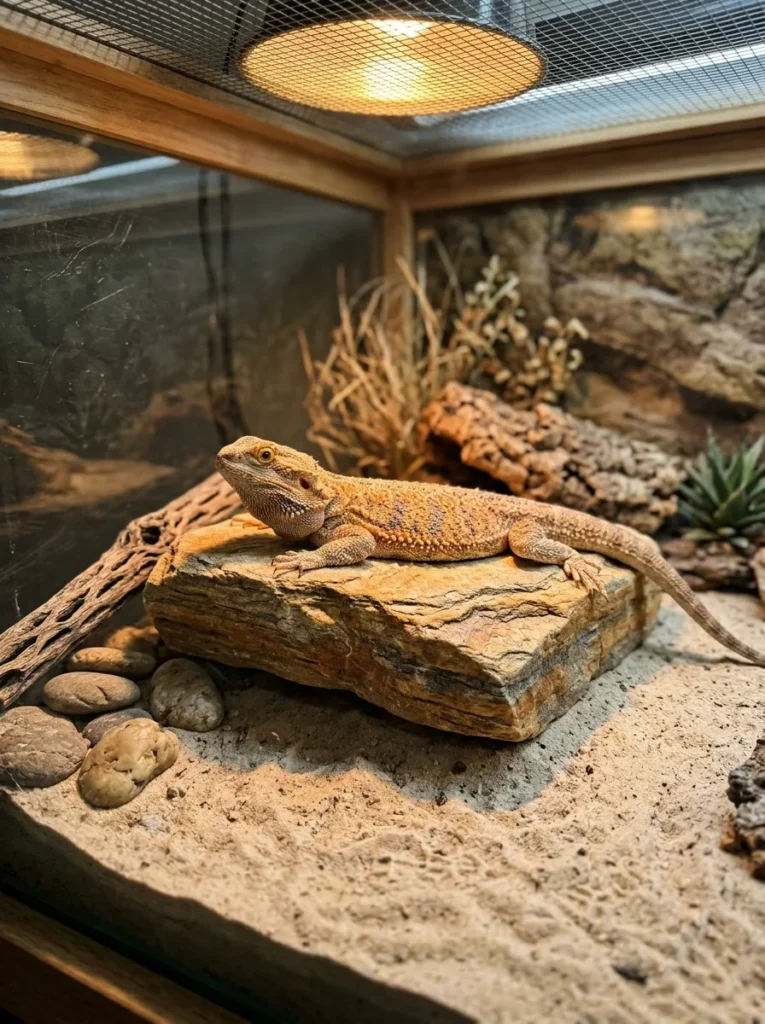
A flat sandstone ledge doubles as a basking spot and a resting bed. Stone holds heat longer than sand or bark, so it stays warm after lights dim. Bearded dragons often flatten their bodies against stone to soak up warmth. Place the ledge under a heat lamp for the strongest effect. Choose a stone with a slightly rough texture for better grip. Sandy beige and warm ochre colors match a desert-style enclosure. This bed idea also simplifies cleaning, since stone wipes down easily. Owners with dry-climate setups often favor this low-maintenance option.
4. Woven Reed Hammock Bed
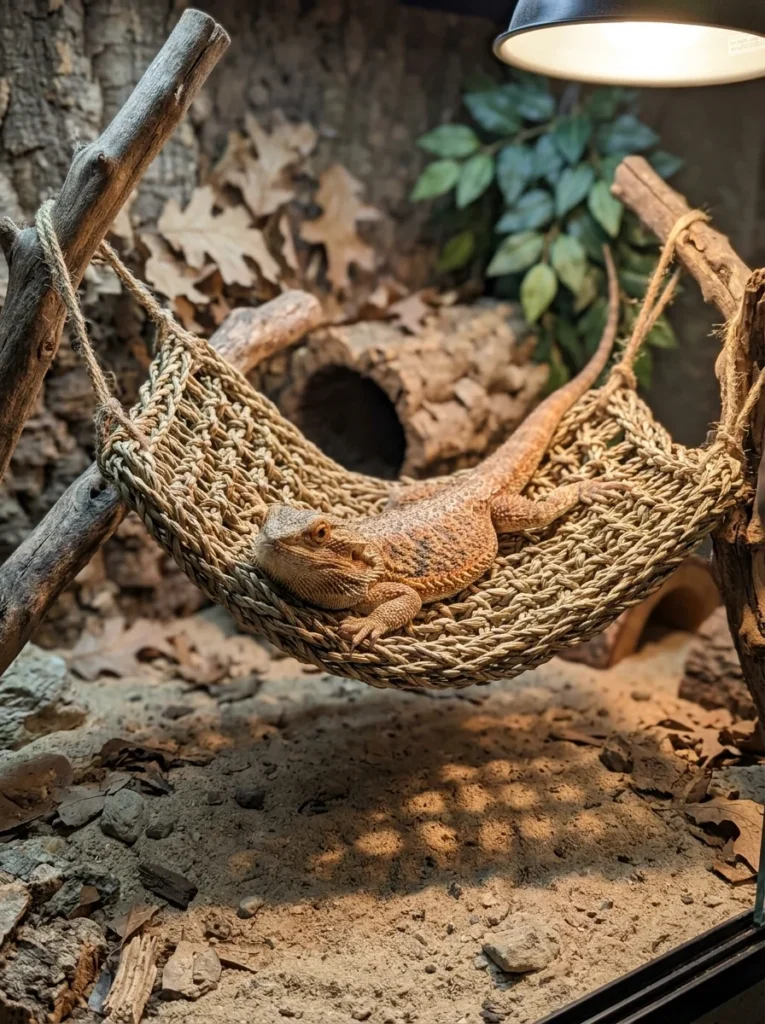
A woven reed hammock adds a soft, breathable resting spot near the enclosure wall. Natural fiber mats hold shape well and dry quickly after misting. This bed style borrows heavily from outdoor textures, similar to the layered woven pieces found in <a href=”https://slekhome.com/patio-decorating-ideas/”>patio decorating ideas</a> for shaded seating nooks. Bearded dragons rest comfortably on the slight give of woven reed. The material also breathes better than solid platforms in humid climates. Keep the weave taut so it supports full body weight. Sand and olive tones blend the hammock into a naturalistic backdrop.
5. Driftwood Branch Perch Bed
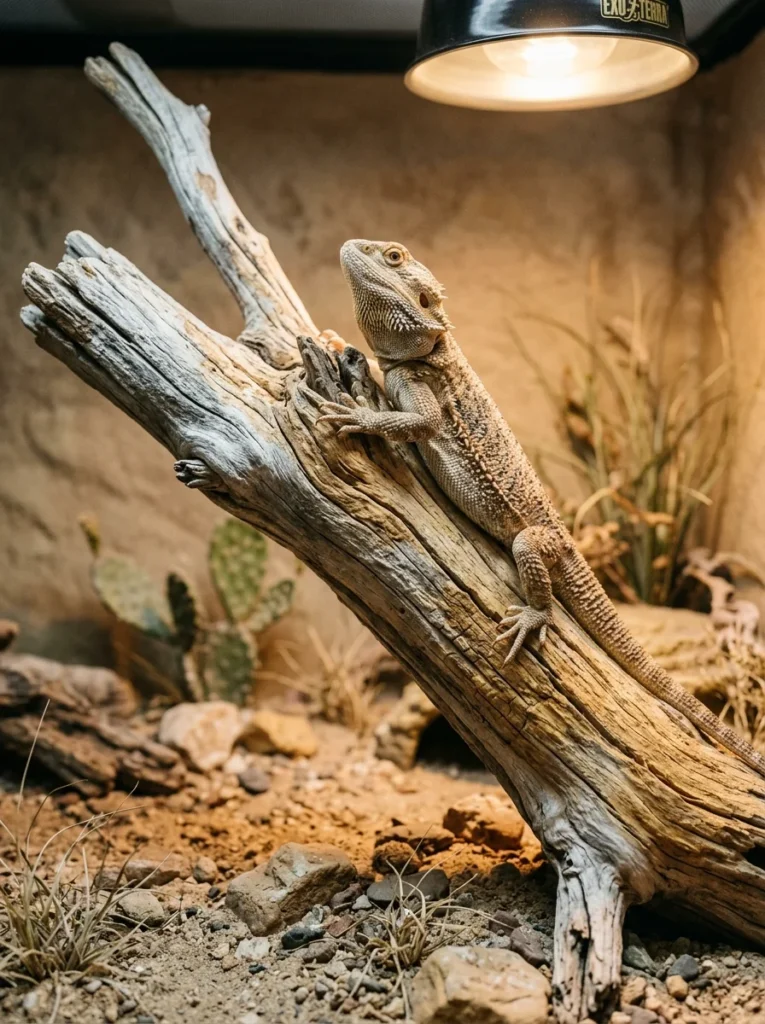
A gnarled driftwood branch creates a raised, sculptural bed for climbing dragons. The uneven surface mimics wild perches found in scrubland habitats. Bearded dragons grip the bark with their claws and settle into forked sections. This bed idea works best paired with a heat source positioned above the highest point. Driftwood also adds visual height, which balances a low, flat enclosure layout. Weathered gray and honey-brown shades give the piece a sun-bleached look. Sand a rough branch lightly before use to remove sharp edges.
6. Moss-Lined Burrow Bed
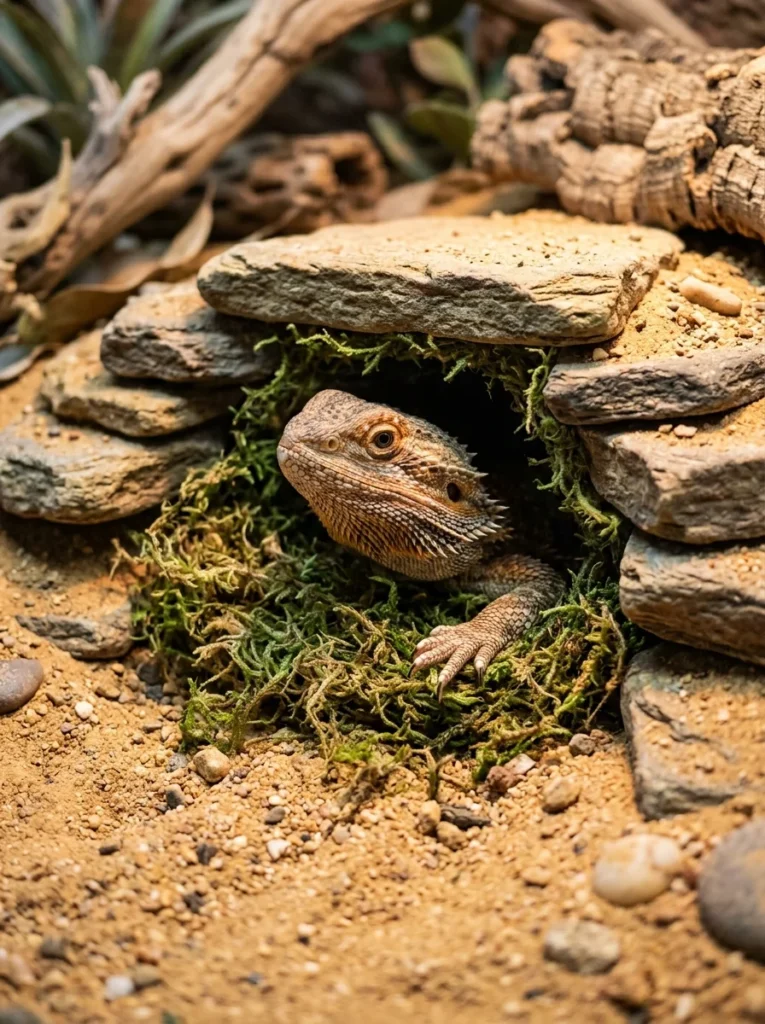
A moss-lined burrow gives dragons a soft, insulated spot to dig into. Sphagnum moss holds gentle warmth and adds a touch of green to a mostly brown palette. Shape the burrow entrance with flat stones to keep the moss contained. Bearded dragons that enjoy digging often favor this bed over open sand. Keep humidity low around the moss, since dragons prefer dry air overall. This bed idea works well as an accent rather than the full substrate. Deep green against warm sand creates a striking, natural contrast.
7. Ceramic Log Hide Bed
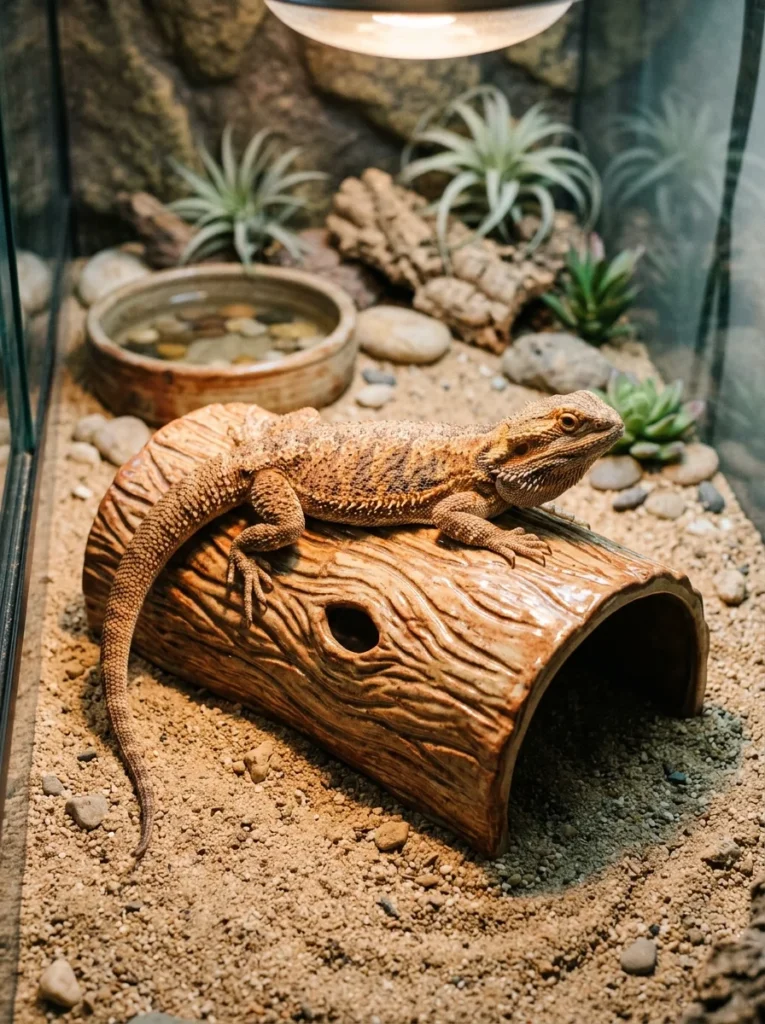
A hollow ceramic log offers a sturdy, easy-to-clean bed with a rustic finish. Manufacturers glaze these pieces to mimic real bark texture without soaking up moisture. Bearded dragons crawl inside for shade or rest along the rounded top surface. Ceramic also holds ambient heat better than plastic alternatives. This bed idea suits keepers who prefer low-maintenance materials over natural wood. Terracotta and driftwood-brown glazes fit most enclosure color schemes. Wipe the log down weekly to keep the surface free of buildup.
 You may also like10 Christmas Chair Decoration Ideas for a Charming Home
8. Rope and Vine Sling Bed
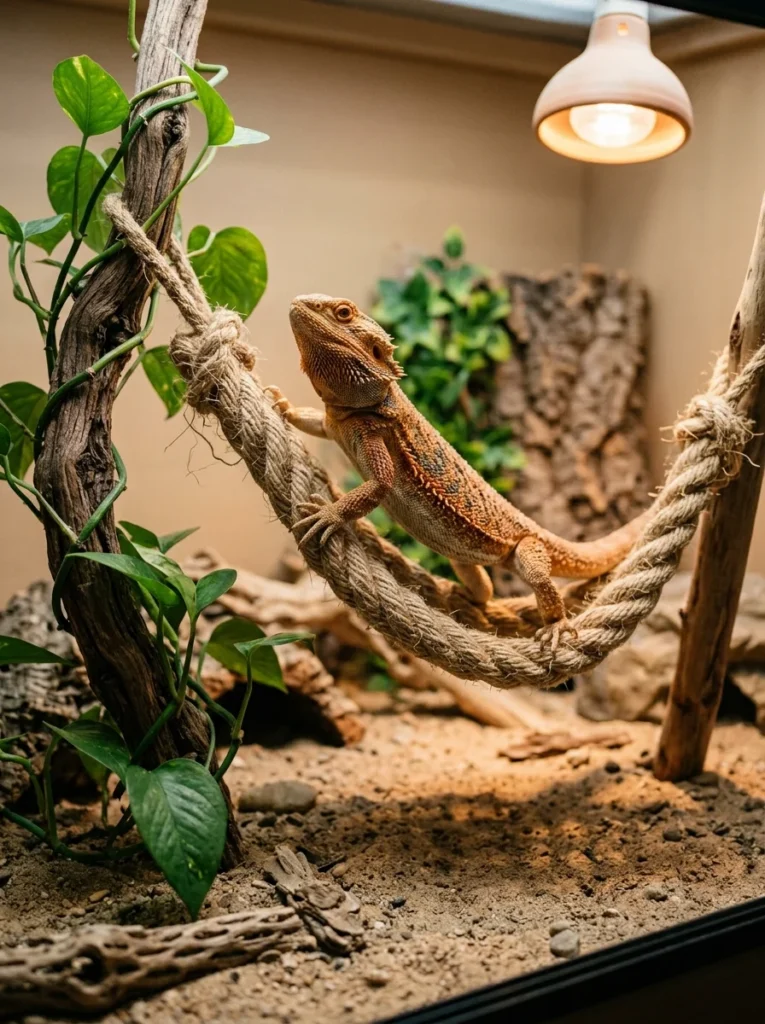
A woven rope sling strung between two branches creates a swaying resting bed. Thick jute or sisal rope holds weight without fraying quickly. This colorful, playful setup pulls inspiration from the bright, tactile layouts used in <a href=”https://slekhome.com/playroom-ideas/”>playroom ideas</a> for climbing structures. Bearded dragons balance on the rope and settle in for warmth under a nearby lamp. Secure both ends firmly to the enclosure frame before use. Natural rope tones pair well with green vine accents. This bed idea adds movement and a bit of visual energy to a static tank.
9. Half-Log Wooden Hide Bed
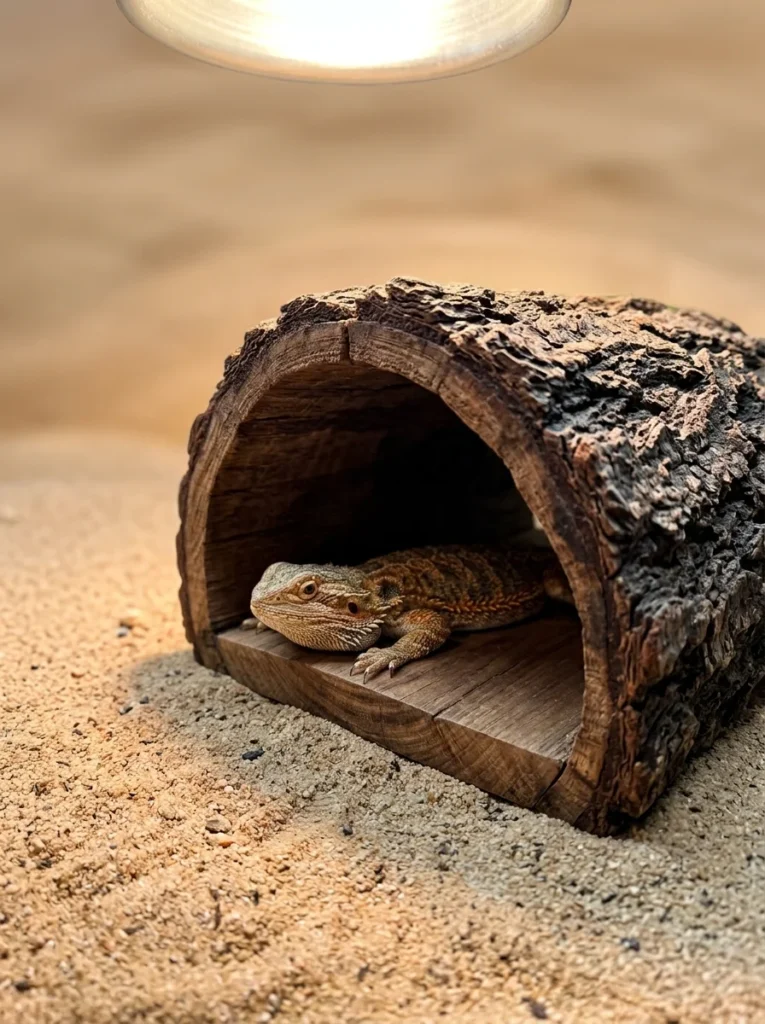
A split half-log offers a simple, sturdy hide with a flat resting floor. Untreated wood, such as mopani or grapewood, holds up well over time. Bearded dragons tuck underneath the curved top for shade during bright hours. The flat interior floor makes a comfortable, stable bed surface. This bed idea suits beginner setups because the piece requires little upkeep. Natural bark tones fit almost any enclosure theme without clashing. Seal any rough edges lightly to prevent scratches on delicate skin.
10. Cholla Wood Nest Bed
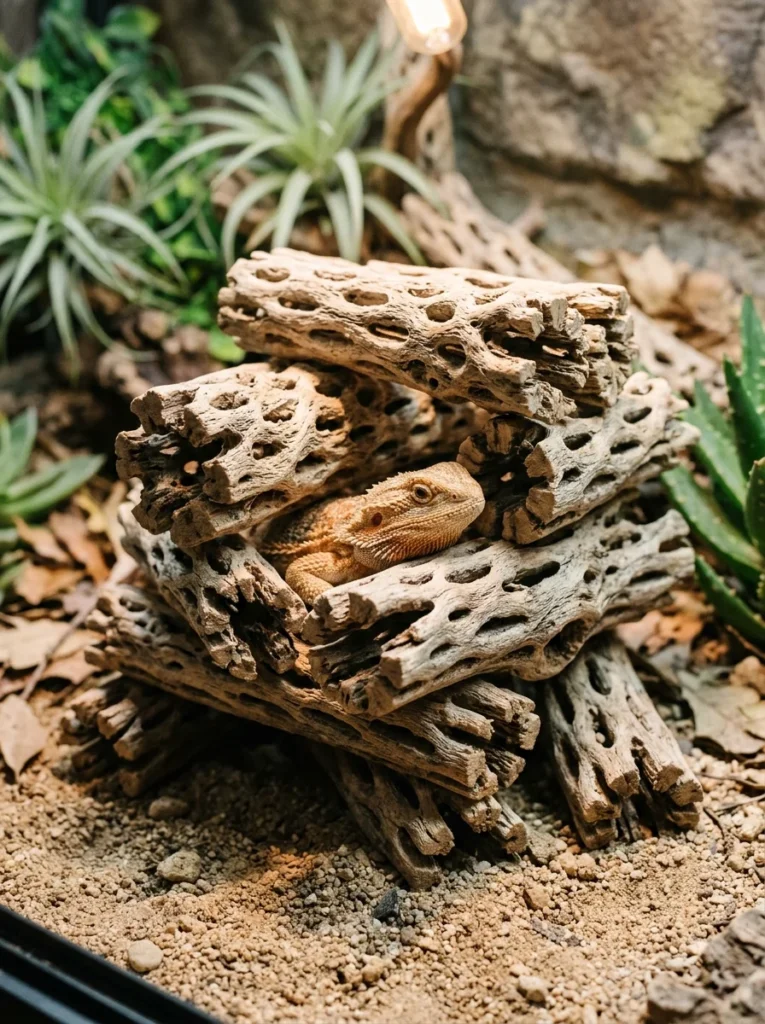
Cholla wood features a hollow, porous structure that forms natural nooks. Stack a few pieces together to build a raised, textured nest bed. Bearded dragons wedge into the gaps for a snug, secure feeling. The lightweight wood also allows airflow, which keeps the bed from trapping moisture. This bed idea works especially well in bioactive enclosures with live plants. Pale tan and gray tones echo the dry, arid look of desert scrub. Replace cholla pieces occasionally, since the wood breaks down faster than dense hardwood.
11. Slate Tile Platform Bed
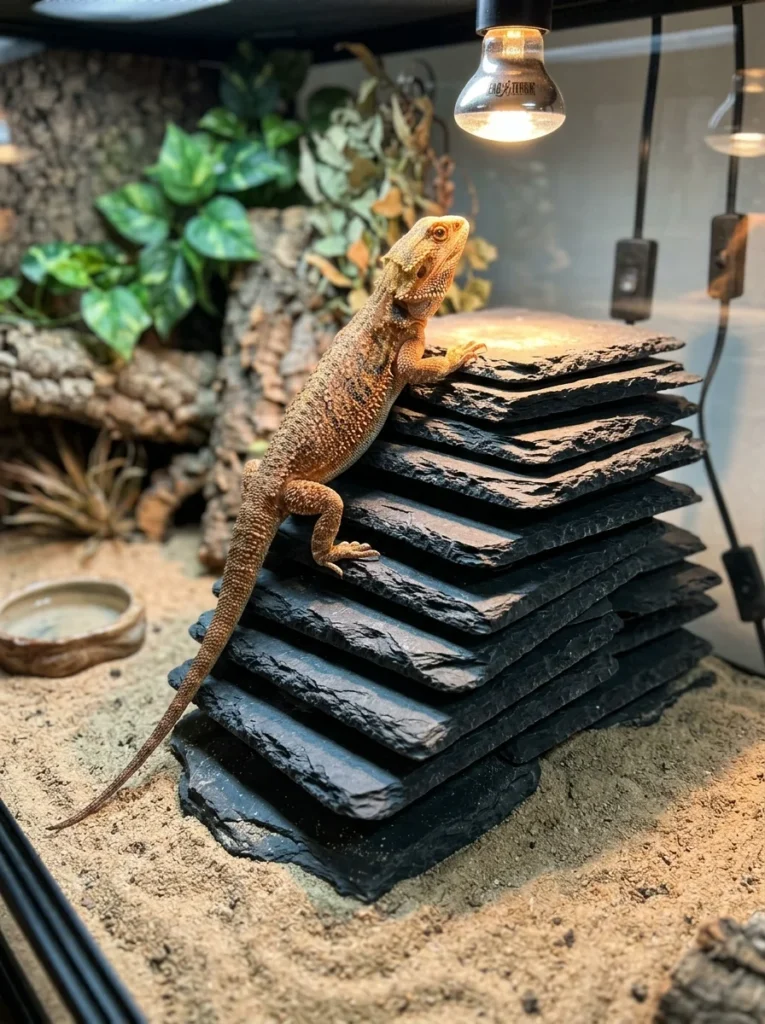
Stacked slate tiles form a raised, multi-level platform bed near the heat lamp. This compact design suits small tanks, much like the space-saving furniture featured in <a href=”https://slekhome.com/studio-apartment-ideas/”>studio apartment ideas</a> for tight layouts. Bearded dragons climb the tiered levels to reach their preferred temperature zone. Slate holds heat evenly and cools slowly once lights switch off. Dark charcoal tones create a striking contrast against lighter sand substrate. This bed idea also gives keepers precise control over basking height. Stack tiles securely to avoid any shifting during activity.
12. Hammered Copper Basking Dish Bed
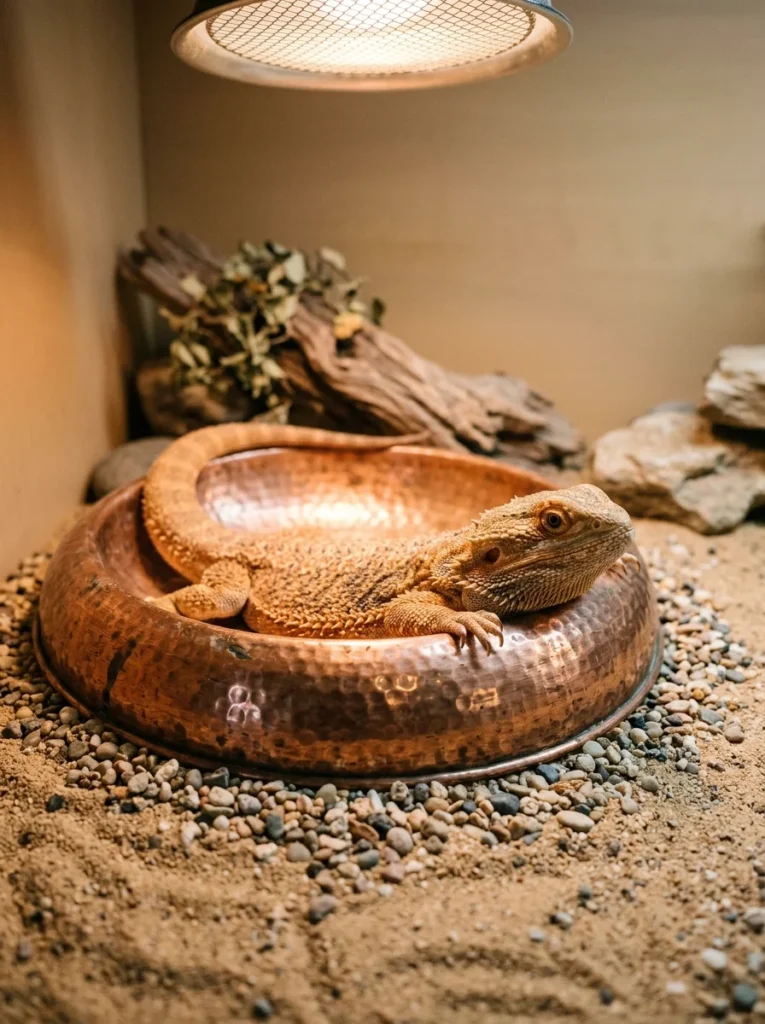
A shallow hammered copper dish makes an unexpected, decorative basking bed. The metal warms quickly under a heat lamp and holds warmth steadily. Bearded dragons rest inside the shallow curve, much like a sunbathing spot. This bed idea suits keepers who want a refined, modern look inside the enclosure. Pair the dish with sand or fine gravel to soften the edges. Warm copper tones catch the light and add a subtle metallic accent. Check the dish temperature regularly, since metal can heat faster than stone.
13. Repurposed Terracotta Pot Cave Bed
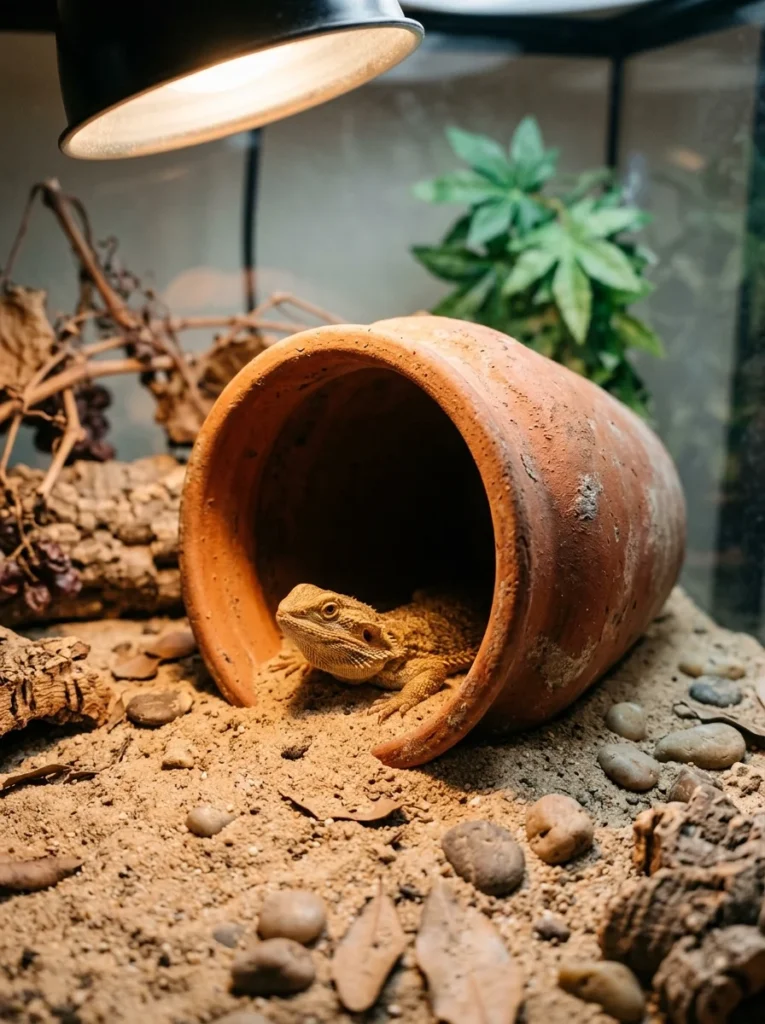
A terracotta pot laid on its side becomes an instant cave-style bed. This budget-friendly, upcycled approach fits the same resourceful spirit found in <a href=”https://slekhome.com/pantry-organization-ideas/”>pantry organization ideas</a> that repurpose everyday containers. Bearded dragons crawl inside for privacy and shade during rest periods. Terracotta stays cool to the touch, offering relief on warmer days. Sand the rim lightly to remove any sharp broken edges. This bed idea costs little and still looks intentional once styled with sand. Earthy orange-red tones blend naturally with most desert-themed setups.
14. Layered Substrate Burrow Bed
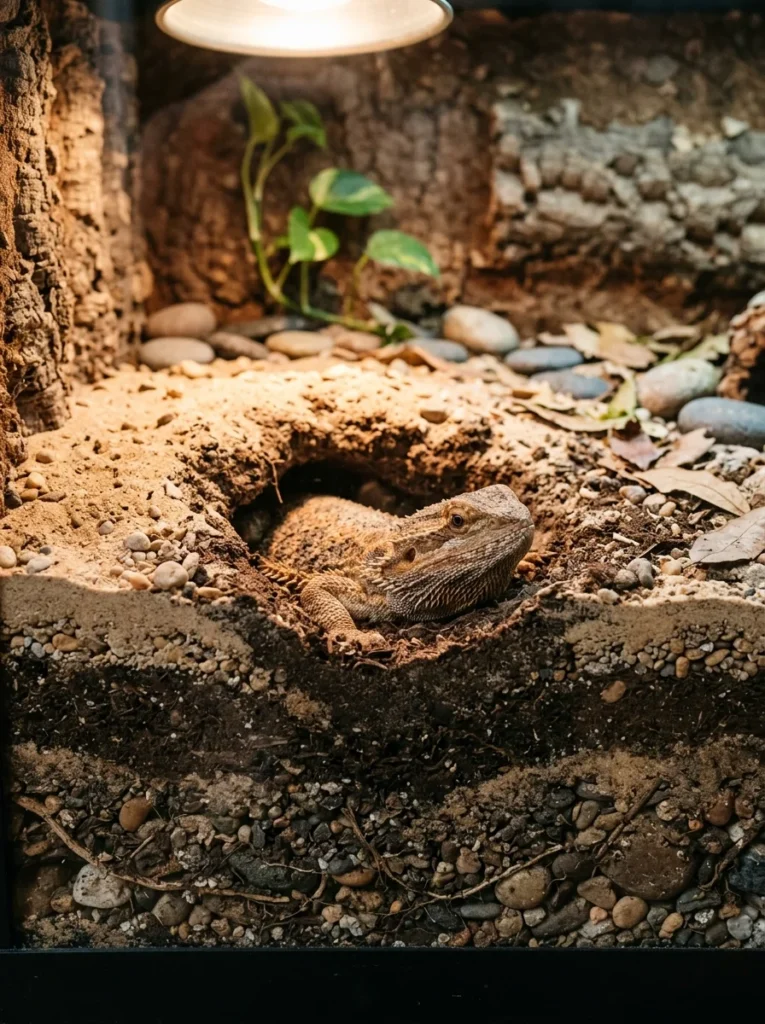
A layered substrate bed combines sand, soil, and small stones for a true digging zone. Deeper layers hold cooler temperatures, giving dragons a natural retreat from heat. Bearded dragons dig their own burrow shape within the loose material over time. Keeping supplies organized nearby helps maintain this bed, similar to the labeled bins shown in <a href=”https://slekhome.com/pantry-organization-ideas/”>pantry organization ideas</a> for tidy storage. This bed idea requires the most upkeep, since loose substrate shifts often. Warm sand tones layered with darker soil create depth and visual interest. Refresh the top layer weekly to prevent compacting or odor buildup.
How to Choose the Right Bearded Dragon Bed Style
Choosing a bed style starts with the enclosure’s overall size and shape. Taller tanks suit hammocks, branches, and elevated ledges. Wider, flatter tanks work better with caves, burrows, and platform beds. Consider the dragon’s personality as well, since some prefer open basking spots over enclosed hides. Active diggers benefit from loose substrate beds, while calmer dragons often settle for simple ledges. Budget also plays a role, since natural wood and stone cost more than repurposed materials. Match the bed to the existing color palette for a cohesive look. Finally, always confirm that any chosen material stays safe for reptile use.
Materials and Colors That Work Best
Natural materials tend to outperform synthetic ones for both safety and style. Wood, stone, ceramic, and natural fiber resist bacteria buildup better than most plastics. Warm, earthy colors such as tan, rust, terracotta, and olive mirror wild bearded dragon habitats. These tones also photograph well, which matters for owners who share enclosure photos online. Avoid bright, artificial colors, since they can clash with a naturalistic setup. Textured surfaces generally beat smooth ones, since dragons grip rough materials more easily. Mixing two or three materials, rather than one, usually creates the most balanced result.
Common Mistakes to Avoid
Overcrowding the enclosure with too many beds limits open floor space for movement. Sharp edges on repurposed items can scratch sensitive skin during regular use. Placing a bed too close to a heat lamp risks overheating the material or the dragon. Ignoring humidity levels around moss or fiber beds can lead to mold growth. Ill-fitting beds that wobble or shift create an unstable resting surface. Skipping regular cleaning allows waste and shed skin to build up in hidden crevices. Choosing purely decorative pieces without checking safety first remains one of the most common errors.
FAQs About Bearded Dragon Bed Ideas
What is the best bed material for a bearded dragon? Natural stone and untreated wood tend to work best, since both resist bacteria and hold heat evenly.
Do bearded dragons need a hammock or hide? Most dragons benefit from at least one hide and one elevated basking spot within the same enclosure.
How often should bedding be cleaned? Spot clean loose substrate weekly, and deep clean solid beds such as stone or ceramic every two weeks.
Can I use household items for a bed? Many keepers repurpose terracotta pots or untreated wood, as long as edges stay smooth and materials remain non-toxic.
Does bed color matter for a bearded dragon? Color mainly affects visual style, though very dark surfaces can absorb extra heat under a basking lamp.

Written by Stephanie Fallis
Mom and homemaker who shares budget friendly DIY projects, decorating tips and gardening ideas for busy families.
More about me → Christmas ideas21 Christmas Tray Ideas for a Festive Home
 Christmas ideas21 Blue Christmas Decoration Ideas for a Stunning Home
 Christmas ideas9 Log Christmas Decoration Ideas for a Cozy Home