Fridge Organization: 18 Stunning Ideas to Try Right Now
Fridge organization changes a cluttered refrigerator into a calm, functional space. Fresh produce stays visible, leftovers stop hiding behind jars, and grocery shopping gets simpler. A well organized fridge saves time every single day. It also cuts down on food waste, since nothing gets forgotten at the back of a shelf. Anyone can master this skill with a few smart habits and the right storage tools.
This guide covers eighteen practical ideas for a fridge organization system that fits any kitchen style. Clear bins, labeled containers, and stackable drawers create defined zones for produce, dairy, and leftovers. Farmhouse kitchens, modern minimalist spaces, and cozy cottage kitchens all benefit from these same core principles. Materials like acrylic, glass, and bamboo add both function and visual calm to the fridge interior.
The ideas below range from simple habit shifts to small storage upgrades. Each one solves a common fridge frustration, from wilted produce to lost condiments. Several ideas also work well as a do it on your own weekend project. Following even a handful of these tips builds lasting order inside the fridge, week after week.
1. Group Items by Category
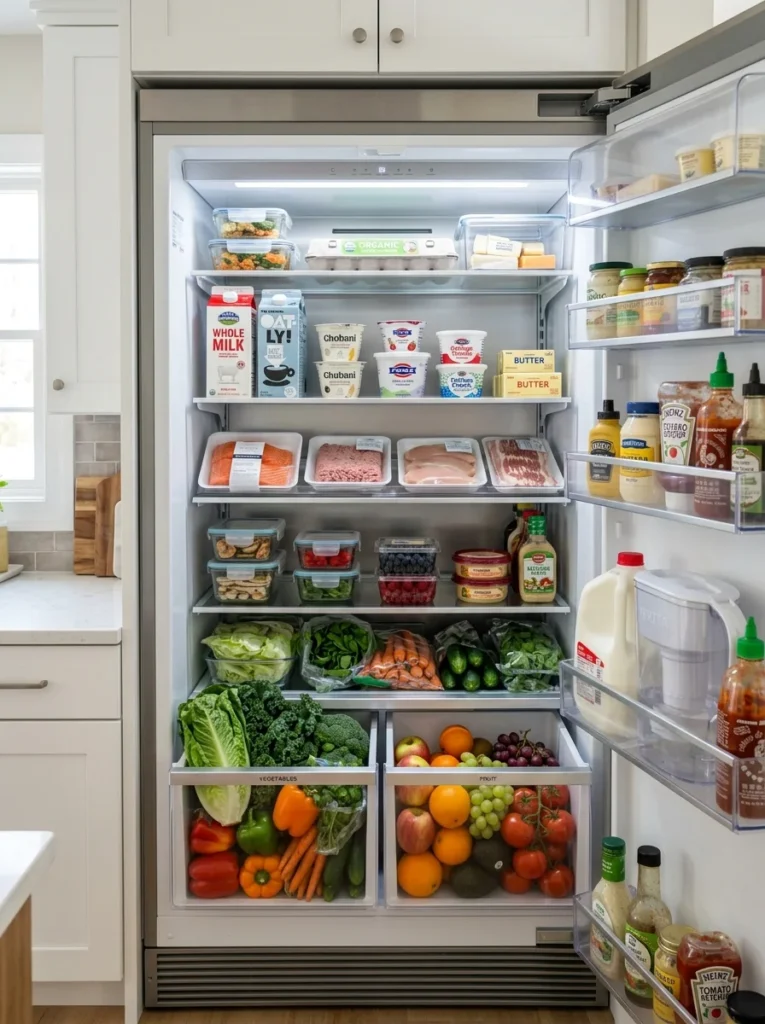
Grouping items by category forms the backbone of good fridge organization. Sort food into produce, dairy, proteins, condiments, and leftovers. Store each group in its own zone. This method keeps similar items together, so nothing gets lost behind a jar of pickles. As a result, meal prep moves faster, since everything needed sits in one spot. This simple shift alone solves most fridge clutter problems in a modern kitchen.
2. Use Clear Bins for Zones
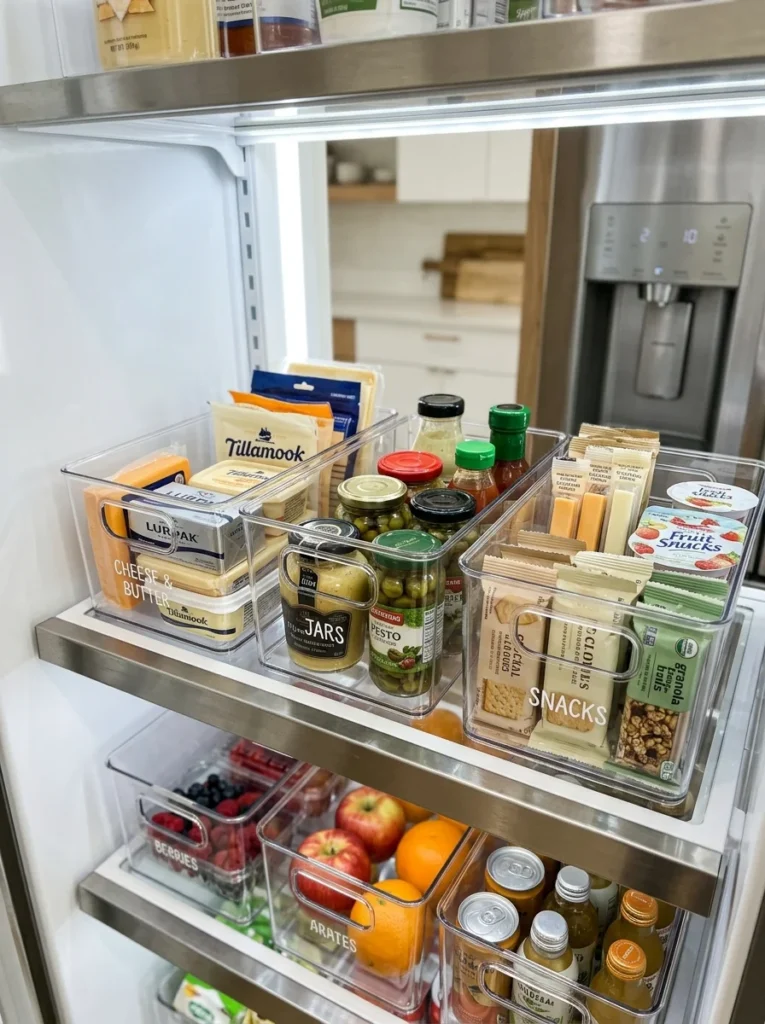
Clear bins turn vague fridge zones into visible, defined sections. Acrylic and glass bins let every item stay in view, from front to back. Meanwhile, opaque containers hide contents and lead to forgotten food. Choose stackable clear bins with sturdy bottoms for heavier jars. This approach pairs naturally with the clean, open storage seen in these duktig ikea kitchen makeovers. Clear bins also make wipe-downs quick during weekly cleaning.
3. Label Every Shelf and Bin
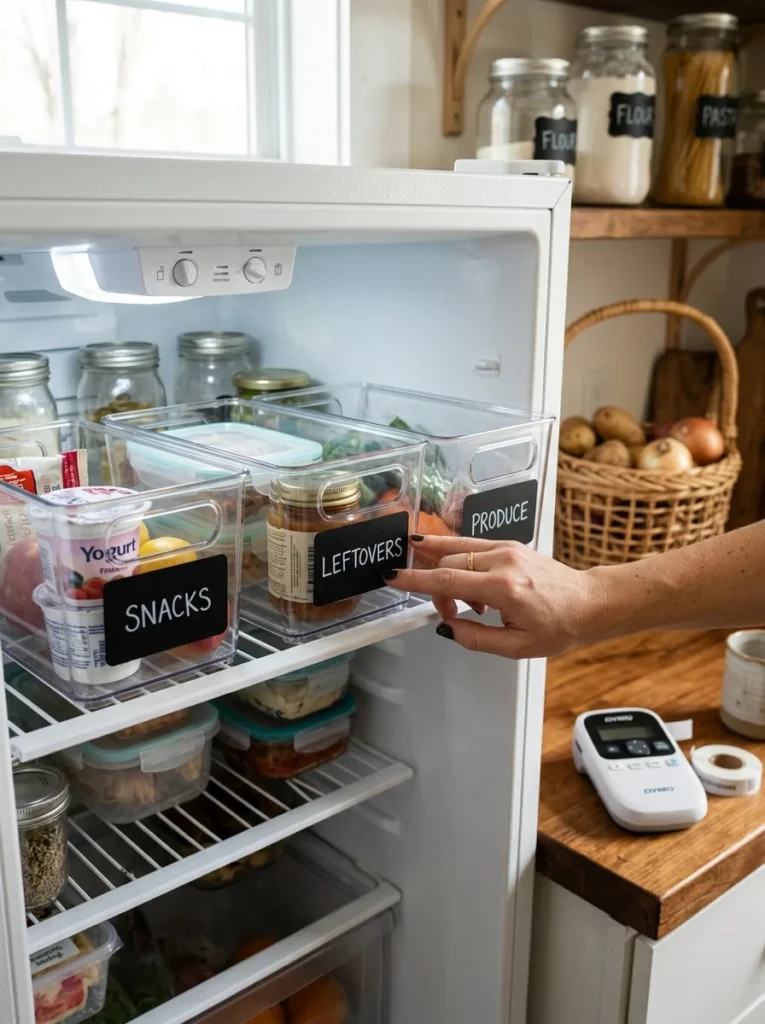
Labels remove the guesswork from daily fridge use. A simple label maker or chalkboard tag marks each shelf and bin clearly. Family members then know exactly where milk, snacks, and leftovers belong. Additionally, labels help guests and kids put groceries away correctly. This small habit keeps an organized fridge consistent, even on busy weeknights. Over time, labeling becomes second nature and cuts down on misplaced items.
4. Store Fresh Produce in the Crisper Drawer
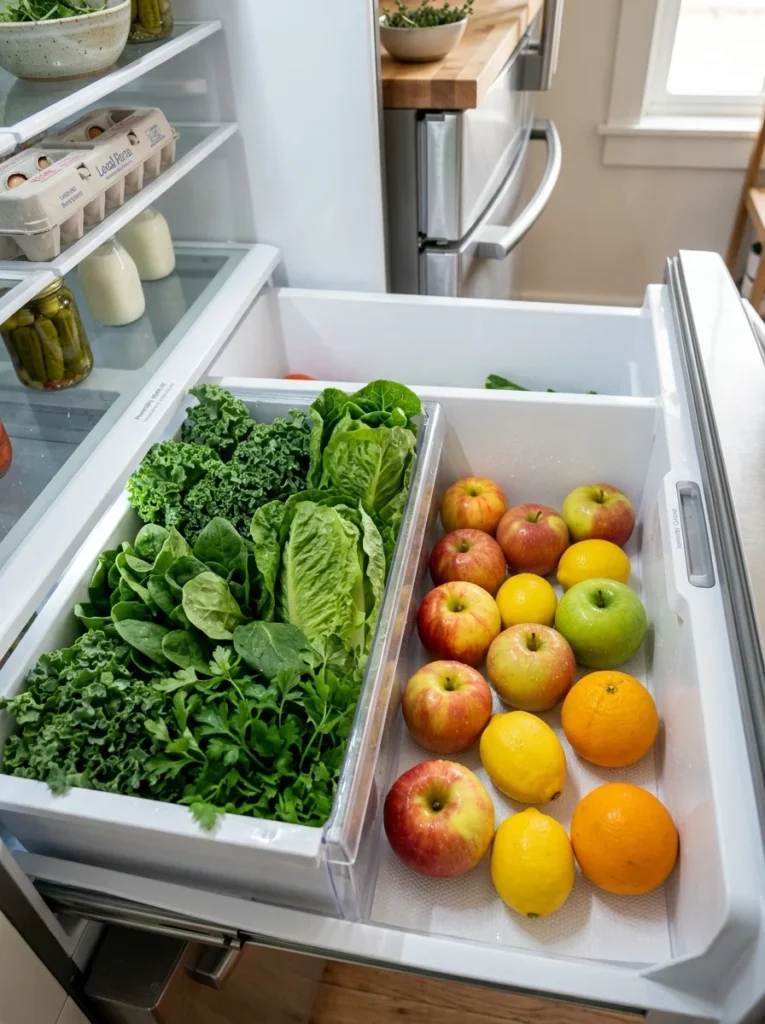
The crisper drawer exists for a reason, so fruits and vegetables belong there. Separate fruits from vegetables when possible, since some produce releases gas that speeds spoilage. Line the drawer with a washable liner for easy cleaning. As a result, produce stays fresh longer and waste drops noticeably. This step forms a key part of a tidy kitchen routine for anyone who cooks often.
5. Keep Dairy on a Middle Shelf
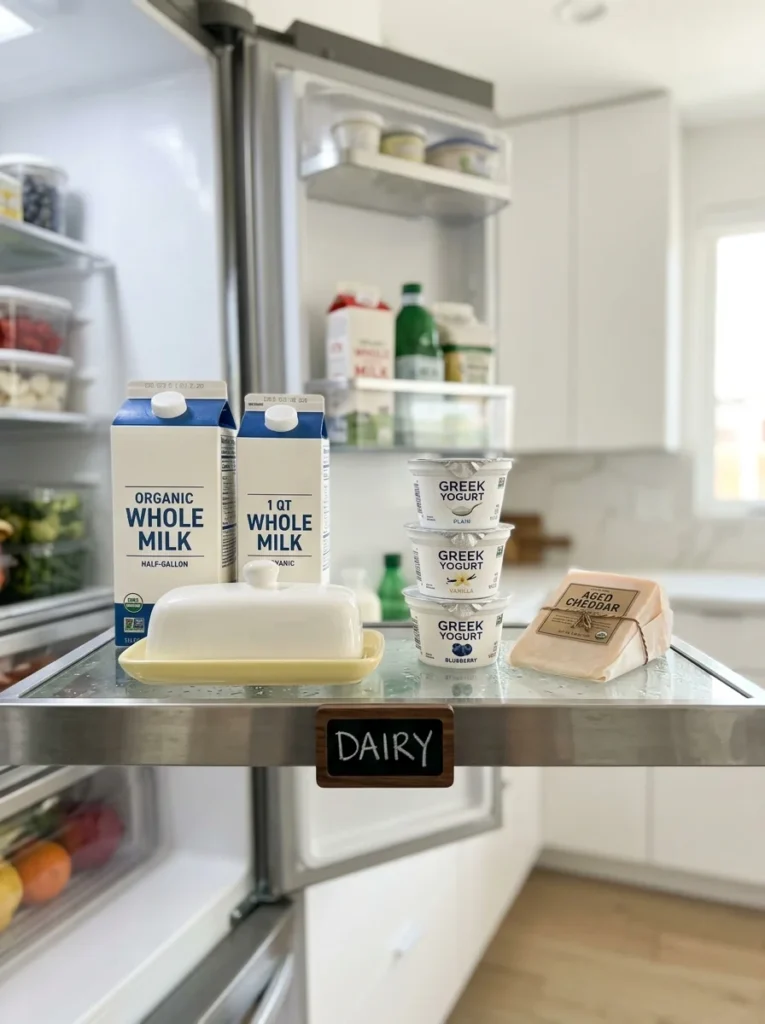
Middle shelves keep a steady, even temperature, which suits dairy products well. Store milk, yogurt, and cheese here rather than the door, where temperatures shift often. However, keep butter in a covered dish to avoid absorbing other food odors. This placement extends shelf life and supports a well organized fridge overall. A tidy dairy zone also makes breakfast prep noticeably quicker each morning.
6. Reserve the Door for Condiments
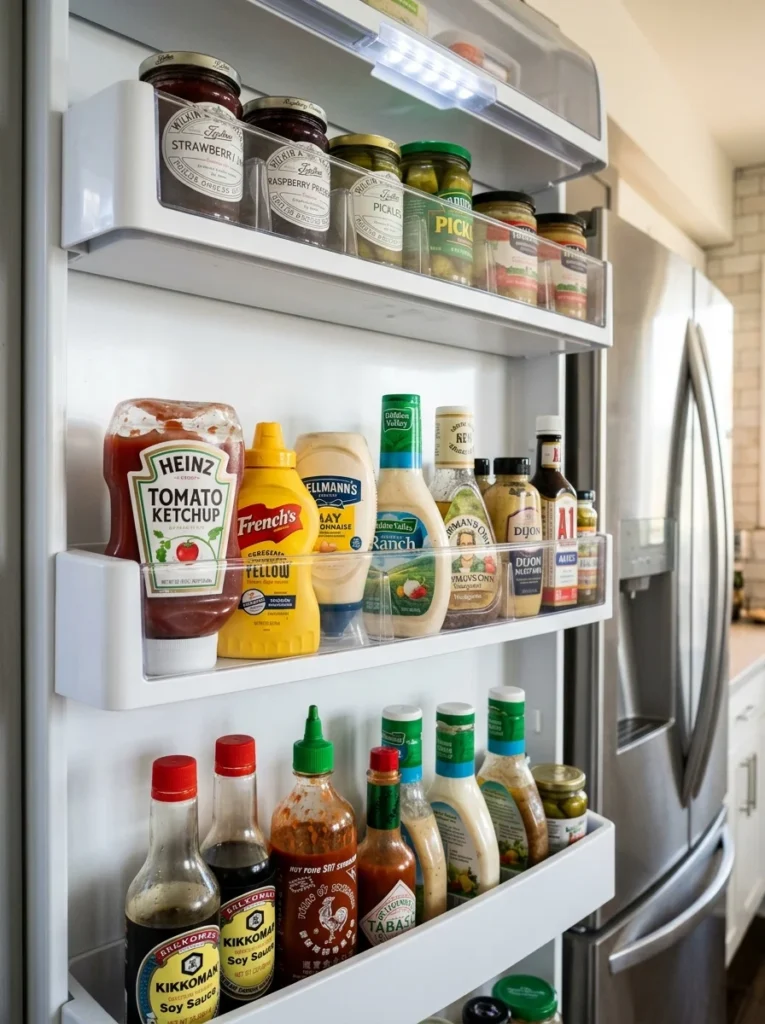
Door shelves work best for condiments, sauces, and items that tolerate temperature swings. Store ketchup, mustard, dressings, and jam along the door. Meanwhile, avoid placing milk or eggs there, since the door stays warmer than the interior. Group condiments by type, sweet, savory, and spicy, for quick access. This tactic keeps the main shelves free for perishable groceries.
7. Use Lazy Susans for Small Jars
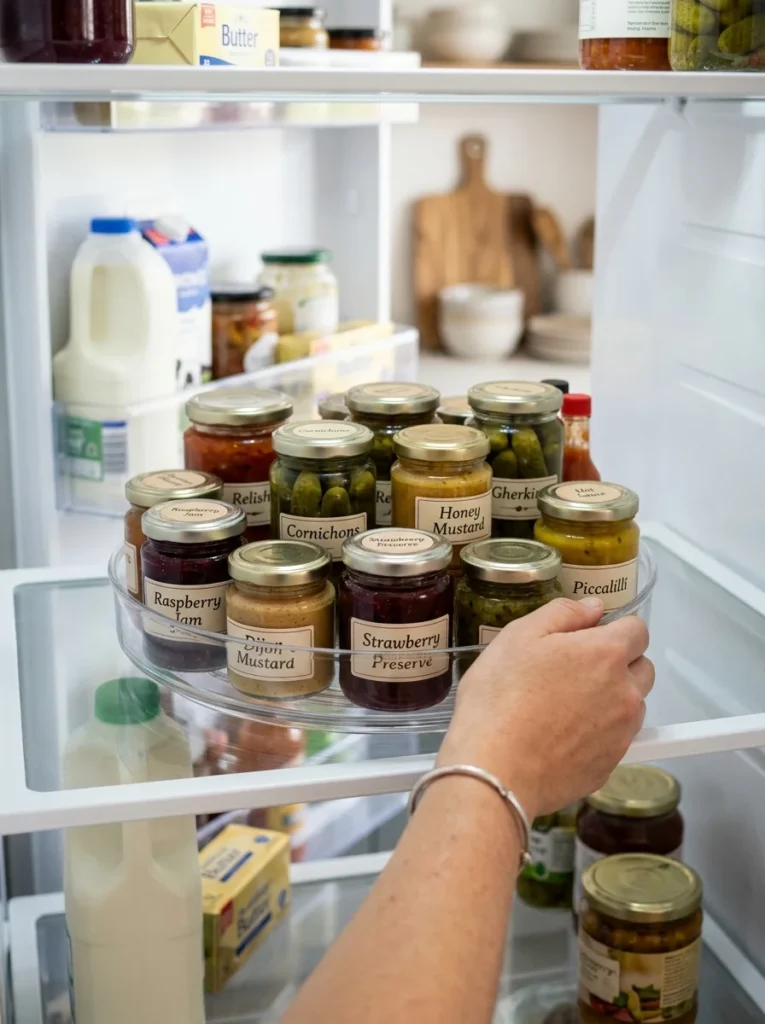
A lazy susan solves the problem of jars hiding behind other jars. Place small condiment jars, jams, or sauces on a rotating tray. Spin the tray to find what is needed instead of digging around. This tool works especially well on deep shelves, where items get pushed to the back. Additionally, a lazy susan speeds up fridge organization in kitchens with limited shelf depth.
8. Add Stackable Drawers for Freezer Space
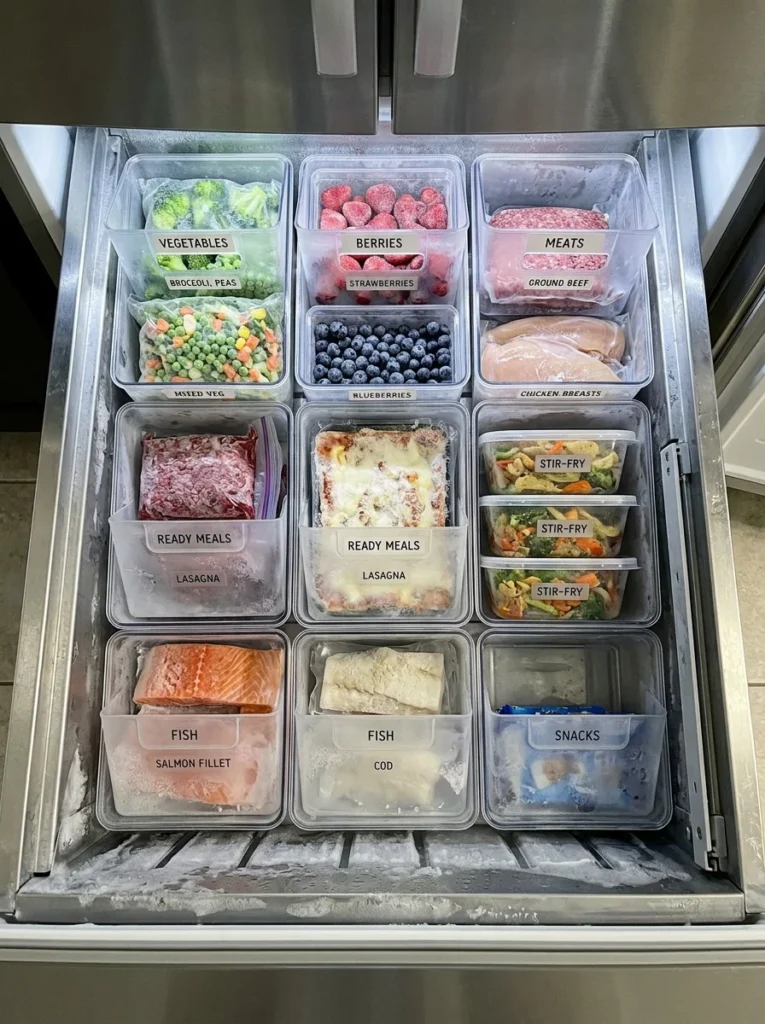
Stackable drawers bring order to a freezer that often turns chaotic fast. Sort frozen vegetables, meats, and ready meals into separate labeled drawers. This method prevents items from getting buried under bags and boxes. As a result, freezer inventory stays visible, and nothing gets forgotten until it freezer-burns. Stackable drawers pair well with the clear-bin approach used throughout the main fridge.
9. Use a Fridge Organizer Cart for Overflow
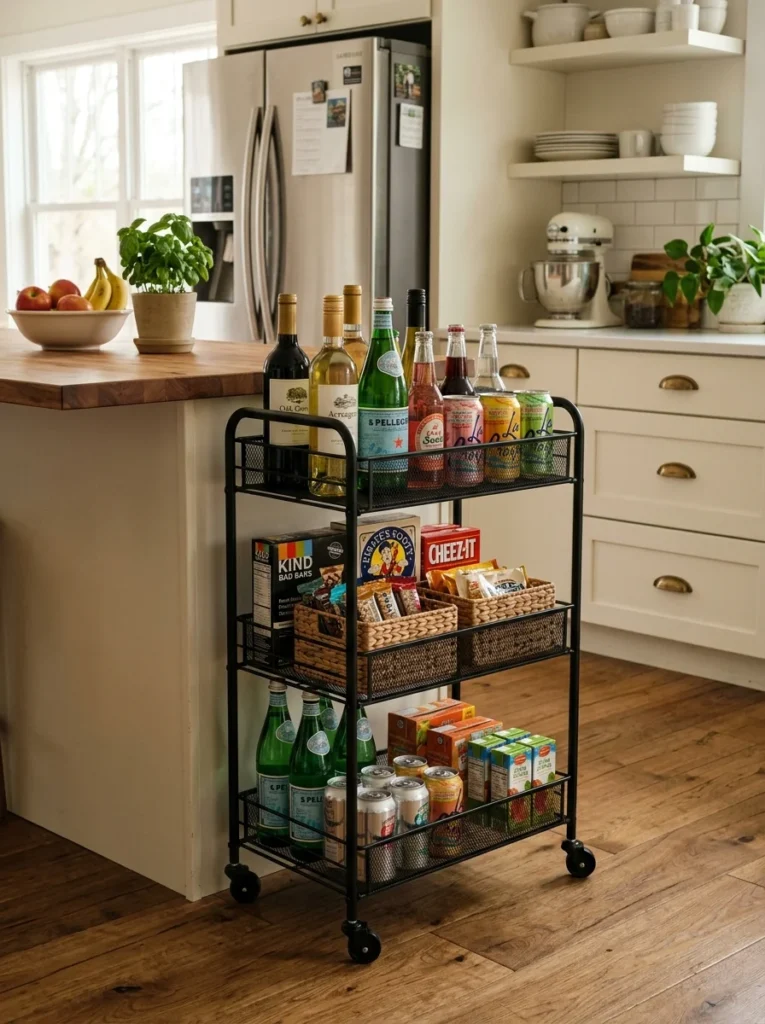
A rolling organizer cart handles overflow when the main fridge runs out of room. Store beverages, snacks, or bulk items on a cart near the kitchen island. This setup suits larger households or anyone who meal preps in bulk. Additionally, a cart with wheels moves easily during deep cleaning sessions. Pairing this idea with a well-styled coffee bar setup creates a cohesive kitchen storage system.
10. Keep Raw Meat on the Bottom Shelf
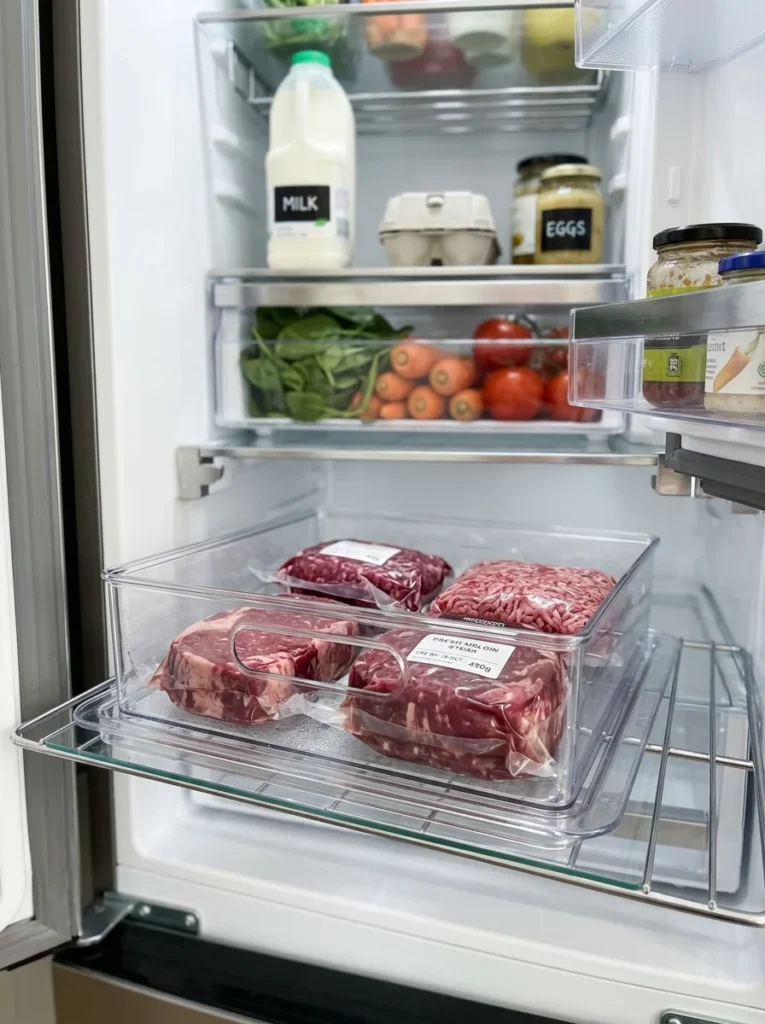
Raw meat belongs on the bottom shelf, away from produce and ready-to-eat food. This placement stops drips from contaminating items stored below. Use a tray or sealed container underneath for extra protection. As a result, this small step keeps the whole fridge safer for the family. This kind of careful placement always accounts for food safety alongside visual tidiness.
11. Store Eggs in Their Original Carton
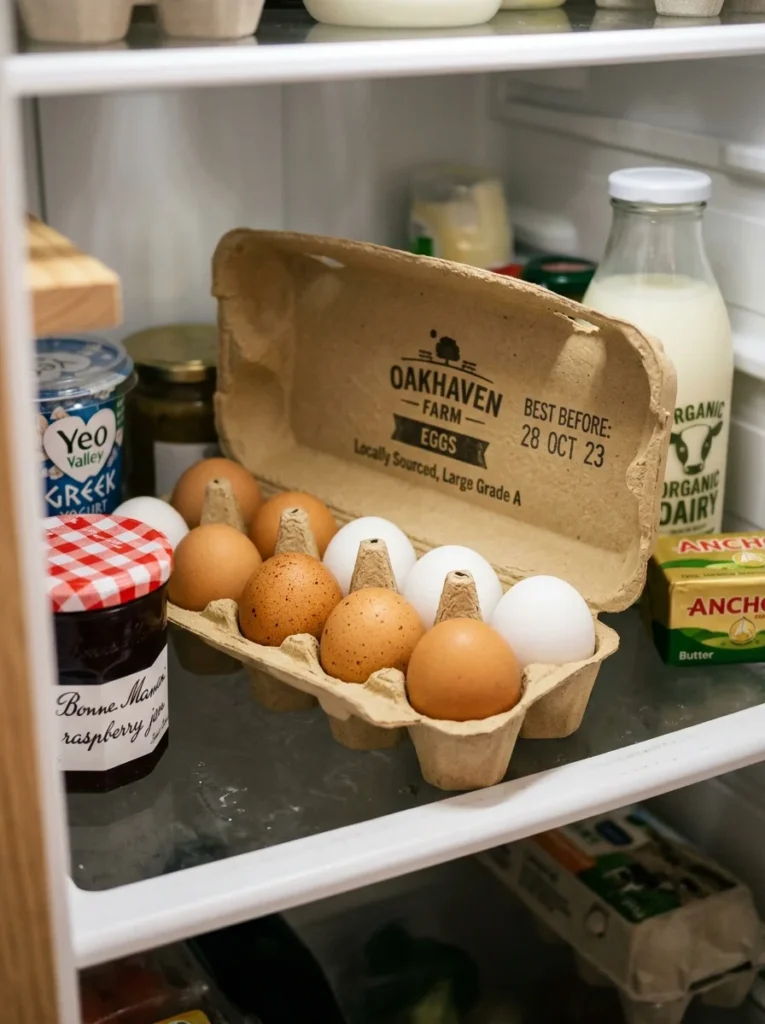
Eggs stay fresher in their original carton rather than a fridge door tray. The carton protects eggs from absorbing strong odors nearby. Additionally, the carton often lists the expiration date, which helps track freshness. Place the carton on a middle or lower shelf, not the door. This habit supports a better organized fridge while reducing unnecessary food waste.
12. Use Egg Bins for Extra Space
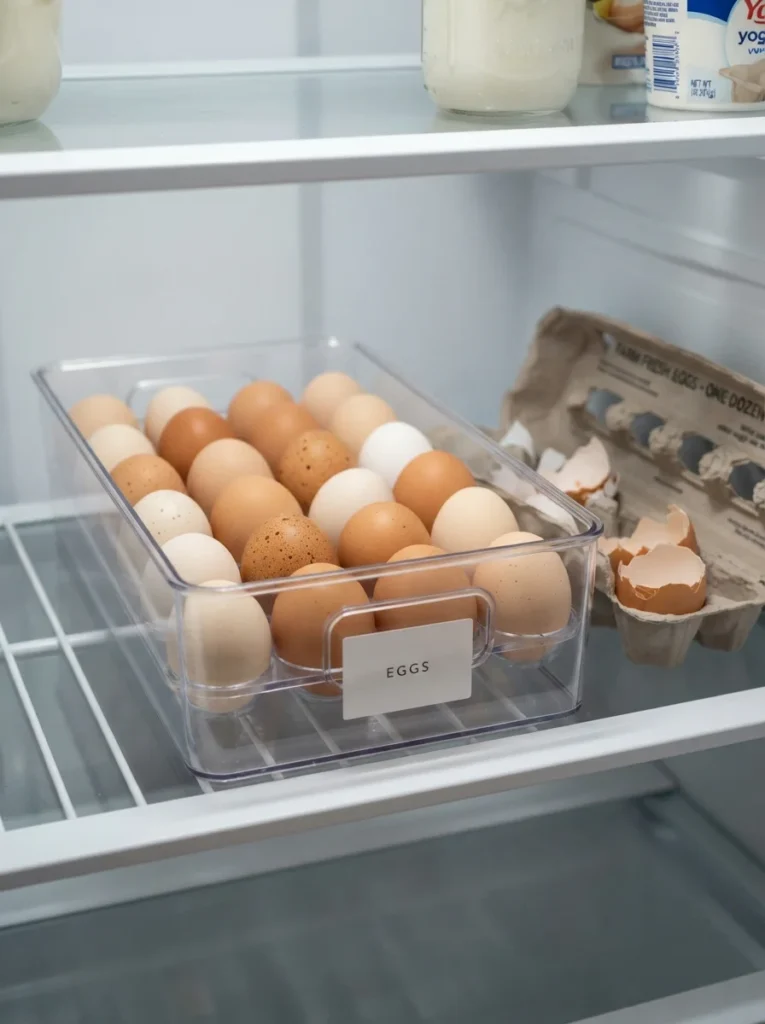
An egg bin frees up carton space while keeping eggs secure and visible. Transfer extra eggs into a labeled bin once a carton runs low. This method works well for households that buy eggs in bulk. Meanwhile, the bin keeps loose eggs from rolling around on the shelf. This small addition rounds out a thoughtful storage routine.
13. Set Up a Snack Station for Kids
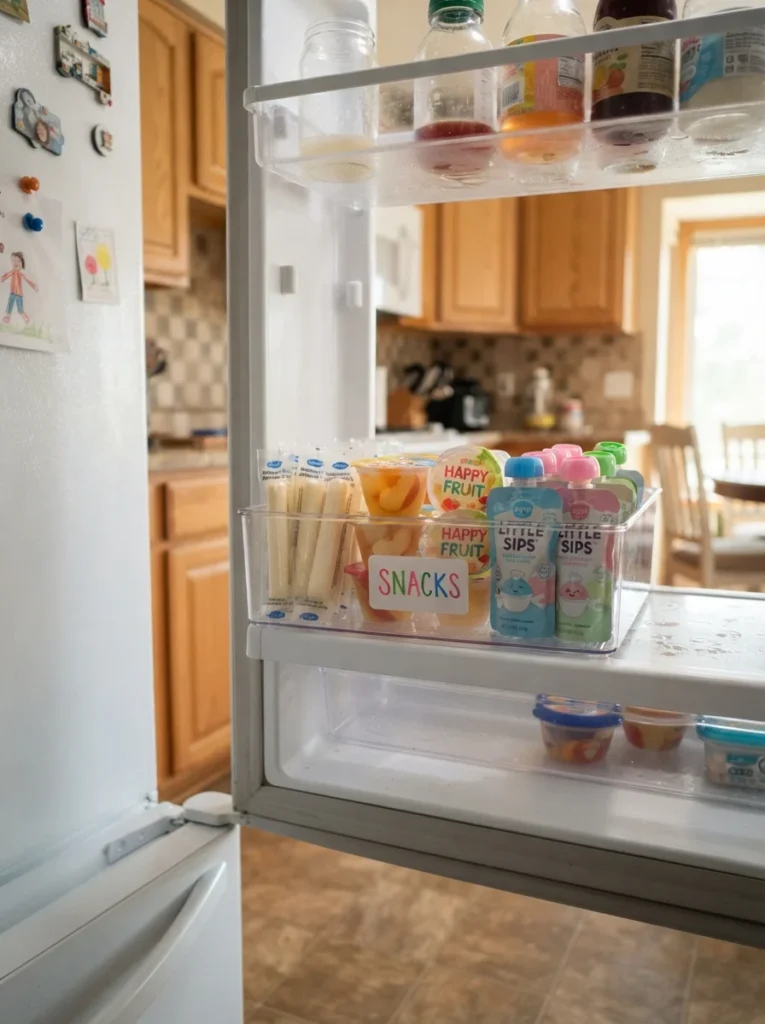
A dedicated snack station teaches kids to find their own food easily. Place a low, clear bin filled with pre-portioned snacks on an accessible shelf. This setup reduces requests for help and builds independence at snack time. Additionally, rotating snacks weekly keeps the bin fresh and appealing. A snack station makes this system useful for the whole family, not just the cook.
14. Use Turntables for Sauces and Dressings
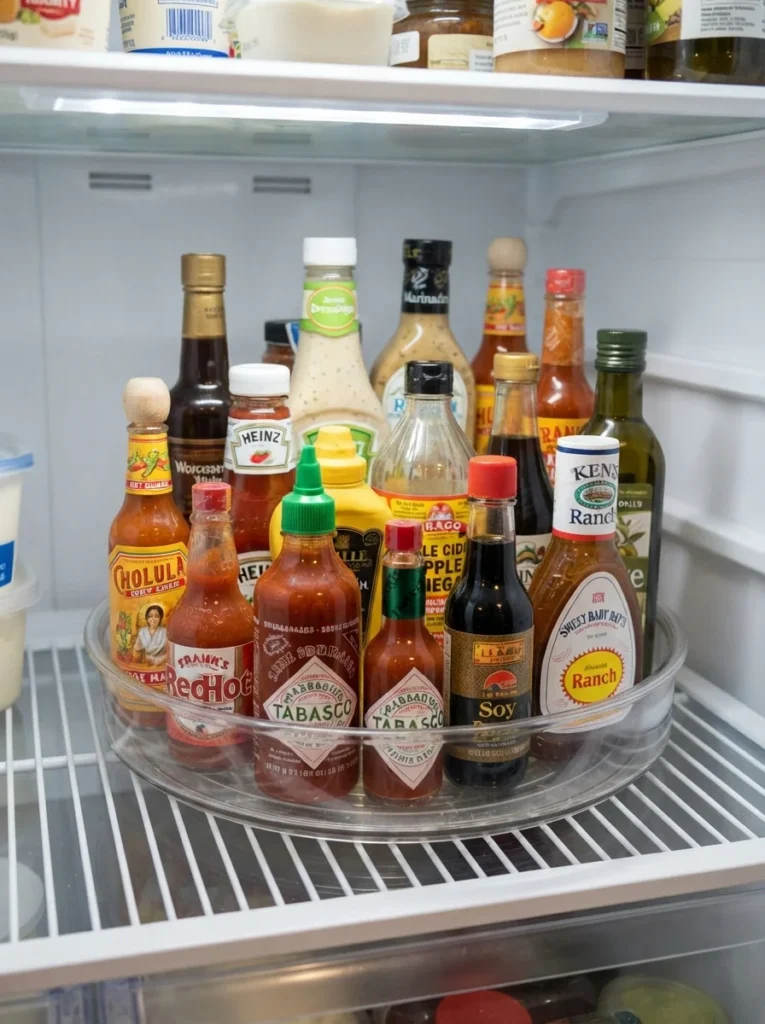
Turntables work well for tall bottles of sauce, dressing, or marinade. Group similar flavors together on one turntable for quick comparison. Spin instead of reaching past bottles to find the right one. This method prevents spills and keeps labels facing outward for easy reading. Turntables complement lazy susans as another rotating storage solution.
15. Store Leftovers in Uniform Containers
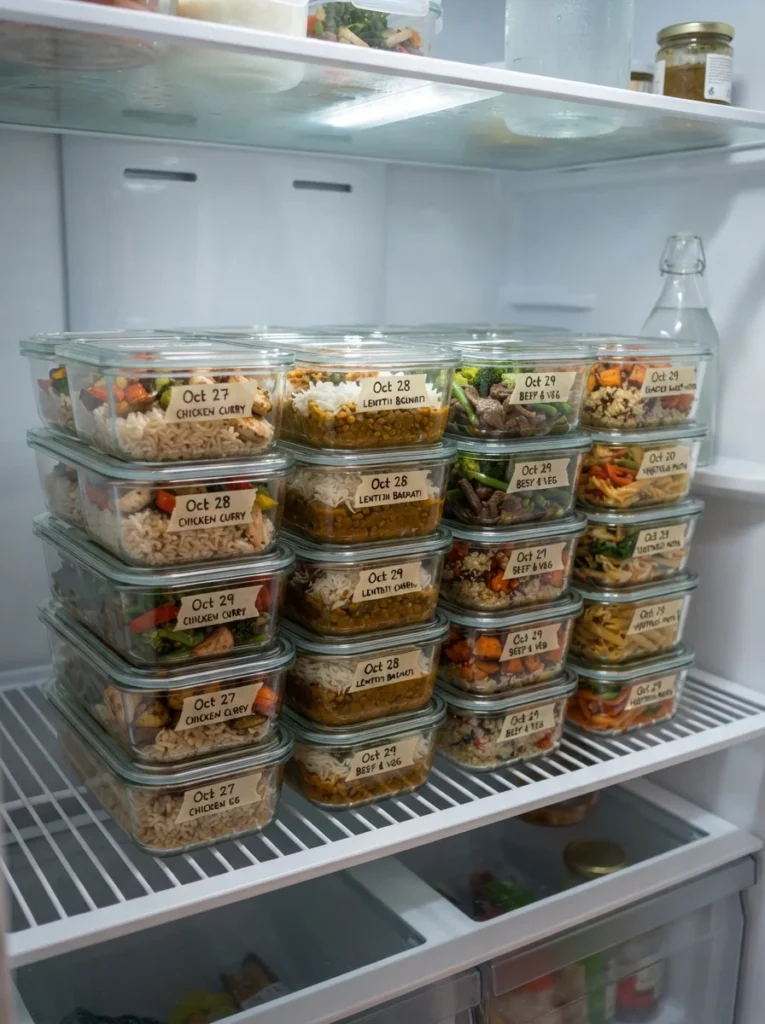
Uniform containers stack neatly and use shelf space far more efficiently. Choose one brand or style of container for all leftovers. Matching lids and shapes prevent wasted gaps between mismatched dishes. As a result, more food fits on fewer shelves without feeling crowded. This habit forms one of the most useful fridge organization tricks for busy households.
16. Create a “Use First” Zone
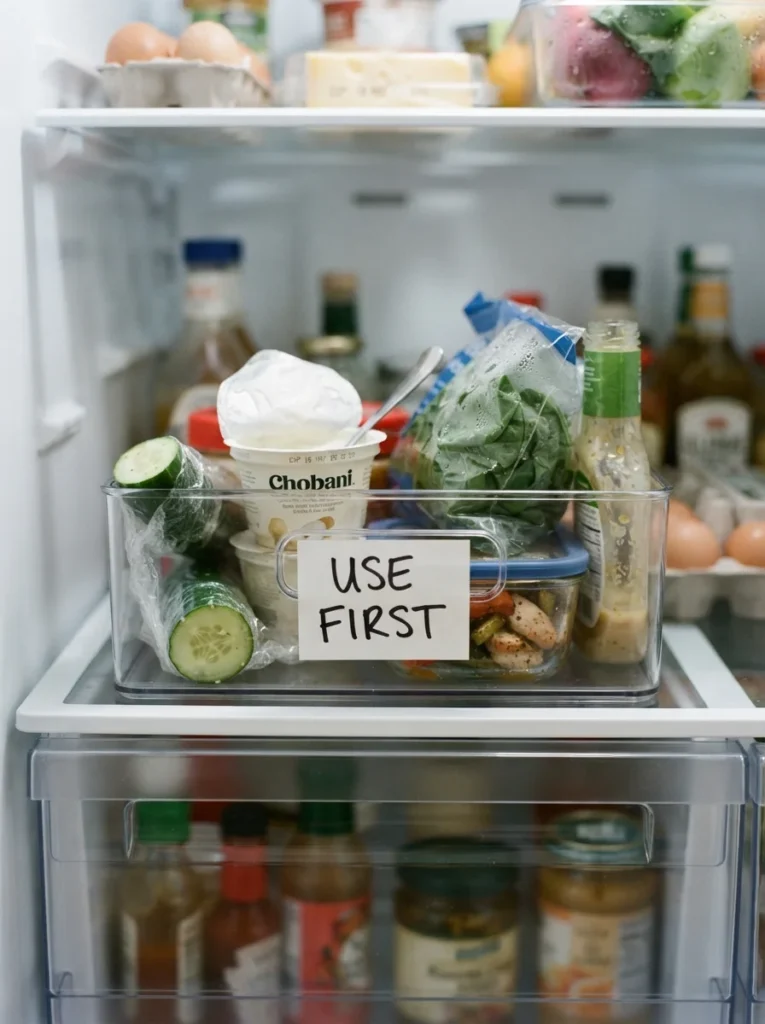
A “use first” zone highlights food nearing its expiration date. Dedicate one bin or shelf section to items that need eating soon. Check this zone before starting any meal or snack. This habit cuts food waste significantly and saves money over time. Many home cooks consider this the single most effective storage trick available.
17. Use Shelf Liners for Easy Cleaning
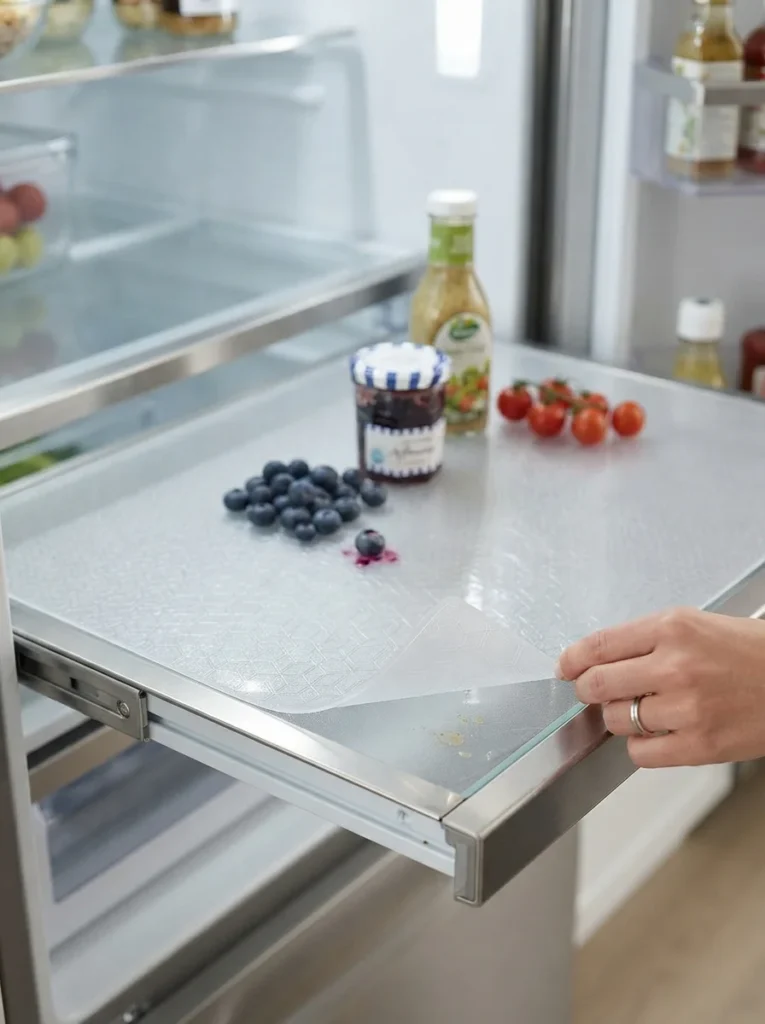
Shelf liners protect glass shelves from spills, crumbs, and sticky residue. Choose washable, cuttable liners sized to fit each shelf exactly. Wipe or rinse the liner instead of scrubbing the entire shelf. This small addition makes weekly cleaning noticeably faster. Liners also extend the life of glass shelving inside any fridge.
18. Maximize Vertical Space with Stacking Bins
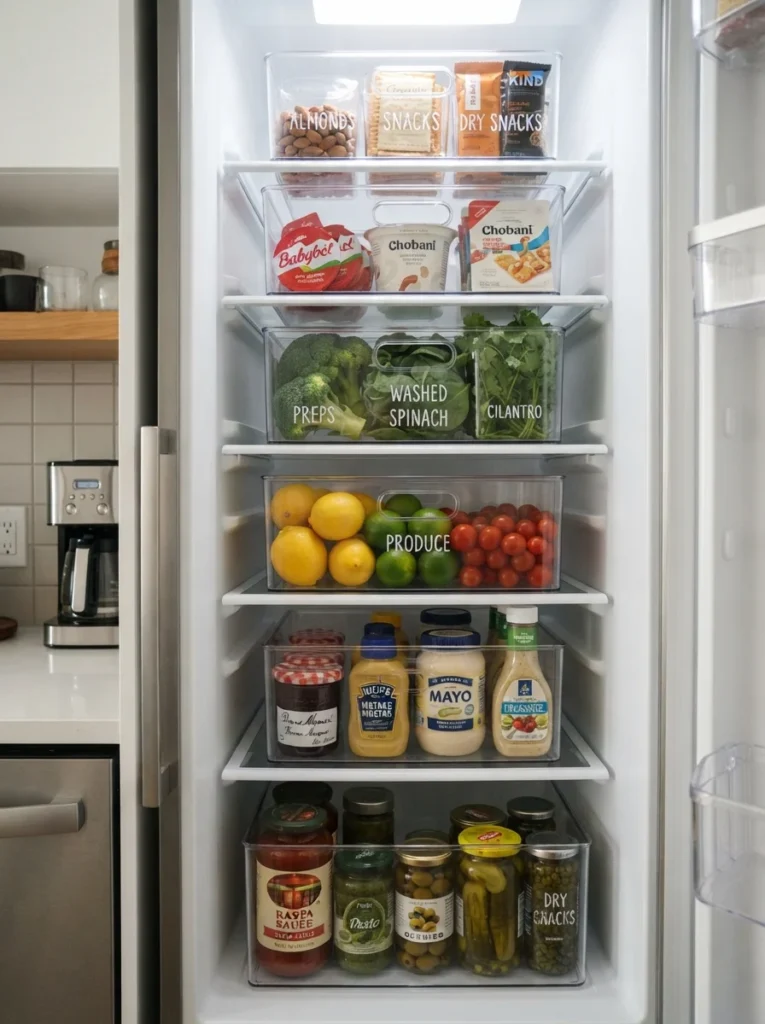
Stacking bins use vertical space that often goes to waste in a tall fridge. Choose bins with sturdy, flat bottoms that support stacking safely. Place heavier items on lower bins and lighter ones on top. This method doubles usable storage without adding new shelves. Vertical stacking rounds out a complete fridge organization plan for any kitchen size.
How to Choose the Right Fridge Organization Bins
Choosing the right bins starts with measuring shelf height and depth. Clear acrylic bins offer visibility, while bamboo trays add warmth to a farmhouse kitchen. Look for stackable designs with handles for easy removal. Additionally, dishwasher-safe materials simplify cleaning routines. Matching bin style to kitchen decor, whether minimalist or cottagecore, keeps the fridge feeling cohesive. Homeowners updating a kitchen with these white kitchen ideas often choose crisp white or clear bins to match cabinetry.
Common Mistakes to Avoid in Fridge Organization
Overfilling shelves blocks air circulation and leads to uneven cooling. Storing milk or eggs in the door also shortens their freshness window. Skipping labels causes confusion and repeated food waste over time. Additionally, ignoring expiration dates lets forgotten items linger too long. Ignoring these mistakes keeps a well-planned storage system running smoothly for months.
How to Maintain an Organized Fridge Long Term
Maintenance matters as much as the initial setup. Wipe shelves weekly and check the “use first” zone before shopping trips. Restock bins in the same spot every time for consistency. Additionally, a quick five-minute reset each Sunday prevents clutter from building up. The same upkeep habits used in a well-run small laundry room apply just as well to fridge storage.
FAQs about Fridge Organization
How often should a fridge be reorganized? A light reset works well weekly, with a deeper clean once a month.
What is the best fridge temperature for organization purposes? Keep the fridge between 35 and 38 degrees Fahrenheit for consistent freshness.
Do clear bins really make a difference? Yes, clear bins improve visibility and reduce forgotten, wasted food significantly.
Can fridge organization ideas apply to a small fridge? Yes, smaller fridges benefit even more from defined zones and stackable bins.
What is a low cost way to start fridge organization? Repurposed jars and bins already at home offer a do it on your own starting point.
Similar zone-based thinking works well beyond the kitchen, as seen in these mudroom ideas.