
Linen closet organization turns a chaotic stack of towels and sheets into a calm, functional system. Many homes tuck this closet into a hallway, yet it holds items families reach for daily. A tidy linen closet saves time during busy mornings and hectic laundry days. Additionally, it stops the frustrating search for a matching pillowcase. This guide covers twenty practical ideas for organizing every shelf, corner, and door.
Cottage, coastal, and modern farmhouse styles each inspire a different linen closet look. Woven baskets bring warmth, while acrylic bins keep a clean, modern edge. Neutral color palettes help a closet feel calm rather than cluttered. Meanwhile, smart labeling and shelf dividers keep every category in its own spot. These small style choices make the closet feel intentional instead of purely practical.
Below, find twenty organization ideas ranging from simple bin swaps to full shelving overhauls. Each idea works well in small closets and larger linen rooms alike. Homeowners can mix a few tips or apply the entire list at once. As a result, this closet can become one of the most functional spaces in the house.
In this post: 20 ideas
- Categorize Linens by Room Type
- Use Bins and Baskets for Grouping
- Roll Towels Instead of Folding
- Install Adjustable Wire Shelving
- Label Every Shelf Clearly
- Add a Shelf Divider System
- Use Vacuum-Sealed Bags for Bulky Items
- Store Extra Pillows in Fabric Bins
- Create a Dedicated Spare Sheet Set Station
- Use Door-Mounted Organizers
- Fold Sheets in Sets Inside Pillowcases
- Add a Small Step Stool for Top Shelves
- Use Baskets for Off-Season Bedding
- Incorporate Cedar Blocks for Freshness
- Choose a Neutral Color Palette for Bins
- Add Battery-Powered Closet Lighting
- Reserve a Lower Shelf for Kids’ Linens
- Use Woven Baskets for a Warm Texture
- Install DIY Wire Shelving: How to Do It on Your Own
- Add a Chalkboard Label for Easy Updates
1. Categorize Linens by Room Type
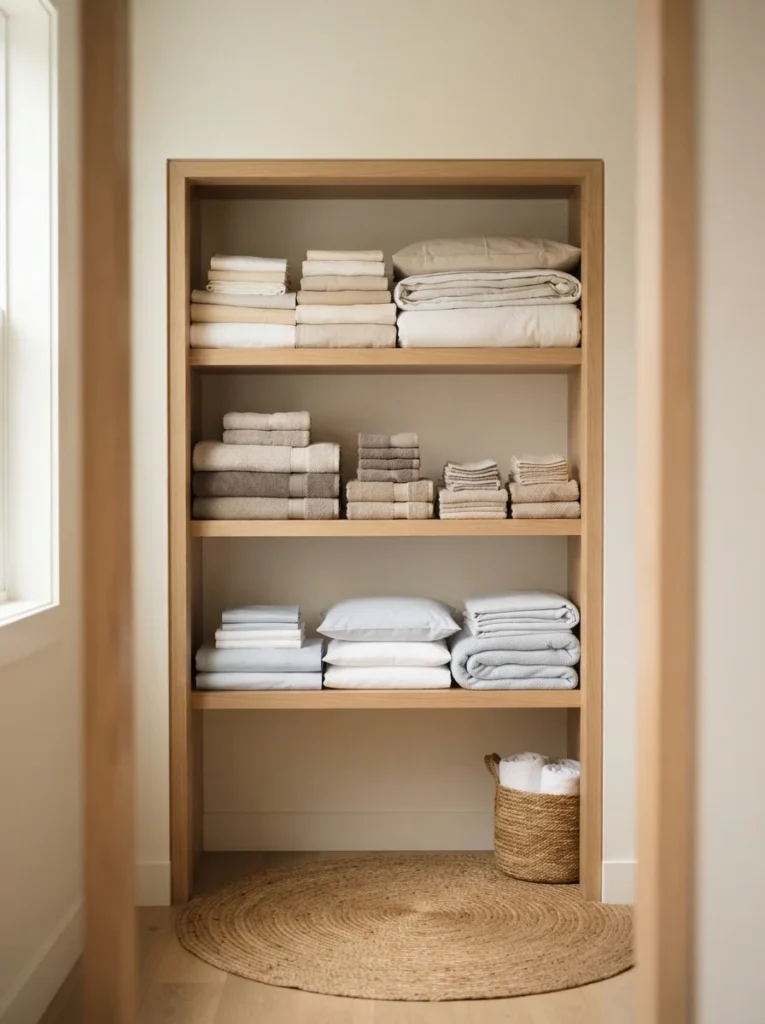
Grouping linens by room keeps morning routines simple. Store bedroom sheets on one shelf and bathroom towels on another. This method prevents mismatched sets from scattering across the closet. As a result, family members find what they need without digging. Consider keeping guest room linens on a separate shelf entirely. This layout also works well alongside the storage habits shown in these laundry room ideas, since both spaces benefit from clear zones.
2. Use Bins and Baskets for Grouping
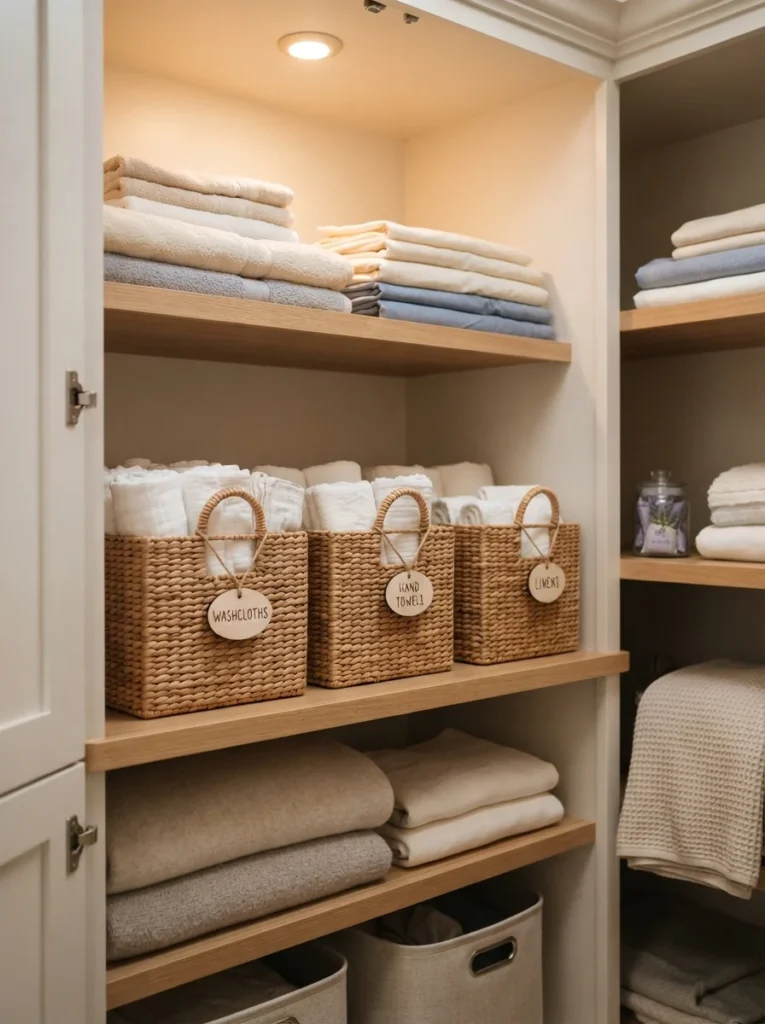
Bins and baskets corral loose items that tend to slide around. Woven rattan baskets suit a cottage or coastal theme nicely. Meanwhile, canvas bins offer a softer, more casual texture. Label each container so contents stay obvious at a glance. This approach keeps small items like washcloths from tumbling off shelves. It also mirrors the basket systems used in many mudroom ideas, where grouped storage keeps daily items tidy.
3. Roll Towels Instead of Folding
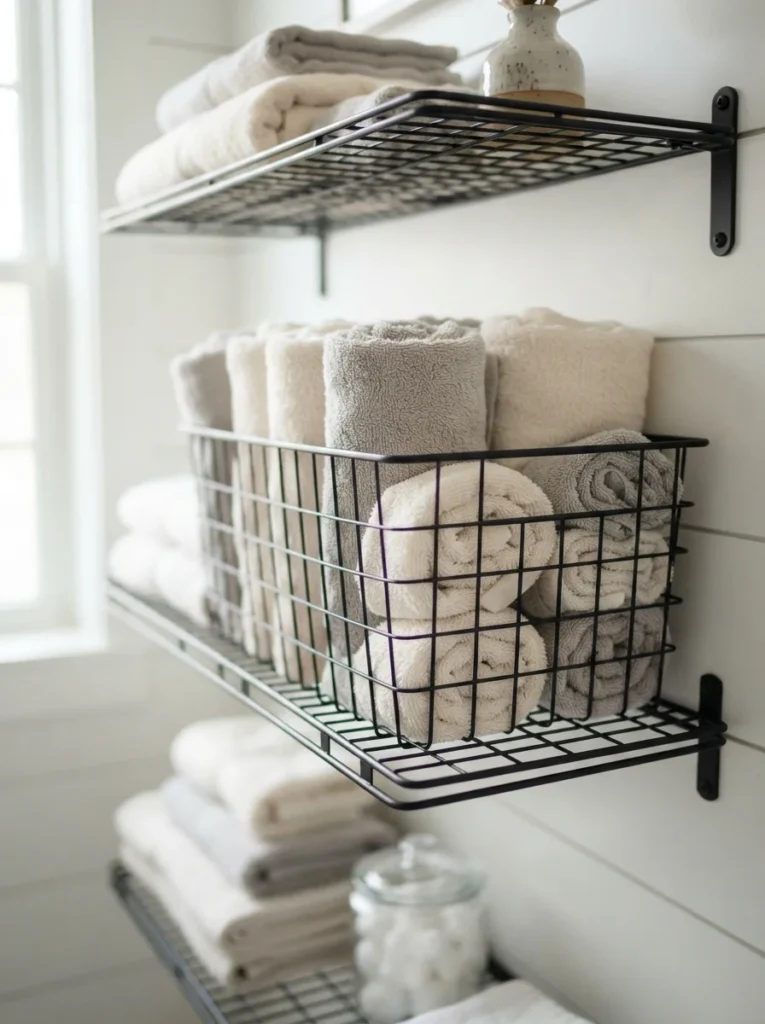
Rolling towels saves shelf space and creates a spa-like display. This method also reduces deep creases that folding often causes. Stack rolled towels by size, from bath sheets to washcloths. A wire basket or open shelf shows off this technique beautifully. Consequently, the closet feels more like a boutique hotel storage nook. Pair this idea with the towel storage tips from this small bathroom idea for a cohesive look between spaces.
4. Install Adjustable Wire Shelving
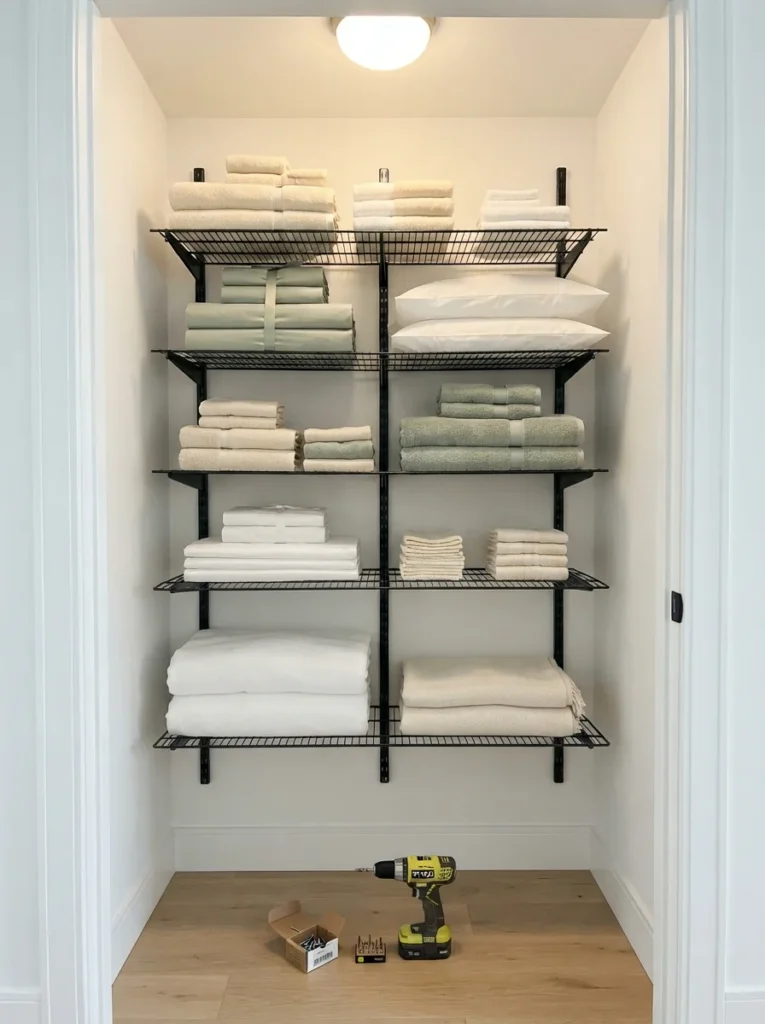
Wire shelving allows airflow around folded linens, which prevents musty odors. Adjustable brackets let homeowners customize shelf height for bulky comforters. This system also costs less than built-in cabinetry. Chrome or matte black finishes suit most closet styles. Additionally, wire shelves make it easy to see items stored toward the back.
5. Label Every Shelf Clearly
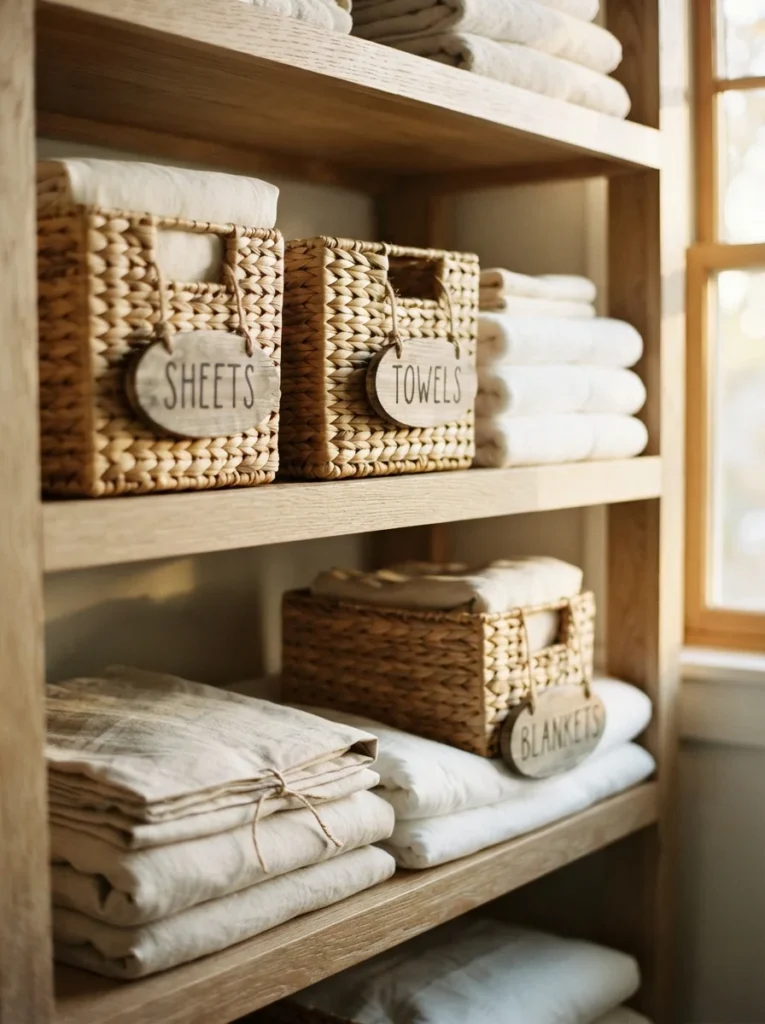
Clear labels remove guesswork for every household member. Wooden tags, chalkboard labels, or printed stickers all work well. Labeling by size, such as twin, queen, or king, speeds up bed-making. This small step keeps organization consistent over time. As a result, the system stays tidy long after the initial setup.
6. Add a Shelf Divider System
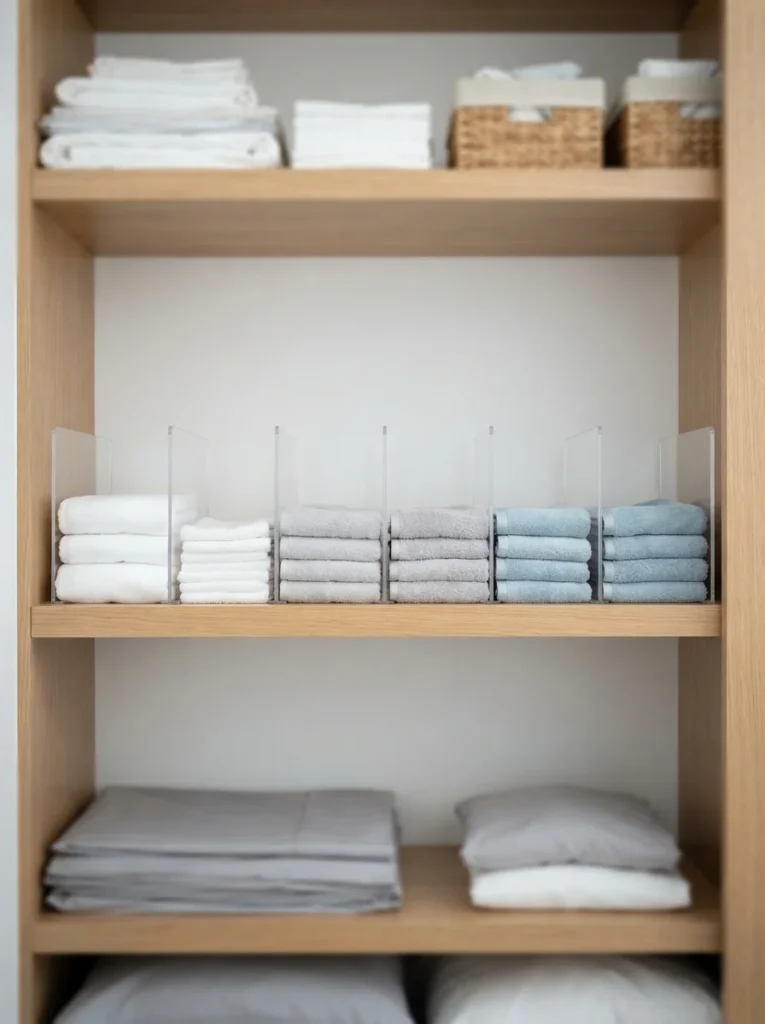
Shelf dividers stop tall stacks of towels from toppling over. Acrylic or wire dividers create defined sections on wide shelves. This setup works especially well for deep closets prone to clutter. Each divided section can hold a specific linen category. Consequently, stacks stay neat even after frequent daily use.
7. Use Vacuum-Sealed Bags for Bulky Items
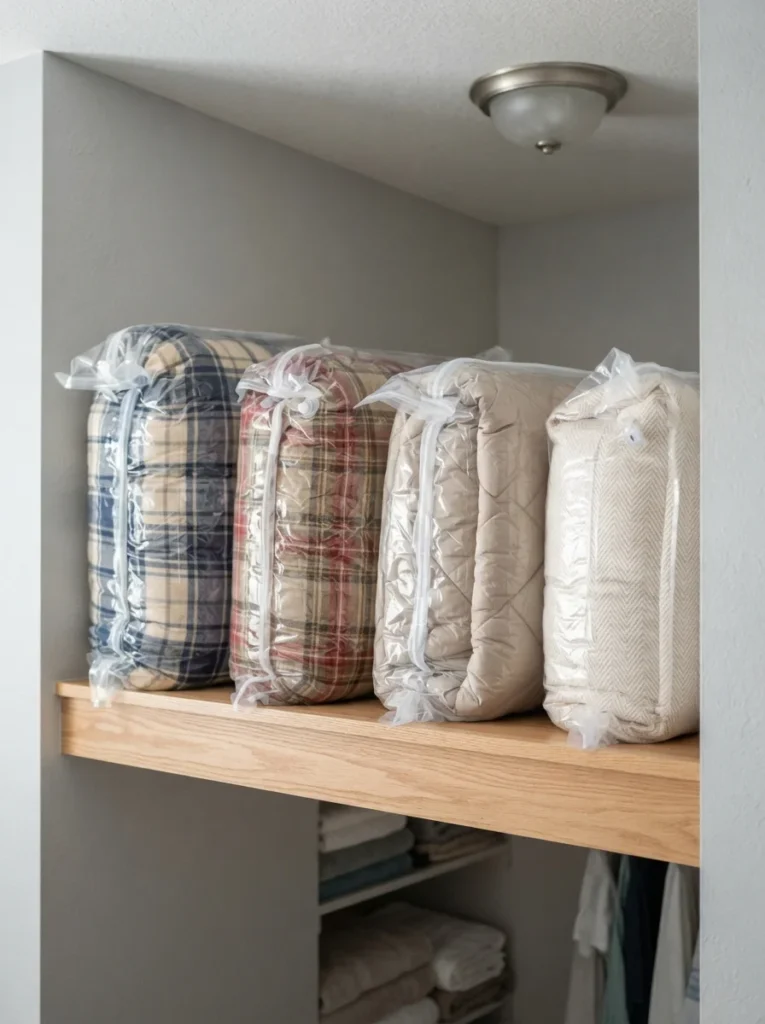
Vacuum-sealed bags compress winter comforters and extra blankets significantly. This method frees valuable shelf space for everyday linens. Clear bags also let homeowners identify contents without opening them. Store sealed bags on a top shelf reserved for seasonal items. As a result, bulky bedding no longer overwhelms the entire closet.
8. Store Extra Pillows in Fabric Bins
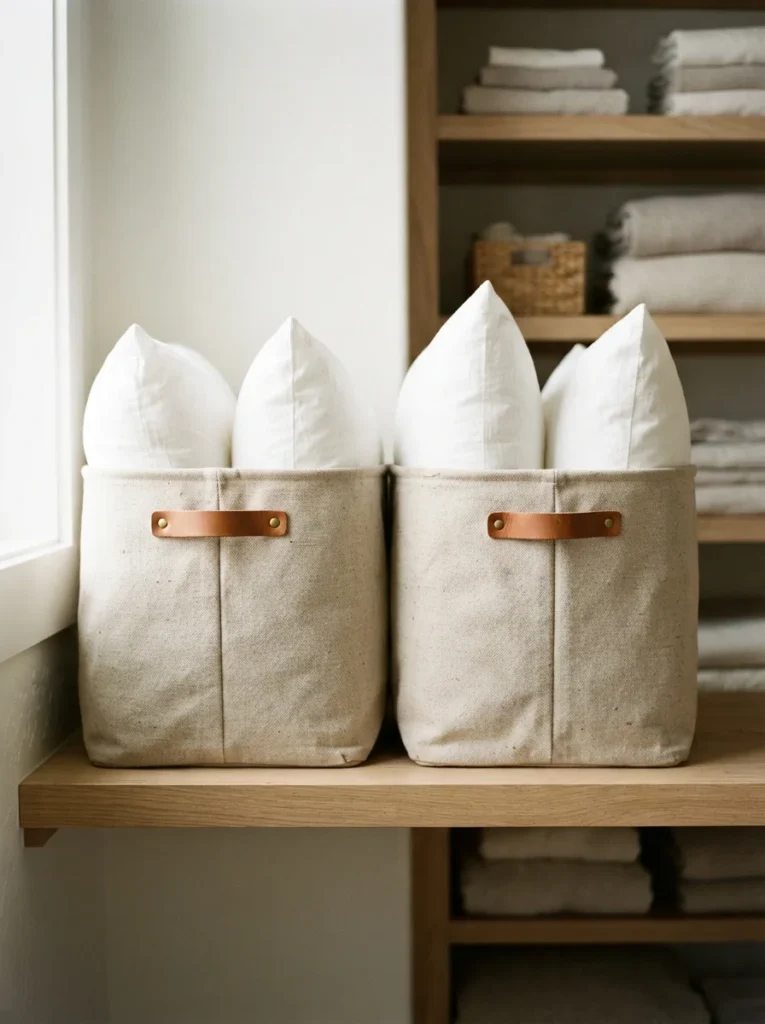
Fabric bins with handles make pulling extra pillows simple. Linen or canvas material adds a soft, textural element to open shelving. This storage method also protects pillows from dust between guest visits. Choose bins in a neutral tone to match the rest of the closet. Extra pillows stay compressed and contained rather than sprawling across shelves.
9. Create a Dedicated Spare Sheet Set Station
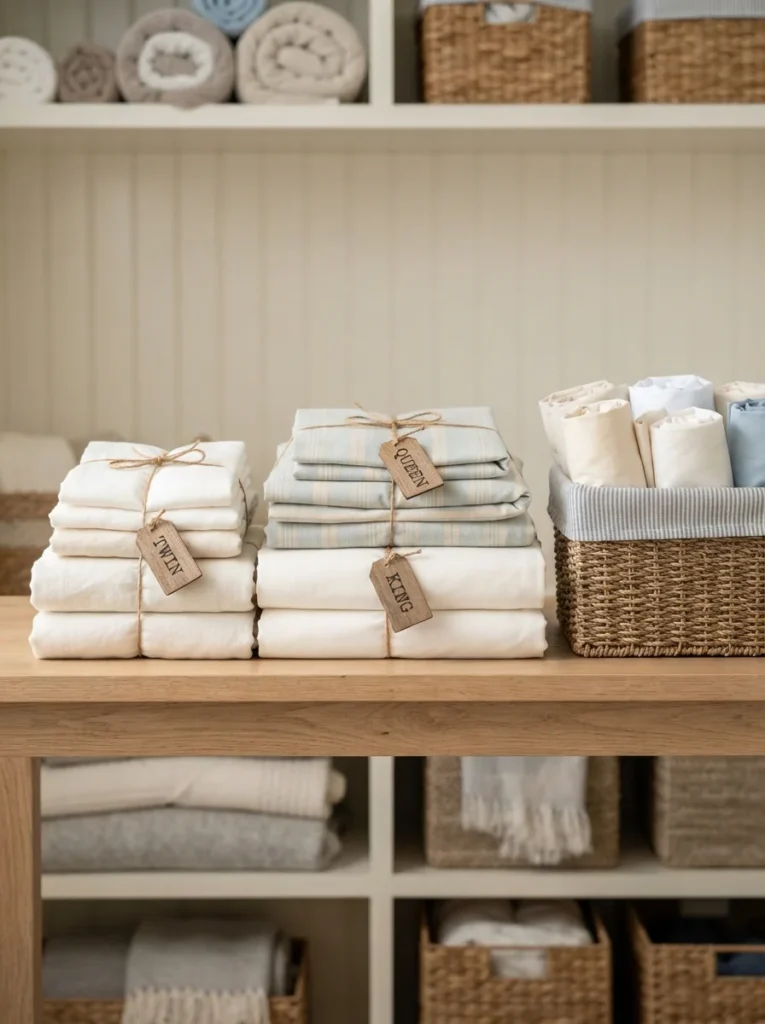
A spare sheet station keeps full sets together in one spot. This prevents the common problem of separated fitted and flat sheets. Stack sets by bed size for quick identification during changeovers. A labeled shelf or basket works well for this purpose. Consequently, laundry day becomes noticeably faster and less stressful.
10. Use Door-Mounted Organizers
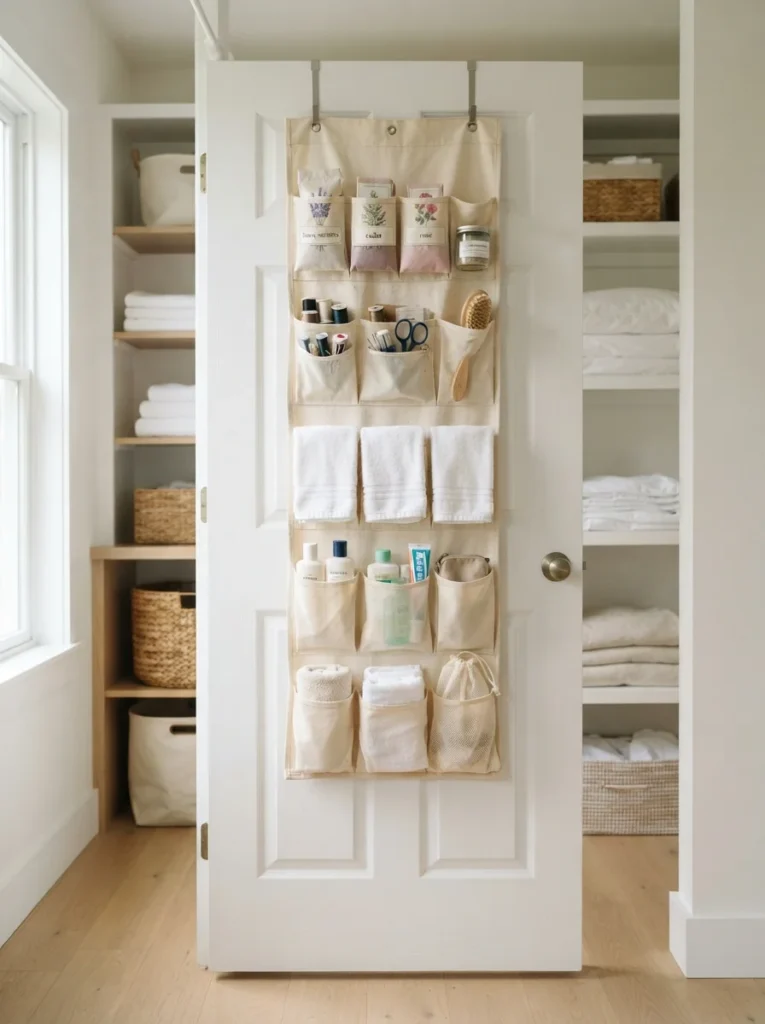
Door-mounted organizers add storage without using shelf space. These pockets suit smaller items like sachets, sewing kits, or extra washcloths. Canvas or mesh pockets keep the look casual and functional. This solution works particularly well in narrow linen closets. As a result, every inch of the closet gets put to use.
 You may also like13 Christmas Canvas Ideas for a Charming Home
11. Fold Sheets in Sets Inside Pillowcases
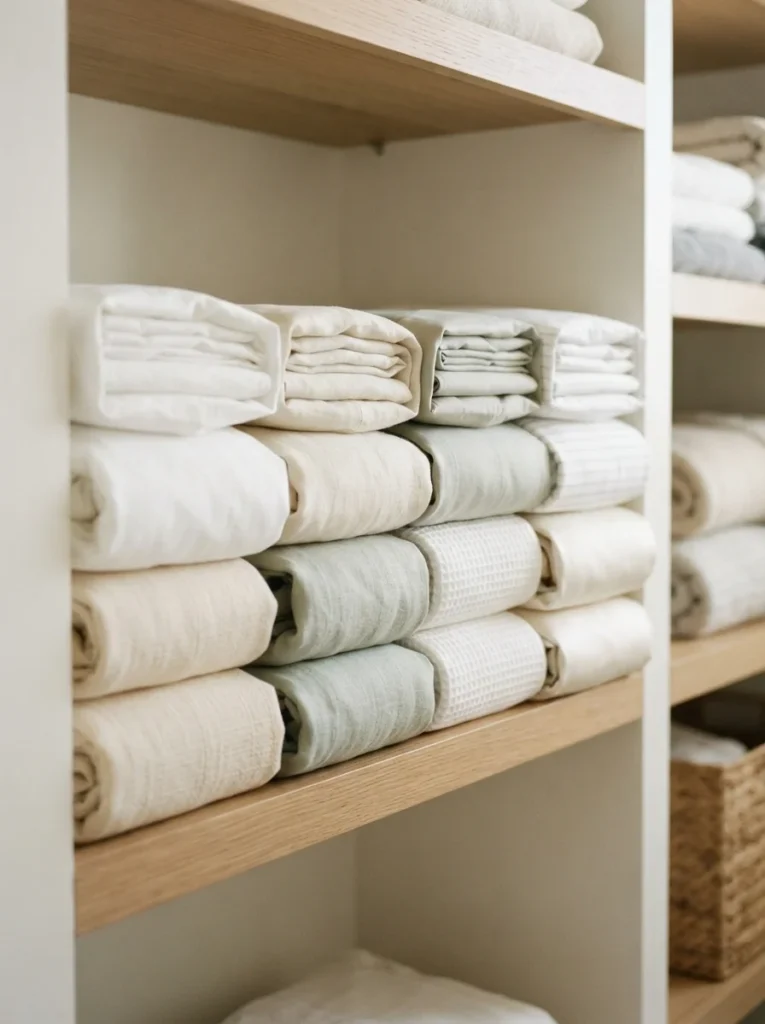
Tucking a folded sheet set inside its matching pillowcase creates instant order. This classic trick prevents sets from separating on the shelf. Each folded bundle also takes up less visible space. Stack bundles by size for a streamlined, boutique appearance. Guests and family members alike can grab a complete set in seconds.
12. Add a Small Step Stool for Top Shelves
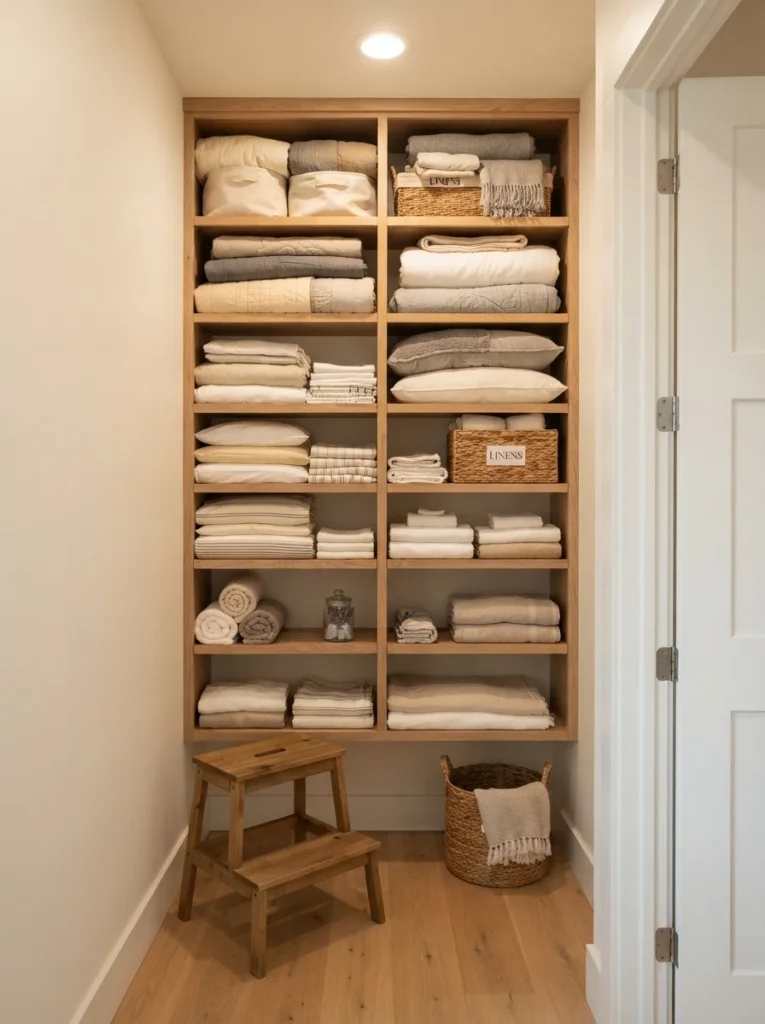
A compact step stool makes top shelves genuinely usable. Reserve upper shelves for rarely used items like seasonal bedding. A folding stool tucks neatly against the closet wall when not needed. This addition prevents wasted vertical space in taller closets. Consequently, homeowners can store more without renovating the entire closet.
13. Use Baskets for Off-Season Bedding
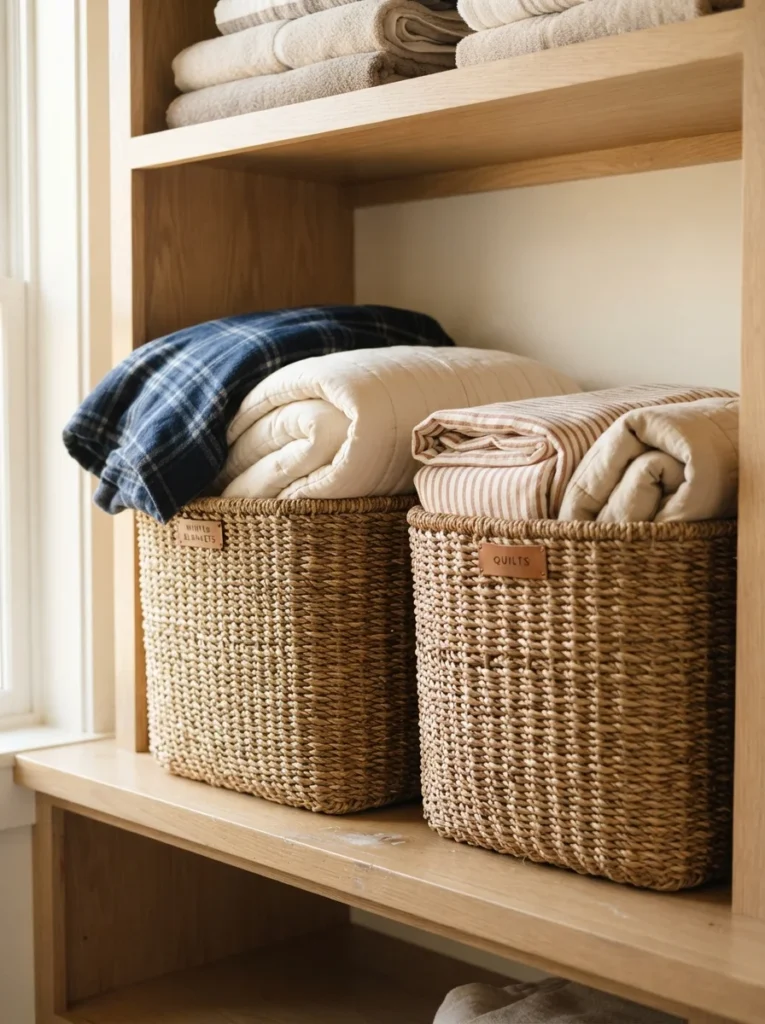
Off-season bedding, like flannel sheets or lightweight summer quilts, needs a dedicated spot. Large woven baskets hide bulky items while adding visual texture. Rotate baskets to the front as seasons change. This method keeps daily-use linens easily accessible year-round. As a result, the closet adapts naturally with the changing weather.
14. Incorporate Cedar Blocks for Freshness
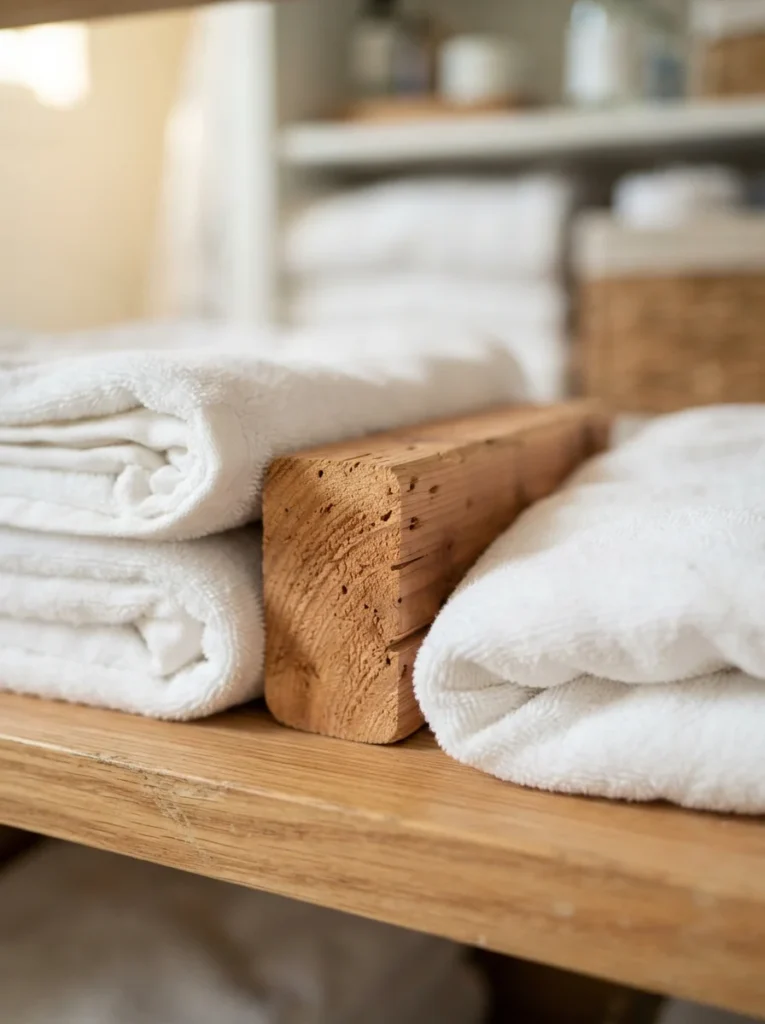
Cedar blocks keep linens smelling fresh and deter moths naturally. Tuck a few blocks between folded stacks or inside baskets. This simple addition also gives the closet a subtle, natural scent. Replace blocks every few months to maintain their effectiveness. Consequently, stored linens stay fresh even after months in storage.
15. Choose a Neutral Color Palette for Bins
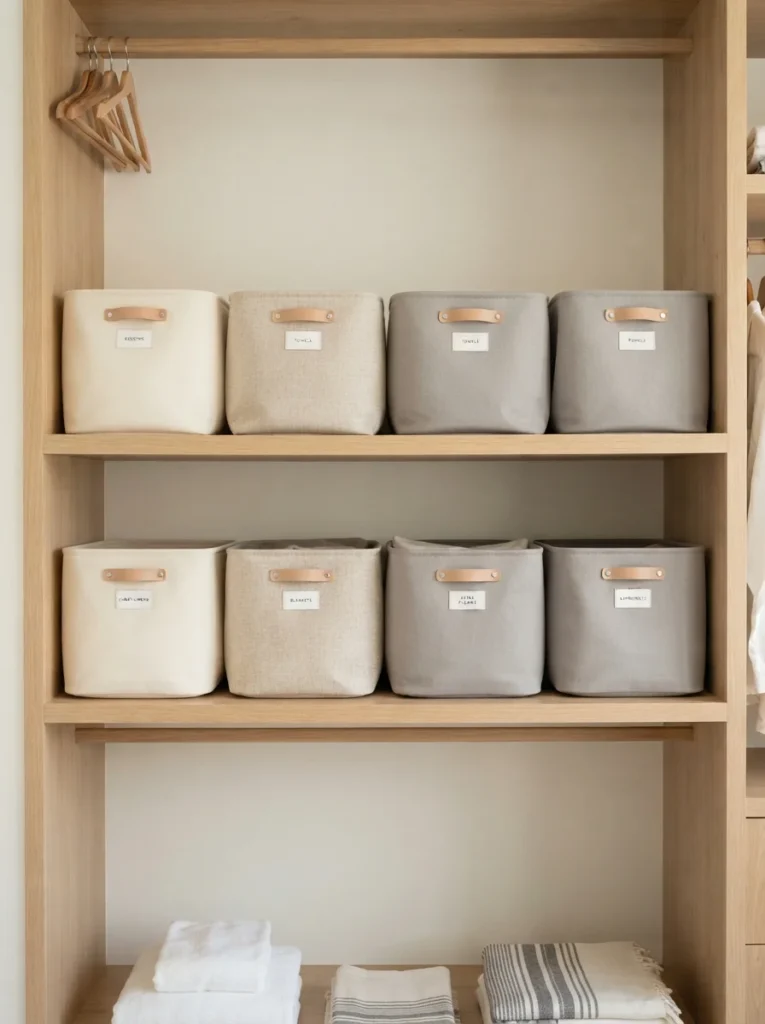
A neutral palette of cream, oatmeal, and soft gray keeps the closet visually calm. Matching bins and baskets create a cohesive, boutique-style appearance. This approach also makes the space feel larger than it actually is. Avoid mixing too many patterns or bold colors within one small area. As a result, the closet feels curated rather than cluttered.
16. Add Battery-Powered Closet Lighting
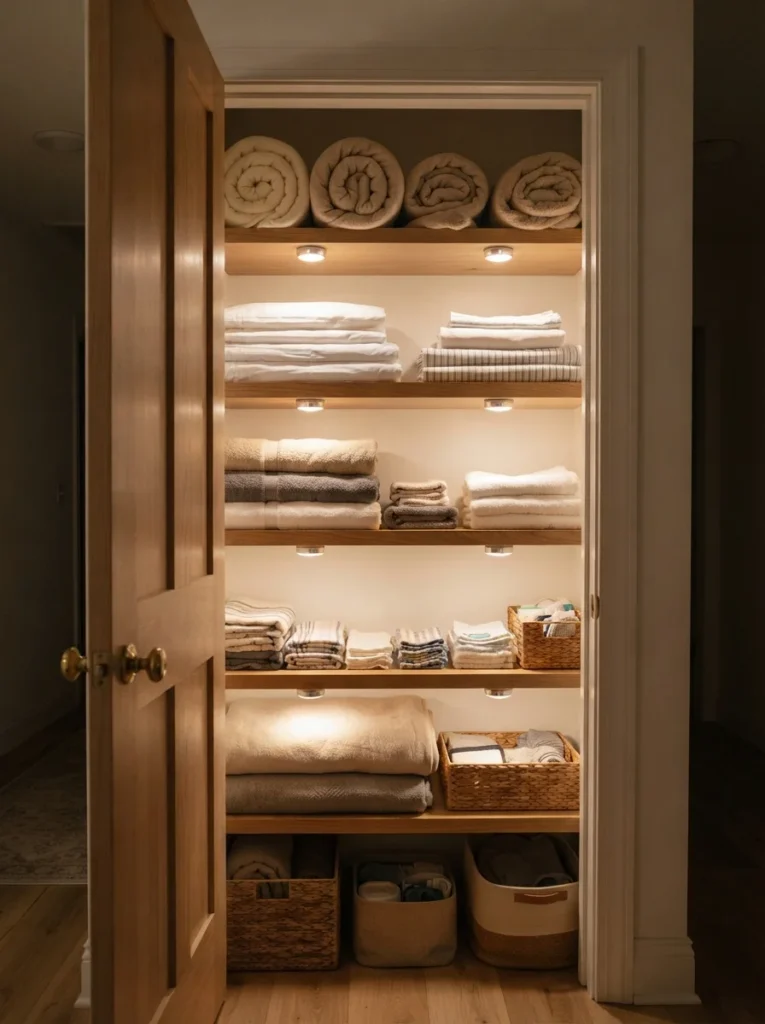
Battery-powered puck lights illuminate dark closet corners without any wiring. This upgrade makes it easier to find items on lower shelves. Motion-sensor versions turn on automatically when the door opens. Warm white bulbs suit most linen closet color schemes. Consequently, this small addition makes daily use noticeably more convenient.
17. Reserve a Lower Shelf for Kids’ Linens
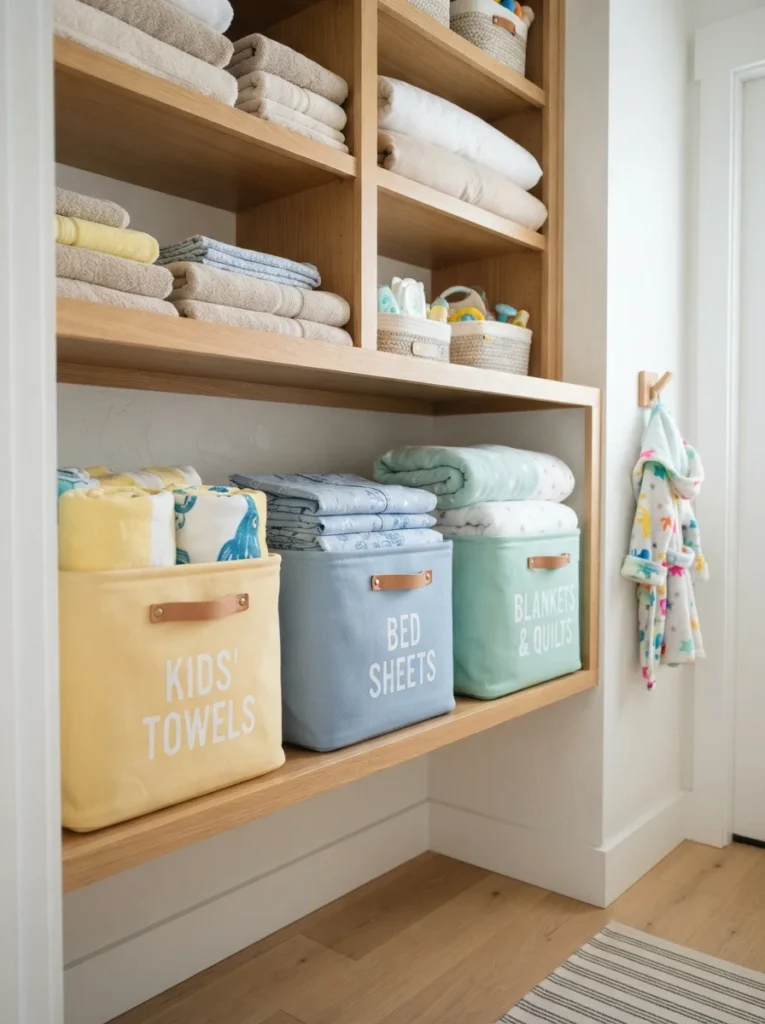
A lower shelf dedicated to kids’ sheets and towels teaches independence early. Children can grab their own linens without asking for help. Use colorful bins or labeled baskets to make this shelf inviting. This setup also keeps kids’ items separate from adult linens. As a result, bedtime and bath routines run more smoothly.
18. Use Woven Baskets for a Warm Texture
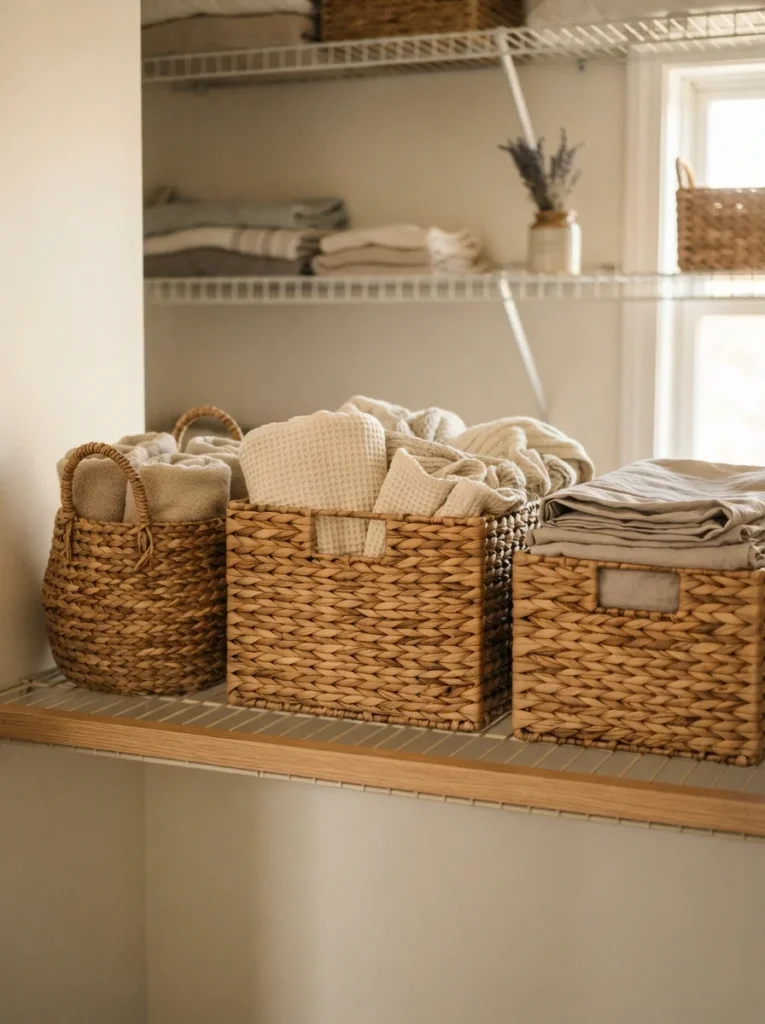
Woven seagrass or rattan baskets bring natural texture into a plain closet. This material choice suits coastal, boho, and farmhouse aesthetics equally well. Baskets also soften the look of metal wire shelving. Choose varying basket sizes for visual interest across shelves. This warm texture pairs nicely with the natural materials found in many small entryway ideas.
19. Install DIY Wire Shelving: How to Do It on Your Own
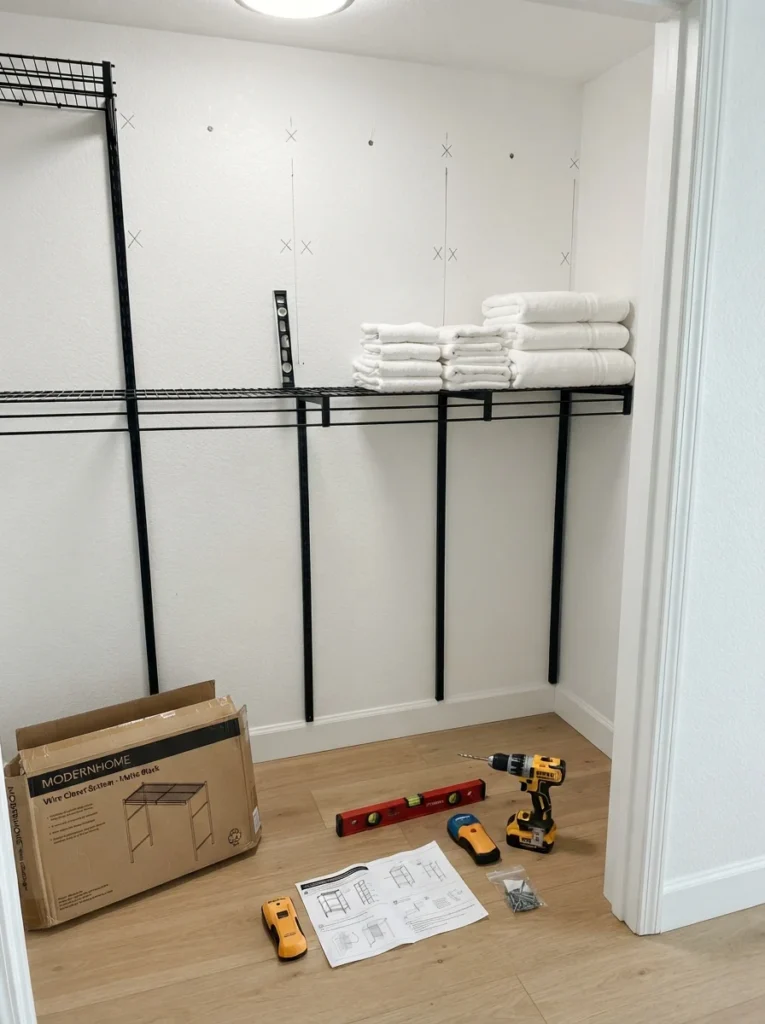
Many homeowners choose to do it on your own with a basic wire shelving kit. Most kits include brackets, tracks, and adjustable shelves for a single afternoon project. A drill, level, and stud finder cover the essential tools needed. This budget-friendly upgrade adds significant storage without a full renovation. Consequently, even a modest closet can gain professional-level organization.
20. Add a Chalkboard Label for Easy Updates
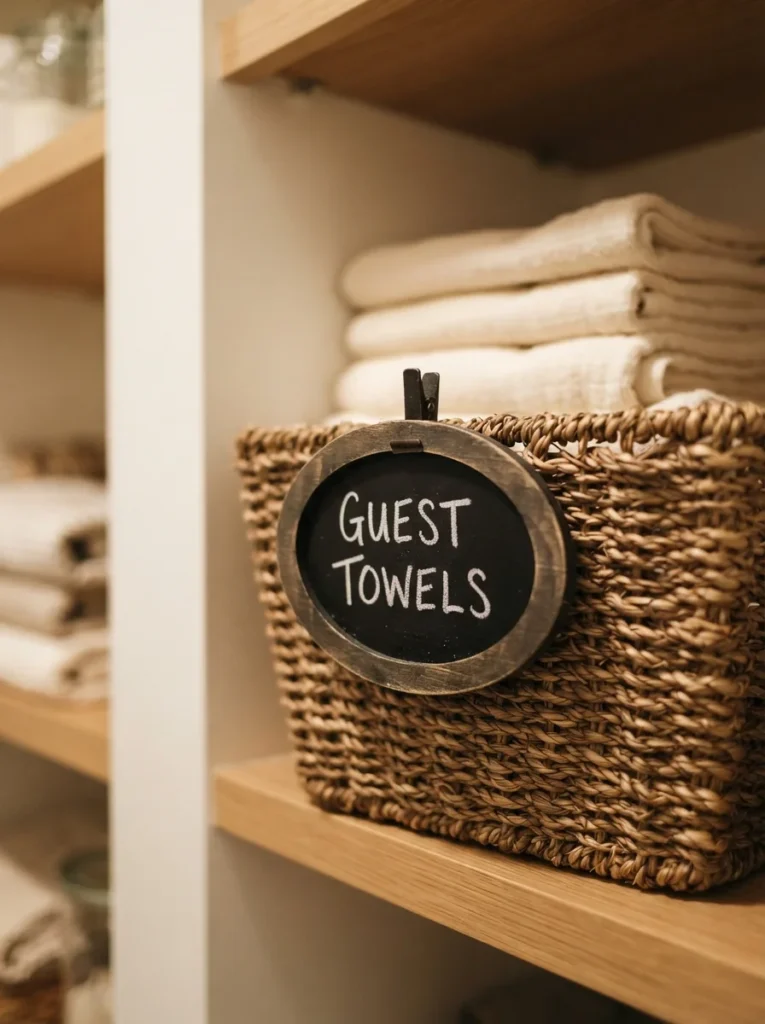
A small chalkboard label allows quick updates as storage needs change. Write shelf categories in chalk marker for a soft, handwritten look. This detail also adds charm to a farmhouse or cottage-style closet. Update labels whenever the family’s linen needs shift. As a result, the organization system stays flexible over time.
How to Choose the Right Storage Solutions for a Linen Closet
Choosing the right storage starts with an honest look at closet depth and shelf spacing. Deep closets suit large bins, while shallow closets work better with slim baskets. Materials should also match the room’s overall style, whether coastal, farmhouse, or modern. Additionally, consider airflow, since closed plastic bins can trap moisture around towels. A mix of open shelving and a few closed bins usually balances visibility with tidiness. This same balance appears in the shelving choices used in many small laundry room layouts, where space stays limited but function remains a priority.
Common Linen Closet Organization Mistakes to Avoid
Overstuffing shelves ranks among the most common linen closet organization mistakes. Packed shelves make it hard to see or reach specific items. Skipping labels also causes confusion, especially in shared households. Another mistake involves ignoring vertical space, which wastes valuable storage above eye level. Finally, mixing categories without dividers leads to messy, sliding stacks. Avoiding these habits keeps the closet functional for the long term.
FAQs About Linen Closet Organization
How often should linens get rotated or refreshed? Most households benefit from reviewing linens every six months. This schedule catches worn items before they clutter the shelves.
What is the best material for closet bins? Woven baskets suit warmer, textured styles, while acrylic bins suit modern, minimal closets. Both options work well for linen closet organization.
How can a small closet fit more linens? Rolling towels, using vacuum-sealed bags, and adding door organizers all maximize a small footprint. Vertical shelving also helps significantly.
Should towels and sheets share the same shelf? Separate shelves work best for towels and sheets. This separation keeps categories easy to locate during busy mornings.

Written by Stephanie Fallis
Mom and homemaker who shares budget friendly DIY projects, decorating tips and gardening ideas for busy families.
More about me → Christmas ideas10 Christmas Chair Decoration Ideas for a Charming Home
 Christmas ideas11 Christmas Coaster Ideas for a Charming Table
 Christmas ideas13 Christmas Bucket Ideas for a Charming Home