
An organic modern living room combines minimalist structure with earthy textures. This style favors clean furniture lines paired with raw, natural materials. Wood, stone, and woven fibers work together in balance. As a result, the space feels calm and welcoming. Homeowners choose this look for its relaxed sophistication. It suits both small apartments and larger family homes. The trend keeps growing because it never feels cold or sterile.
This design approach borrows from Scandinavian simplicity and Japandi warmth. However, it adds softer curves and richer textures than pure minimalism. Neutral colors like cream, sand, and taupe dominate the palette. Meanwhile, natural elements such as plants and rattan add life. Furniture shapes stay simple, but materials carry the personality. Lighting plays a quiet yet important role too.
The following ideas show how to bring this style into any living room. Each idea focuses on texture, material, or furniture choice. Some suggestions suit full renovations, while others fit rental-friendly budgets. Every idea keeps the space feeling calm, grounded, and cohesive.
In this post: 19 ideas
- Natural Wood Furniture Pieces
- Curved Sofas and Soft Silhouettes
- Neutral Color Palette with Earthy Tones
- Woven Textures and Natural Fibers
- Statement Rattan or Wicker Accents
- Stone and Plaster Accent Walls
- Layered Linen and Cotton Textiles
- Sculptural Lighting Fixtures
- Indoor Plants and Greenery
- Handcrafted Ceramic Decor
- Jute and Wool Area Rugs
- Open Shelving with Natural Materials
- Organic Shaped Coffee Tables
- Mixed Metal Accents in Warm Tones
- Textured Wall Art and Macrame
- Cozy Reading Nook with Boucle Chair
- Natural Light and Sheer Curtains
- Minimalist Decor Styling
- DIY Organic Modern Accents
1. Natural Wood Furniture Pieces
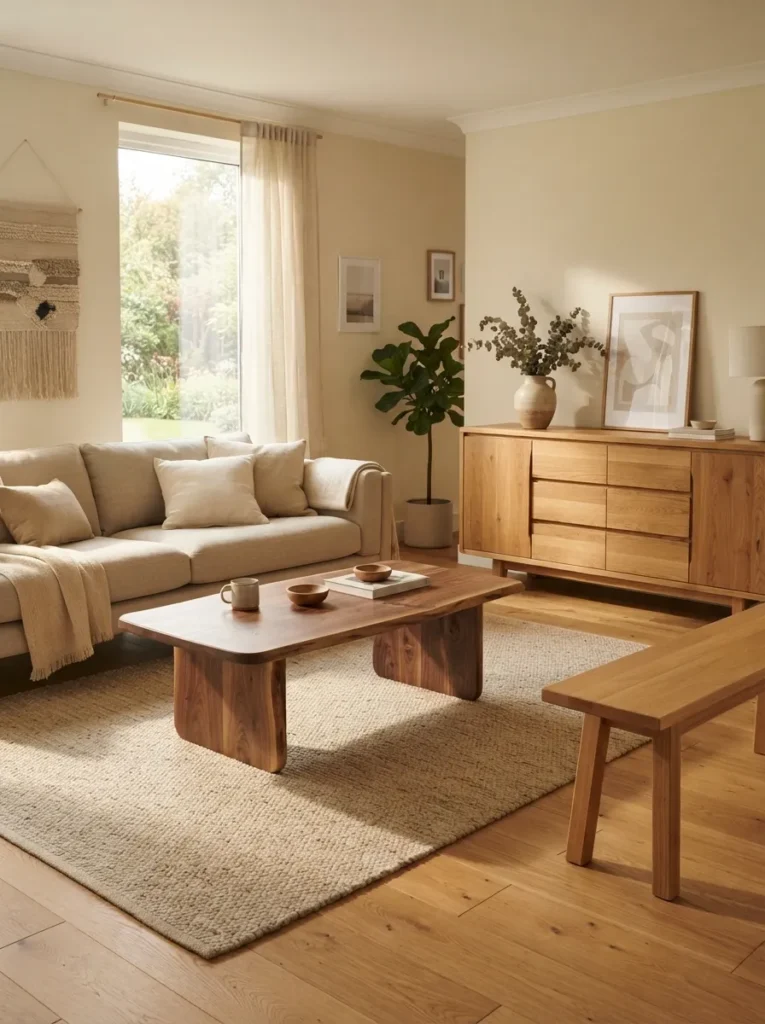
Solid wood furniture forms the backbone of any organic modern living room. Oak, walnut, and ash bring warmth without heaviness. Choose pieces with simple, rounded edges instead of ornate carvings. A live-edge coffee table adds character to a neutral setup. Additionally, wood tones should stay within the same warm family. This keeps the room looking intentional rather than mismatched. Pairing wood with lighter upholstery balances the overall visual weight nicely.
2. Curved Sofas and Soft Silhouettes
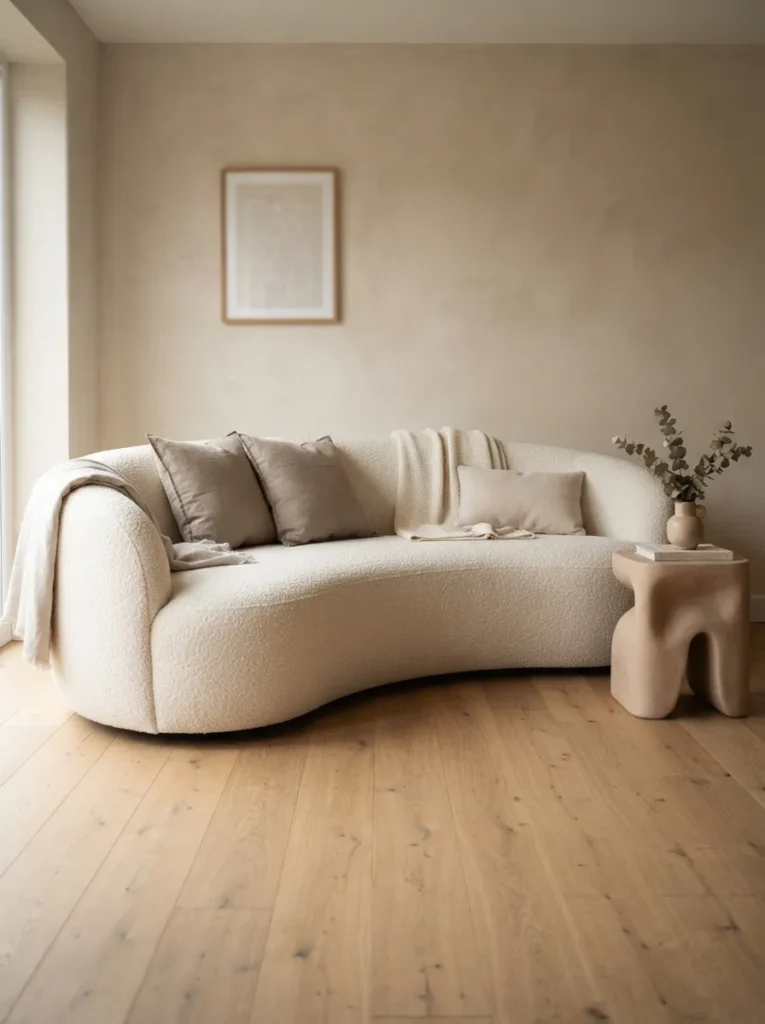
Curved furniture softens the strict lines typical of modern design. A rounded sofa creates flow and encourages easy conversation. Boucle or linen upholstery adds texture without competing patterns. As a result, the seating area feels inviting rather than rigid. Pair the sofa with a low, organic-shaped side table. This combination anchors the room while keeping sightlines open. Curves also help smaller rooms feel less boxy overall.
3. Neutral Color Palette with Earthy Tones
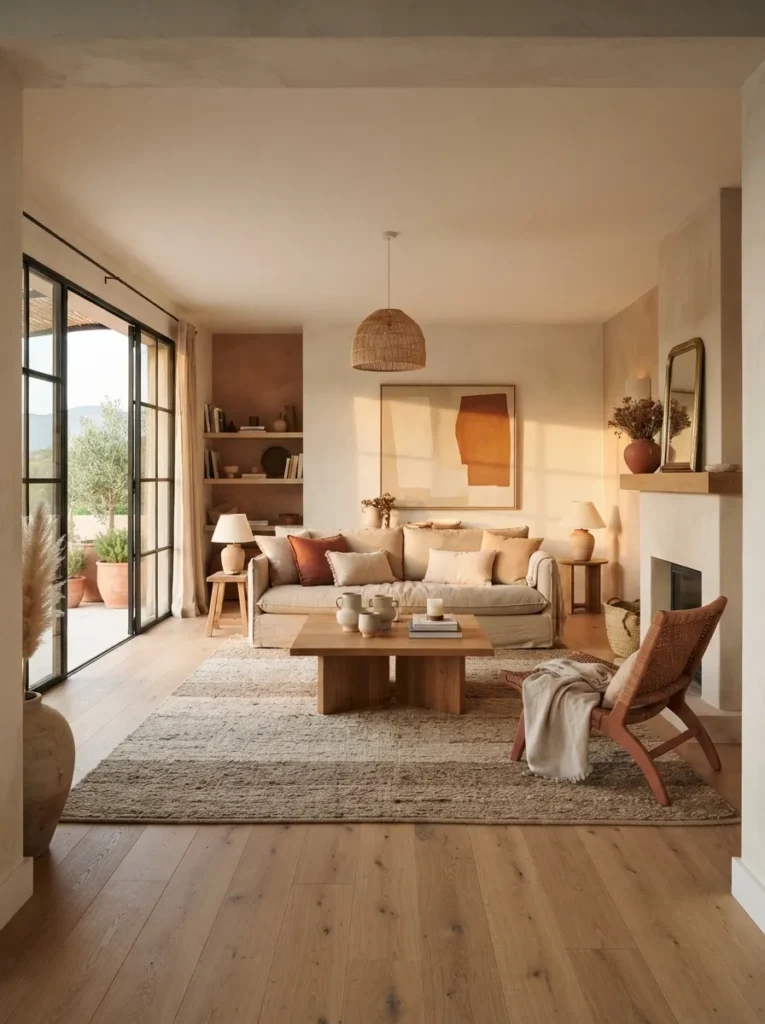
A neutral color palette defines the organic modern living room aesthetic. Warm whites, sand, taupe, and soft clay create a grounded base. These tones reflect natural light without feeling stark or clinical. Meanwhile, layering different shades within the same family adds depth. Avoid stark white or cool gray, since they clash with warmth. Instead, choose paint with subtle warm undertones for walls. This approach keeps the space feeling soft and lived-in.
4. Woven Textures and Natural Fibers
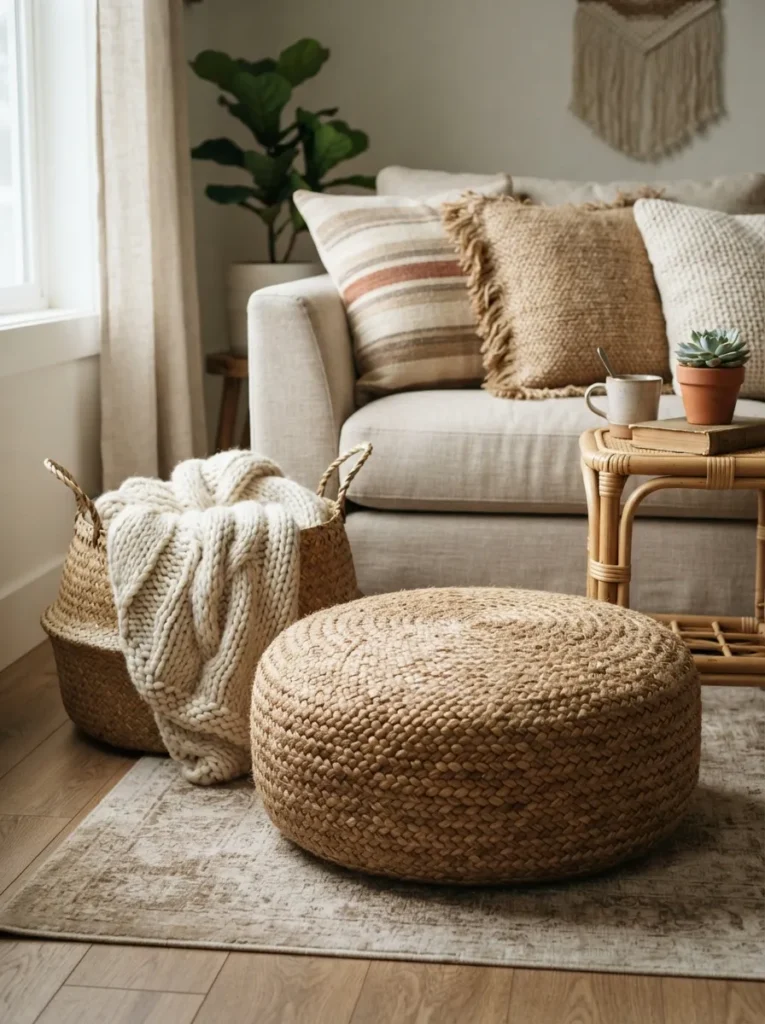
Woven textures bring tactile interest to otherwise simple furniture. Natural fiber baskets, throws, and cushions add layered depth. Jute, hemp, and raw cotton pair well with wood tones. Additionally, these materials age gracefully and never look overly polished. A woven pouf or ottoman works well as extra seating. This texture layering prevents the room from feeling flat or sterile. It also adds a handmade quality that feels personal.
5. Statement Rattan or Wicker Accents
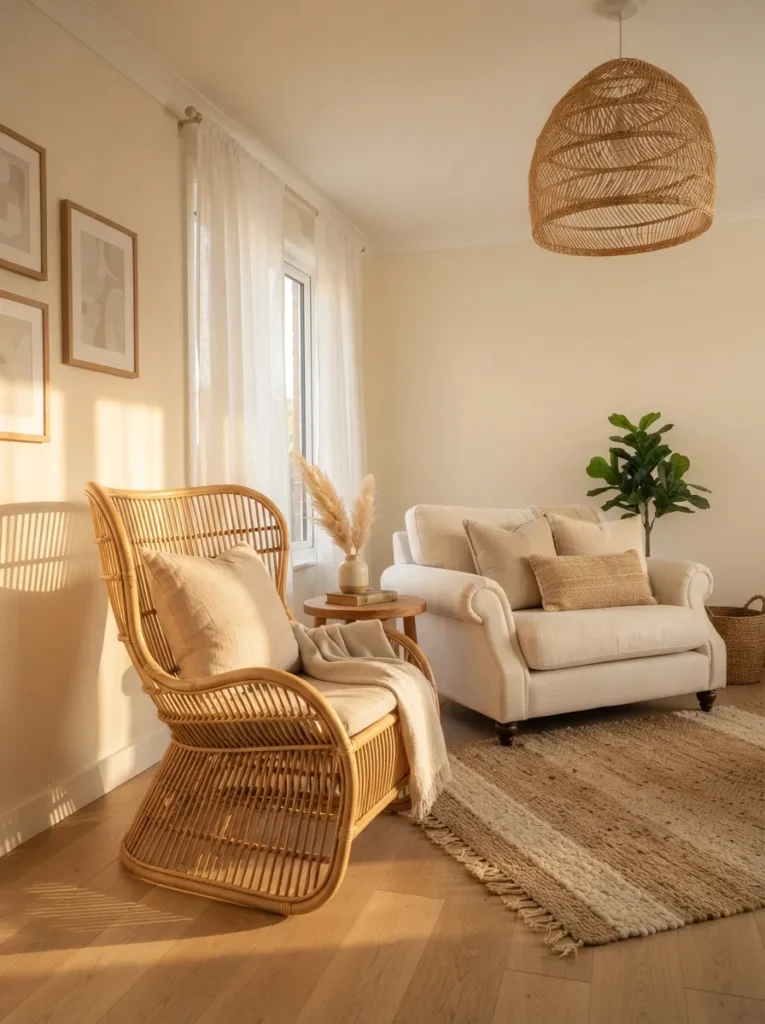
Rattan and wicker pieces bring a lightweight, organic feel to any room. A rattan accent chair pairs beautifully with a linen sofa. Meanwhile, wicker pendant lights add texture overhead without visual clutter. These materials work well in both traditional and contemporary layouts. However, keep other elements simple so rattan can stand out. A single statement piece often works better than several smaller ones. This restraint keeps the room feeling curated, not cluttered.
6. Stone and Plaster Accent Walls
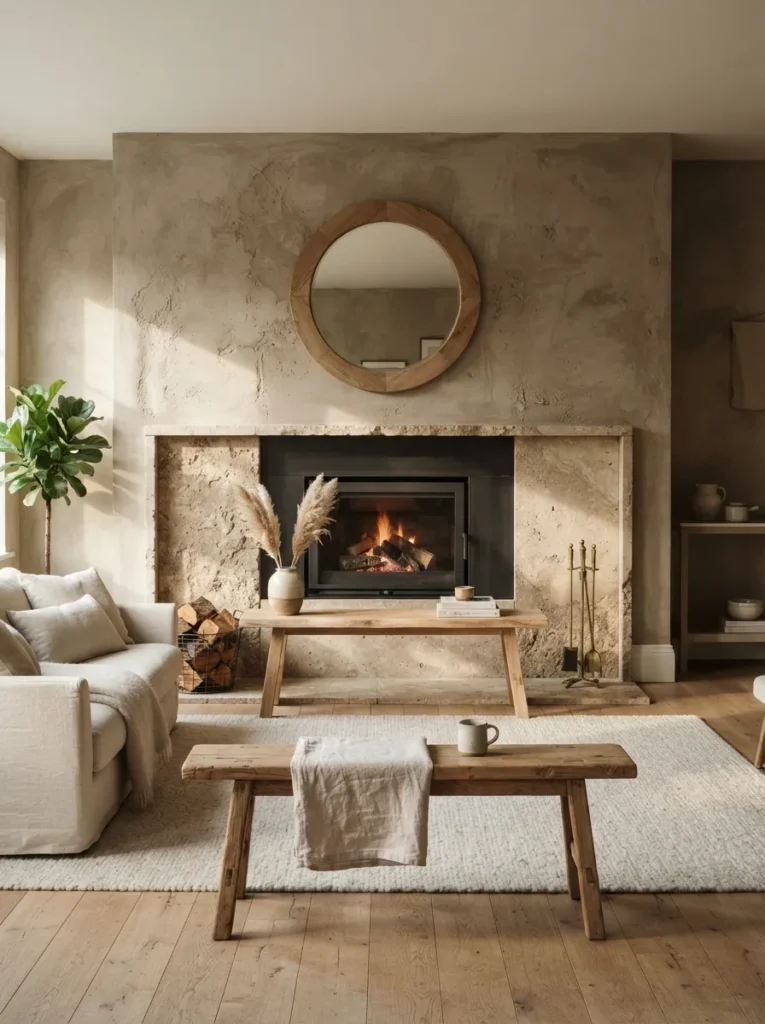
Textured walls add depth without relying on bold color. A limewash or plaster finish gives walls subtle movement and warmth. This technique pairs beautifully with a modern plaster fireplace as a focal point. Stone cladding also works well around fireplaces or media walls. Additionally, these finishes catch natural light differently throughout the day. This creates a living, changing quality in the space. Choose one accent wall to avoid overwhelming the room.
7. Layered Linen and Cotton Textiles
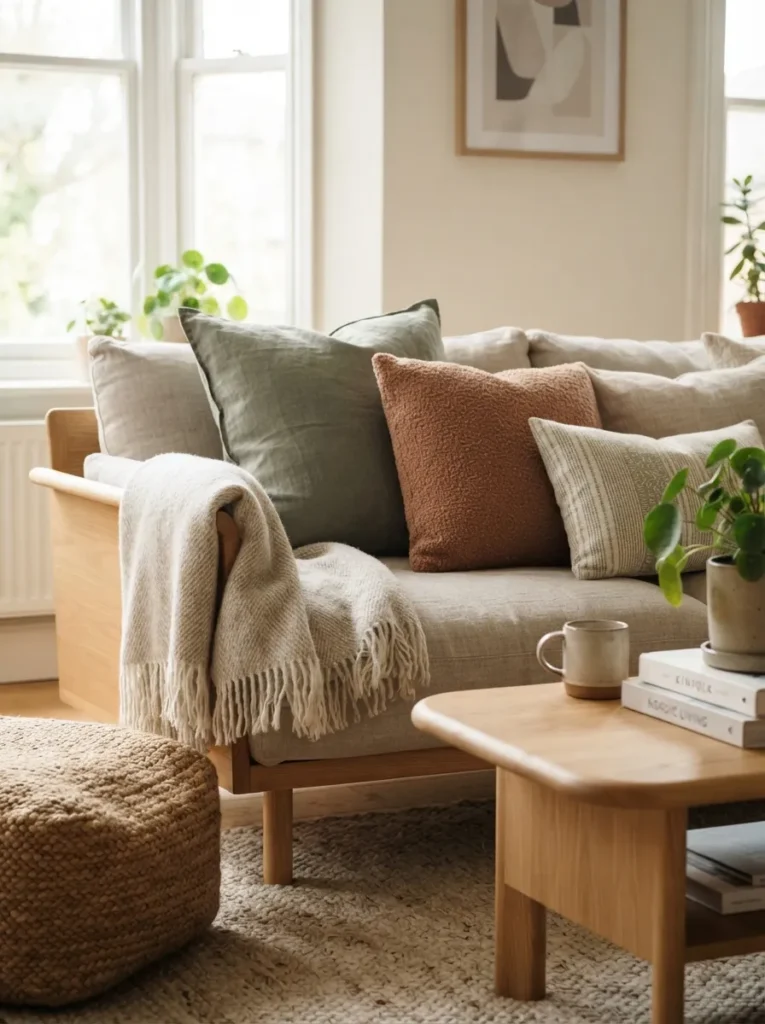
Soft textiles bring comfort to the clean lines of modern furniture. Linen curtains, cotton throws, and woven cushions layer texture easily. Choose fabrics in muted tones like oatmeal, sage, or terracotta. Meanwhile, mixing textures such as boucle and linen adds richness. This layering technique prevents the space from feeling sparse or cold. Additionally, natural fabrics breathe better and age more gracefully than synthetics. Rotate seasonal textiles to refresh the room without a full redesign.
8. Sculptural Lighting Fixtures
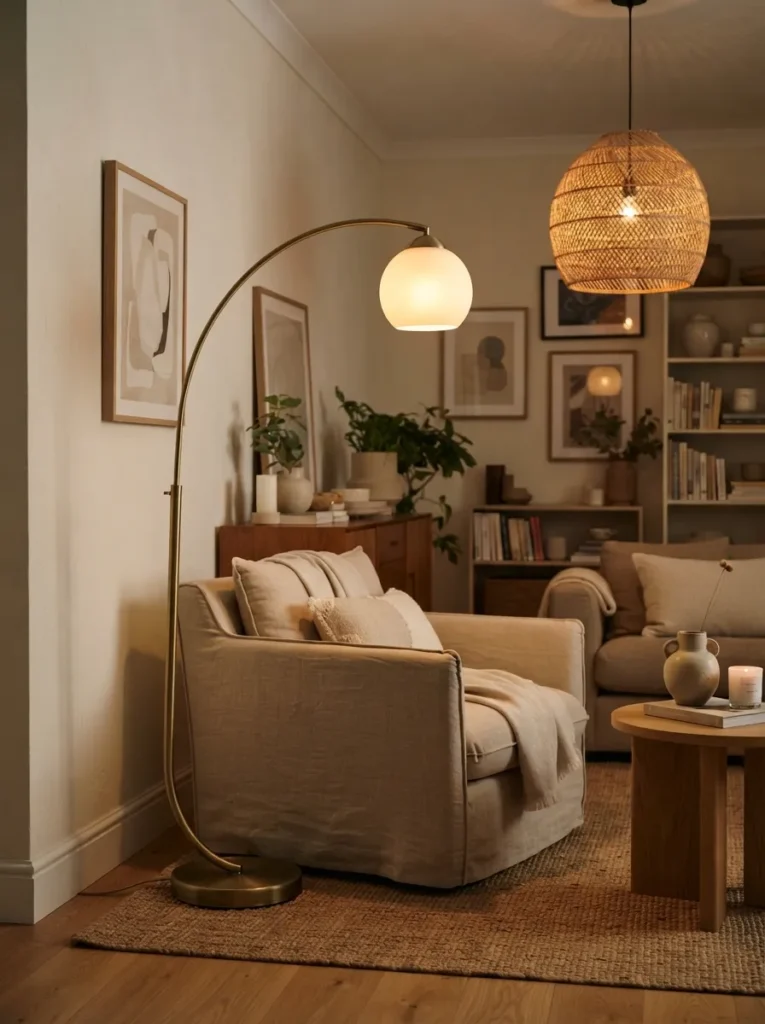
Lighting acts as functional art within an organic modern living room. Choose fixtures with organic shapes, such as curved arcs or orbs. Materials like rattan, paper, or unlacquered brass suit this style well. Additionally, warm bulb temperatures keep the mood soft and inviting. A sculptural floor lamp can replace the need for extra decor. This approach lets lighting double as both function and focal point. Dimmable fixtures also help adjust mood throughout the day.
9. Indoor Plants and Greenery
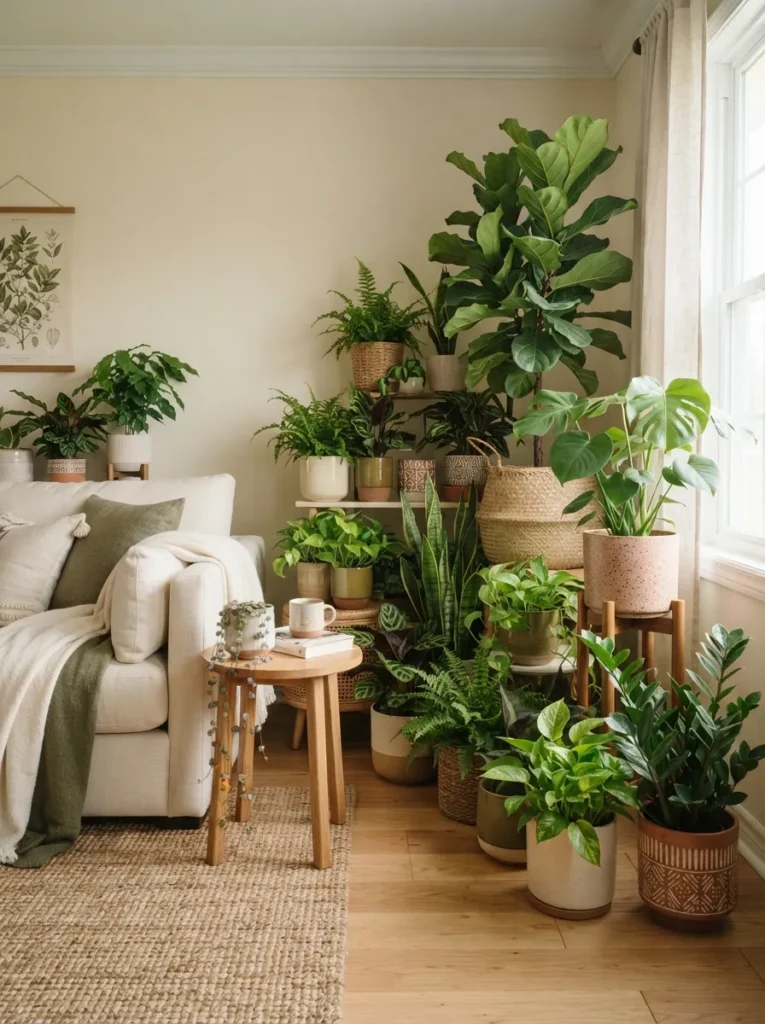
Plants bring life and softness to organic modern spaces naturally. Large leafy varieties like fiddle leaf figs add dramatic height. Meanwhile, trailing plants soften shelving and corners effectively. Choose ceramic or woven planters to match the room’s material palette. Additionally, grouping plants of varying heights creates a natural, layered look. This greenery also improves air quality and adds calming energy. Rotate plant placement seasonally to keep the space feeling fresh.
 You may also like10 Christmas Chair Decoration Ideas for a Charming Home
10. Handcrafted Ceramic Decor
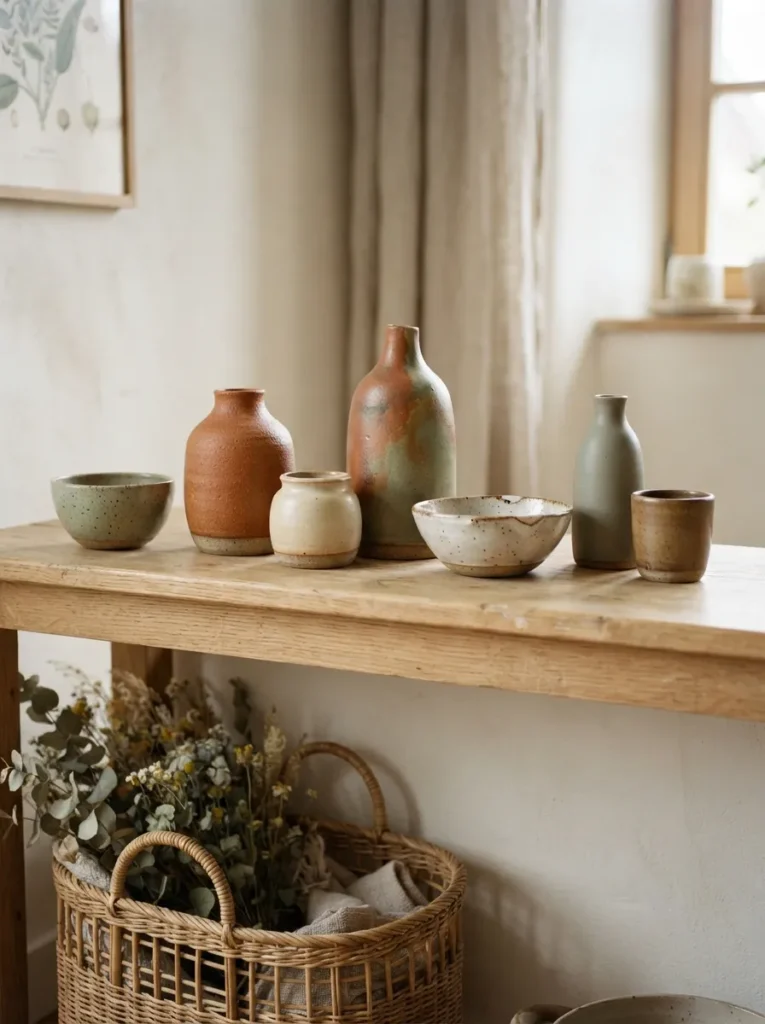
Handmade ceramics add authenticity and texture to styled shelves. Choose vases, bowls, and sculptures with imperfect, organic shapes. These pieces reflect the same values found in wabi-sabi interior decor ideas. Earthy glazes in cream, rust, or sage tones fit the palette well. Additionally, grouping ceramics in odd numbers creates a balanced display. This styling technique avoids looking too uniform or mass produced. A single statement vase can anchor an entire shelf arrangement.
11. Jute and Wool Area Rugs
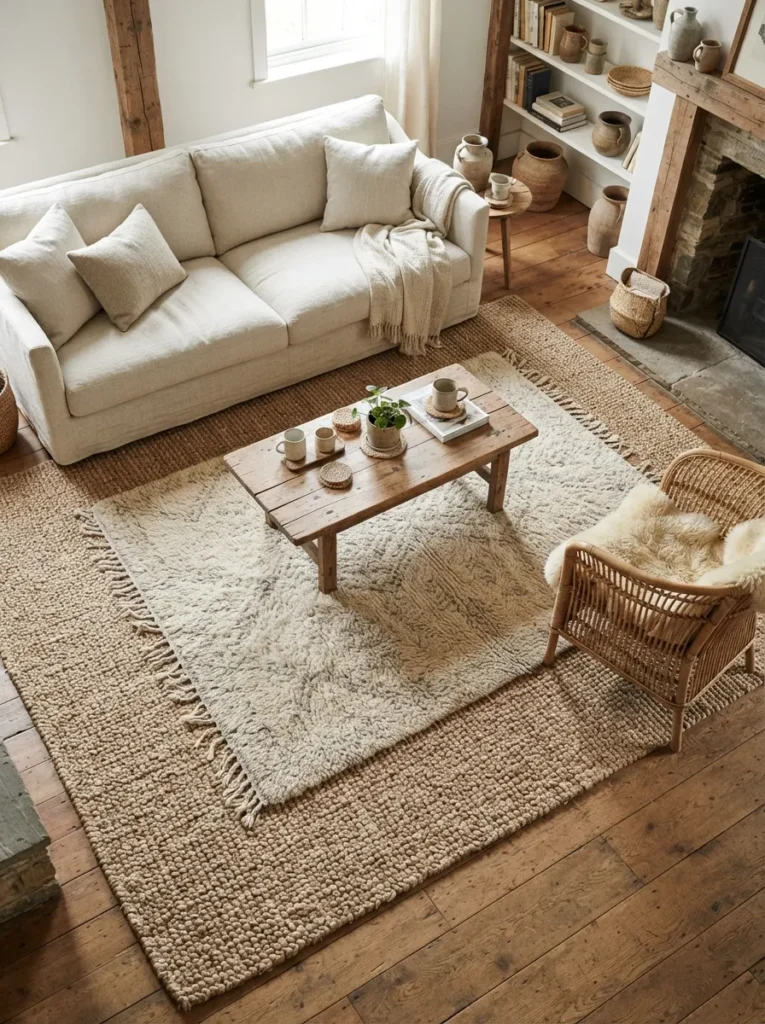
A natural fiber rug grounds the seating area with texture and warmth. Jute rugs add a rustic, earthy foundation underfoot. Meanwhile, wool rugs offer softness with a similar neutral tone range. Layering a smaller patterned rug over a larger jute base adds depth. Additionally, natural fibers hide wear better than synthetic alternatives. This makes them practical for high-traffic living rooms. Choose a size that extends slightly beyond the furniture footprint.
12. Open Shelving with Natural Materials
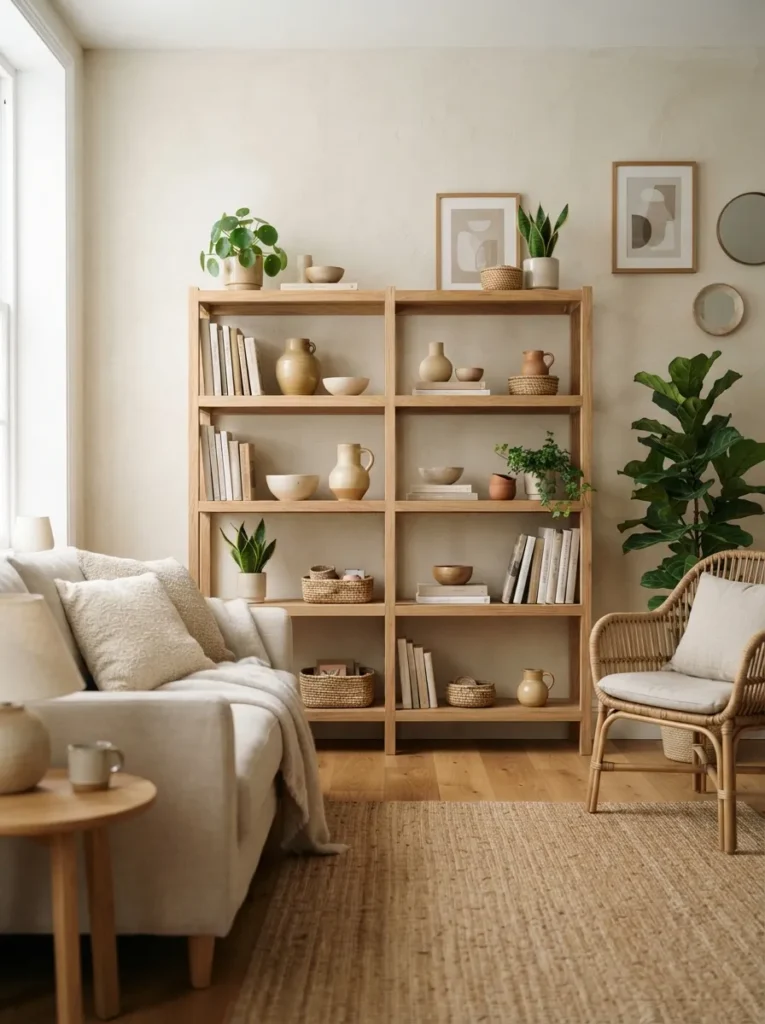
Open shelving keeps storage visible while showcasing curated decor. Wood or rattan shelving units suit the organic modern aesthetic well. Meanwhile, styling shelves with books, ceramics, and small plants adds interest. Avoid overcrowding shelves, since negative space matters in this style. Additionally, mixing textures across shelf items prevents a flat, repetitive look. This approach turns functional storage into a design feature. Rotate items seasonally to keep the display feeling current.
13. Organic Shaped Coffee Tables
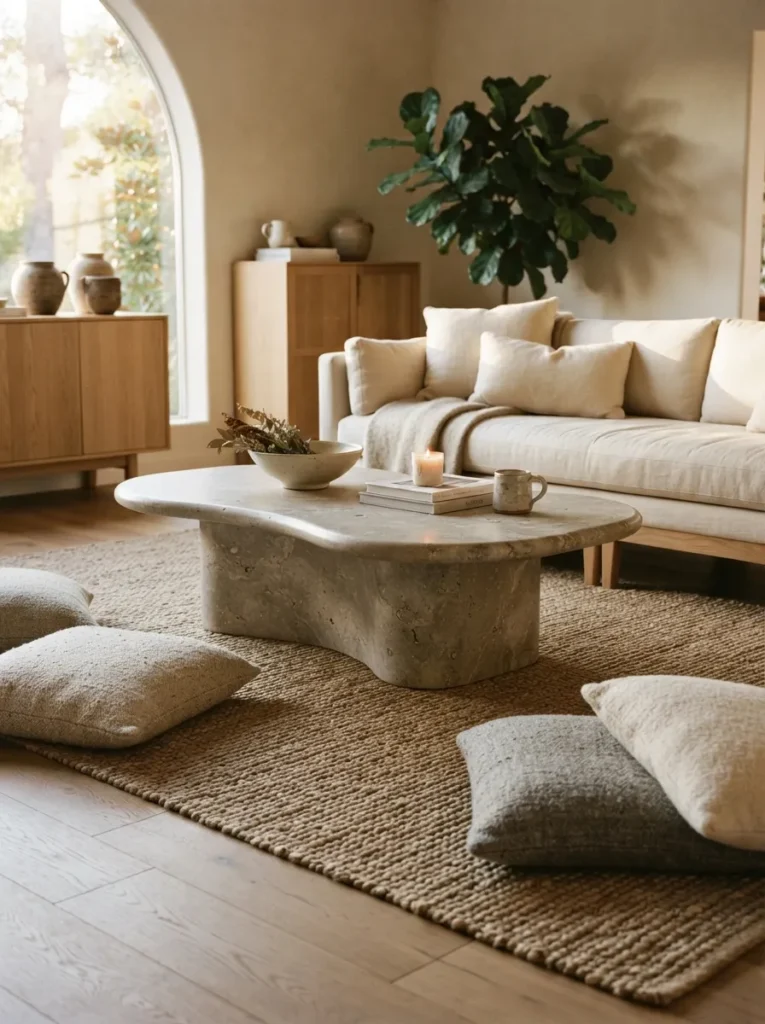
A coffee table with soft, irregular edges suits this style perfectly. Stone, wood slab, or plaster tables all work beautifully here. These pieces double as functional sculpture within the seating area. For more inspiration, browse these coffee table decor ideas for organic finishes. Additionally, pairing a low table with floor cushions adds casual comfort. This combination invites relaxed, grounded living room gatherings. Choose a table height that matches surrounding seating for comfort.
14. Mixed Metal Accents in Warm Tones
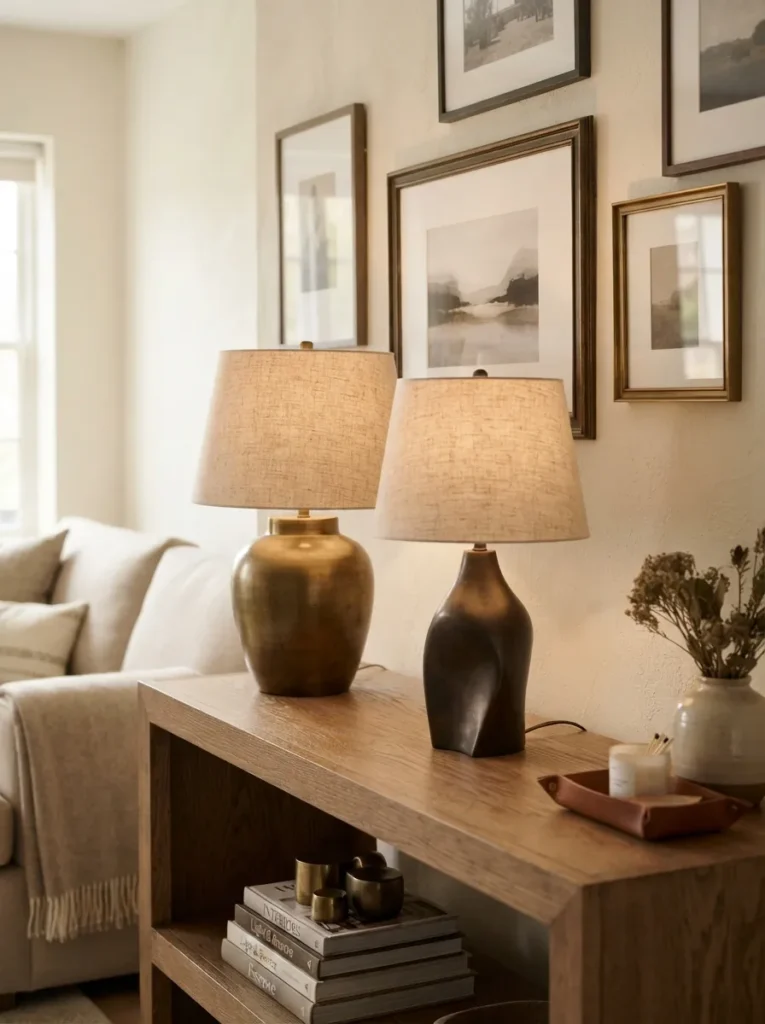
Warm metals like unlacquered brass and bronze add subtle shine. These finishes complement natural wood and stone without feeling cold. Meanwhile, avoiding overly polished chrome keeps the palette cohesive. Small accents, such as lamp bases or picture frames, work well. Additionally, mixing two warm metal tones adds visual interest. This technique prevents the room from feeling too monochromatic. Keep metal accents minimal so natural materials remain the focus.
15. Textured Wall Art and Macrame
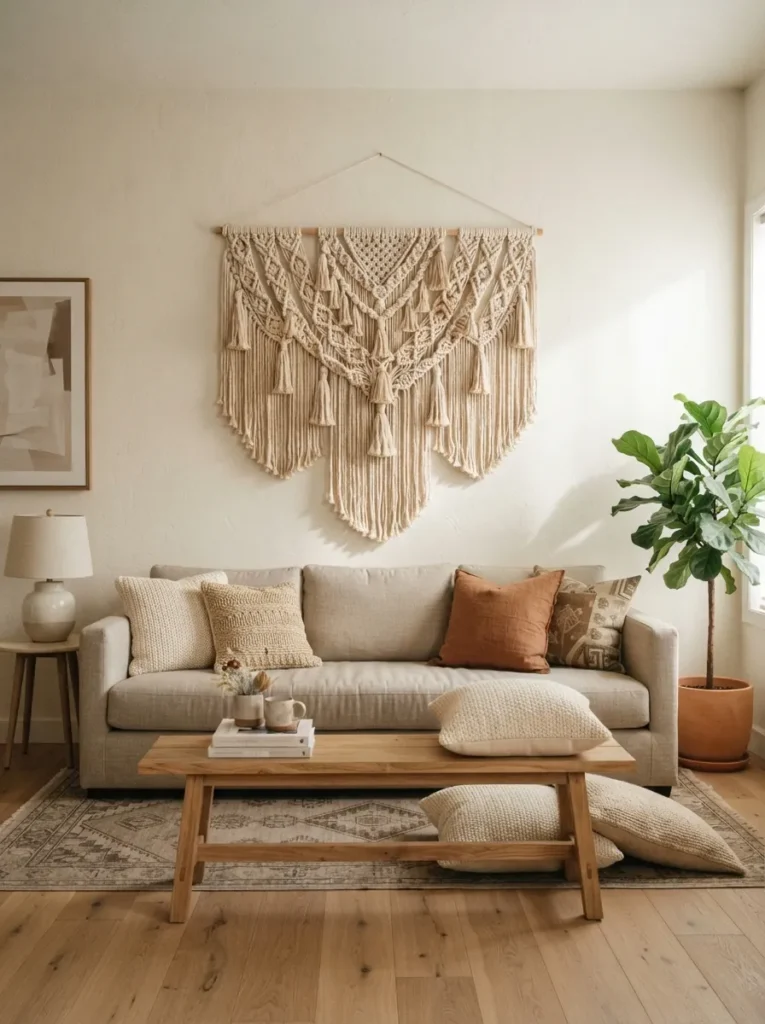
Textured wall pieces add dimension without relying on bold color. Macrame hangings, woven tapestries, and textured canvases all fit well. These pieces echo the natural fiber theme found throughout the room. Additionally, neutral tones keep the art from overpowering the space. A gallery of small textured pieces works as well as one large piece. This layering approach adds warmth to otherwise empty wall space. Choose frames in natural wood to maintain material consistency.
16. Cozy Reading Nook with Boucle Chair
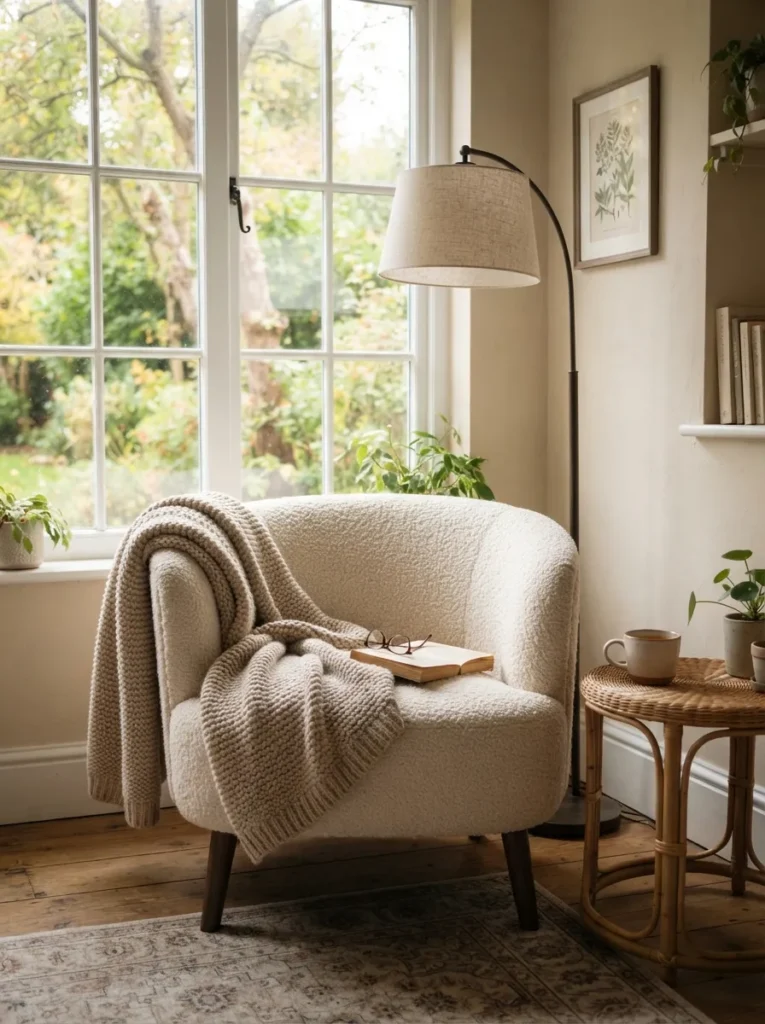
A dedicated reading corner adds function and comfort to the layout. A boucle accent chair pairs beautifully with a woven side table. This setup borrows heavily from cozy living room styling principles. Meanwhile, a small floor lamp provides warm, focused lighting nearby. Additionally, a chunky knit throw adds softness to the seating area. This nook works well near a window for natural daylight. Keep the corner simple to maintain a restful atmosphere.
17. Natural Light and Sheer Curtains
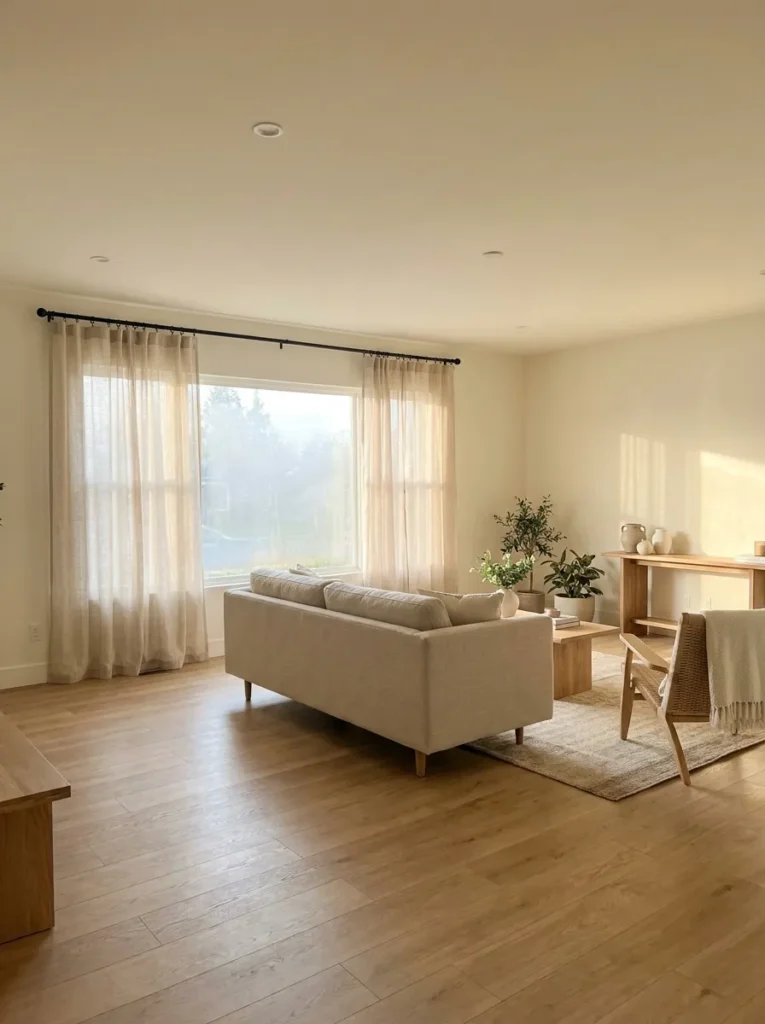
Maximizing natural light keeps the organic modern living room feeling airy. Sheer linen curtains filter sunlight while maintaining privacy. Meanwhile, avoiding heavy drapery keeps the room from feeling closed in. Choose curtain rods in matte black or natural wood finishes. Additionally, positioning furniture away from windows lets light travel further. This approach highlights textures like woven rugs and wood grain. Morning light especially enhances the warmth of neutral tones.
18. Minimalist Decor Styling
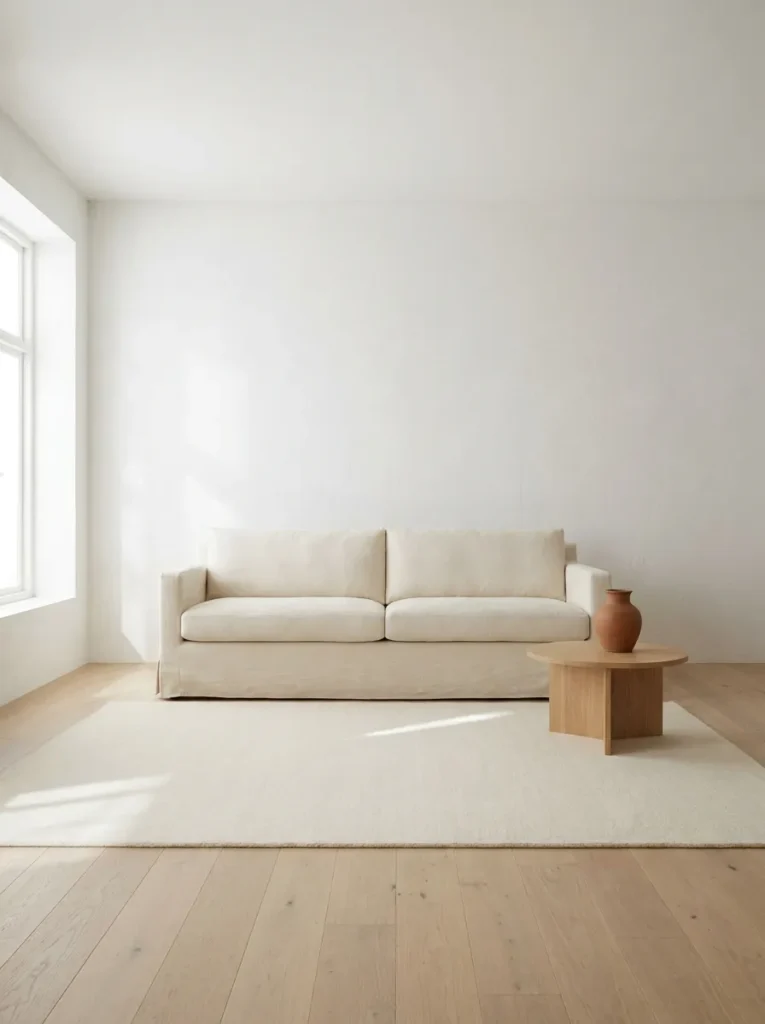
Restraint plays a key role in organic modern interiors overall. Choosing fewer, higher-quality pieces creates a calmer visual rhythm. These principles overlap closely with popular minimalist living room decor ideas. Meanwhile, negative space allows textures and materials to stand out individually. Additionally, avoiding trend-driven accessories keeps the room feeling timeless. This approach also simplifies cleaning and everyday furniture arrangement. Focus on quality materials rather than quantity of decor items.
19. DIY Organic Modern Accents
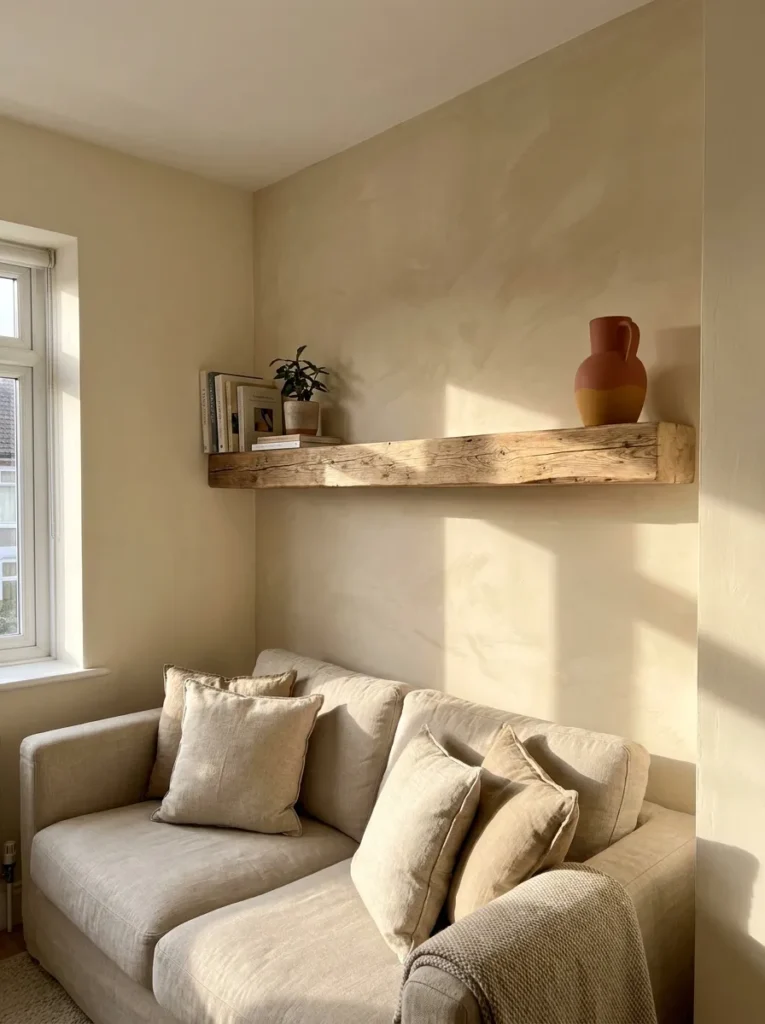
Many organic modern touches work well for anyone who wants to do it on your own. Simple projects include limewashing walls or building a floating wood shelf. Additionally, thrifted ceramics can be repainted in earthy, matte tones. Sewing simple linen cushion covers also adds a handmade element. These small projects add personality without requiring a full renovation budget. Meanwhile, mixing a few DIY pieces with quality furniture keeps balance intact. This approach makes the style accessible at nearly any budget.
How to Choose the Right Organic Modern Color Palette
Start with a warm neutral base, such as cream or sand. Layer in one or two earthy accent tones like clay or sage. Meanwhile, keep contrast soft rather than stark or high-impact. Test paint swatches in natural daylight before committing to a color. Additionally, consider how wood and stone tones already present will interact. This ensures the palette feels cohesive rather than accidental. A well-planned palette ties every idea in this list together.
Common Mistakes to Avoid in an Organic Modern Living Room
Overloading the room with too many textures creates visual clutter. Instead, choose two or three dominant materials per room. Additionally, mixing cool and warm tones without a plan can feel jarring. Avoid overly matched furniture sets, since they read as staged. Skipping natural light consideration also weakens the overall effect. Finally, resist adding trend-driven decor that clashes with earthy simplicity. Small, intentional choices matter more than filling every surface.
FAQs About Organic Modern Living Room Design
What defines an organic modern living room? It blends minimalist furniture shapes with natural, textured materials.
Is organic modern the same as Japandi? They share similarities, but organic modern uses softer curves overall.
What colors work best for this style? Warm neutrals like sand, taupe, cream, and soft clay work well.
Can this style work in small living rooms? Yes, simple furniture and light tones make small spaces feel open.
Which materials should be prioritized first? Start with wood furniture, then layer in stone, rattan, and textiles.

Written by Stephanie Fallis
Mom and homemaker who shares budget friendly DIY projects, decorating tips and gardening ideas for busy families.
More about me → Christmas ideas21 Christmas Tray Ideas for a Festive Home
 Christmas ideas21 Blue Christmas Decoration Ideas for a Stunning Home
 Christmas ideas9 Log Christmas Decoration Ideas for a Cozy Home